Abhaneri: A Quiet Village in Eastern Rajasthan
Abhaneri is a little village almost 95 kilometers from Jaipur in eastern Rajasthan . It is home to one of the most astonishing architectural statements in the country — a stepwell both so grand and so geometrically accurate that it exceeded the architect’s ambition.
Abhaneri lies in the semi-arid belt of Dausa district that is predominant by hot summers, short periods of rainfall and extended droughts. Most of the land is farmland and is reliant on groundwater. In such geography; water is not just a resource, it is everything. The way the settlements developed, the temples evolved, the villages and life formed, revolved around the presence of water. Abhaneri poses an answer to that question with monumental clarity.
Chand Baori
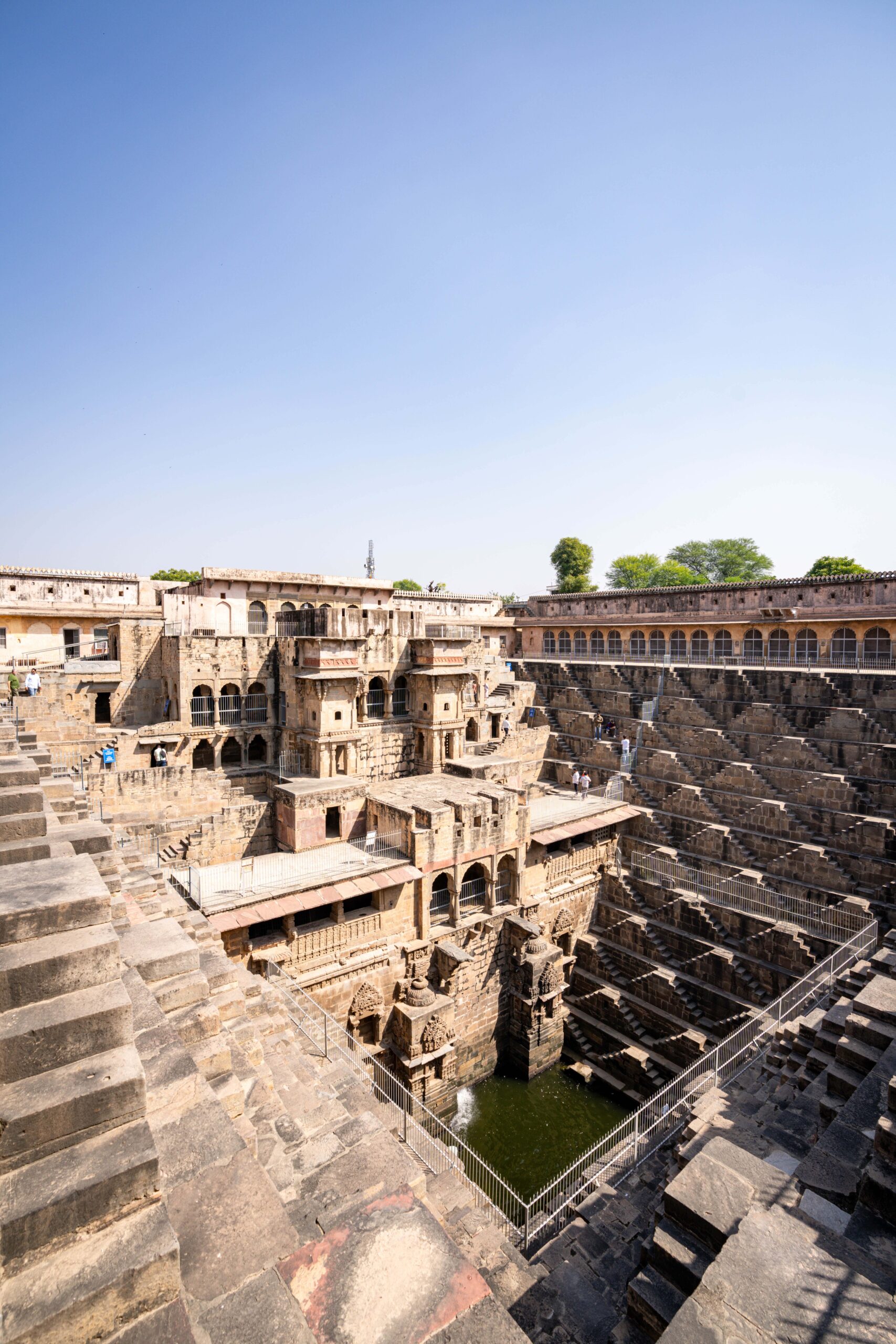
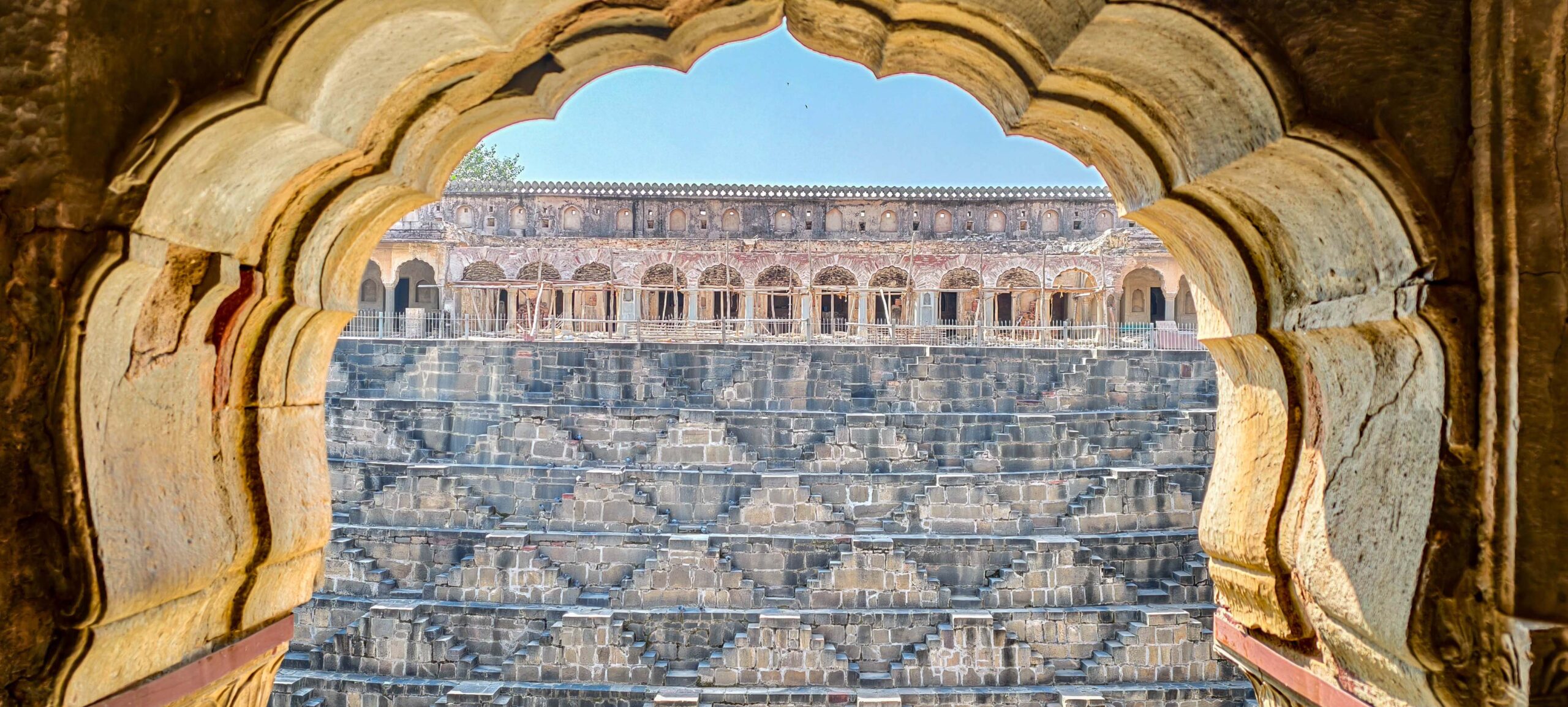
The highlight of Abhaneri is Chand Baori, one of the biggest and deepest stepwell of India. Constructed during the reign of the Nikumbha Rajputs around the 8th–9th century CE, the stepwell descends about 13 stories (approximately 64.4 meters) and is built with over 3,500 steps laid out in precise geometric patterns.
When we reached the edge, we were feeling less like a visitor and more like an observer from within the bounds of a geometric illusion. The intercession of the stairways make violent triangle-forms, a shape that seems to evolve as the gaze descends. It is often several degrees cooler at the base than at level with the ground—a reminder that this was not just a marvelous architecture, but climate-responsive engineering.
Chand Baori served as a community water source, especially important in a part of the country with inconsistent rainfall. A social space of sorts as well, however. This was a place where people came to fetch water, gossip, perform rituals, and to escape the heat. Utility and ornamentation went hand in hand, as evidenced by the pavilion galleries and carved niches around the stepwell. Such infrastructure was built with aesthetic certainty.
Harshat Mata Temple
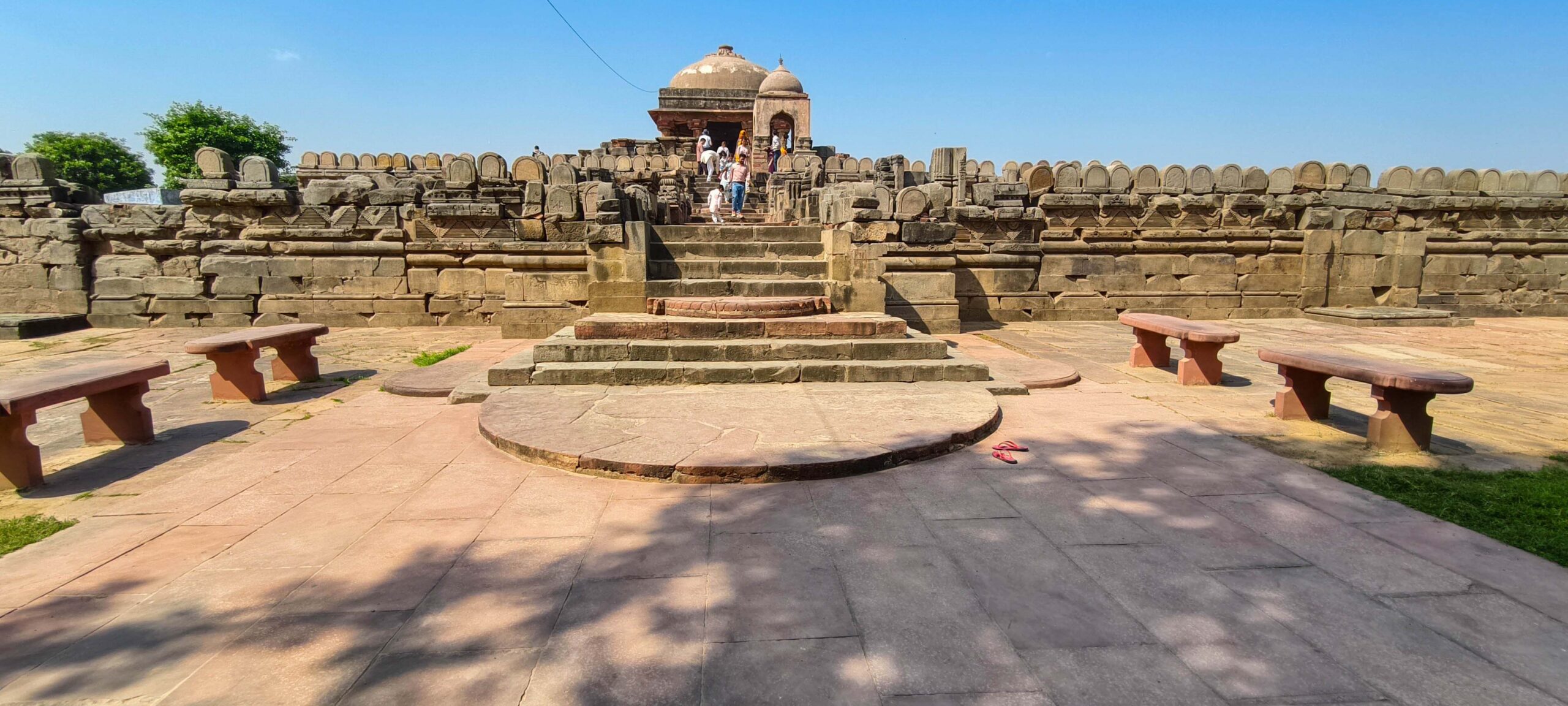
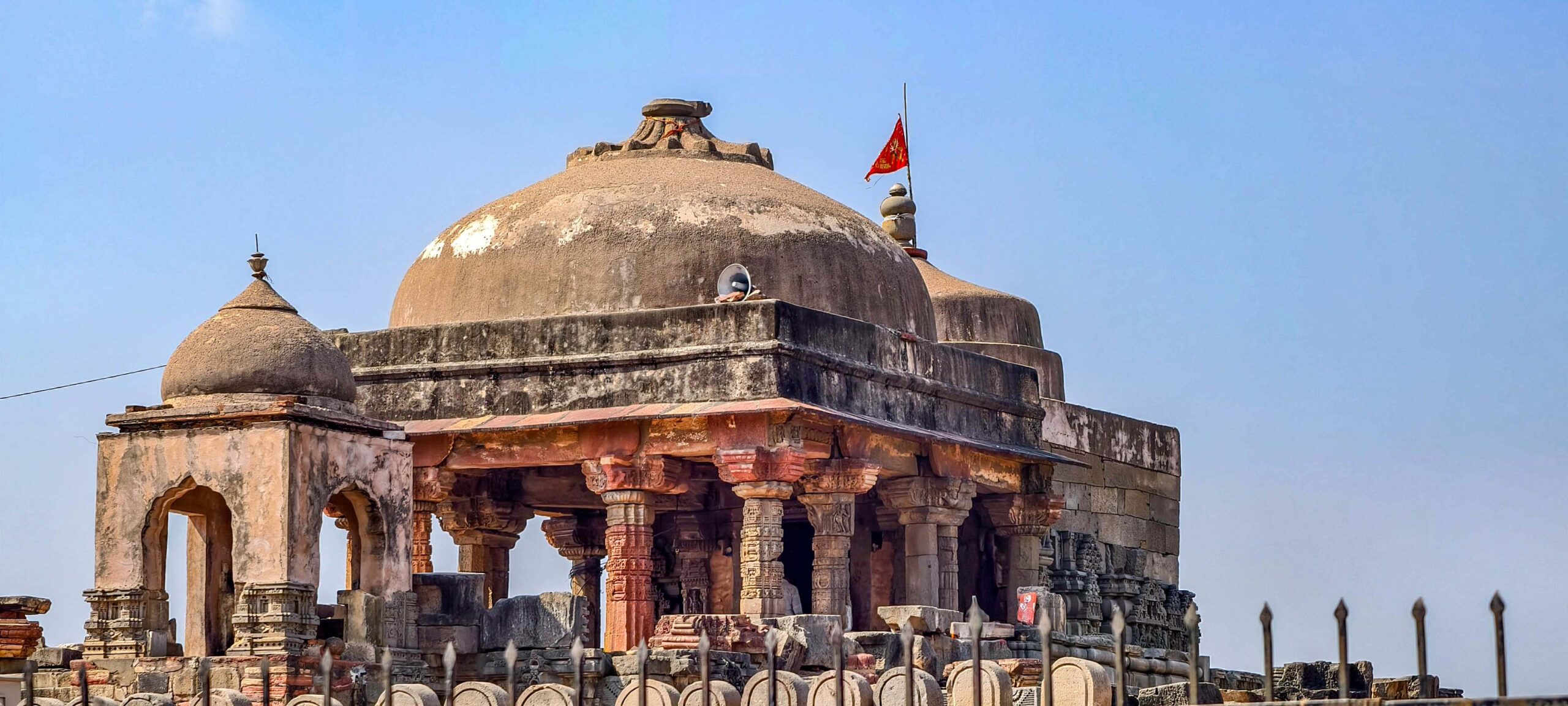
The Harshat Mata Temple is dedicated to the goddess of joy and happiness, Harshat Mata. The temple was originally built in 8th century with Pratihara style of North Indian temple. Most of it today lies in partial ruin but sculptural fragments hint at former grandeur.
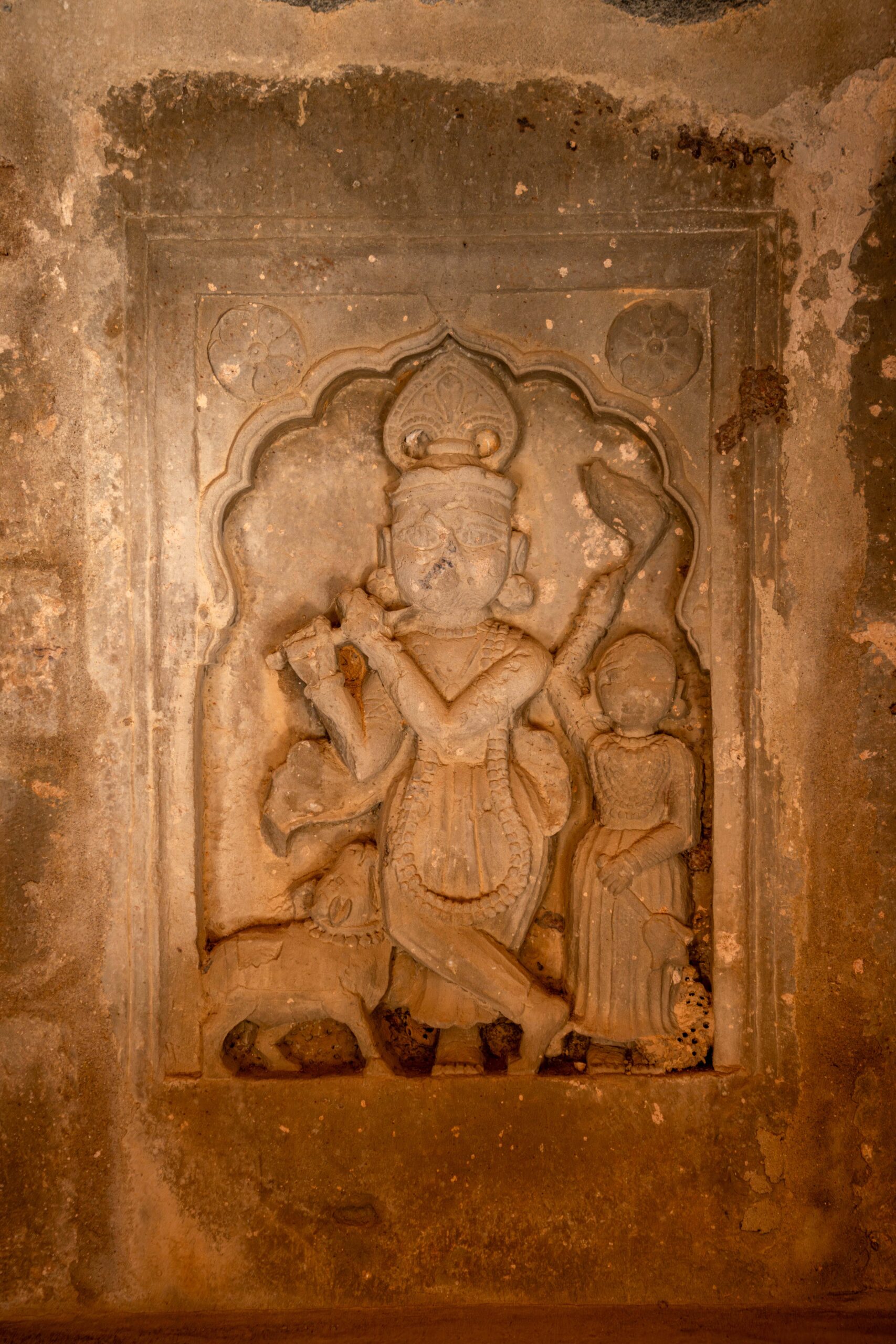
As we walked inside, we noticed that each side had exquisitely carved panels of gods, demi-gods, dancers, and mythological stories. Invasions in medieval times by nomadic clans destroyed many original idols, and the superstructure does not exist in the same state anymore. But the surviving sculptures testify to a time when temple architecture in Rajasthan was so sophisticated.
The temple’s proximity to the Chand Baori should be well noted. We reminded ourselves that water has always been sacred in out country and plays a major role in sustenance, purification, and ritual.
Culture
Abhaneri is a dry part of the region. While mustard, wheat and millet all grow well in the soil, agriculture relies on monsoon rhythms. The summers are particularly unbearable wherein the temperatures crosses 45°C whereas winters are dry and cold. There aren’t such dramatic hills to defend it, no rivers to nourish it all year round. Which makes the existence of Chand Baori a thousand times more significant. Here, the identity of the village is closely connected with the water architecture of the village.
Cuisine in Abhaneri reflects the general food patterns of eastern Rajasthan. Meals focus on being hearty and easy to make. Staple foods include bajra roti with garlic chutney, ker sangri, and gatte ki sabzi. The flavors are honest and straightforward. Cooking methods historically did this by limiting waste of water in areas where it was scarce. Hence, culinary techniques evolved to include dried ingredients, ghee and preserved spices. The food culture of Abhaneri can be seen as a reflection of its agrarian philosophy.
As we peered down into the depths of Chand Baori it felt like we were gazing into Rajasthan accepting its relationship with scarcity itself. Abhaneri doesn’t exactly star in the guidebooks, but it teaches the lesson of adaptation, on how communities adapted their resilience, far ahead of the modern concept of sustainability.
Abhaneri, in many ways, has nothing to do with grandeur. It is about wisdom—architectural, ecological, and societal. And that is part of the reason why it is one of the simplest but mightiest places we have visited in Rajasthan.