Pushkar Fair – Faith, Trade, and Festivity in the Desert
Among the historic towns of Rajasthan, Pushkar occupies a unique position because of its religious significance and its association with one of India’s most celebrated traditional fairs. Situated beside a sacred lake and surrounded by low hills at the edge of the Thar Desert, Pushkar has for centuries served both as a pilgrimage centre and a gathering place for traders from across Rajasthan. Though modest in size compared to the larger royal cities of the state, Pushkar is known throughout India for its temples, ghats, and the annual Pushkar Camel Fair, which transforms the quiet pilgrimage town into a vast and crowded temporary settlement.
Pushkar’s importance is rooted primarily in religion and mythology. According to Hindu tradition, the town is associated with Lord Brahma, the creator deity. It is believed that Brahma dropped a lotus flower upon the earth, and the place where it fell became Pushkar Lake. The town is especially famous for the Brahma Temple, one of the few major temples in India dedicated to Brahma. Around the sacred lake stand more than fifty ghats and numerous temples visited by pilgrims throughout the year. During Kartik Purnima, considered especially auspicious, thousands of devotees gather at Pushkar to bathe in the lake, believing the ritual to possess spiritual merit.
Alongside its religious importance, Pushkar historically functioned as a major seasonal trading centre. Communities from Rajasthan’s desert regions gathered here with camels, horses, and cattle, combining pilgrimage with commerce. Over time, these seasonal markets developed into the Pushkar Fair, now internationally known for its scale and atmosphere. Although tourism has expanded its character considerably, the fair still retains its original function as one of the largest traditional livestock fairs in India.
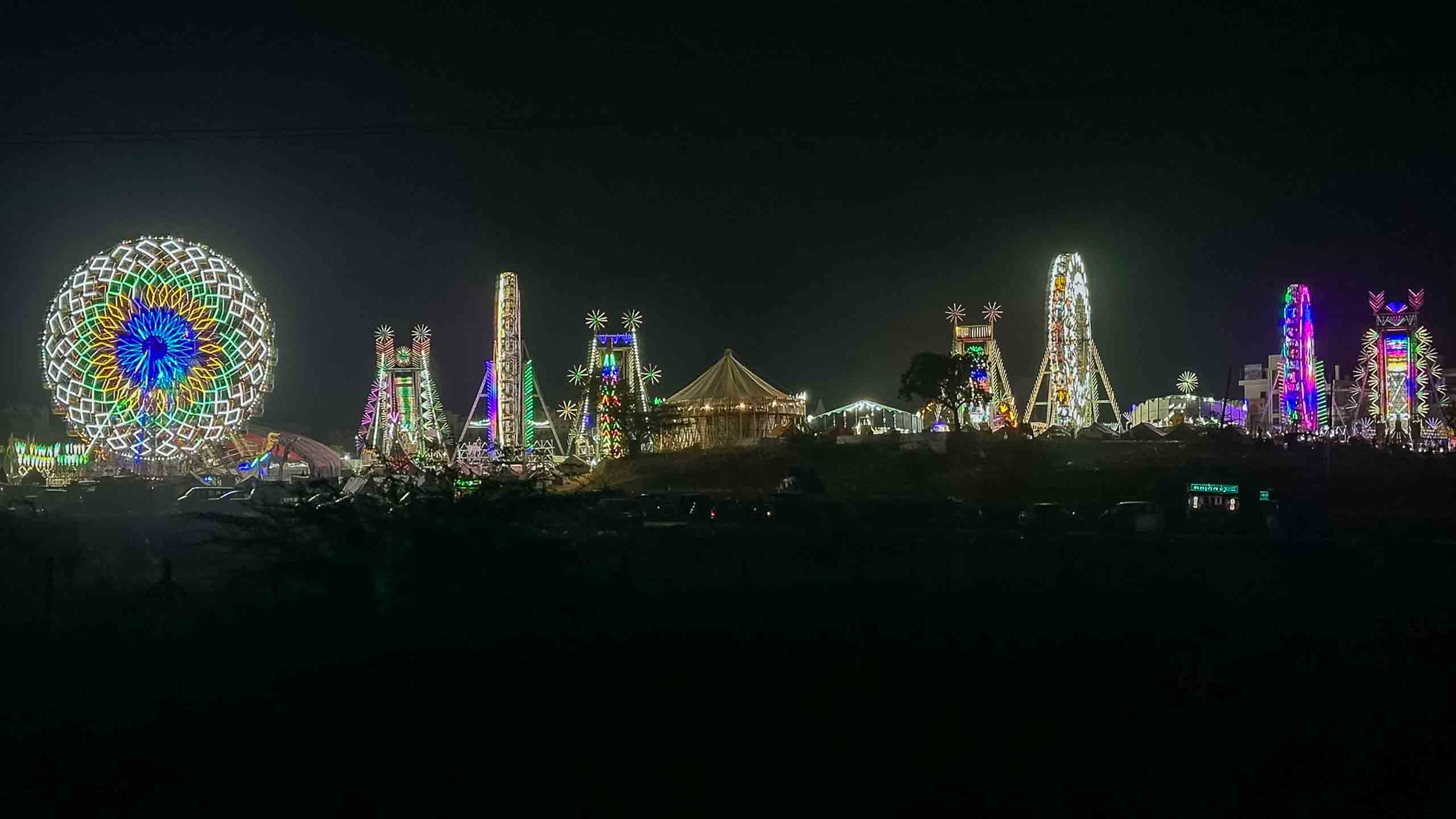
We reached Pushkar in the evening, shortly before sunset. The roads leading toward the fairground were already crowded with vehicles, camel carts, motorcycles, tractors, and pedestrians moving in every direction. Dust rose continuously from the dry ground while loudspeakers carried folk songs, film music, and announcements across the open grounds. Above the crowds, the outlines of giant wheels and amusement rides stood against the fading desert sky.
The first impression of the fair was one of movement and noise. Nothing appeared static. The Pushkar Fair is not merely a cattle market but a
combination of pilgrimage, trade, entertainment, and tourism. One section of the grounds was occupied by livestock traders, another by carnival rides and amusement stalls, while long rows of temporary shops and food stalls stretched across the fair area.
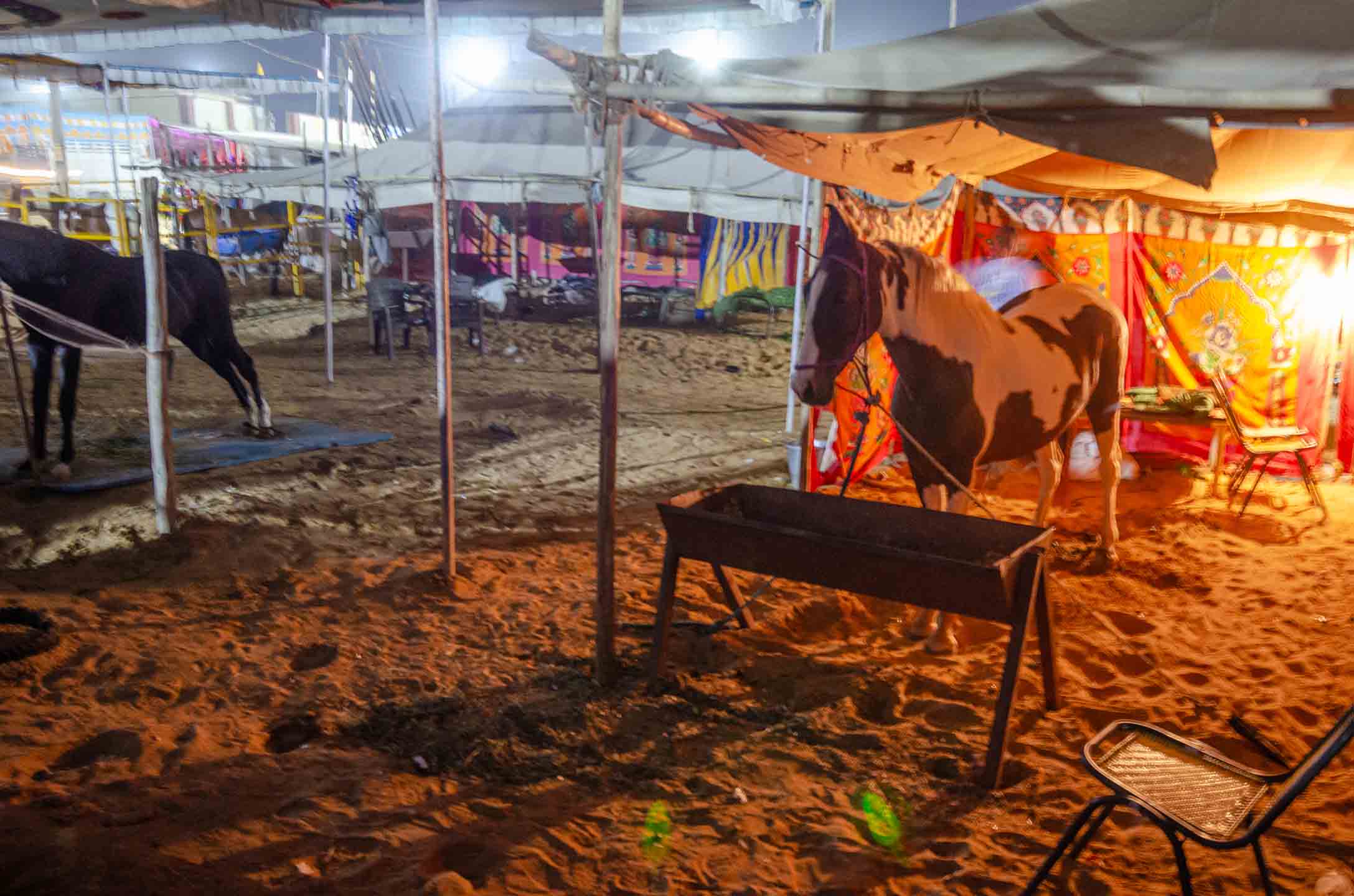
The livestock grounds remained among the most remarkable parts of the fair. Camels sat in long rows upon the sand while traders negotiated prices nearby. Many animals were decorated with colourful ropes, bells, beads, and embroidered saddles. Some camels had ornamental patterns shaved into their fur, a traditional practice associated with desert fairs. Horses were paraded before buyers to display their movement and endurance, while cattle owners rested beside their animals beneath temporary shelters made of cloth and bamboo poles.
As darkness approached, the amusement section became brighter and louder. Giant wheels covered in rows of coloured lights slowly turned above the crowds, visible from nearly every part of the fairground. Their illuminated metal frames dominated the skyline of the temporary settlement. Around them stood smaller rides, rotating swings, toy trains, and game stalls filled with families and children.
The carnival atmosphere felt distinctly traditional rather than modern. Temporary wooden structures, painted signboards, exposed electric bulbs, cloth banners, and generators powering the rides gave the fair a rough but lively appearance. Loud film songs played continuously while children ran through the crowds carrying balloons and spinning toys. The fair possessed an energy that modern amusement parks often lack — improvised, crowded, and deeply connected to local culture.
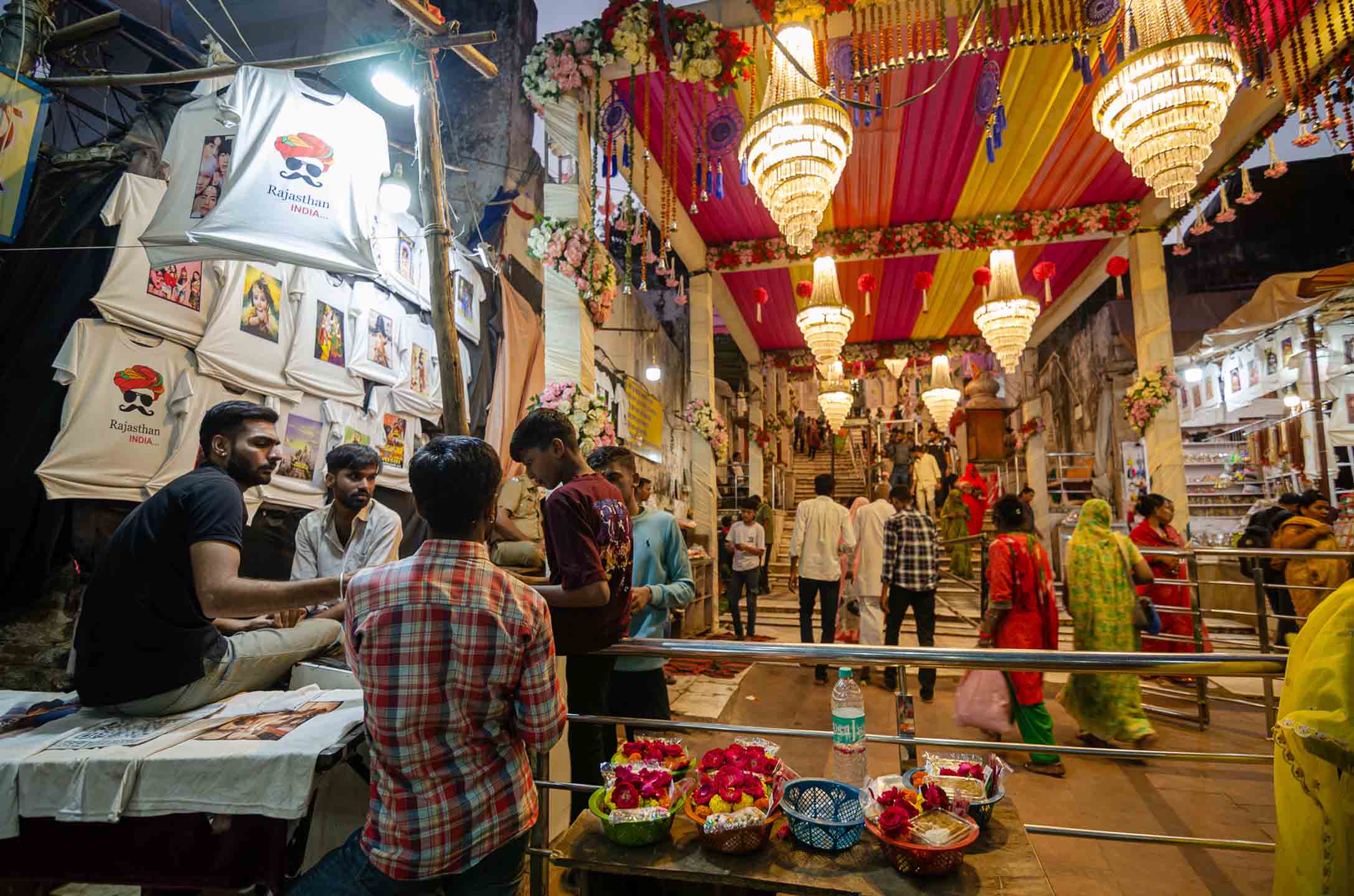
The market lanes stretched endlessly through the grounds. Shops sold traditional Rajasthani textiles, turbans, mirror-work fabrics, silver jewellery, leather footwear, embroidered bags, brass utensils, and decorative handicrafts. Under strings of hanging bulbs, mirrors stitched into fabrics reflected the light in every direction. Shopkeepers called out constantly to passing visitors while tourists bargained over shawls, jewellery, and souvenirs.
Walking through these crowded lanes revealed the fair’s extraordinary diversity. Villagers from nearby desert districts mingled with pilgrims, traders, photographers, and international tourists. Some visitors came for religious purposes, others for trade, and many simply to experience the atmosphere of the fair itself. Everywhere there was movement — people eating, bargaining, watching performances, or simply wandering through the illuminated grounds.
One of the most striking aspects of the Pushkar Fair in the evening was the contrast between the darkness of the surrounding desert and the brightness of the fairground itself. Beyond the lights lay open land and distant hills fading gradually into night. Inside the fair, however, everything glowed — amusement rides, tea stalls, food counters, shopfronts, and temporary stages illuminated by strings of coloured bulbs.
At moments, the fair almost seemed unreal. Camels moved slowly past brightly lit carnival rides. Folk musicians performed beside loud amusement stalls. Pilgrims walked toward the ghats while tourists photographed decorated animals nearby. Dust hung constantly in the air beneath artificial lights, softening the outlines of people and structures. The fair existed simultaneously as a sacred gathering, a trading centre, and a popular spectacle.
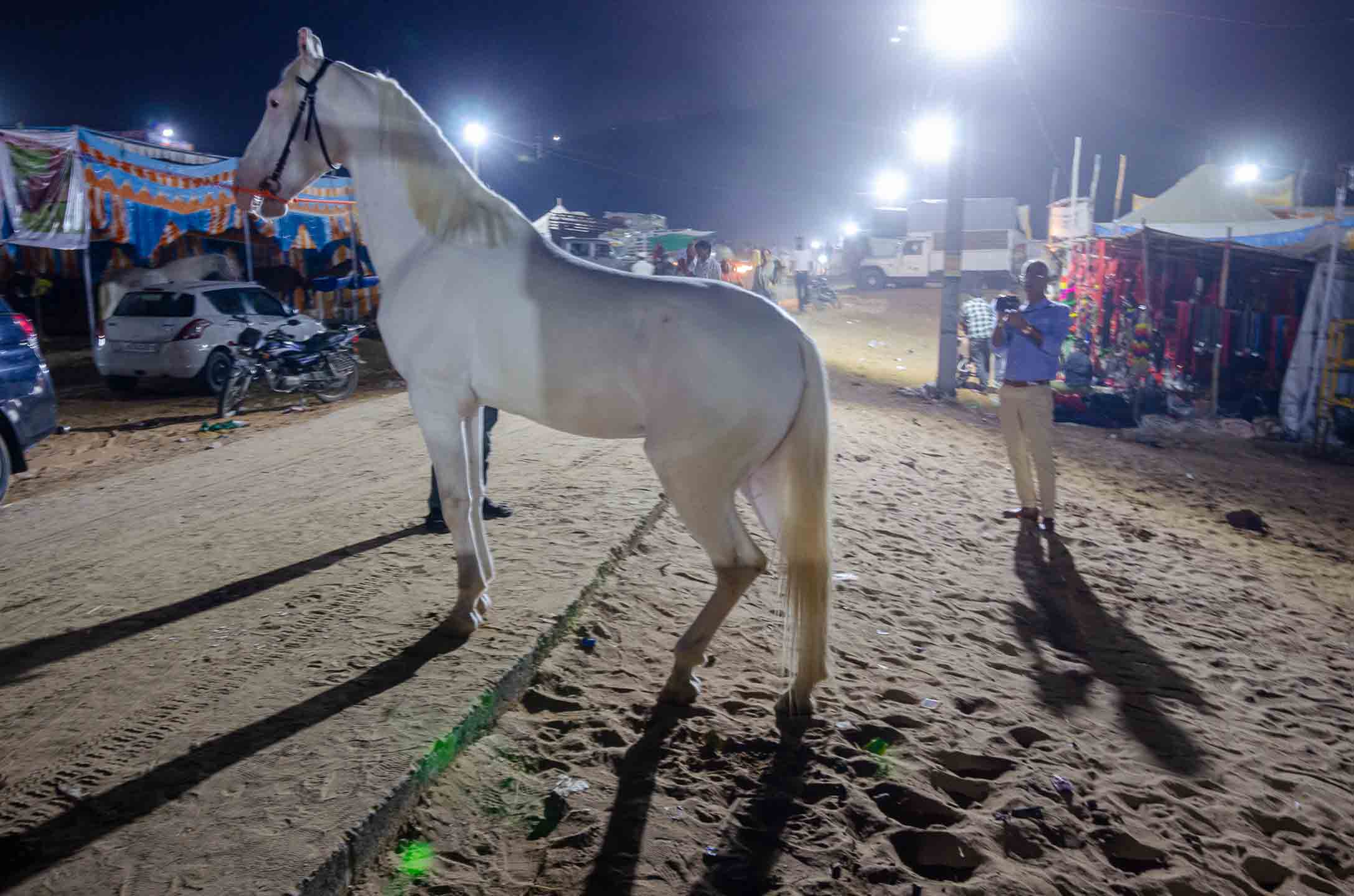
An important attraction associated with the Pushkar Camel Fair is the Indian Horse Championship, which highlights Rajasthan’s long equestrian traditions and the cultural prestige attached to horses in the region. The event prominently features the celebrated Marwari horse, known for its distinctive inward-curving ears, endurance, and historical association with Rajput warfare and nobility. During the fairgrounds, beautifully groomed and decorated horses are presented before large crowds while riders demonstrate control, agility, and ceremonial riding skills. Competitions and exhibitions often include horse dancing performances, traditional riding displays, decoration contests, and breed showcases. Beyond entertainment, these events preserve older traditions of horse breeding and training that remain important in Rajasthan’s rural and aristocratic culture. Amid the noise and crowds of Pushkar, the sight of illuminated horses moving gracefully across the sand beneath the evening lights becomes one of the fair’s most memorable spectacles.
Despite the carnival atmosphere, the religious identity of Pushkar remained visible throughout the evening. Many visitors still came primarily to visit the temples and sacred ghats around Pushkar Lake. As night fell, lamps reflected softly upon the water while devotional chants occasionally drifted across the town. This coexistence of pilgrimage and festivity gives Pushkar a character unlike any other fair in Rajasthan.
The food culture of the region formed another essential part of the experience. Rajasthan’s cuisine developed in response to its arid climate and scarcity of water, resulting in foods that could be preserved easily and prepared with limited resources. Throughout the fairgrounds, food stalls prepared local snacks in large iron pans over open flames. Kachoris, mirchi vadas, pakoras, and fresh jalebis were among the most common foods sold at temporary counters crowded with visitors.
Tea stalls remained busy throughout the evening, serving sweet chai in small glasses to traders, tourists, and pilgrims alike. Larger food tents offered traditional Rajasthani meals such as dal baati churma, gatte ki sabzi, ker sangri, and various breads suited to desert conditions. Sweet shops displayed milk-based sweets and traditional desserts prepared with clarified butter and dry fruits. The food of Pushkar reflected the wider culinary traditions of Rajasthan — rich, flavourful, and closely shaped by the environmental conditions of the desert region.
By the time we left, the night had fully settled over Pushkar. The giant wheels still turned above the illuminated grounds while music and announcements continued in the distance. Dust clung to clothes and shoes, and the sounds of the fair lingered long after departure. Pushkar in the evening was crowded, noisy, and overwhelming, yet precisely because of this intensity, it remained unforgettable.