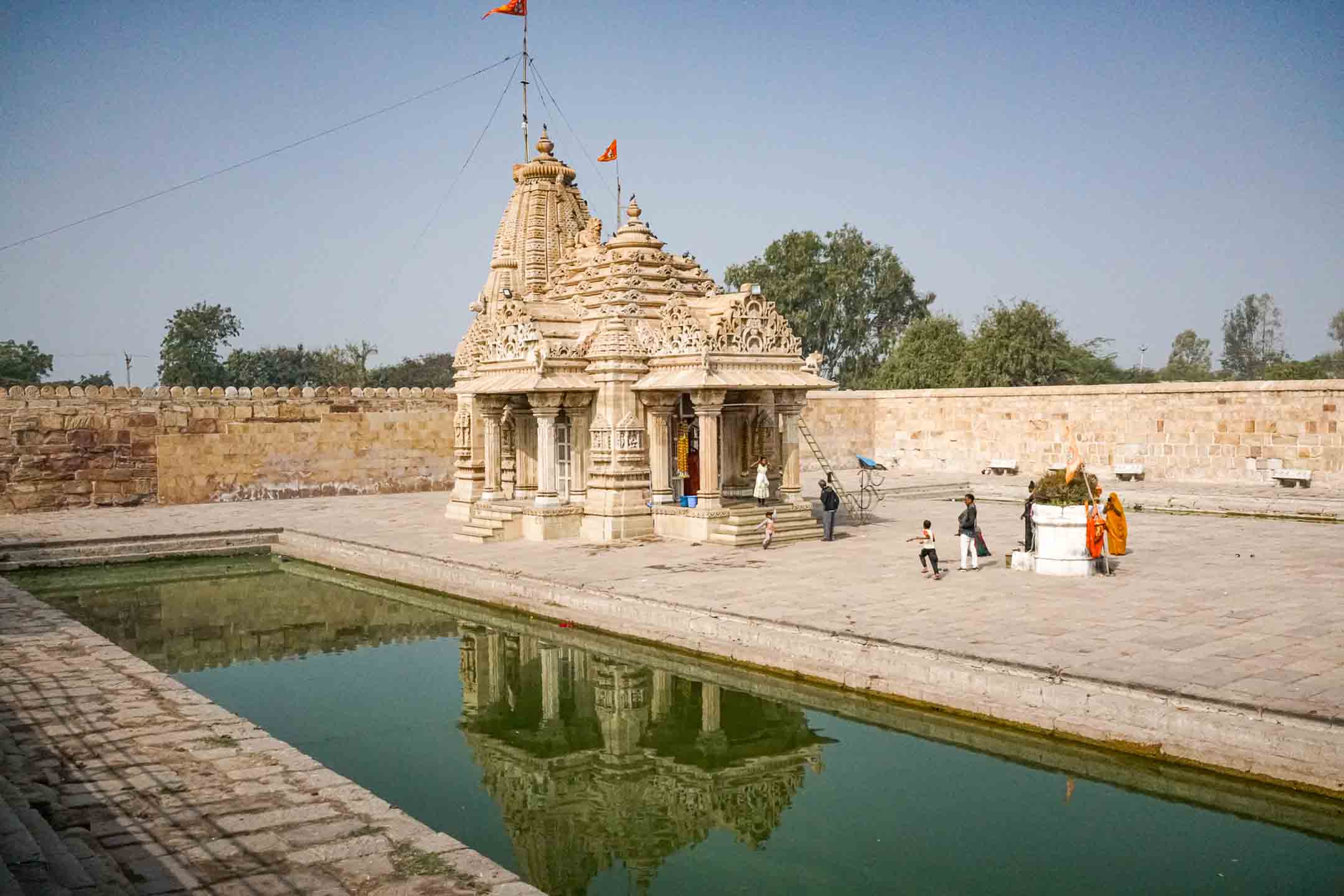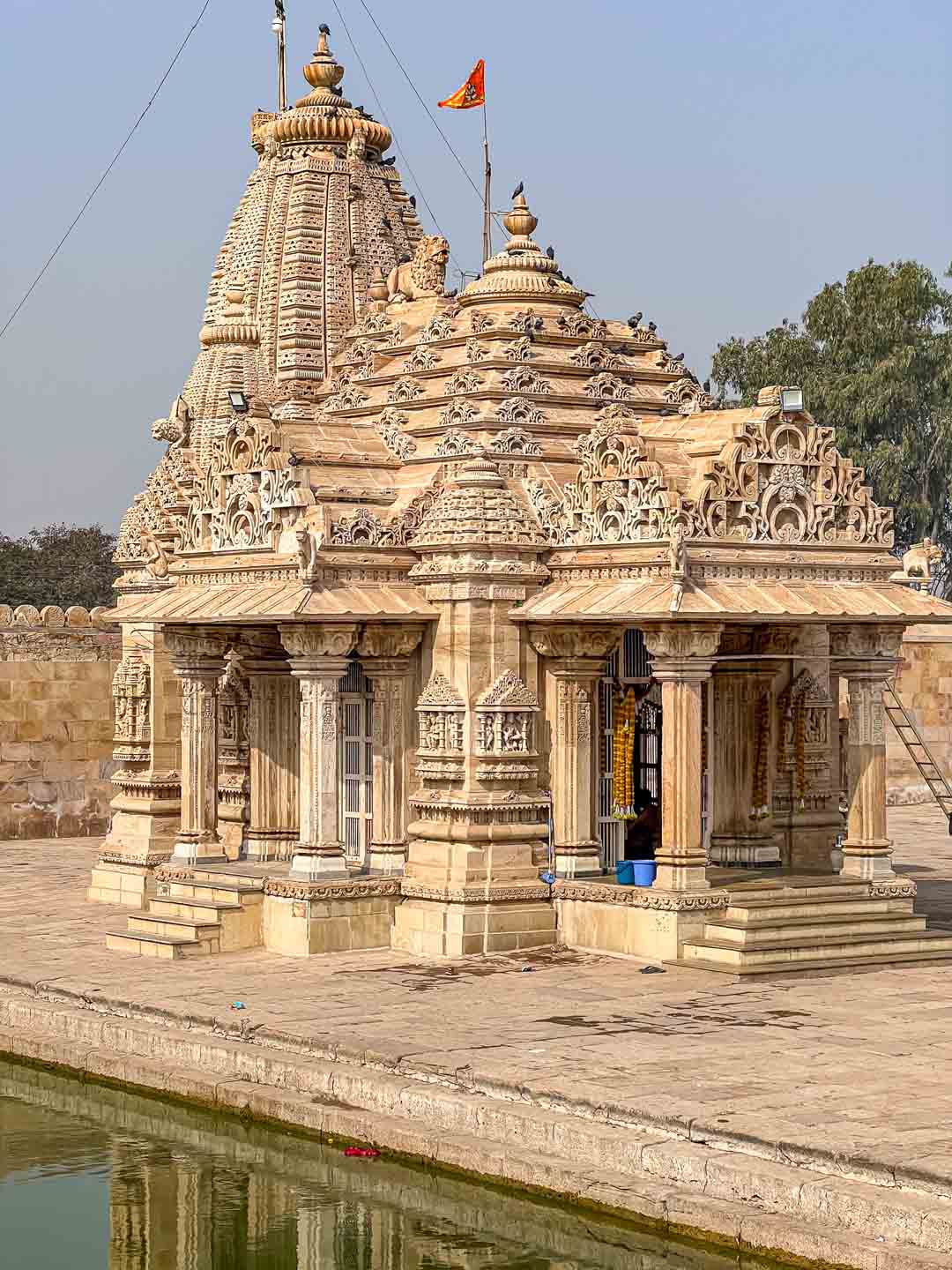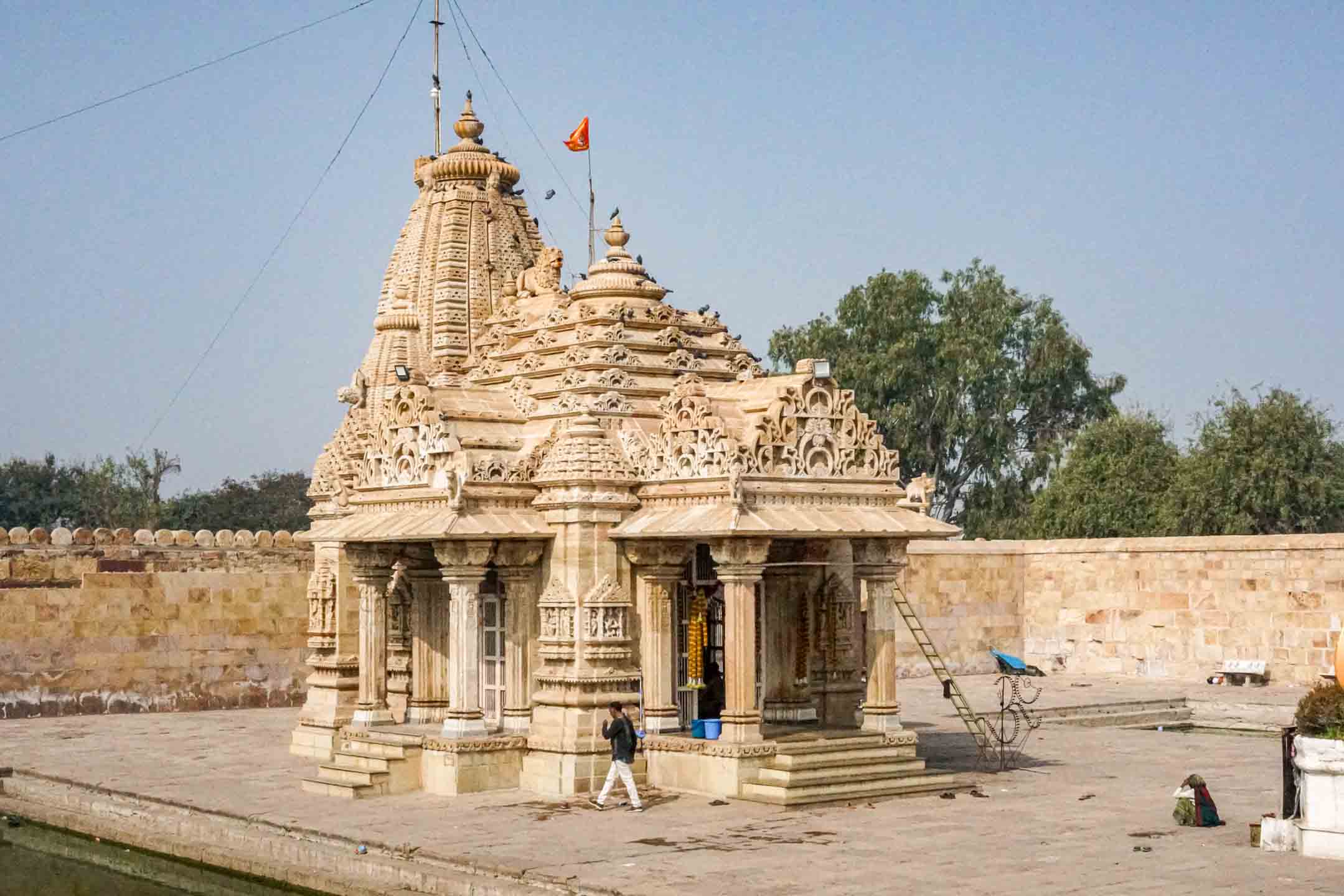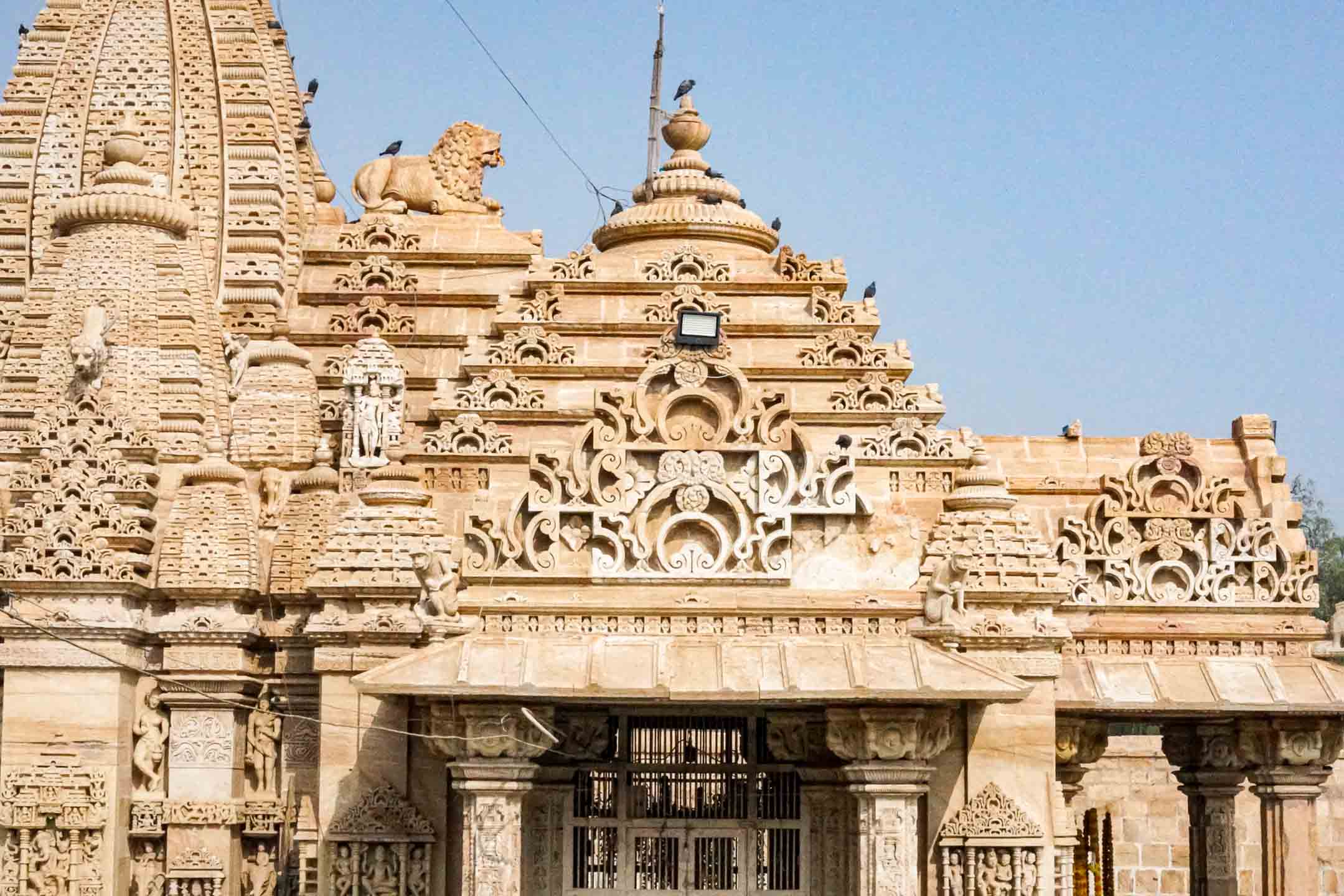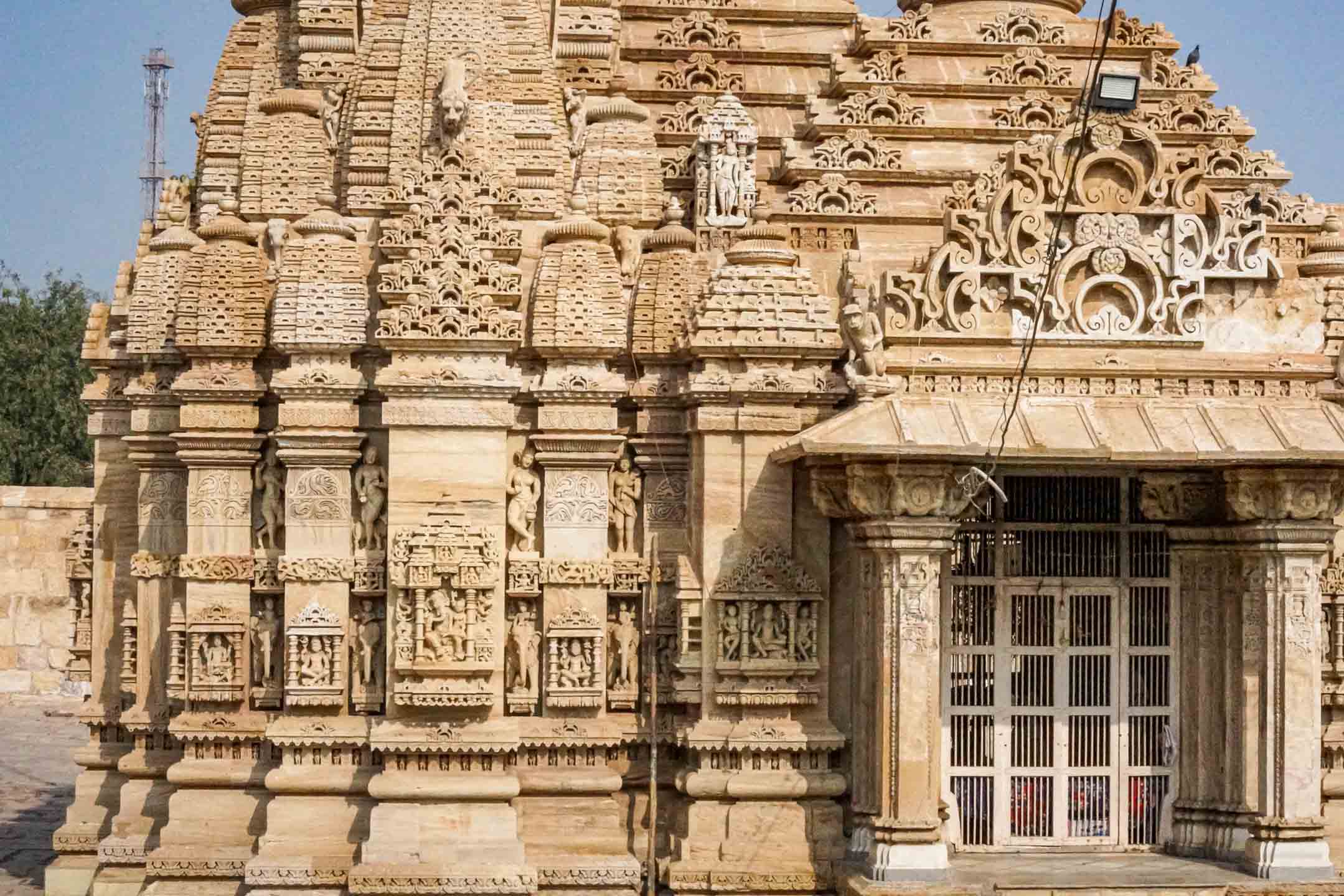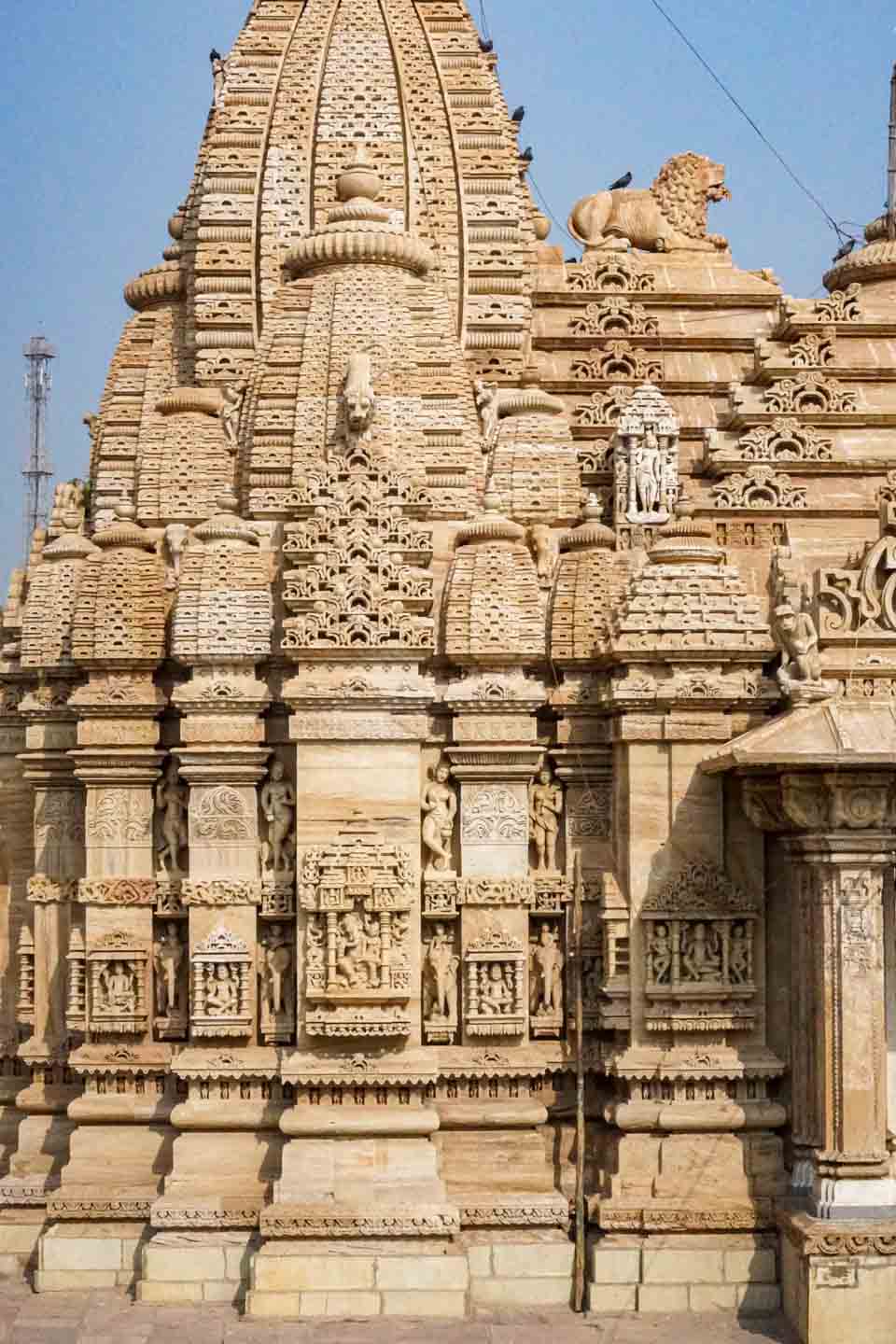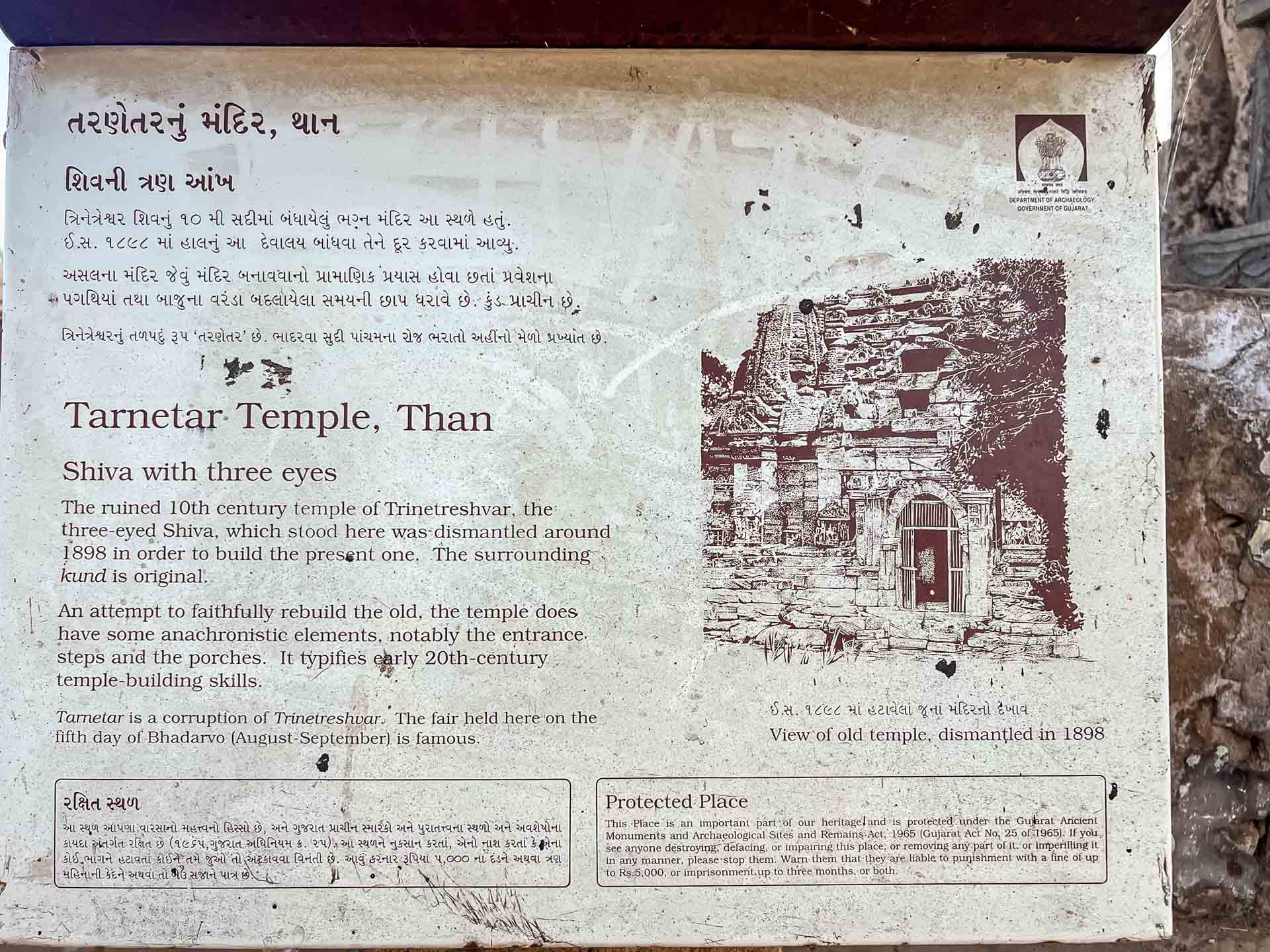
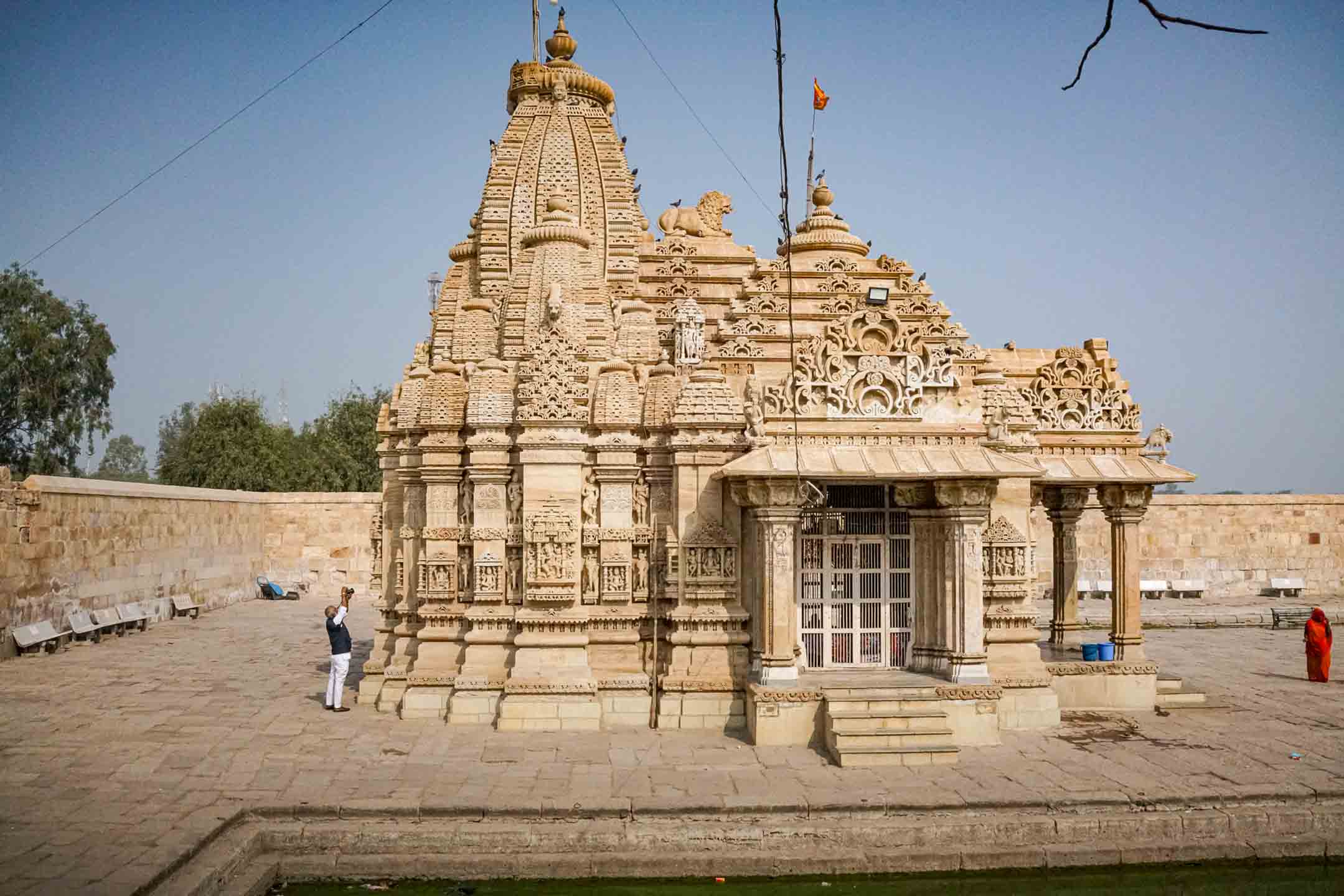
Trinetreshwar Temple is one of Gujarat’s most important historic and religious monuments. Dedicated to Lord Shiva in his form as Trinetreshwar, or “the Three-Eyed One,” the temple is believed to date to the early medieval period. The present structure reflects the Maru-Gurjara style of architecture, with intricately carved pillars, sculpted exterior walls, and three sacred kunds: Brahma Kund, Vishnu Kund, and Shiva Kund.
The temple is closely associated with local legend and is often linked symbolically to the Mahabharata episode of Draupadi’s swayamvara, in which Arjuna won her hand through an archery feat. The Trinetreshwar Temple is therefore significant not only as an architectural monument but also as the spiritual and cultural center.
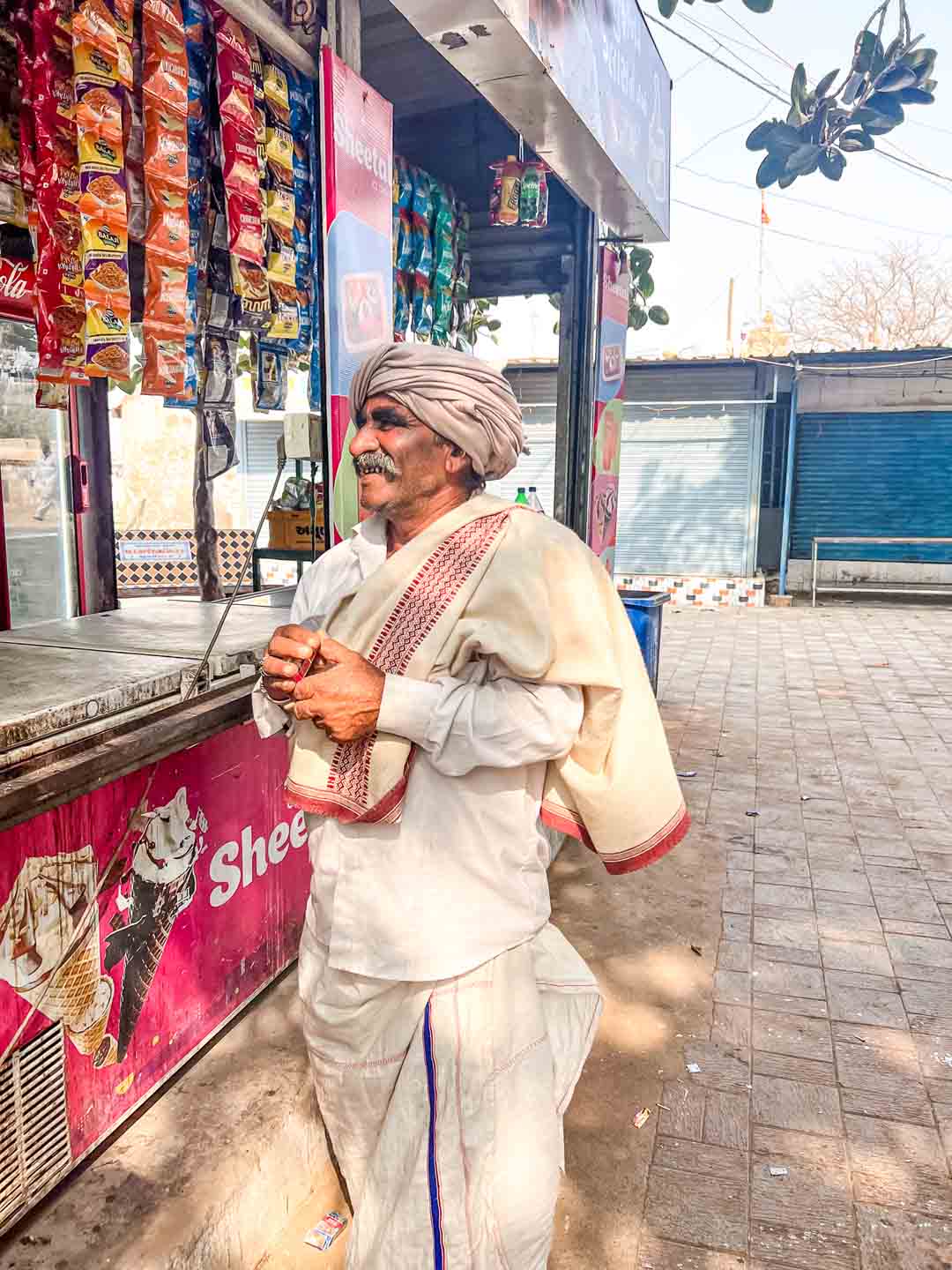
Each year, the temple becomes the focal point of the renowned Tarnetar Fair, one of Gujarat’s most vibrant cultural gatherings. Traditionally considered a matchmaking fair, it attracts members of pastoral and agrarian communities, including the Rabari, Bharwad, Koli, and Kathi groups.
During the fair, the temple grounds come alive with folk music, garba and raas performances, decorated umbrellas, craft stalls, and food vendors. The event remains a vivid expression of rural Gujarat, where religious devotion, social interaction, and artistic traditions converge.