Markets, Crafts, and Commercial Culture
Rajkot has historically functioned as one of the major commercial centers of Saurashtra. For centuries, trade networks connected the city with agricultural regions, ports, and princely states across western India.
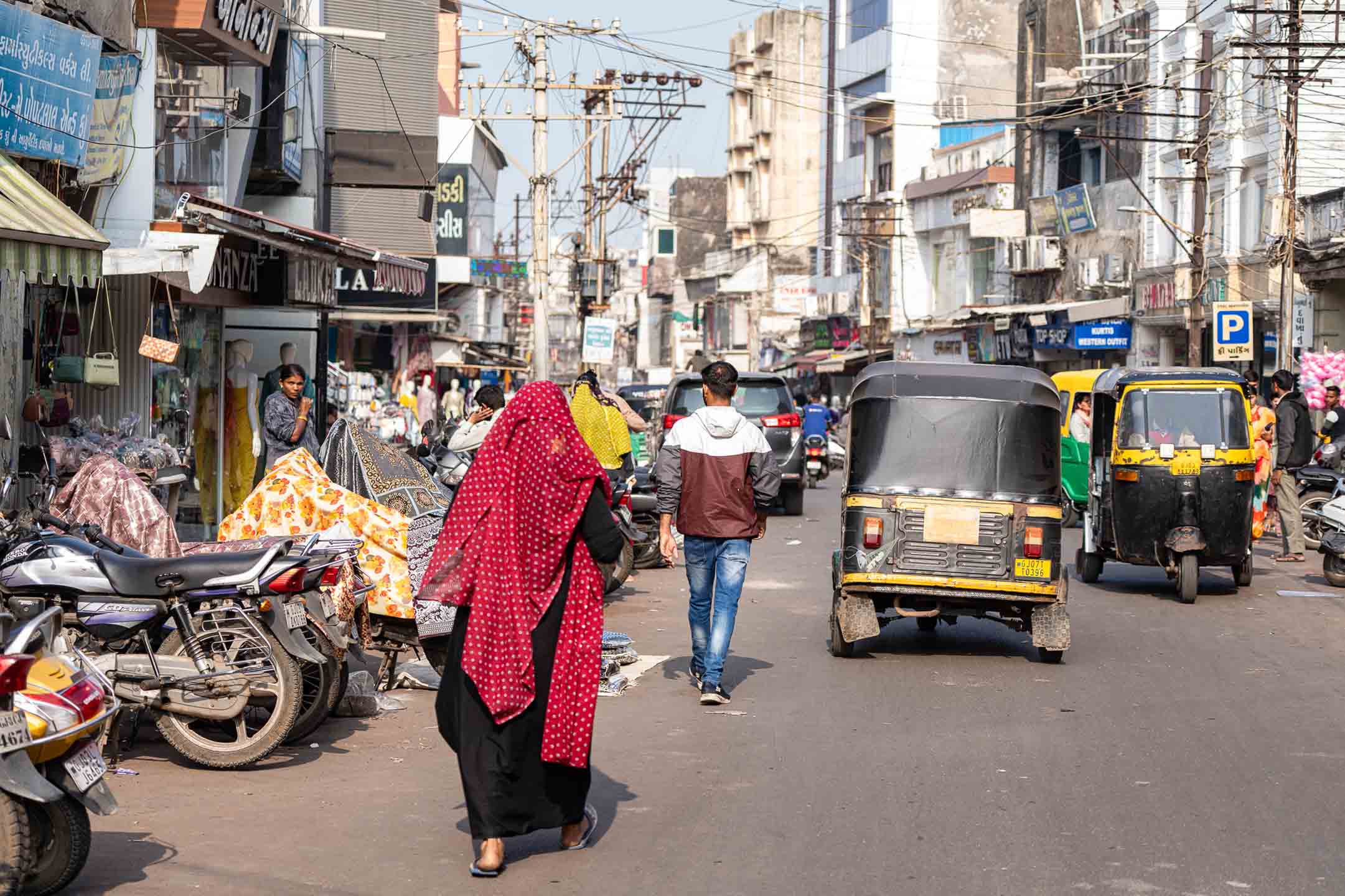
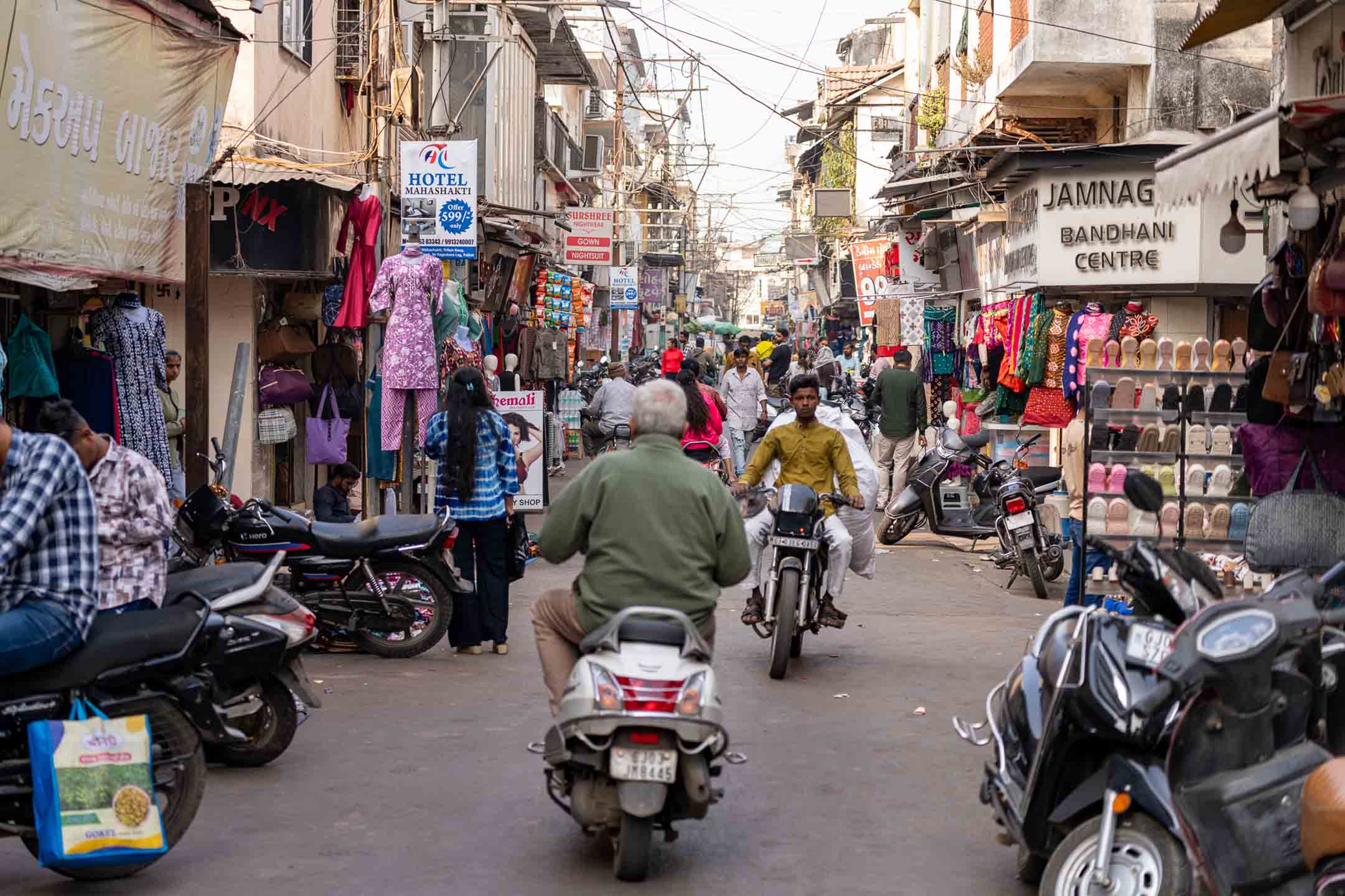
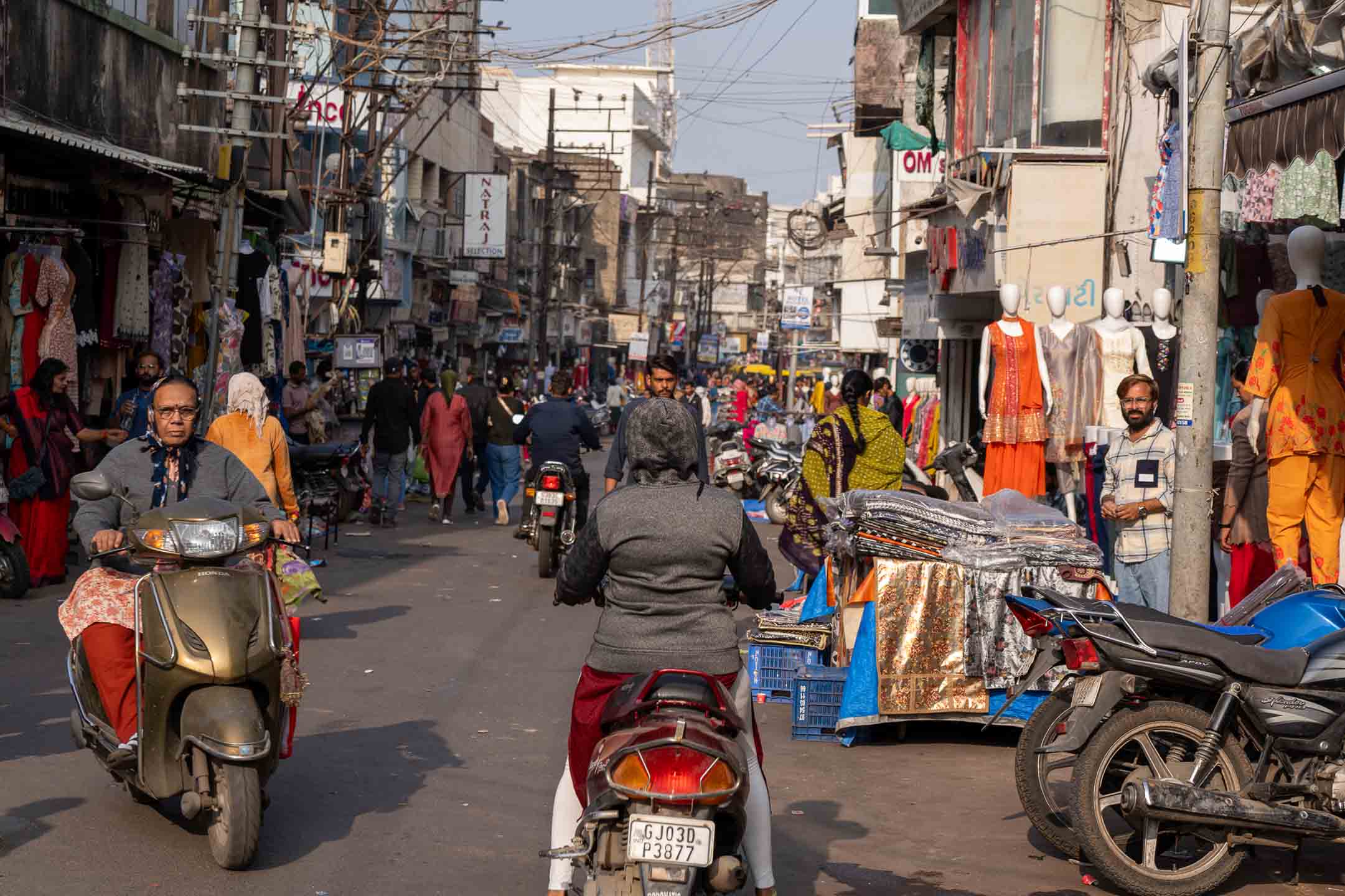
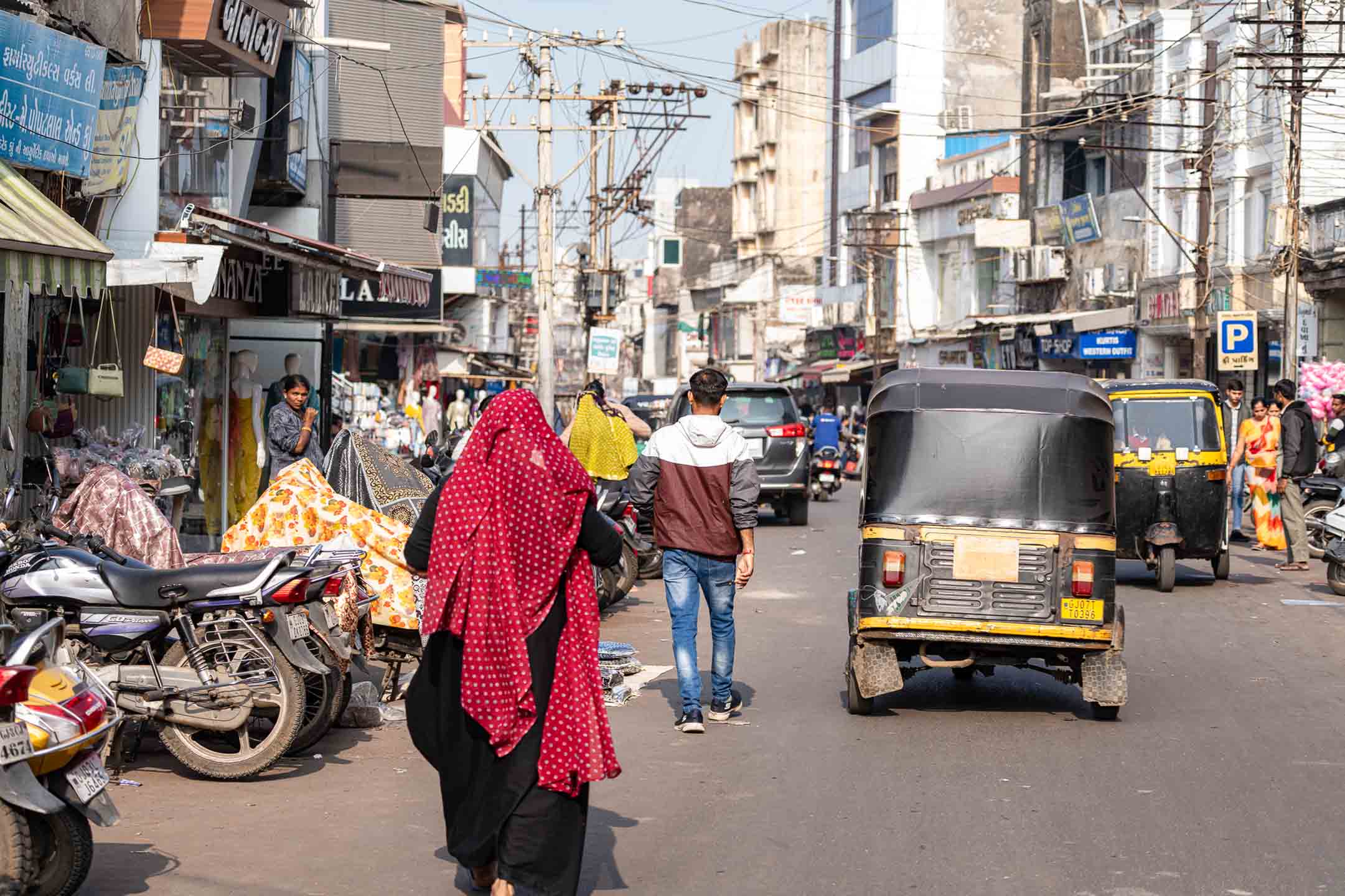
Even today, commerce continues to shape the character of the city. Markets specializing in textiles, jewelry, machine tools, kitchenware, and handicrafts remain crowded and active.
Bandhani textiles are especially associated with the region. These intricate tie-dyed fabrics, created through labor-intensive manual techniques, fill market stalls with vivid patterns in deep reds, yellows, greens, and indigo tones. Embroidered garments, mirror-work textiles, silver ornaments, and handcrafted items further reflect the artistic traditions of Saurashtra.
Rajkot is also known for its machine-tool industry and small-scale manufacturing sector, giving the city a distinctive blend of traditional commerce and industrial entrepreneurship.
Rajkot’s Educational and Cultural Identity
Rajkot has long been regarded as an important educational center within Gujarat. Schools, colleges, libraries, and public institutions established during the princely and colonial periods helped shape the city’s intellectual culture.
Institutions such as Rajkumar College educated members of princely families from across Kathiawar. Colonial-era architecture, expansive grounds, and historic academic buildings continue to preserve traces of that past.
Cultural life in Rajkot remains deeply connected to Gujarati language, literature, devotional music, folk performance, and festival traditions. Navratri celebrations are especially vibrant, with garba dances transforming public spaces into arenas of rhythm, color, and collective participation.
Temples, community halls, music schools, and local theaters continue to sustain the city’s cultural traditions alongside rapid urban growth.
Food and Culinary Traditions
No understanding of Rajkot is complete without its food culture, which reflects both the climate and social traditions of Saurashtra.
The cuisine balances sweetness, spice, texture, and warmth with remarkable sophistication.
Daily meals often include rotla, shaak, dal, rice, pickles, chutneys, and farsan prepared using seasonal ingredients suited to the semi-arid environment.
Street food forms an essential part of the city’s identity. Evening markets fill with the aromas of fafda, jalebi, sev usal, dabeli, kachori, bhajiya, pav bhaji, and countless varieties of chaat.
Tea stalls continue to function as important social spaces where people gather repeatedly throughout the day.
Kathiawadi cuisine, strongly associated with Saurashtra, is especially prominent in Rajkot.
Traditional thalis often include millet breads, garlic chutneys, ringan no olo, stuffed vegetables, lentils, yogurt preparations, and generous amounts of ghee.
Food here remains deeply communal. Families gather together for late evening meals, festival sweets circulate through neighborhoods, and hospitality continues to occupy a central place in social life.
Rajkot and the Spirit of Saurashtra
Rajkot may not possess the monumental spectacle of India’s great imperial capitals, yet it offers something equally valuable — continuity between past and present.
Its princely history survives not as isolated ruins but as part of everyday urban life. Gandhian memory exists beside crowded bazaars. Old neighborhoods continue alongside commercial growth and industrial expansion.
Most importantly, Rajkot retains a strong regional identity. Its streets, markets, language, food, and rhythms of daily life continue to reflect the culture of Saurashtra with remarkable clarity.
To walk through Rajkot is therefore not simply to visit a city, but to encounter a living historical landscape where commerce, memory, spirituality, craftsmanship, and public life remain deeply interconnected.