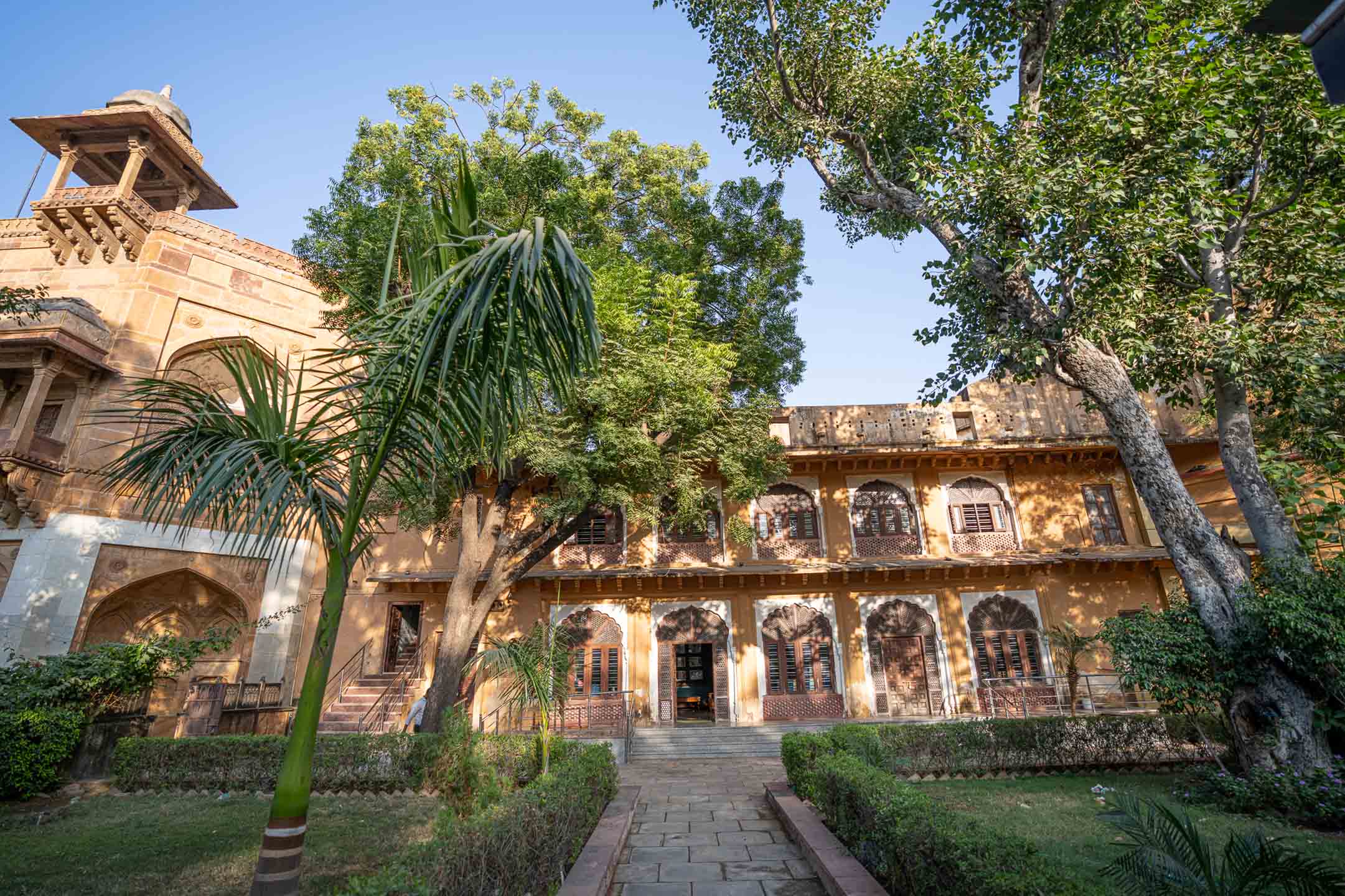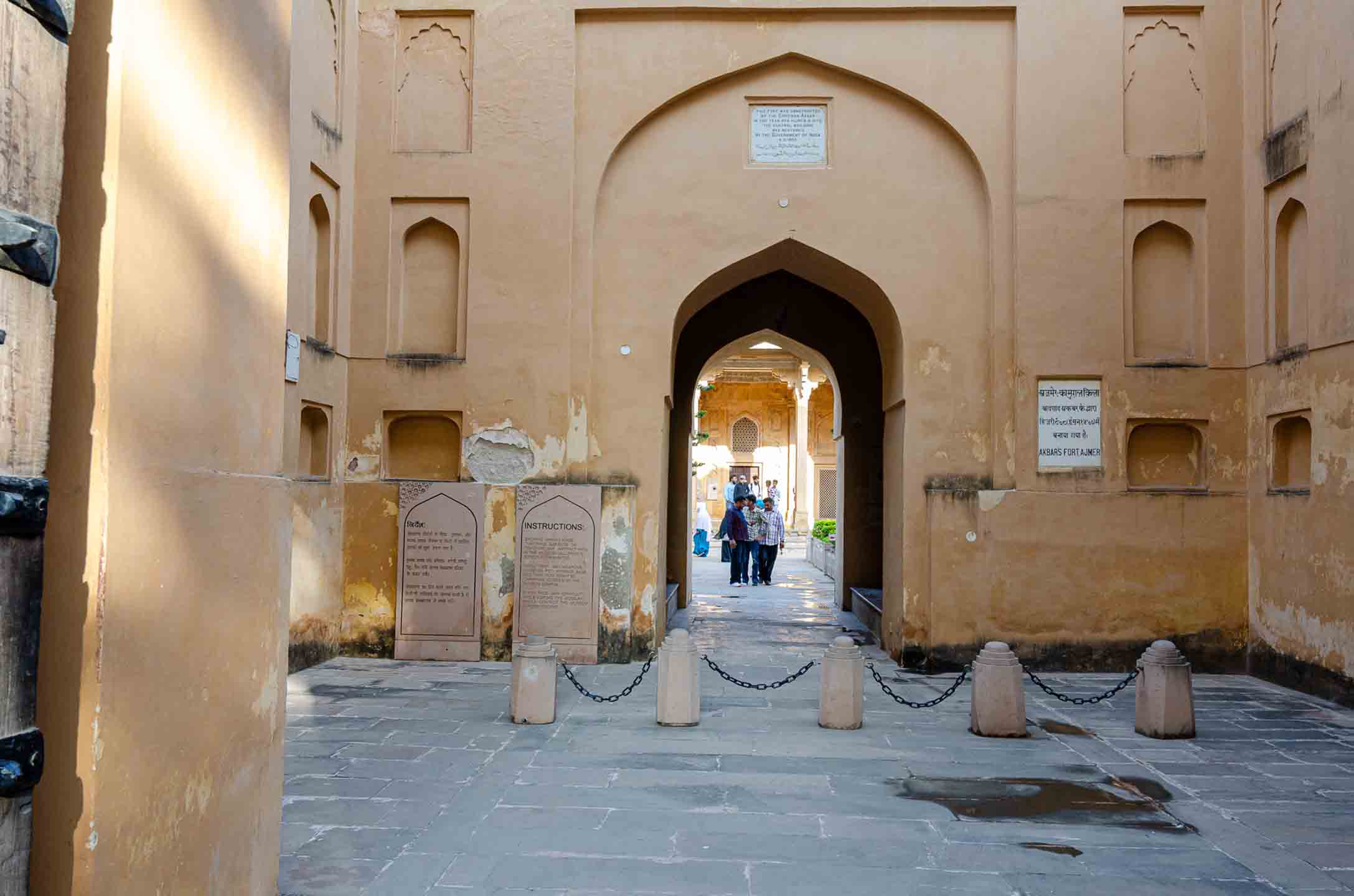
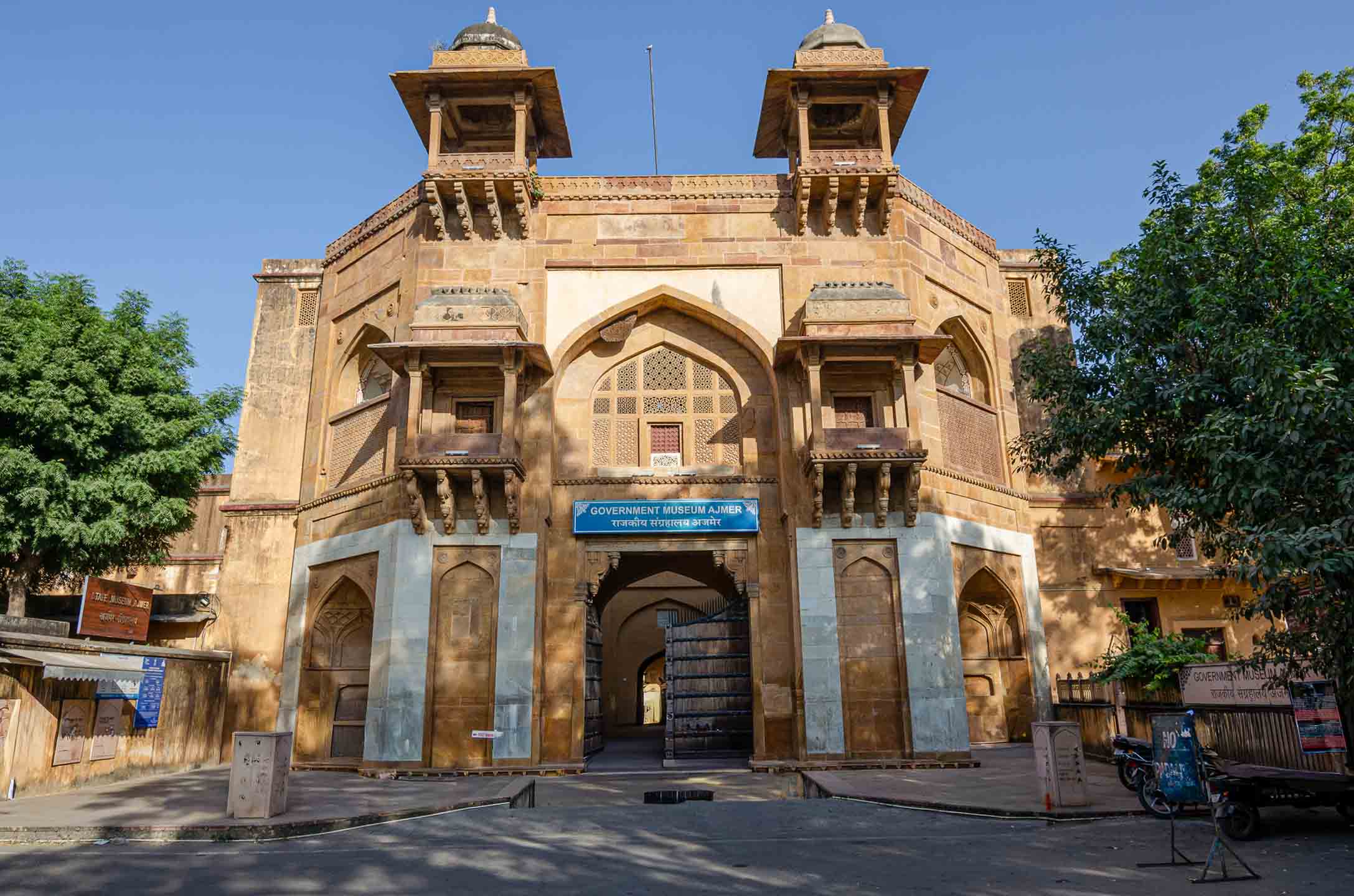
Akbar Fort — built in 1570, the mass and scale of this fort made sure that this is one building that secures Mughal superiority here in Rajputana. Red sandstone used for the thick walls, bastions and gates of the city all of which were used to portraying power and grandeur rather than beautifying.
Built by the Mughal Emperor Akbar as a royal residence, the Akbar Fort evolved into a seat of administration, and a museum containing sculptures, inscriptions and artefacts that tell the political and cultural history of Ajmer. In the sound of inner city traditional havelis and mansions mirror life of nobles and traders with stone courtyards, painted wall and carved brackets. Together, the forts, shrines, palaces, and memorials of Ajmer tell a story of a place formed by devotion as much as diplomacy and defense. The fort, which came into British
possession to later serve as an administrative centre, embodies a layered authority — imperial, colonial, and post-independence. The power of its architecture also comes through, even in this era.