Bera – The Frontier of Quietness
Nestled among the hills of western Rajasthan lies the small village of Bera, a place that at first glance appears to be just another simple rural settlement. Located within the rugged landscape of the Jawai region, Bera is surrounded by granite hills, open scrublands, and scattered agricultural fields. Life here moves slowly, shaped less by the pace of modern cities and more by the rhythms of nature. Yet beneath its quiet surface lies a story rooted in agriculture, wildlife, and enduring rural traditions.
Geography and Landscape
Bera forms part of the broader Jawai region, an area known for its unusual and dramatic landscape. Massive granite outcrops rise abruptly from the earth, their weathered surfaces shaped by millions of years of geological activity. These ancient rocks create a striking terrain of caves, ridges, and boulder-strewn hills.
Nearby flows the Jawai River, which feeds the large Jawai Dam. The reservoir is an important ecological zone and a crucial water source for surrounding villages. During certain seasons, the waters attract a variety of birds and animals, turning the otherwise stark landscape into a vibrant natural habitat.
For Rajasthan, the geography of Bera is somewhat unusual. Much of the state is dominated by the sandy expanses of the Thar Desert, but the Jawai region is far more rugged, marked by rocky hills and scrub vegetation. Natural caves and crevices formed within the granite provide shelter for wildlife and lend the region an almost timeless appearance. At sunrise and sunset, the stone formations glow in shades of pink and gold, creating a landscape that feels both wild and serene.
Historical Background
Historically, Bera lay close to the frontier between the powerful Rajput kingdoms of Mewar and Marwar. Because of this location, the surrounding area often served as a corridor between these two territories.
Local traditions connect the region with Maharana Pratap, one of the most celebrated warriors in Rajput history. Some accounts suggest that lands in the area were granted to members of his extended family, and small estates or defensive settlements were established to oversee the countryside.
It remained a quiet rural settlement surrounded by farmland and grazing land. Even so, the village held a modest strategic importance within the wider political landscape because of the presence of Rajput estates and smaller fortified residences. Traces of this past still survive in the old houses and family traditions of the region.
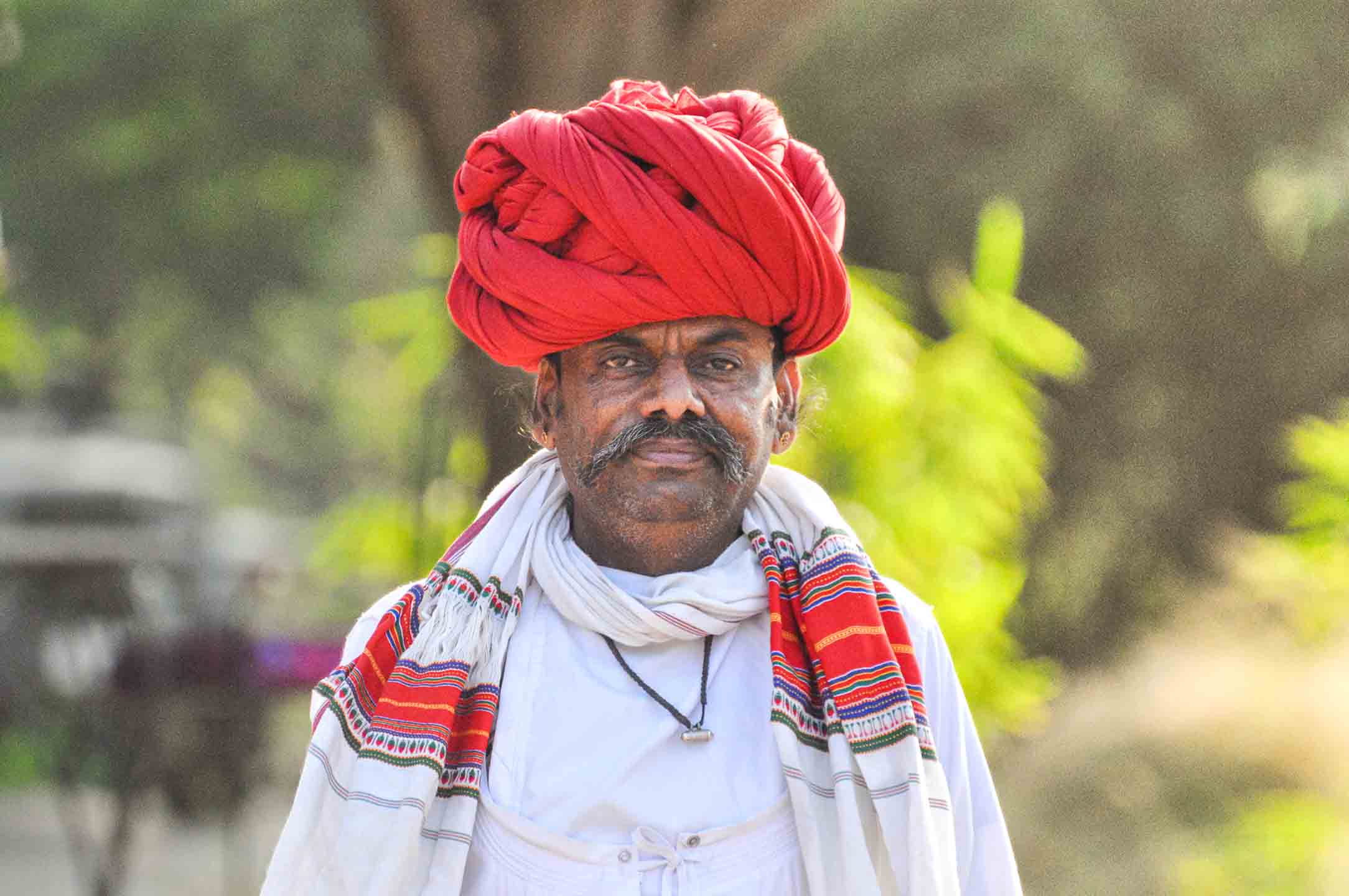
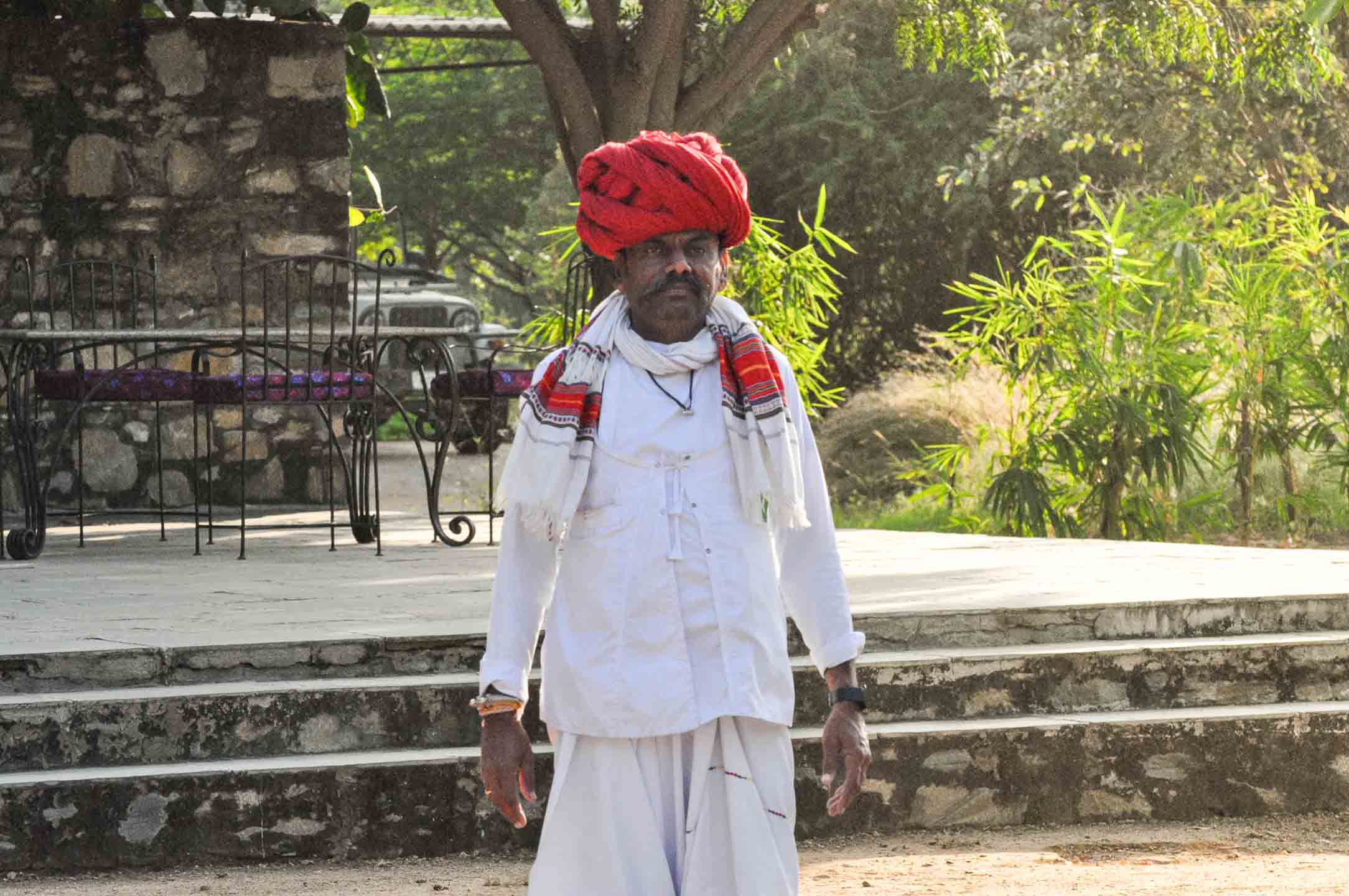
During our visit, we met a man dressed in a white dhoti and kurta, his head wrapped in a large colourful turban. His appearance reflects a way of life that has changed very little over generations. The bright red, saffron, or multicoloured turban he wears is more than a practical protection against the desert sun—it is also a symbol of pride and identity in rural Rajasthan.
Wildlife of the Jawai – Bera Region
Today, what makes Bera remarkable is its wildlife. The rocky hills surrounding the village have become one of the most unusual leopard habitats in India.
The granite hills around Bera are home to the Indian leopard. What makes the region exceptional is the way these animals coexist peacefully with local communities such as the Rabari and Rajput villagers. It is one of the rare places where large predators live in close proximity to human settlements with relatively few conflicts.
The leopards use the caves within the granite hills as natural shelters. As evening approaches, they emerge from their rocky hideouts and move quietly across the landscape in search of prey. Because of this unique environment, wildlife enthusiasts and photographers from around the world now visit the Jawai region hoping to glimpse these elusive animals.
Beyond leopards, the area supports a wide range of wildlife. Species such as Nilgai, jackals, hyenas, and crocodiles can be found here, particularly around the reservoir. The wetlands created by the Jawai Dam also attract migratory birds during the winter months, adding to the region’s ecological diversity.
Life in Bera
Despite growing interest from visitors, everyday life in Bera remains firmly rooted in tradition. Agriculture and livestock herding continue to shape the rhythm of village life.
Camels, goats, and cattle move slowly along dusty paths that criss-cross the landscape. Women dressed in colourful ghagras and odhnis carry water pots or work in the fields, their bright clothing standing out against the earthy tones of the countryside.
One of the most evocative images of Rajasthan is that of a man dressed in white robes with a large turban. The turban itself may stretch several metres in length and is wrapped in distinctive regional styles. Beyond protecting the wearer from the sun, it serves as a sign of honour, identity, and social standing.
As the sun sinks behind the granite hills, evenings settle gently over the village. Birds call in the distance, and the sounds of livestock echo across the quiet landscape. Occasionally, somewhere among the rocky hills, a leopard may slip silently through the fading light.
A Landscape of Quiet Significance
Bera is a place where history, nature, and traditional village life continue side by side. The granite hills of the Jawai region shelter wildlife that lives in remarkable harmony with people. In the background, memories of old Rajput frontiers linger, while village traditions continue much as they have for centuries.
Perhaps that is the true essence of Bera. Standing there in silence, we captured a landscape defined not by spectacle but by quiet endurance, a place where the ancient rhythms of Rajasthan still move at their own steady pace.