Bhangarh – Between Legend and Ruins
Bhangarh is famous for its spine-chilling legacy with a well-preserved slice of medieval Rajputana history with eerily silent temples, markets, and deserted palaces narrate the tale of a bustling town that thrived hundreds of years ago.
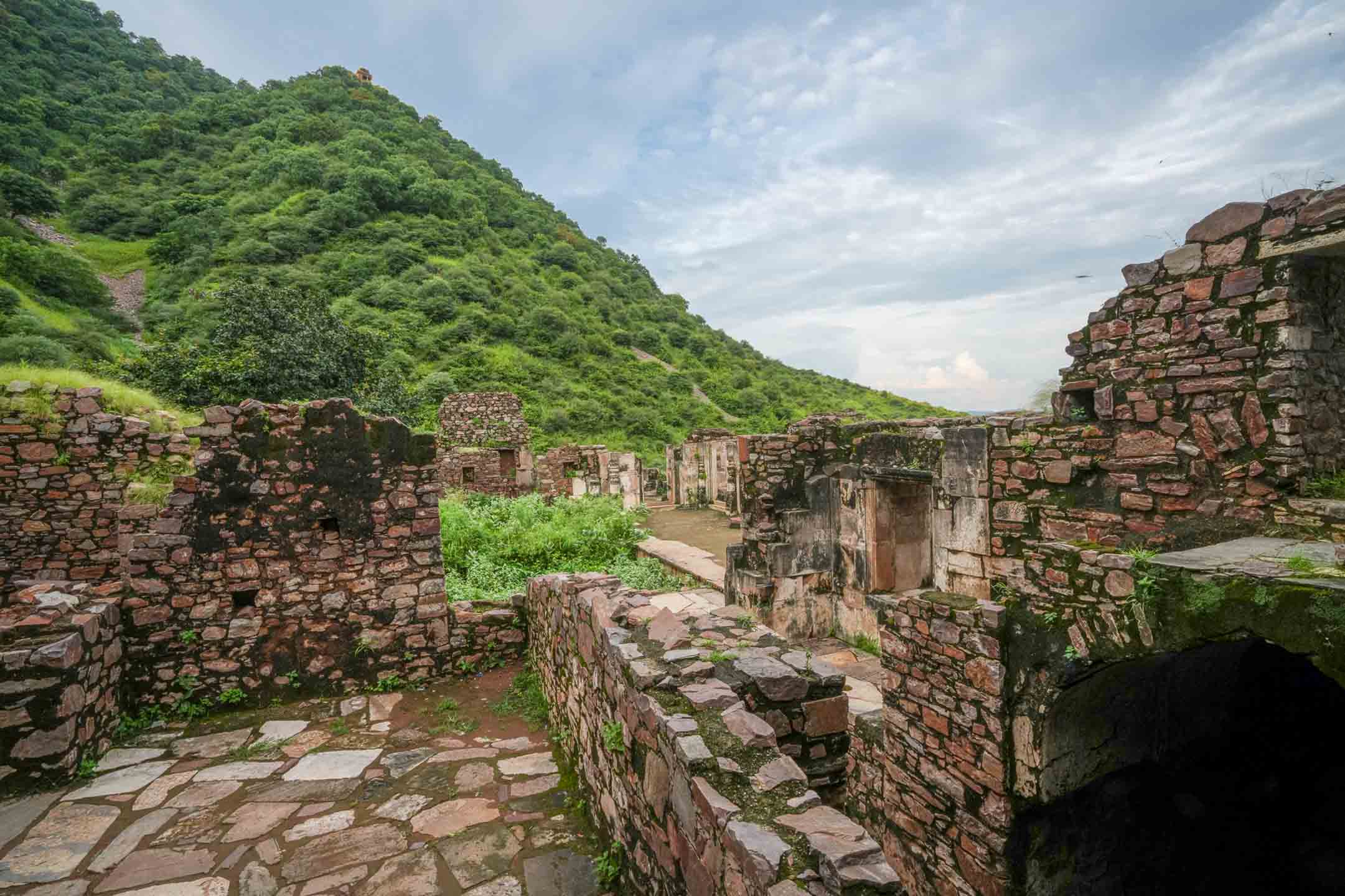
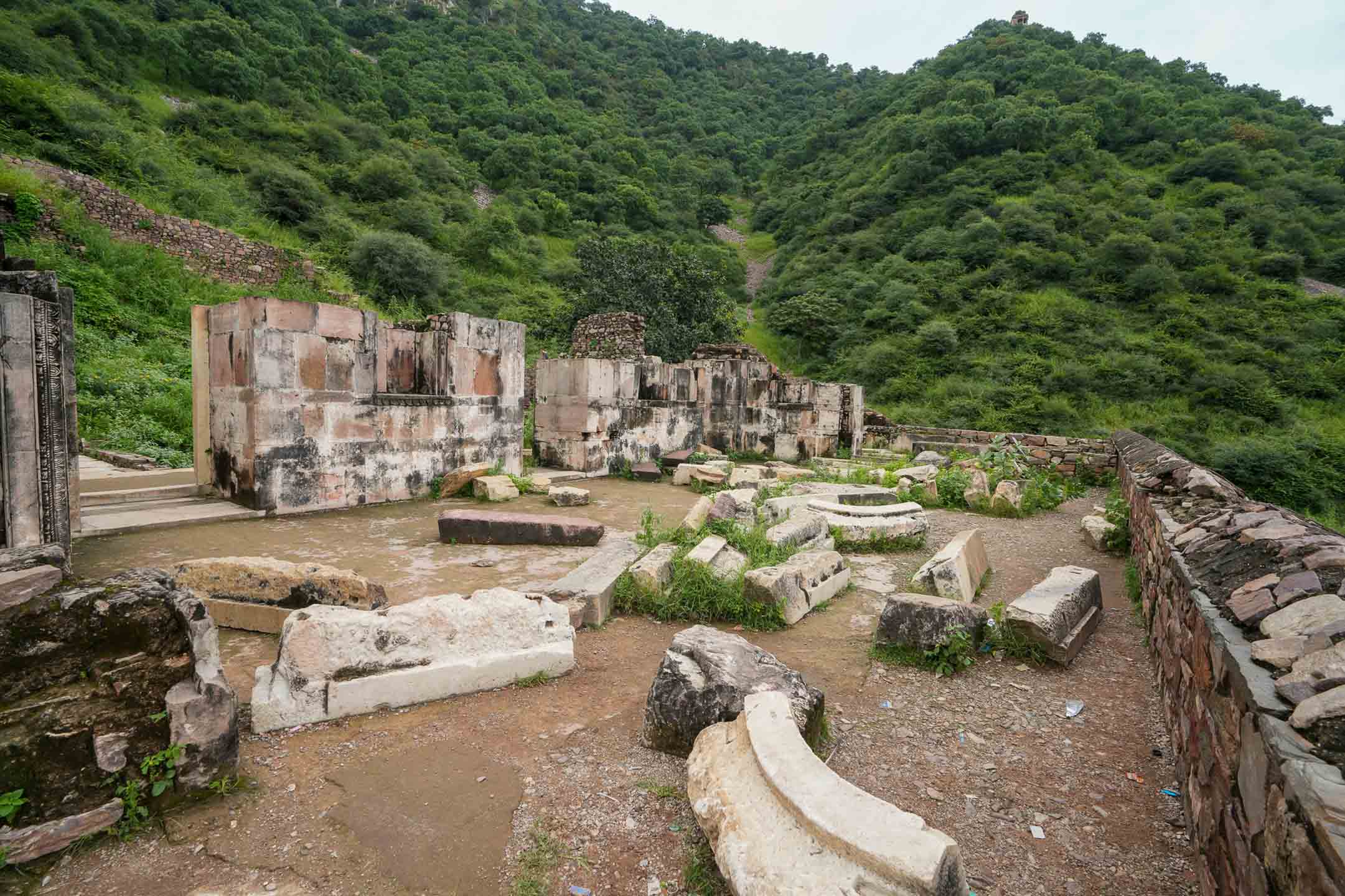
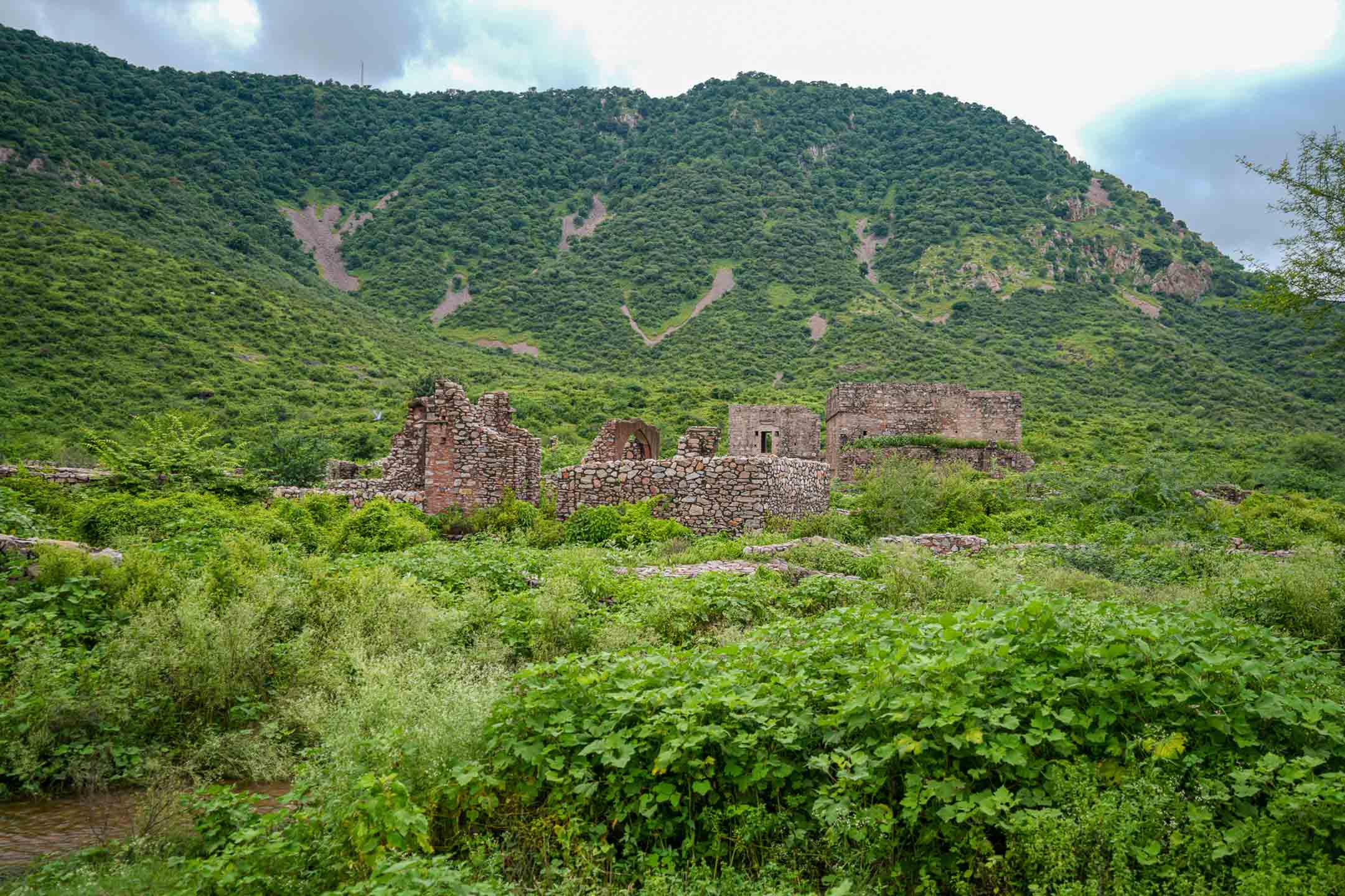
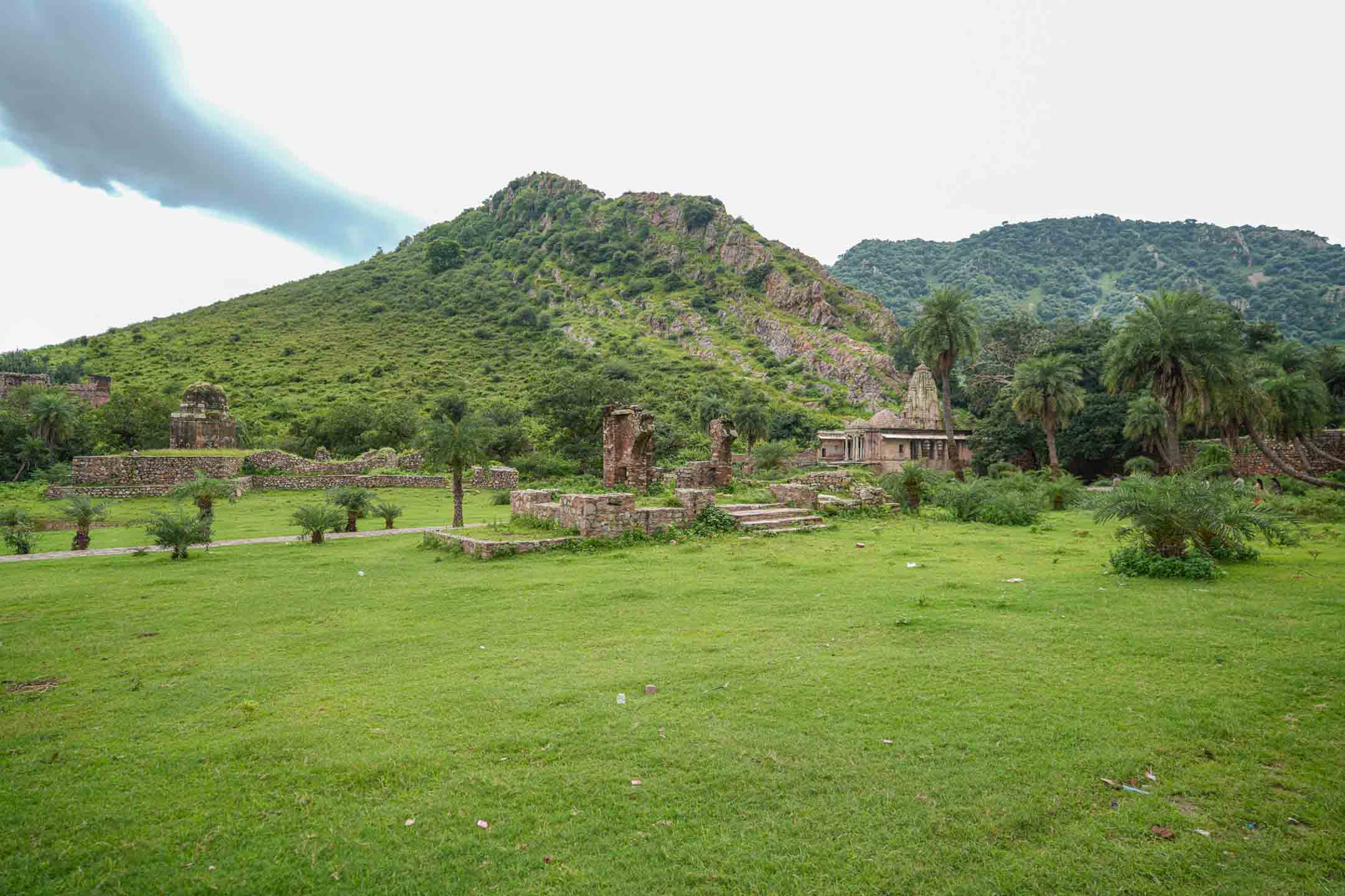
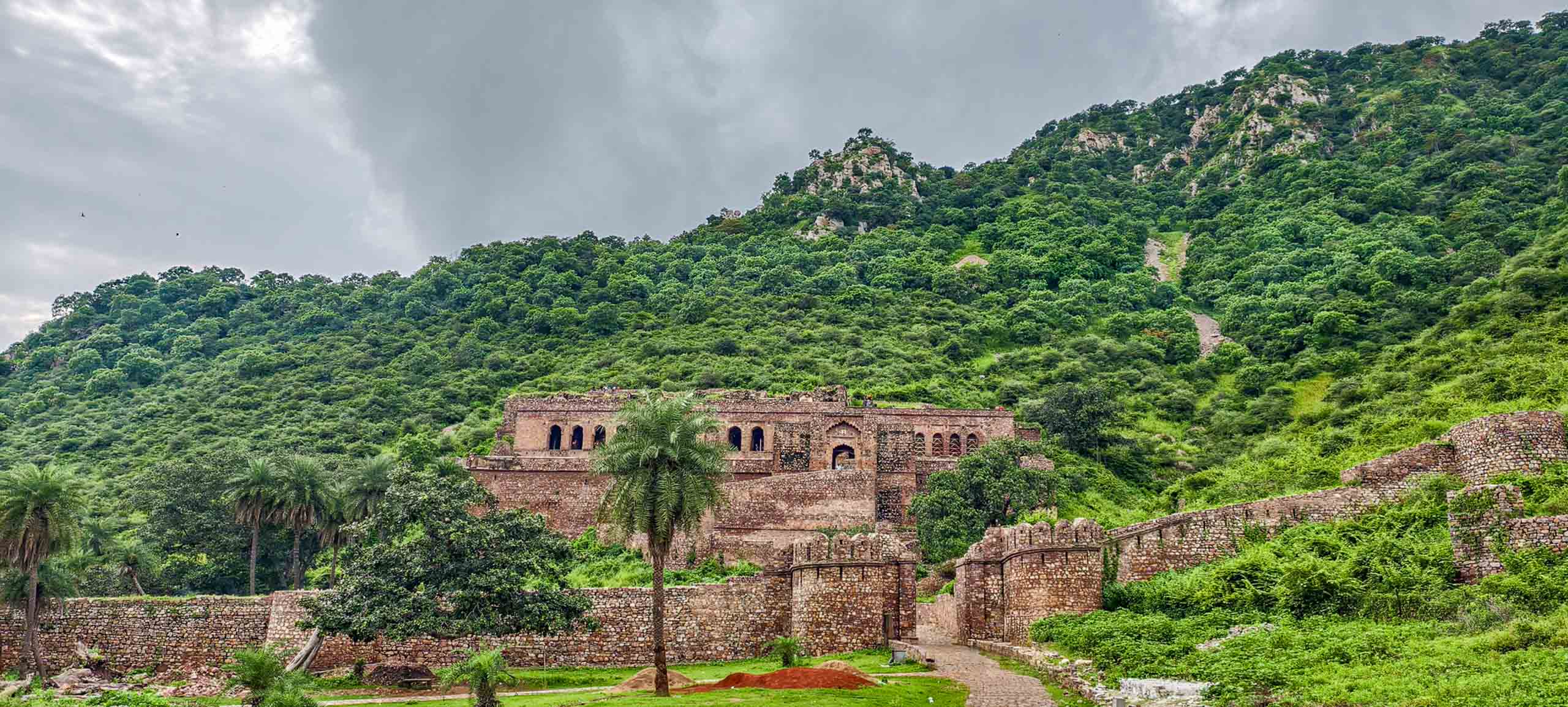
This town in Alwar district is wedged between sharp hills, emerging from the back of the town. Peacocks roam amongst the ruins, monkeys lounge on temple walls, and a wind blowing in from the dry grass and dust feels thick and laden with these sounds. One struggles to envision this peaceful surroundings being vivid with the hustle and bustle of traders, nobles, craftsmen and other pilgrims traveling through the lanes of Bhangarh.
Aravalli Rnage
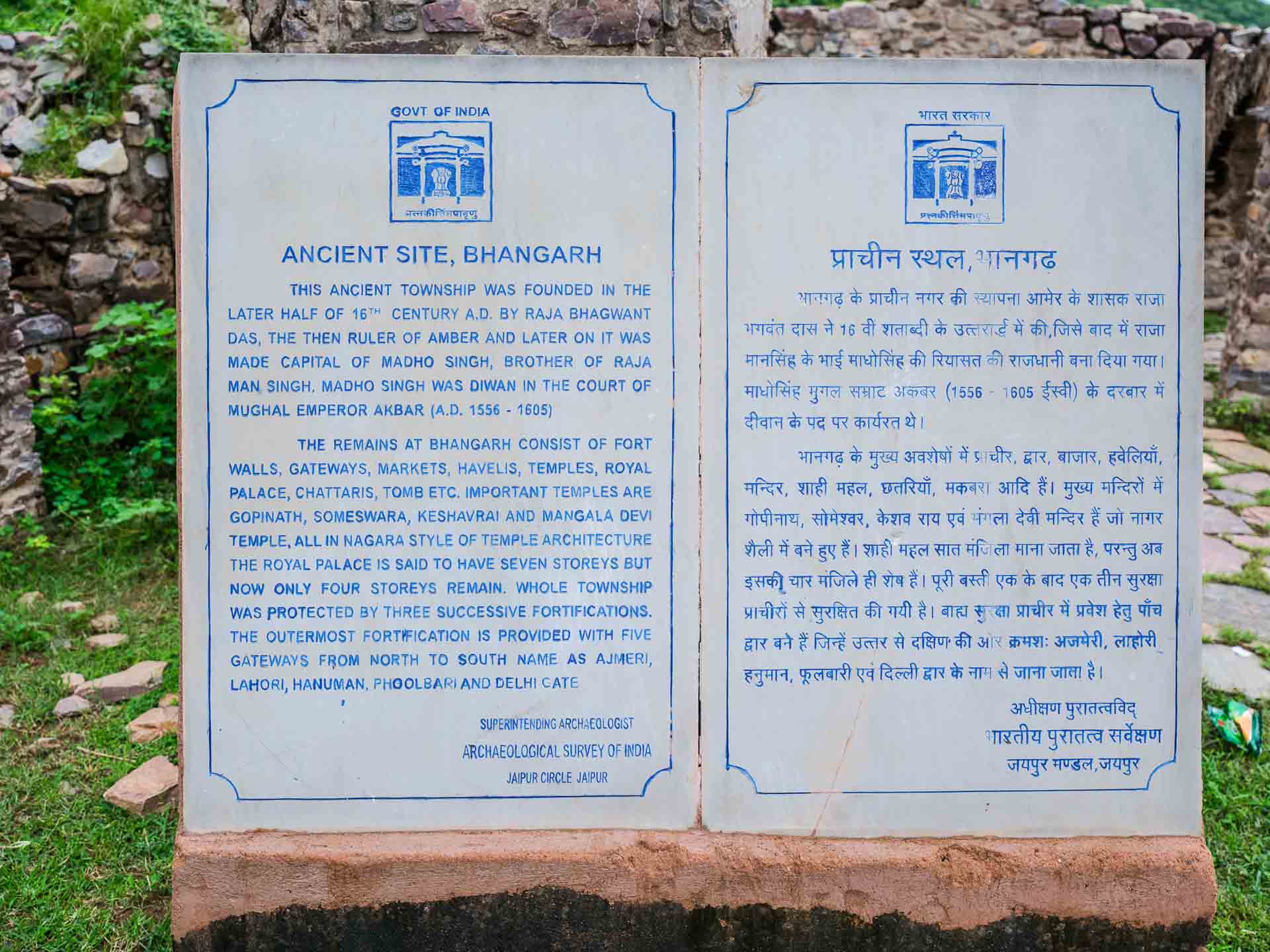
Bhangarh was built in 1573 by Madho Singh I, a Kachwaha Rajput noble in the service of Mughal emperor Akbar. Madho Singh picked this site with a great amount of deliberation. What inspired him was the natural defense the Aravalli hills provided, and its paths linking it to larger trading posts in Rajasthan.
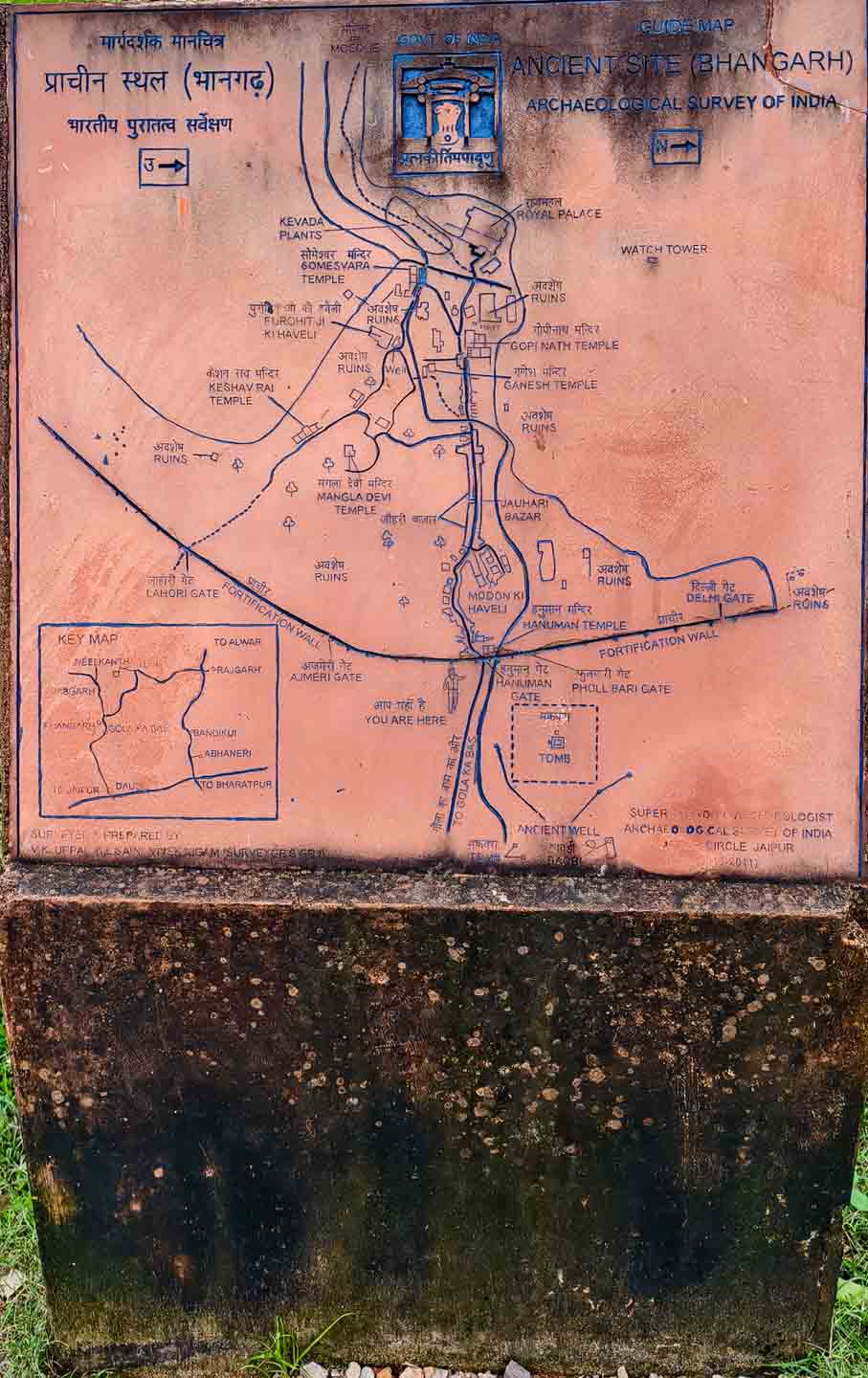
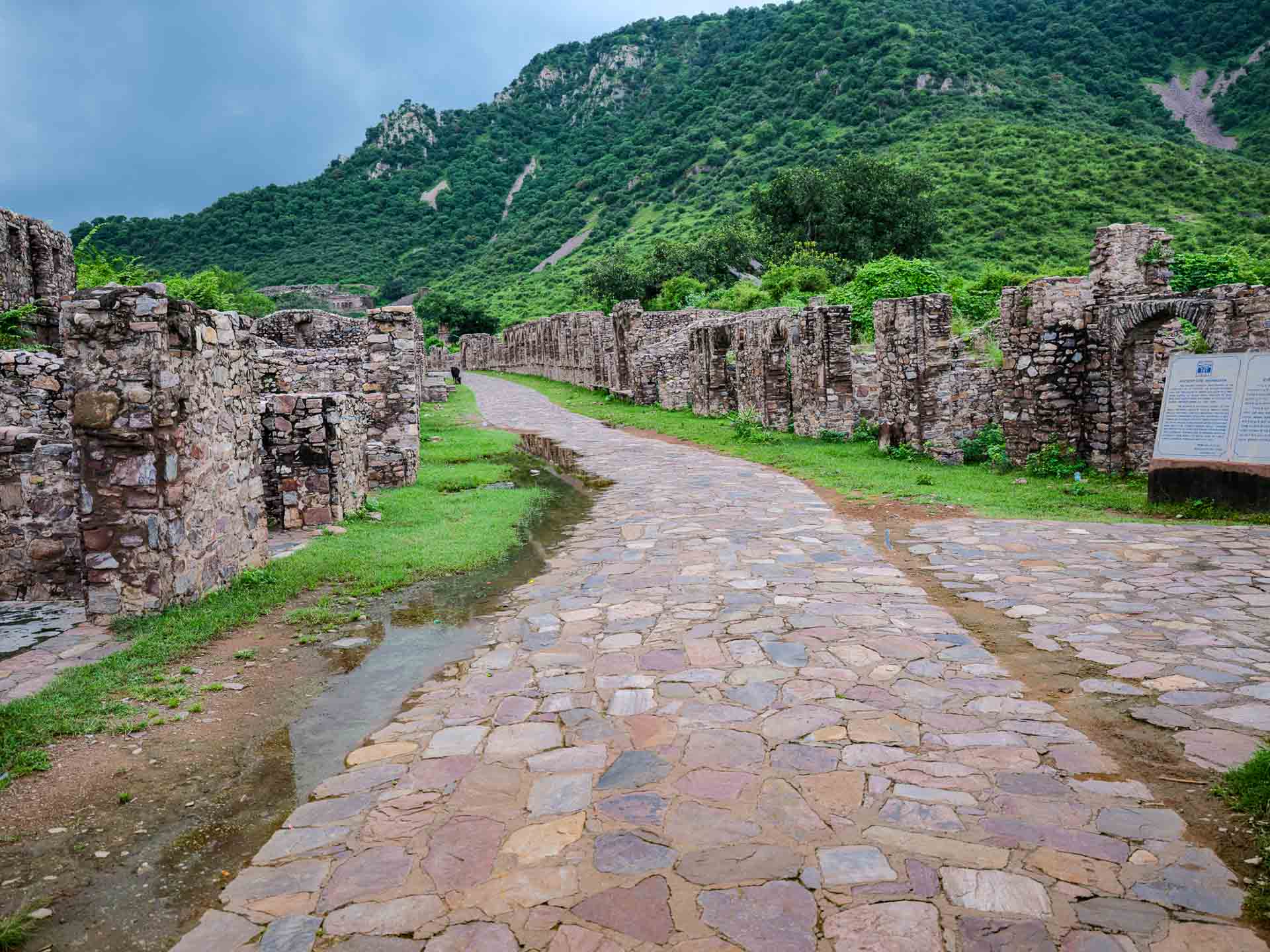
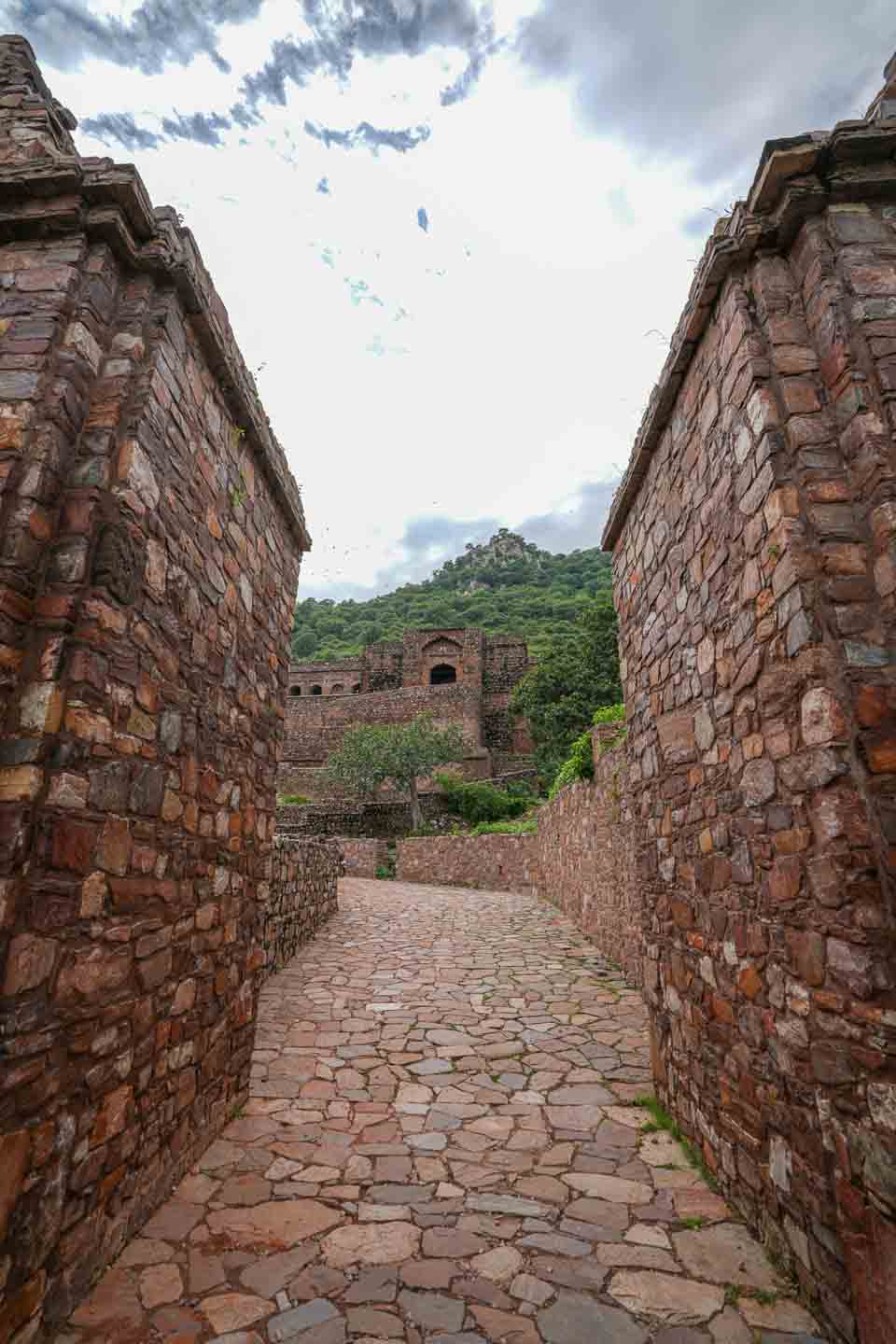
This town was well-established with stony wide streets leading into a market area and properly built residential quarters. The temples and palaces were located near the hills.
Madho Singh’s descendants, and particularly his son Chhatr Singh, helped develop the town further. By the seventeenth century Bhangarh had developed into an affluent hub with traders in cloth, grain and indigenous handicrafts. The forests and valleys in the vicinity also supported people who sold livestock and produce in the town’s markets.
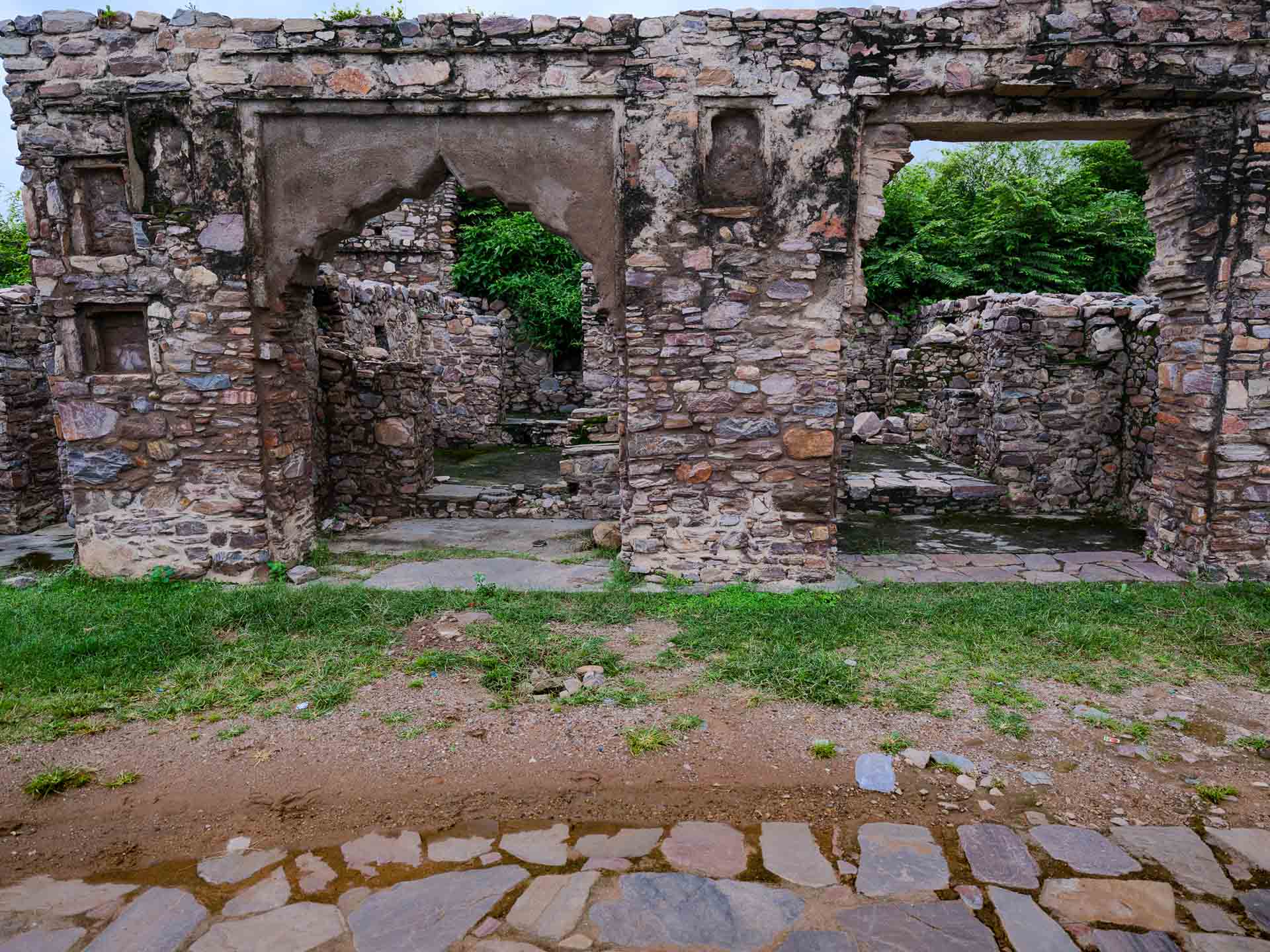
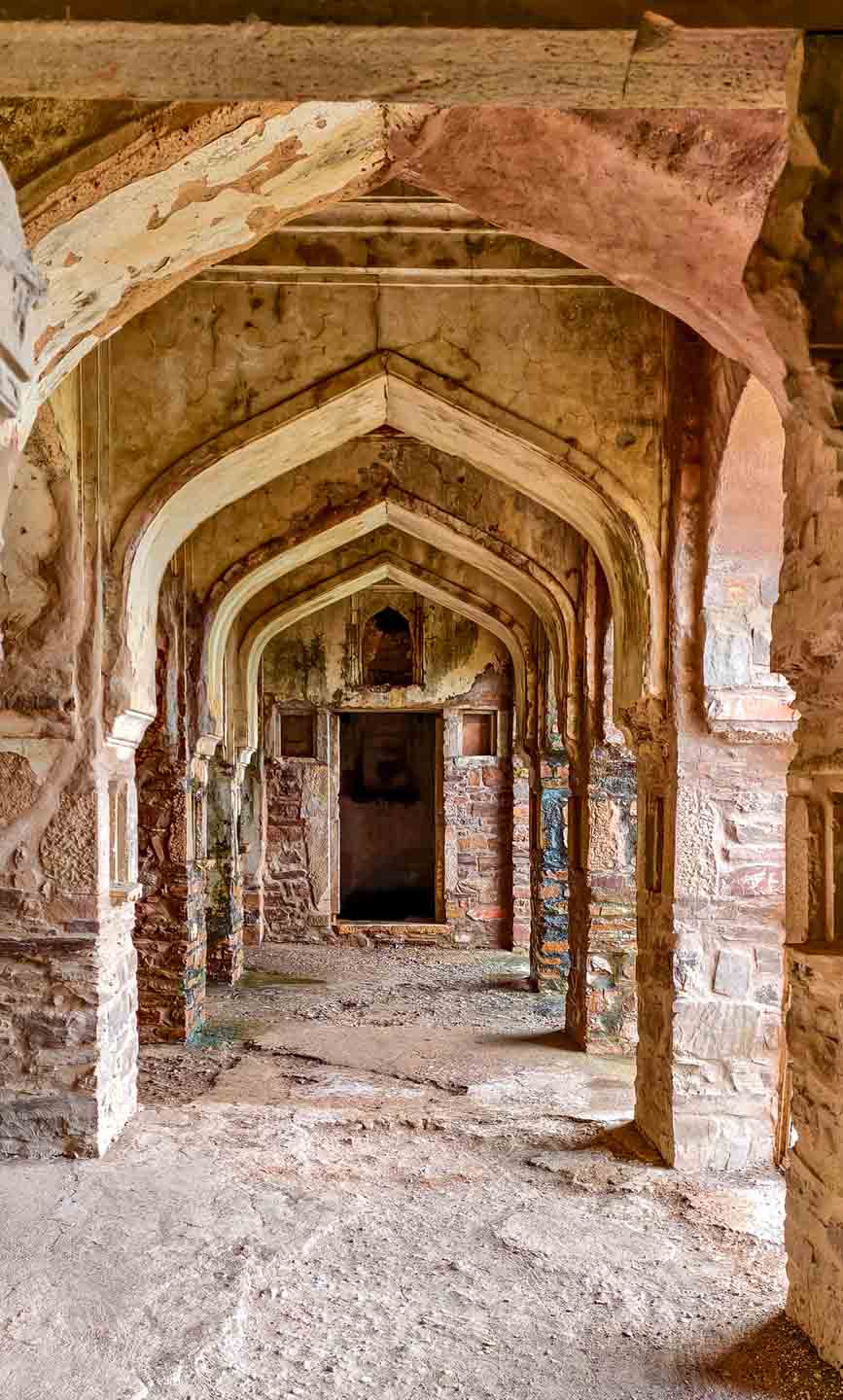
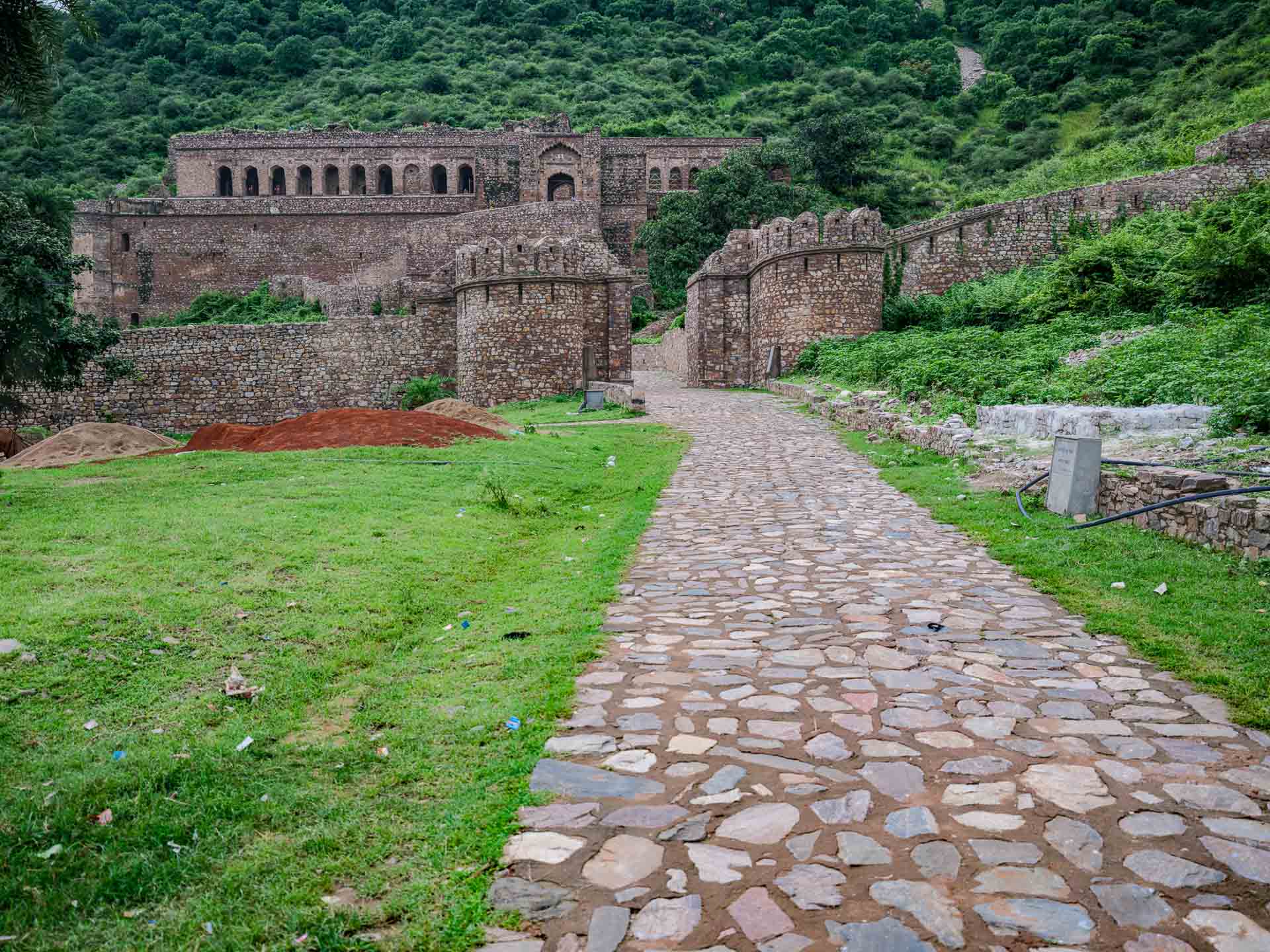
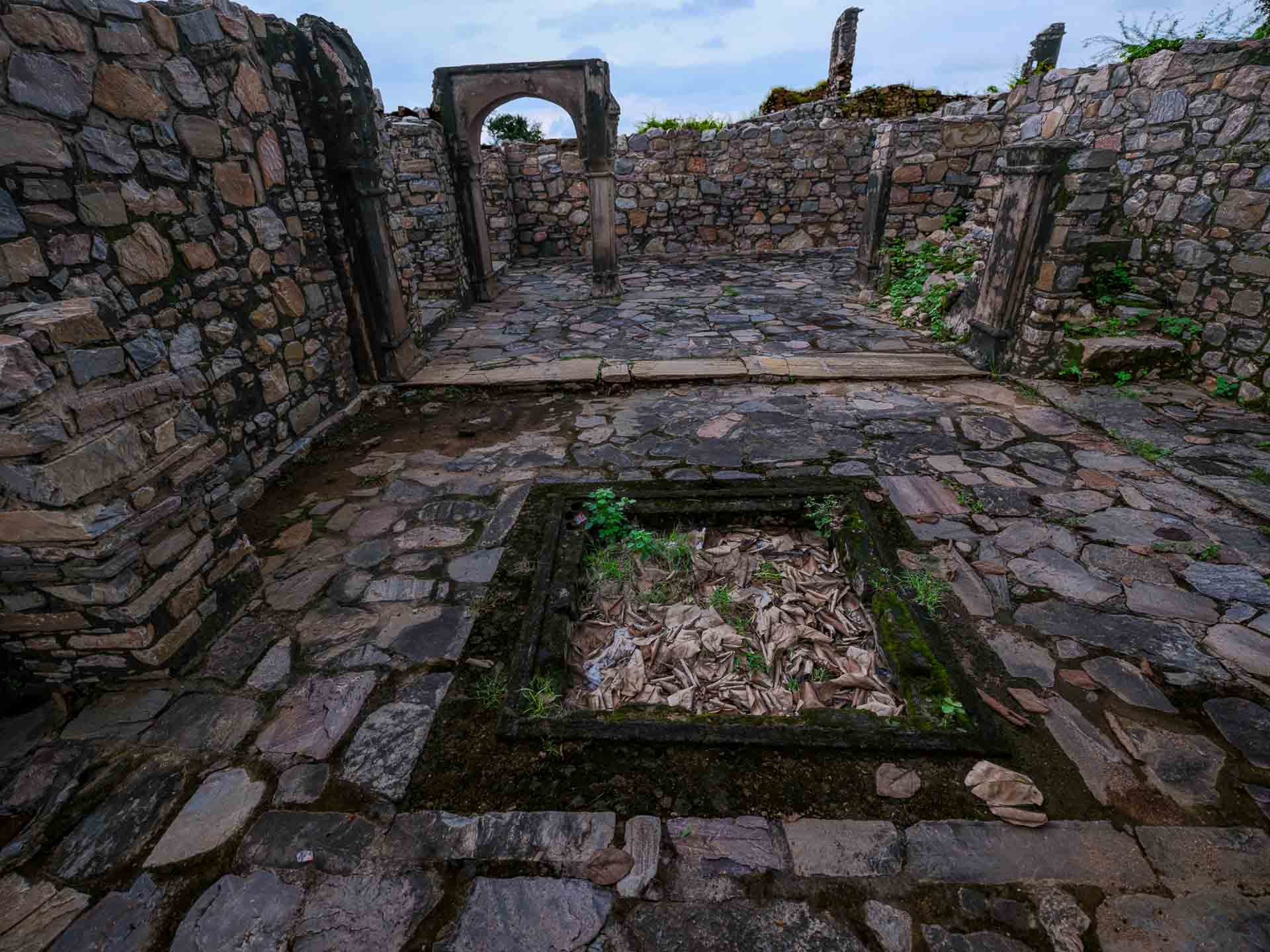
Today the remnants of these marketplaces are still apparent. The main street is lined with stone shops, their doorways facing the street as they did centuries ago. The roofs have long gone, but the uniform layout of these components provides a vibrant impression of what a thoroughly organized marketplace this was.
Temples
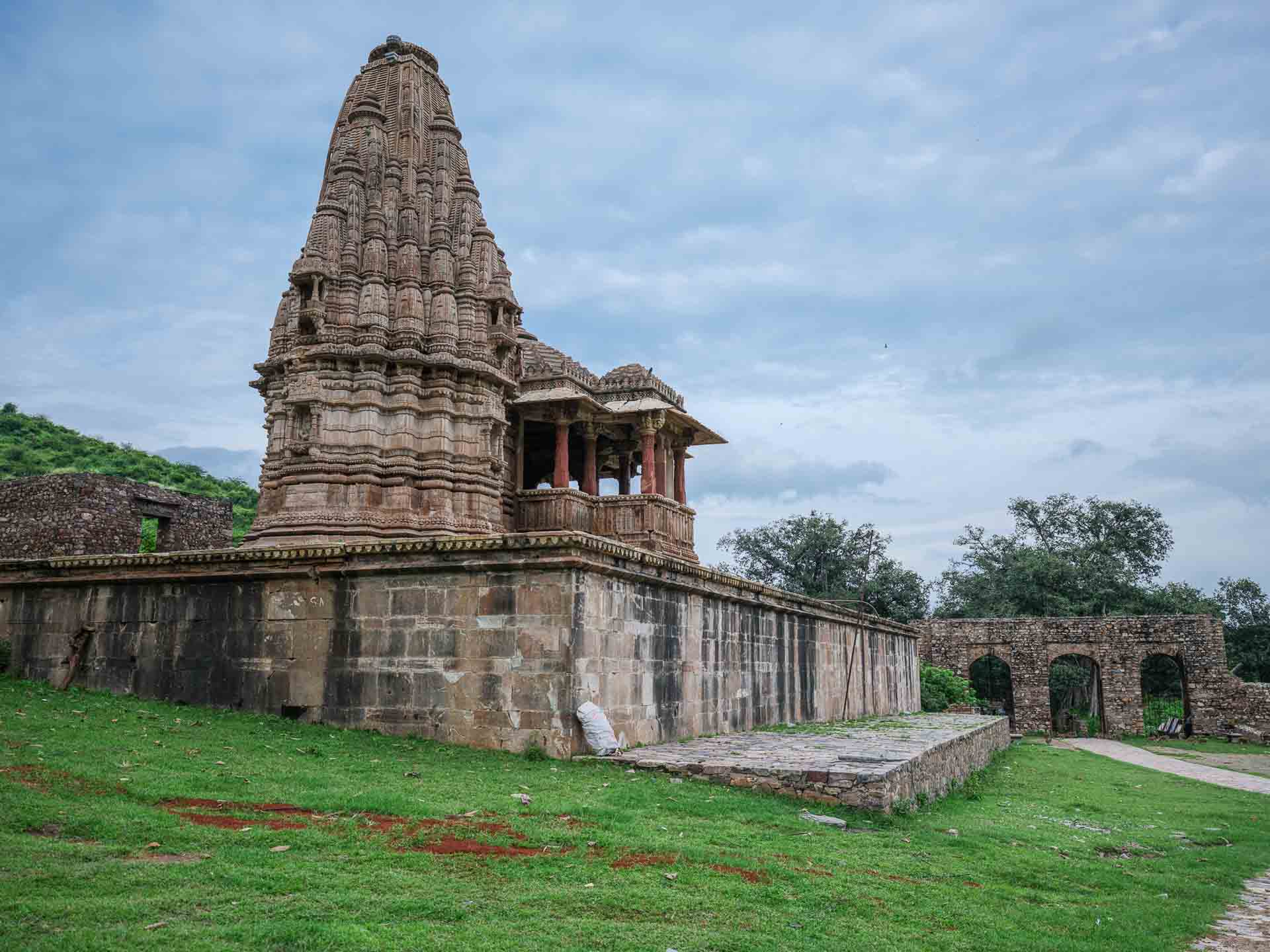
Scattered around, outside the old bazaar are several temples, many of those could still be quite well preserved. This includes the Gopinath Temple which is the largest in the town. There are other shrines nearby like Someshwar Temple and Mangla Devi Temple.
Someshwar Temple near a water tank and the reflections of the temple steps rippling out in the pond. Water reservoirs like these were indispensable to towns across Rajasthan’s dry landscapes, fulfilling both practical and ritual needs.
The Royal Palace
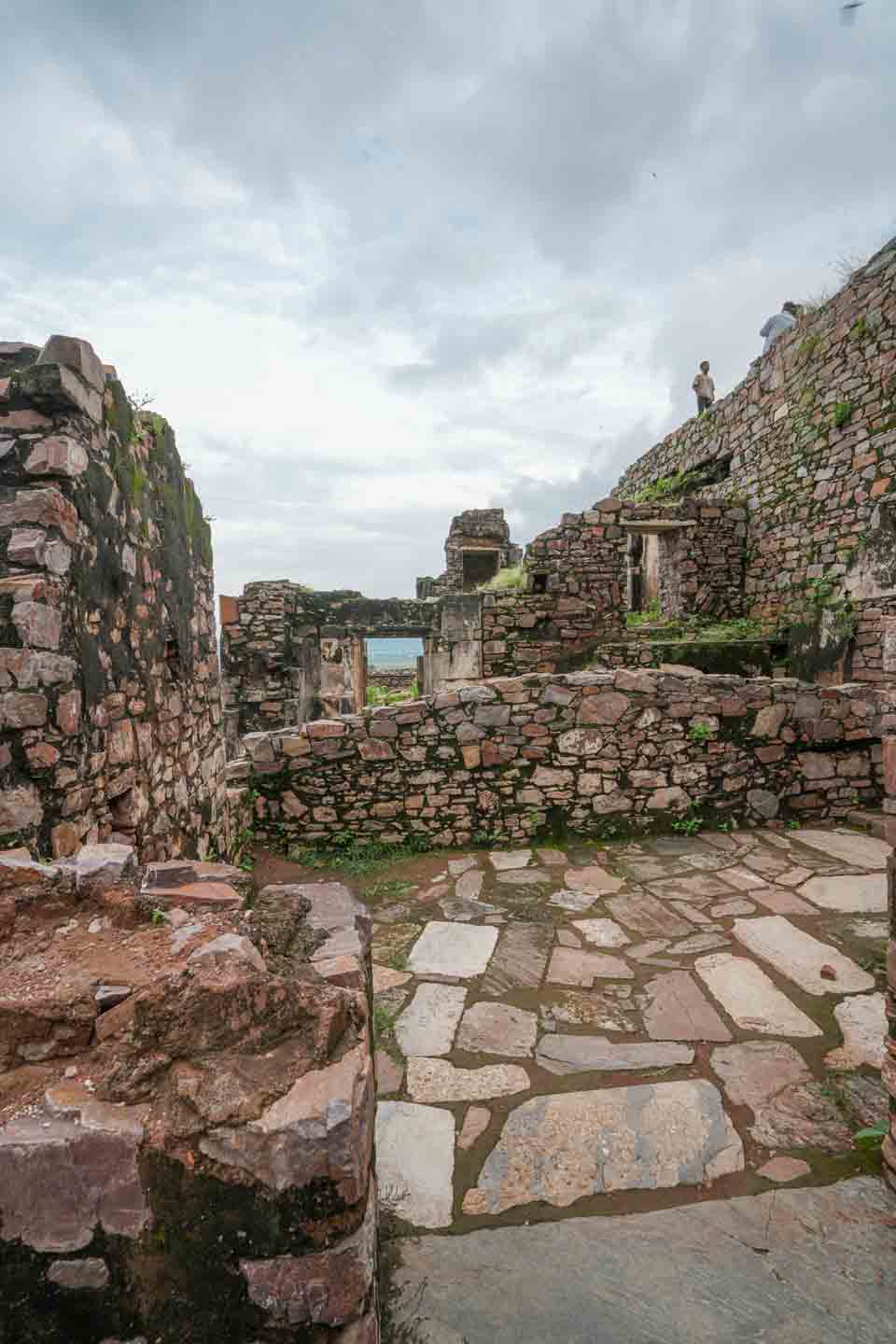
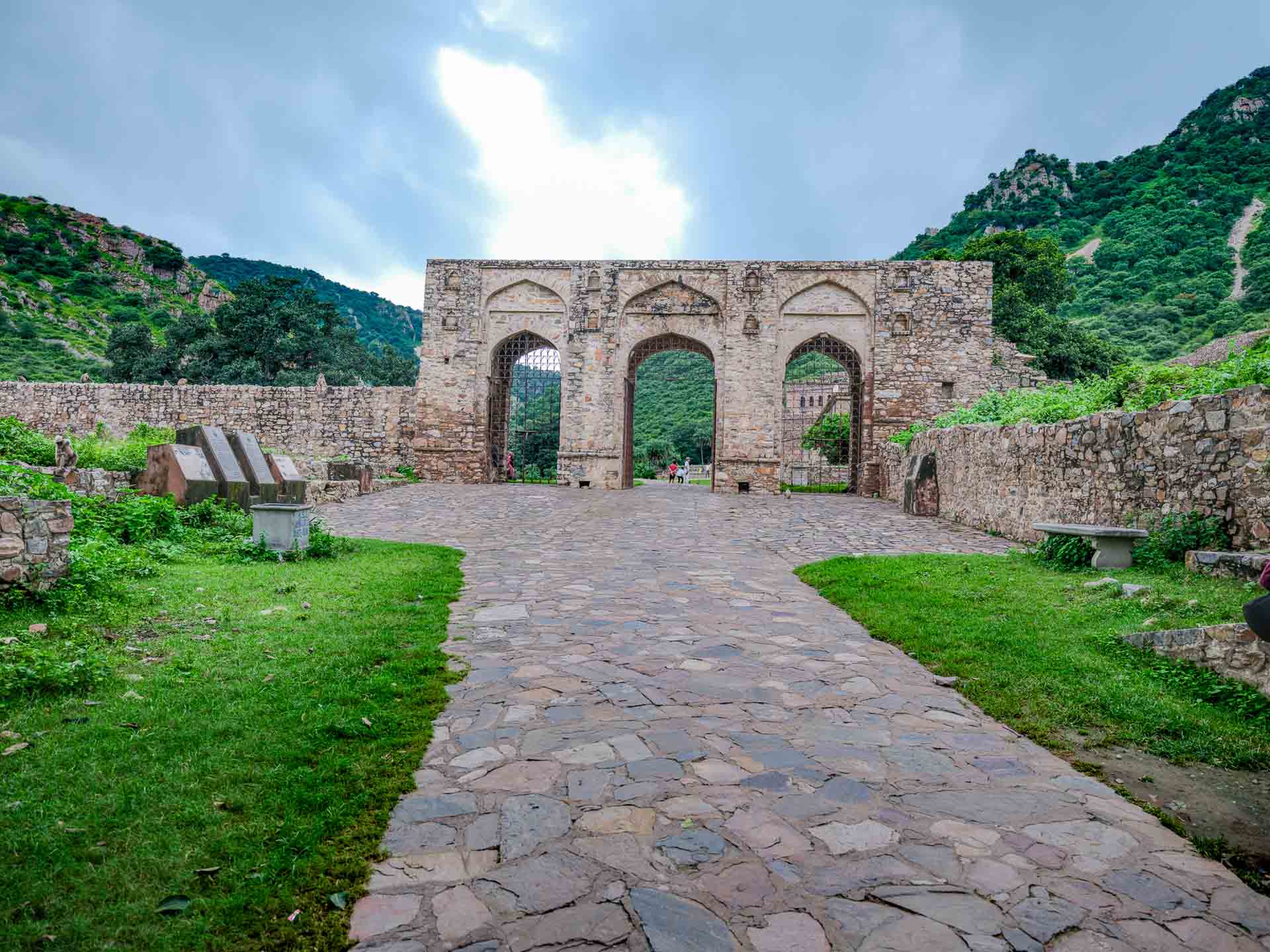
Although called a “fort,” in fact, it is a palace complex with walls for defense. There are entrance gateways that lead into sequential courtyards and halls that rise progressively higher up the hillside. The highest floors would have offered expansive vistas across the plains beneath, allowing the rulers of Bhangarh to take stock of both the town and countryside.
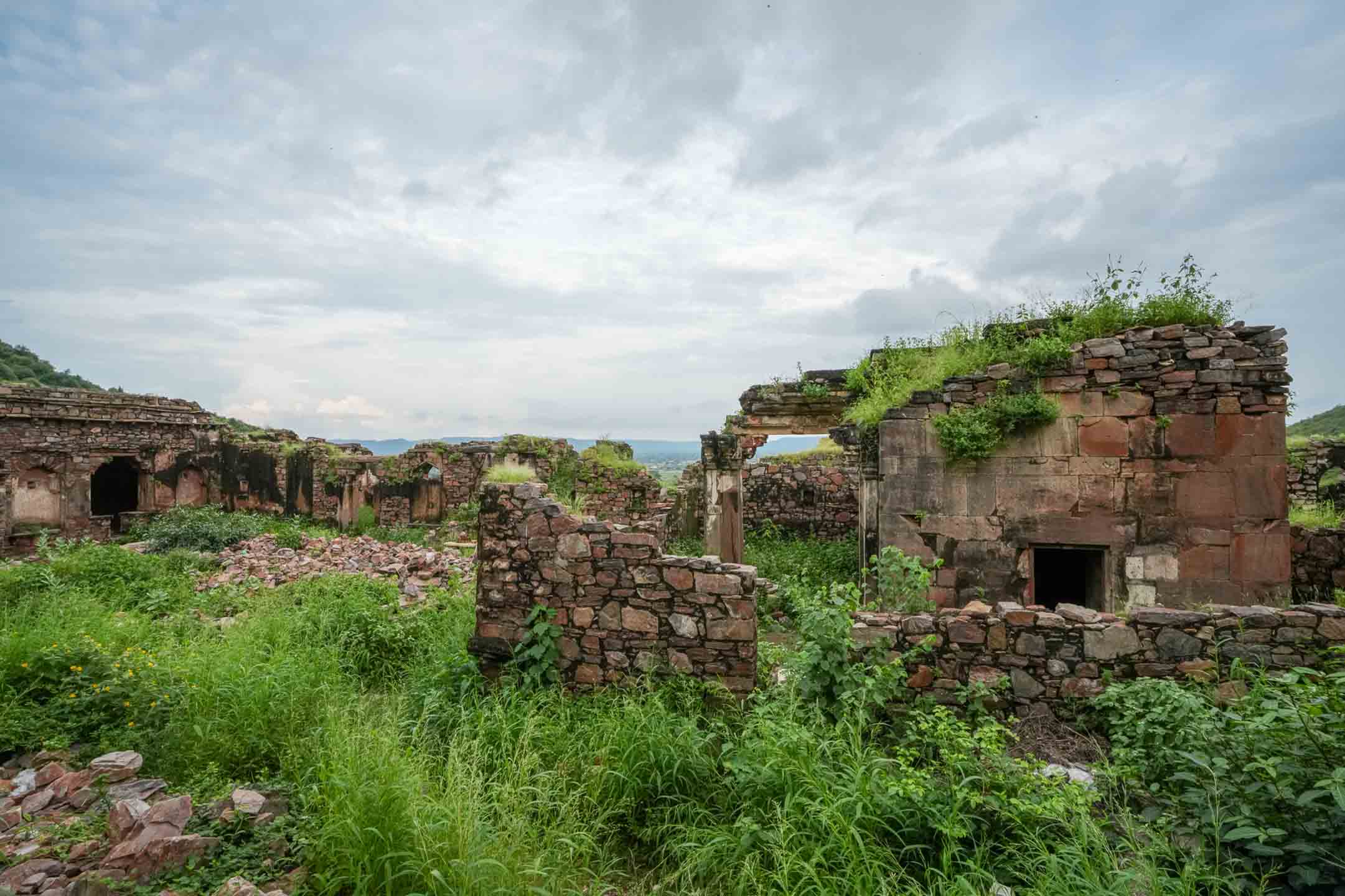
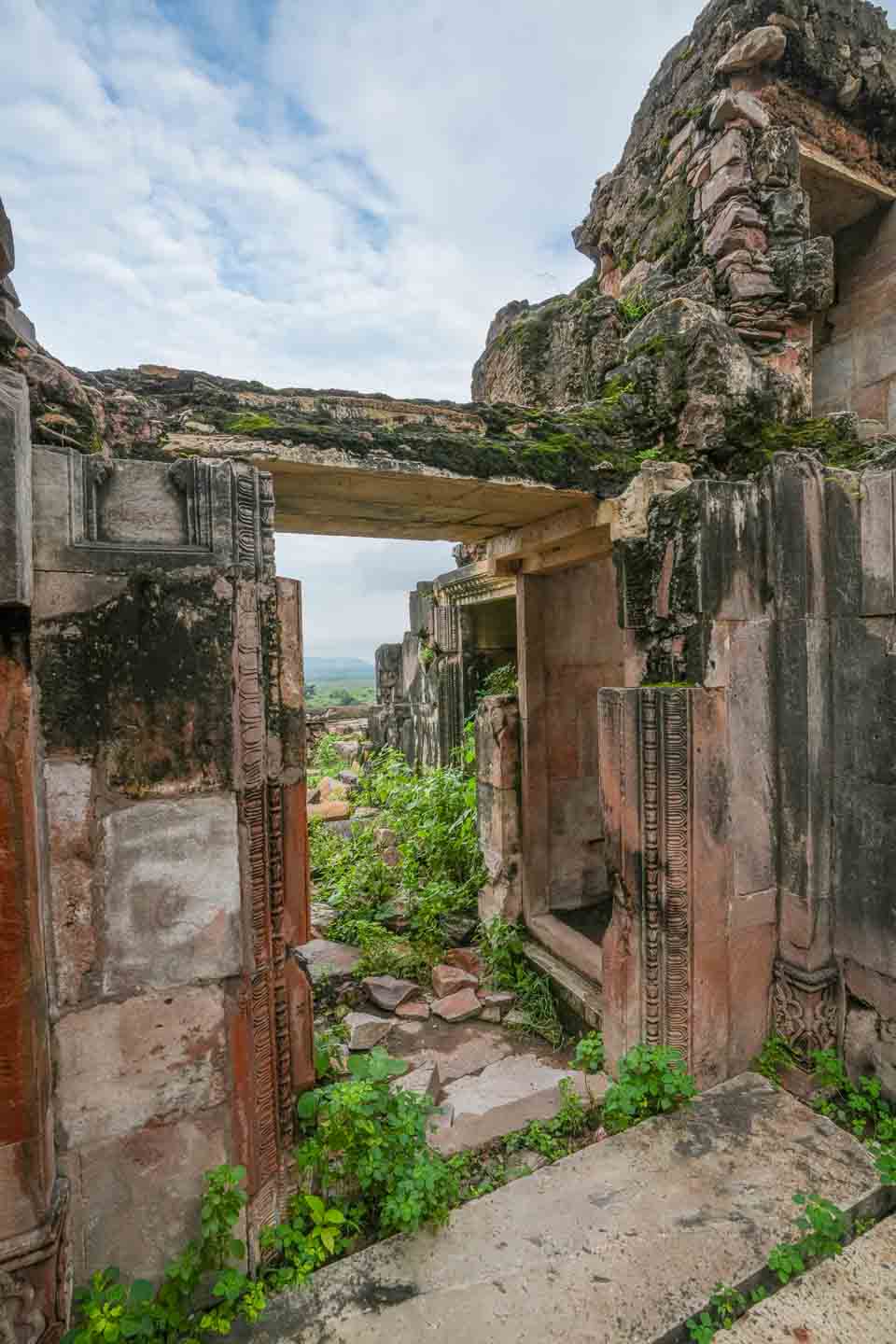
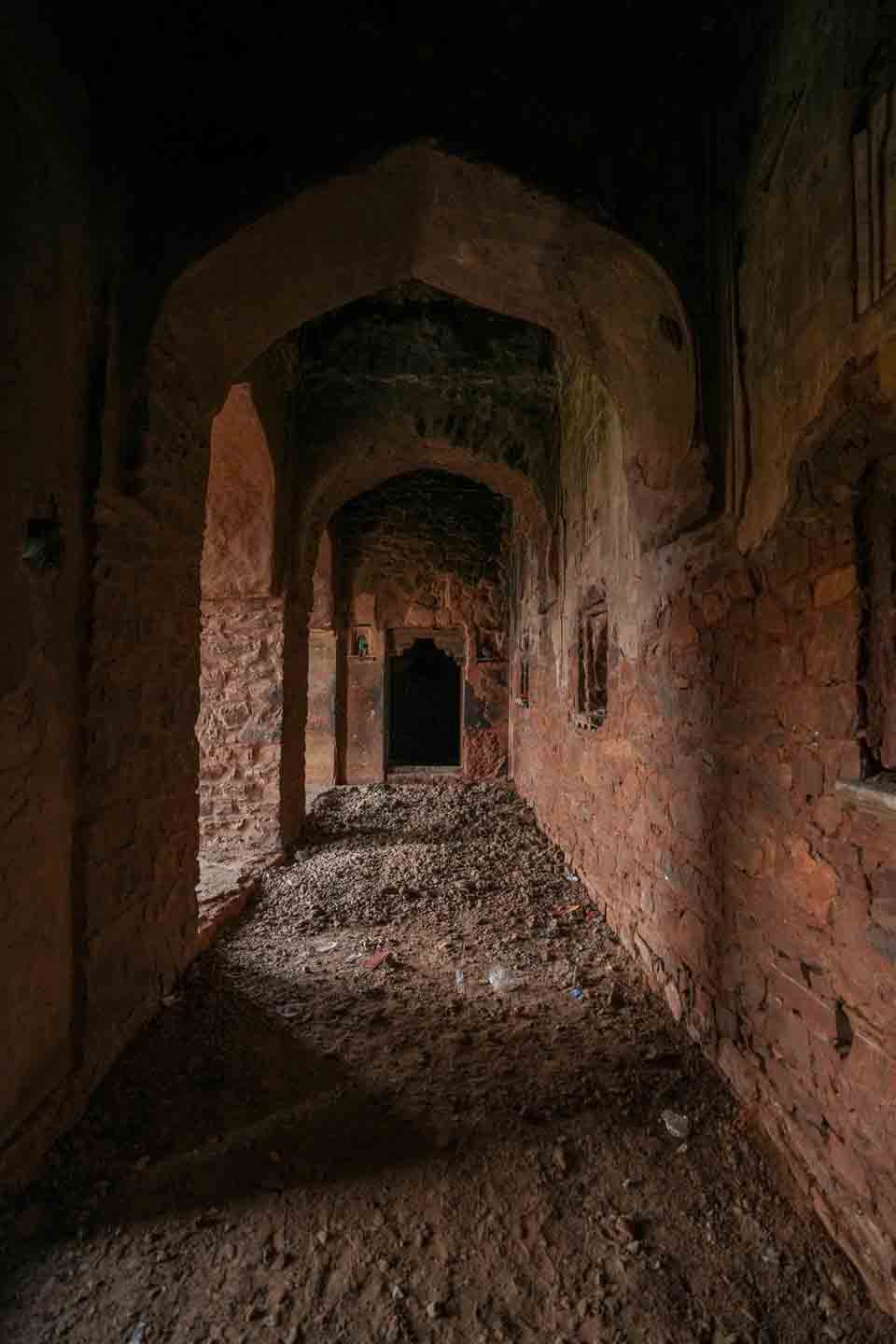
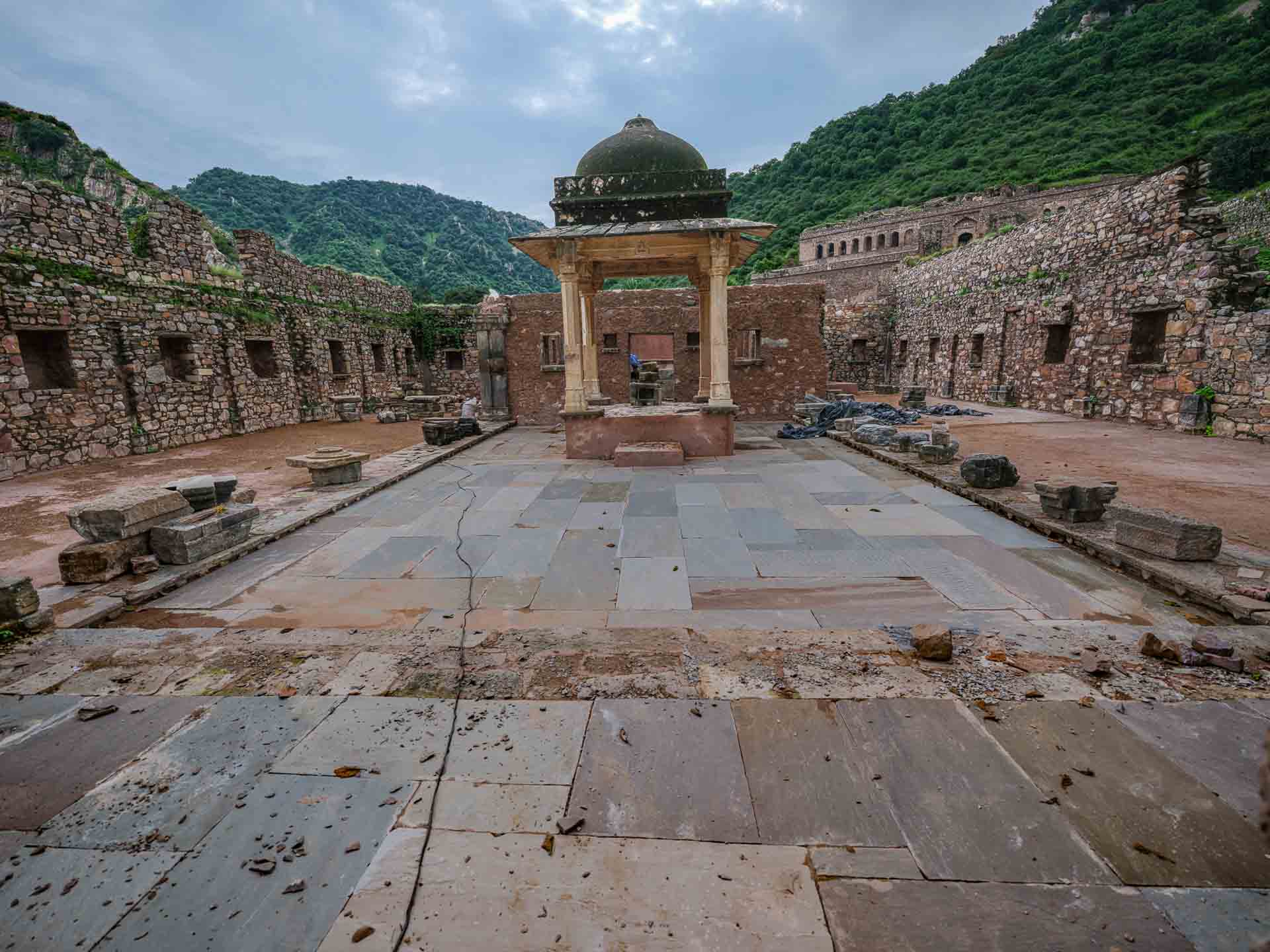
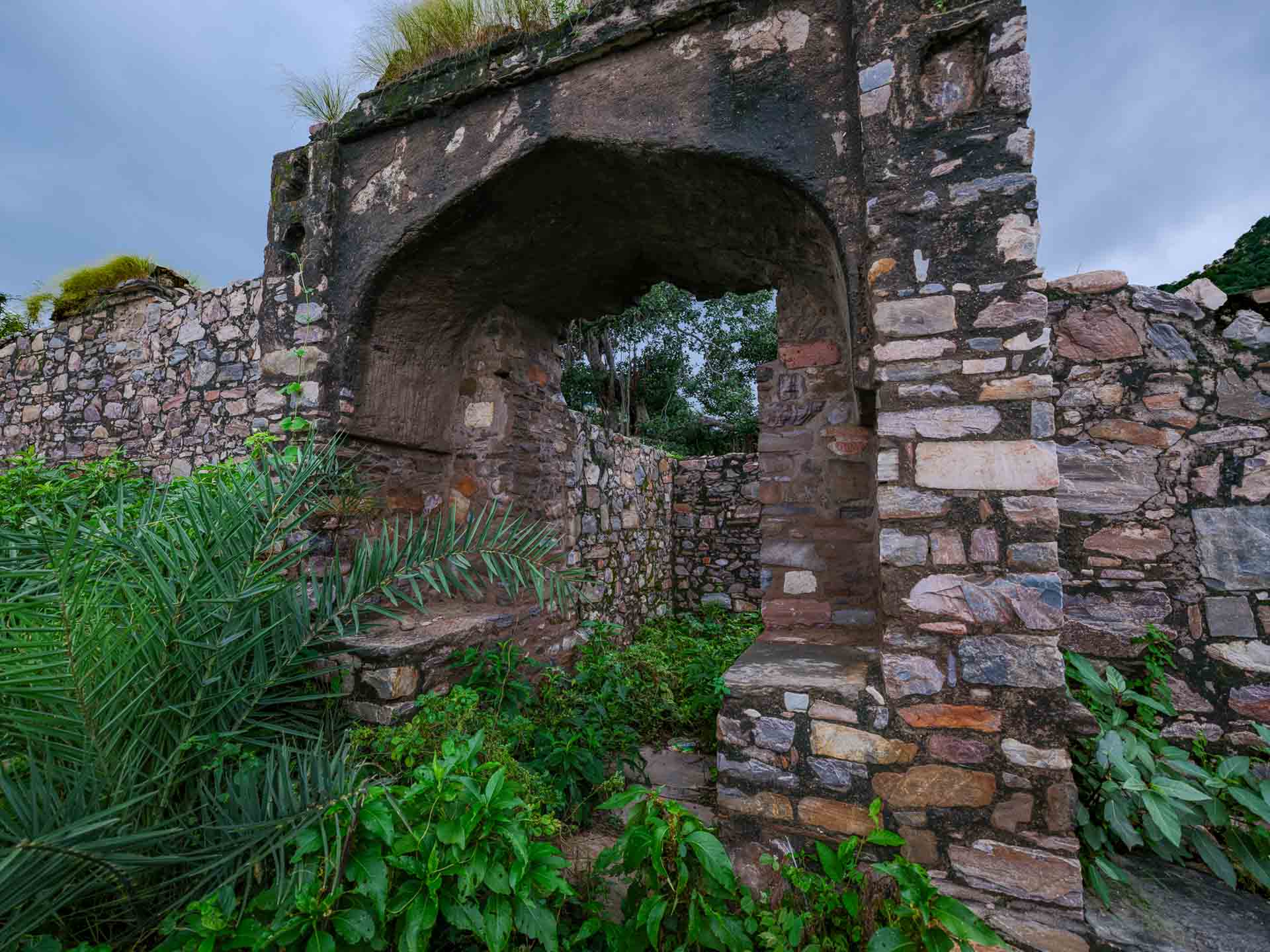
Now roofless for the most part, the palace shows the least remaining traces of the former rest and splendor behind its tall stone walls and dark chambers. And narrow staircases lead to terraces littered with the remains of balconies and windows. From here you can make out the whole settlement of temples, market streets and ruined houses across the valley floor.
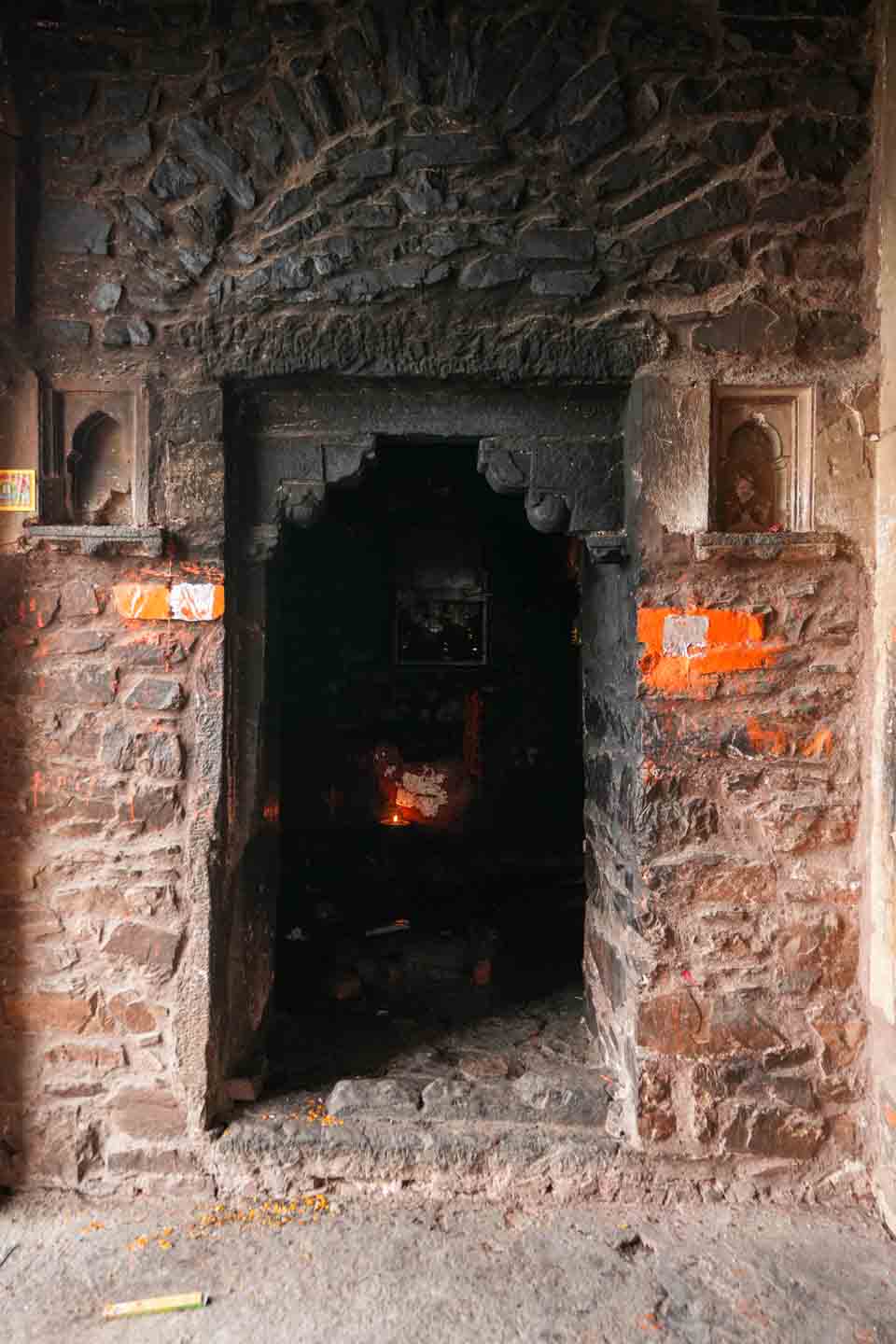
A few meters from the path leading upwards towards the higher levels of the Bhangarh Fort sits a small but colorful stone temple, the Mangla Devi Temple. In contrast to the more prominent temples that dominate the main street of Bhangarh, this shrine is small and unassuming, erected from thick stone blocks eroded by centuries of sun and wind. The simplicity and size of its inner sanctuary indicates that this temple may have been more of a private chapel for the palace household, rather than a space for large public meetings. Though all but its doorway and parts of its walls remain, its remaining structure still embodies the austere and unadorned beauty of Rajput temple architecture. Located adjacent to the royal complex and partially shielded by the hills of the Aravalli Range, the temple invokes a sense that spiritual life was integrated into the daily rhythms of palace and town below.
The ruins today paint a picture of loss but history says that Bhangarh was a thriving town. The culture of the region was a heritage of the Rajput courts of Rajasthan. The lifestyle of the town was also influenced by the countryside around it. People were and still are very resourceful. The hills and forests are a source of firewood and wild produce, and seasonal streams provide agriculture water.
The Legend
With the passage of time Bhangarh came to be linked with a curse. Popular local lore explains the town as cursed by an influential sage, Guru Balu Nath.
According to the legend, when the town was first constructed, Guru Balu Nath was meditating on the hill near him. He permitted the building work on the grounds that the palace shadow should never reach his house. This rule prevailed in the settlement for years. Later rulers, however, built higher up the slope, making the palace bigger. But eventually its shadow was said to extend to the retreat of the hermit, thus breaking his promise. The sage became enraged and uttered a curse that the town would soon become a ghost town.
A different, famous, tale discusses a magical practitioner, Singhia, who tried to lure the local princess. According to the legend, after his plan fell through, he cursed the town prior to dying.
Historians might categorize these tales as no more than folklore, but they are nonetheless entrenched in the collective memory of the region.
The Silent Remains
More plausible explanations for the falling into disrepair of Bhangarh can be found in history books. During the eighteenth century, a number of towns of Rajasthan got affected due to political instability and changing trade routes. On top of that, the area repeatedly experienced droughts, which could destroy villages or towns reliant on scarce sources of water.
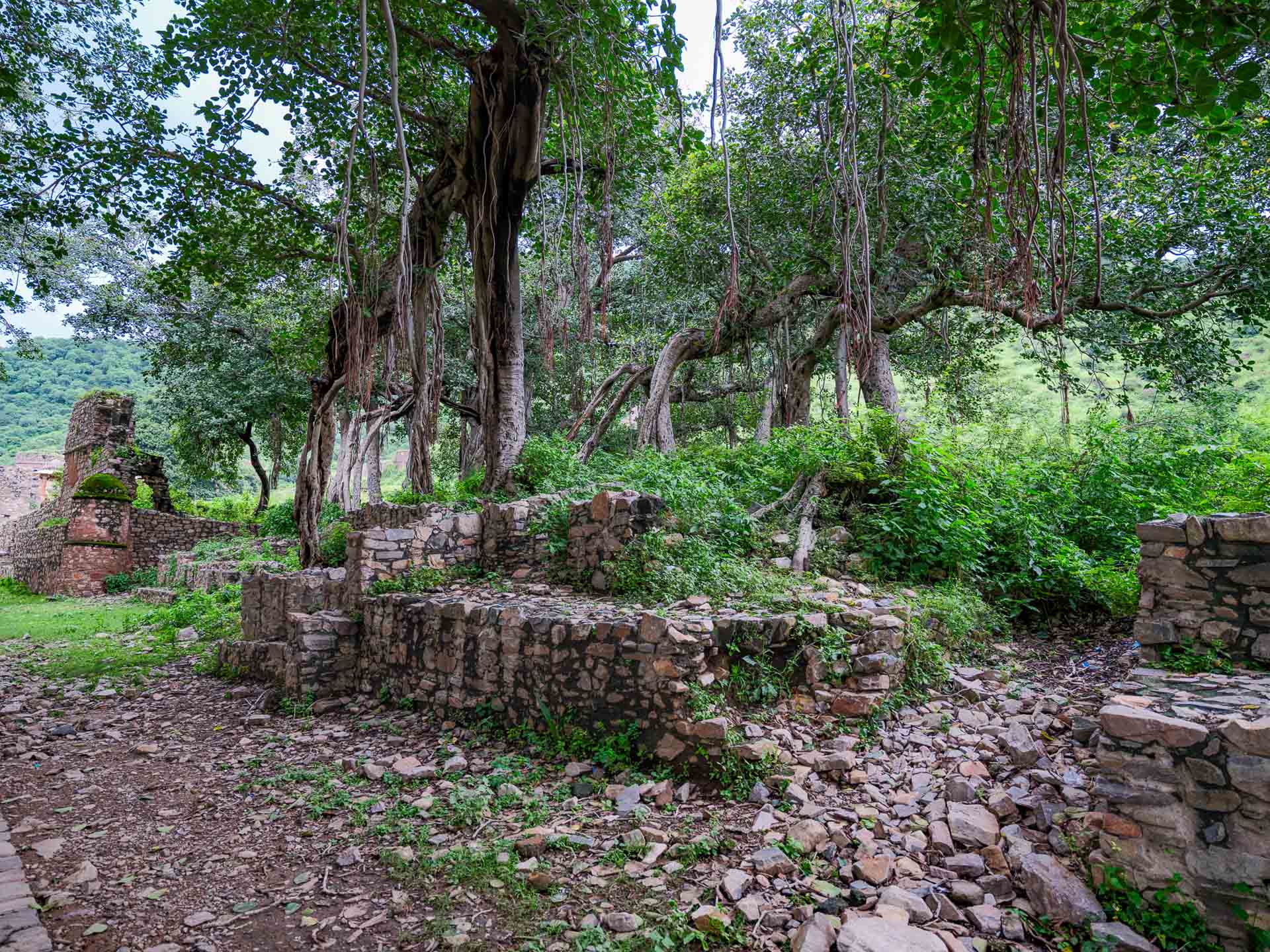
Gradually Bhangarh’s population dwindled. People abandoned their homes and temples in order for their families to relocate to safer and more prosperous regions, especially during the 1783 Chalisa Famine. The buildings fell to ruin as the unforgiving desert climate took its toll over the hundreds of years since they were last occupied. By the nineteenth century the town was deserted. Visitors to the area found nothing but the silence of walls and courtyards swallowed by greenery.
Ruins of Bhangarh are protected by Archaeological Survey of India in modern time. Daytime visitors are welcome but there is no entry when night falls. The town has earned the nickname of being one of the most “haunted” places in India due to this rule. Regardless of whether one believes in such tales, Bhangarh does take on an eerie feeling after the sun sets. When the sun disappears behind the Aravalli hills, the empty streets are cast in deep shadows and the only sound breaking the silence is the chirp of birds inside the ruins.
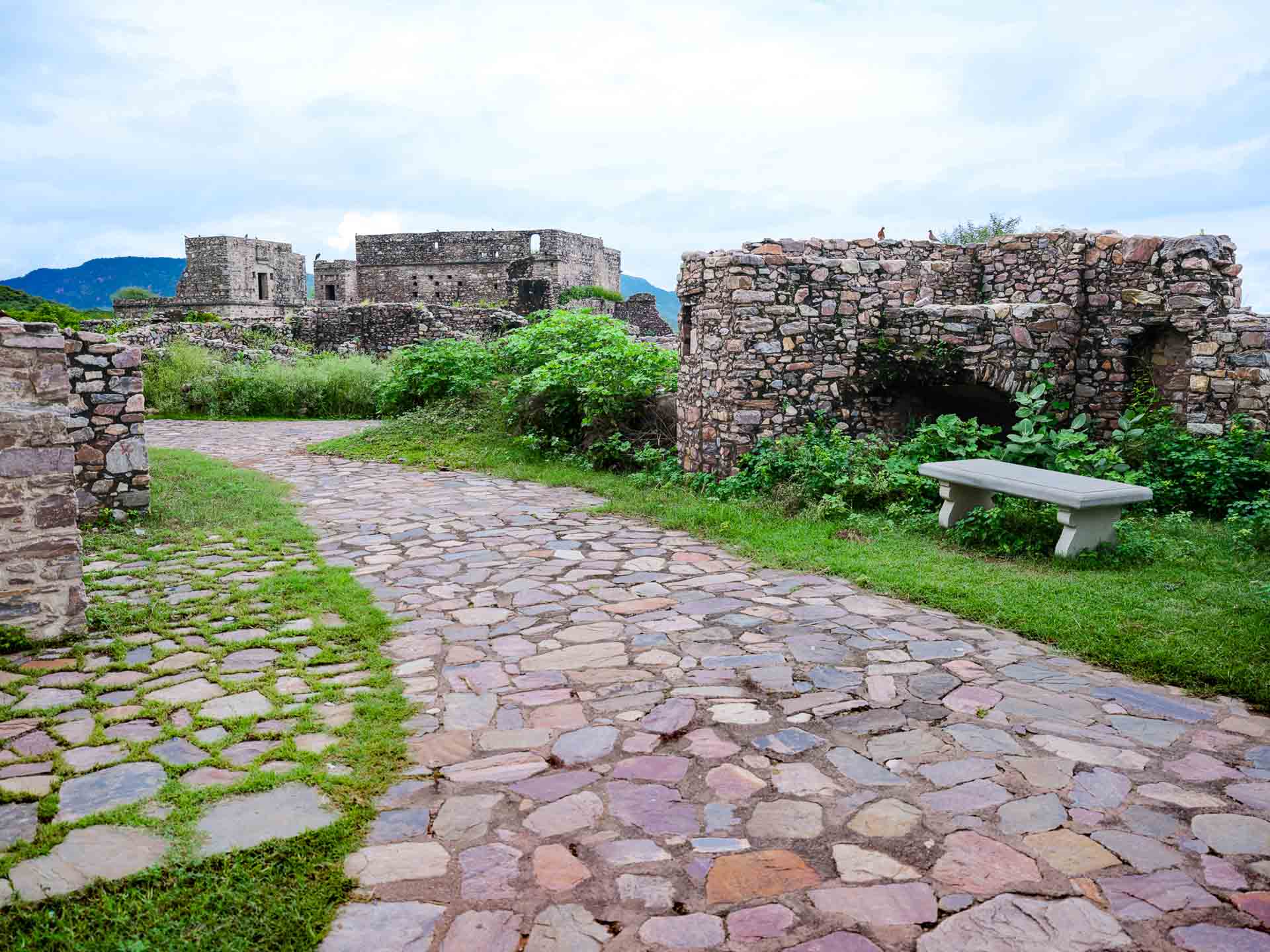
The dry, dusty terrain goes through a short-lived makeover during the months of monsoon. Grass and wildflowers spring through the stones and the water tank close to Someshwar Temple brims with rainwater. For a moment the ruins almost come alive again. We were honored to greet Bhangrah with such serene sights. Our visit to Bhangarh was nothing like what we expected. The beauty of the nature against those rugged stone ruins, is simply something that can only be understood through experience.