Deeg – the ‘ Babylon’ of India
In the eastern reaches of Rajasthan, not far from the Uttar Pradesh border, Deeg stands as a small, mellow town that quietly carries the weight of a grand past. At first glance, it reveals little of its former stature, yet just beneath that calm surface lies a world once designed for royal leisure and seasonal retreat.
Here, water defines everything. Lakes shimmer beneath palace walls, gardens hold symmetry and coolness, and the town moves at a measured, contemplative pace. We arrived at a court shaped for pleasure, retreat, and escape from the harsh summer.
Deeg occupies a semi-fertile tract influenced by the Yamuna basin, setting it apart from the arid stretches of western Rajasthan. The land here stays flatter and greener, supporting agriculture and sustaining a different rhythm of life. Summers still press hard, but the monsoon restores balance, feeding the region’s historic water systems.
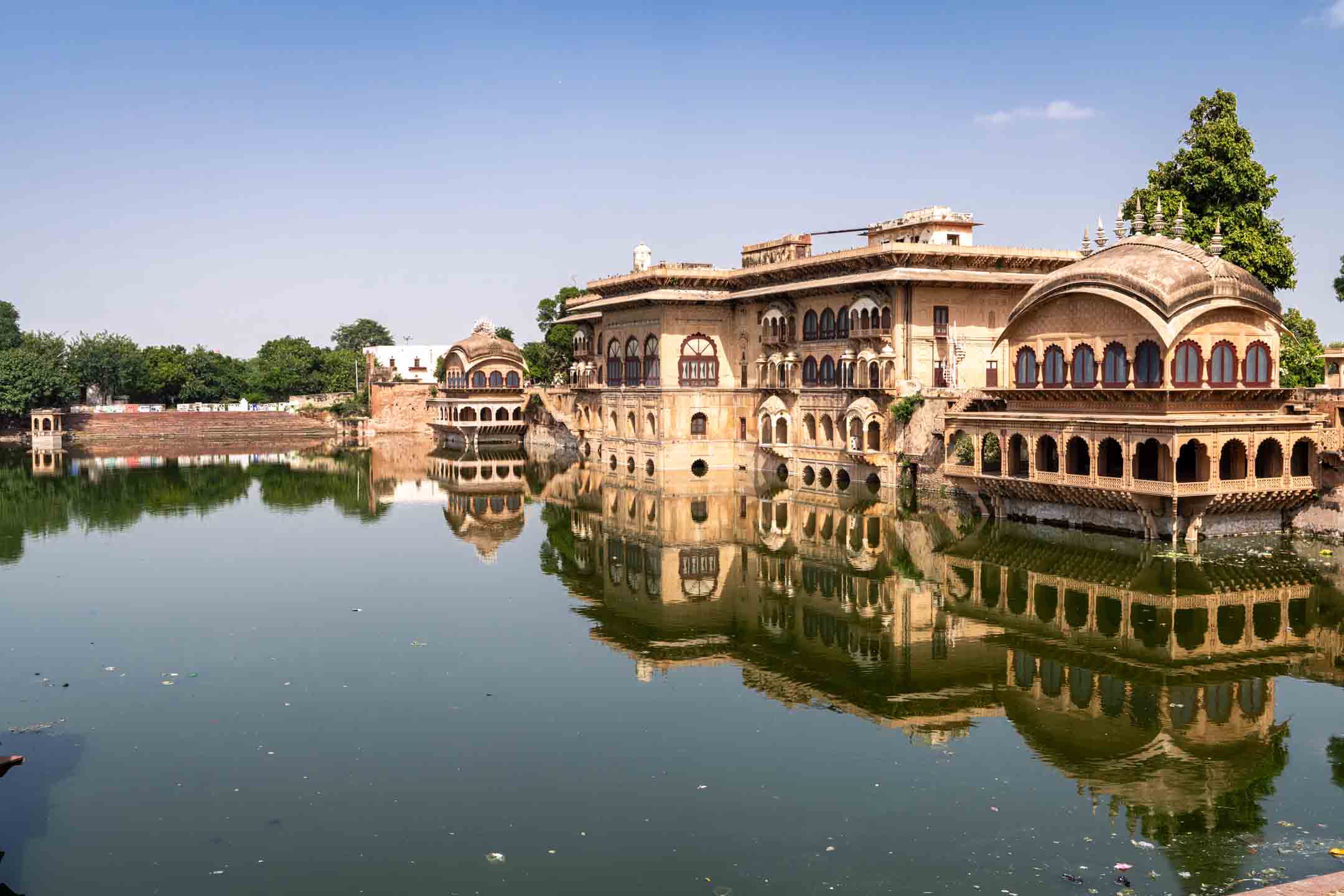
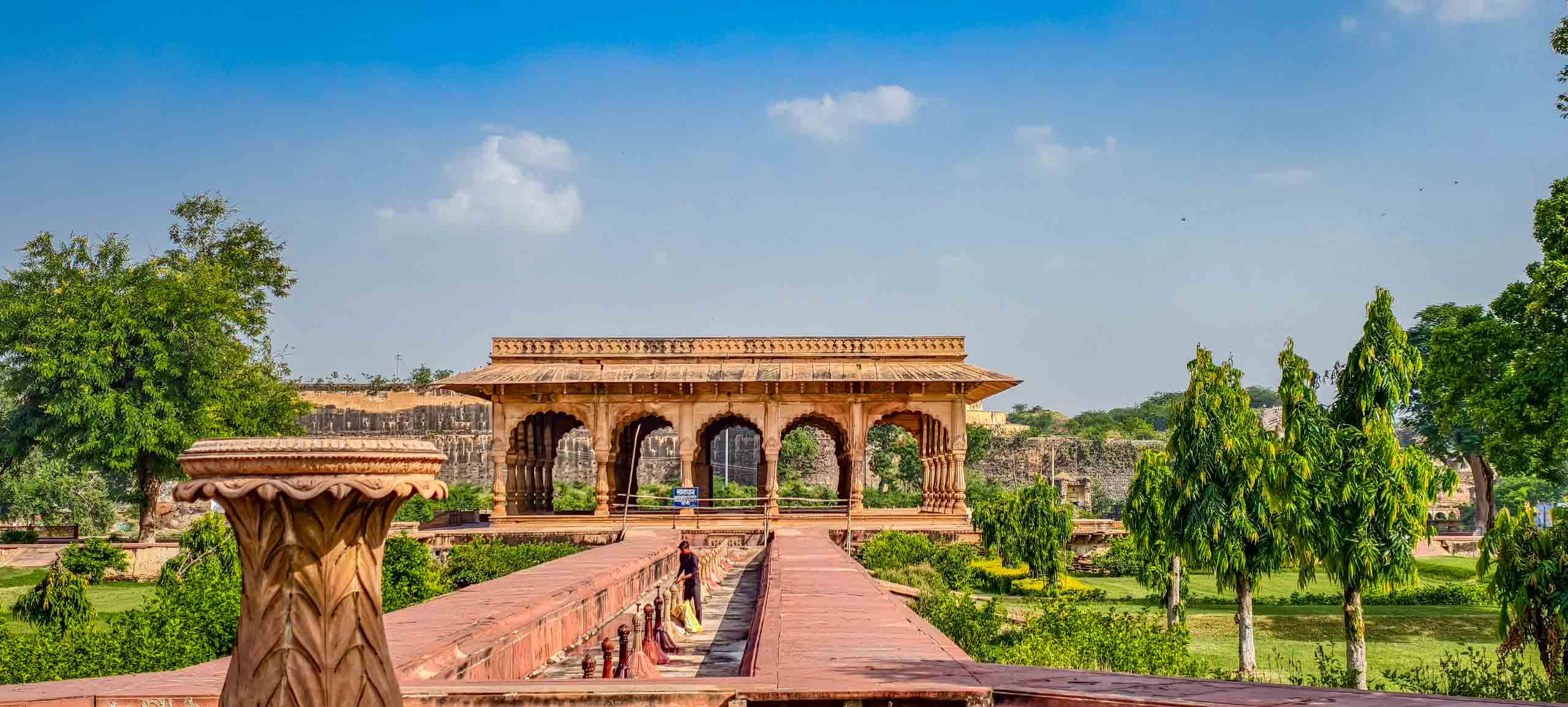
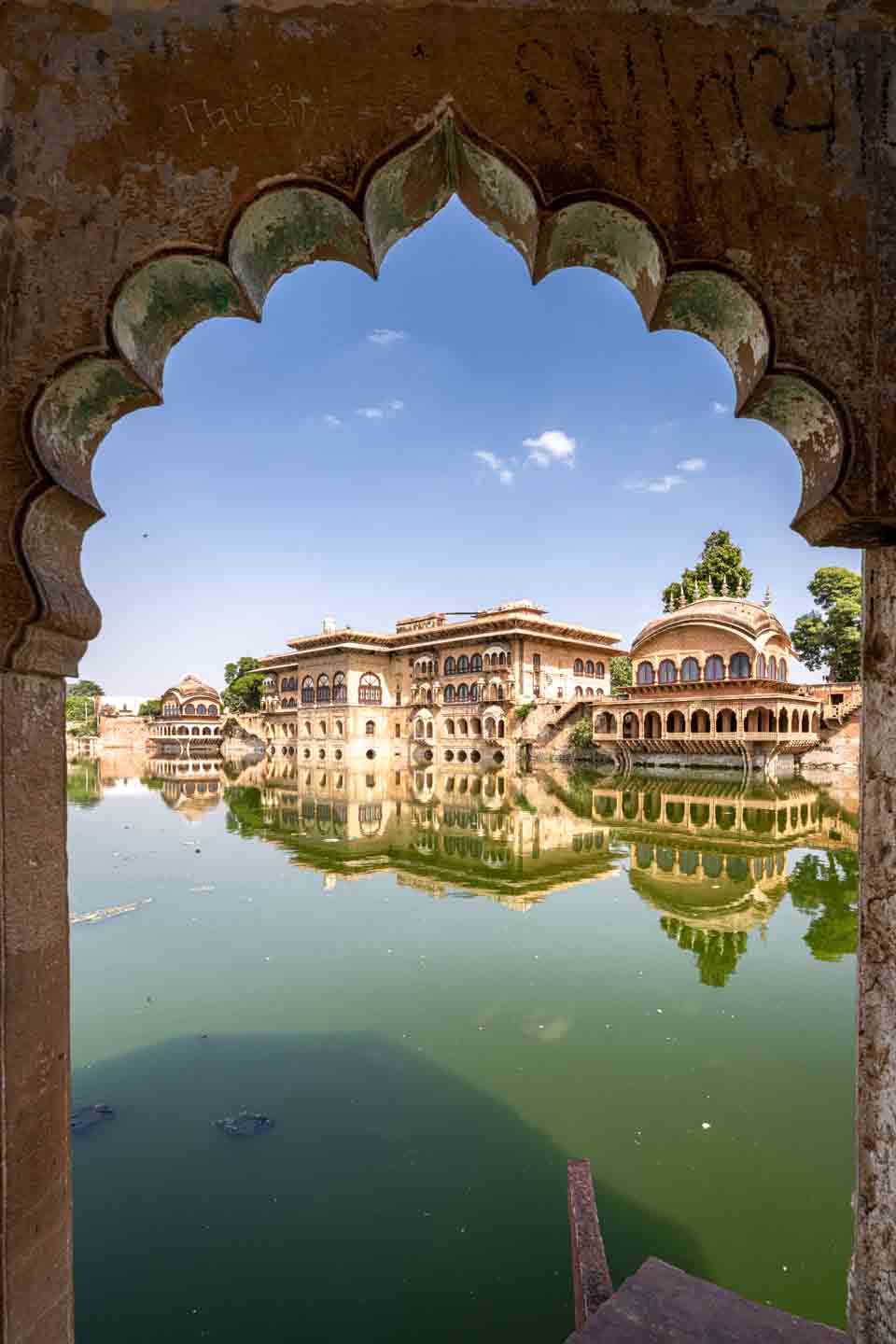
The town’s defining feature lies in its carefully constructed water network. Large waterbodies like Gopal Sagar and Rup Sagar surround the palace complex and serve both aesthetic and functional purposes. These reservoirs collect water, reflect the palaces, and cool the surrounding air.
Water, used at this scale, feels deliberate and almost theatrical. It transforms Deeg into an oasis, an environment shaped as much by design as by geography. Even the name “Deeg” likely derives from a term linked to water reservoirs, reinforcing the town’s enduring relationship with water.
History
Deeg rose to prominence in the 18th century under the Jat rulers of Bharatpur, particularly during the reign of Maharaja Suraj Mal. The town first functioned as a fortified stronghold and later evolved into a royal retreat. Before Bharatpur emerged as the primary capital, Deeg held both political and strategic importance.
The Jats asserted their independence during a time of shifting power, challenging Mughal authority and regional forces. Deeg reflects this transition. Its architecture borrows Mughal elements like symmetry, gardens, and water channels, while adapting them into a more regional and functional style.
As power shifted to Bharatpur, Deeg gradually transformed into a place of leisure. The rulers designed its palaces for celebration, monsoon retreats, and courtly life.
The Palaces of Deeg
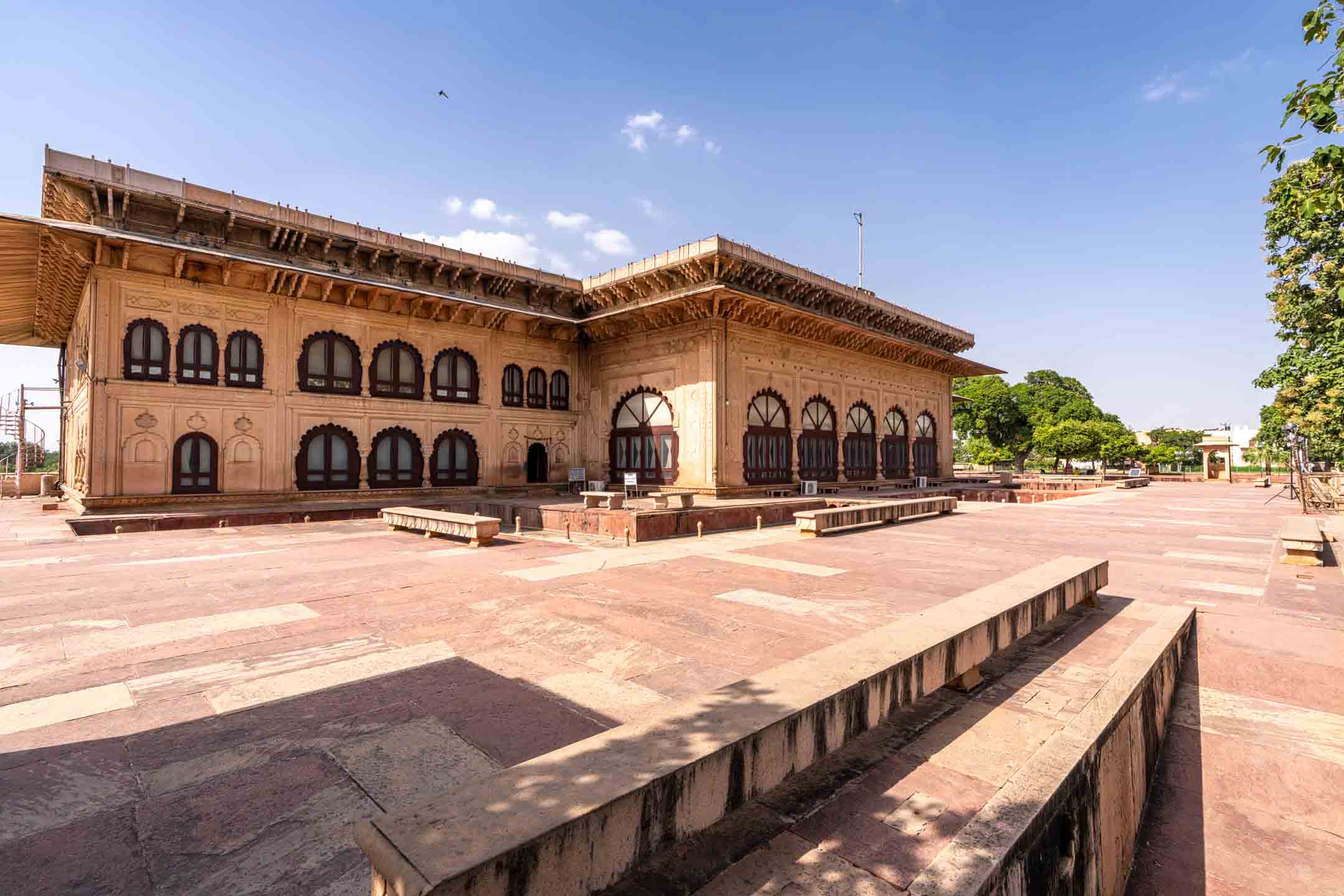
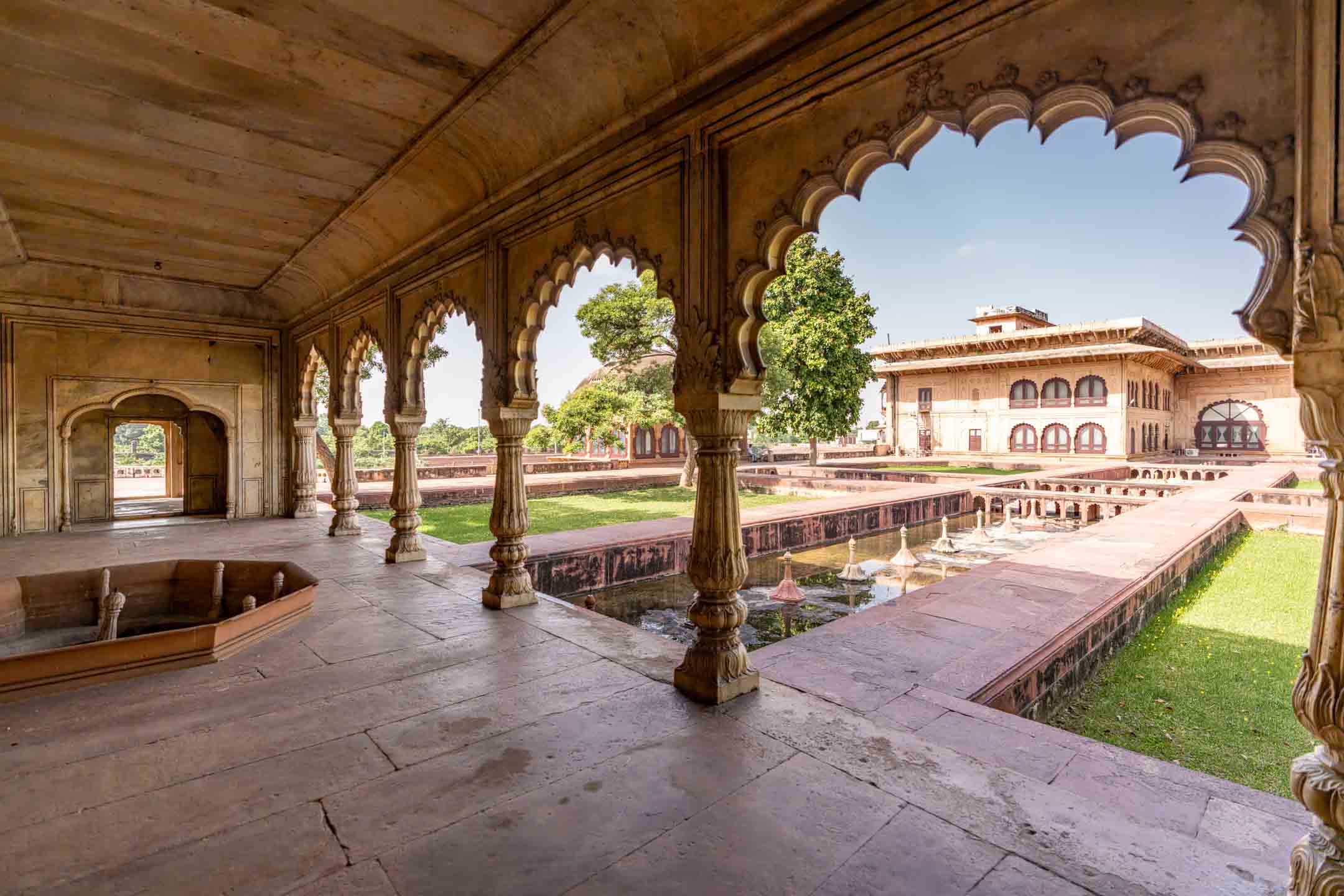
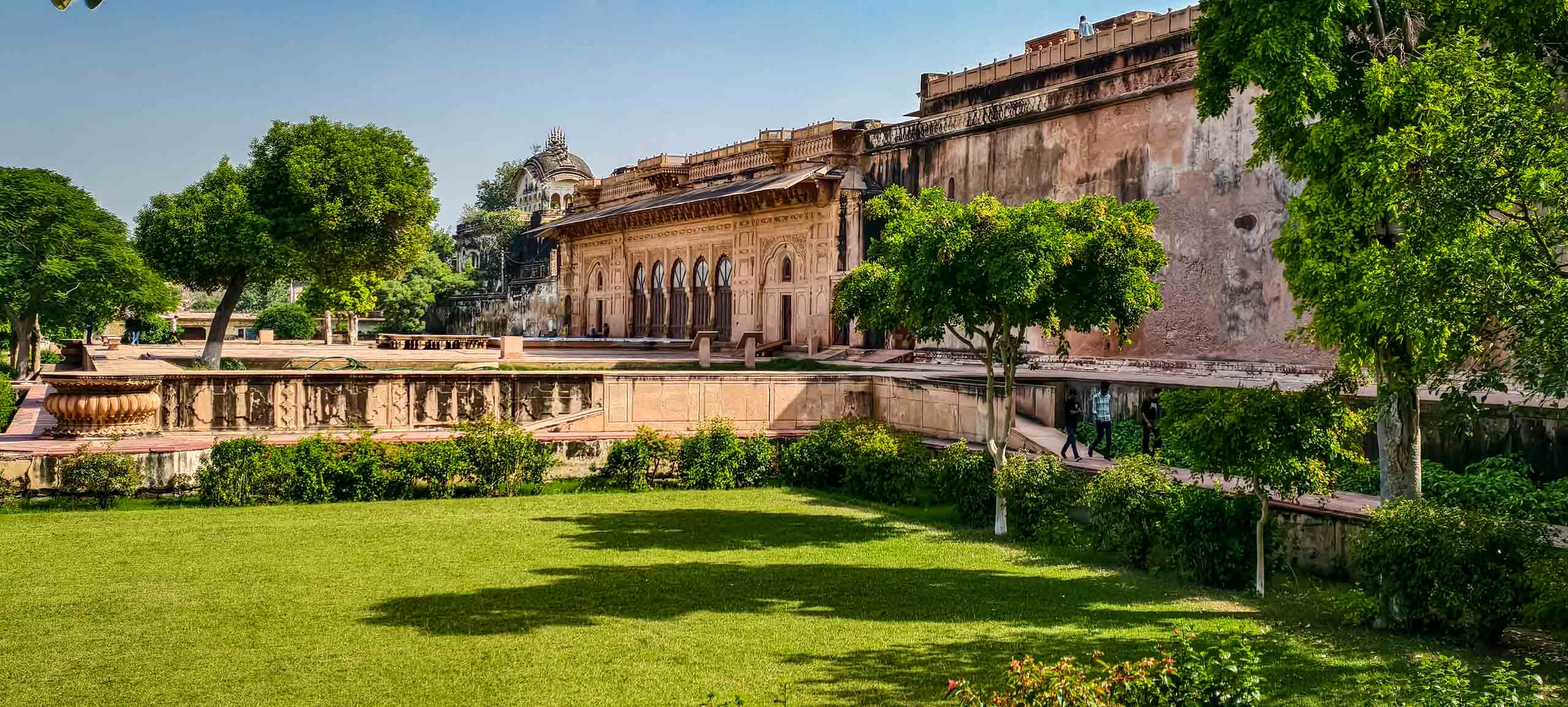
The Deeg Palace complex forms the heart of the town. A network of interconnected buildings, gardens, and water bodies creates a cohesive and immersive space. Unlike Rajasthan’s imposing hill forts, these structures remain low, open, and elegant, allowing air and light to move freely.
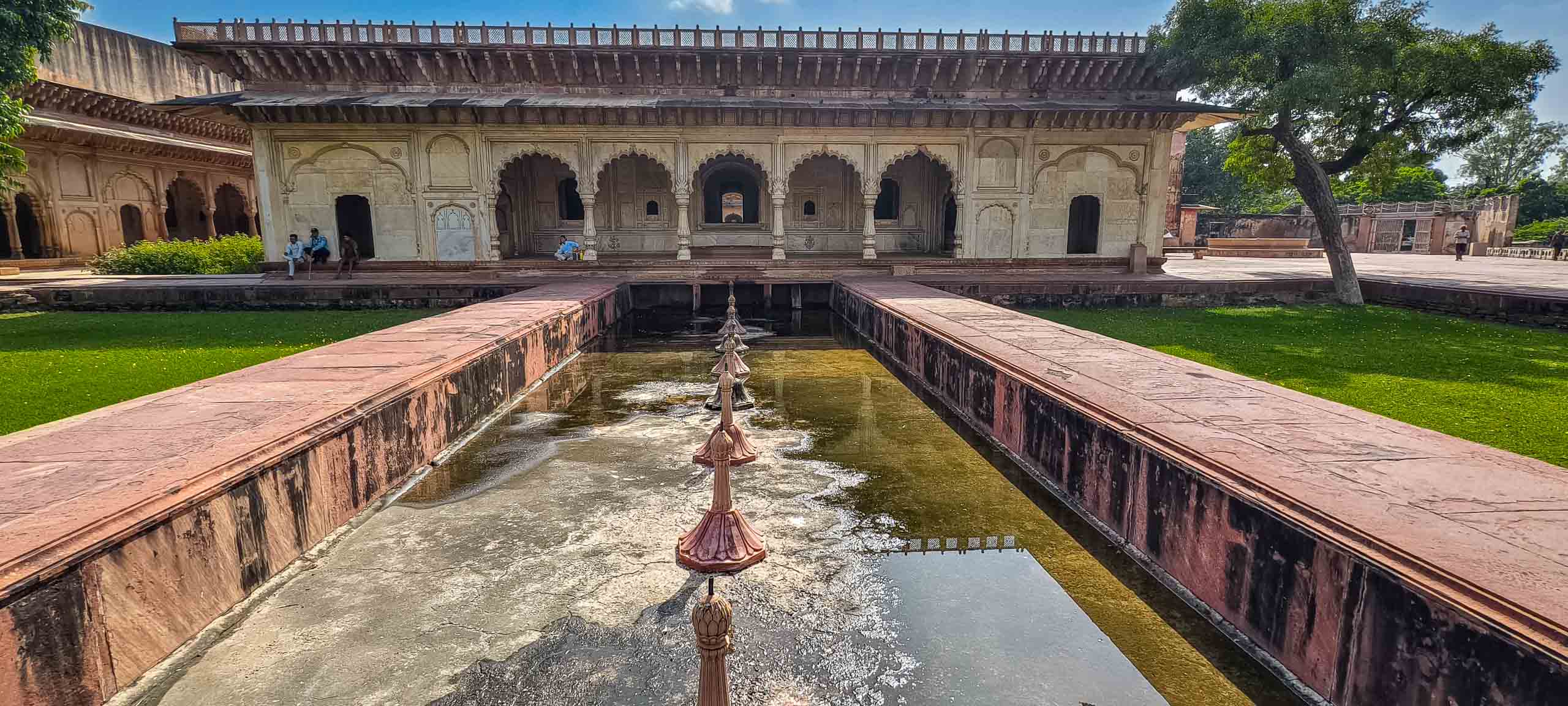
Keshav Bhawan stands at the center surrounded by water channels and fountains. During special occasions, they activated these fountains to create elaborate displays, sometimes perfumed or colored to mimic rainfall.
The sandstone palaces once held richly decorated interiors. Though time has stripped much of that ornamentation, the spatial experience remains powerful. Visitors still move through a landscape defined by openness, reflection, and balance.
The architecture blends Mughal planning, Rajput aesthetics, and Jat practicality. It prioritizes experience over defense, emphasizing the interplay of water, air, and space.
The palace complex centers around a series of “bhawans,” each serving a distinct purpose while contributing to a unified design with connecting pathways and shared gardens.
Gopal Bhawan anchors the complex, overlooking Gopal Sagar and functioning as both residence and audience hall.
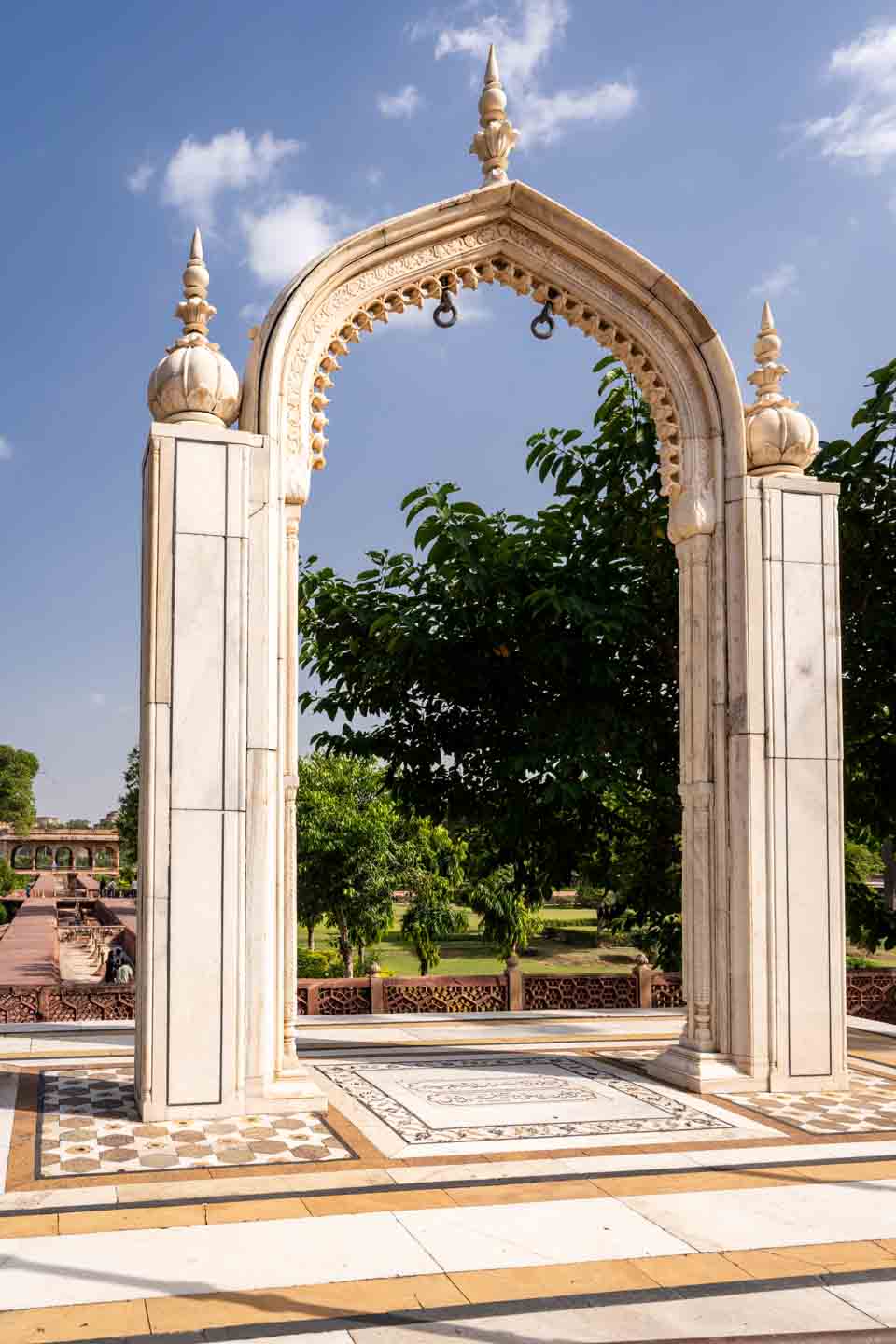
Suraj Bhawan, named after Maharaja Suraj Mal, introduces refined marble elements into the ensemble.
Kishan Bhawan showcases an ingenious system capable of simulating rainfall, an early example of environmental engineering.
Keshav Bhawan provides the central garden pavilion for leisure and ceremonial gatherings.
The palace complex is largely untouched by mass tourism. Its palaces stand quietly, reflected in still waters, free from the rush of large crowds. This calm allows visitors to experience the space intimately to walk through gardens, sit beside reservoirs, and absorb the atmosphere.
At the same time, the passage of time has left visible marks. Preservation continues to pose a challenge.
Culture and Food
Deeg’s culture reflects both its royal past and its agrarian present. Traditions of the Jat rulers continue through festivals, local customs, and shared memory. Holi stands out as a particularly vibrant celebration, influenced by the nearby Braj region. Music, temple rituals, and folk performances remain deeply rooted in the land.
Deeg’s cuisine reflects its geography and cultural setting. It favors simplicity over opulence, yet delivers depth of flavor rooted in tradition.
Local meals revolve around wheat-based breads such as rotis and pooris, paired with seasonal vegetables, lentils, and generous use of ghee. The region’s agricultural base supports this straightforward, nourishing style of cooking.
Proximity to the Braj region brings a strong presence of milk-based sweets. Peda and rabri feature prominently, especially during festivals and celebrations.
Deeg reminds us that power once expressed itself not only through fortresses and conquest, but also through spaces designed for retreat, reflection, and celebration.
We left Deeg not just with its memory, but with an experience—the one shaped by water. In a state defined by desert landscapes, Deeg offers something rare: a place where water becomes architecture, and architecture becomes experience.