Karauli — The Kingdom of Eastern Rajasthan
Karauli is a historic town shaped by Rajput rule, religious tradition, and red sandstone architecture in eastern Rajasthan, where rugged hills and dry plains gradually merge into the Chambal landscape. Over the years, Karauli evolved with a quieter princely identity closely associated with the Jadon Rajputs, who claimed descent from the Yadava lineage of Lord Krishna.
The kingdom of Karauli was established in the fourteenth century by Raja Arjun Dev Pal after the decline of older settlements connected to the Yaduvanshi rulers. Over time, the state emerged as an important Rajput principality in eastern Rajasthan. Although smaller than cities such as Jaipur or Jodhpur, Karauli held strategic importance because of its location between Rajputana and territories influenced by Mughal power.
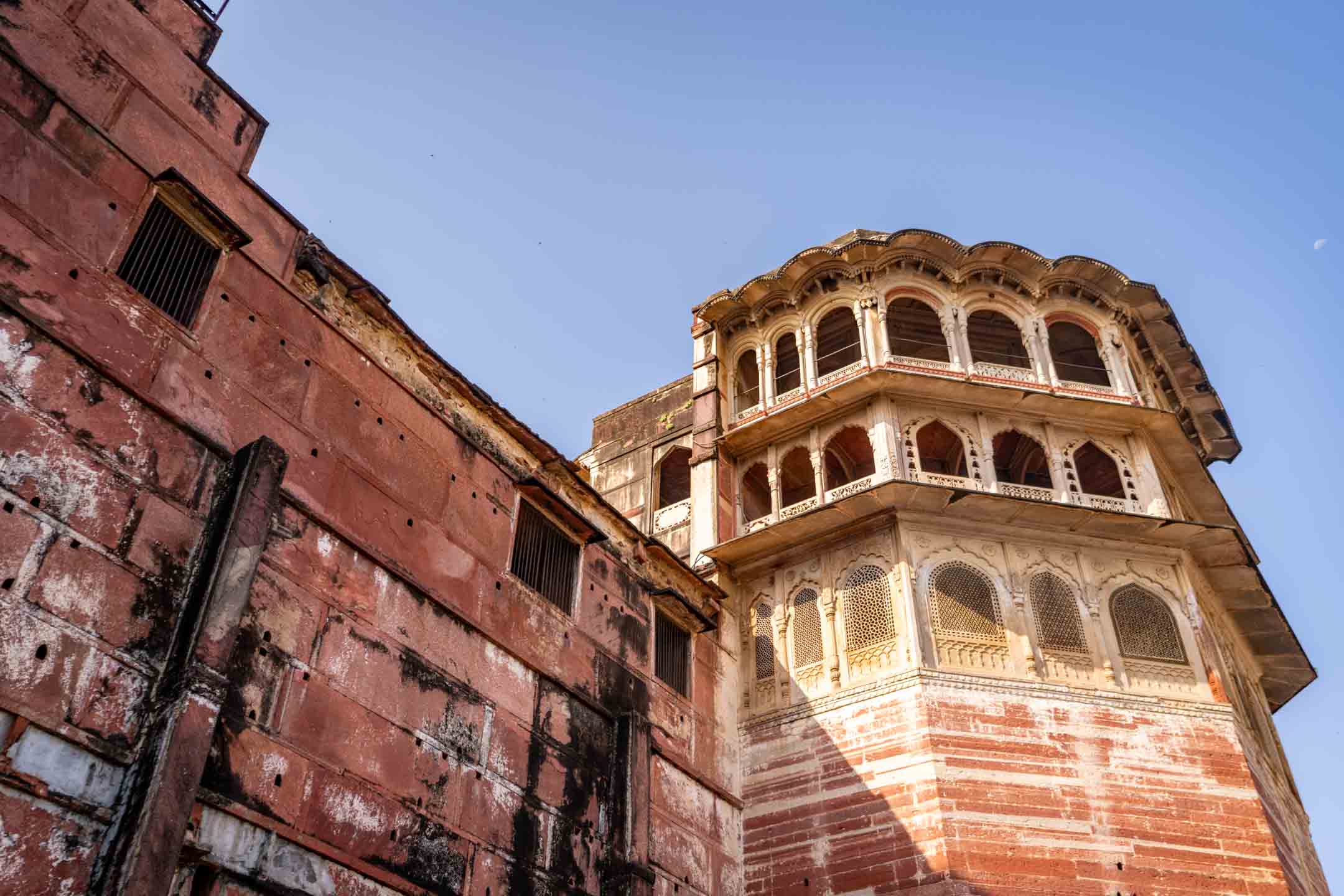
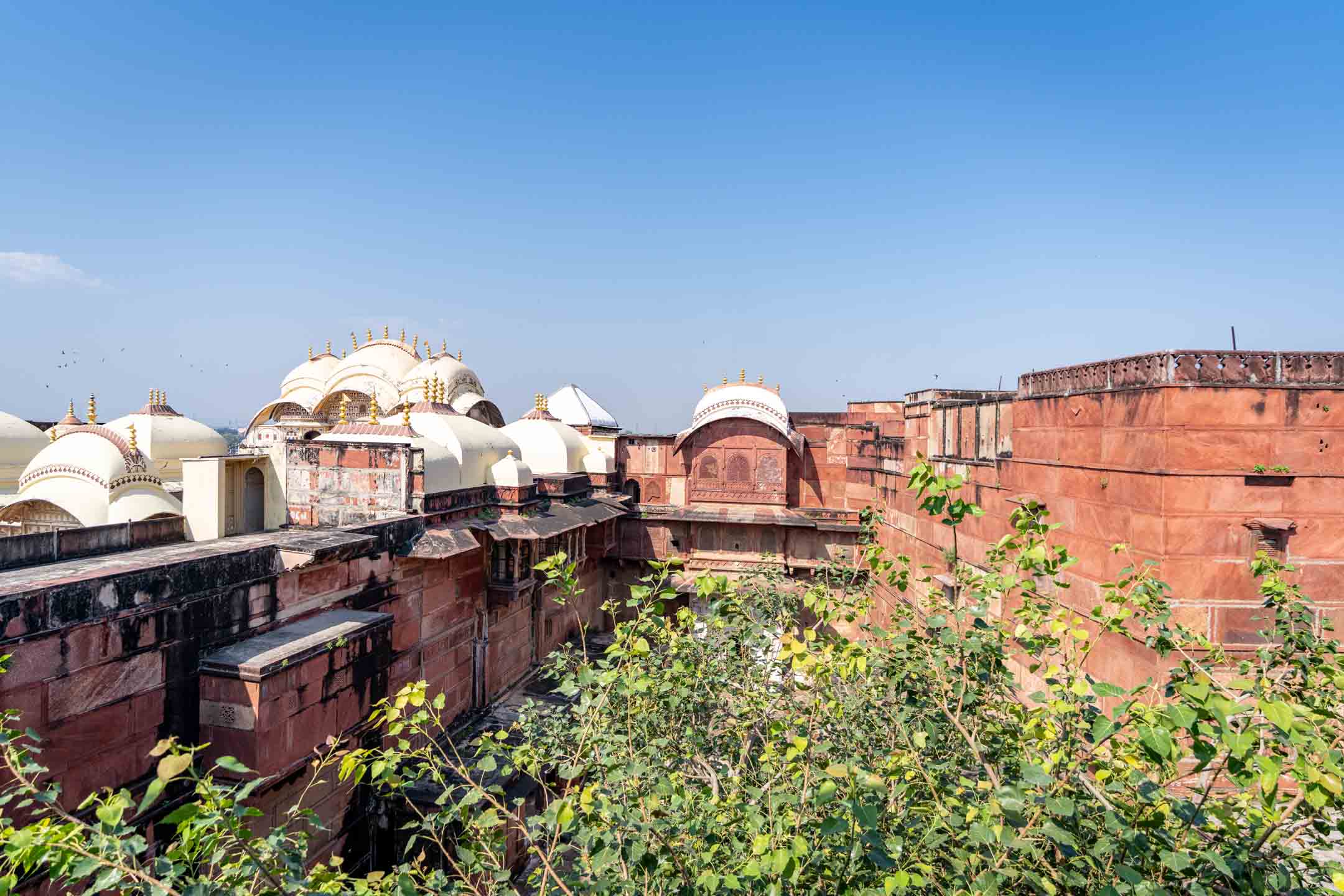
The town developed around fortified walls, palace complexes, temples, and narrow market streets. Red sandstone became one of the defining architectural materials of the region, giving much of Karauli its deep reddish appearance that continues to shape the city’s identity today.
Karauli also emerged as an important religious center. Temples dedicated to Krishna and other Hindu deities attracted pilgrims from surrounding regions, while religious festivals became deeply connected to the cultural rhythm of the town.
The City Palace
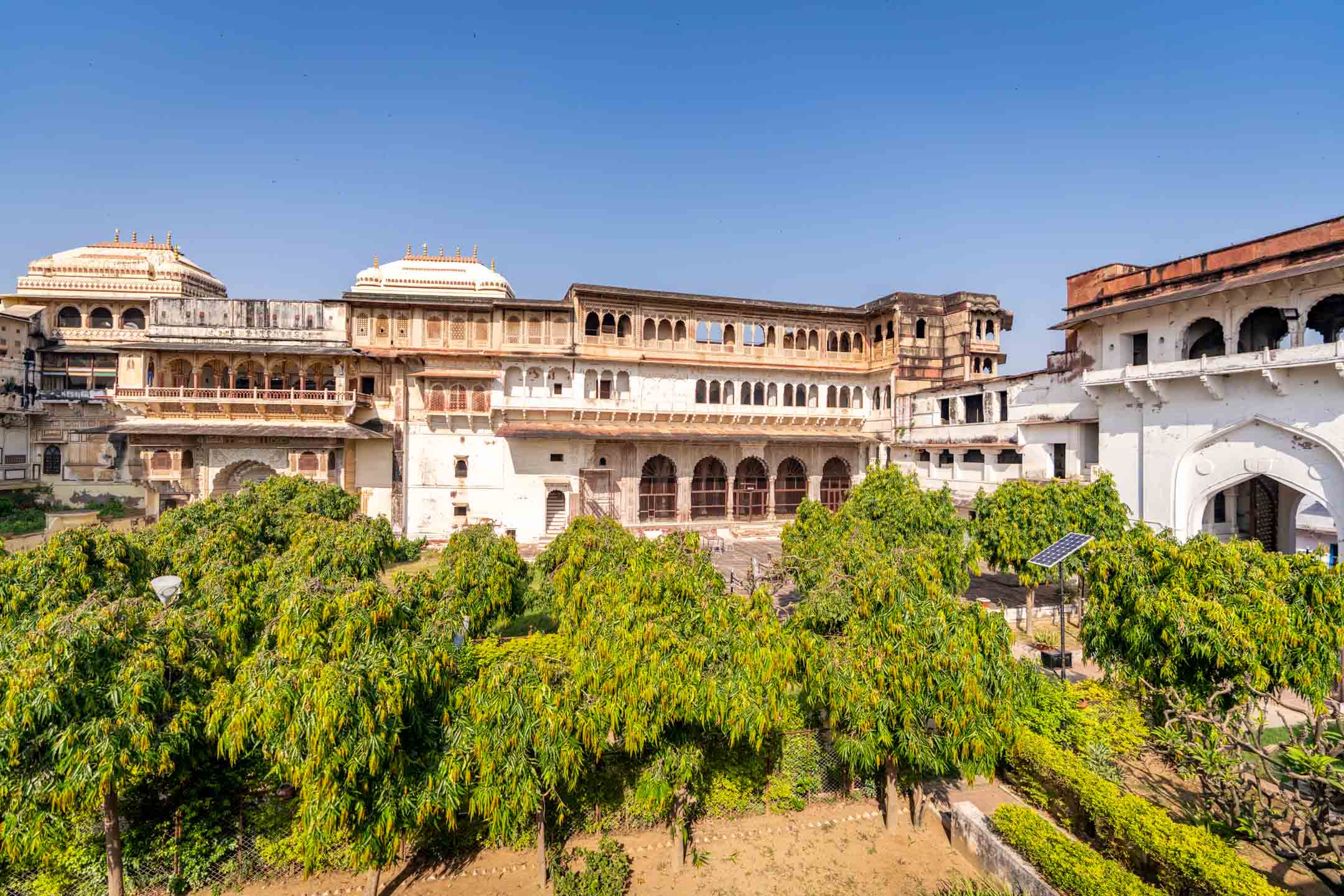
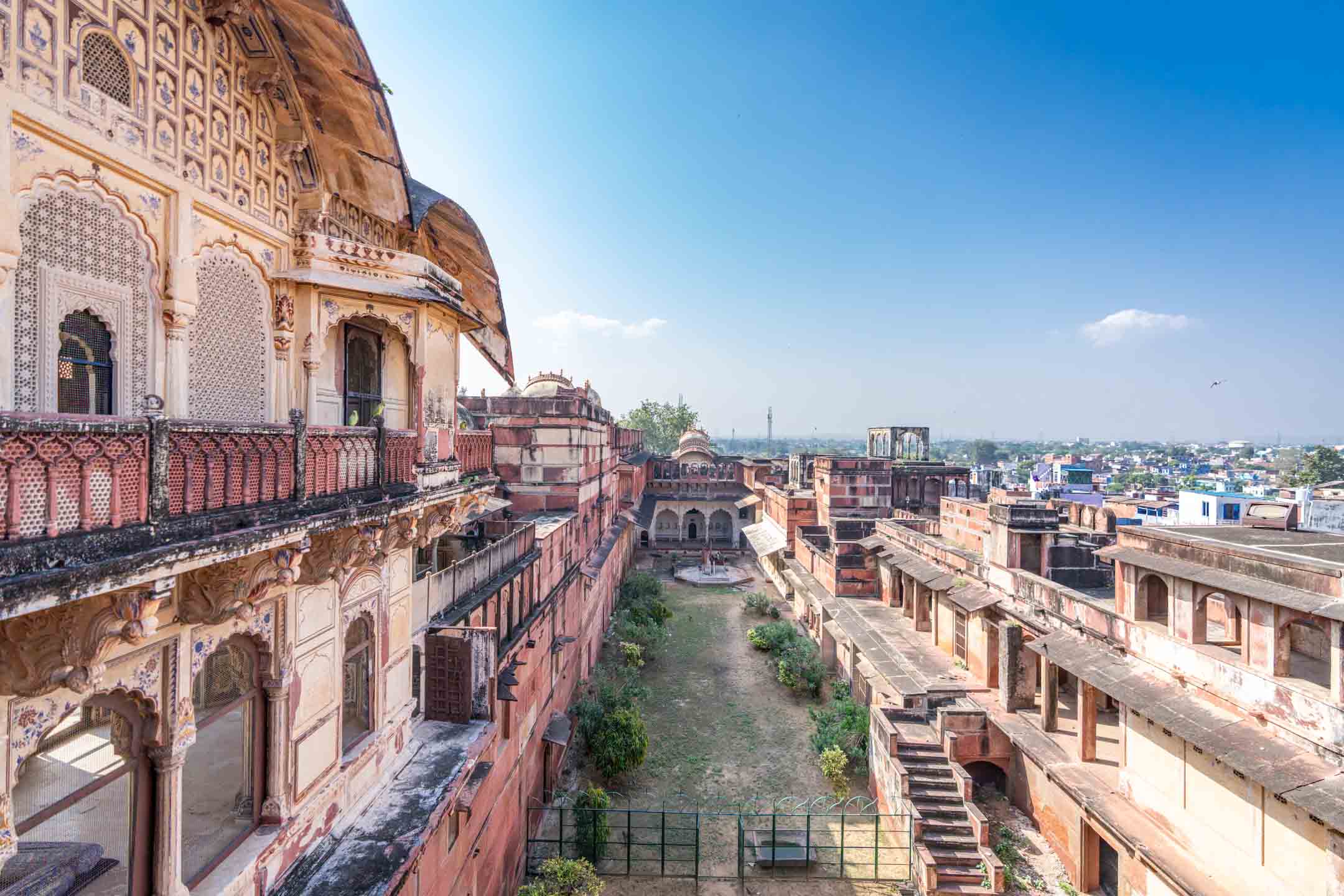
At the center of Karauli’s royal identity stands the City Palace, one of the most important architectural landmarks of the region. Built primarily from red sandstone and white marble, the palace complex reflects a combination of Rajput and Mughal architectural influences developed over centuries by successive rulers of Karauli.
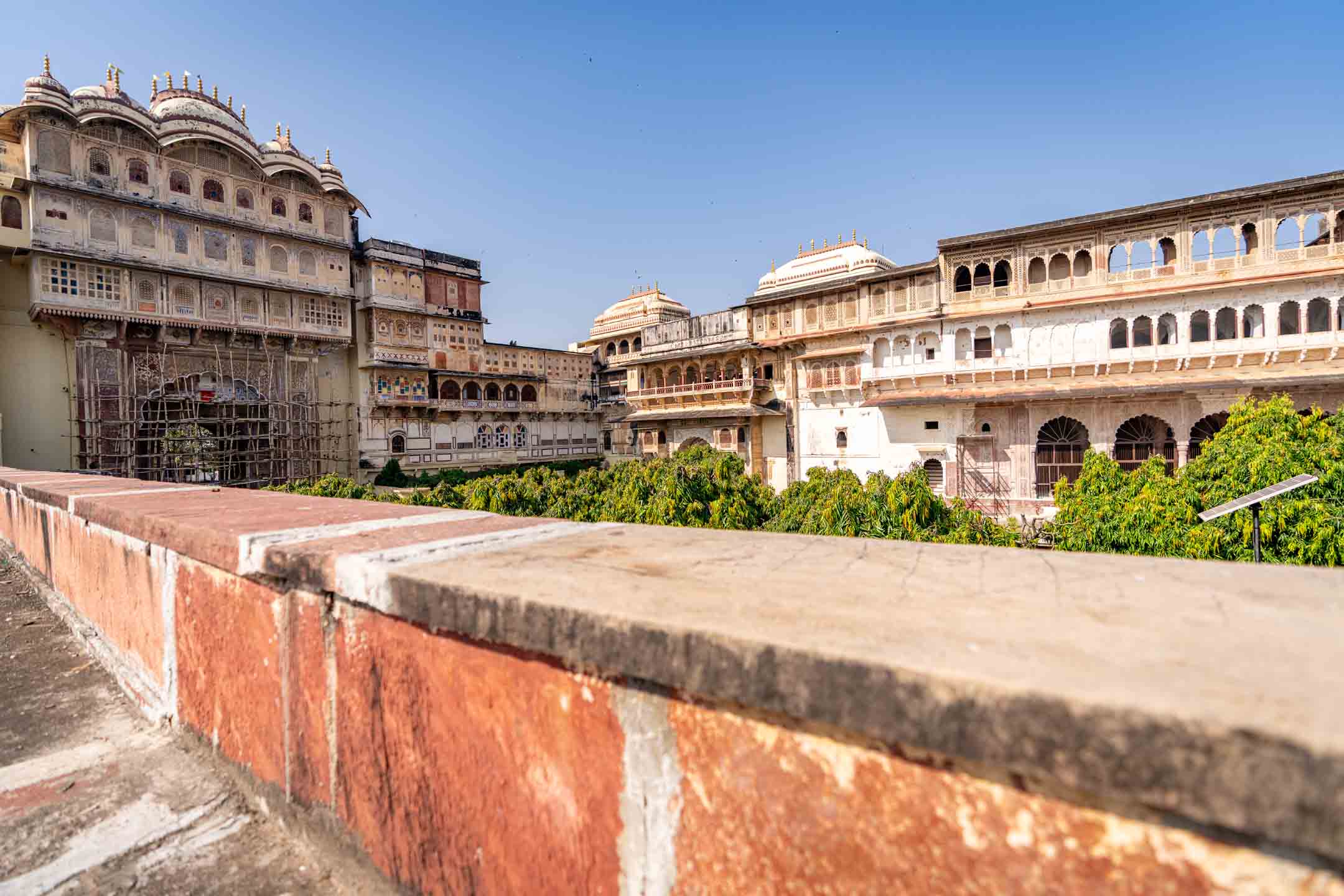
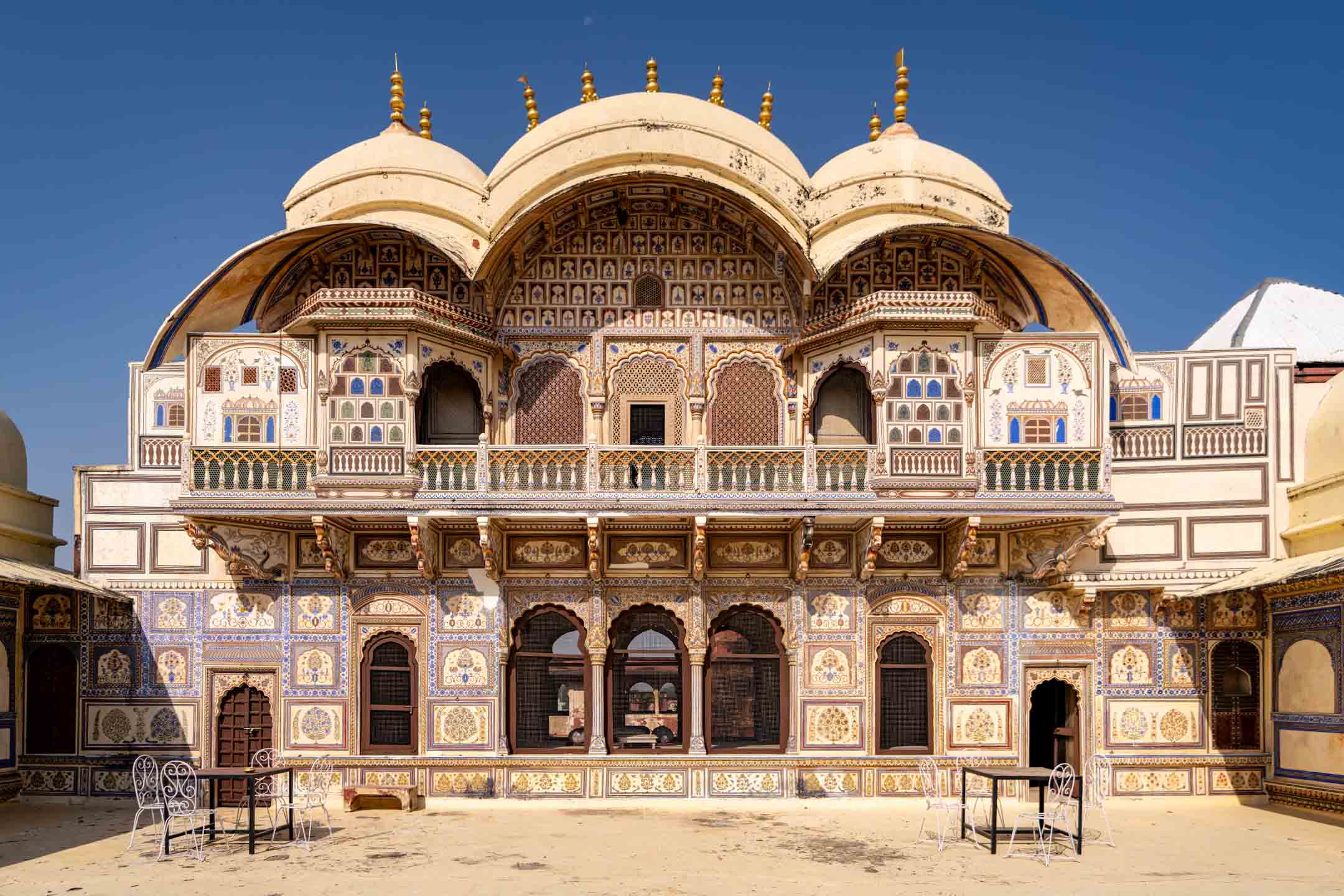
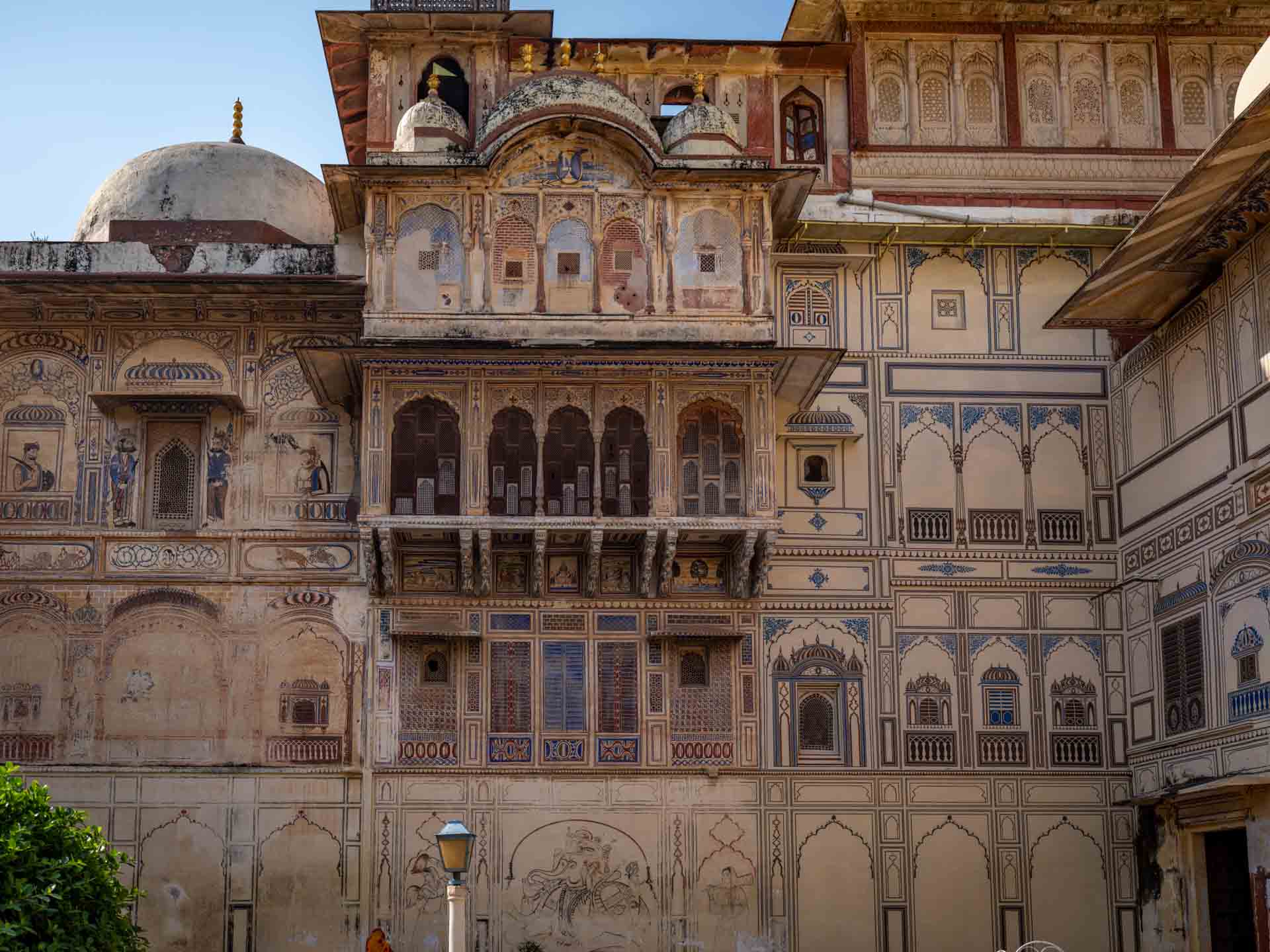
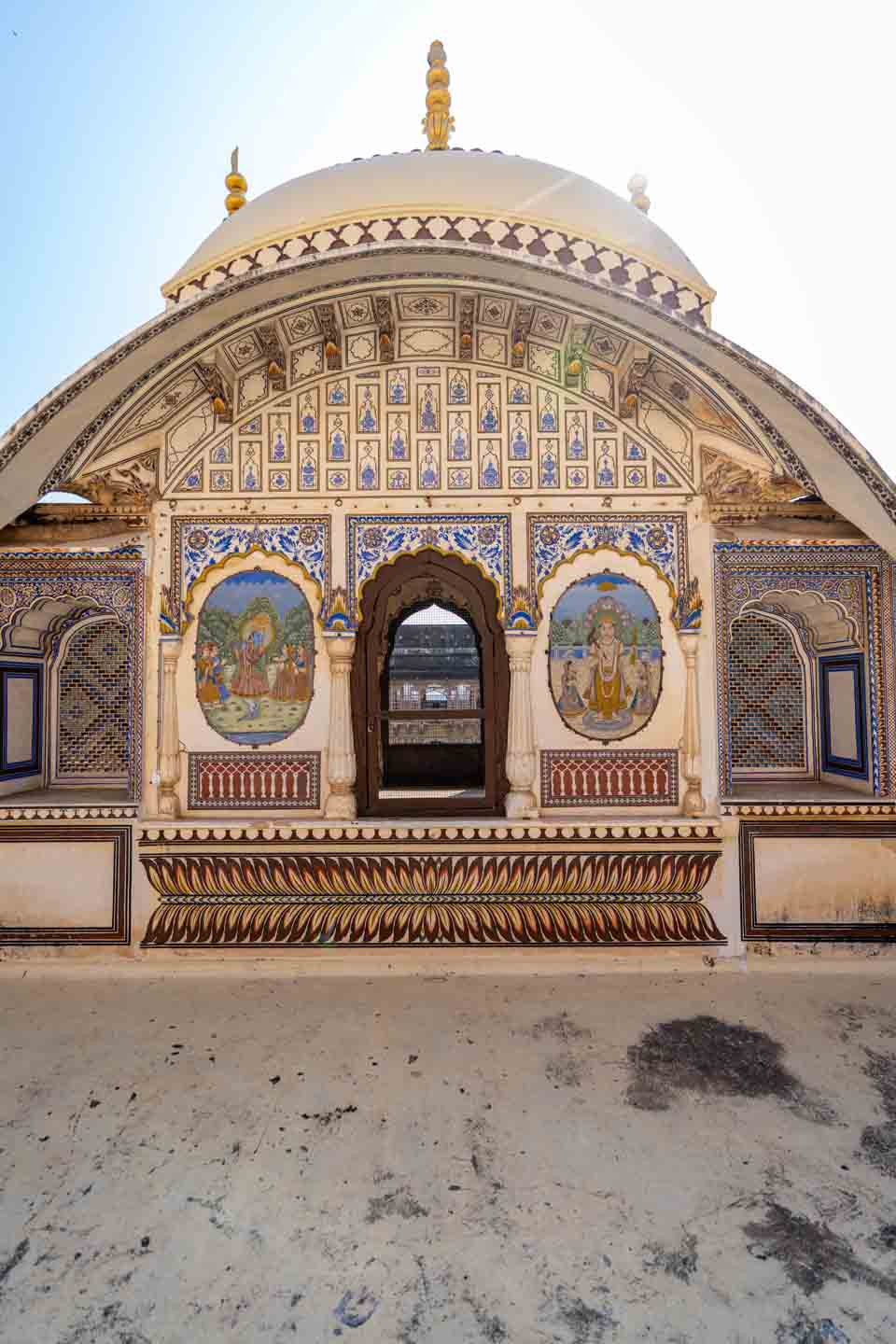
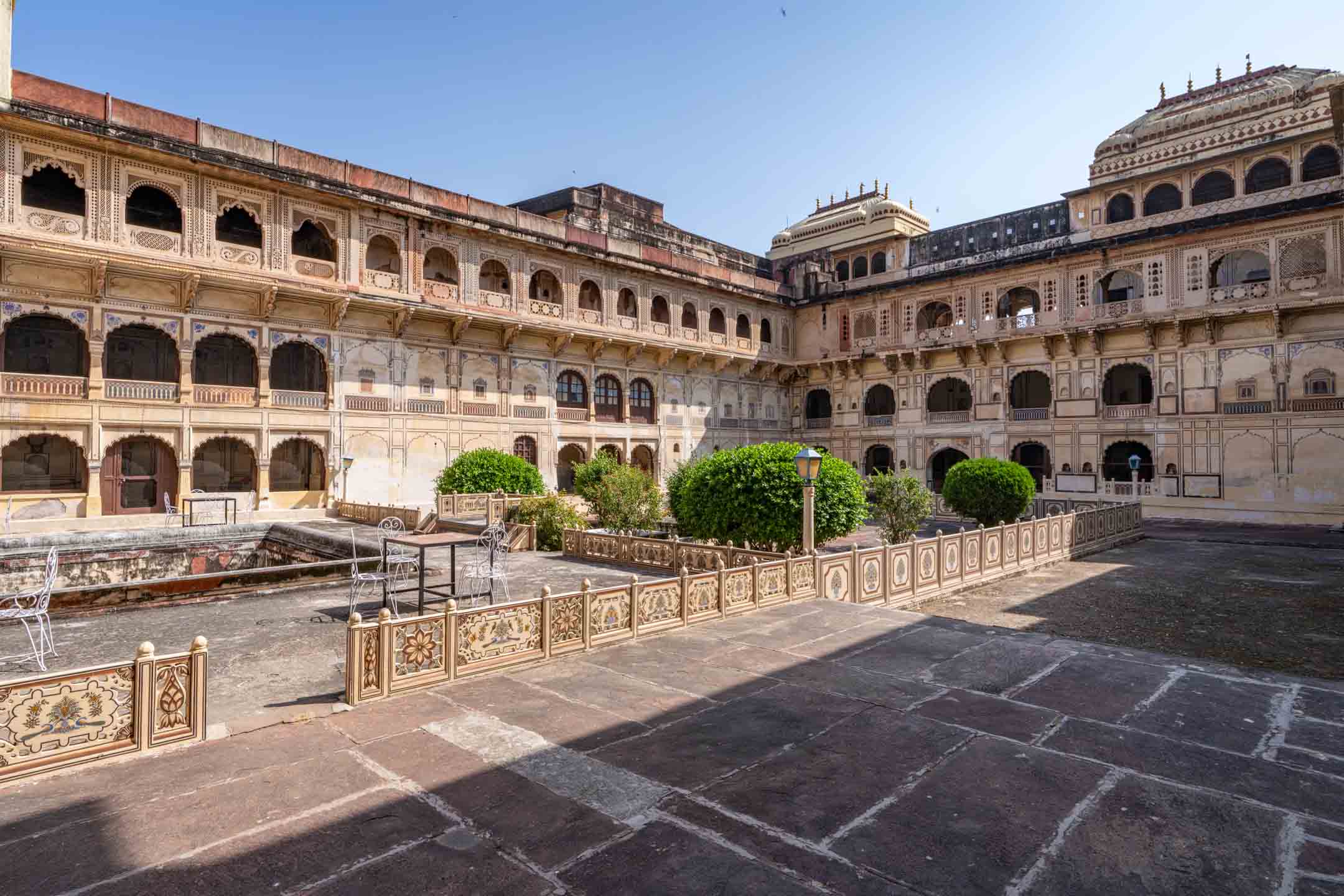
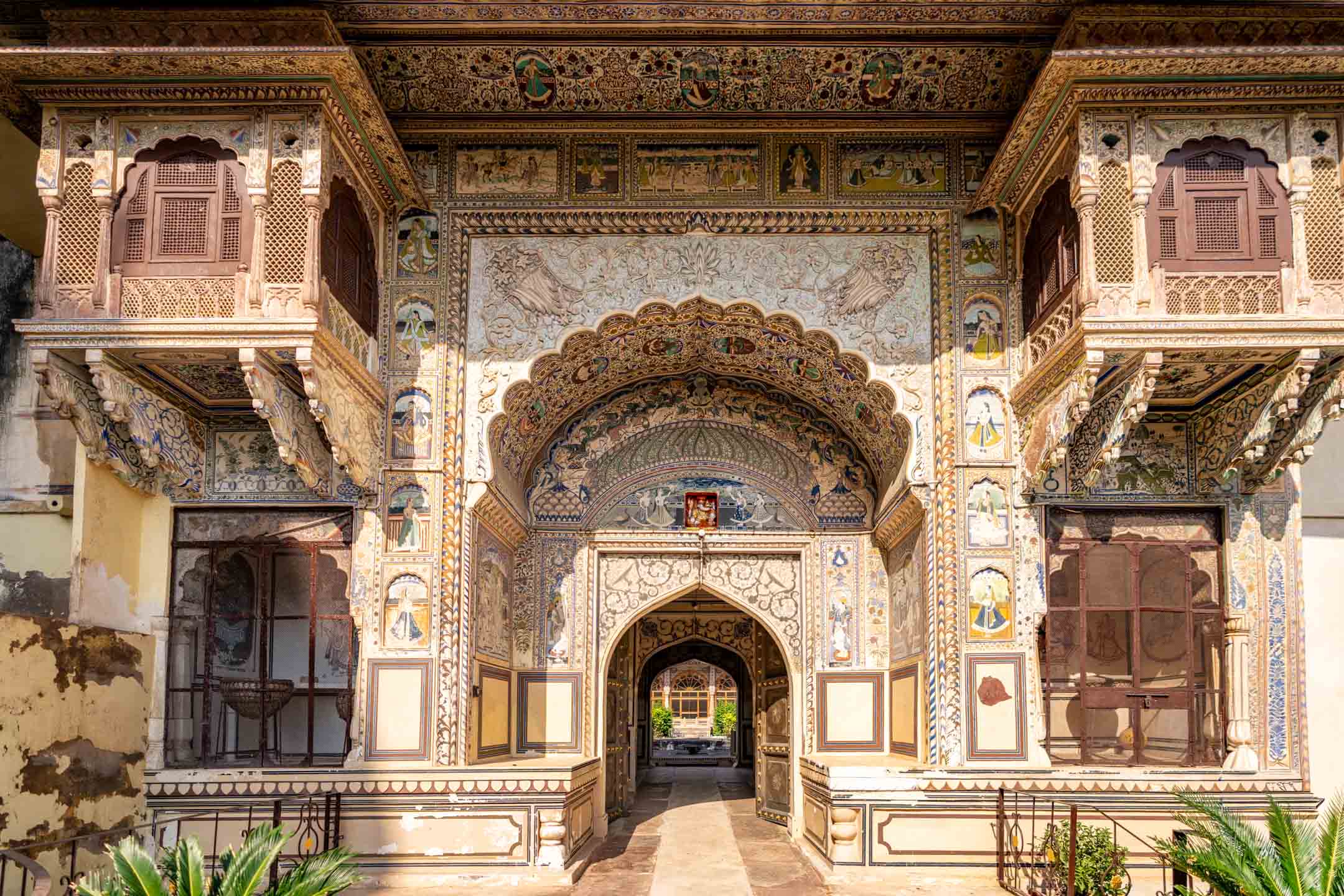
The exterior of the palace rises above sections of the old city with fortified walls, balconies, domed pavilions, and intricately carved windows. The architecture balances defensive strength with ornamental refinement, illustrating how Rajput palaces functioned both as royal residences and fortified administrative centers.
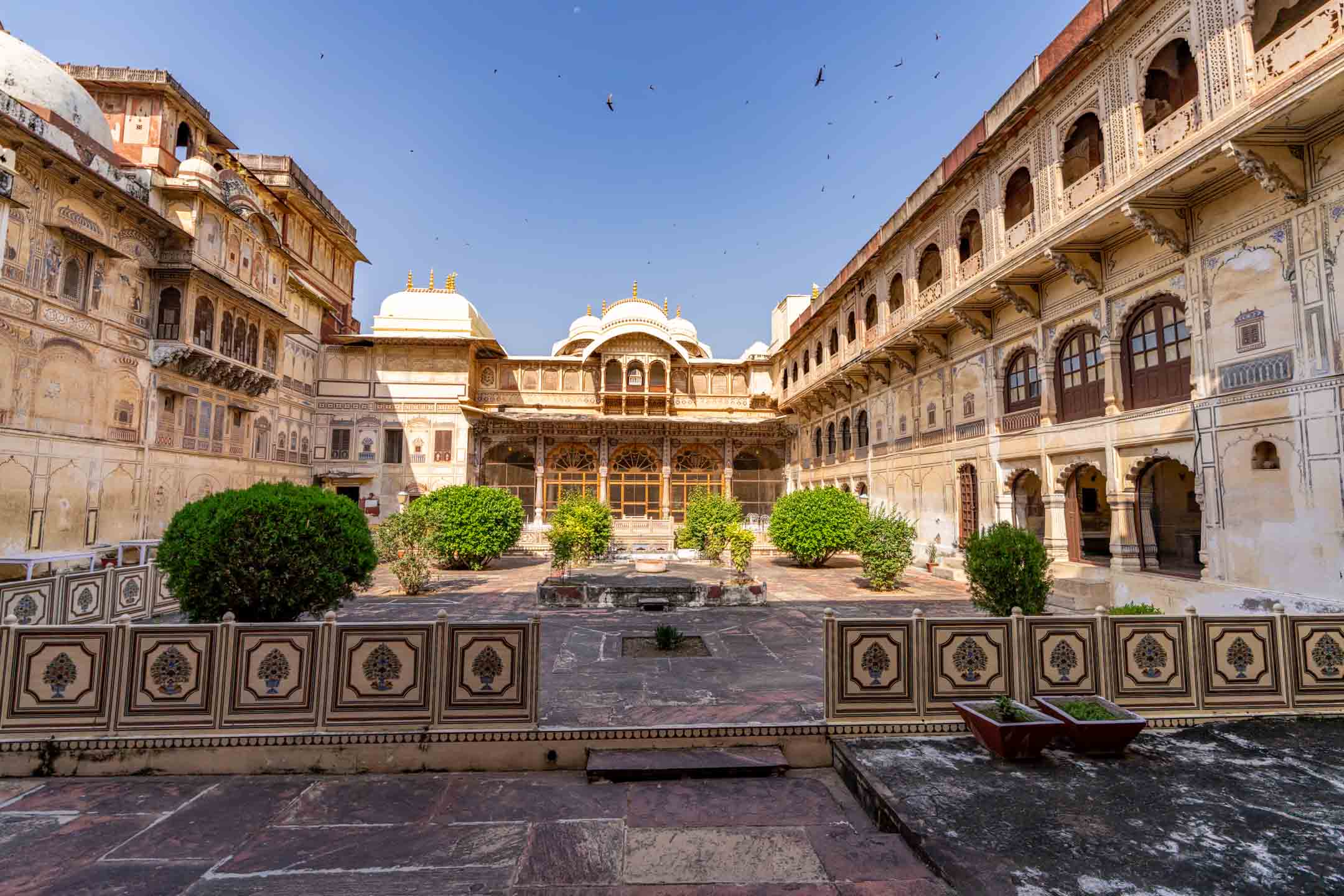
Entering the palace complex leads through interconnected courtyards, corridors, gateways, and audience halls. The layout reflects the hierarchical structure of royal life, where public administrative spaces gradually transition into private residential quarters.
Courtyards, Arches and Interior Architecture
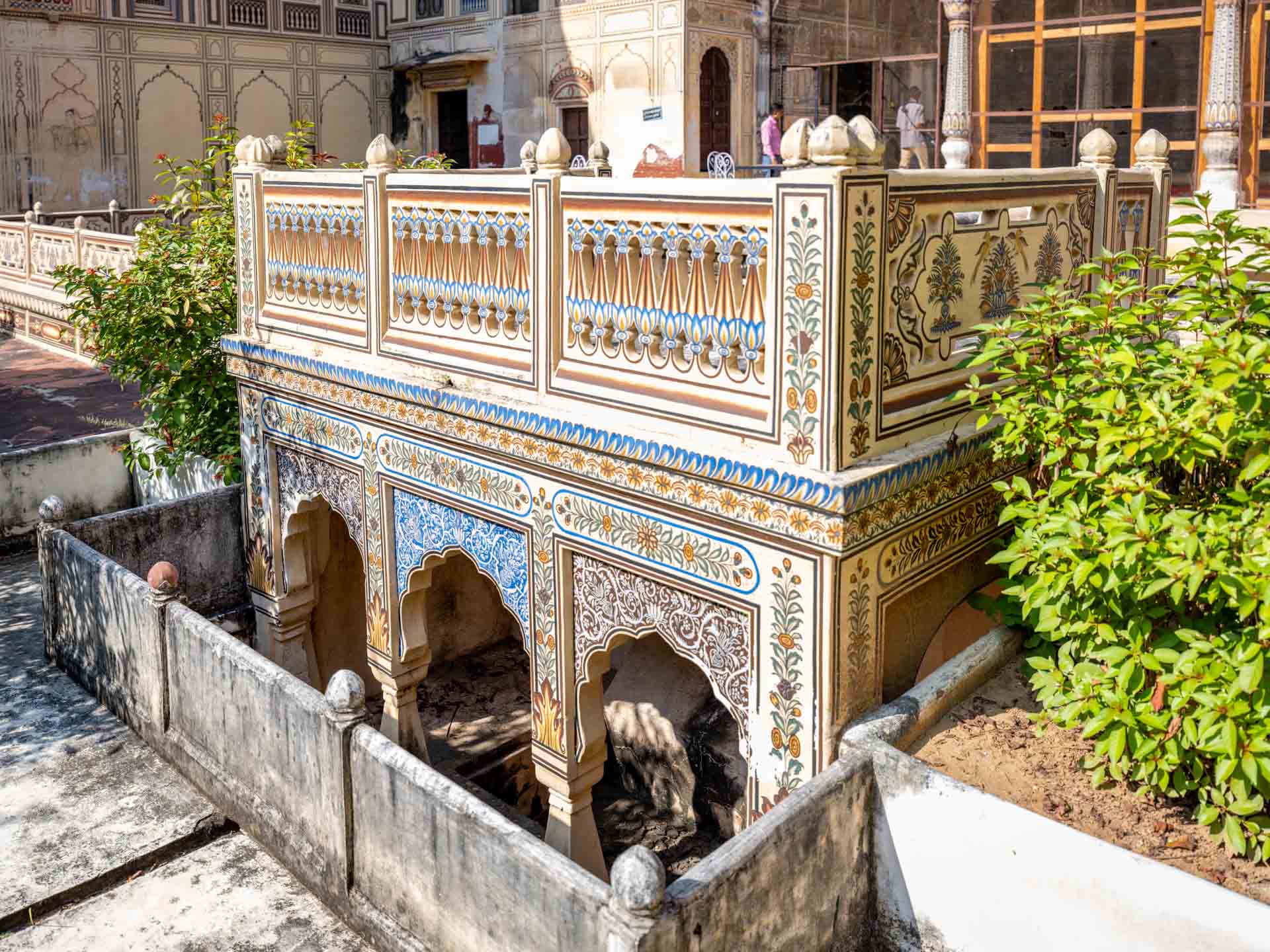
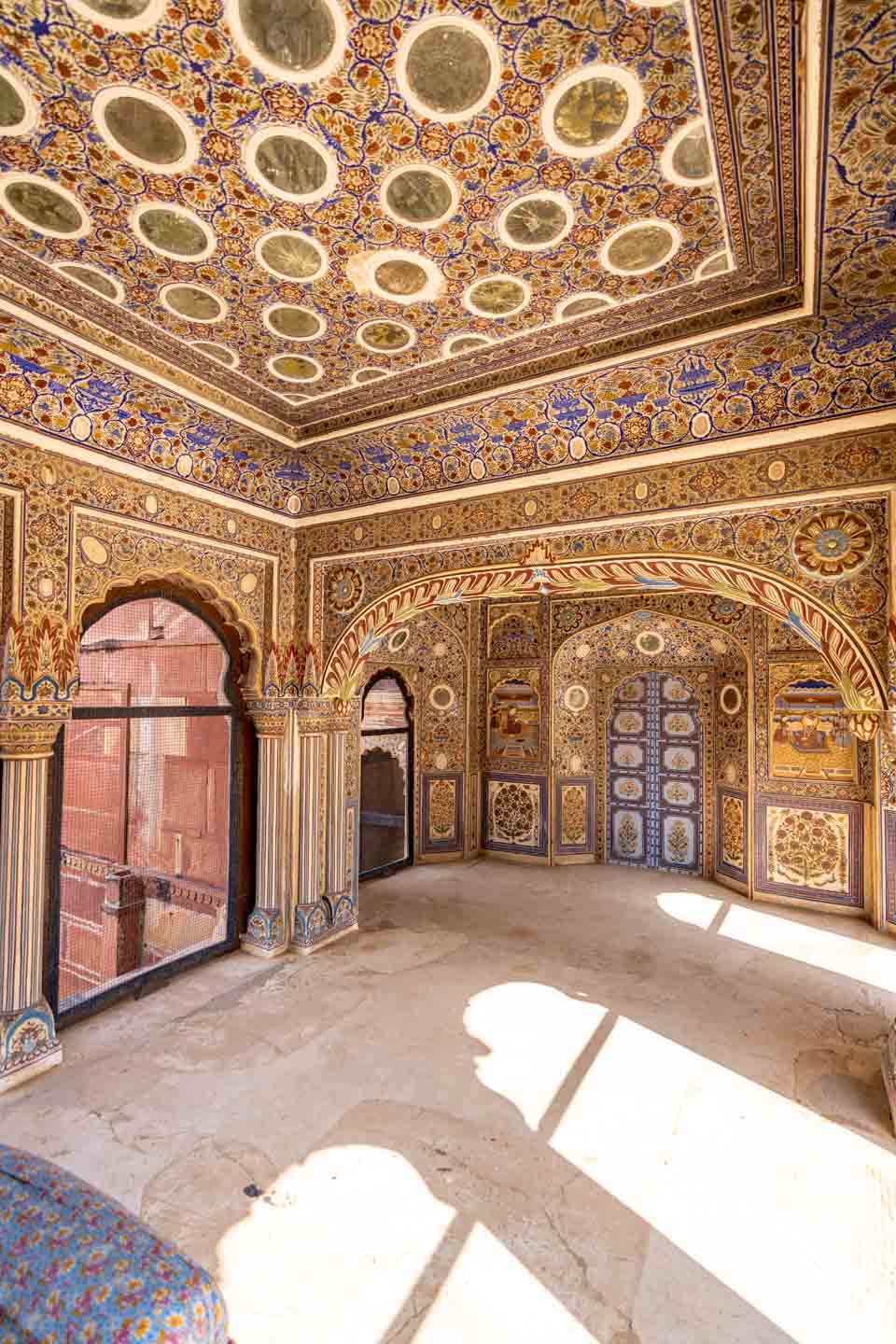
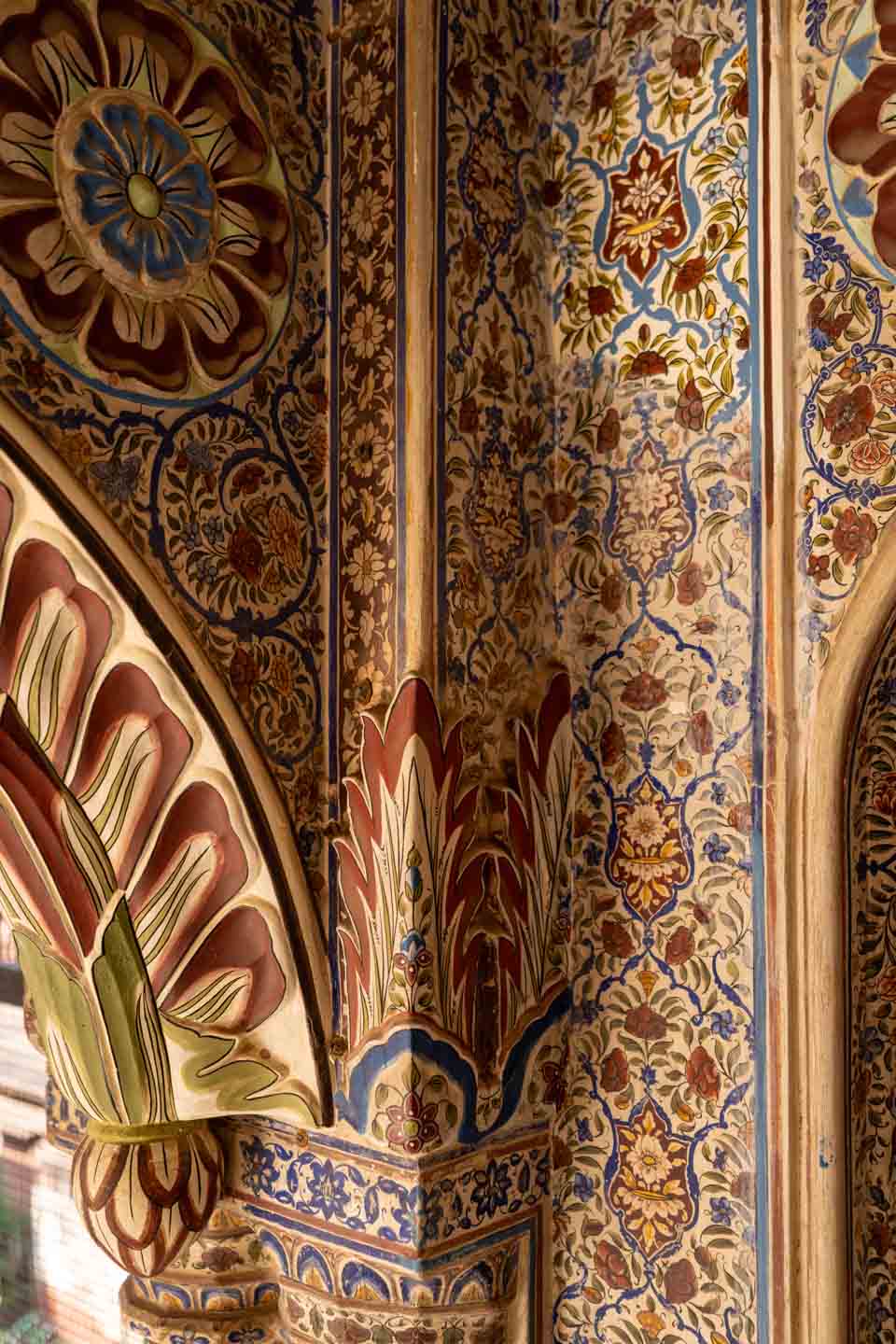
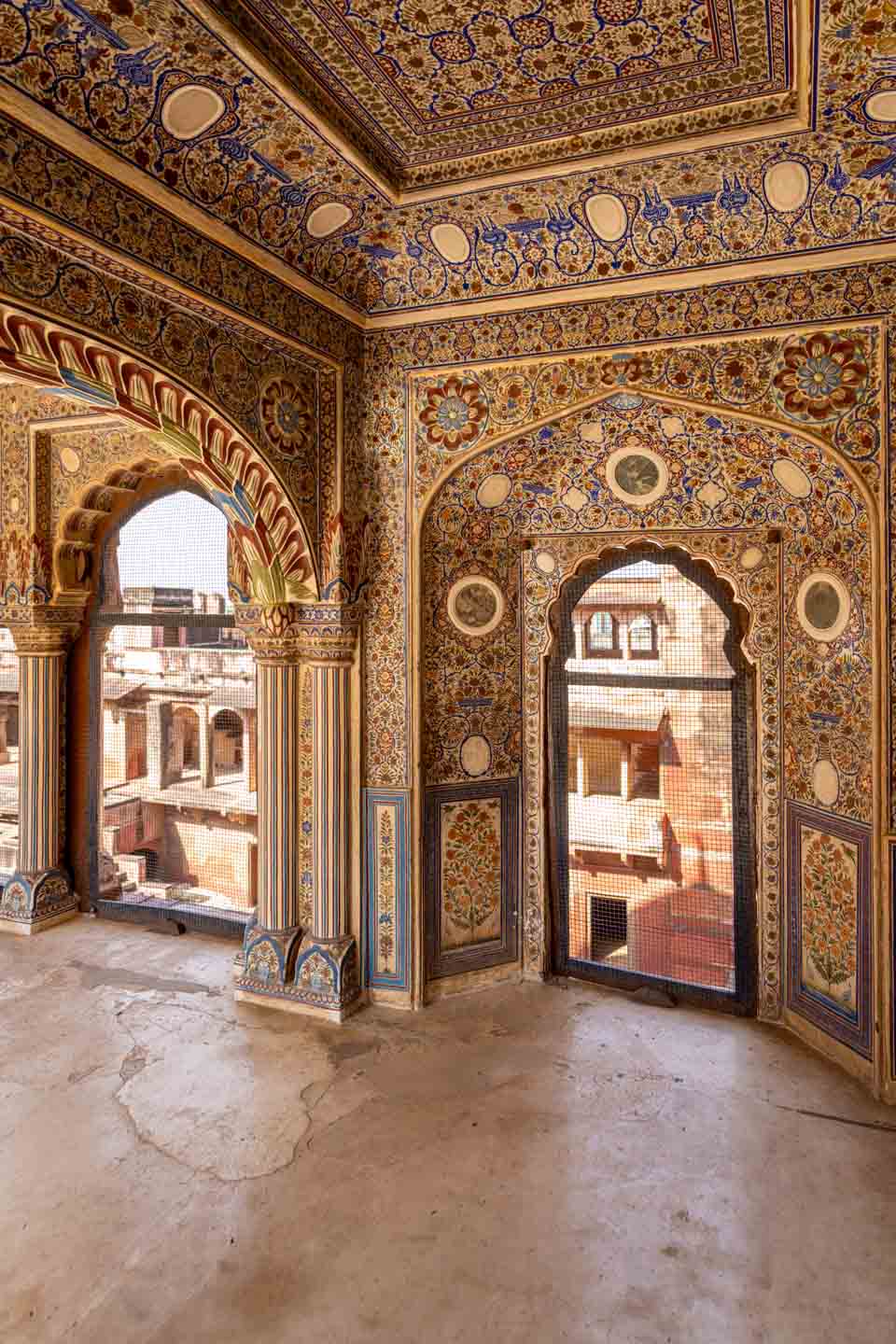
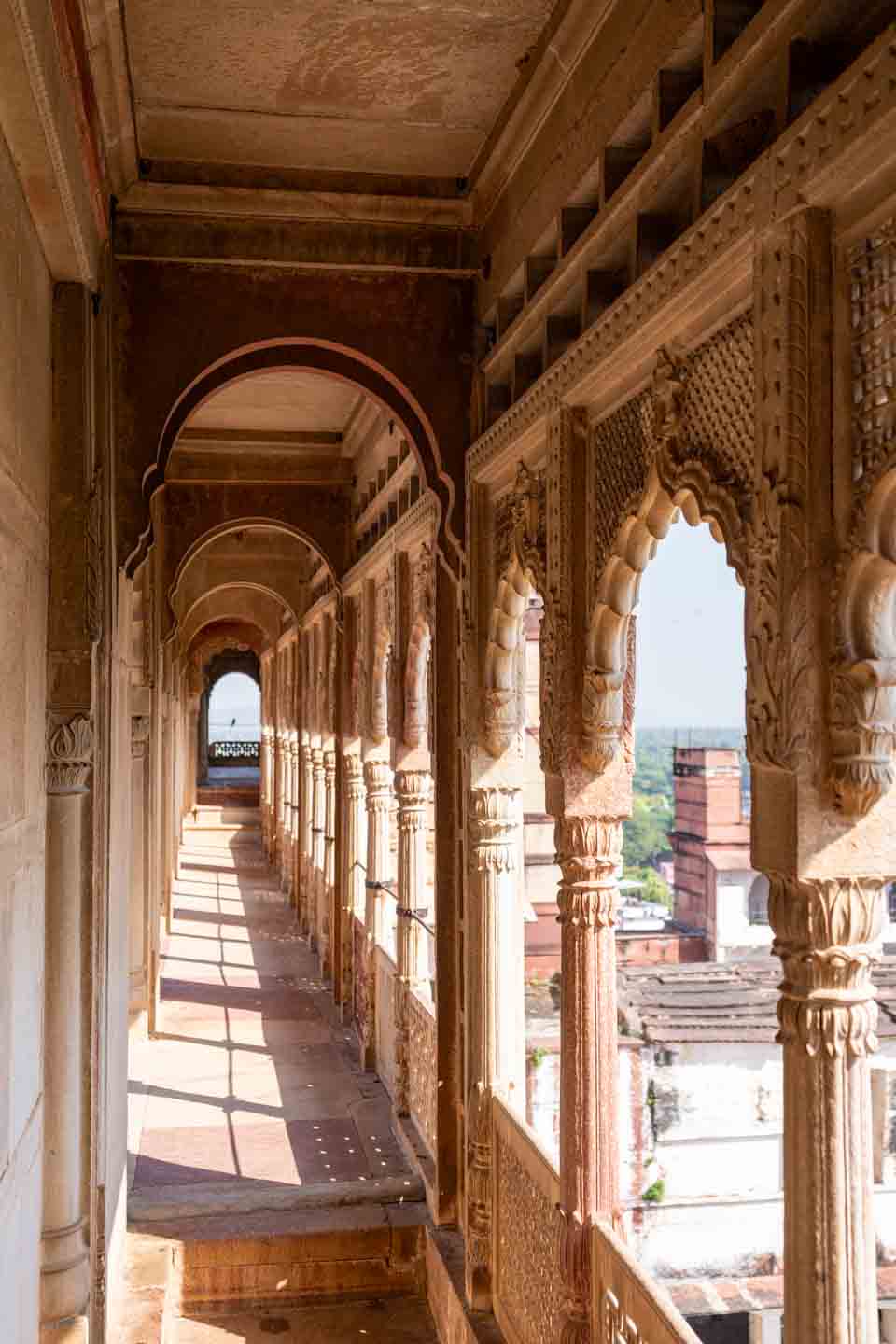
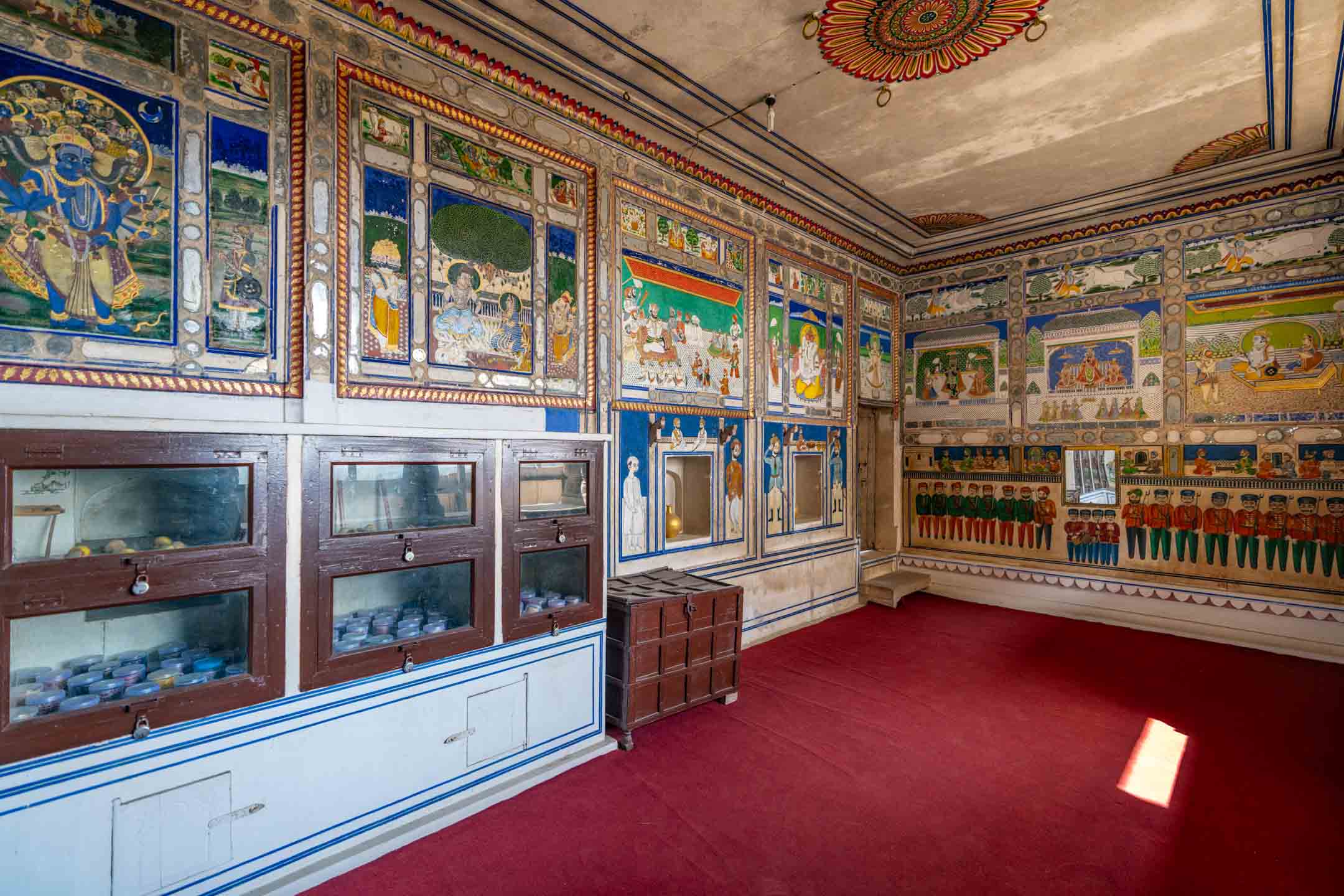
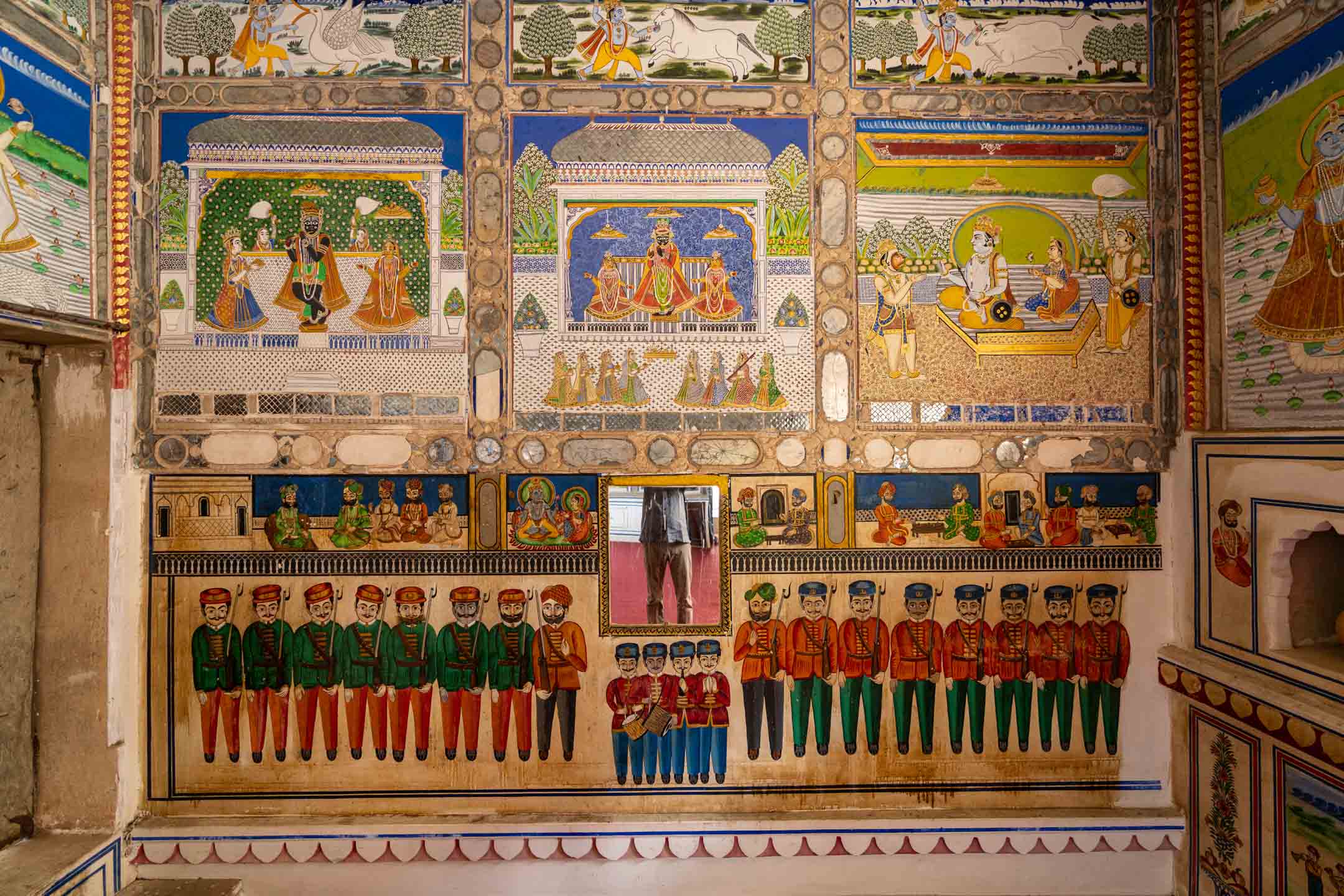
Inside the palace, richly decorated courtyards open into chambers lined with painted walls, carved pillars, and ornamental arches. Delicate jharokhas project from the upper sections of the palace, offering views across the city while maintaining privacy within the royal quarters.
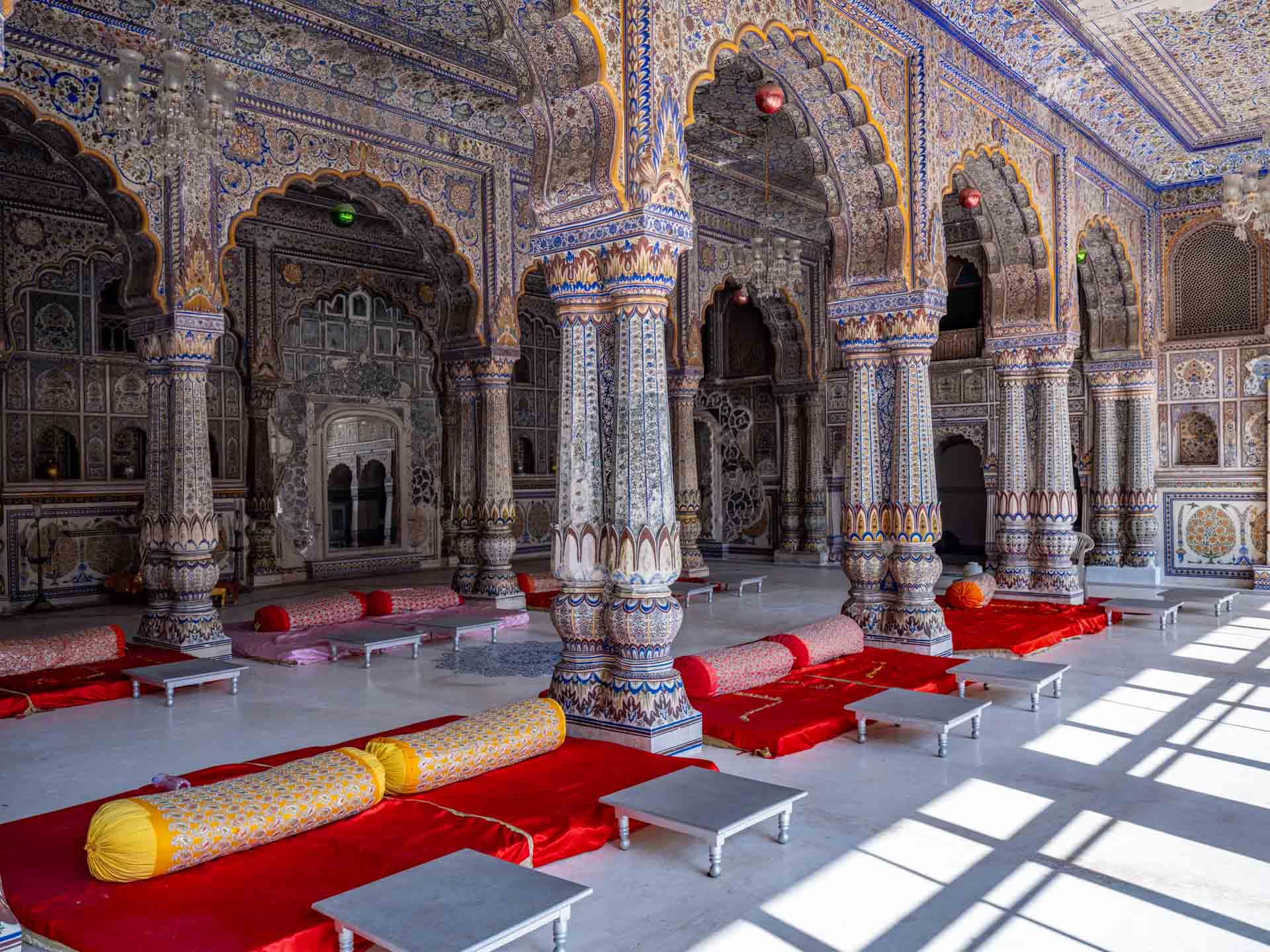
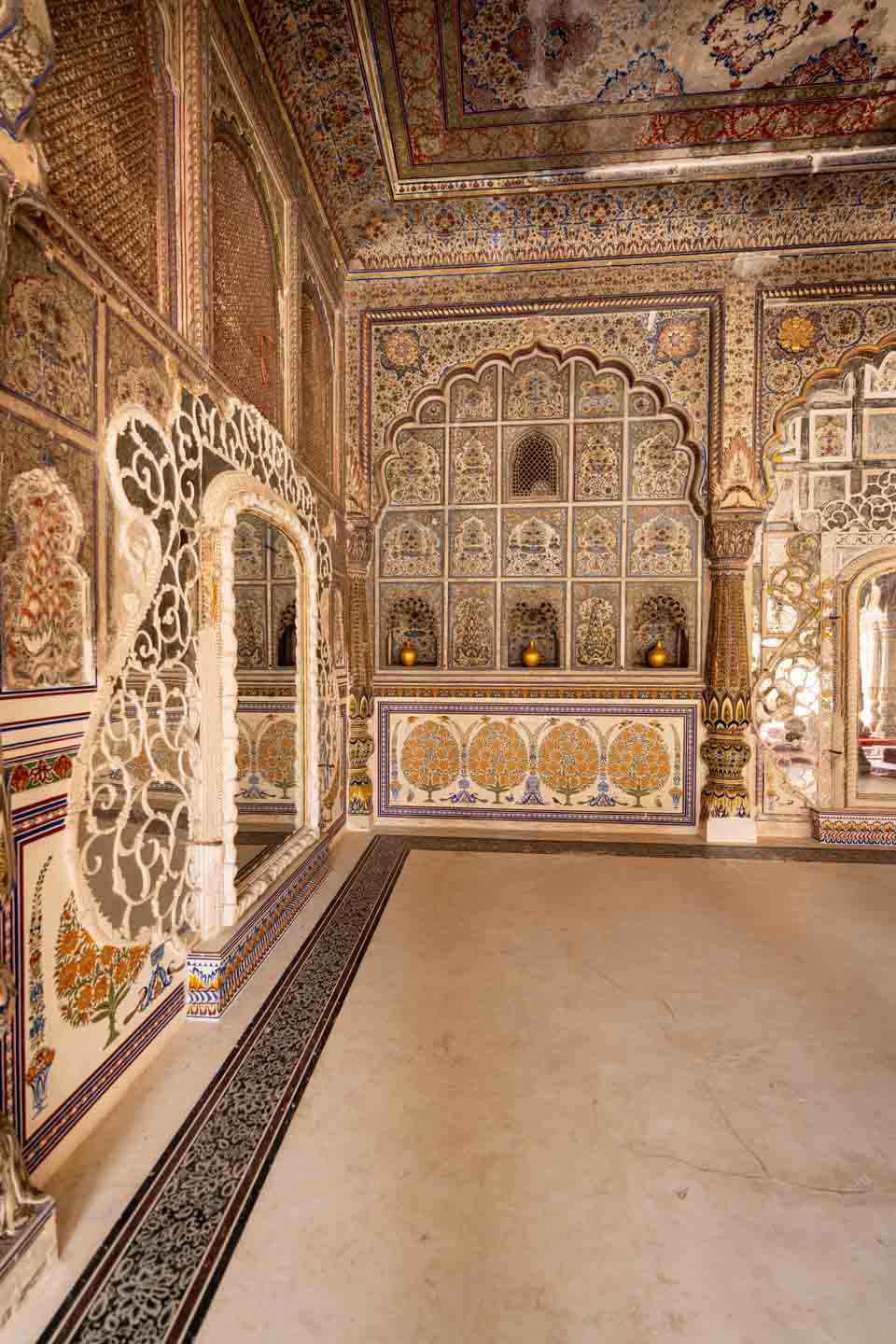
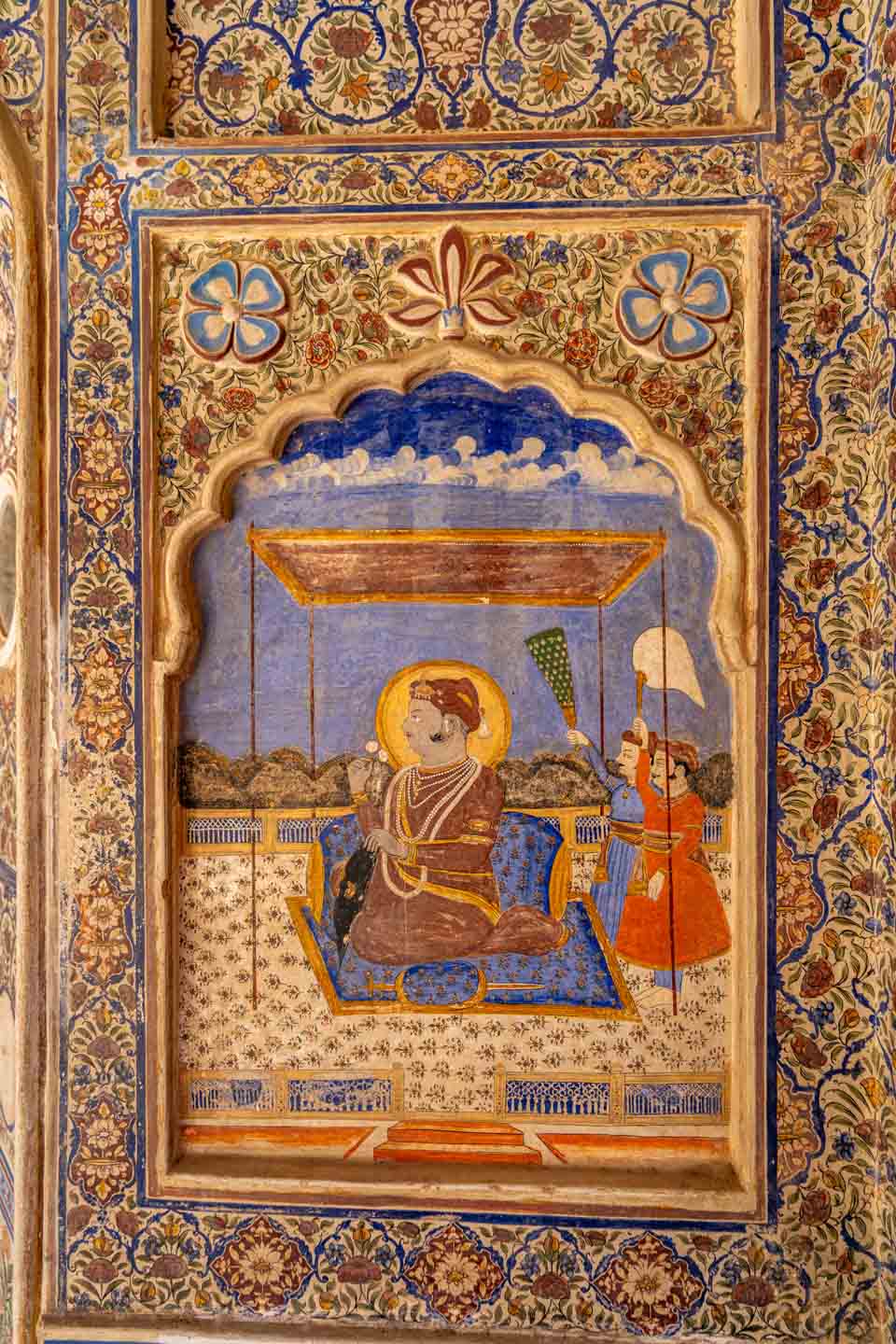
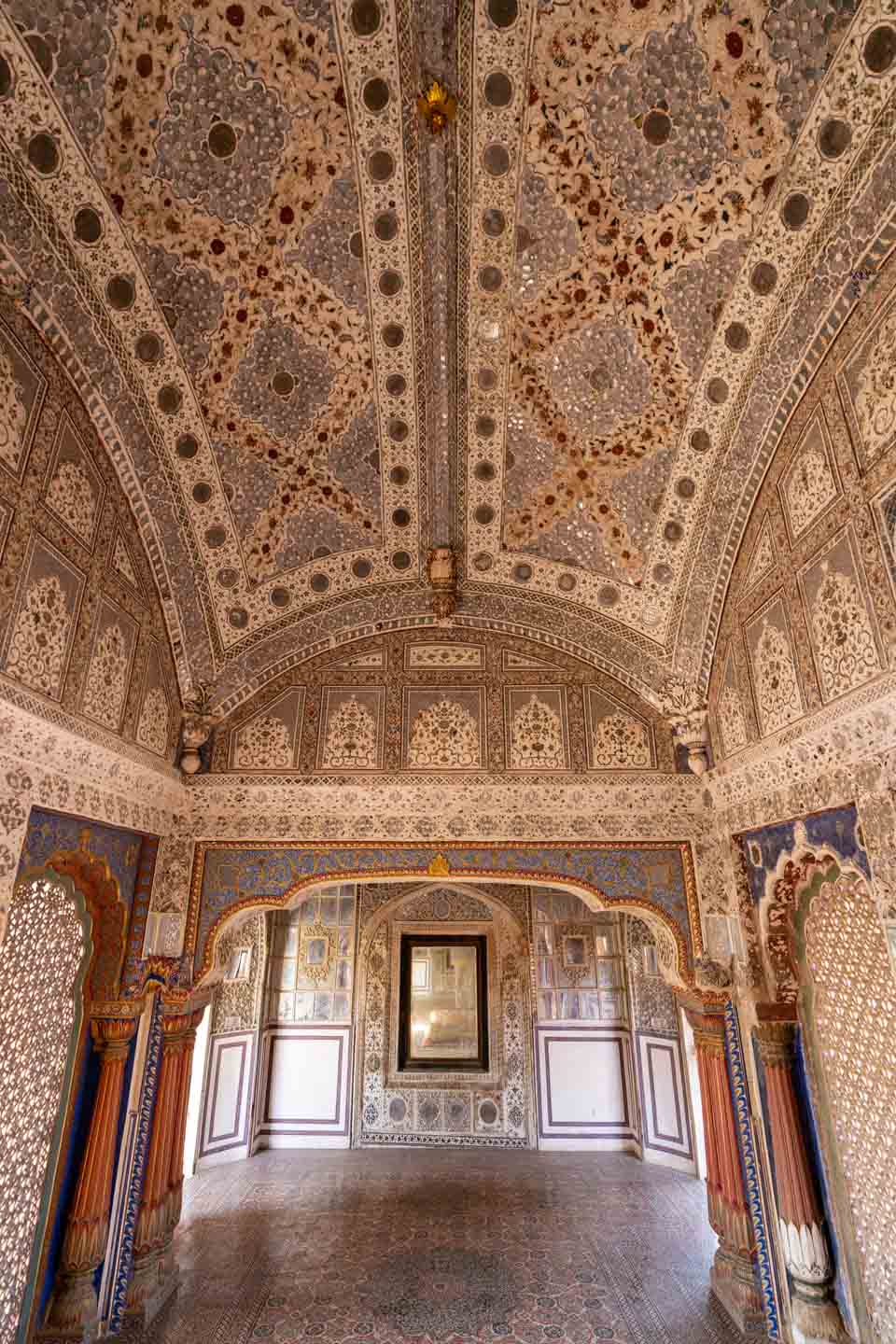
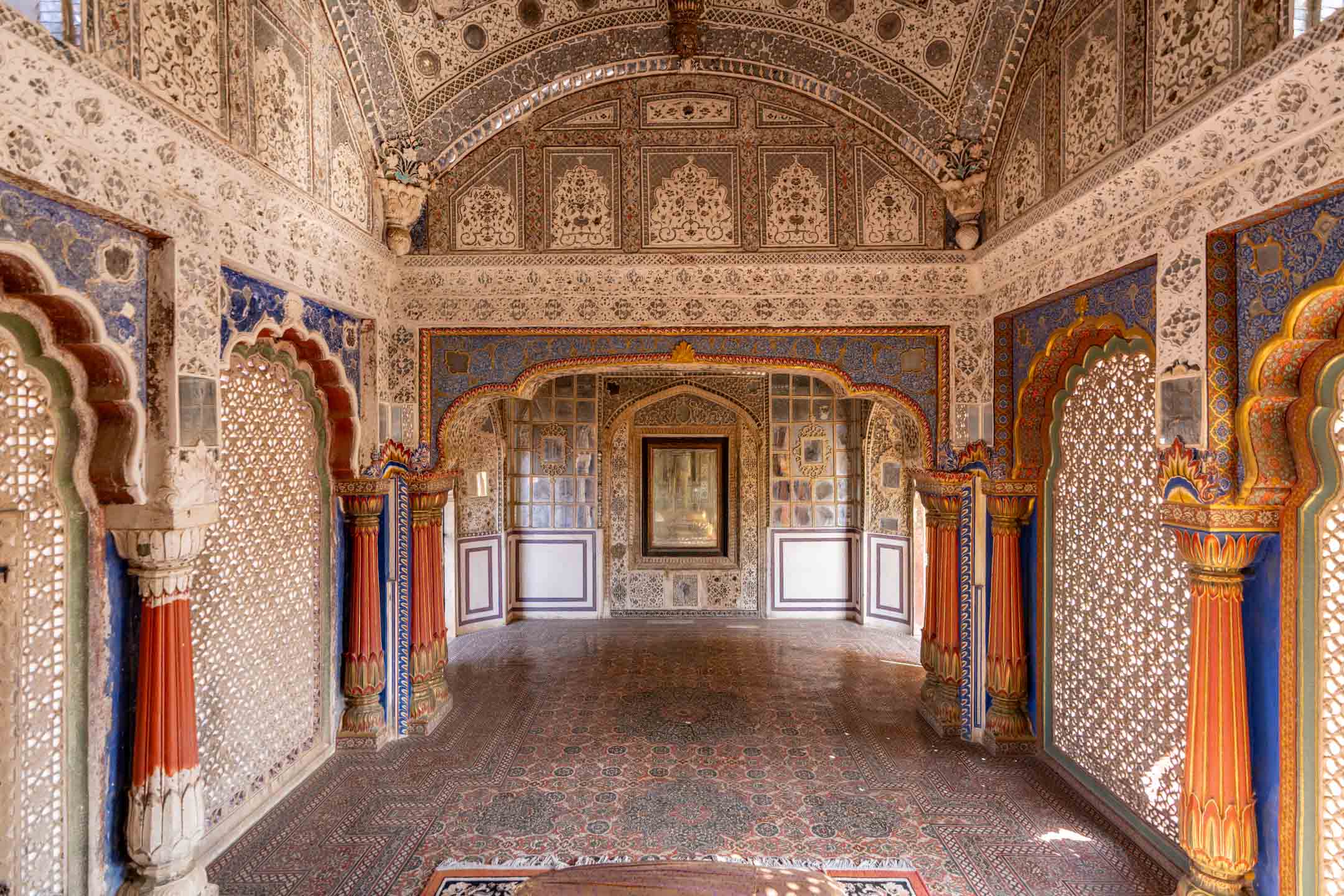
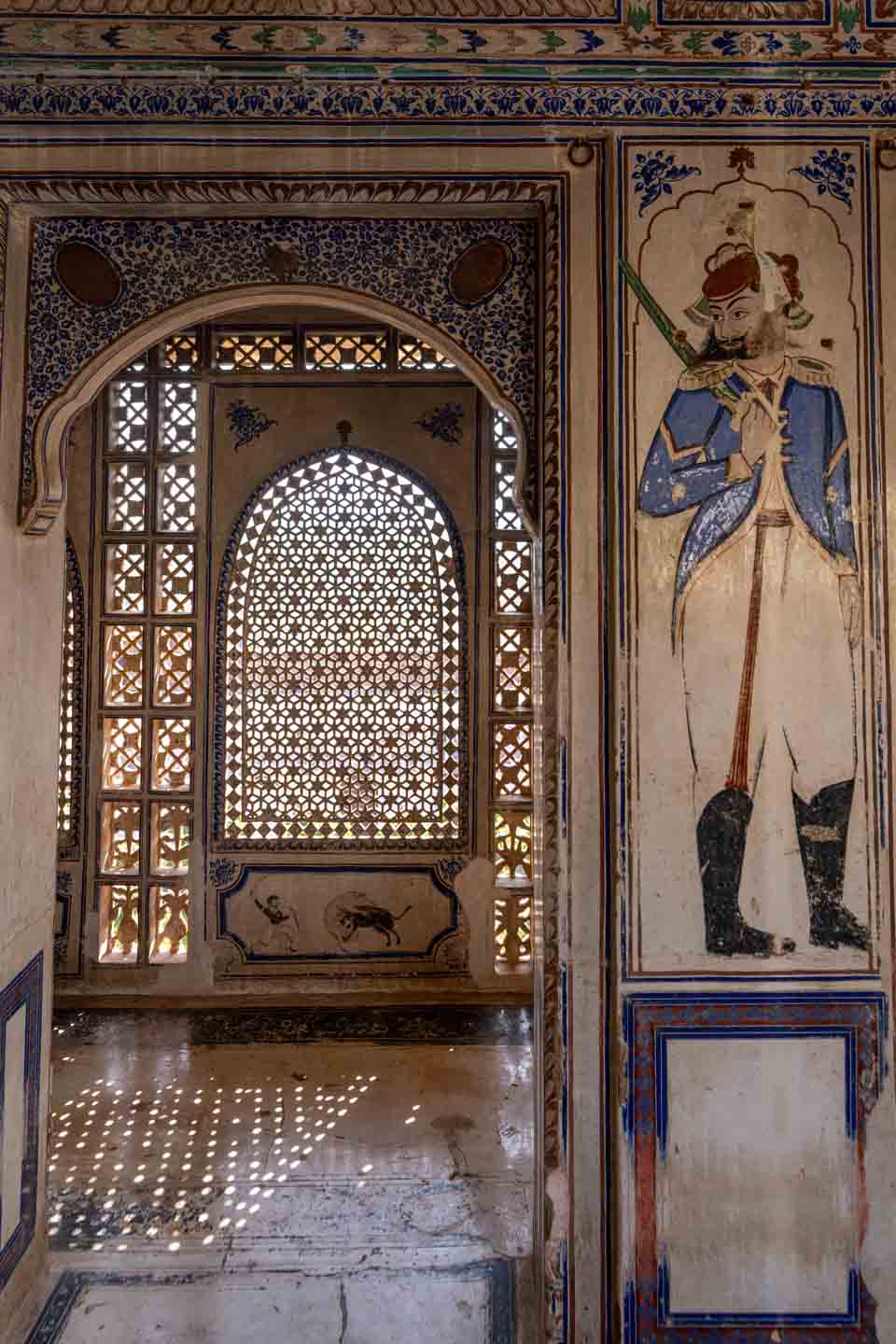
Many rooms still preserve traces of wall paintings, floral decorations, mirror work, and ornate ceilings. The interiors reveal a synthesis of Rajput courtly aesthetics and Mughal decorative influences.
Large audience halls within the palace once served as spaces where rulers conducted administration, diplomacy, and ceremonial gatherings. Carved columns, raised seating platforms, and decorative archways continue to reflect the ceremonial importance of these halls.
Certain sections of the palace contain intricately carved lattice screens that filtered sunlight into the interiors while also helping regulate heat during Rajasthan’s intense summers.
Royal Collections and Palace Displays
Parts of the palace preserve collections associated with the royal household of Karauli. Among the objects displayed are old weapons, swords, shields, ceremonial objects, textiles, and royal furniture connected to the princely history of the state.
Portraits of former rulers line sections of the interior halls, documenting the lineage of the Karauli royal family across generations. Old photographs and paintings provide glimpses into courtly life during the late princely era.
Some rooms contain objects associated with religious rituals conducted within the palace, reflecting the close relationship between kingship and temple patronage in Karauli’s history.
Decorative objects, manuscripts, and royal artifacts displayed within parts of the palace help reconstruct aspects of aristocratic life once connected to the royal court.
Culture and Food
The culture of Karauli reflects a blend of Rajput traditions, religious practices, local crafts, and rural influences from eastern Rajasthan. Festivals associated with Krishna devotion remain especially important within the city. Religious processions, devotional singing, temple gatherings, and seasonal fairs continue to shape public life. Traditional craftsmanship survives in local markets through textile work, decorative crafts, and religious objects sold in bazaars surrounding temple areas.
Food in Karauli reflects the culinary traditions of eastern Rajasthan. Local meals often include millet breads, lentils, spicy vegetable dishes, yogurt-based preparations, and sweets made with milk and clarified butter. Street vendors throughout the old city sell kachoris, pakoras, sweets, and tea. During temple festivals and religious gatherings, large community feasts and traditional food offerings continue to play an important role in social life.
Karauli remains a city shaped by red sandstone architecture, royal memory, and religious tradition. Its palace courtyards, temple complexes, narrow bazaars, and old residential quarters continue to preserve the atmosphere of a historic Rajput principality.
Beneath the weathered walls, carved balconies, and temple bells of the old city survives a landscape where architecture, religion, and princely history remain deeply connected, a quieter yet significant chapter in the larger history of Rajasthan.