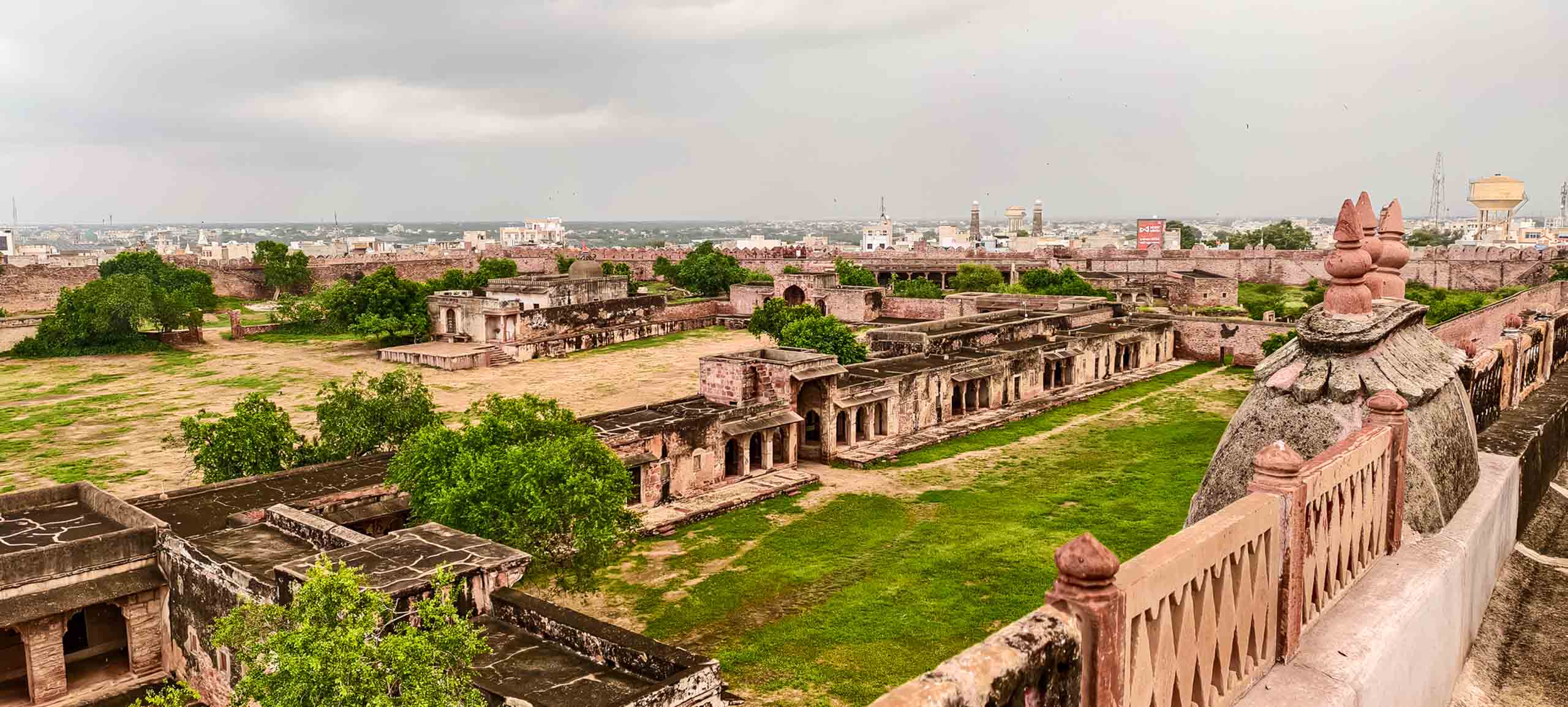
Nagaur Fort — The Heart of Rajasthan
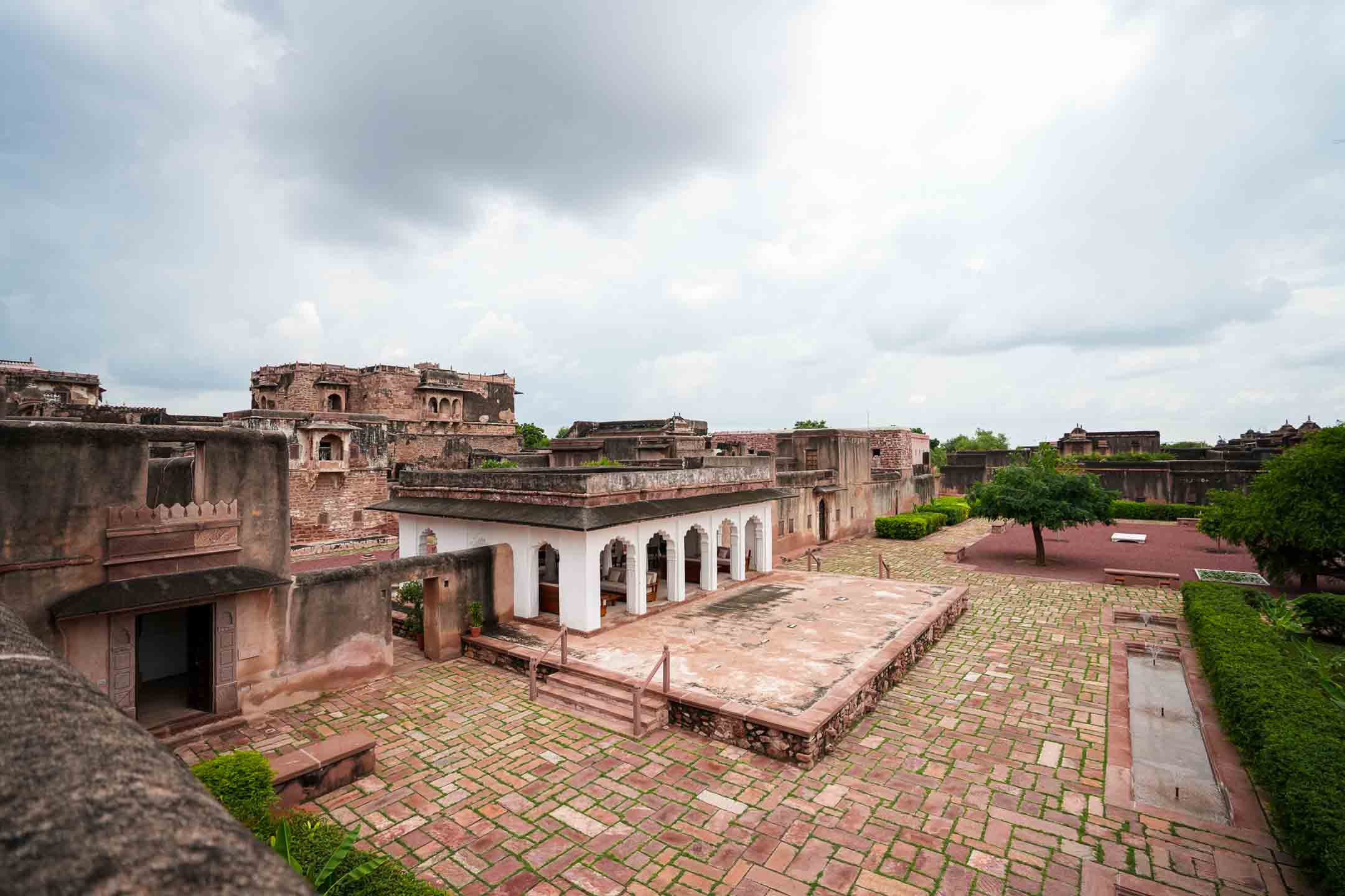
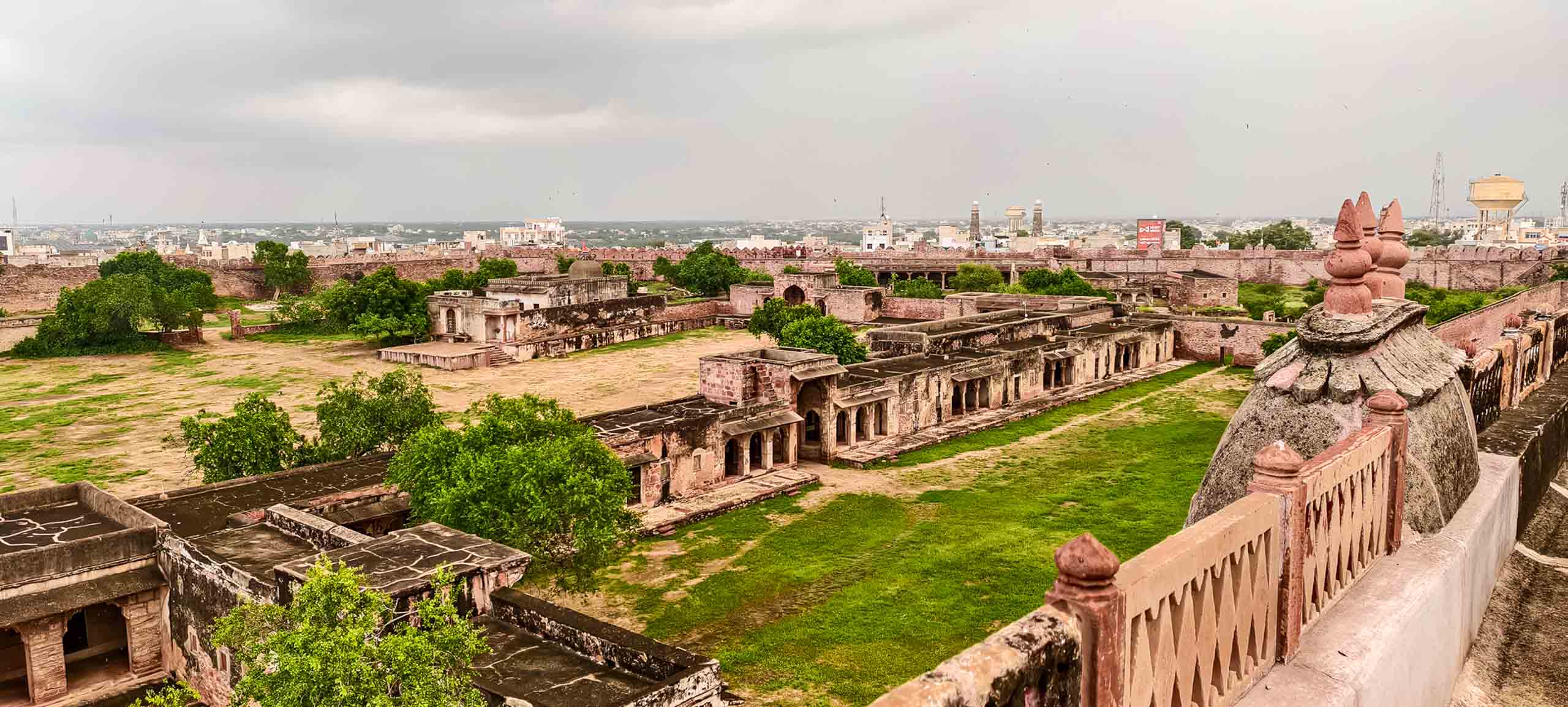
Nagaur Fort, historically known as Ahhichatragarh Fort, stands among the most remarkable fortified complexes in Rajasthan and western India. Spread across nearly thirty-six acres within the historic town of Nagaur, the fort preserves an extraordinary combination of military architecture, royal palaces, painted chambers, gardens, temples, water systems, gateways, and ceremonial spaces that together reflect almost nine centuries of political and cultural history.
Ahhichatragarh emerges from the plains bordering the Thar Desert. Its importance lies not only in its military scale and strategic role, but also in the remarkable survival of painted interiors, Mughal-influenced palaces, ceremonial halls, gardens, and complex hydraulic systems that rarely survive so extensively elsewhere in Rajasthan.
Today, the fort is internationally recognized as one of India’s most successful conservation-led restoration projects, where traditional craftsmanship has revived not only architecture but also historic decorative arts.
Nagaur: A Historic Desert Town
Nagaur lies in northwestern Rajasthan between Jodhpur and Bikaner, positioned strategically on historic trade and military routes that once connected Delhi with Central Asia, Sindh, Gujarat, and western Rajasthan. The region forms a transitional landscape between the fertile plains of northern India and the arid expanses of the Thar Desert.
For centuries, Nagaur functioned as a major center of commerce and movement. Caravans carrying horses, salt, spices, grains, textiles, and opium passed through the town. Control over Nagaur therefore meant control over trade routes, taxation, military movement, and access to desert territories.
Nagaur also emerged as an important center of spiritual and cultural life. Sufi traditions flourished here, particularly around the shrine of Khwaja Hamiduddin Nagauri, the celebrated disciple of Moinuddin Chishti. Even today, Nagaur retains a layered cultural identity shaped by Rajput courts, Mughal influence, Islamic scholarship, caravan trade, and pastoral desert traditions.
The surrounding landscape appears austere at first glance. Flat plains stretch toward the horizon, interrupted by scrub vegetation, grazing lands, seasonal lakes, and villages built from sandstone and lime. Yet historically, this region supported powerful kingdoms, thriving trade networks, and sophisticated settlements adapted to desert life.
Origins of Ahhichatragarh Fort
The name Ahhichatragarh derives from the Sanskrit words ahi (serpent), chatra (hood or canopy), and garh (fort), together translated as “Fort of the Hooded Cobra.” The symbolism likely represented protection, sovereignty, and martial power.
The earliest fortifications at Nagaur are believed to date to the twelfth century, a period marked by continuous military conflict between Rajput dynasties and invading powers from Central Asia and Afghanistan. Nagaur emerged as a strategically important frontier military center during this era.
Over the centuries, the fort passed through the hands of several ruling powers, including the Chauhans, the Delhi Sultanate, the Mughals, and the Rathores of Marwar. Each successive dynasty expanded and modified the complex according to changing military requirements, political ambitions, and architectural tastes.
This layered history remains visible in the fort itself. Its massive ramparts and gateways reflect medieval military planning, while its palaces and decorative interiors reveal Mughal refinement combined with late Rajput courtly aesthetics.
During the Mughal period, Nagaur became an important diplomatic and administrative center where Rajput rulers negotiated alliances with the imperial court. These interactions profoundly influenced the architecture and artistic culture of the fort.
Military Architecture and Defensive Design
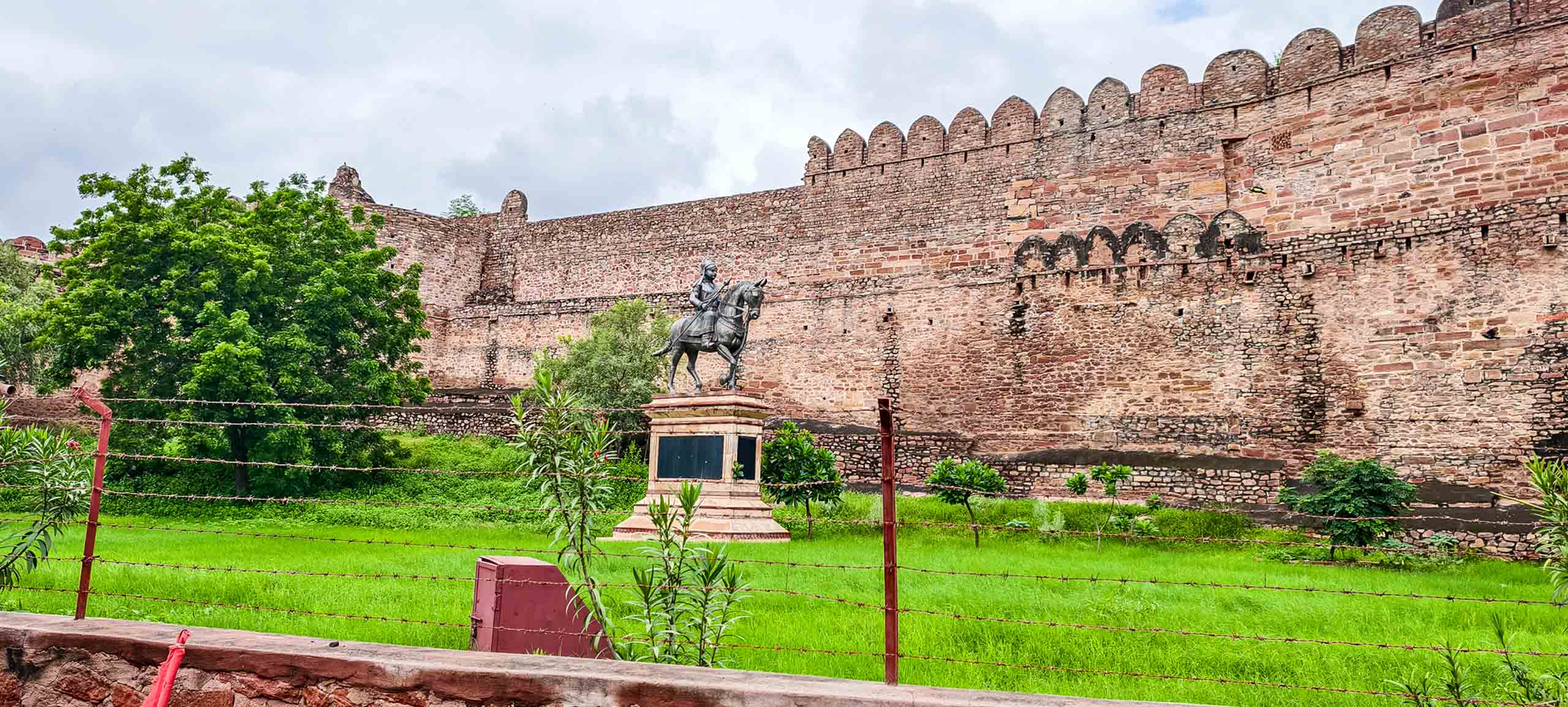
Viewed from a distance, Ahhichatragarh presents a powerful and imposing profile above the plains. Massive outer ramparts encircle the fort, reinforced by rounded bastions and fortified gateways. Constructed primarily from stone and lime mortar, the walls were designed to withstand prolonged siege warfare.
The defensive layout demonstrates careful military planning. Visitors enter through a sequence of angled gateways intended to slow advancing armies and prevent direct cavalry charges. Narrow passages forced attackers into confined spaces where defenders could more effectively control movement.
The moat surrounding sections of the fort provided additional protection, particularly important in flat terrain where natural hill defenses were absent. Bastions positioned along the ramparts allowed archers and later artillery units to monitor approaches from all directions.
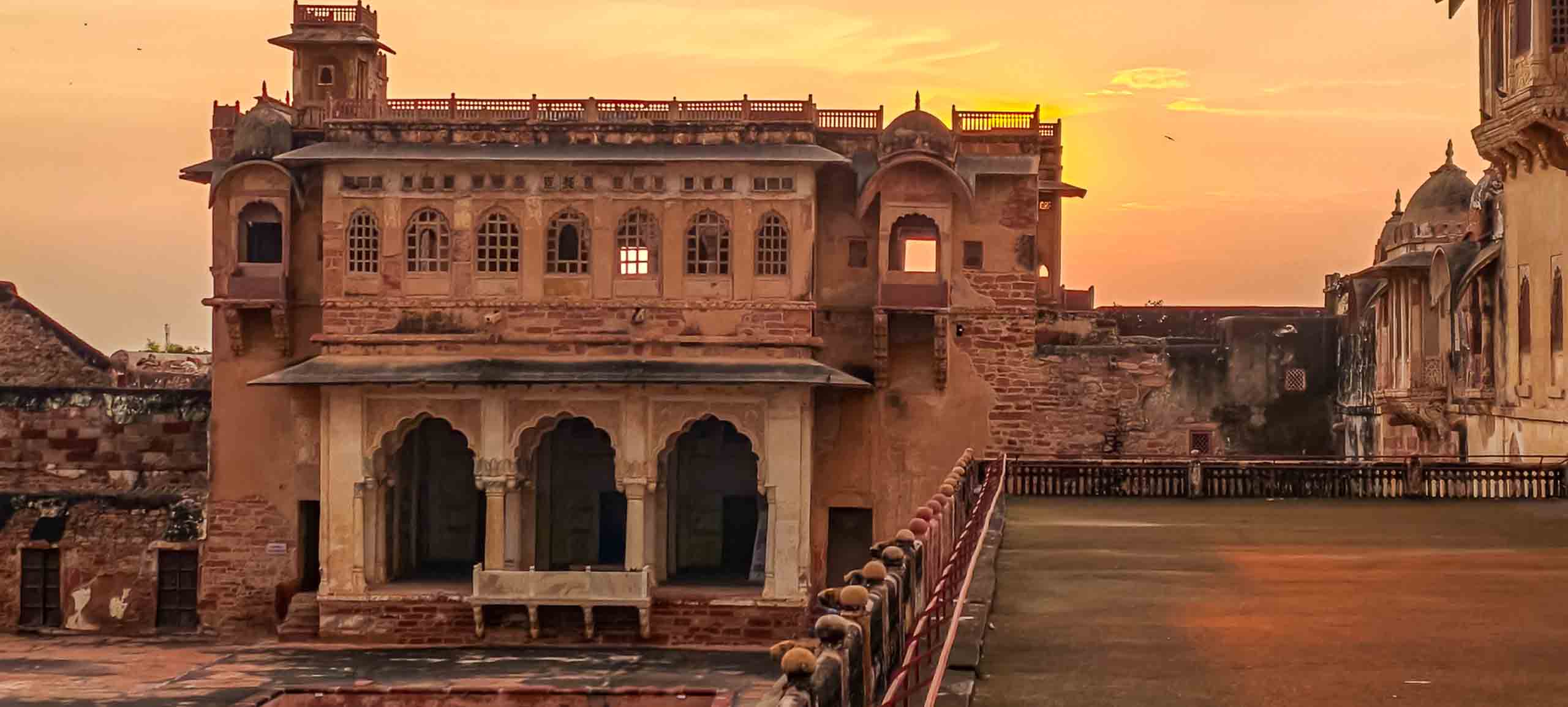
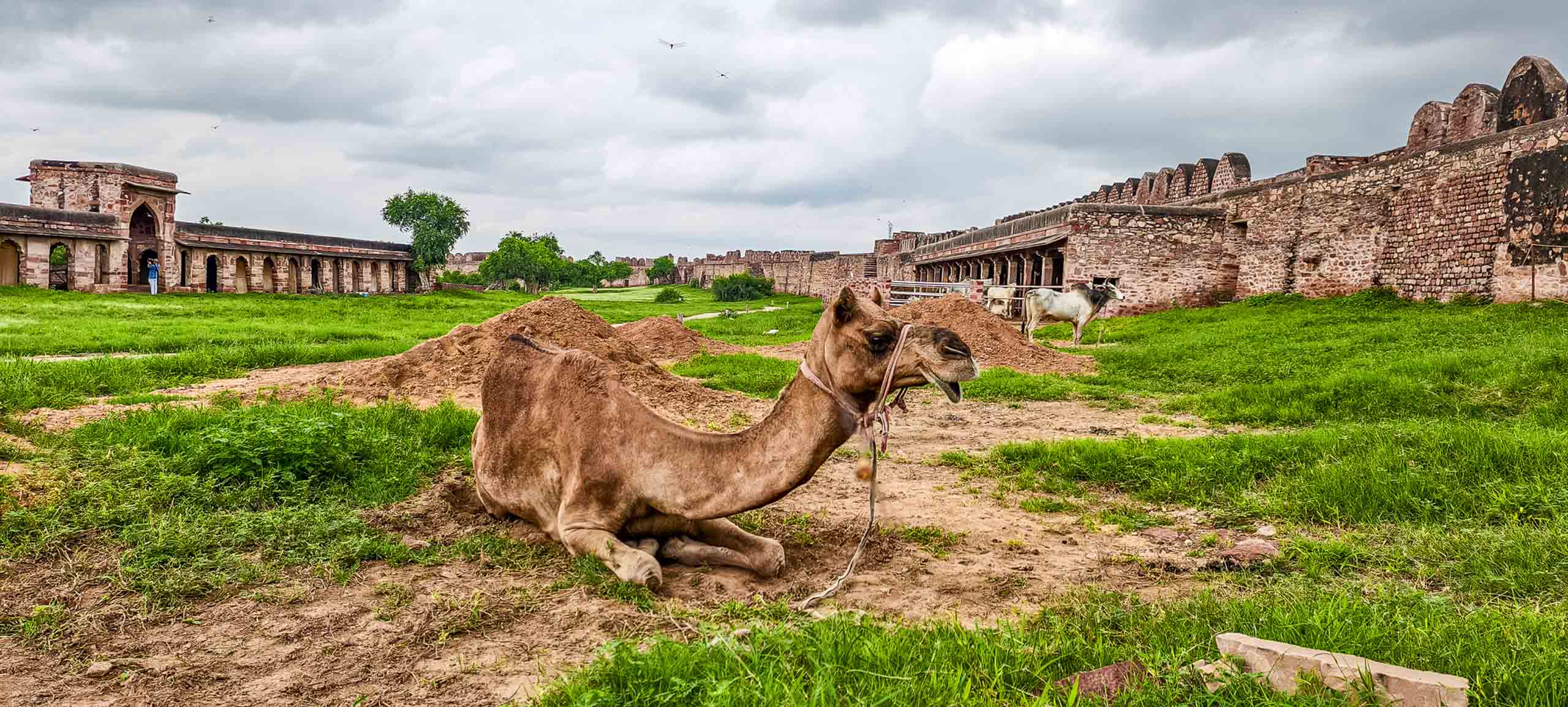
Unlike many smaller desert forts, Ahhichatragarh functioned as a self-contained urban complex. Within its walls stood royal residences, administrative halls, temples, barracks, granaries, workshops, stables, gardens, and water reservoirs capable of sustaining long-term occupation during conflict.
Transformation into a Royal Court
Although originally conceived as a military stronghold, Ahhichatragarh gradually evolved into an important royal residence.
This transformation became especially significant during the seventeenth and eighteenth centuries under the Rathore rulers of Marwar. The most influential patron associated with Nagaur was Bakhat Singh, who governed Nagaur before later becoming Maharaja of Jodhpur.
Bakhat Singh was both a military commander and an important patron of architecture and the arts. Under his rule, the fort underwent extensive development.
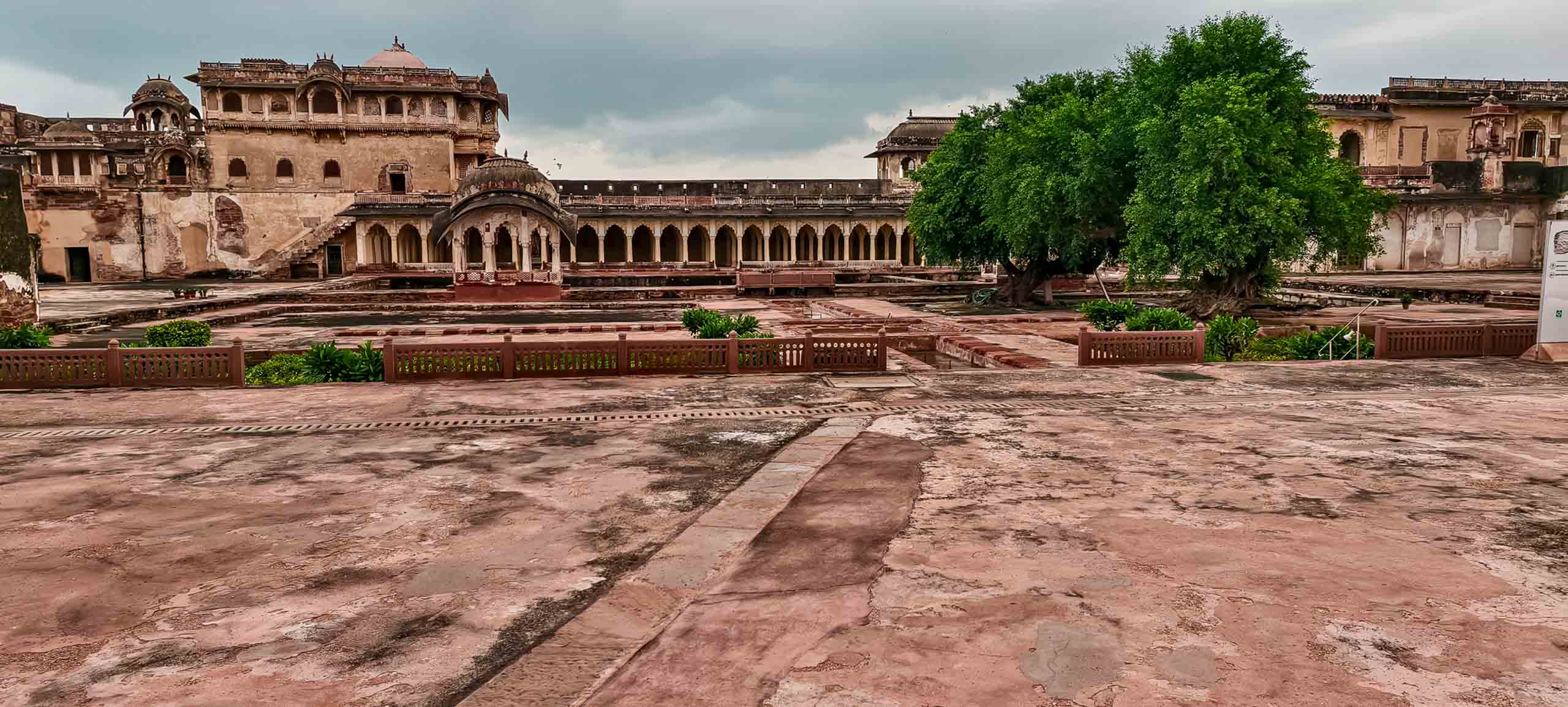
Palaces, painted halls, pleasure pavilions, fountains, gardens, and ceremonial spaces transformed the austere military citadel into a refined center of administration and aristocratic life.
Diplomatic meetings, poetry gatherings, musical performances, seasonal celebrations, and royal ceremonies would all have taken place within these palace complexes. Architecture increasingly expressed not only political authority and military strength, but also elegance, leisure, and artistic patronage.
Architectural Style and Spatial Planning
One of the most remarkable features of Nagaur Fort is the fusion of Rajput and Mughal architectural traditions.
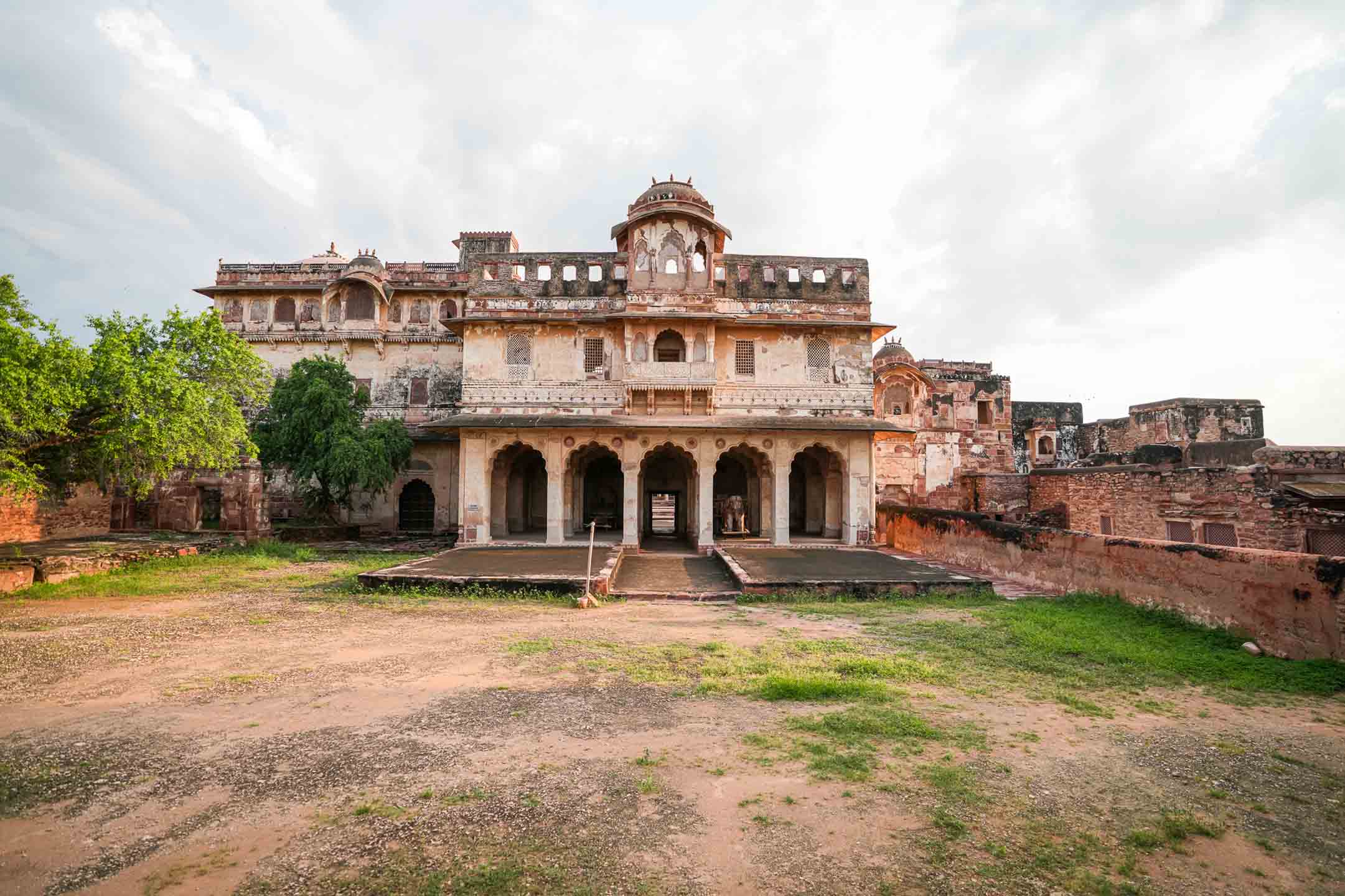
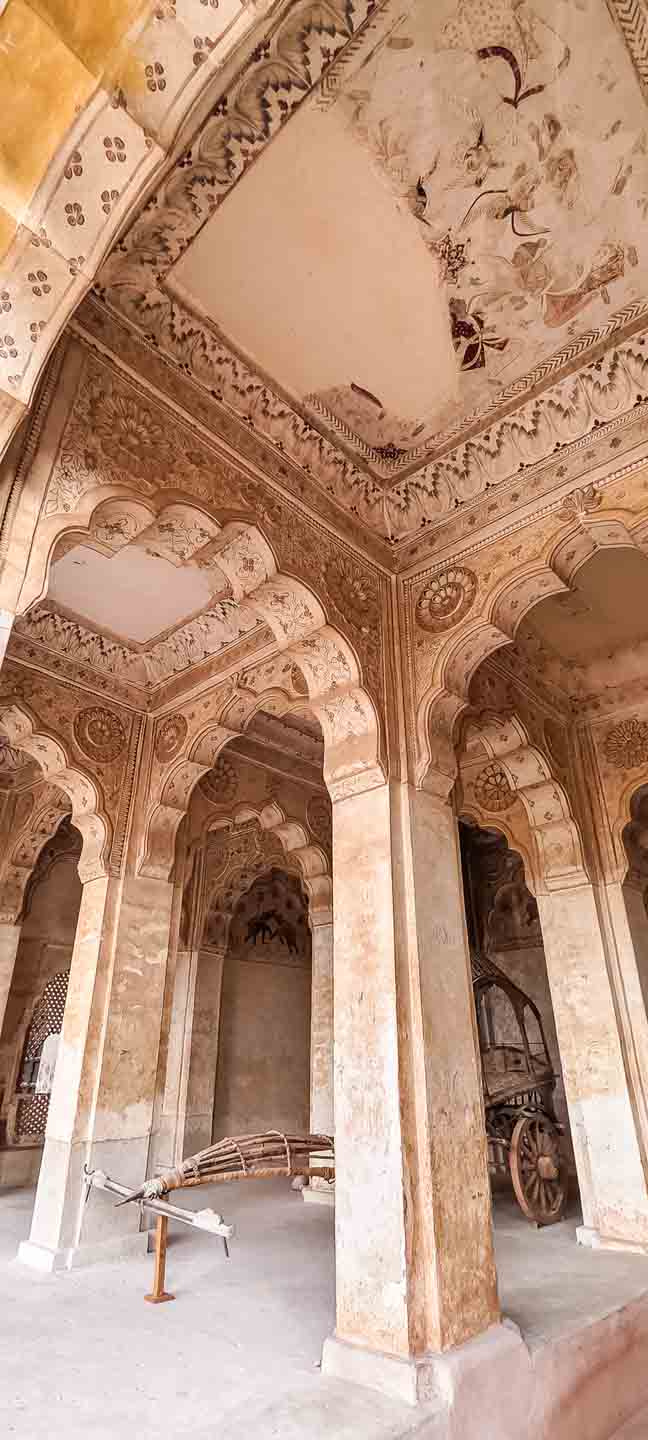
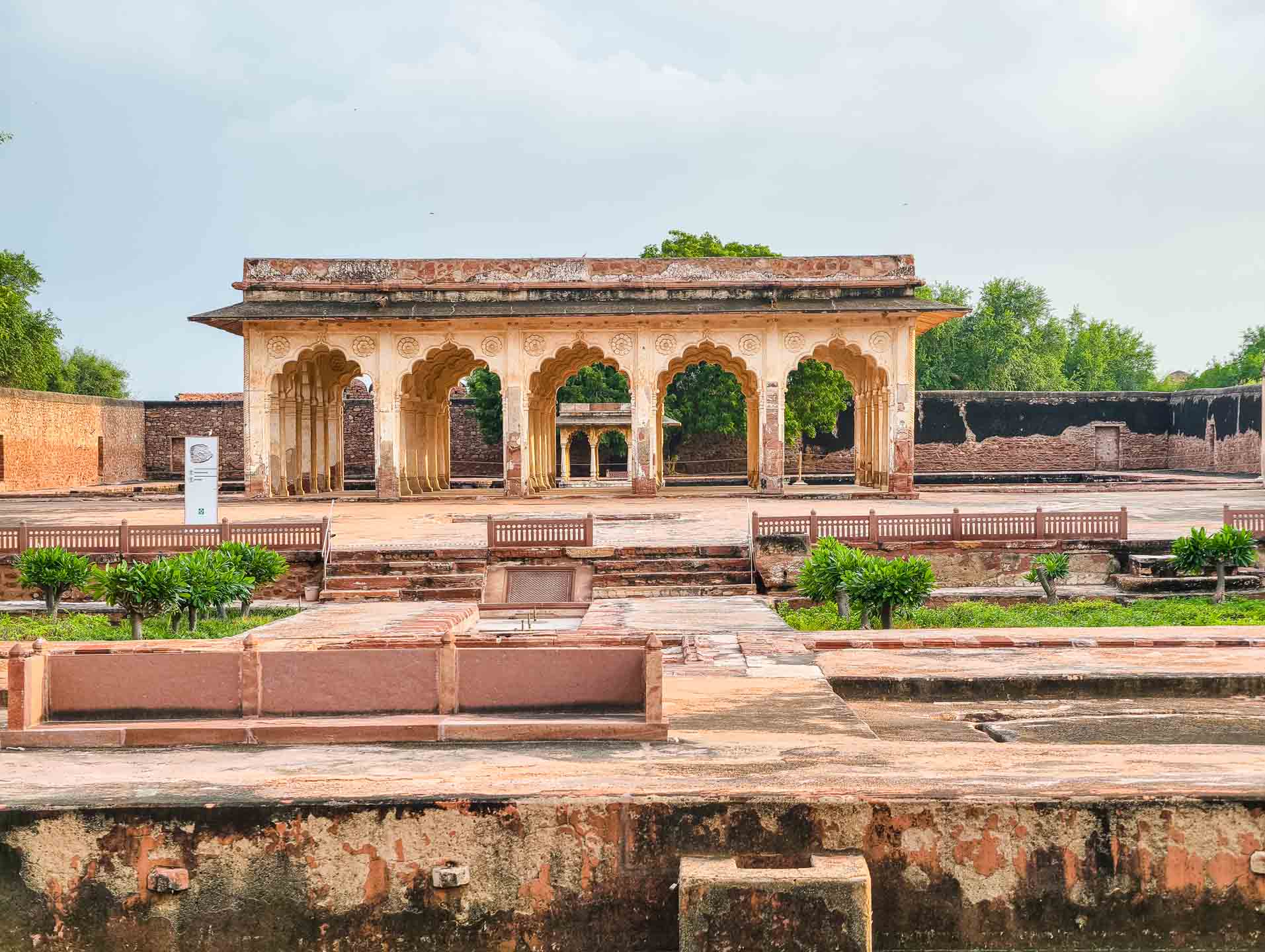
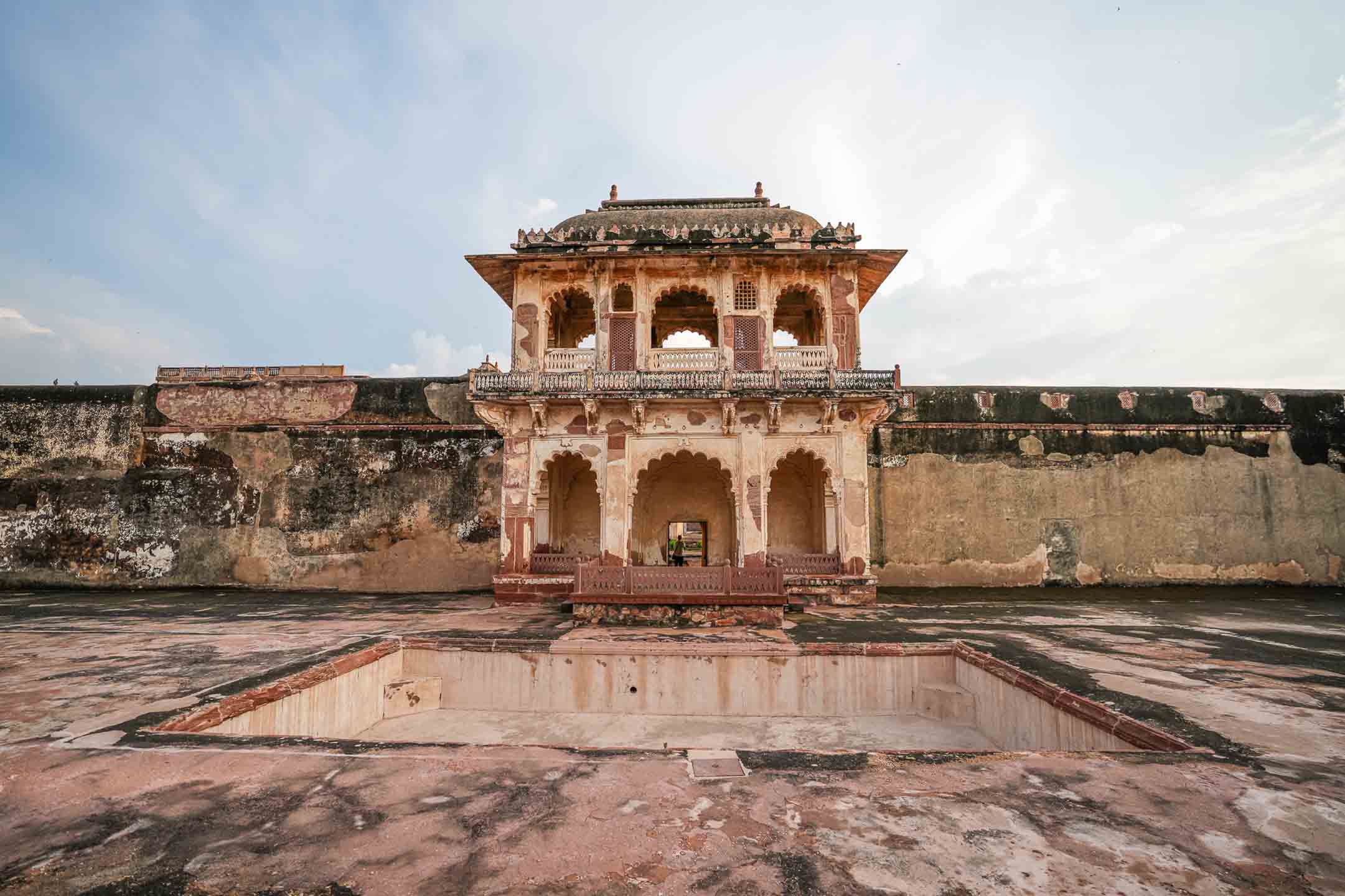
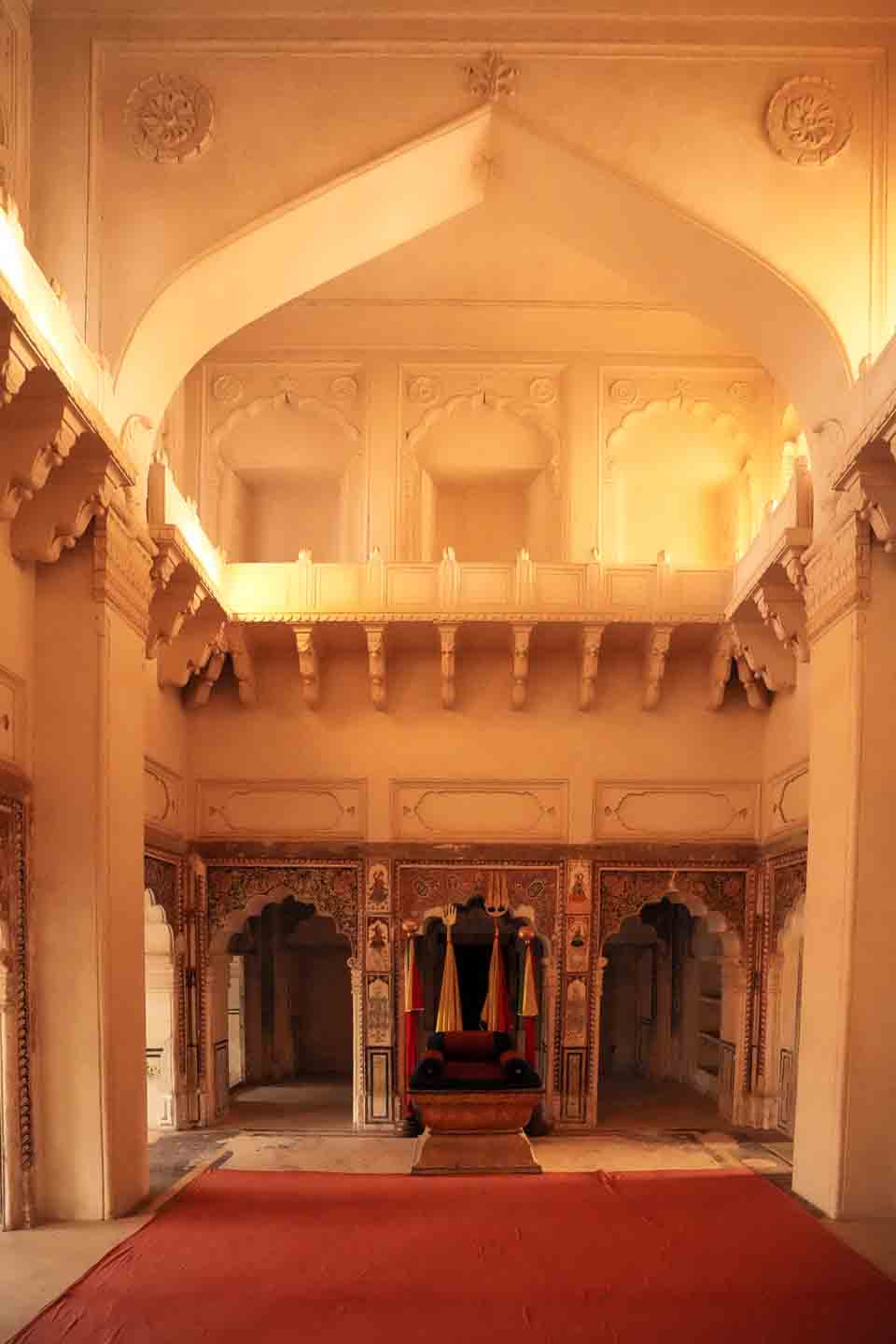
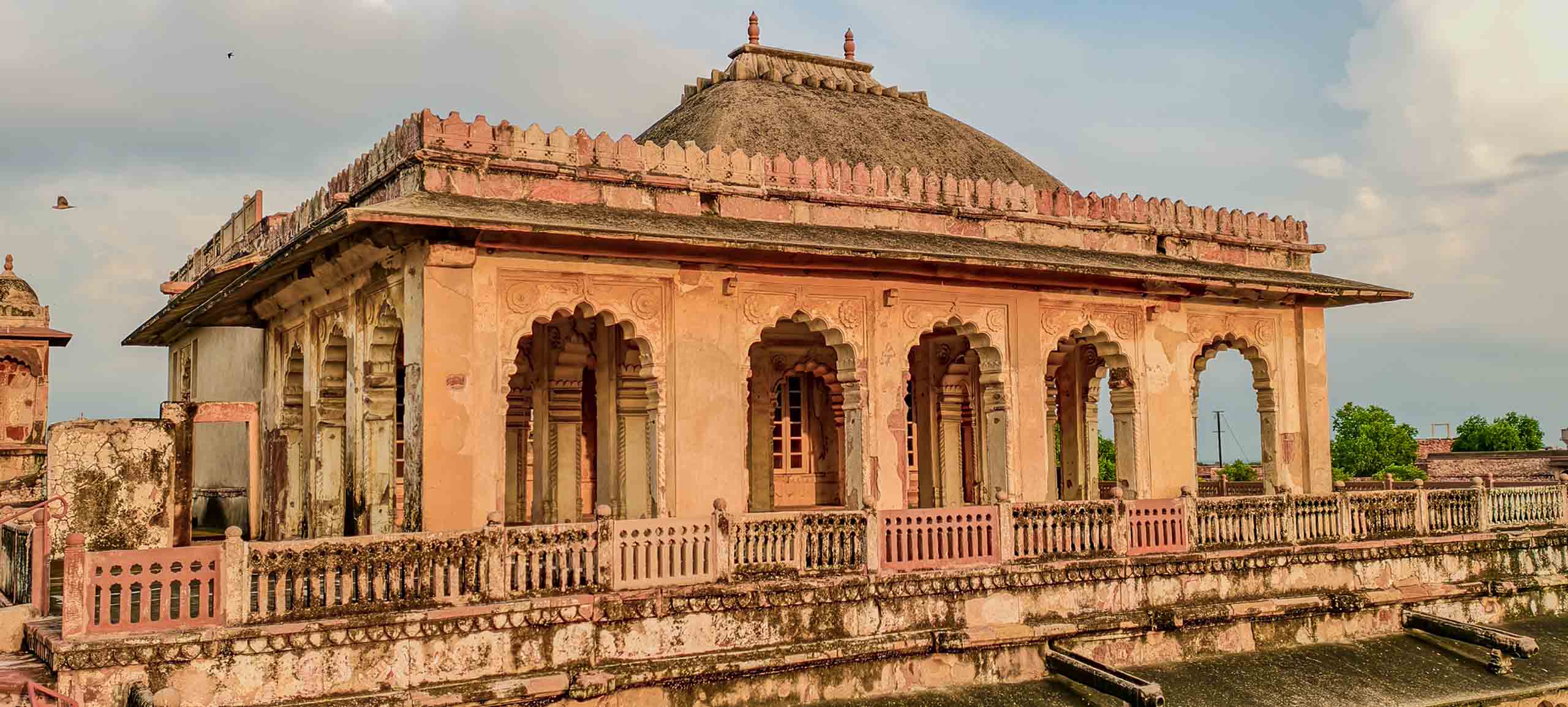
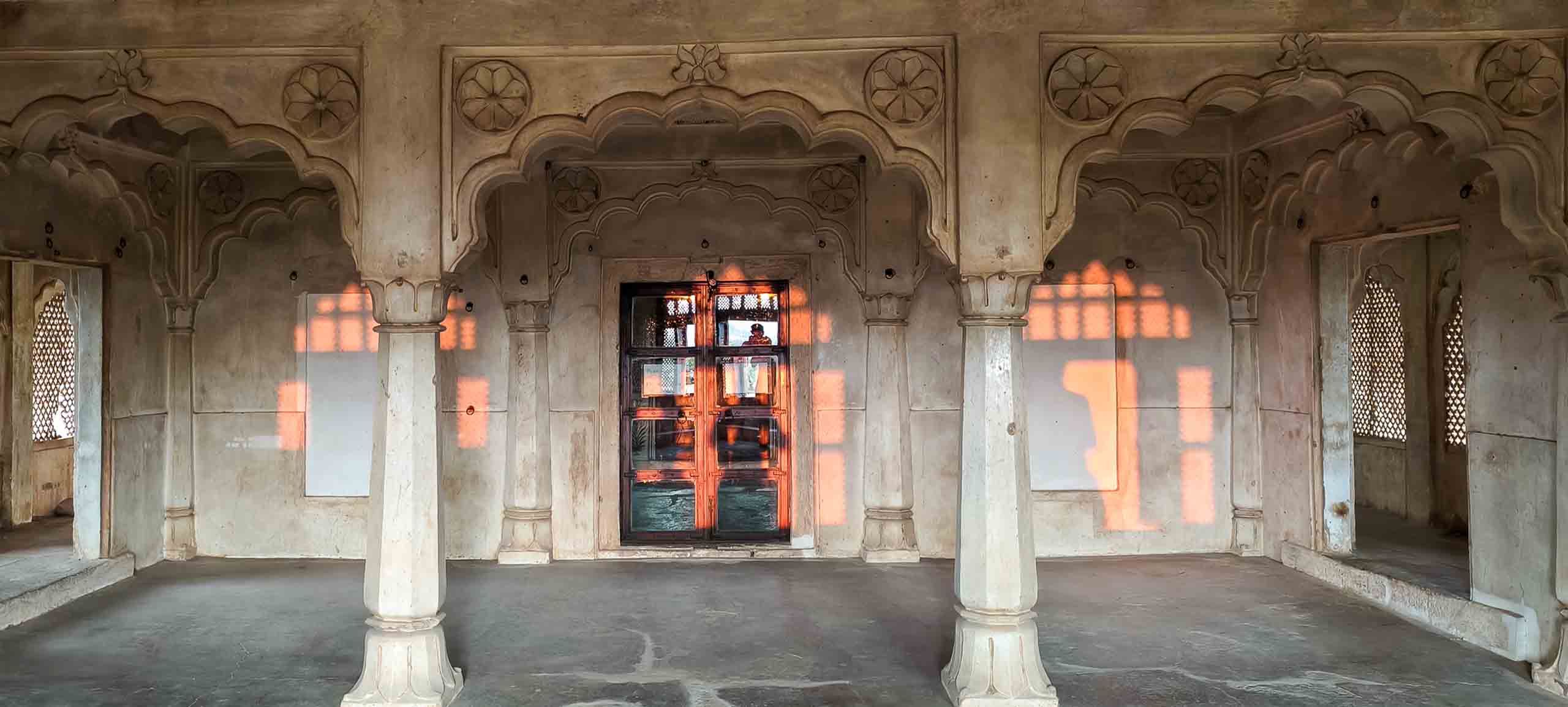
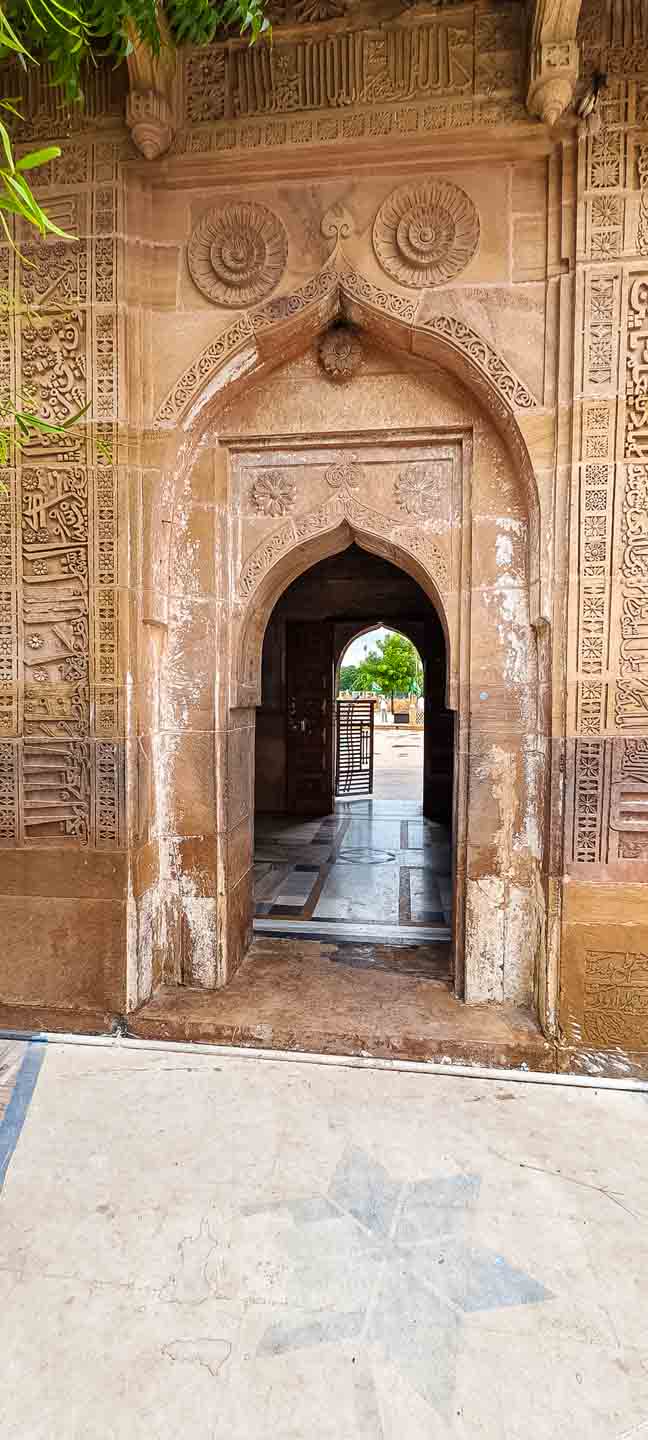
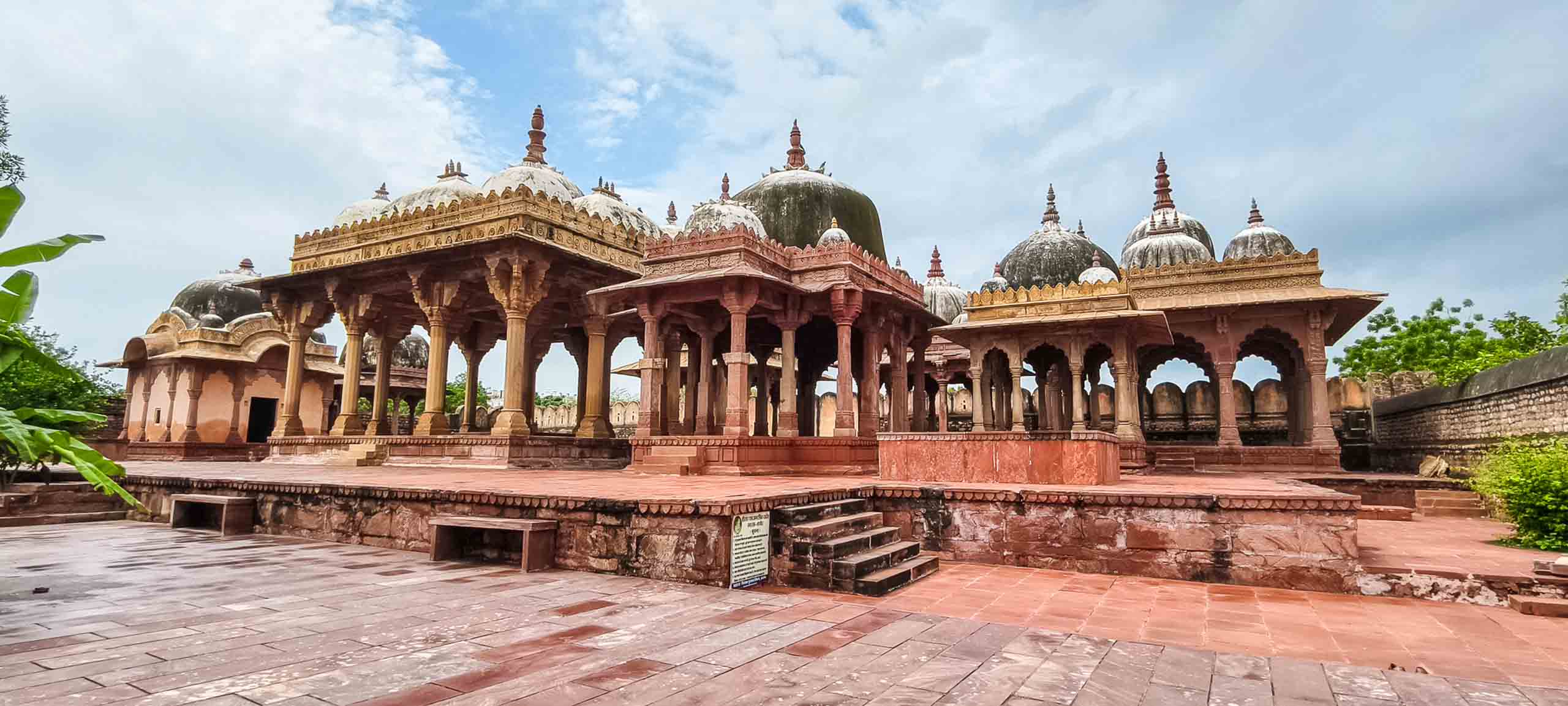
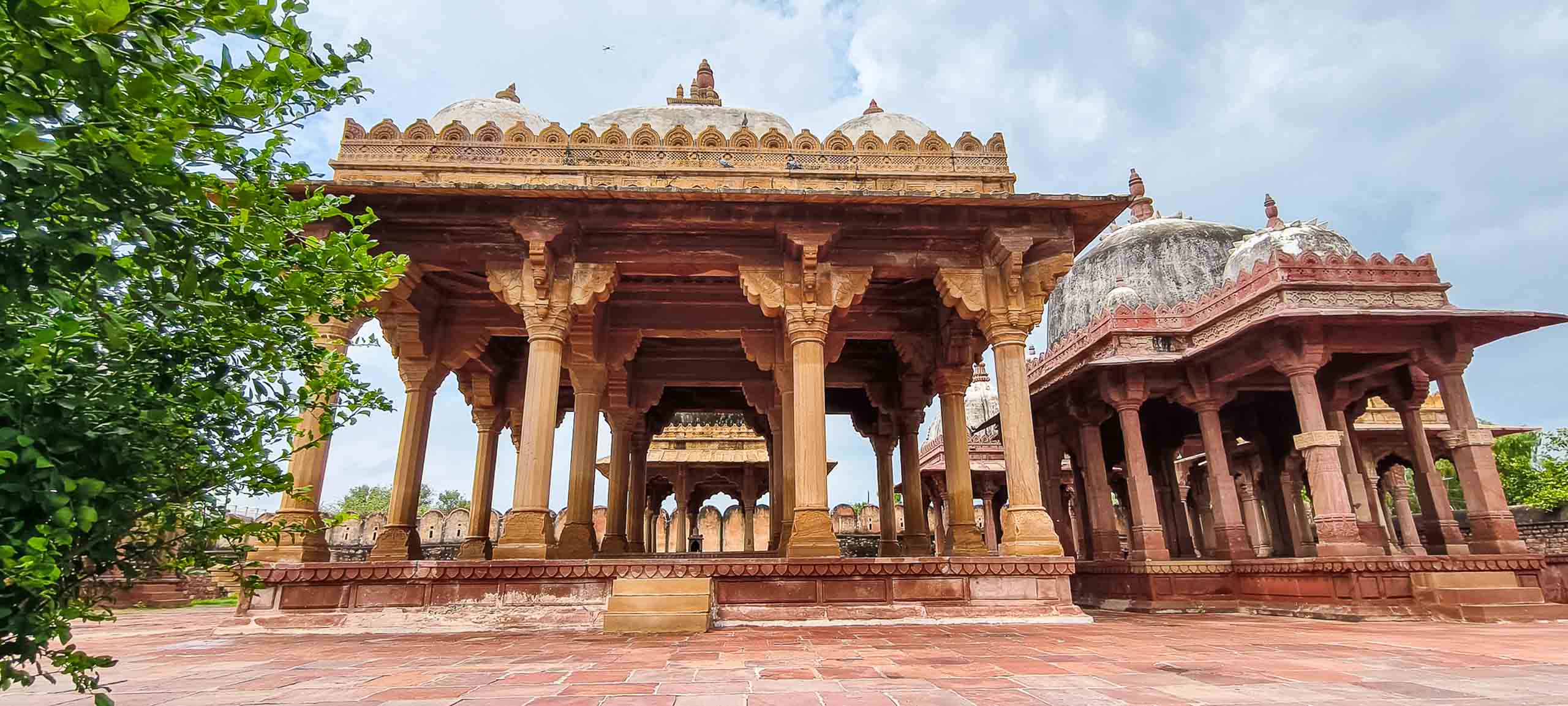
Rajput elements include projecting jharokhas, chhatris, fortified courtyards, carved stone brackets, and hierarchical spatial organization separating public and private areas. Mughal influence appears in the symmetrical gardens, cusped arches, painted interiors, water channels, hammams, and ornamental plasterwork.
Buildings are arranged around a sequence of interconnected courtyards that gradually transition from public ceremonial zones to increasingly private residential quarters.
The architecture was also highly responsive to climate. Thick masonry walls insulated interiors from the desert heat, while shaded verandas created cool circulation spaces. Screened windows and open courtyards encouraged airflow and natural ventilation. The result is architecture that combines military strength with climatic adaptation and decorative elegance.
Painted Interiors and Courtly Art
Among the greatest treasures of Ahhichatragarh Fort are its surviving wall paintings and decorative interiors.
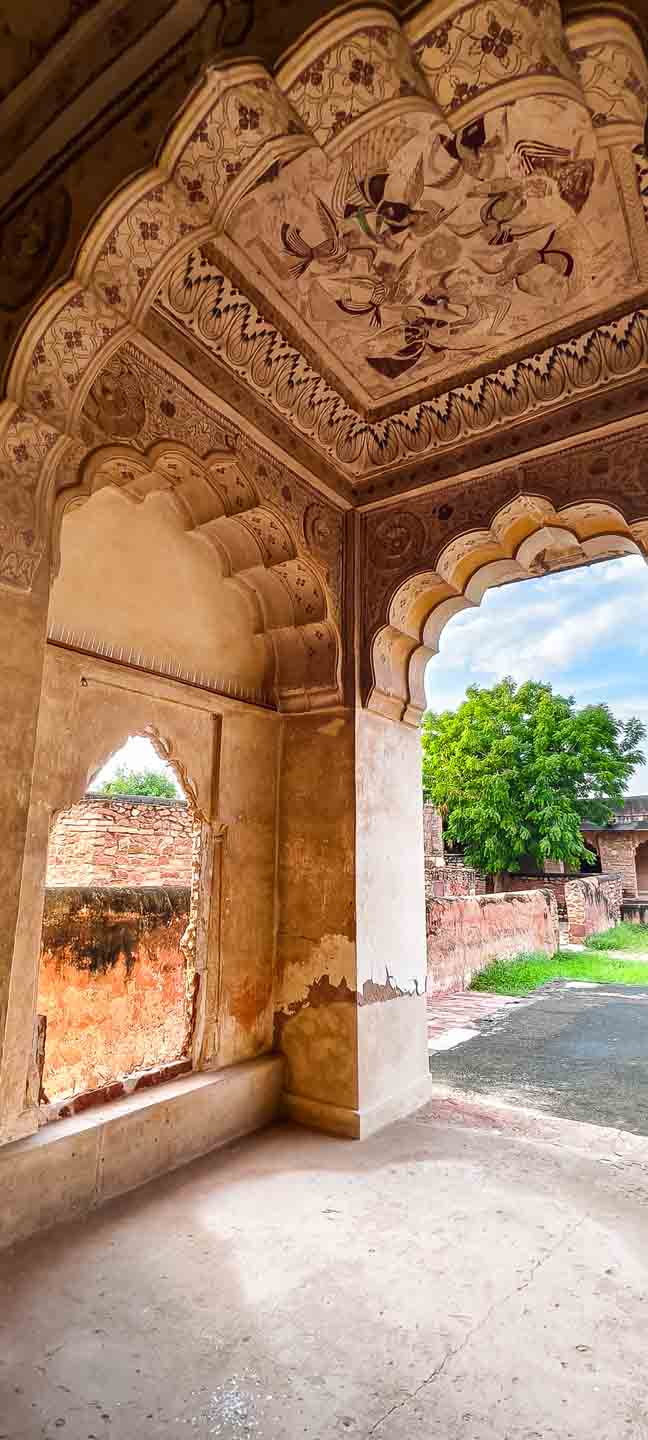
The palace walls contain frescoes depicting floral arabesques, hunting scenes, mythological subjects, courtly imagery, geometric ornamentation, and symbolic motifs rendered in vibrant natural pigments. Red ochre, indigo, gold, green, white lime, and vegetal colors continue to survive on many surfaces despite centuries of wear.
Many of these paintings were executed using traditional lime-plaster fresco techniques in which mineral and vegetal pigments were applied directly onto wet plaster surfaces.
The painted ceilings are especially remarkable. Intricate geometric arrangements and dense ornamental patterns transform entire rooms into immersive artistic environments.
Several paintings reveal strong Mughal influence through delicate floral compositions and refined detailing, while others retain distinctly Rajput themes and local artistic traditions.
Mirror work, carved wooden ceilings, decorative plaster, and painted niches further enriched these interiors. Such elaborate decoration reflected the prestige of the Nagaur court and its participation in broader artistic traditions circulating across northern India during the Mughal and late Rajput periods.
The Turkish Hammams
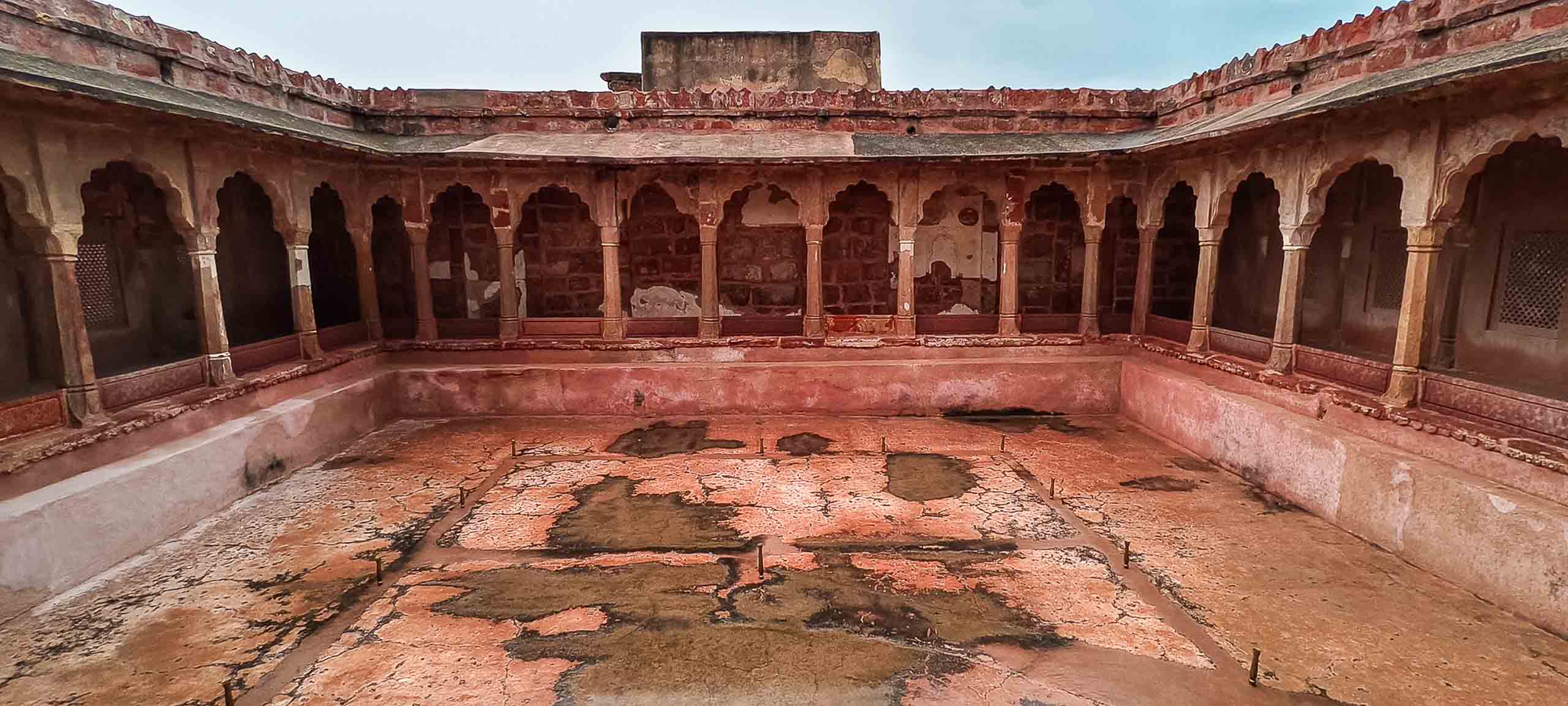
Among the most fascinating architectural features within the fort are the Turkish Hammams, or royal baths.
These baths reveal the influence of Persian and Mughal court culture on Rajput palace architecture. Hammams functioned not only as bathing spaces but also as places of relaxation, ritual purification, conversation, and elite leisure.
The Nagaur hammams incorporated advanced hydraulic engineering. Water circulated through specially designed channels supplying both hot and cold bathing chambers. Underground heating systems warmed floors and water reservoirs, creating controlled temperatures even during cooler desert nights.
The interiors once featured painted plasterwork, decorative niches, carved surfaces, and domed ceilings punctured with small openings through which filtered light entered softly.
In Rajasthan’s harsh desert climate, such baths represented exceptional luxury. They also reflected the cosmopolitan atmosphere of eighteenth-century courts where Persian, Mughal, and Rajput traditions intersected continuously.
Deepak Mahal
Deepak Mahal is one of the fort’s most visually striking ceremonial spaces.
Its name, associated with lamps and illumination, reflects the atmospheric character of the chamber. The walls and ceilings are covered with elaborate frescoes depicting floral motifs, ornamental borders, arabesques, and courtly scenes.
Rich reds, golds, blues, and greens create a luminous effect even in daylight. Small wall niches once held oil lamps, and during royal gatherings the entire chamber would have flickered with reflected light.
The mahal likely functioned as an important ceremonial and entertainment space where music, poetry, diplomatic meetings, and festive gatherings took place. Architecturally, Deepak Mahal demonstrates the sophisticated interaction between Rajput palace planning and Mughal decorative aesthetics.
Hadi Rani Mahal
Hadi Rani Mahal presents a more intimate and domestic architectural atmosphere.
Associated with the zenana or women’s quarters, the mahal preserves frescoes adorned with floral motifs, birds, decorative borders, and scenes connected to courtly life. These paintings offer rare insight into the visual culture surrounding royal women in Rajput courts.
The mahal’s jharokhas overlook internal courtyards while maintaining privacy. Screened openings filtered light and encouraged airflow, making the interiors more comfortable during the intense summer months.
Upper chambers and terraces captured cool evening breezes and offered views across the palace complex.
Unlike the grand ceremonial halls, Hadi Rani Mahal conveys the quieter rhythms of life within the fort — conversation, music, family gatherings, seasonal rituals, and private ceremonies.
Gardens and Water Engineering
One of the most extraordinary aspects of Ahhichatragarh Fort is its sophisticated hydraulic engineering system.
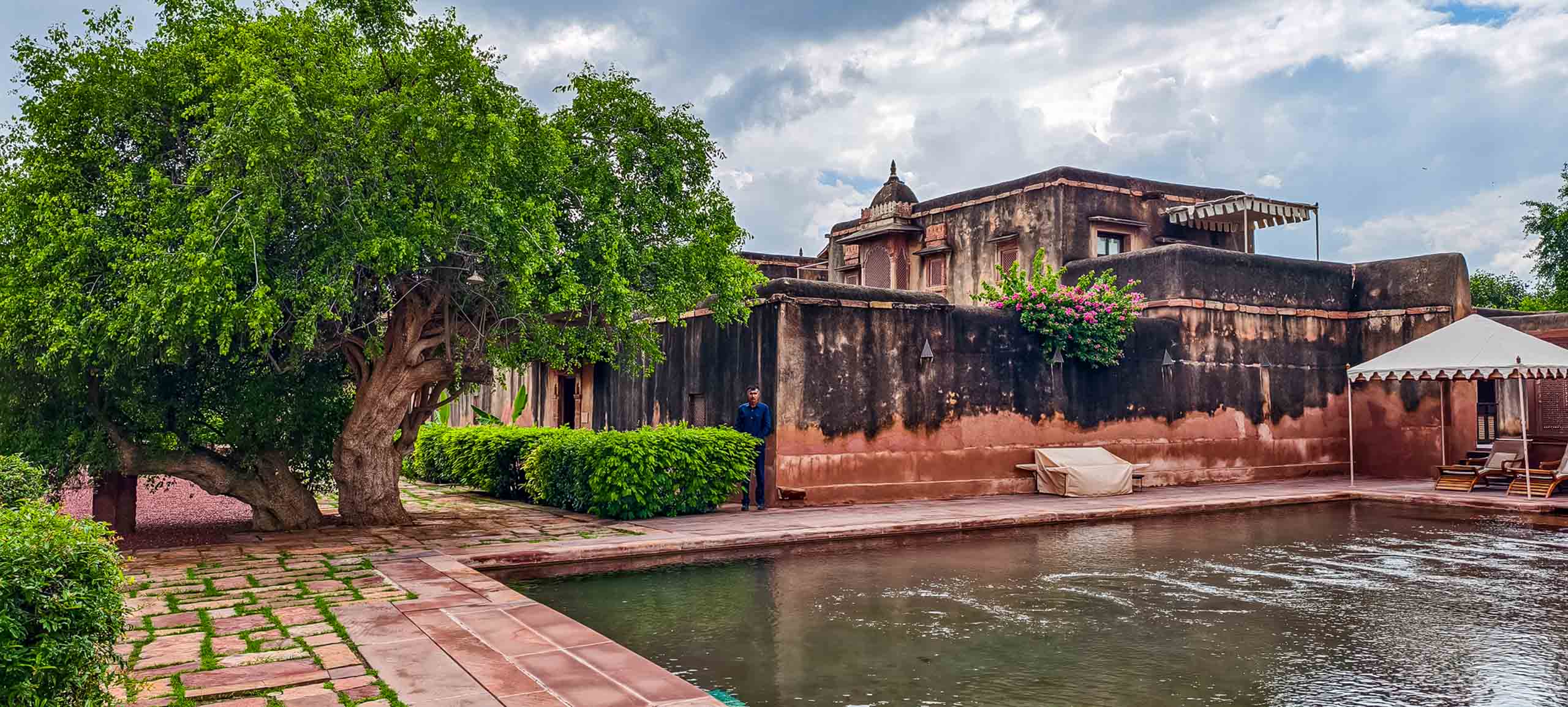
In an arid region where water determined survival, engineers developed interconnected networks of tanks, stepwells, fountains, channels, underground pipes, and reservoirs supplying the palace complex.
Water served both practical and symbolic purposes. It sustained daily life, cooled interiors, irrigated gardens, and created sensory experiences associated with royal luxury.
The gardens within the fort reflect Mughal charbagh principles adapted to Rajasthan’s desert climate. Geometric layouts, shaded pathways, fountains, and flowing water introduced greenery and coolness into the fortified environment.
The sound of moving water softened the harshness of the desert surroundings and enhanced the atmosphere of comfort and elegance within the palace complex.
Veer Var Amar Singh Rathore Smarak
The Veer Var Amar Singh Rathore Smarak is dedicated to Amar Singh Rathore, one of Rajasthan’s most celebrated Rajput warriors and folk heroes. Amar Singh Rathore (c. 1613–1644), a nobleman of the Rathore clan associated with Nagaur, became legendary for his courage, fierce independence, and defiance of Mughal authority during the reign of Shah Jahan. He served in the Mughal court but is best remembered for a dramatic incident at the imperial court in Agra, where, following a heated confrontation, he killed the Mughal official Salabat Khan.
According to popular tradition, Amar Singh then attempted a daring escape from the fort before eventually being killed. Over time, his story entered the ballads, oral traditions, and folklore of Rajasthan as a symbol of Rajput honor, valor, and
resistance. The memorial at Nagaur preserves the memory of this legendary figure and reflects the enduring pride the region continues to associate with its martial heritage. Even today, Amar Singh Rathore occupies a powerful place in Rajasthan’s cultural imagination, where his life is remembered not merely as history, but as legend.
Decline of the Fort
Following political changes during the nineteenth century and the gradual decline of princely authority under British colonial rule, the importance of Nagaur Fort diminished. Large sections of the palace complex fell into neglect. Roofs collapsed, frescoes deteriorated, water systems ceased functioning, and vegetation overtook abandoned courtyards.
By the twentieth century, many interiors had entered advanced stages of decay. Paintings darkened beneath soot and dust, structural cracks threatened palace walls, and delicate decorative surfaces deteriorated due to exposure and moisture. Without intervention, significant portions of the fort risked irreversible loss.
Conservation and Restoration
The revival of Ahhichatragarh Fort represents one of the most important conservation achievements in modern India.
The restoration project undertaken by the Mehrangarh Museum Trust focused on preserving authenticity while reviving the architectural integrity of the complex.
Traditional craftsmen worked with lime plaster, natural pigments, stone masonry, and historic construction techniques rather than modern industrial materials. Conservators stabilized damaged frescoes, repaired collapsed roofs, restored painted interiors, and revived historic water systems with extraordinary care.
Importantly, conservation specialists intentionally preserved visible signs of age and weathering rather than over-restoring the surfaces into artificially new conditions. The project received international recognition for demonstrating how traditional craftsmanship and conservation methodology could successfully restore large-scale heritage monuments.
Nagaur Fort Today
Today, Ahhichatragarh functions as one of Rajasthan’s most important heritage destinations and cultural centers.
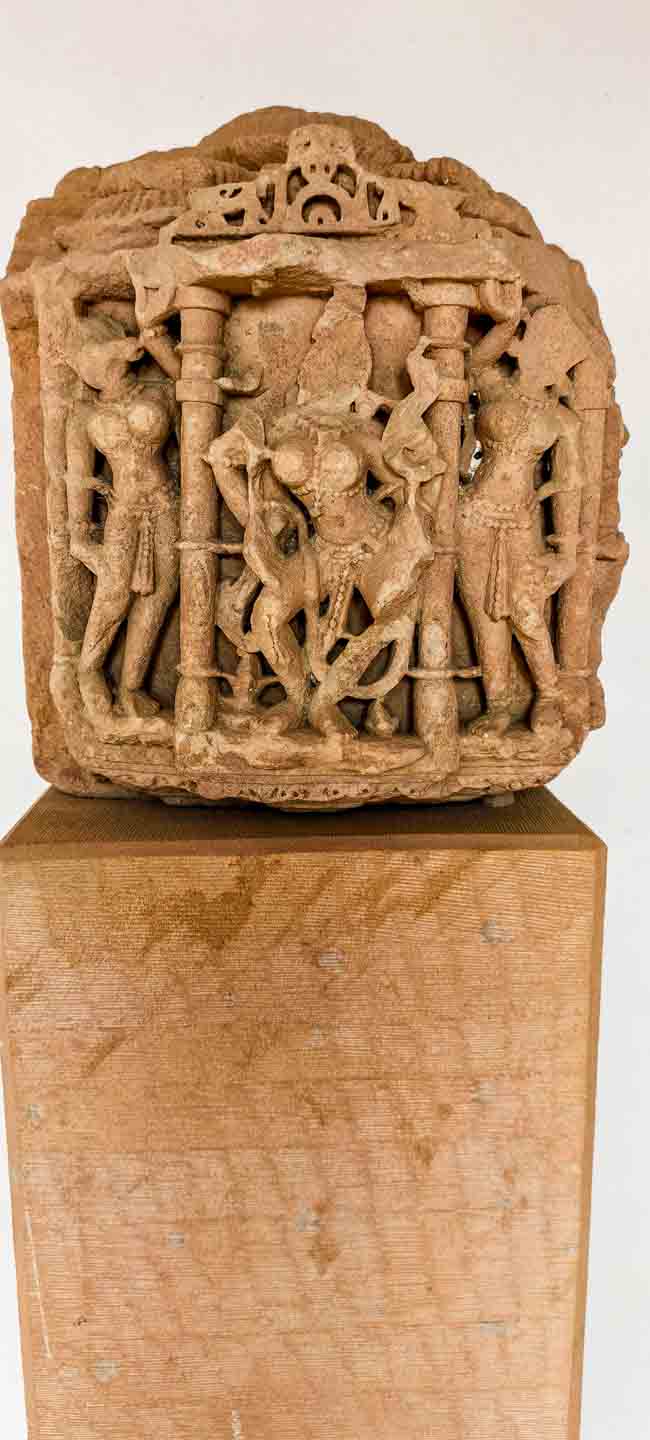
Visitors move through restored palaces, painted halls, gardens, courtyards, and museum galleries displaying royal portraits, manuscripts, textiles, arms, decorative objects, and historical artifacts associated with Nagaur and Marwar.
The fort also hosts the World Sacred Spirit Festival, during which musicians from across India and around the world perform within illuminated palace courtyards and historic halls.
The festival has helped reintroduce the fort not merely as a preserved monument, but as a living cultural space connected to music, performance, and artistic tradition.
Cultural Importance of Ahhichatragarh
Ahhichatragarh Fort is far more than a military structure.
Its fortifications preserve the history of warfare, trade, diplomacy, and political rivalry across Rajasthan and northern India. Its palaces reveal the sophistication of Rajput courtly culture. Its painted interiors preserve artistic traditions that might otherwise have disappeared, while its water systems demonstrate remarkable ingenuity in adapting architecture to desert conditions.
Most importantly, the fort embodies the layered cultural identity of Nagaur itself — a place shaped by Rajput rulers, Mughal influence, Sufi traditions, caravan trade, desert ecology, and artistic patronage.
Today, Ahhichatragarh stands not only as the architectural heart of Nagaur, but also as one of Rajasthan’s most intellectually rich and rewarding heritage sites, where military history, art, engineering, conservation, and courtly culture continue to coexist within a single monumental landscape.