Nawalgarh and Mandawa: The Shekhawati Heritage
In the northeastern part of Rajasthan lies Shekhawati, a region where art spills onto the streets, stories are painted on walls, and history is preserved not only in forts and palaces but within the mansions of merchant families. Spread across the districts of Jhunjhunu, Sikar, and Churu, Shekhawati is often described as the world’s largest open-air art gallery.
Within towns such as Nawalgarh and Mandawa stand hundreds of ornately painted havelis built by wealthy Marwari merchants between the eighteenth and early twentieth centuries. These families amassed fortunes through trade and banking, and many later established major business houses in Kolkata, Mumbai, and Chennai. Yet even after moving to distant cities, they continued to invest in their ancestral towns.
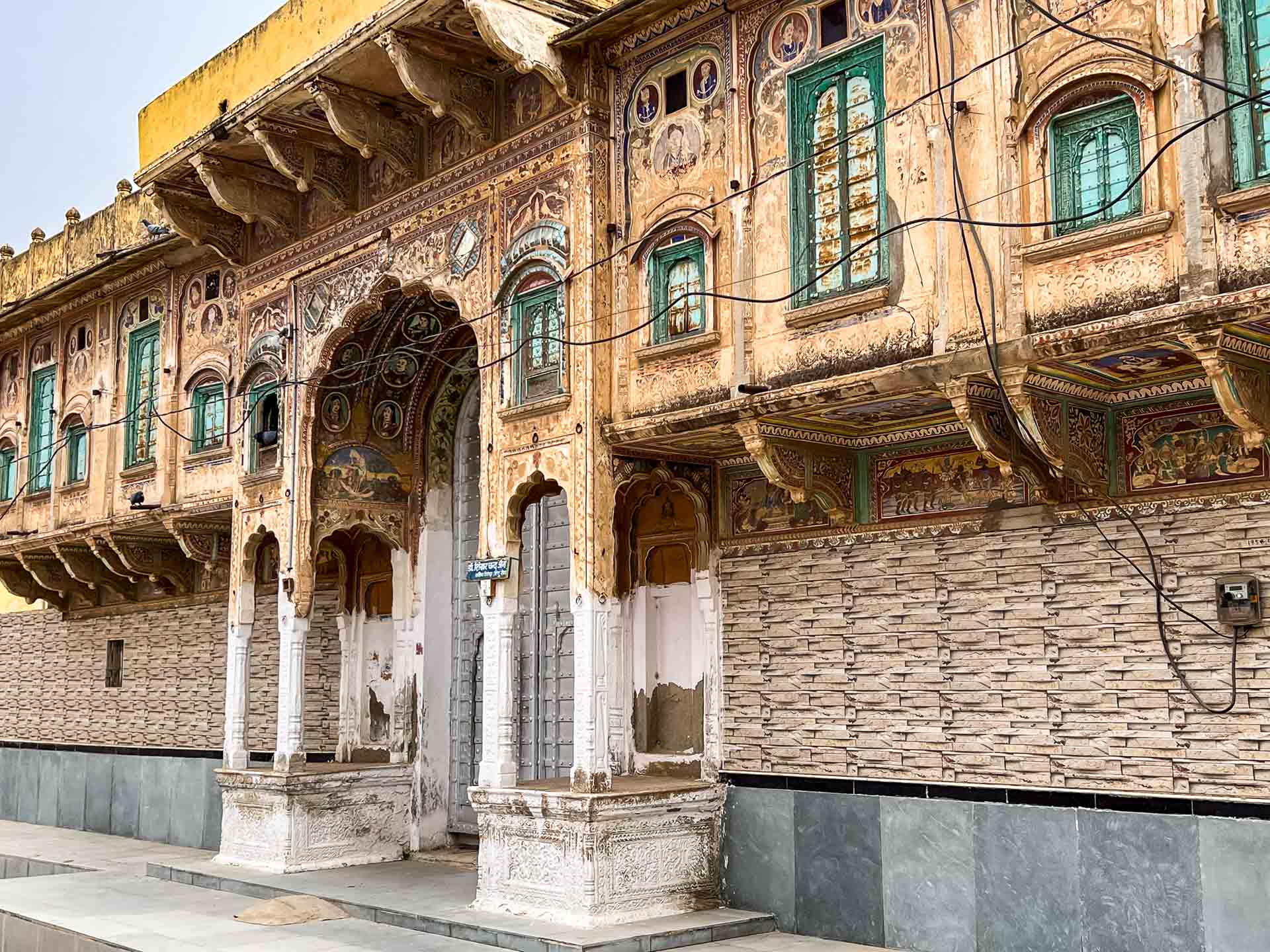
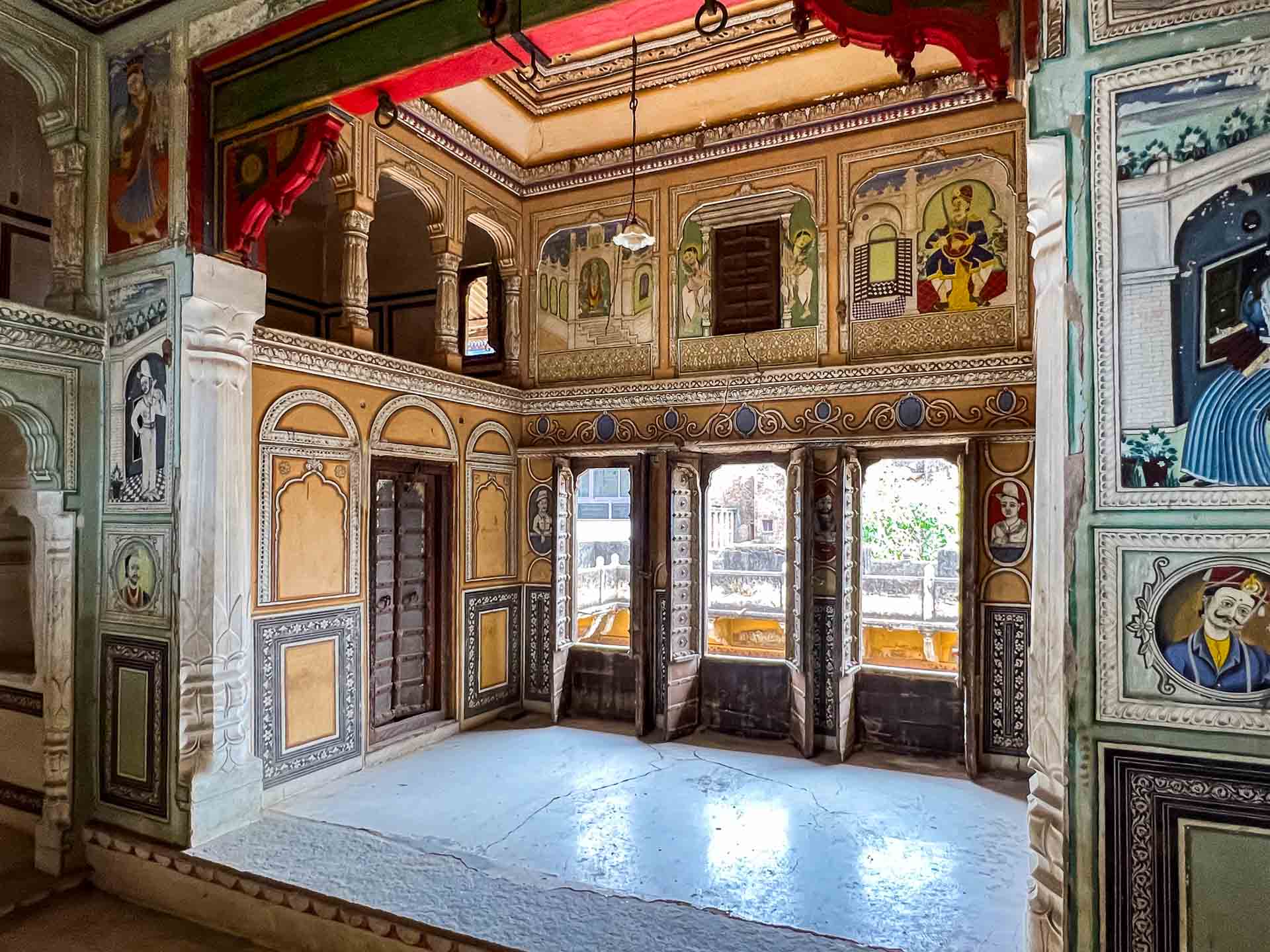
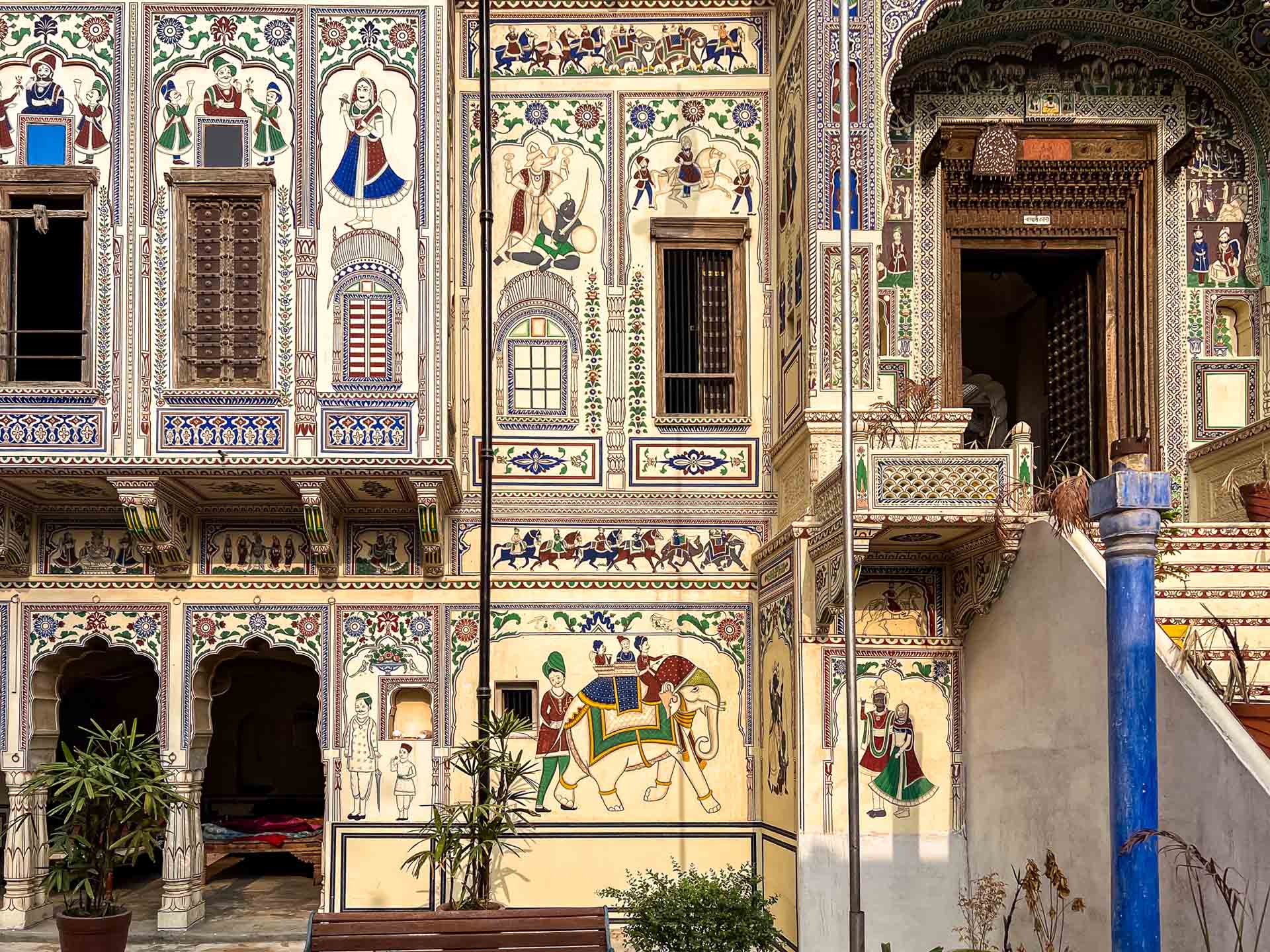
Their mansions became expressions of prosperity, religious devotion, and social prestige. Courtyards, ceilings, and facades were covered with frescoes depicting Hindu deities, royal processions, British officers, steam locomotives, telephones, motorcars, and even scenes from Christianity. In these painted houses, one can trace the story of a society deeply rooted in tradition yet fully aware of the wider world.
To walk through Shekhawati is to encounter a unique visual archive in which art, architecture, commerce, and memory are inseparably linked.
Nawalgarh: A Merchant Town of Art and Philanthropy
Founded in 1737 by Thakur Nawal Singh, the fifth son of Thakur Shardul Singh of Jhunjhunu, Nawalgarh quickly emerged as one of the most prosperous towns in Shekhawati. Its strategic location on trade routes encouraged commercial growth, and prominent Marwari families established their ancestral homes here. The Podars, Morarkas, Seksarias, and other business dynasties left a lasting imprint on the town through their mansions, temples, schools, and charitable institutions.
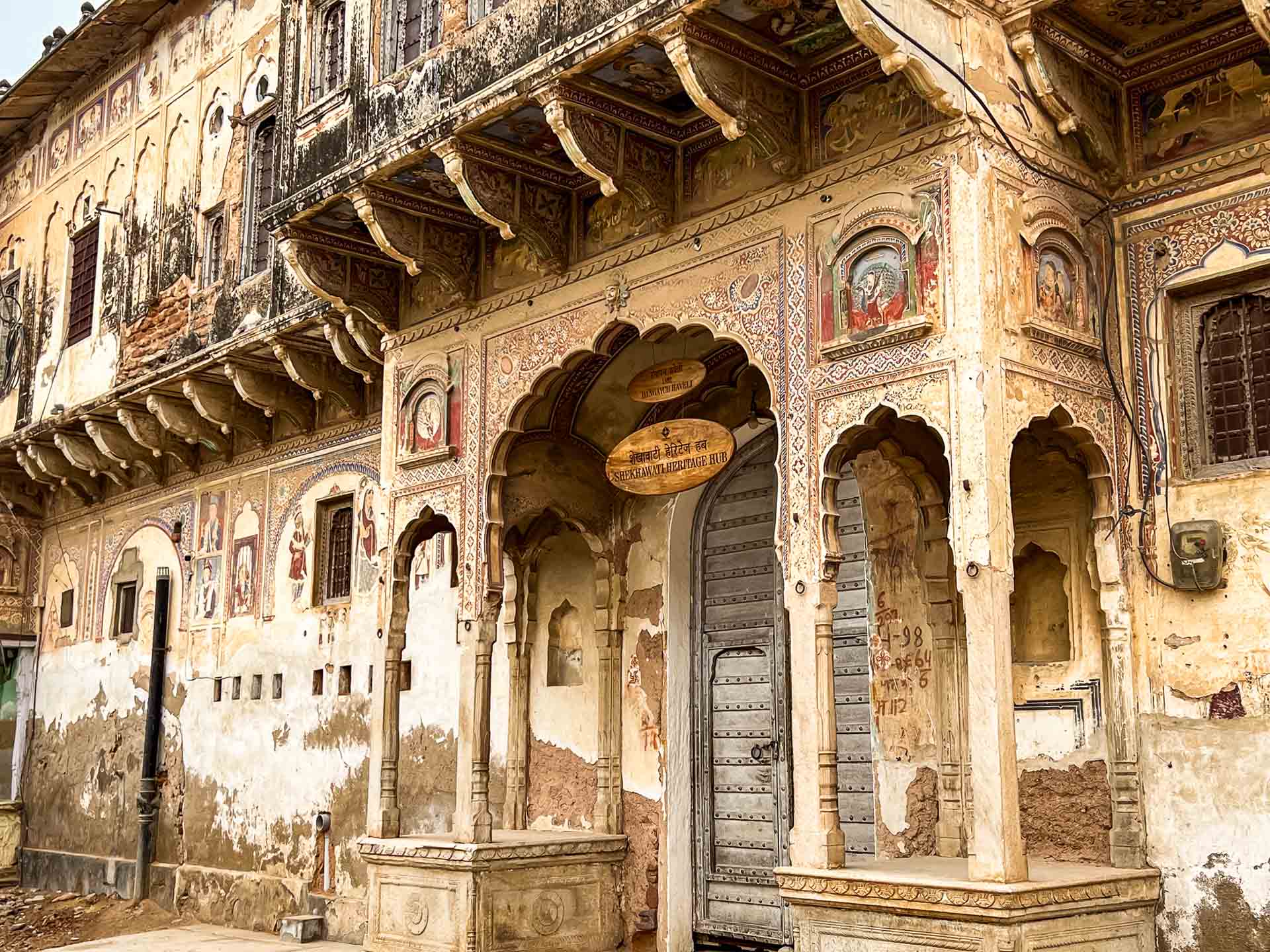
Nawalgarh retains a dignified and spacious character. Its streets are lined with decorated facades, painted gateways, and traditional houses whose walls still preserve traces of brilliant pigments. The town reflects a social order in which commerce, religion, and philanthropy were deeply intertwined. Wealth was not merely accumulated; it was expressed through patronage of architecture, art, and public service.
Among Nawalgarh’s greatest attractions are its restored havelis, now functioning as heritage hotels and museums. These buildings offer visitors an opportunity to understand how merchant families lived and how they used art to narrate their beliefs, aspirations, and worldly experiences.
The Grand Haveli Heritage Hotel
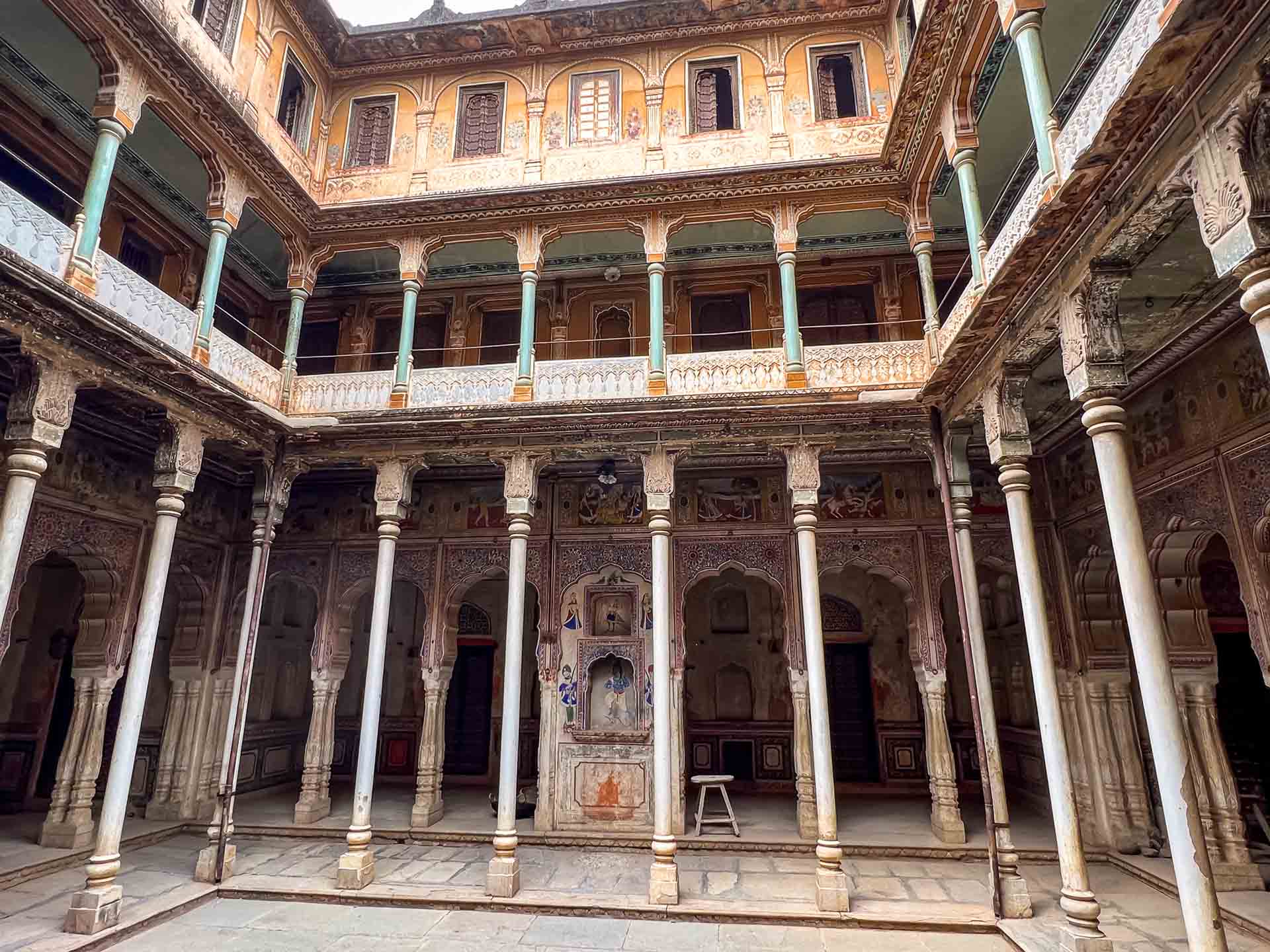
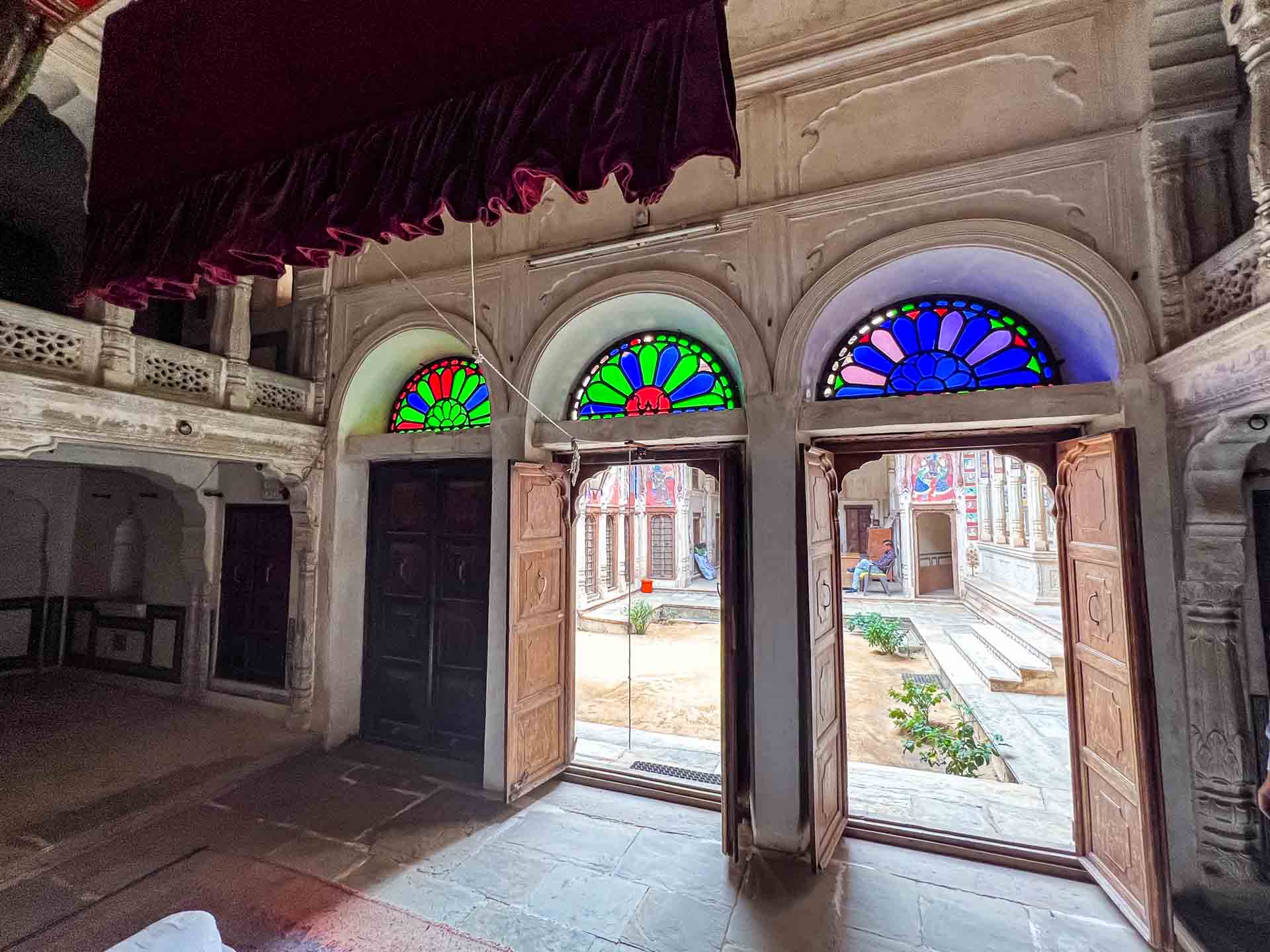
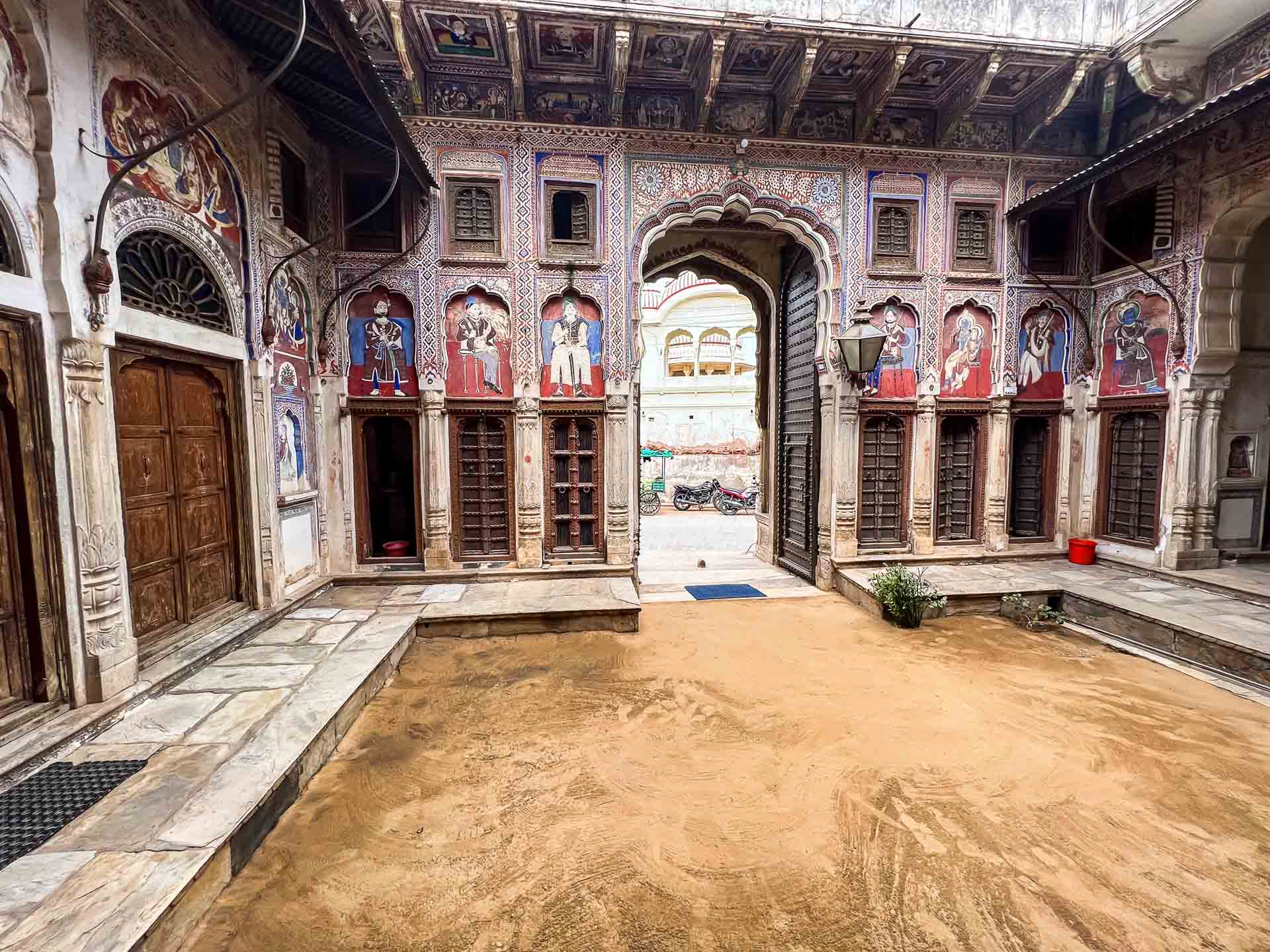
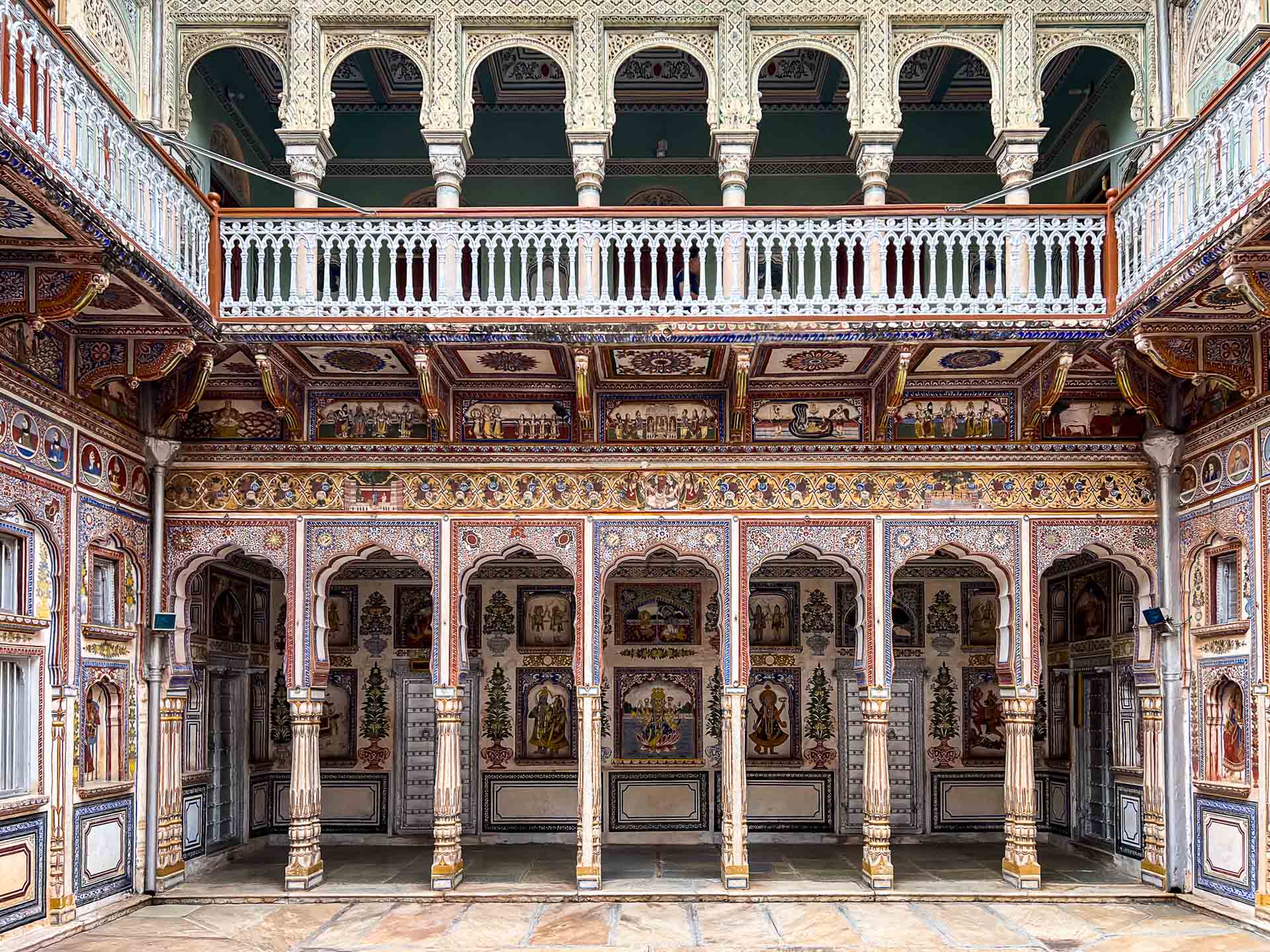
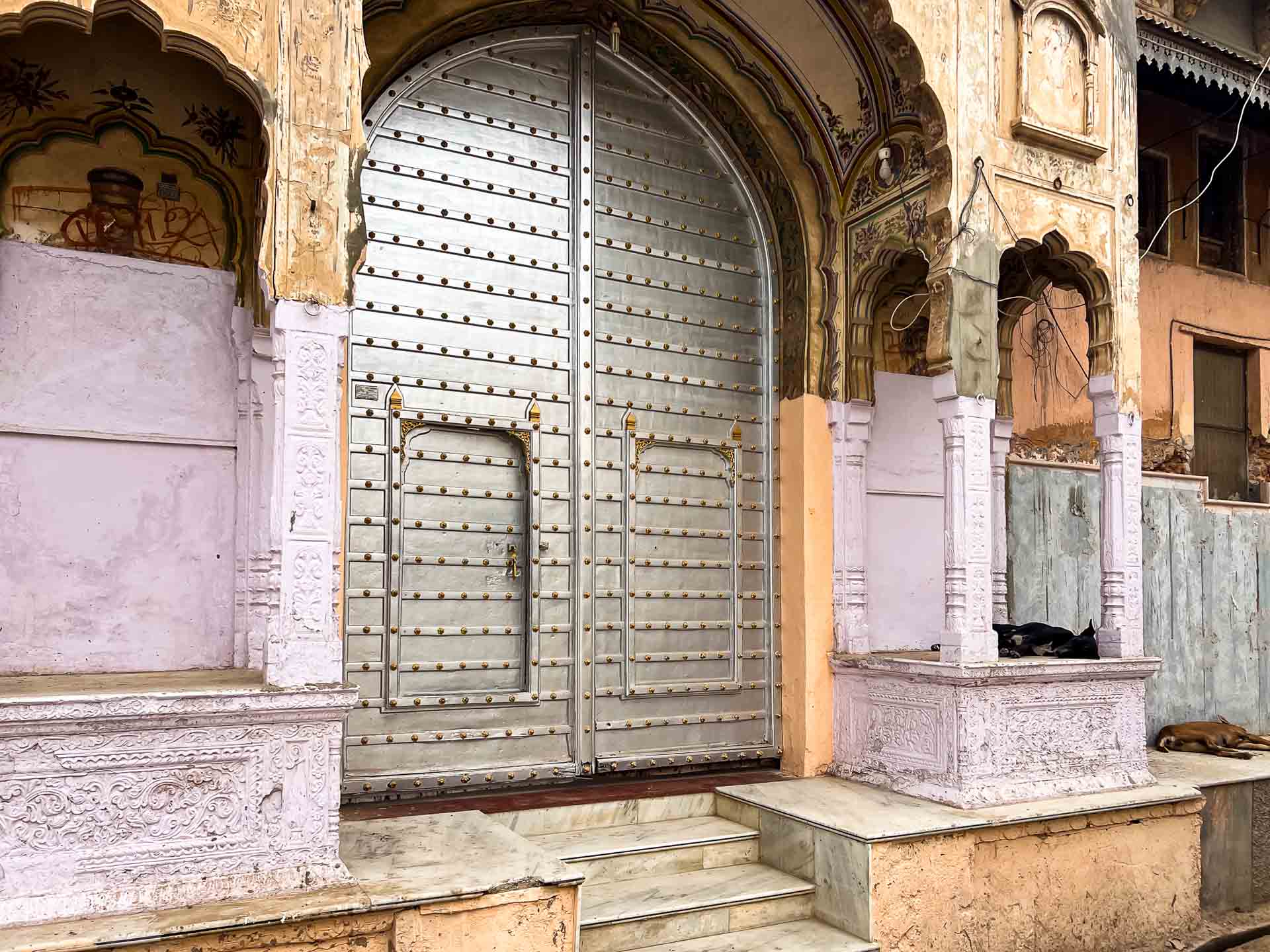
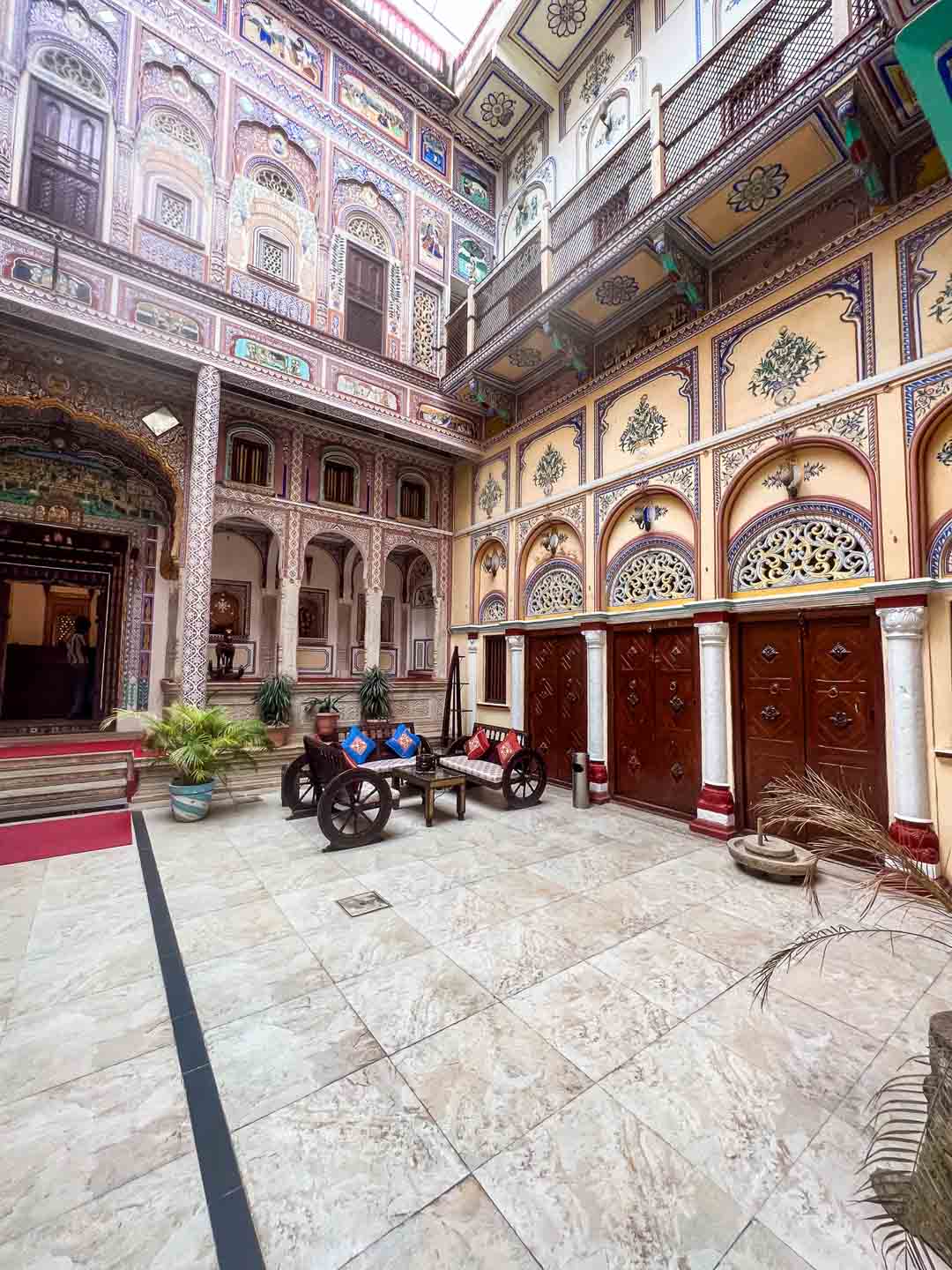
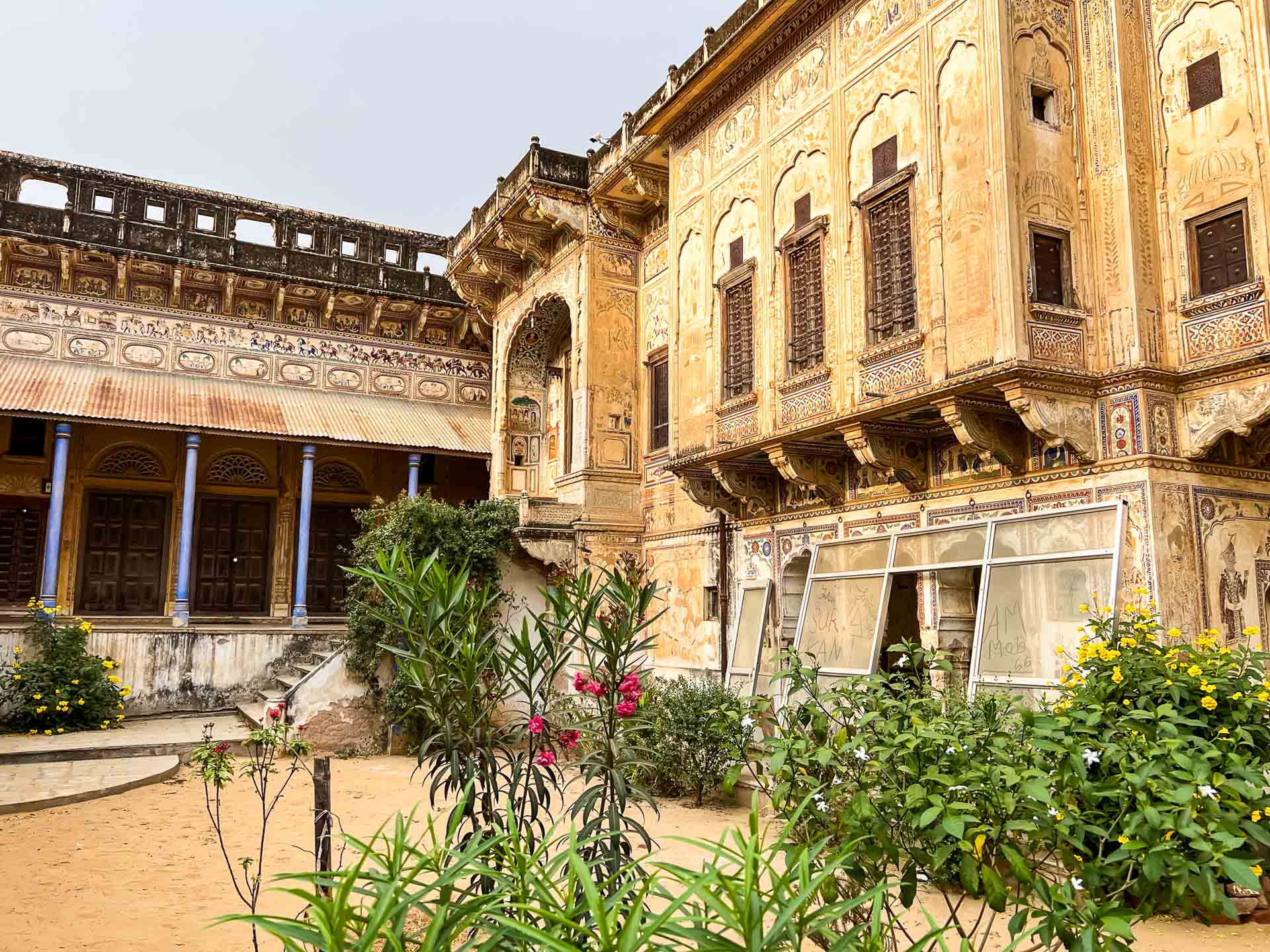
Our stay in Nawalgarh began at The Grand Haveli Heritage Hotel, a restored mansion that introduced us to the architectural vocabulary of Shekhawati. Hidden behind a traditional entrance gate, the haveli opened into a serene central courtyard around which the household was organized.
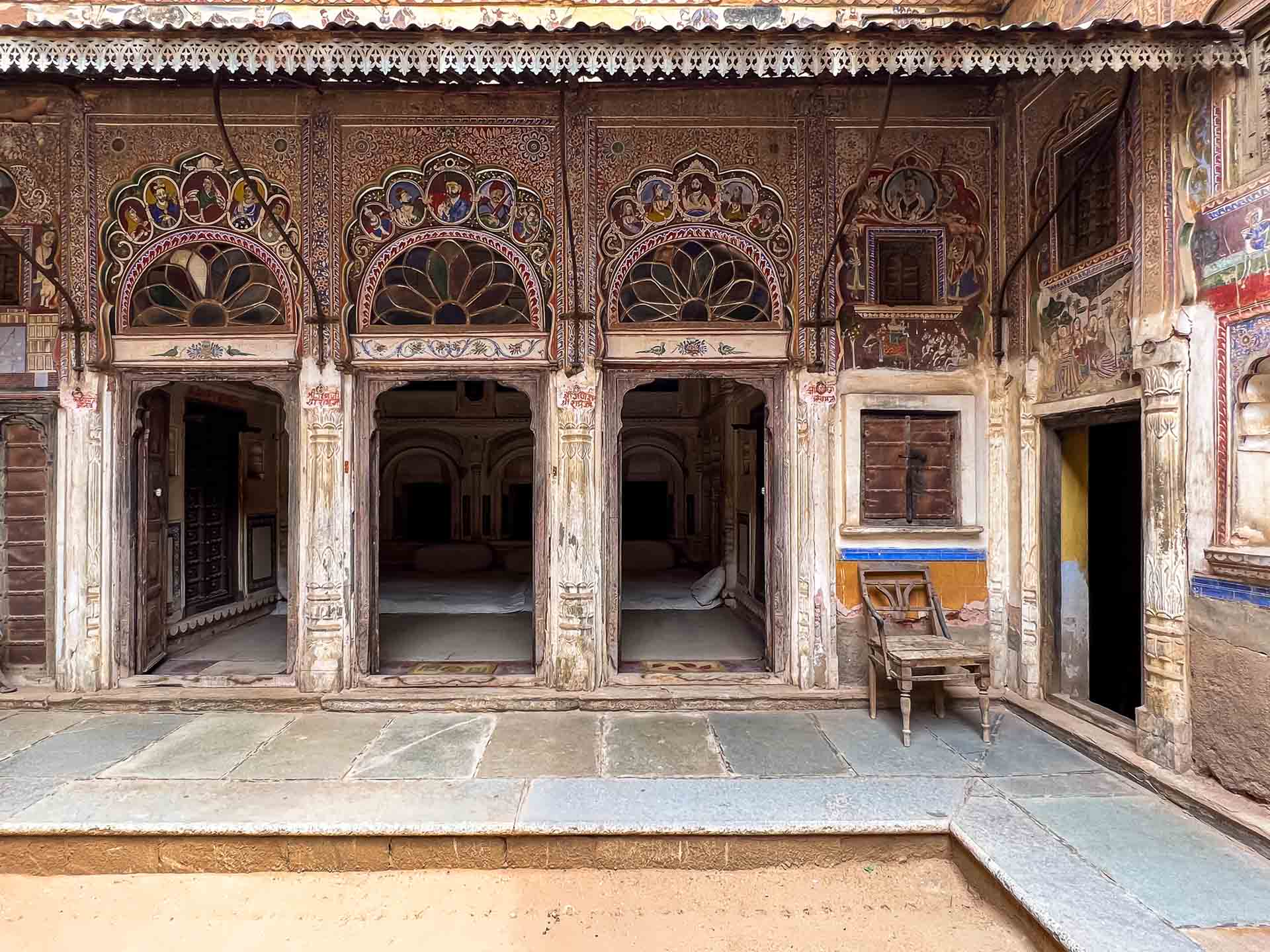
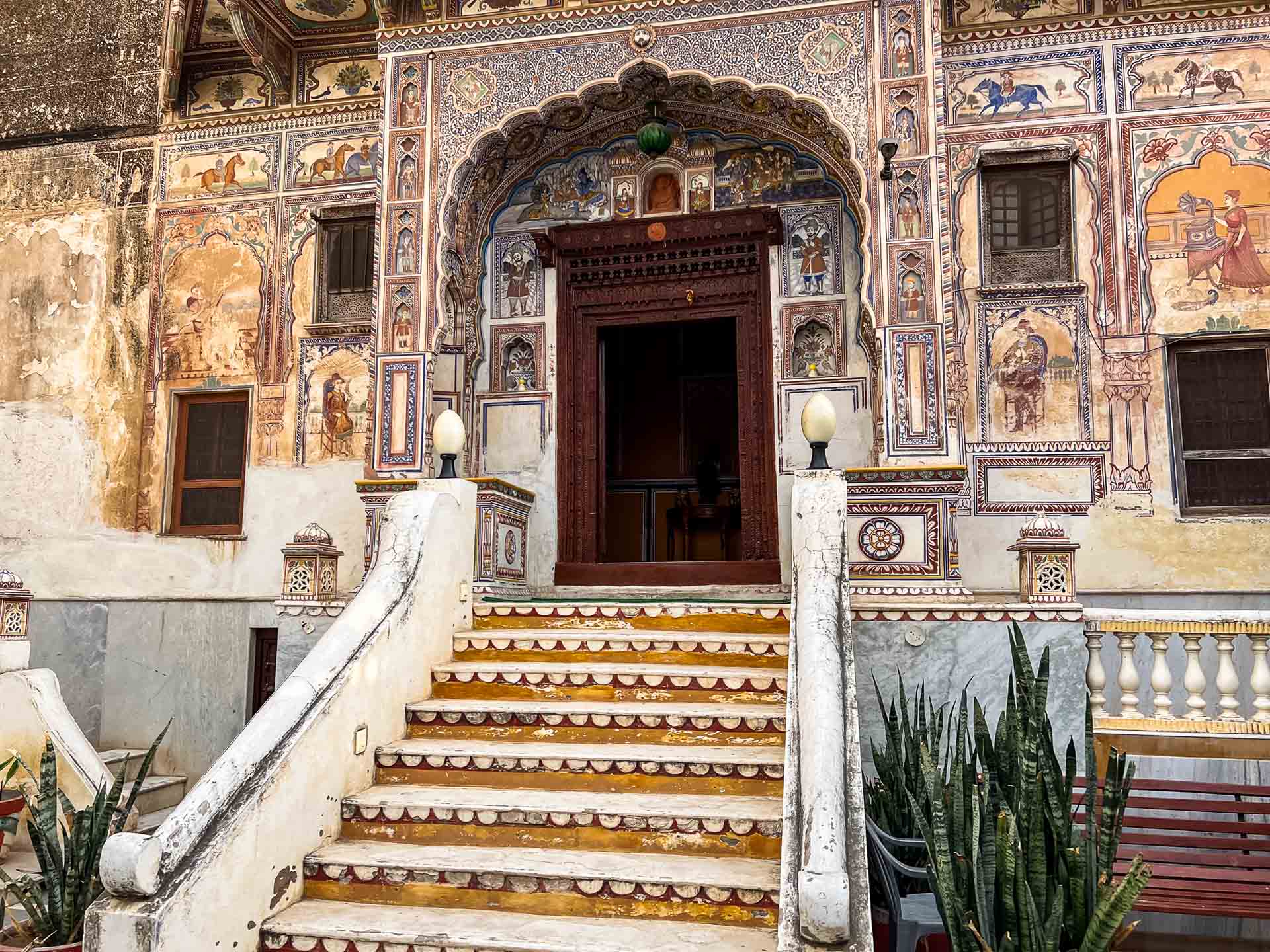
The building preserved many original features: thick lime-plastered walls that moderated the desert climate, carved teak doors, cusped arches, painted niches, and upper balconies overlooking the courtyard below. The decorative details were understated yet elegant, with floral motifs and geometric patterns lending rhythm to the architecture.
In traditional merchant homes, the courtyard served as the nucleus of domestic life. It was a space for family gatherings, ceremonies, and daily routines. Public reception rooms occupied the front of the house, while more private family quarters lay deeper within. Women observed the activities of the household from screened jharokhas on the upper levels.
Vivaana Culture Hotel and Museum
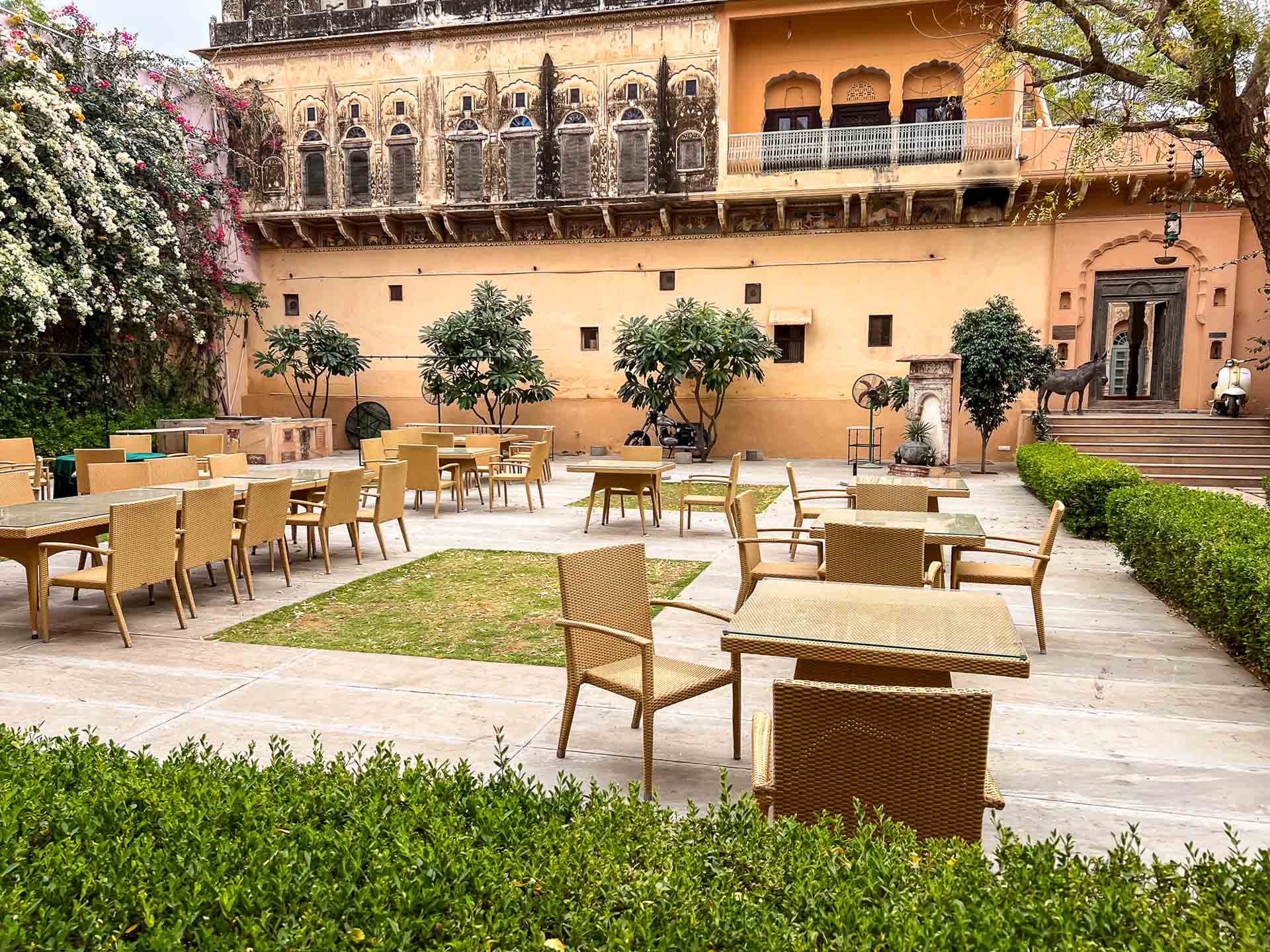
Vivaana Culture Hotel is one of the finest examples of heritage conservation in Shekhawati. Housed in two adjoining nineteenth-century havelis that once belonged to the Podar family, the property combines historical authenticity with modern hospitality.
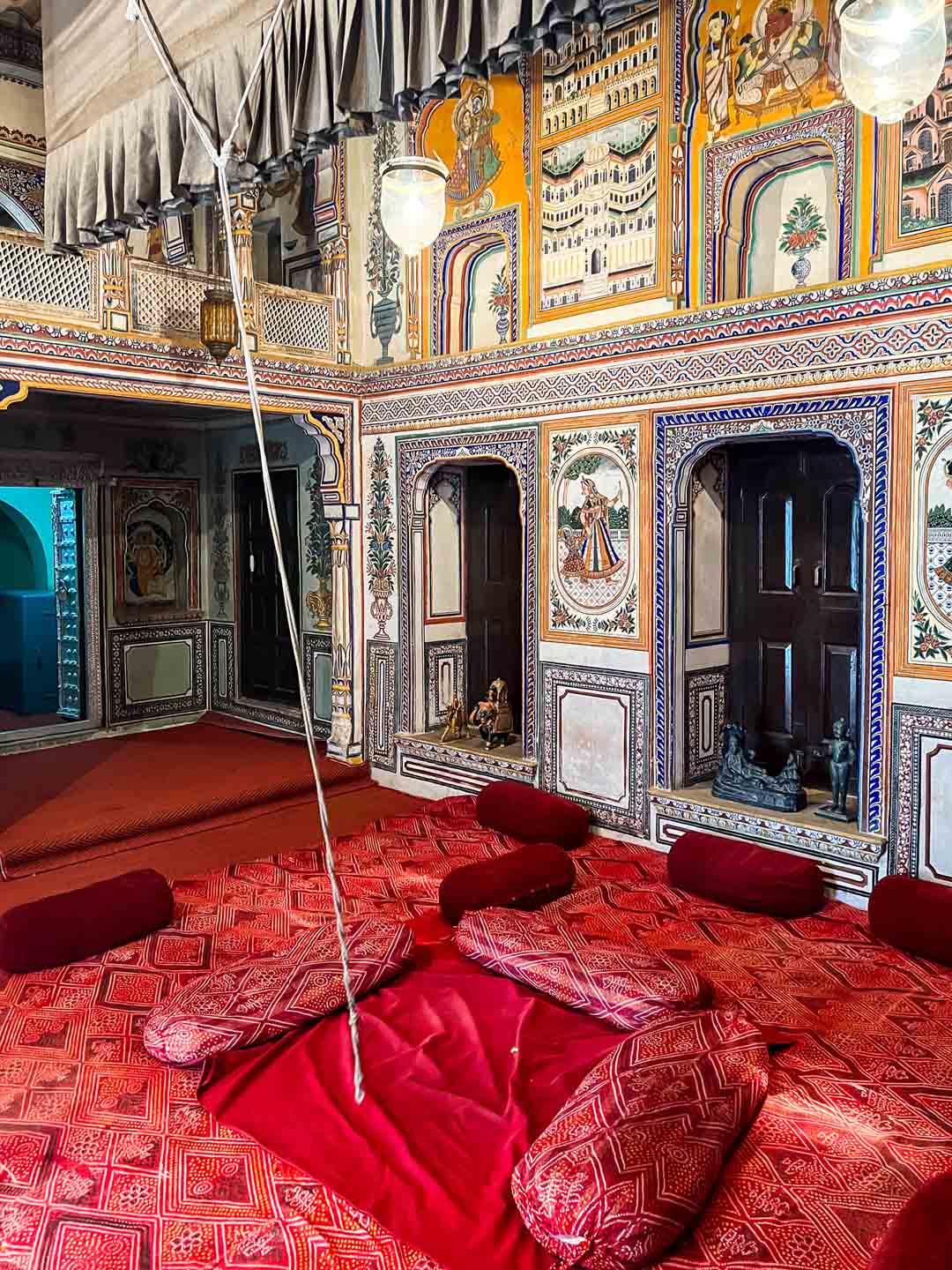
The restoration is meticulous. Original frescoes have been carefully conserved, antique furniture placed in period settings, and numerous artifacts displayed throughout the property. Walking through Vivaana feels like moving through a museum where every room tells a story
The frescoes are among the hotel’s greatest treasures. Painted ceilings feature floral medallions and celestial motifs, while walls depict Krishna, royal processions, hunting scenes, and symbols of modernity introduced during the colonial period. The juxtaposition of sacred and secular imagery reflects the curiosity and cosmopolitan outlook of Shekhawati’s merchants.
The property also houses curated displays interpreting local customs, textiles, utensils, and aspects of domestic life. These exhibits help visitors appreciate the broader cultural world in which these mansions were created.
One evening, in Vivaana’s atmospheric courtyard, we attended a traditional Kathputli puppet show. The brightly dressed wooden puppets moved gracefully to the sound of folk music, re-enacting episodes drawn from Rajasthan’s oral traditions.
As the performance unfolded, we were served a memorable dinner of regional specialties, rotis, and rich desserts. It was an immersive experience in which architecture, performance, and cuisine came together seamlessly.
Arya Samaj Homeopathic Hospital
The Arya Samaj Homeopathic Hospital reflects the philanthropic spirit of Nawalgarh’s merchant families. Inspired by the reformist ideals of the Arya Samaj movement, which emphasized education, healthcare, and social uplift, the institution was established to serve the wider community.
Architecturally, the building resembles a traditional haveli. Its symmetrical facade and decorative detailing demonstrate how beauty and utility were often combined in Shekhawati. The hospital stands as a reminder that the wealth generated through trade was directed not only toward private residences but also toward institutions of public benefit.
Kamal Morarka Haveli Museum
The Kamal Morarka Haveli Museum offers one of the most comprehensive introductions to the domestic and artistic traditions of Shekhawati. Built in 1900 by Shri Jairamdasji Morarka, a connoisseur and patron of the arts, the mansion has been carefully preserved to retain its original character—including its frescoes, which have been cleaned rather than repainted, allowing visitors to see the original pigments.
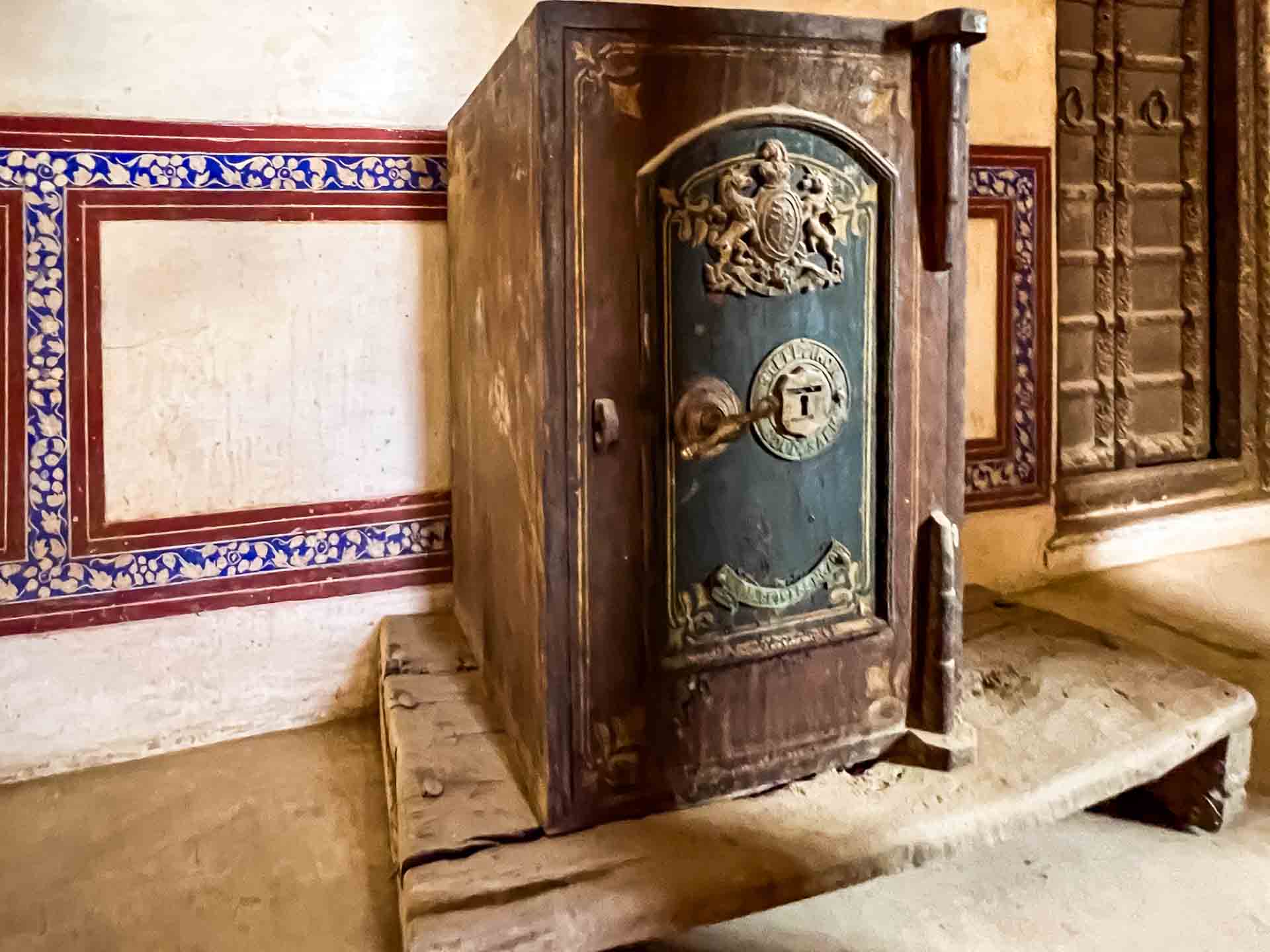
The haveli’s painted rooms contain displays of furniture, textiles, utensils, manuscripts, and household objects that illustrate everyday life in a prosperous merchant home. Together, these artifacts provide context for understanding the people who inhabited these richly decorated spaces.
Among the museum’s most fascinating exhibits is a camel saddle estimated to be over two centuries old. This object evokes the era when camel caravans traversed the desert, carrying goods and connecting Rajasthan with distant markets.
The frescoes themselves are notable for their craftsmanship and variety. Religious scenes depicting Shiva, Krishna, and Vishnu coexist with portraits, folk tales, and European figures, revealing how art functioned as both decoration and documentation.
Particularly remarkable are the two portraits of Jesus Christ—one on the exterior wall and one inside a room—a rare and striking presence in traditional Rajasthani domestic architecture.
Dr. Ramnath A. Podar Haveli Museum and Podar Gate
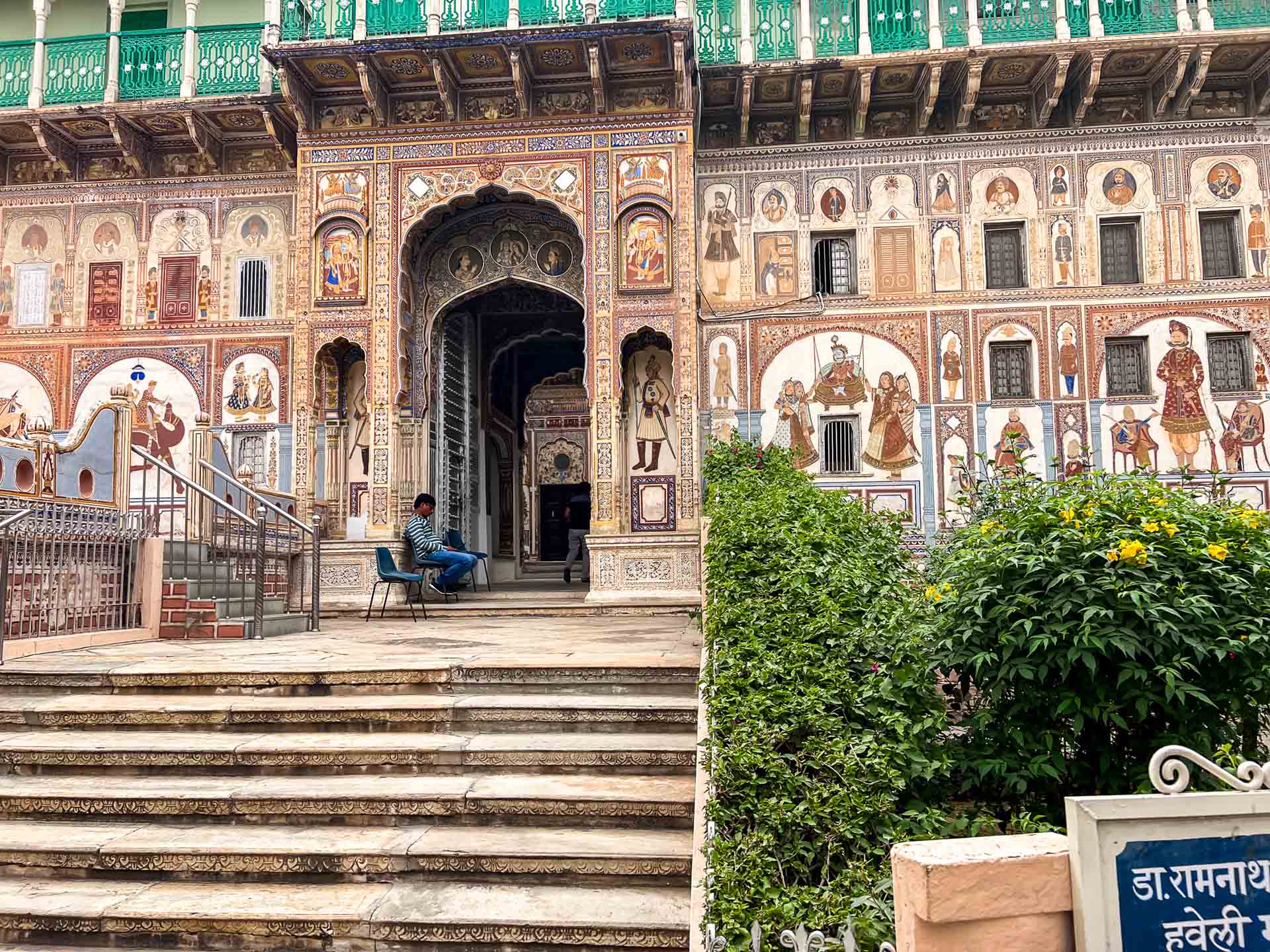
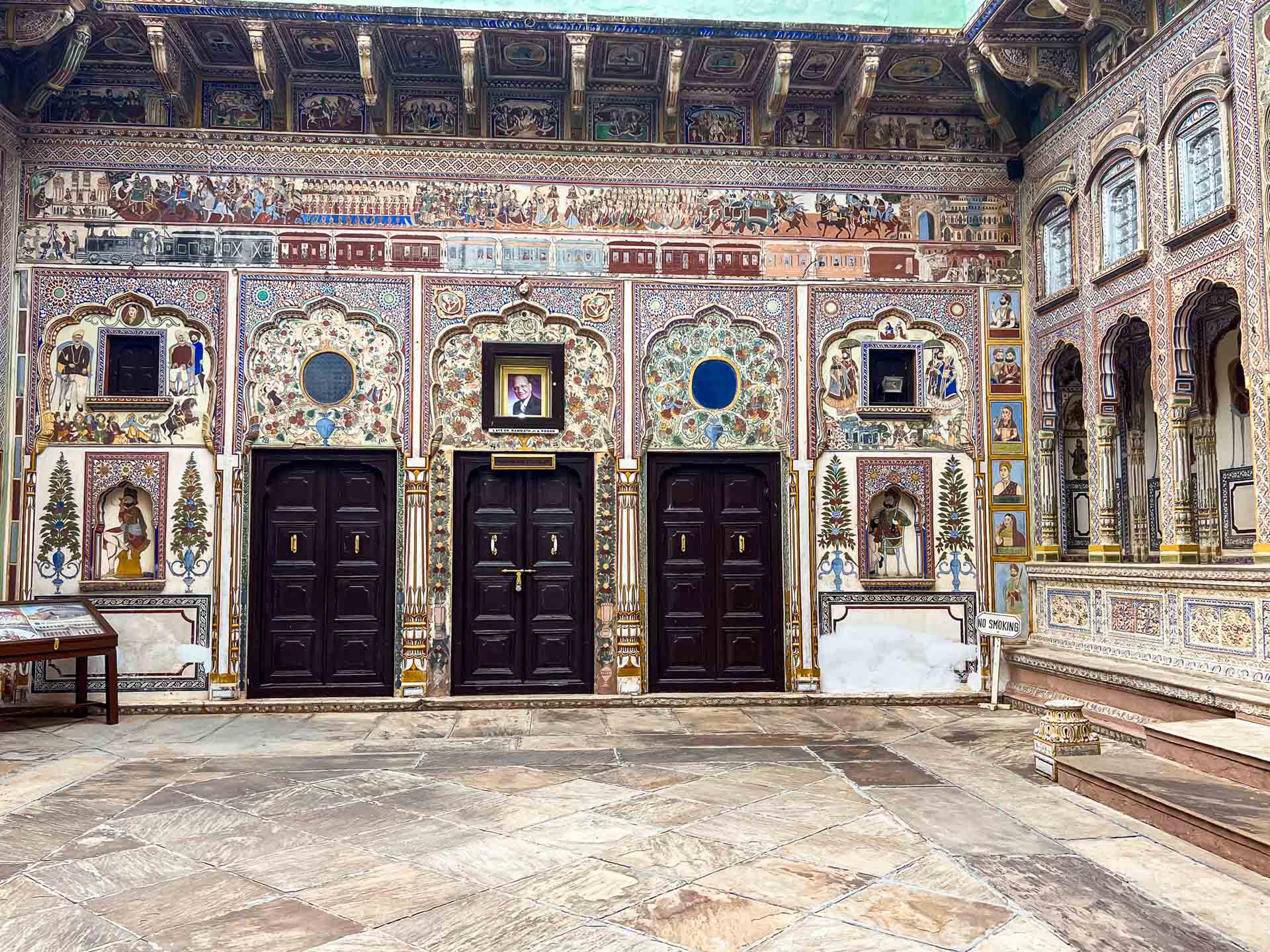
The Dr. Ramnath A. Podar Haveli Museum is one of Nawalgarh’s most celebrated landmarks. Built in 1902 by Seth Anandilal Podar, a prominent Marwari businessman with interests in cotton mills in Mumbai, the mansion was later converted into a museum by his grandson, Kantikumar R. Podar, in memory of his father, Dr. Ramnath A. Podar.
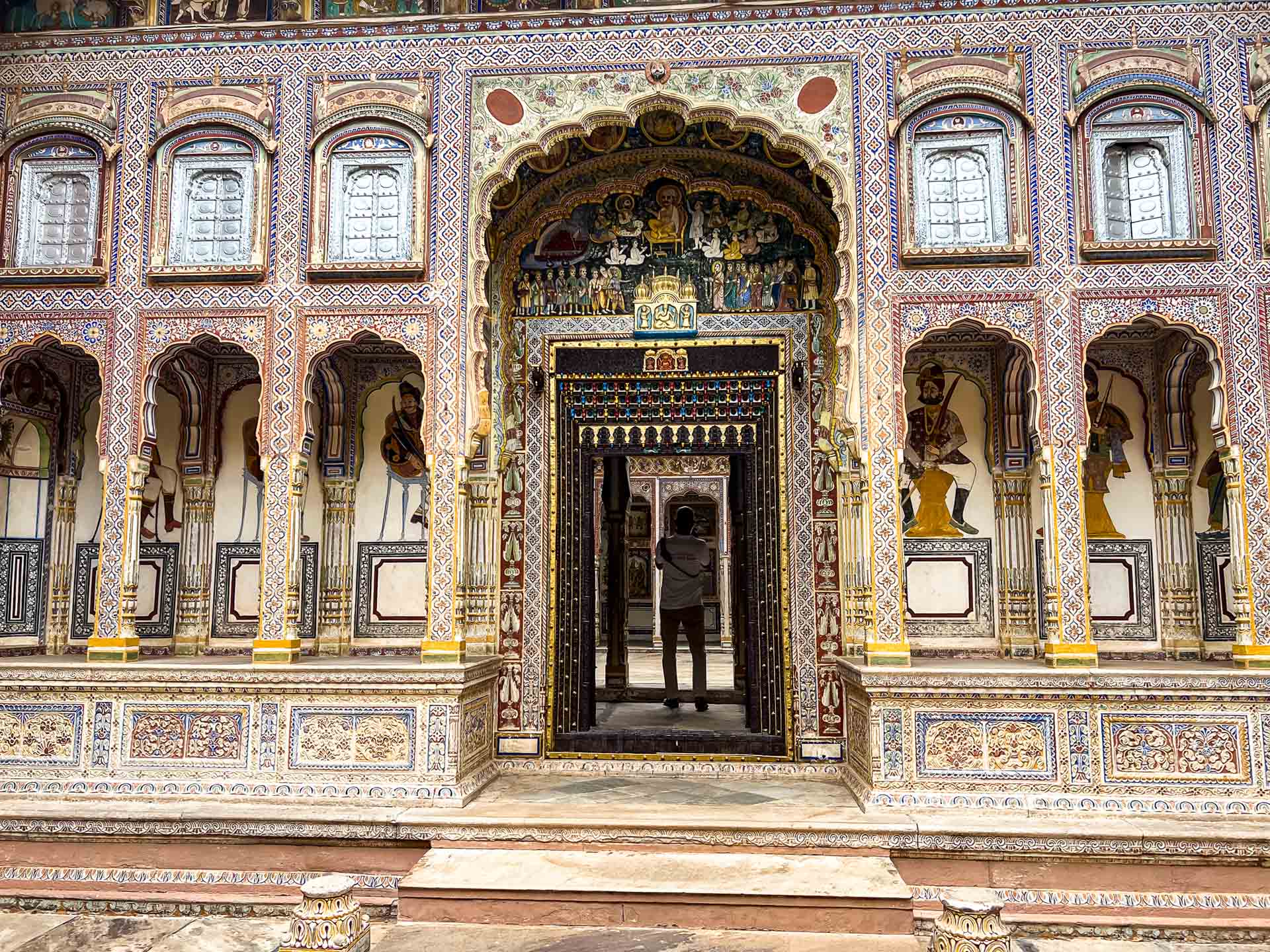
The frescoes cover walls, ceilings, and courtyards in astonishing profusion—over 750 in total. Hindu deities, wedding processions, village scenes, trains, and automobiles appear side by side, demonstrating the broad visual repertoire of Shekhawati artists.
Inside, galleries present traditional costumes, turbans, jewellery, musical instruments, and miniature models of Rajasthan’s famous forts and palaces. These displays offer a valuable overview of regional culture and craftsmanship.
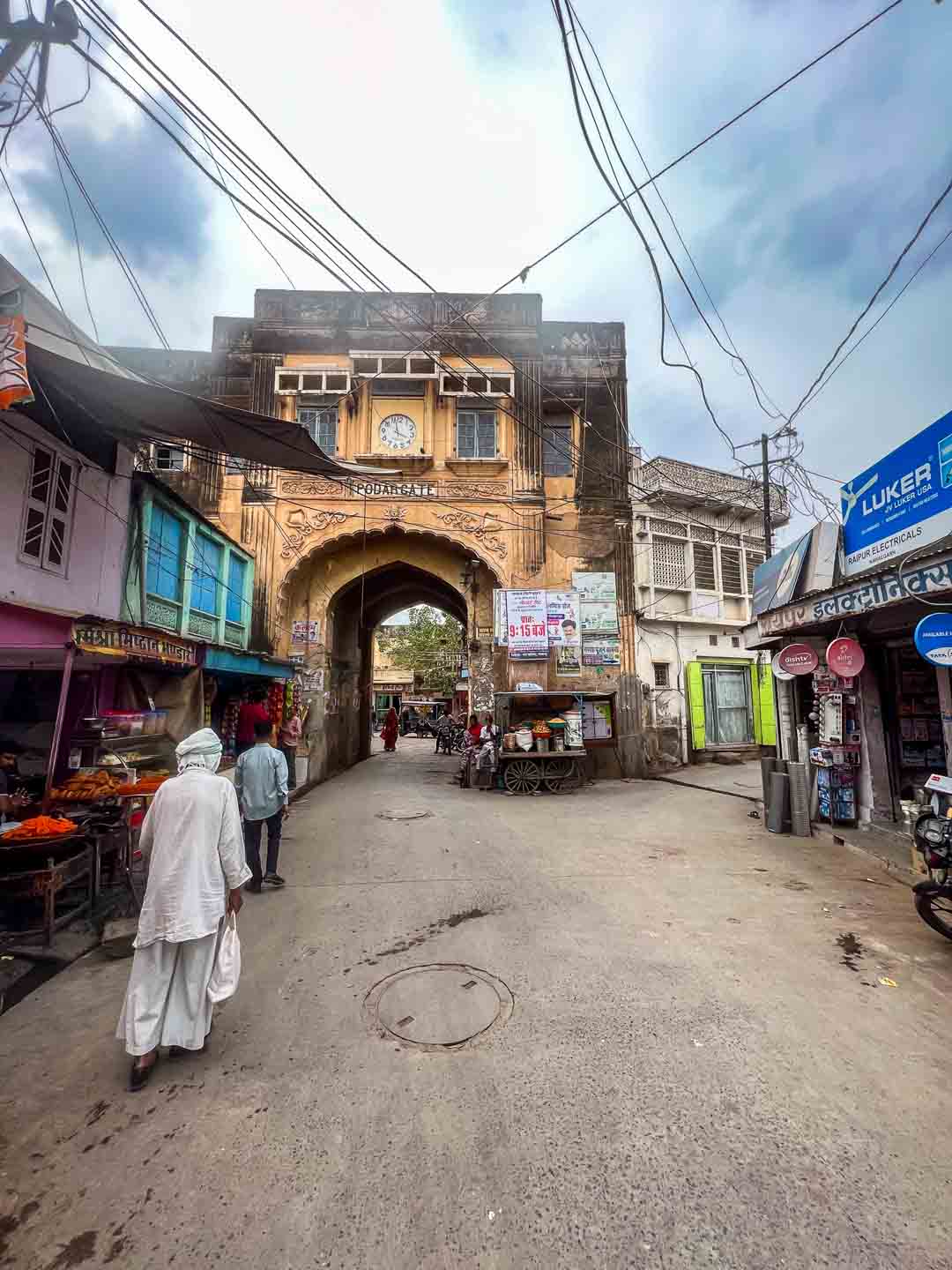
The Podar Gate, elaborately ornamented and richly painted, forms an impressive threshold to the museum. Passing through it, one enters a world where architecture and art merge into a cohesive expression of cultural identity.
Mandawa: A Fortified Trading Town
Mandawa, located a short distance from Nawalgarh, developed around a fort built in the mid-eighteenth century by Thakur Nawal Singh, the ruler of Nawalgarh, to protect trade caravans and assert political control over the surrounding region. After his death in 1780, the territory was divided among his sons, and Mandawa was developed by his sons Padam Singh and Gyan Singh.
Its strategic position brought prosperity, and wealthy merchant families commissioned havelis whose painted facades transformed the town into one of the most visually striking settlements in Rajasthan.
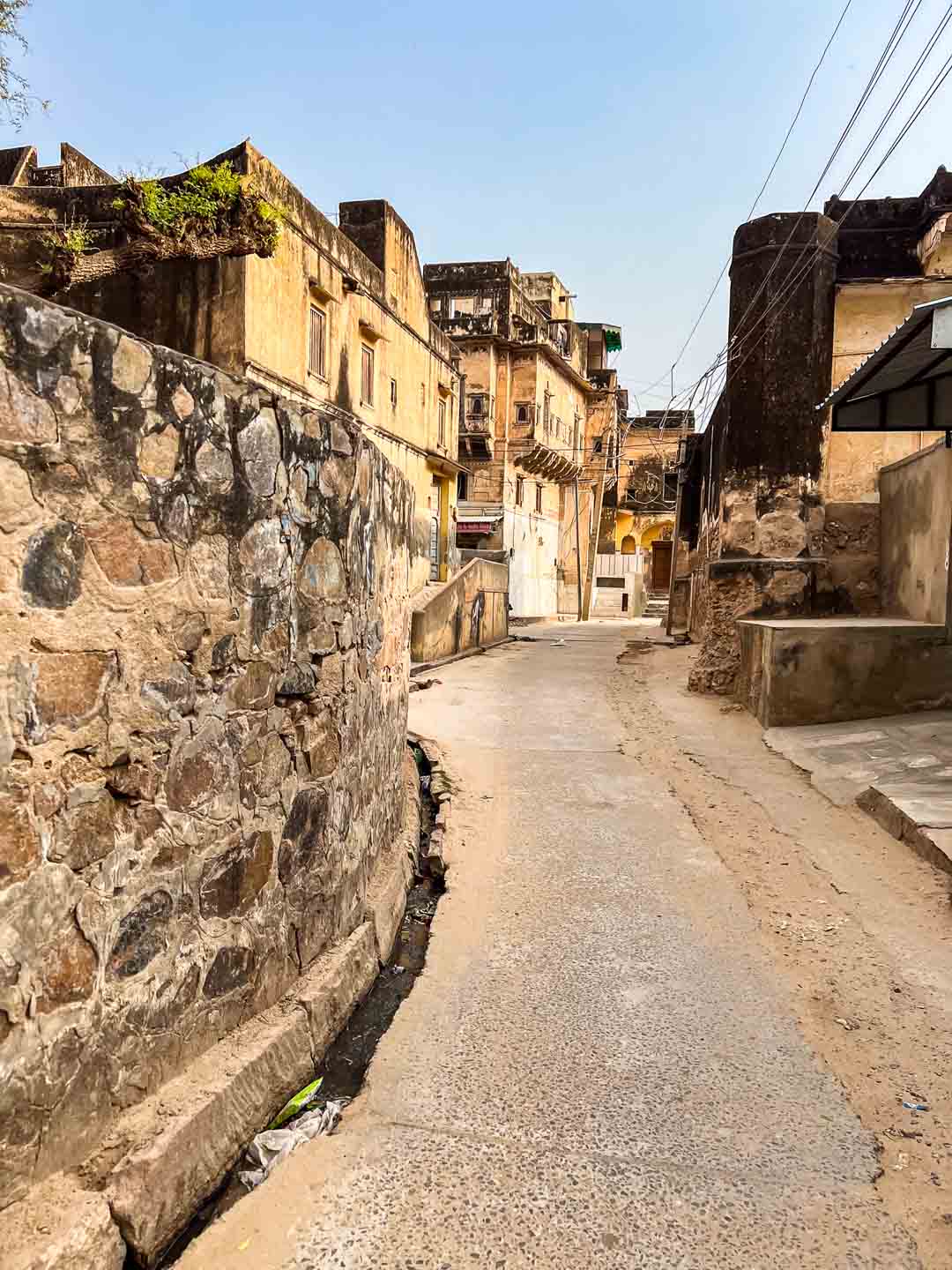
Today, Mandawa is among the best-known destinations in Shekhawati. Its narrow lanes, decorated mansions, and imposing fort preserve the atmosphere of a historic trading centre where commerce and art flourished together.
Radhika Haveli
During our stay in Mandawa, we were hosted at Radhika Haveli, a heritage property that retains the intimate charm of a traditional merchant residence.
Painted ceilings, carved brackets, latticed windows, and a peaceful courtyard created an atmosphere of understated elegance. The haveli conveyed a sense of domestic continuity, as though the rhythms of an earlier era still lingered in its architecture.
Mandawa Fort
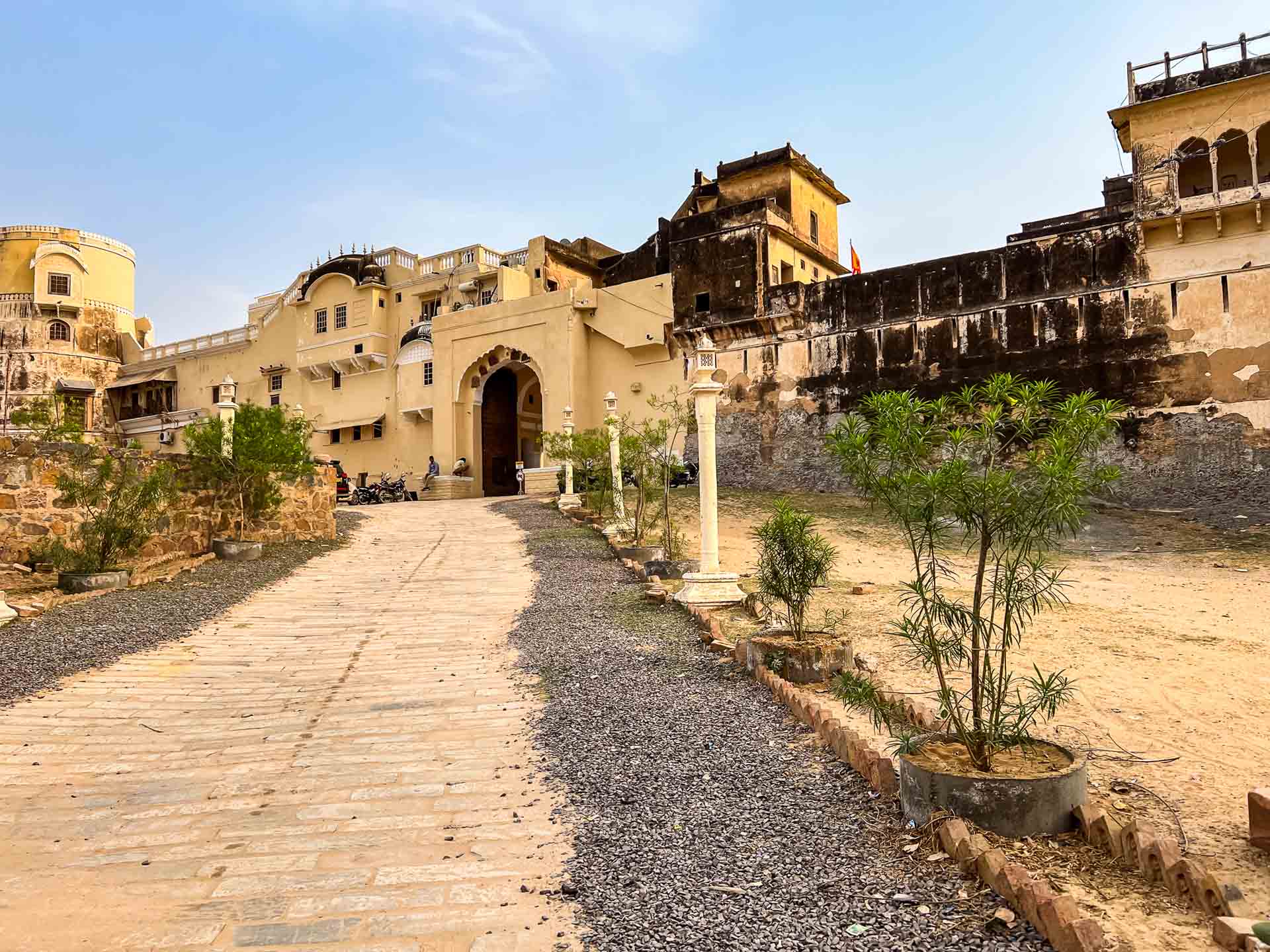
Built in the mid-eighteenth century by Thakur Nawal Singh of Nawalgarh, Mandawa Fort occupies a commanding position overlooking the town. Conceived as a defensive structure, it was also designed to reflect the status and sophistication of its rulers. It is now a heritage hotel called Mandawa Castle.
Architecturally, Castle Mandawa combines the defensive features of a Rajput fort with the decorative richness of Shekhawati. Turreted bastions, arched gateways, projecting balconies, and painted corridors coexist with family portraits, antique furniture, ceremonial objects, and historic weapons. A large brass gong, traditionally struck to mark the passing of each hour, reinforces the feeling that time moves at a different pace within these walls.
The interiors reward close attention. Mirror work, painted archways, and murals depicting religious and courtly themes reveal the aesthetic sensibilities of both Rajput and Shekhawati traditions. At the entrance, images of Radha and Krishna set the tone for a building where art and architecture are inseparable.
Its interiors feature painted walls, mirror work, and ceremonial spaces that reveal the aesthetic tastes of the local nobility. Decorative motifs range from floral patterns to courtly scenes, demonstrating that even martial architecture was infused with artistic refinement. Its historical presence continues to define the identity of Mandawa.
Chokhani Double Haveli
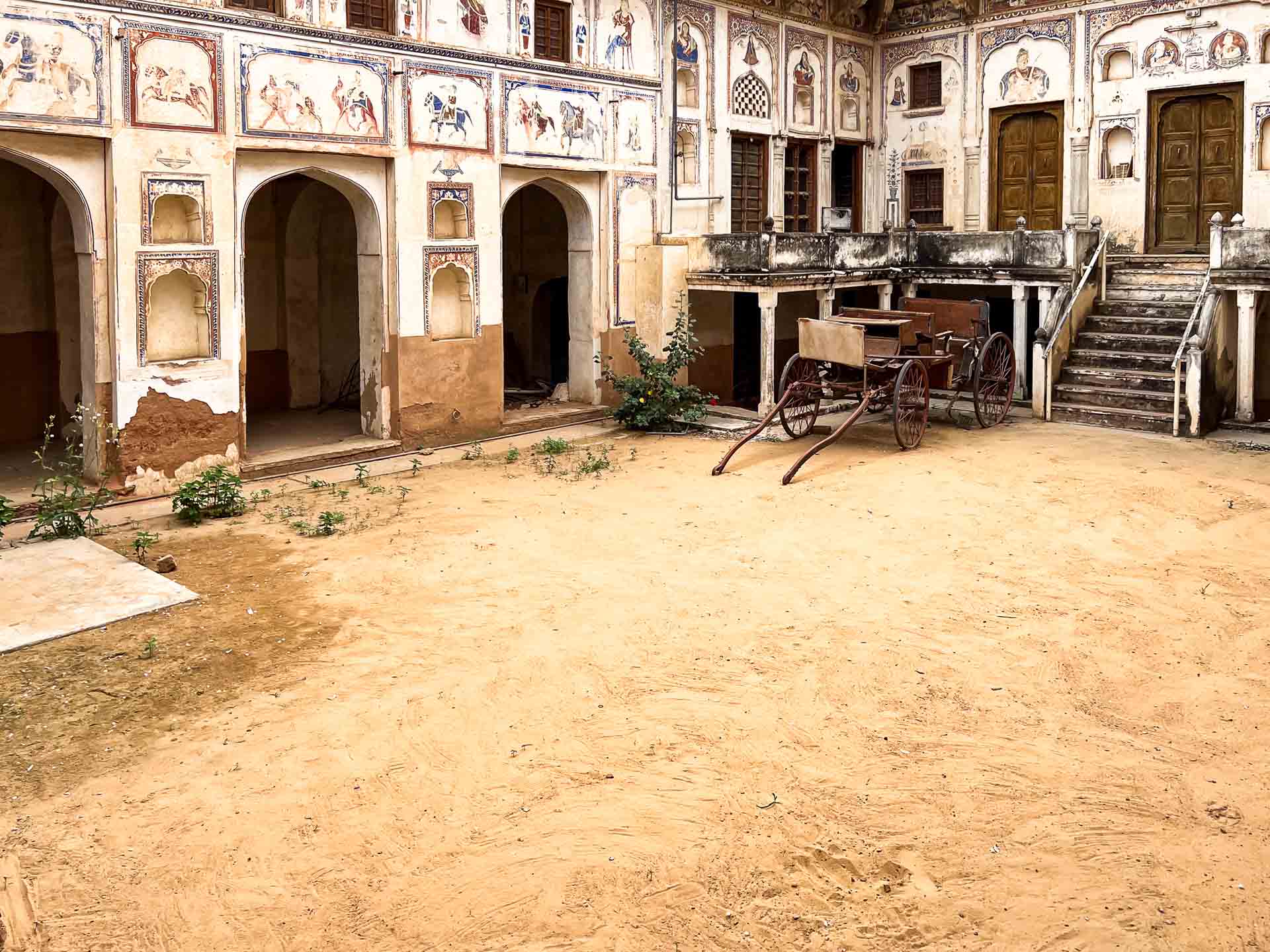
The Chokhani Double Haveli is among Mandawa’s most evocative structures. The two adjoining mansions preserve a significant number of frescoes, though many remain only partially restored.
This state of preservation creates a powerful contrast. In some sections, figures and colours remain vivid and expressive; in others, fading plaster exposes the fragility of the painted surface.
The haveli offers a poignant reminder that these artistic treasures are both enduring and vulnerable.
Goenka Double Haveli
The Goenka Double Haveli is widely regarded as one of the masterpieces of Shekhawati art. Its two connected mansions are richly adorned with frescoes of exceptional quality.
The facades feature elephants, horses, and decorative borders, while the interiors depict gods, European figures, railway engines, and scenes from everyday life. The breadth of imagery reflects the merchant patrons’ exposure to a rapidly globalising world.
The technical skill of the artists is evident in the delicate brushwork, balanced compositions, and enduring colours.
Dangayach Haveli
Dangayach Haveli is a notable example of the diverse imagery that Shekhawati’s patrons commissioned for their homes. Like several other mansions in the region, it features themes drawn from both Indian and foreign visual traditions, reflecting the openness of Shekhawati’s merchant families to influences from beyond India.
Imported prints and illustrated books often served as source material for local artists, who adapted foreign imagery to their own decorative vocabulary—producing interiors that speak to a world in conversation with itself.
Bhagton Ki Choti Haveli
Bhagton Ki Choti Haveli may be smaller than some of the region’s grander mansions, but its scale lends it a special charm.
The frescoes are delicately executed, and the intimate spaces encourage close observation of details that might be overlooked in larger complexes. The haveli demonstrates that artistic excellence in Shekhawati was not limited to the most monumental residences.
Shekhawati Memorial Cenotaphs
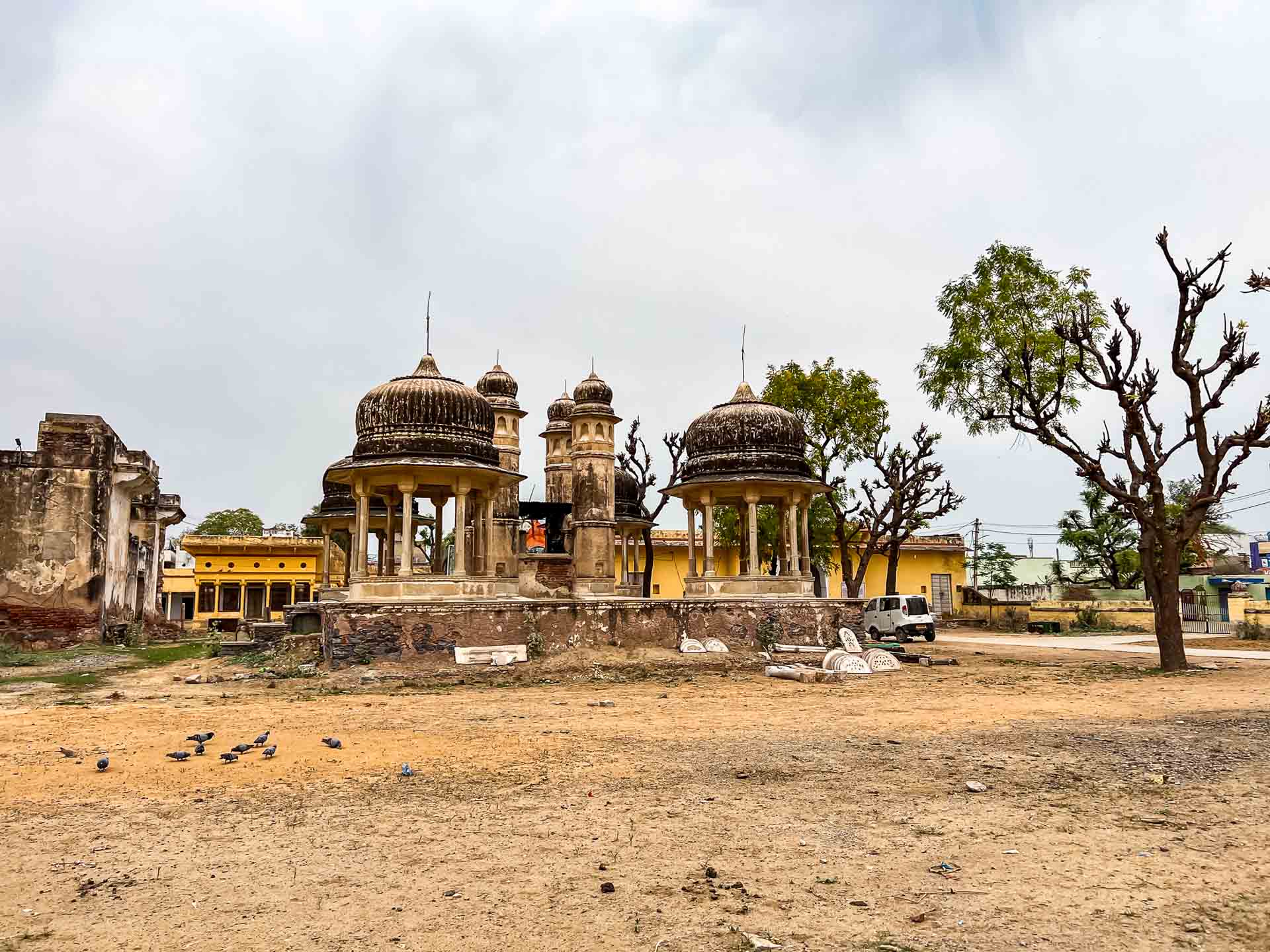
The cenotaphs, or chhatris, of Shekhawati were erected to honour rulers and prominent members of merchant families. These domed memorial structures often stand in tranquil settings at the edges of towns.
Their painted ceilings and decorative columns extend the visual traditions of the havelis into commemorative architecture. They are places of remembrance, but also enduring expressions of artistic patronage.
Art and Architecture of the Shekhawati Havelis
The havelis of Shekhawati represent a sophisticated response to climate, social structure, and aesthetic ambition.
Thick walls insulated interiors from extreme temperatures, while inward-looking courtyards ensured privacy and ventilation.
Public and private spaces were carefully organised to accommodate business activities, family life, and social customs.
Some of these paintings and frescos represent the extent of travel they did as merchants and traders and their cultural appreciation.
The frescoes were executed on wet lime plaster using mineral and vegetable pigments. Because the colours bonded chemically with the plaster, they retained their brilliance for decades.
Themes ranged from religious narratives and portraits to symbols of prosperity and scenes of technological change. Elephants signified power, lotuses purity, and peacocks beauty and abundance.
Together, architecture and painting created environments that were both functional and deeply expressive.
Food and Cultural Traditions of Shekhawati
The cuisine of Shekhawati evolved in an arid landscape where water was scarce and ingredients needed to be stored for long periods. As a result, many dishes are robust, nourishing, and designed to remain flavorful even in harsh climatic conditions.
Regional specialties include dal baati churma, ker sangri, gatte ki sabzi, panchmel dal, bajra rotis, and fiery garlic chutney. Traditional sweets such as ghevar and mawa kachori reflect Rajasthan’s fondness for rich desserts.
The cultural life of Shekhawati is equally vibrant. Folk music, oral storytelling, and the ancient art of Kathputli puppetry continue to preserve heroic legends, moral tales, and memories of the region’s past.
Nawalgarh and Mandawa are far more than picturesque towns. They are repositories of memory, preserving the ambitions, beliefs, and artistic achievements of generations of merchants and artisans.
Their painted walls capture a world in transition, where devotion coexisted with curiosity and local traditions absorbed influences from distant lands.
As we wandered through frescoed courtyards, museum galleries, and quiet streets, we came to appreciate Shekhawati as one of India’s most distinctive cultural landscapes—a region where history continues to speak in colour, craftsmanship, and enduring beauty.