Pokhran — Clay, Craftsmanship, and Chinkara
Pokhran is a tiny desert town in western Rajasthan, situated between the ancient trade routes that joined the interior of India to caravan networks leading into Central Asia and the Arabian Sea near Jodhpur & Jaisalmer. Pokhran seems so unassuming at first glance. Sandstone houses are clustered along its streets, the desert stretches out in all directions, and life unfolds at an unhurried pace determined by the rhythms of a punishing but stunning landscape.
According to the town, its name is derived from two Hindi words pokhar (meaning pond) and ran( meaning place/settlement). The name itself showcases the ingenuity and resilience of those who carved a life here in a place where water has always been precious.
Pokhran today is mostly remembered as the location of nuclear tests in 1974 and 1998, but it has a longer history full of places you should definitely explore. Established by the Rathore clan in the 14th century, it became an important bastion controlling trade and travel through the Thar Desert. But apart from its past glory, what Pokhran has to offer the visitors is a quieter time based on skill or trade, and the heritage and beauty of the secluded desert.
Pokhran Fort Palace
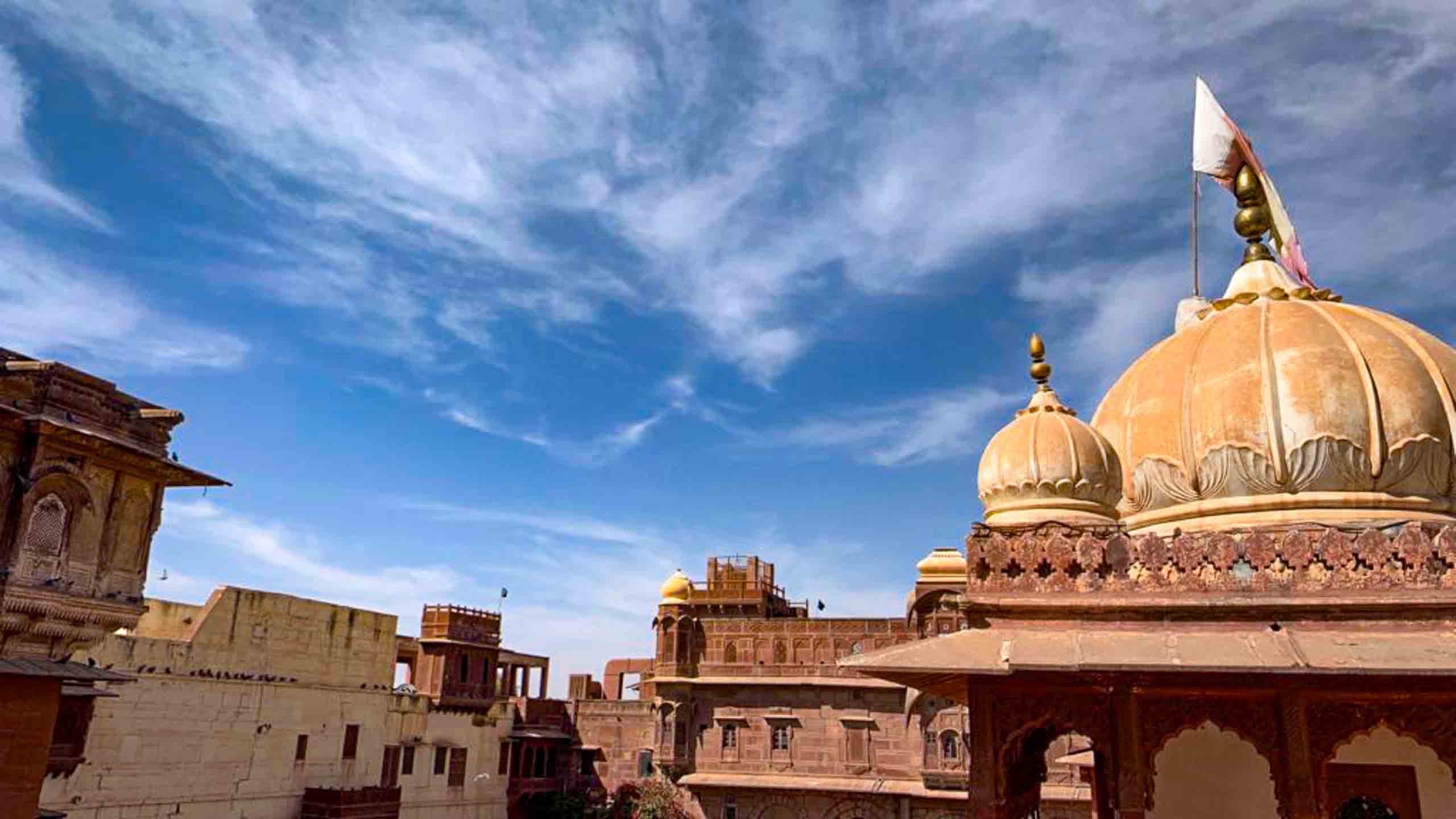
Pokhran Fort Palace is easily the town’s most dominant feature. Rao Maldeo, heir of the Rathore dynasty, built this fort and has kept an eye on anything happening in Pokhran from a low hill since 1356.
Its fort is entirely made of yellow sandstone and appears to have sprung up from the desert floor naturally. Thick walls, bastions, and gateways made the city able to withstand both floods and invading armies. But inside the fortress-style shell, you will find beautiful courtyards, delicately carved balconies, and rooms of arches with painted details.
Portions of the fort still belong to the royal family, and portions have been converted into a heritage hotel, so you can experience this living palace instead of just a static monument. You feel the connection to history when you walk around the courtyards. Not just a thing of the past, but it continues to be a place where tradition coexists with hospitality.
The landscape reflects the toll of time, and though you bask in the soft light of morning or evening, it becomes ageless.
The Pottery Tradition of Pokhran
While the fort may signify Pokhran’s royal lineage, its pottery speaks to the creative expression of its past. Pokhran is famous for having a robust ceramic tradition that has been passed from generation to generation across Rajasthan.
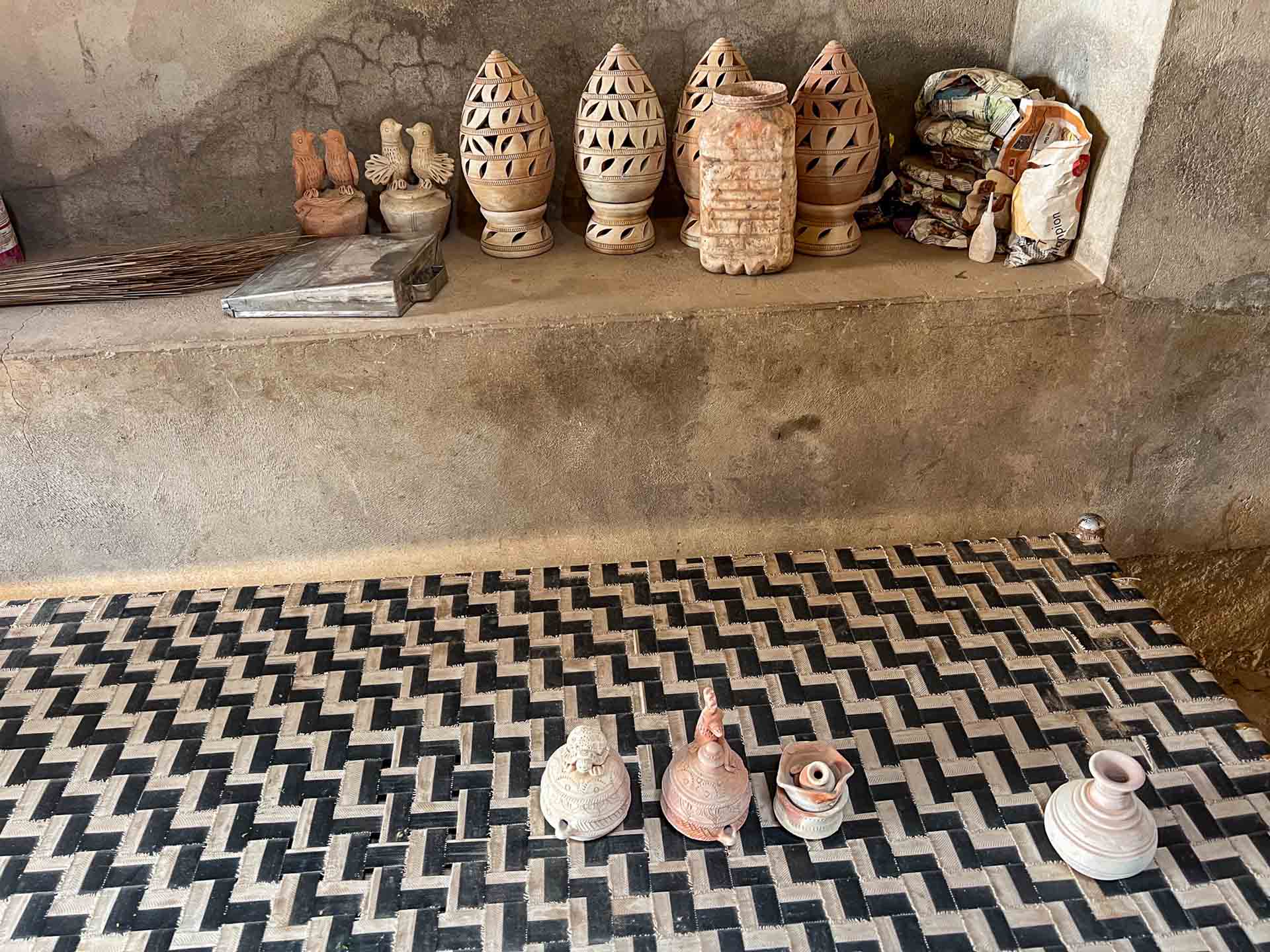
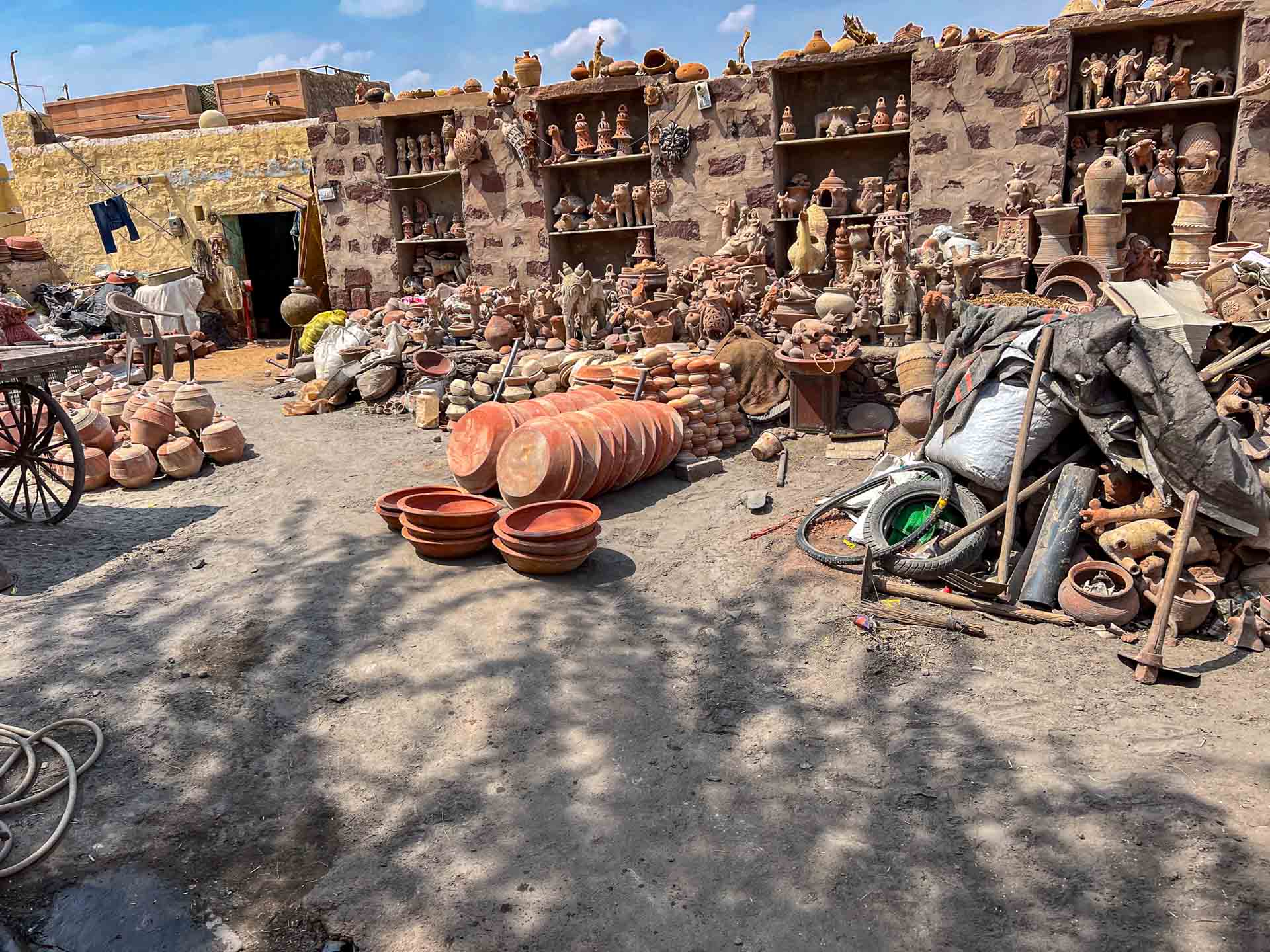
Local clay, augmented by the mineral content of desert soil, is ideally suited for pottery. This simple matter is turned into water vessels by artisans, bowls, plates, lamps, and ornaments that serve functional as well as artistic purposes.
The colors have a range that pulls from terracotta red, cream, ochre, or muted brown—dense yet earthy. Most of them are handcrafted with colorful flower themes, geometric borders, and shaped birds and beasts. The designs—simple but beautiful, echoing the desert’s sparse color.
Visiting the Pottery Artisans
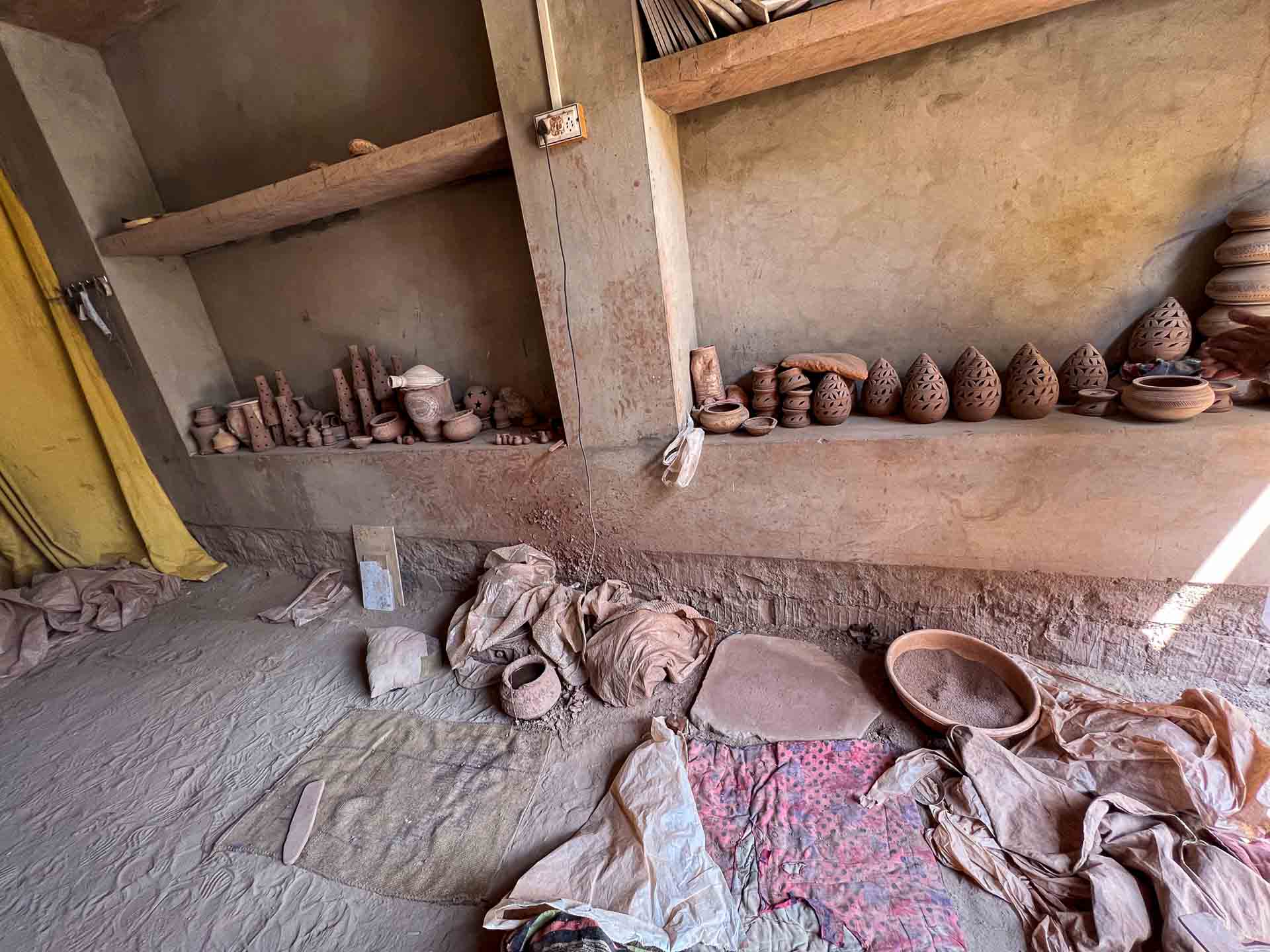
Some of the best moments we had in Pokhran were our visit to the potter workshops. It was not a performative thing: the artisans were simply at work, carrying out what had been handed down through each generation.
There was a mountain of clay beside the wheel. The potter deftly centered and started shaping the clay. The lump slowly rose into a vessel of perfect proportions, slightly pressing his fingers in. The transformation seemed almost magical.
Nearby, racks were filled with completed projects waiting for the kiln. There were some simple, modest objects whose beauty was purely in their form. Some of them had been adorned with fine brushwork. Every item had been touched by hand, no two being entirely identical.
Judging by the work being done in front of us, we saw patience and skill, which left an impression. Such craft has meaning in a world of mass production.
Chinkara
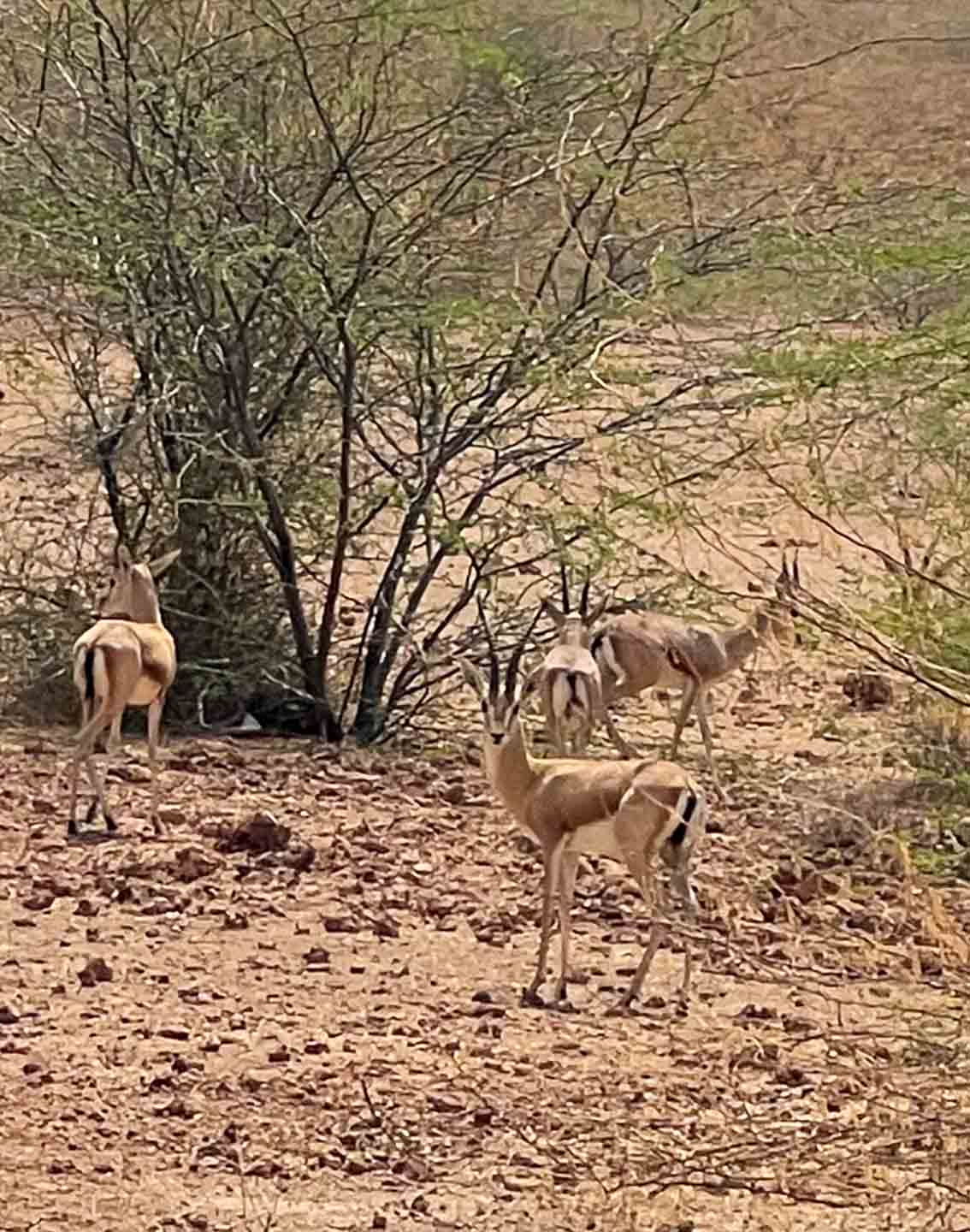
Just outside Pokhran, we spotted movement in the scrubland. Chinkaras were traversing the sand and disappearing in little bursts of speed into the thorny underbrush. They are well adapted to desert life and are a native species of the arid regions of western India. With its pale coat, it merges with the landscape, and it is able to live without drinking for long periods, obtaining some moisture from the plants it consumes.
The sight of these gorgeous creatures further enriched our experience of Pokhran. They seemed to reflect the very characteristics of the desert — grace, fortitude, and unassuming power.
The true essence of Pokhran is found in the sandstone folds swelled by years of wind. It lives in the hands of potters molding clay into timeless beauty. It is in the flavor of tea sipped from an earthen cup, and the momentary form of a chinkara crossing the desert.