Ramgarh Crater – Ancient yet Still Relevant
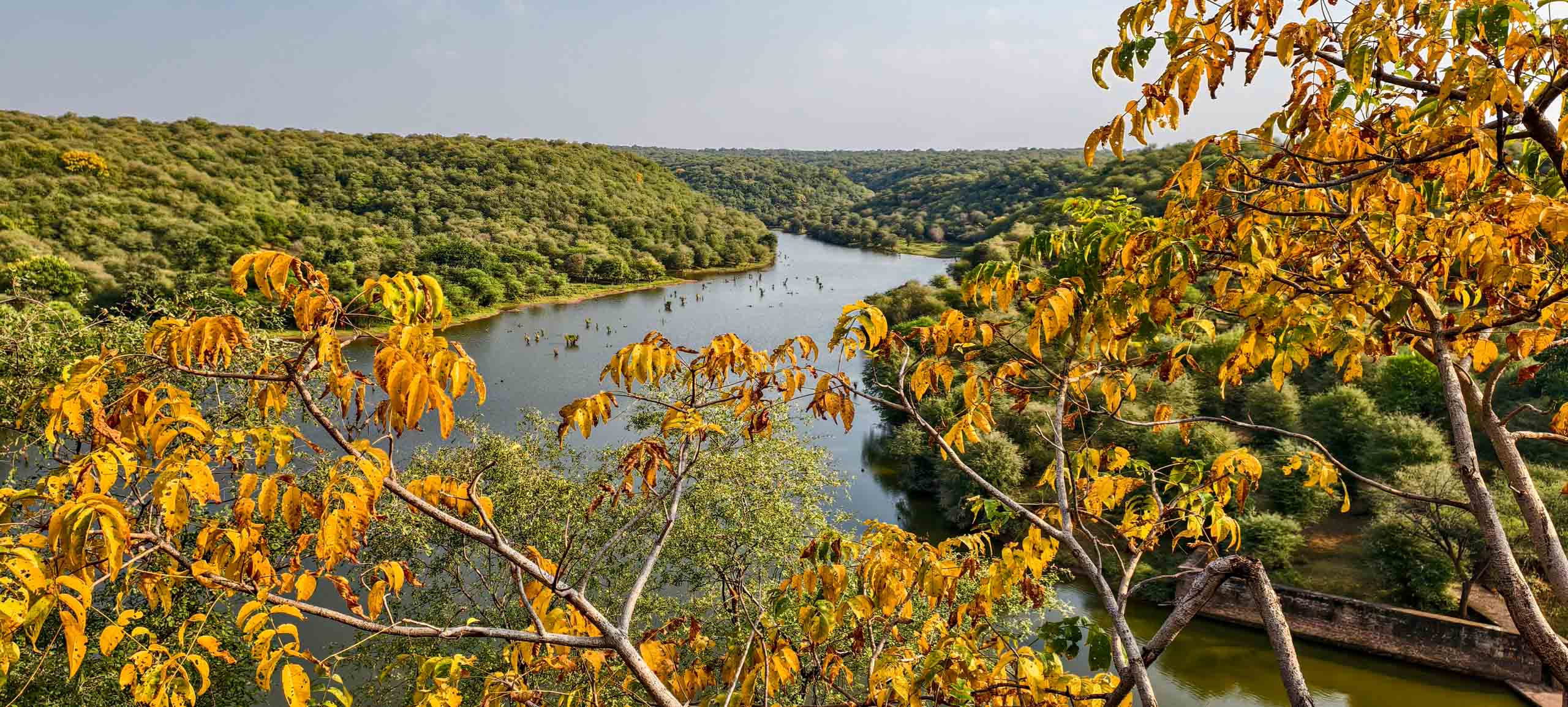
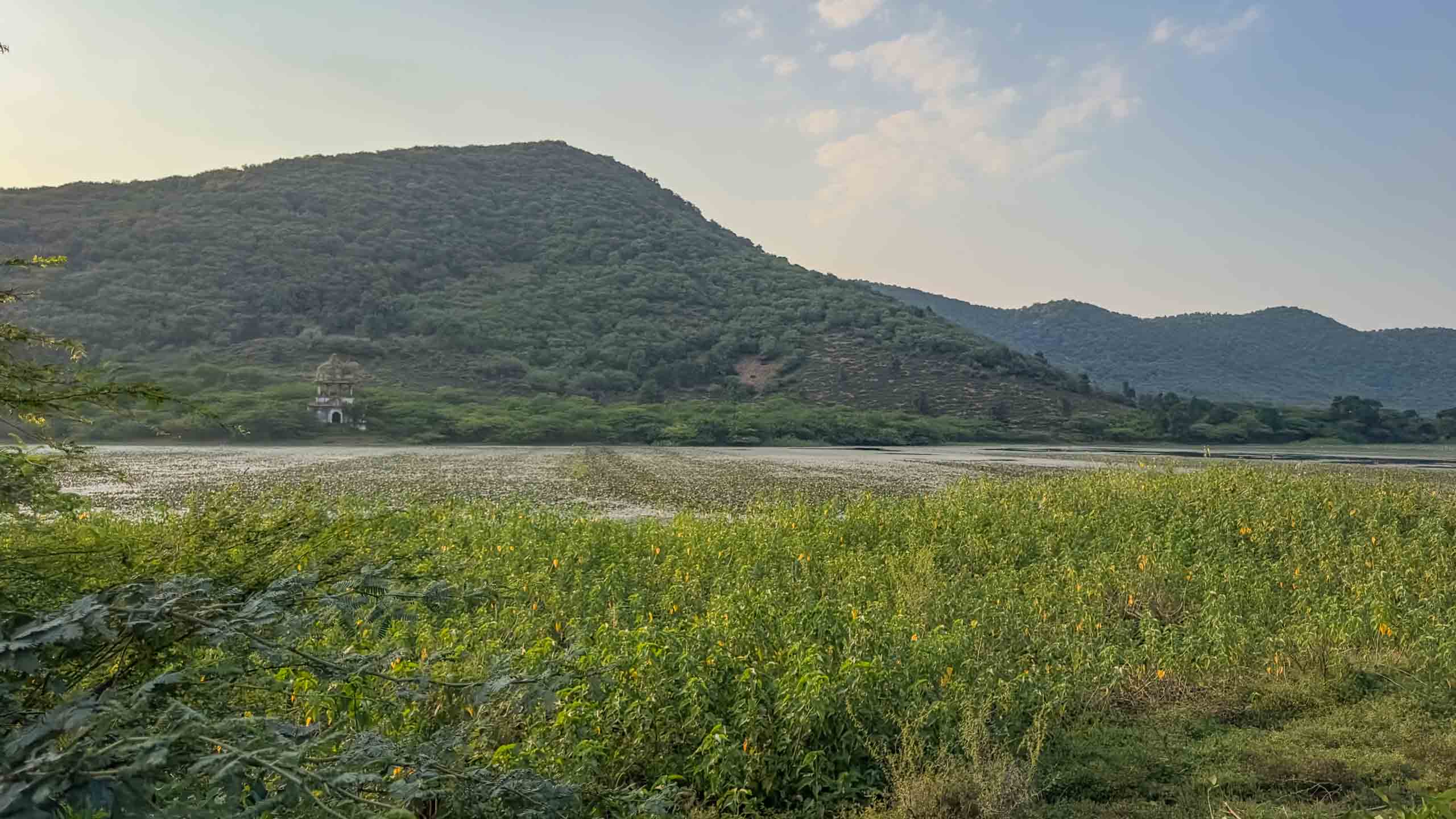
The Ramgarh Crater, located about 25 miles from Jhalawar, is one of India’s most unusual natural structures we visited in the country. Ramgarh’s significance, unlike the region’s more prominent forts and palaces, lies beneath its surface. Most believe that the crater was created by a meteorite impact thousands of years ago, much older than any historical monument in the surrounding area.
Circular, several kilometers in diameter, the crater has a raised rim and a wide basin. Over centuries of a series of geological events, erosion or sedimentation, and monsoon rainfall helped transform this basin into cultivable land. That was in the past; today, the interior of the crater hosts villages, agricultural fields and religious sites—a testament to how human habitation evolved in a landscape sculpted by prehistoric forces.
Early theories suggested a volcanic origin for the crater, but subsequent studies of its geology concluded with an extraterrestrial explanation. Characteristics like the crater’s symmetry, raised rim and distortion in local rock formations are consistent with known impact structures around the world. Though its exact date is still being studied, the crater’s age far predates recorded human history in the area.
The difference between Ramgarh and many other impact craters is that it’s completely absorbed into everyday rural life. Agriculture, grazing and settlement persist inside the basin — a rare example of an ancient impact structure that continues to be humanly inhabited.
Bhand Deva Temple
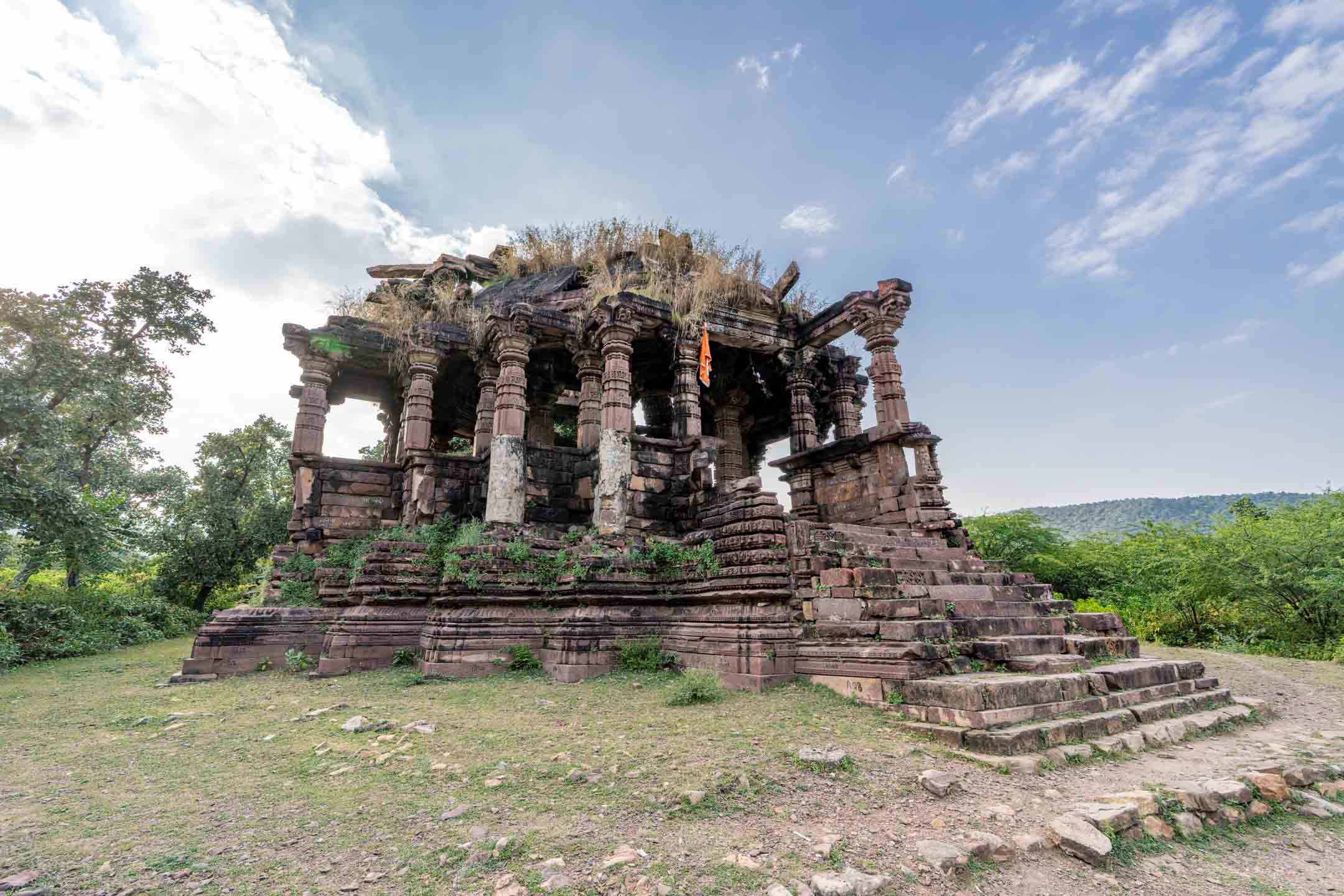
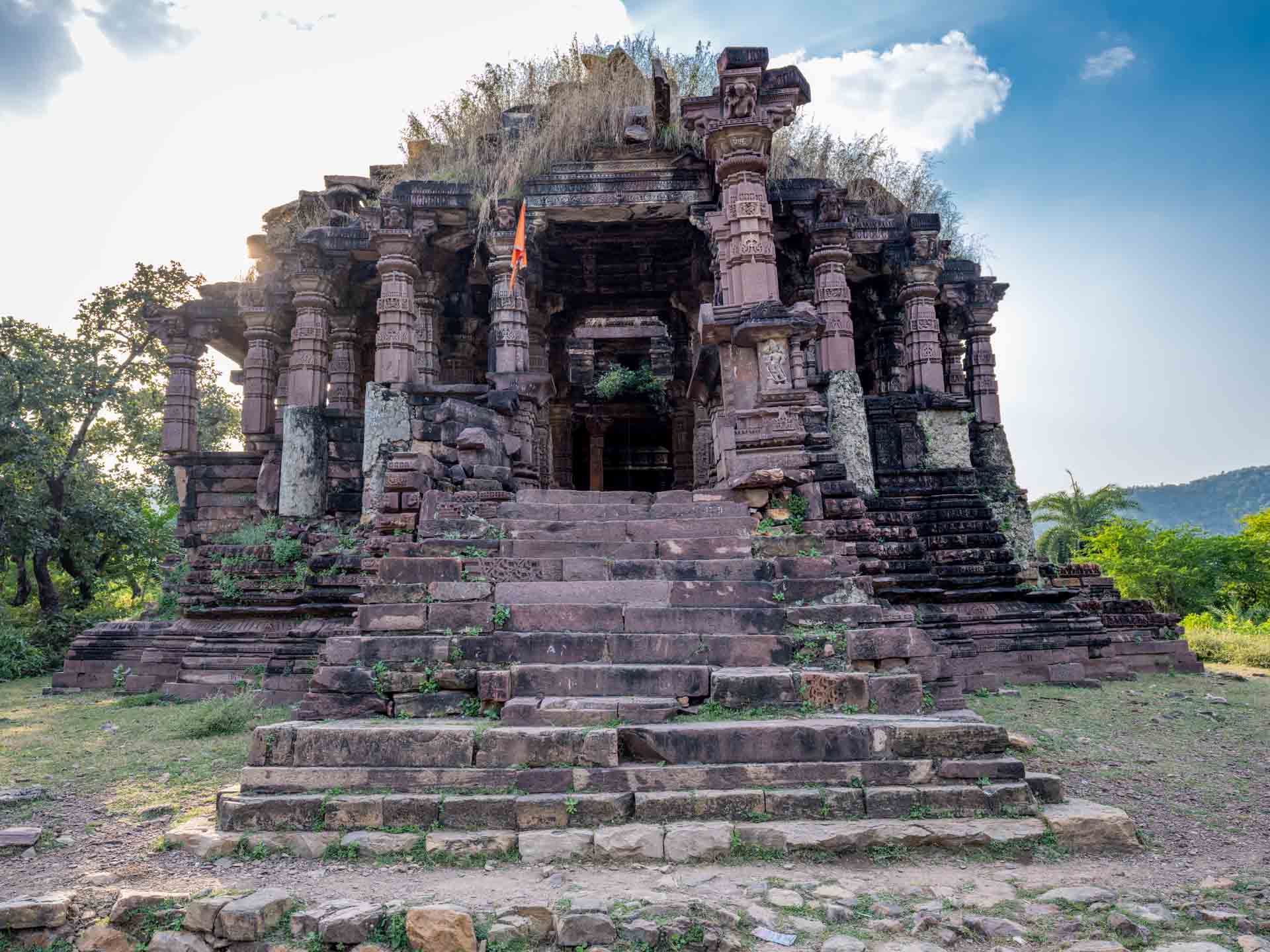
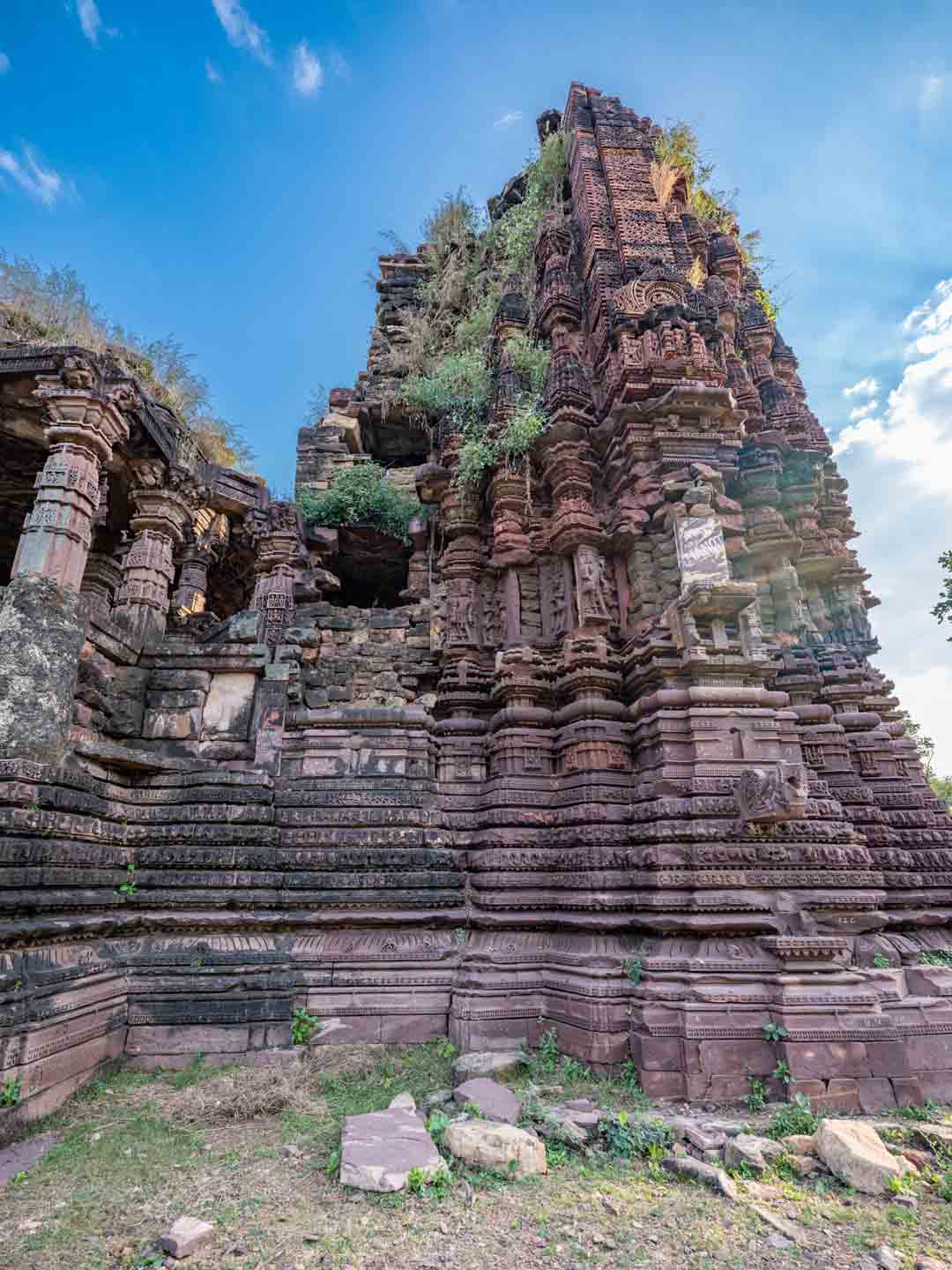
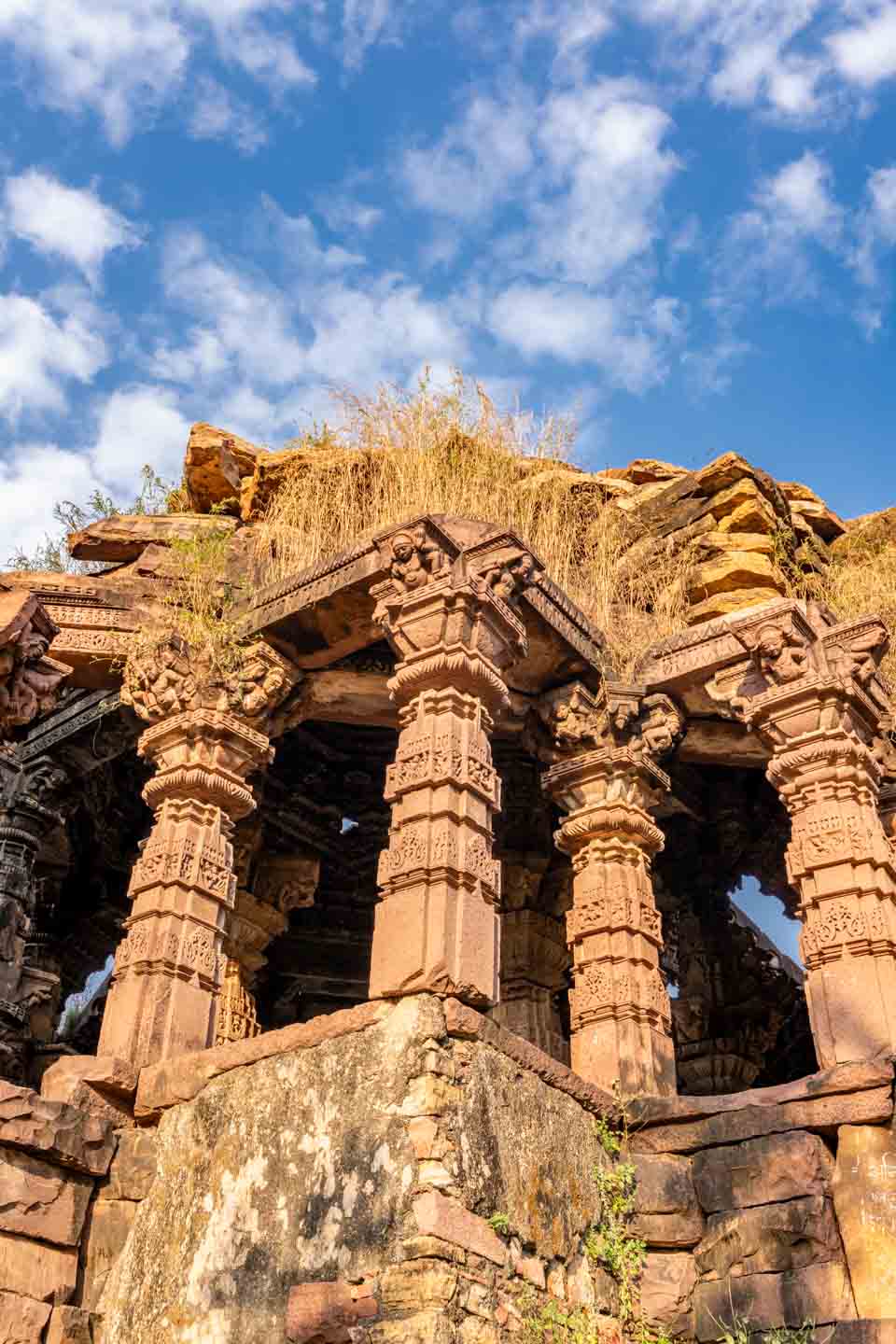
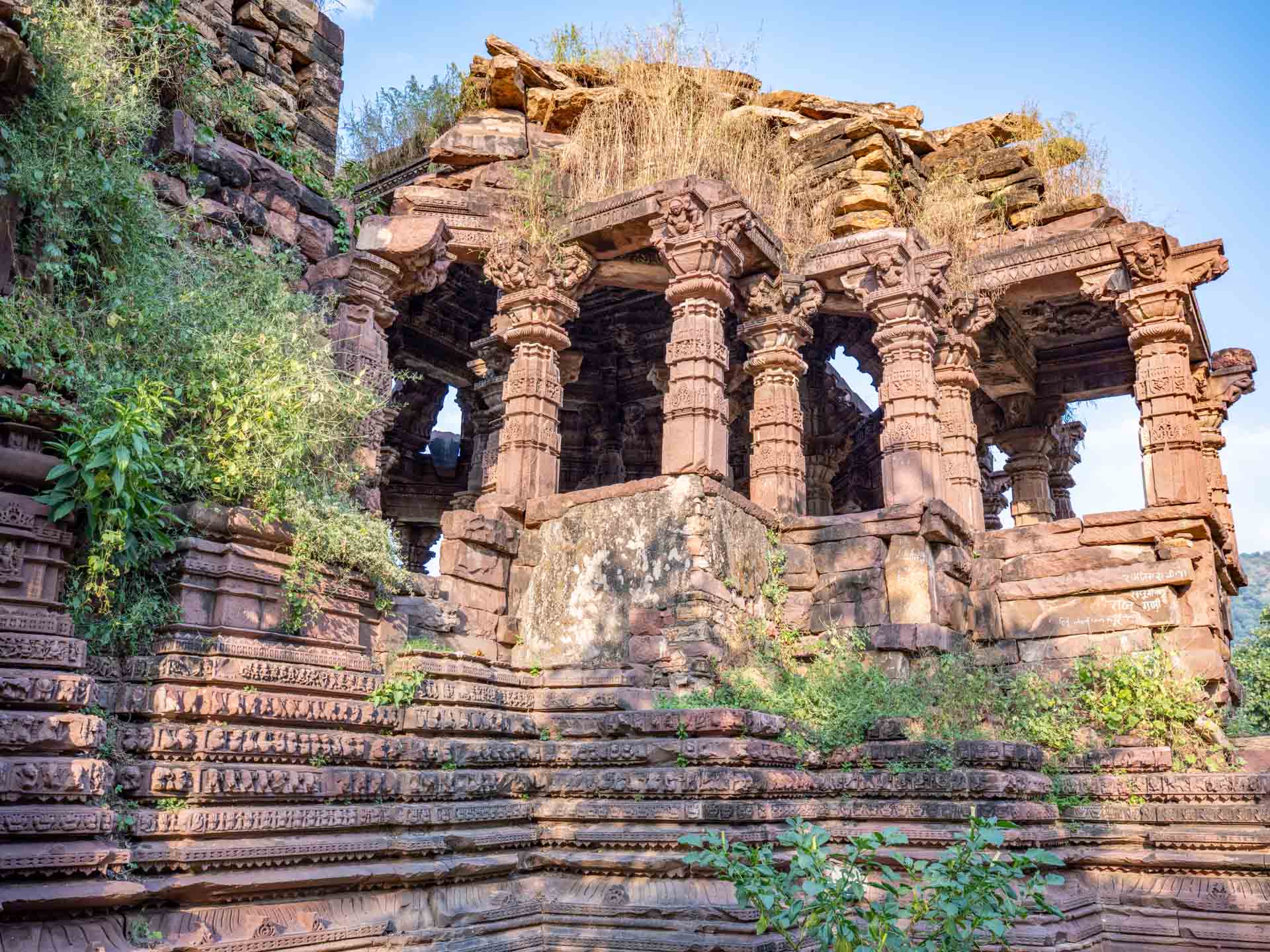
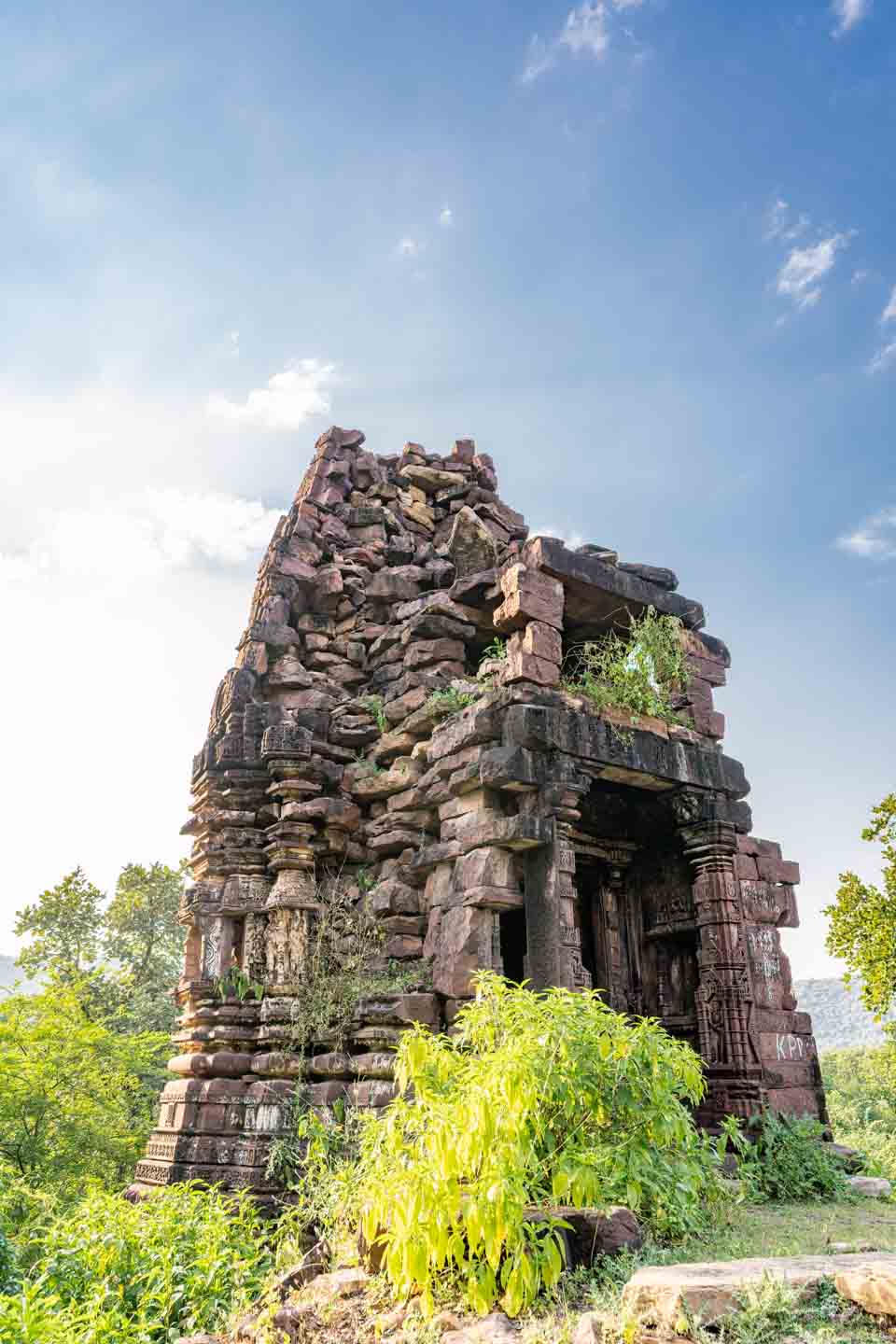
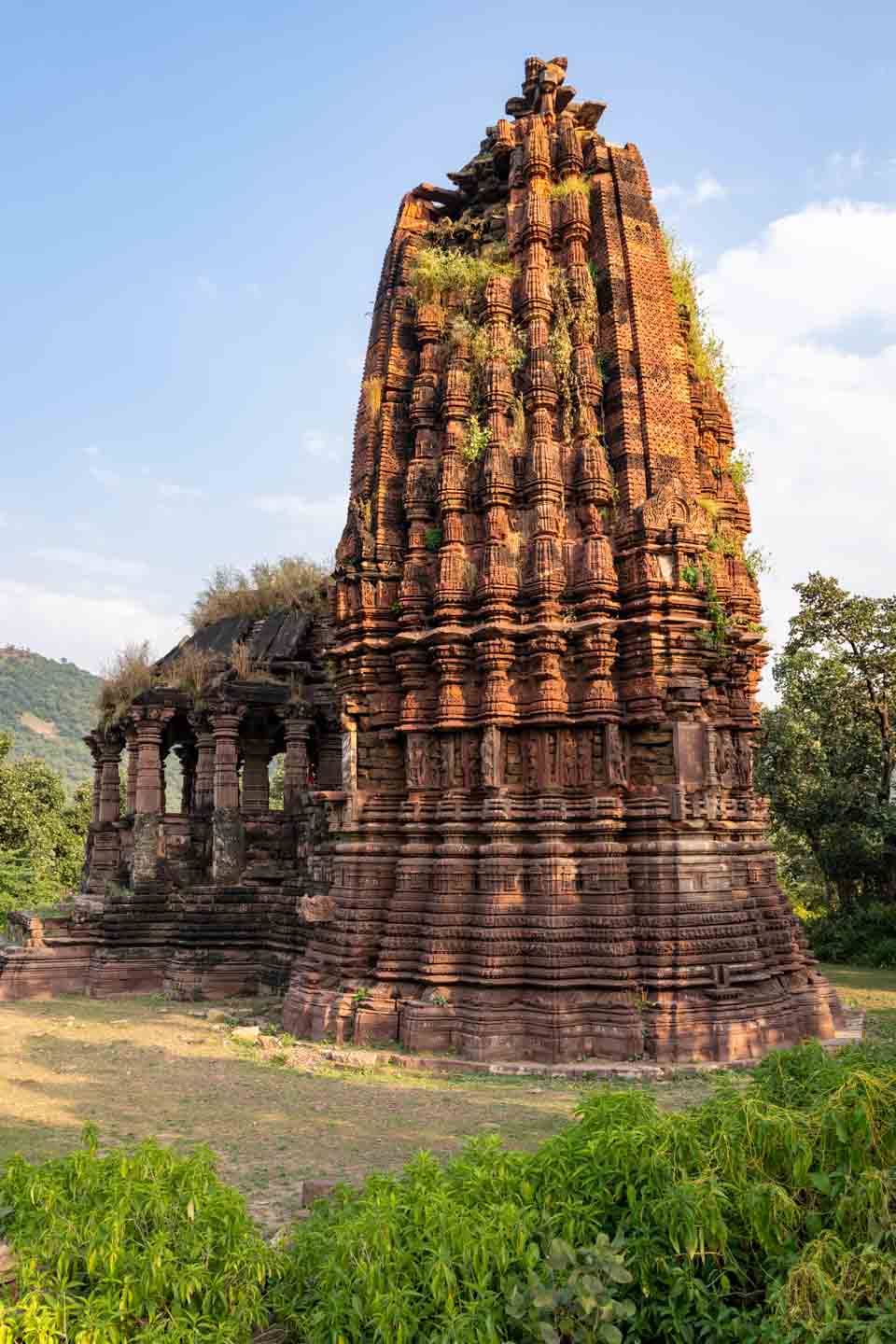
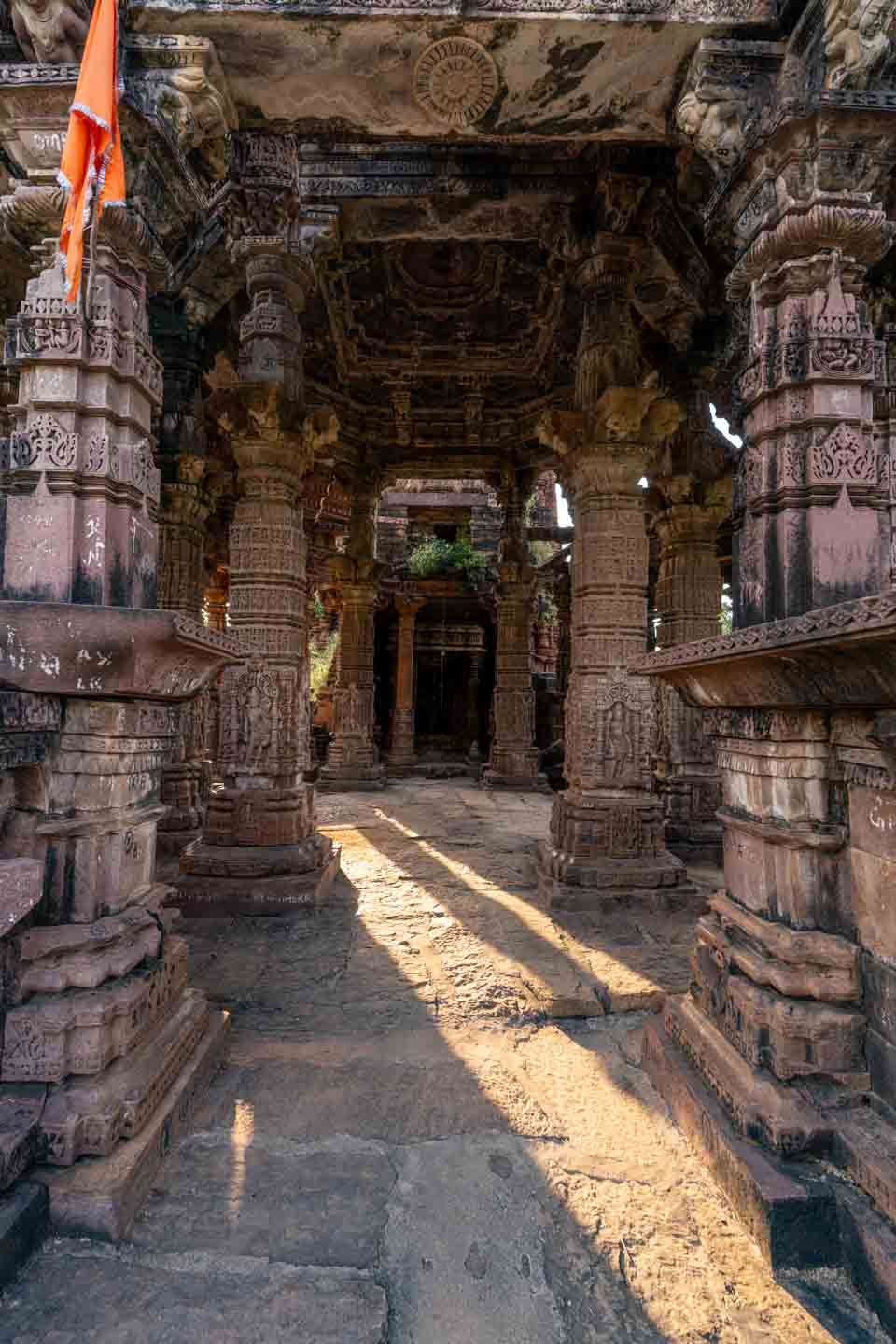
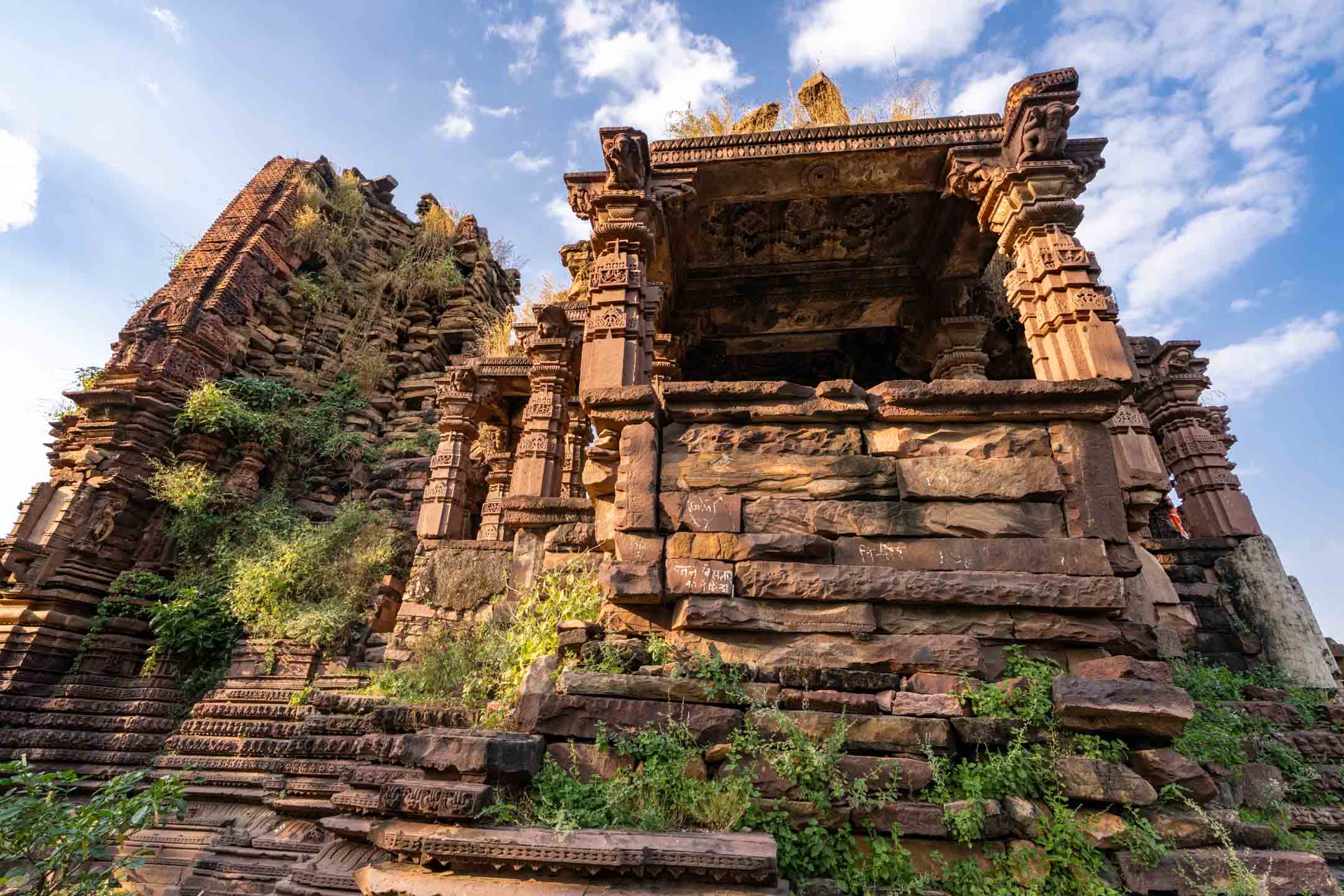
In the centre of the crater basin is the Bhand Deva Temple. Established at the beginning of 10th to 11th century CE, the temple is credited to Meda dynasty which ruled over a part of southeastern Rajasthan during the early medieval period.
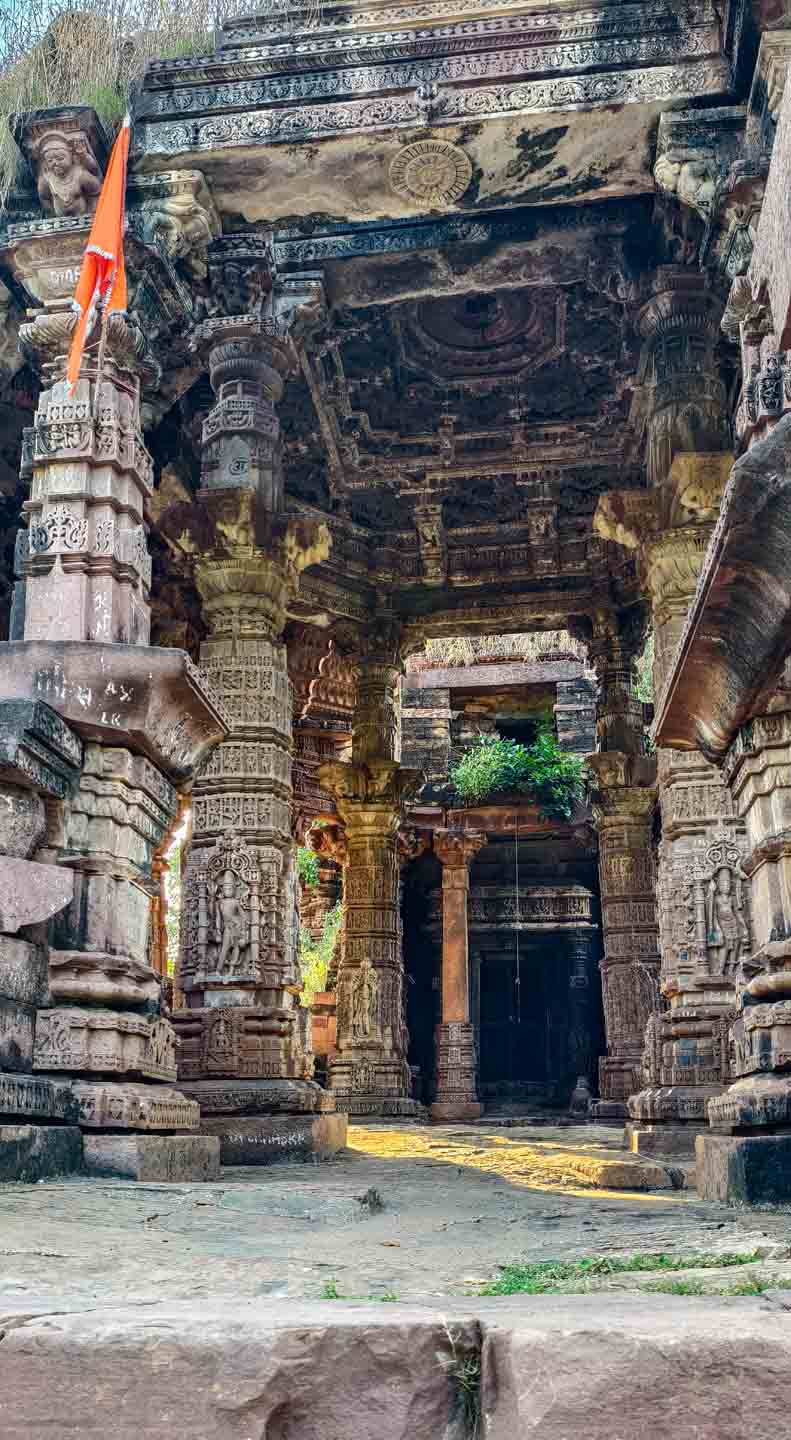
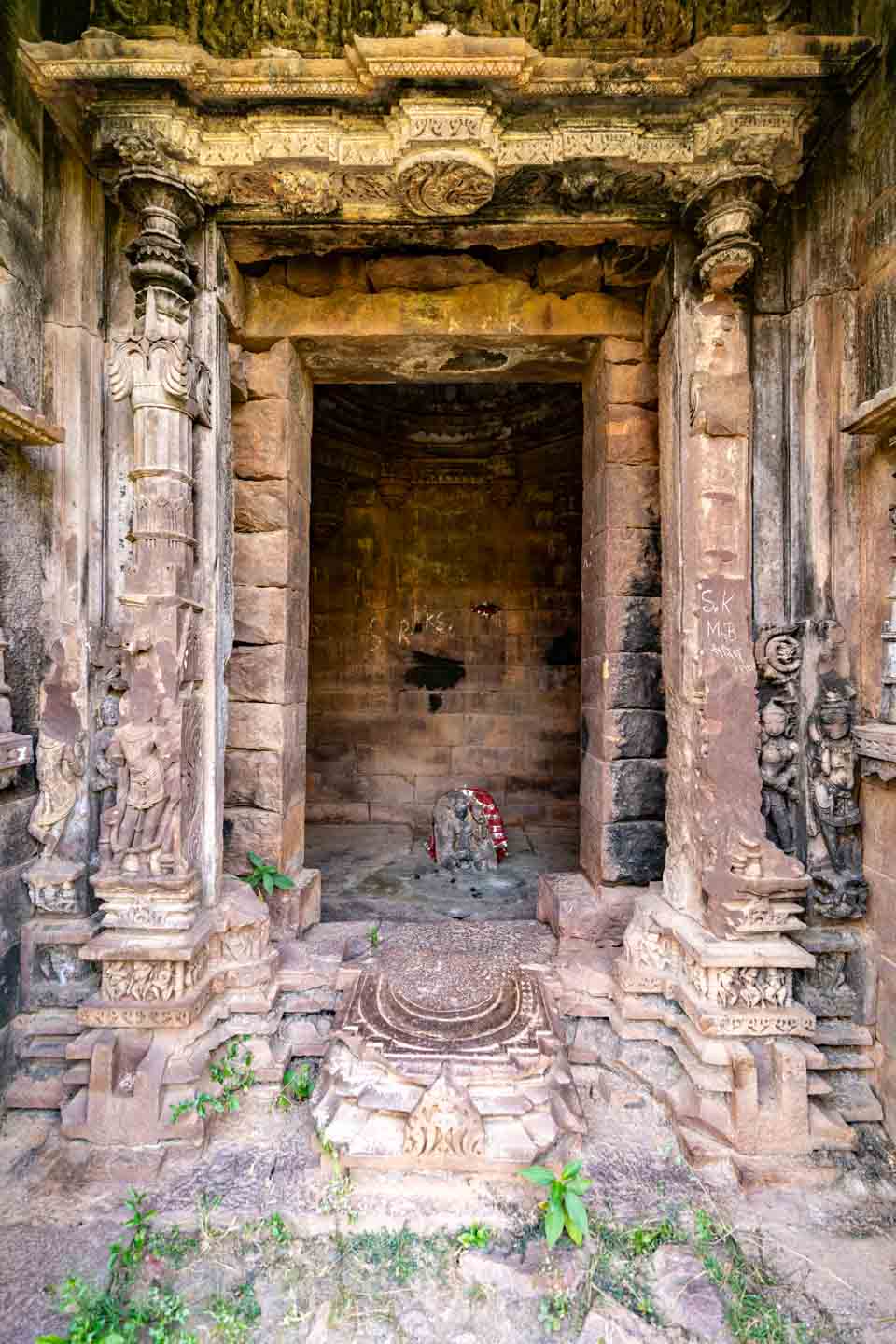
The temple has been dedicated to Lord Shiva and is based on northern style of Indian architecture called Nagara. Built with locally sourced sandstone, the complex comprises a main sanctum (garbhagriha), a mandapa (pillared hall) and subsidiary shrines.
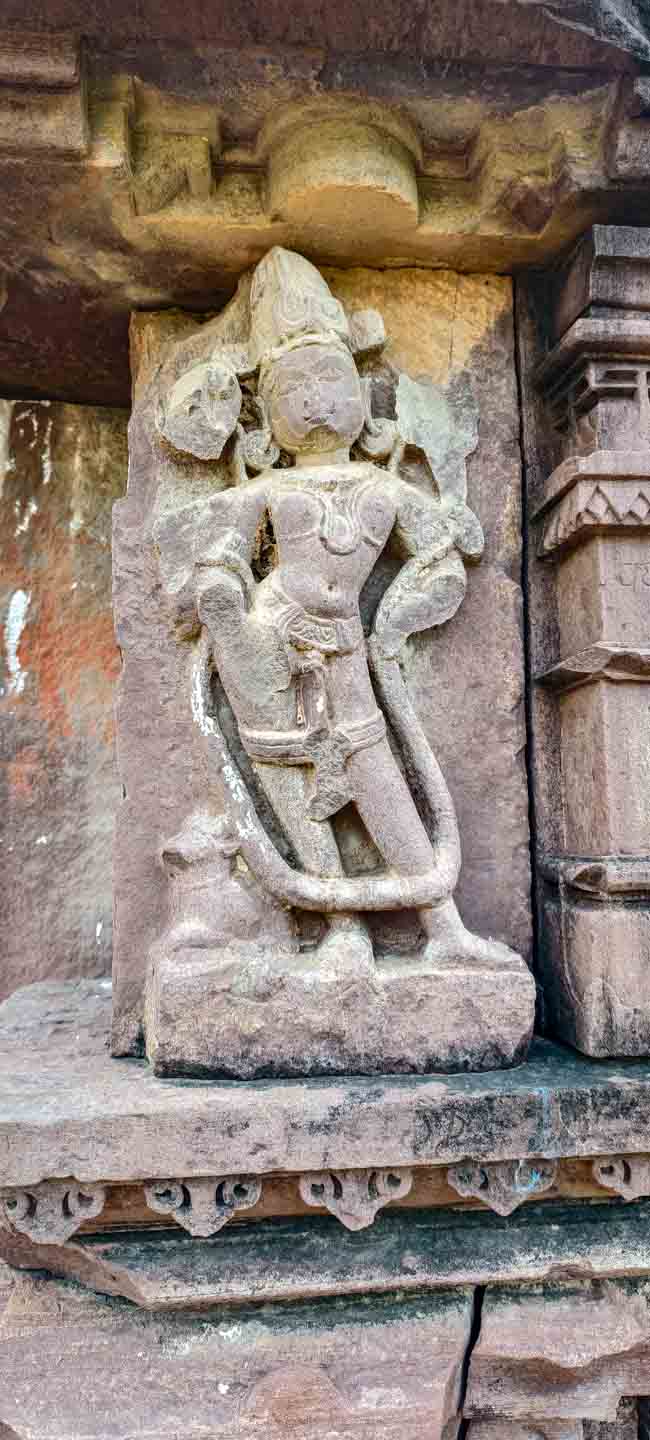
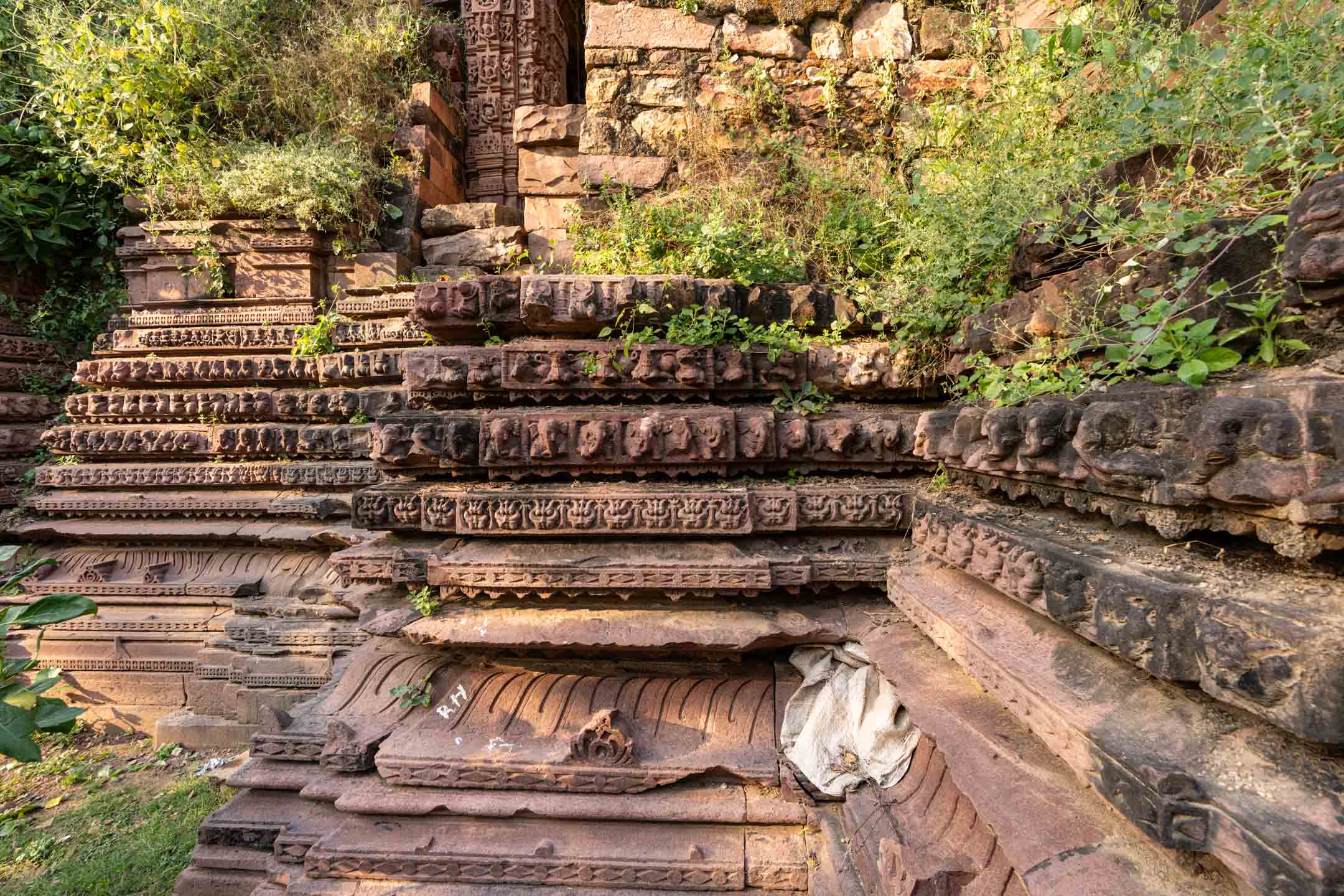
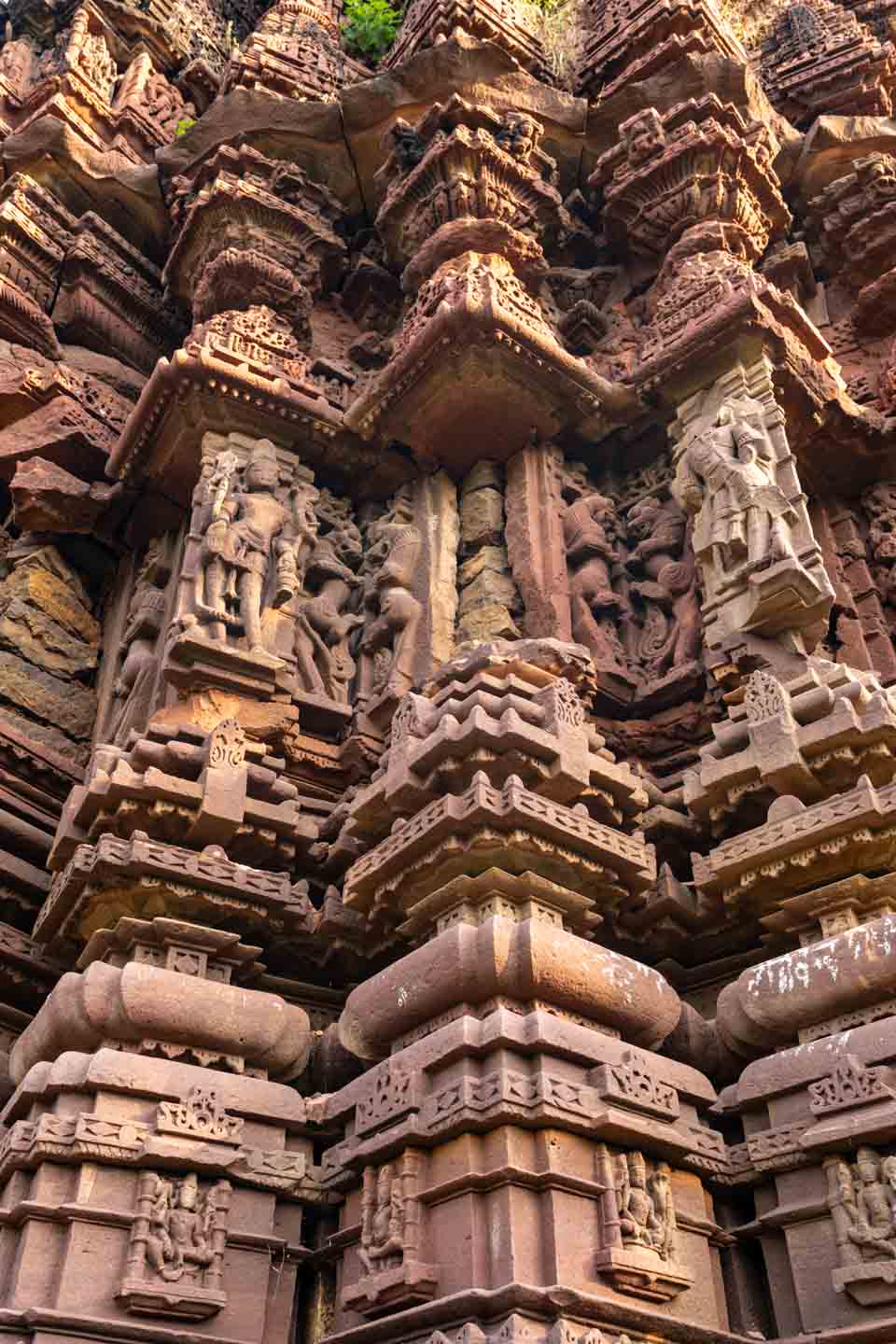
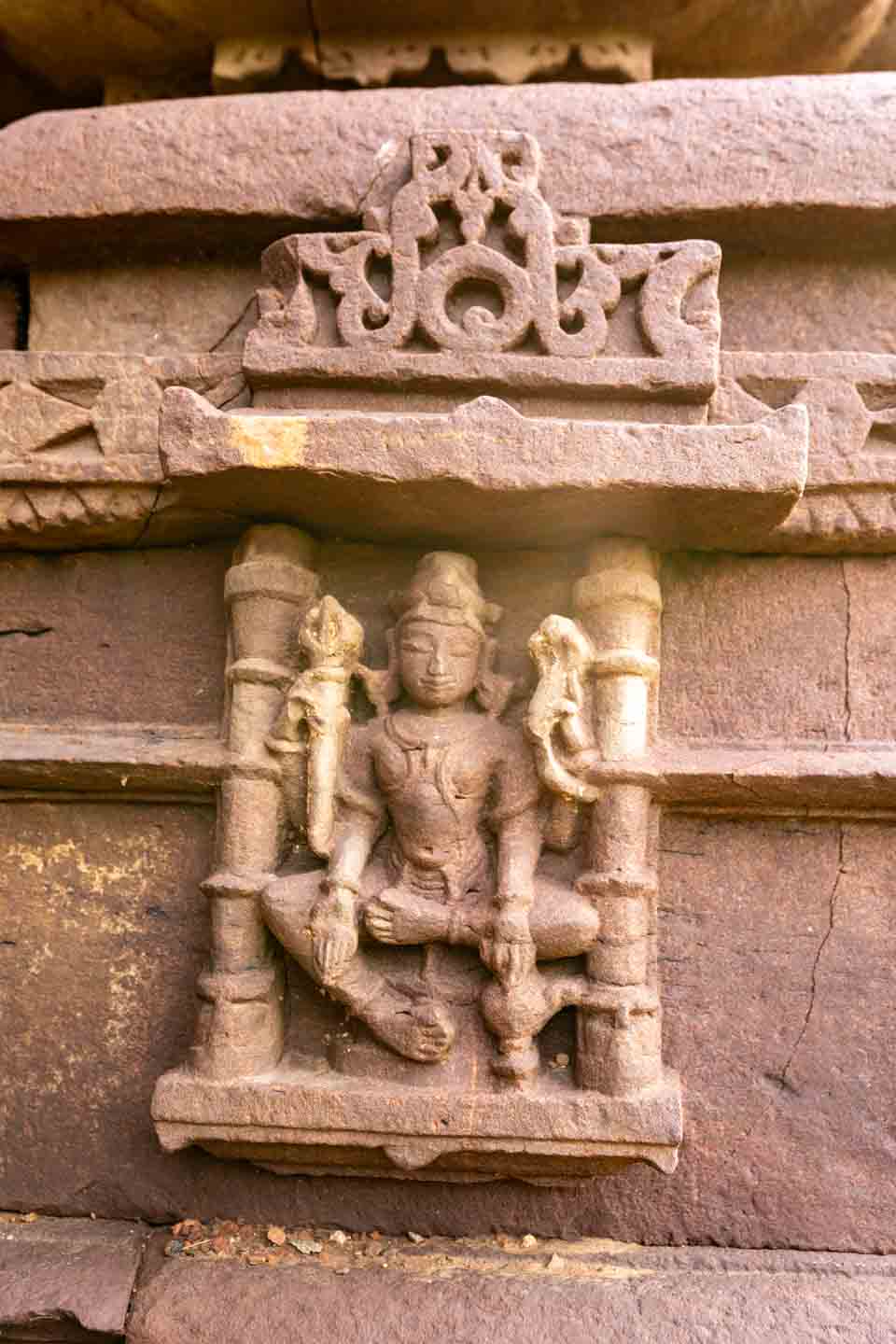
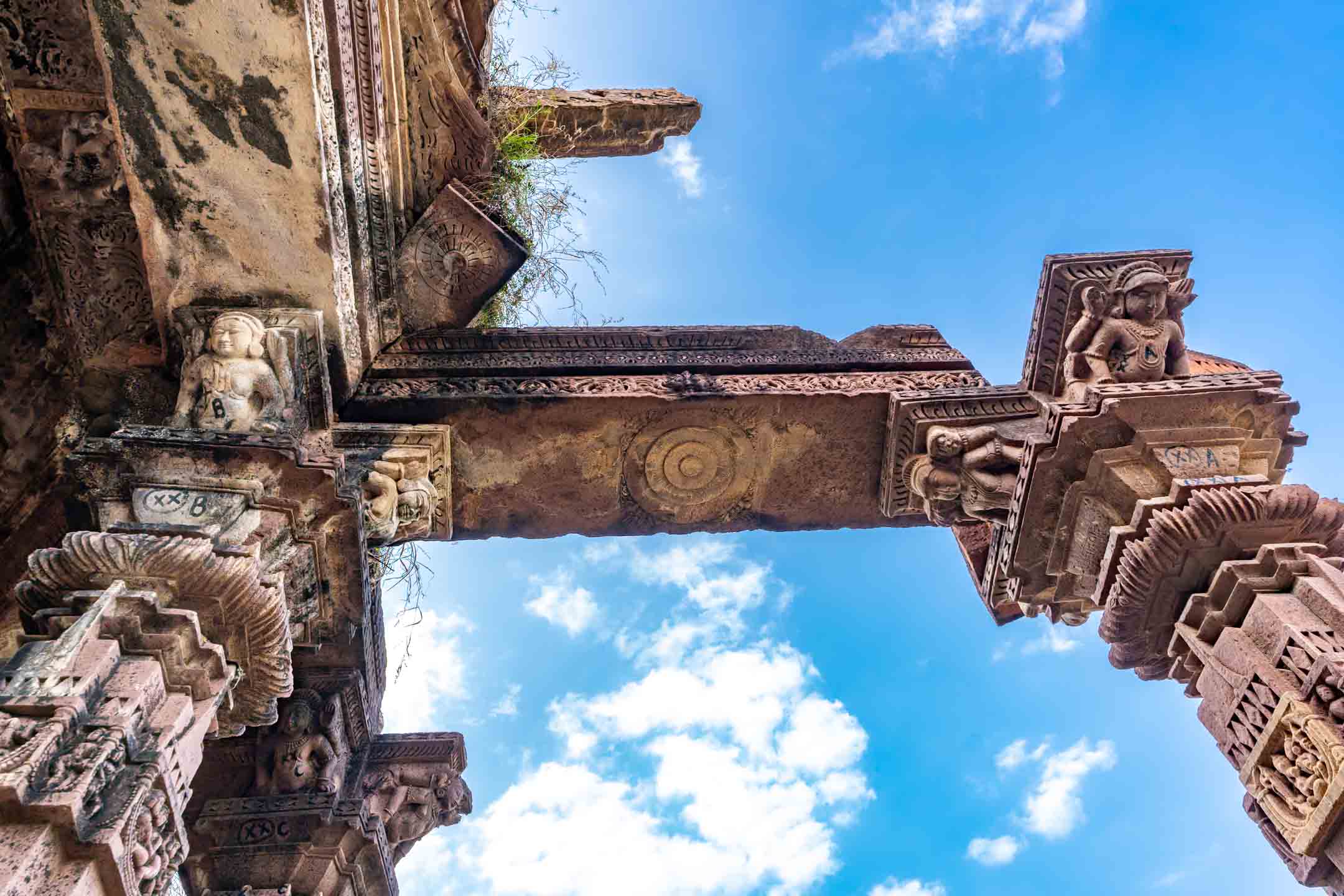
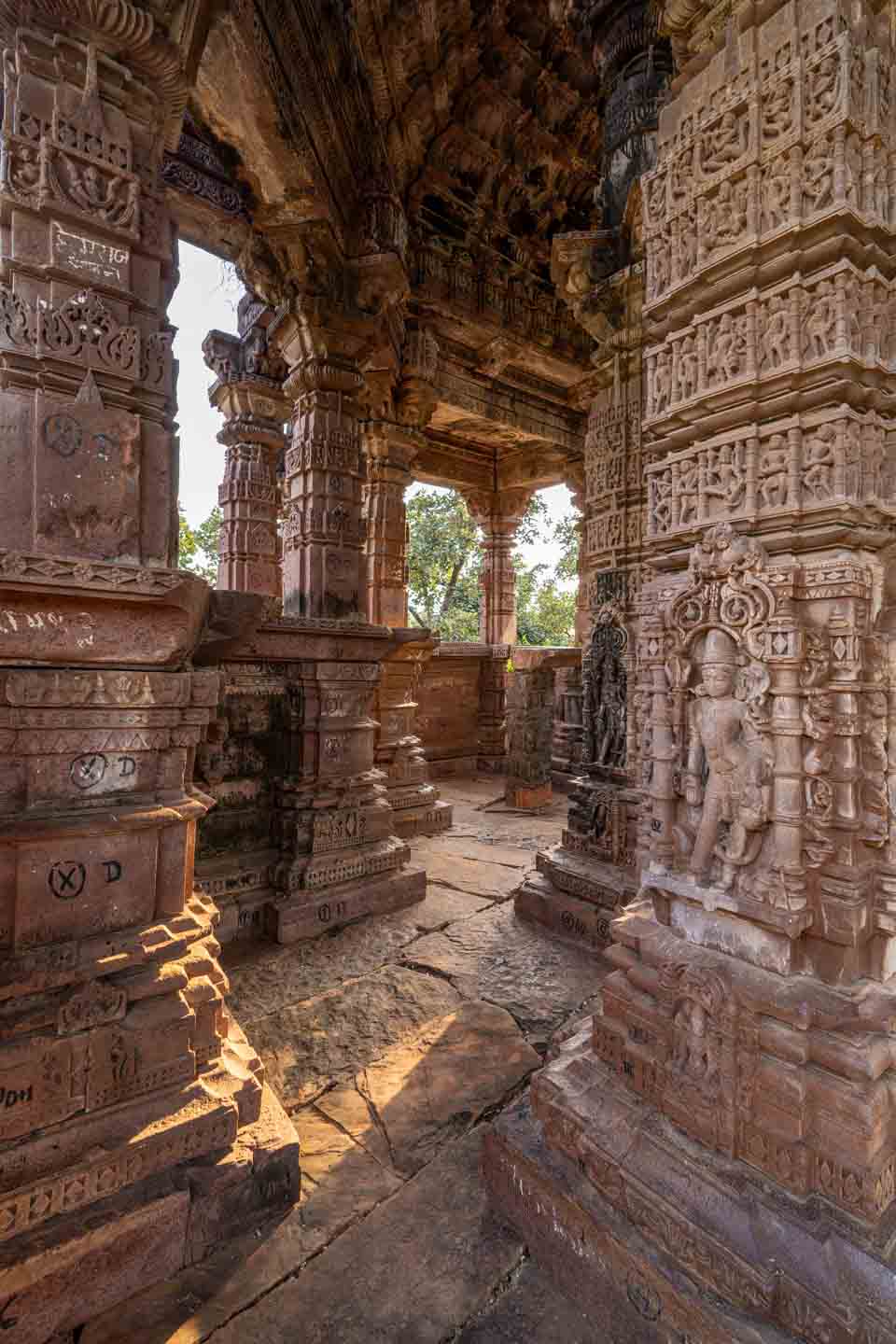
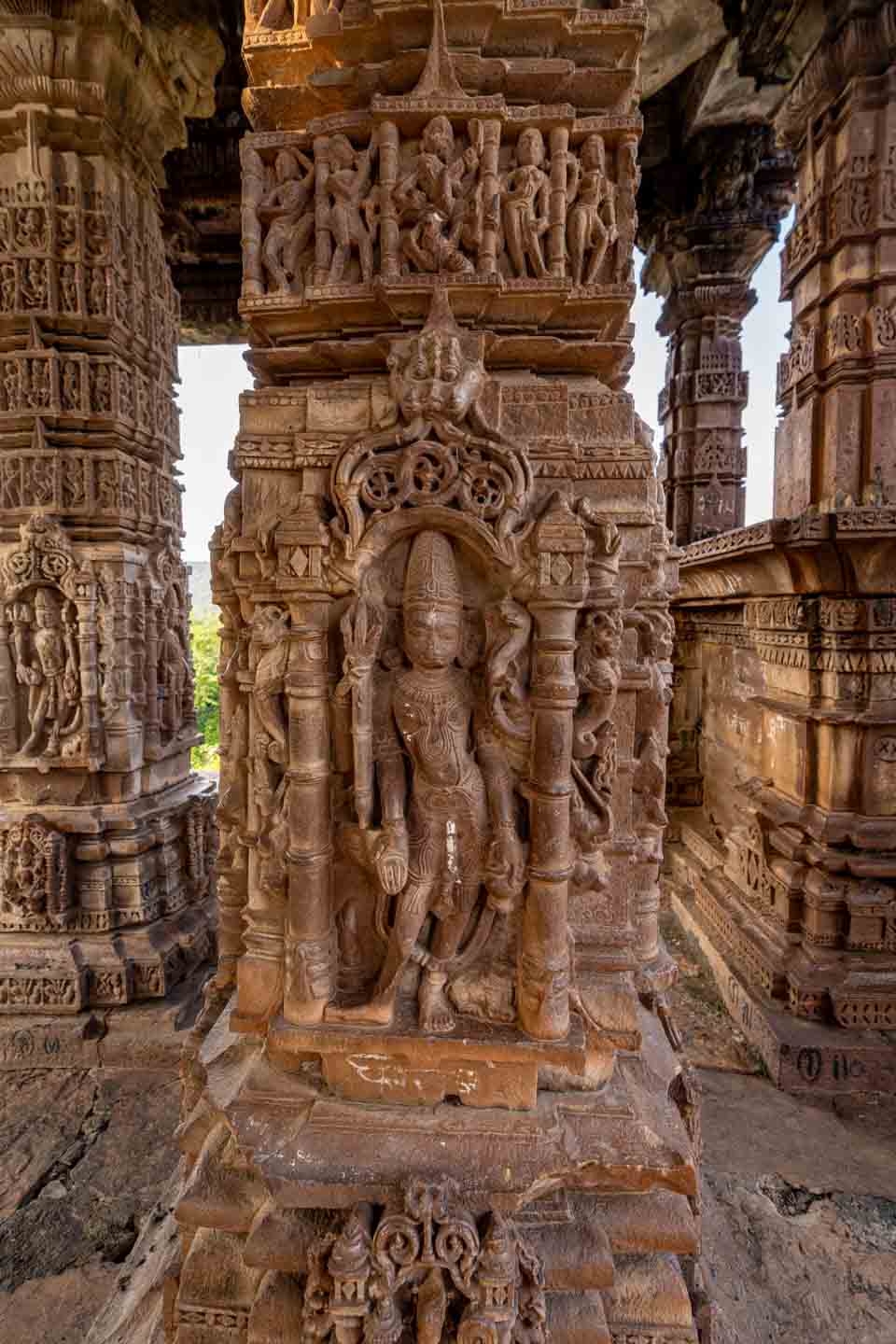
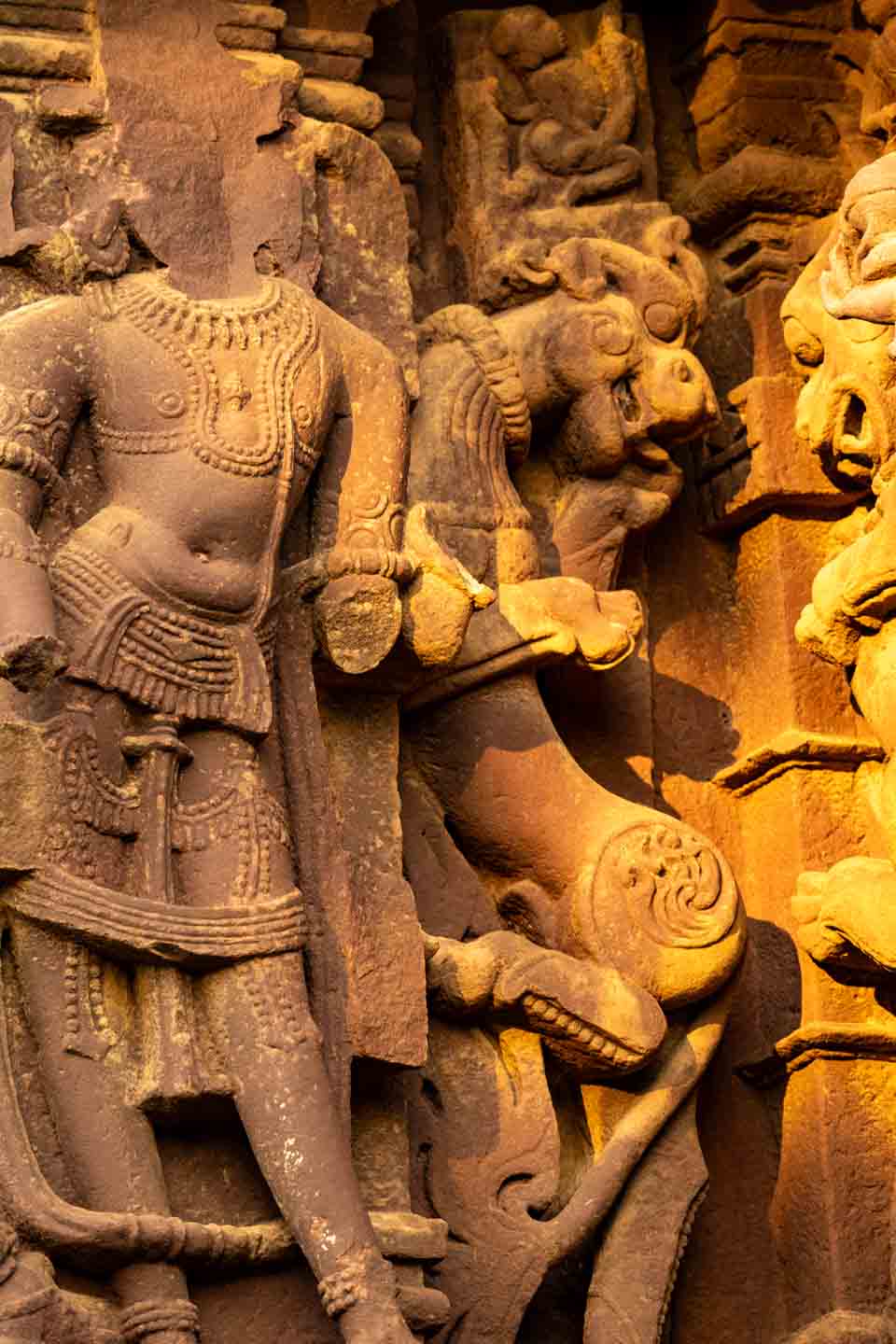
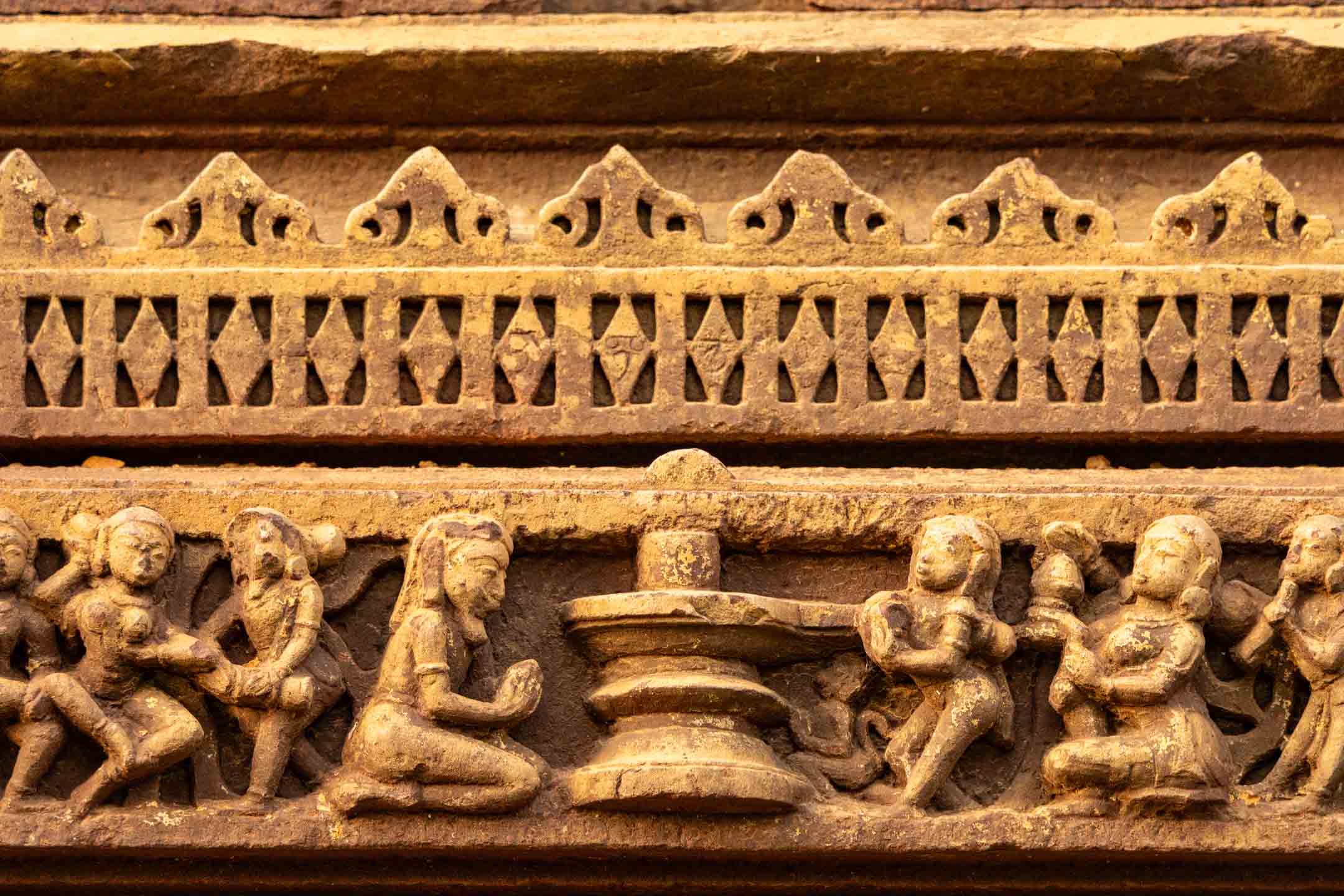
The Bhand Deva Temple is known as the “Mini Khajuraho” because of its sculptural program having a significant resemblance to that found in temples of Khajuraho, Madhya Pradesh. The comparison is based on the detailed stone carvings, sculptures of celestial beings, dancers, musicians, gods, couples, and the presence of everyday imagery, executed gracefully. As at Khajuraho, these carvings do not exist in isolation but are set within a larger symbolic framework that speaks to fertility, cosmic balance, and the union of materiality and spirituality.
Bhand Deva show considerable craftsmanship and the carving is intricate, with well-annotated panels, proportionate figures, and a continuing narrative from one to another.
The temple reflects a time period in which temple architecture had past religious purposes but also served as a visual retention of social life, artistic ideals, and religious philosophy.
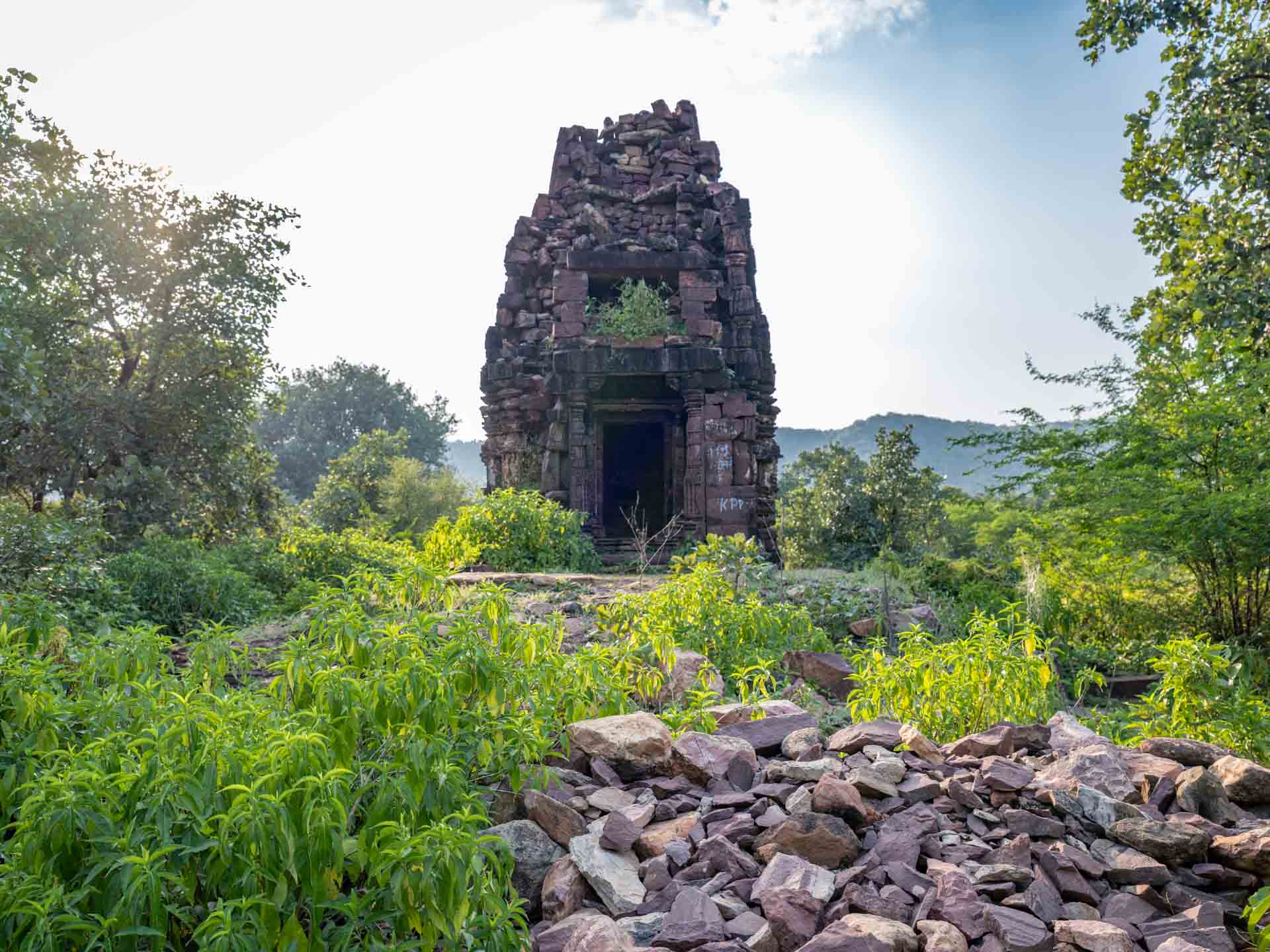
Despite its artistic importance, documentation work on Bhand Deva Temple has been significantly less than that of larger temple complexes, and large portions are showing signs of weathering or neglect.
Over centuries, the crater became naturalized as workable ground on religious, agricultural, and social scales independent of its ancient genesis. Ramgarh Crater is now important for geologists, historians, and heritage researchers. It provides insight on adaptation to land over the long term and how natural forms enter into relation with cultural development.
Ramgarh Crater is a rare amalgamation of geological history, medieval temple architecture, and living rural culture. Instead of a single monument or event, Ramgarh tells a long, continuous story, starting with a cosmic impact and passing through centuries of worship, settlement, and daily life.