Ranthambore—Where the Forest Guards a Kingdom of Stone
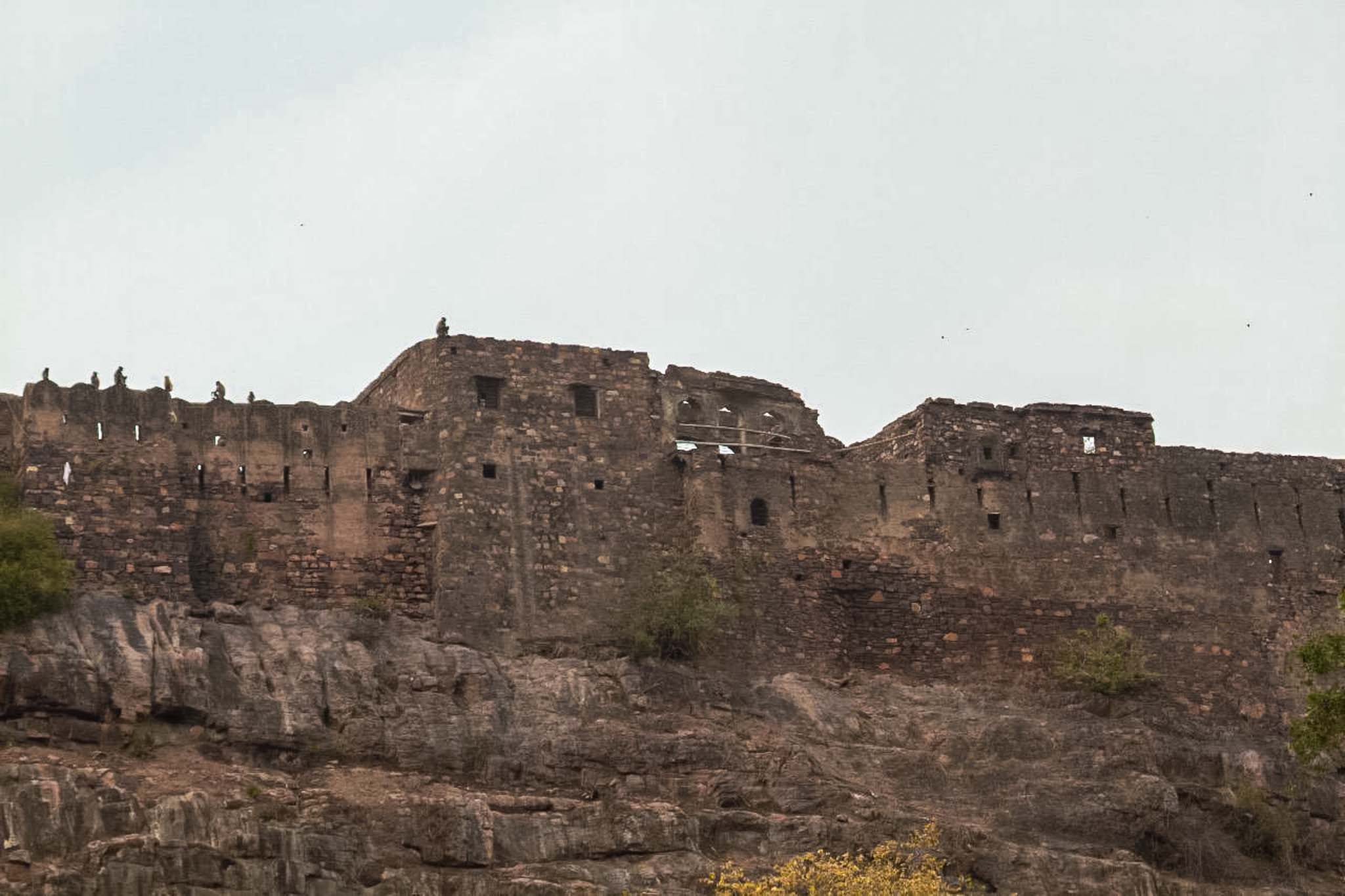
Ranthambore is one of those rare places where history and wilderness exist in complete harmony. In most parts of India, ancient kingdoms survive as monuments while nature remains a separate attraction. Here, however, the two are inseparable. Tigers roam beneath medieval ramparts, langurs perch upon palace ruins, and centuries-old temples continue to attract pilgrims within a fortress surrounded by one of India’s most celebrated forests.
Situated near Sawai Madhopur in southeastern Rajasthan, Ranthambore occupies a landscape that has shaped its destiny for more than a thousand years. Rising above a vast expanse of rugged hills, lakes, and dry deciduous forest, Ranthambore Fort dominates the horizon much as it did during the age of Rajput kingdoms. The fort’s commanding position, combined with the natural protection offered by the surrounding terrain, made it one of the most formidable strongholds in northern India.
Today, most visitors arrive in search of the Bengal tiger. Yet beyond the excitement of wildlife safaris lies a deeper story—one of powerful dynasties, epic sieges, remarkable engineering, sacred shrines, and a landscape that has witnessed both the rise and fall of kingdoms. Ranthambore is not merely a national park or a historic monument; it is a living record of Rajasthan’s military, cultural, and natural heritage.
Geography: Between the Aravallis and the Vindhyas
Ranthambore lies at the meeting point of two of India’s oldest geological formations—the Aravalli Range and the Vindhya Plateau. This convergence has created a dramatic landscape characterized by steep escarpments, rocky ridges, narrow valleys, and elevated plateaus that appear to rise suddenly from the surrounding plains.
Unlike the sand dunes and open desert commonly associated with Rajasthan, the terrain here is surprisingly varied. Forested hills alternate with grasslands, while seasonal streams feed a network of lakes and wetlands that sustain wildlife throughout the year. During the monsoon months, the dry landscape transforms into a vibrant mosaic of green vegetation, replenishing the water sources that are essential to the region’s ecology.
Among these water bodies, Padam Talao, Rajbagh Talao, and Malik Talao are the most significant. These lakes form the ecological heart of Ranthambore National Park.
During the dry season, they attract sambar deer, chital, nilgai, crocodiles, and countless species of birds. They also provide some of the most iconic wildlife sightings in India, with tigers frequently seen along their shores.
The strategic importance of this geography was recognized centuries ago. Whoever controlled Ranthambore controlled a natural fortress overlooking important routes linking northern and central India. The hills served as defensive barriers, while the surrounding plains enabled surveillance of approaching armies from great distances.
The Rise of a Rajput Stronghold
The origins of Ranthambore Fort are generally traced to the Chauhan rulers, who established the fortress between the eighth and tenth centuries. The name itself is believed to derive from “Ran,” referring to the plains below, and “Thambhor,” the hill upon which the fort stands.
Following the defeat of Prithviraj Chauhan in the Second Battle of Tarain in 1192, Ranthambore emerged as one of the principal centers of Chauhan resistance. Protected by formidable natural defenses, the fort became a symbol of Rajput independence during a period of intense political upheaval across northern India.
Over the centuries, several rulers attempted to capture Ranthambore. Its strategic position, military strength, and symbolic importance made it one of the most coveted fortresses in the region. Yet it was during the reign of Hammir Dev Chauhan that Ranthambore entered the realm of legend.
Hammir Dev Chauhan and the Great Siege
No figure is more closely associated with Ranthambore than Hammir Dev Chauhan, who ruled during the late thirteenth century. Under his leadership, the kingdom reached its greatest political and military prominence.
Hammir’s refusal to submit to the expanding Delhi Sultanate transformed Ranthambore into a symbol of Rajput resistance. This defiance eventually brought him into conflict with Sultan Alauddin Khilji, one of the most powerful rulers of medieval India.
In 1301, Alauddin Khilji launched a massive siege against Ranthambore. Historical accounts describe months of fierce fighting as defenders held out against overwhelming odds. Despite the strength of the fort’s defenses, the siege eventually succeeded.
As was the tragic custom in many Rajput strongholds facing defeat, chronicles record that the women of the fort committed jauhar while the warriors prepared for their final battle. Although the fortress fell, Hammir’s resistance secured his place among Rajasthan’s most celebrated warrior-kings.
The story of his reign was later immortalized in the Hammir Mahakavya, one of the most important literary works associated with the history of Ranthambore.
A UNESCO World Heritage Fort
Today, Ranthambore Fort is recognized as part of the UNESCO World Heritage designation known as the Hill Forts of Rajasthan. This recognition places it alongside some of Rajasthan’s most significant fortifications and acknowledges its outstanding military architecture and historical importance.
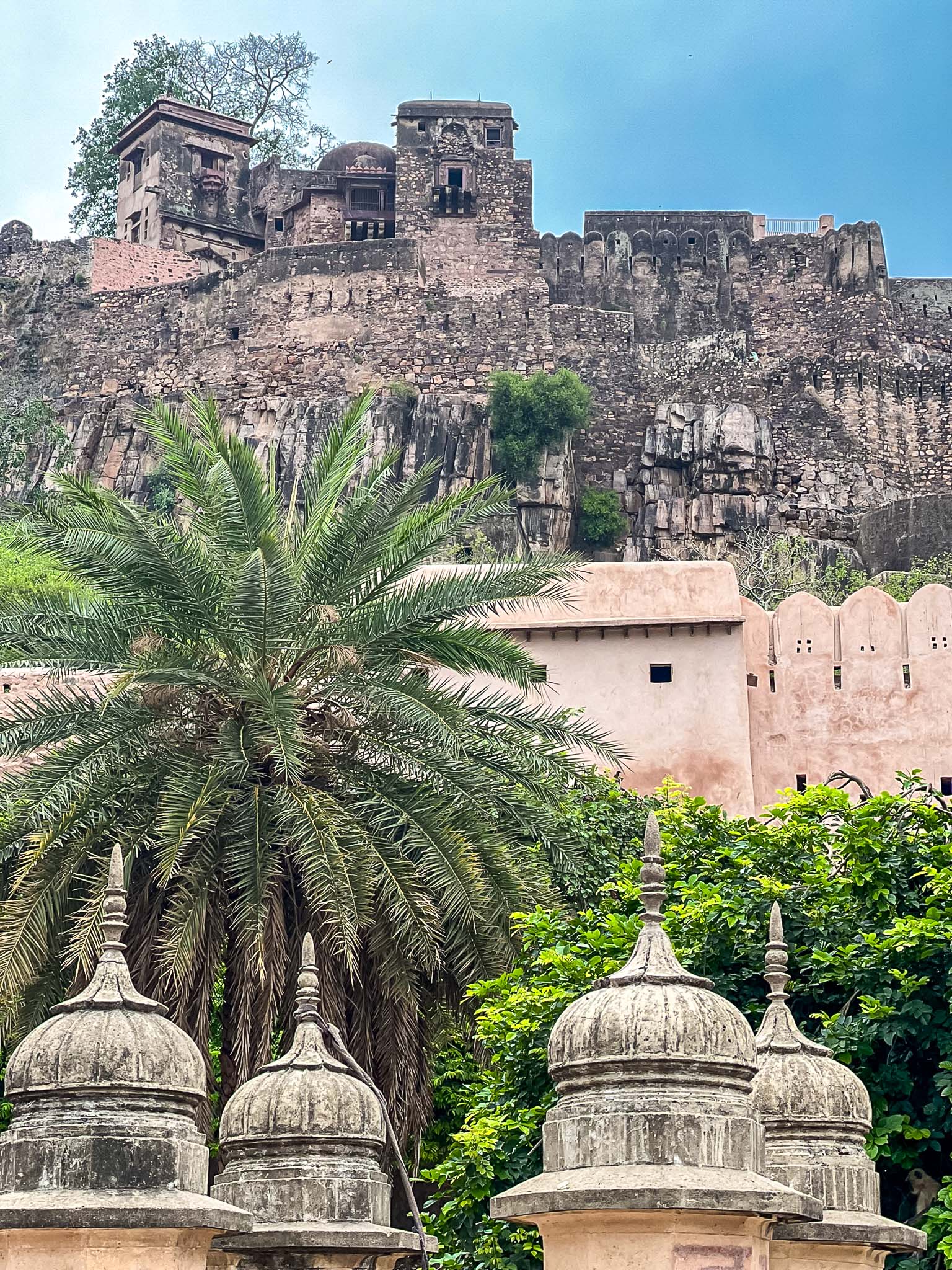
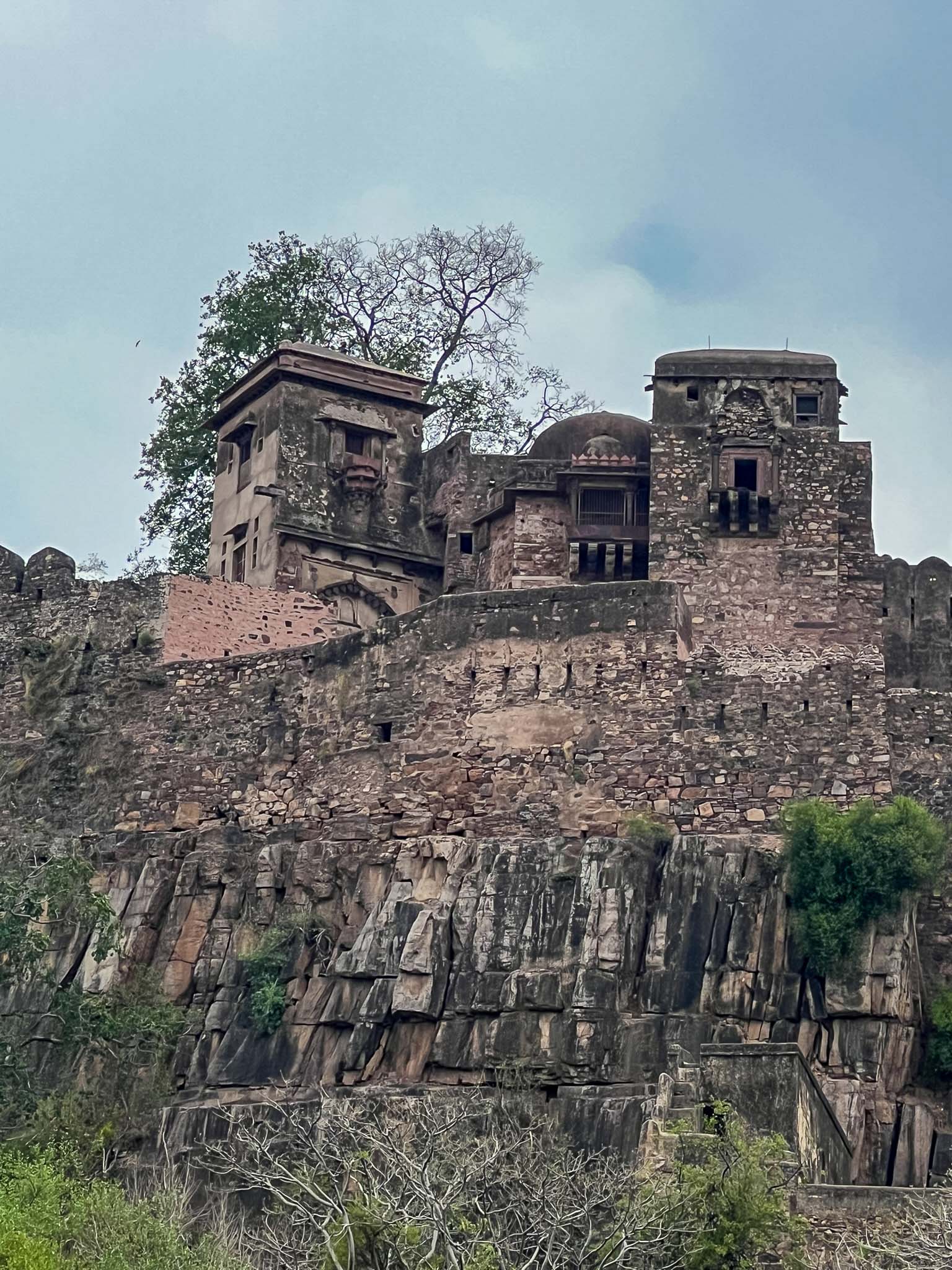
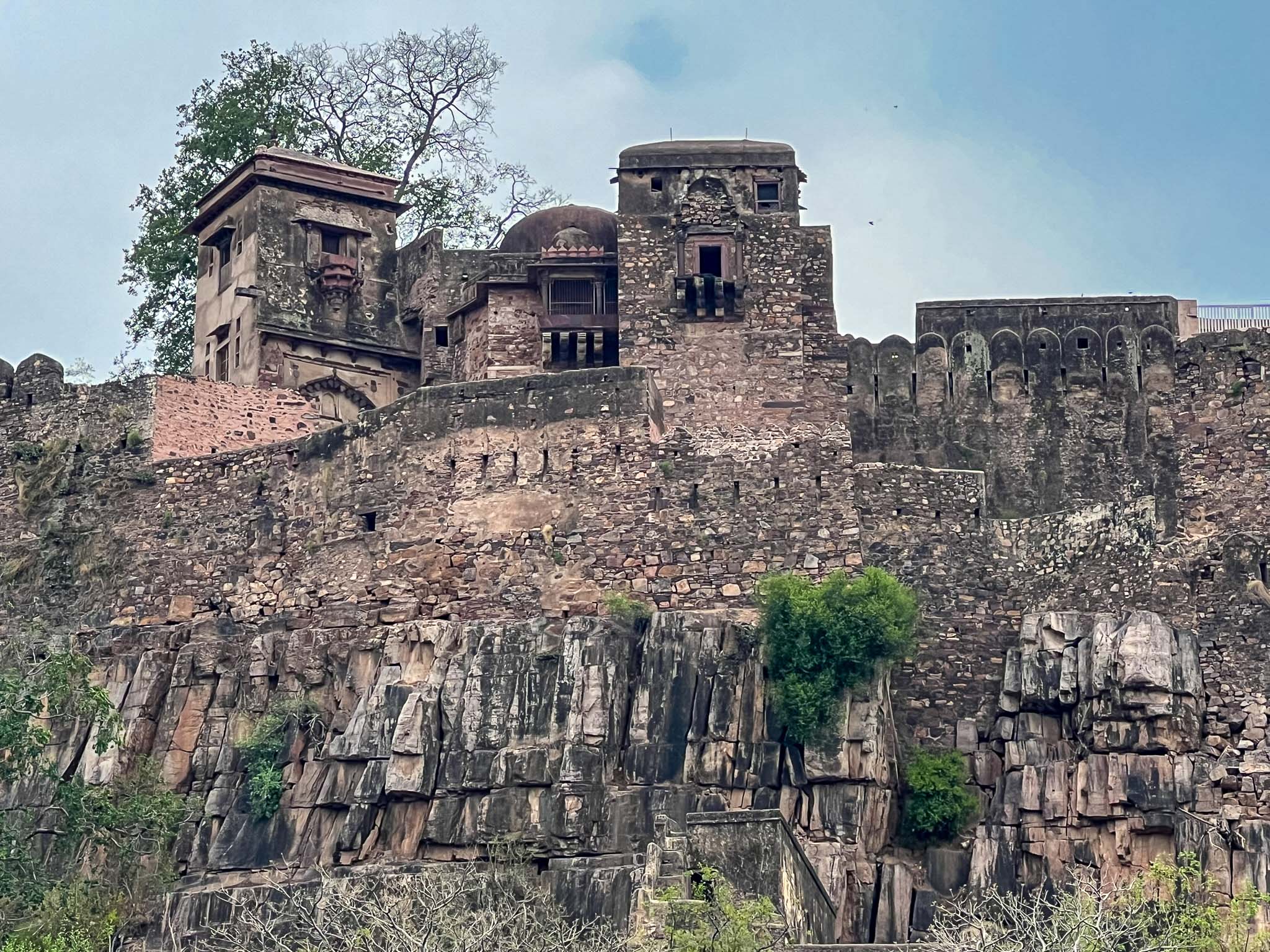
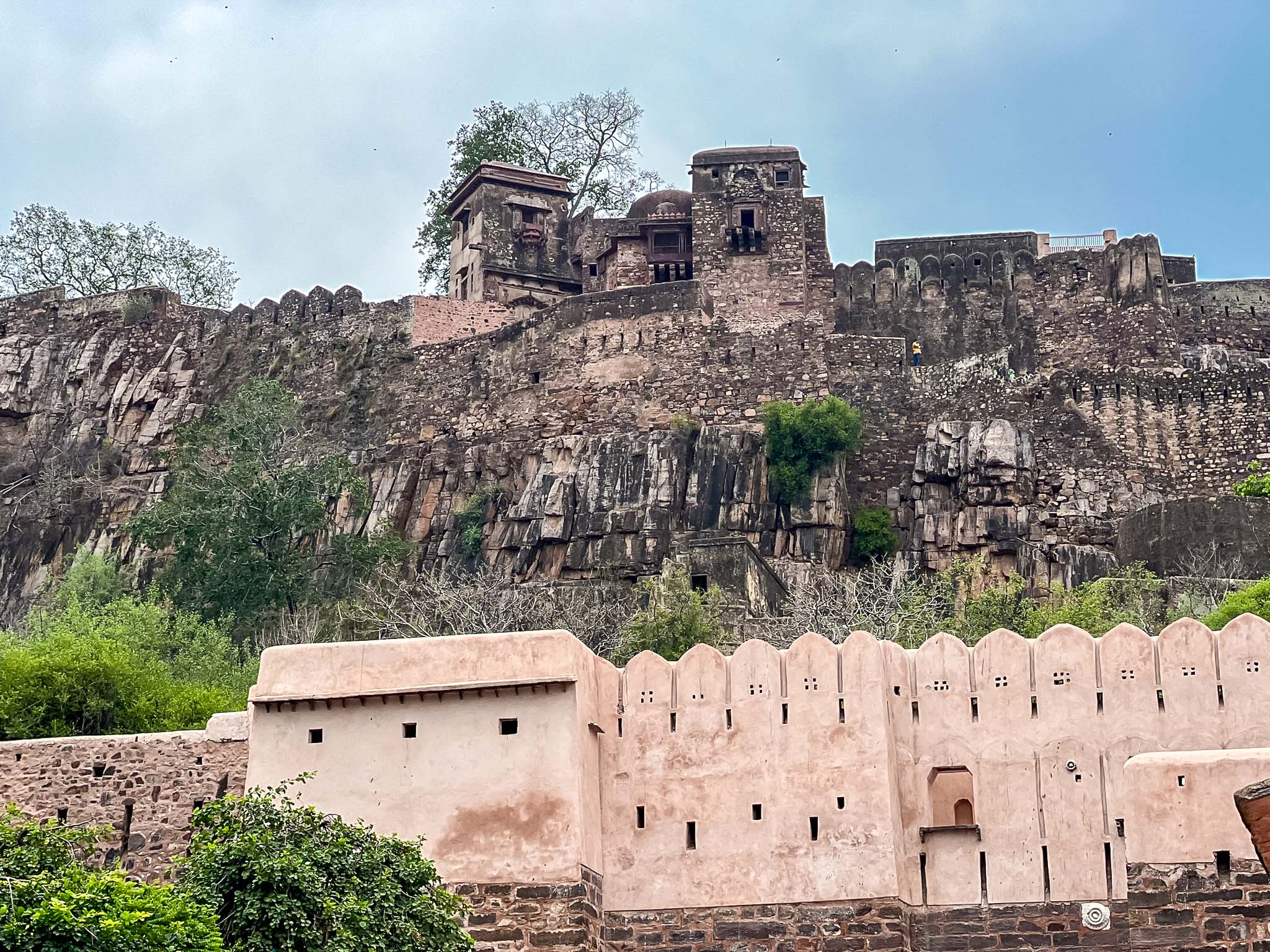
Perched approximately 700 feet above the surrounding plains, the fort covers nearly seven kilometers in circumference. Rather than imposing itself upon the landscape, it appears to grow organically from the rocky hill on which it stands. Massive stone walls merge with natural cliffs, creating a defensive system that medieval armies found exceptionally difficult to overcome.
The ascent to the fort passes through a series of imposing gateways. Traditionally, seven gates protected the approach, each designed to slow advancing armies and expose them to attack from defenders positioned above. Even today, the climb provides a vivid understanding of the challenges faced by invading forces.
Exploring the Fort
Unlike many restored monuments, Ranthambore Fort retains much of its original character. Large sections remain in a state of atmospheric ruin, lending authenticity to the experience of exploring the site.
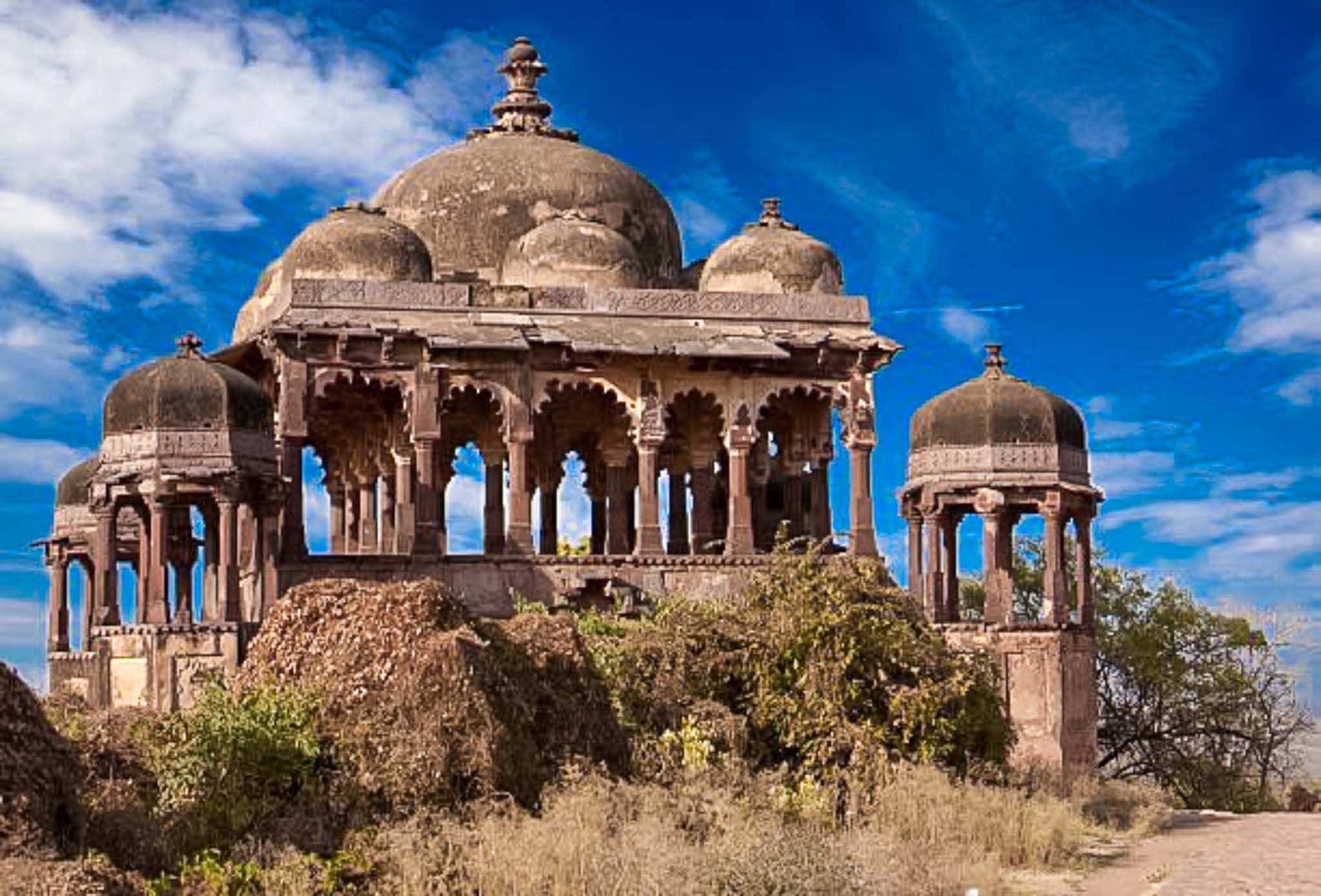
Within its walls are the remains of palaces, pavilions, military installations, reservoirs, temples, and administrative structures. Together they reveal a self-contained fortified city capable of supporting a substantial population during extended sieges.
Among the most notable structures is Hammir Palace, traditionally associated with the fort’s legendary ruler. Though partially ruined, its surviving courtyards and halls suggest the scale and sophistication of royal life during the Chauhan period.
Nearby stands the Rani Mahal, believed to have served as part of the royal residential complex. Fragments of decorative architecture and enclosed chambers hint at its former grandeur.
One of the most remarkable aspects of the fort is its extensive water-management system. Numerous reservoirs, tanks, and rainwater-harvesting structures ensured a reliable water supply even during prolonged military blockades. These engineering achievements played a critical role in the fort’s ability to withstand repeated sieges.
Temples and Sacred Traditions
Religion has always been woven into the identity of Ranthambore Fort. The most important shrine within the complex is the Trinetra Ganesh Temple, one of Rajasthan’s most revered temples dedicated to Lord Ganesha.
According to local tradition, the deity appeared in a dream to Hammir Dev during a period of crisis. The temple continues to attract thousands of devotees each year. A unique custom sees families sending wedding invitations to the deity before distributing them to relatives and friends, seeking blessings for important life events.
The fort also contains several Jain temples and other Hindu shrines, reflecting the diverse religious traditions that once flourished within its walls.
The Forest Reclaims the Kingdom
As the military significance of Ranthambore declined, the surrounding forests gradually reclaimed former hunting grounds and settlements. In the twentieth century, conservation efforts recognized the ecological importance of this landscape.
Declared a wildlife sanctuary in 1955 and later incorporated into Project Tiger, Ranthambore evolved into one of India’s premier wildlife destinations. Today, it is internationally renowned for its tiger population and the relative ease with which these animals can often be observed in their natural habitat.
Alongside tigers, the park supports leopards, sloth bears, striped hyenas, jackals, crocodiles, and more than 300 species of birds. The sight of a tiger moving beneath the ancient walls of the fort remains one of India’s most unforgettable wildlife experiences.
Food and Culture
The culture of Ranthambore reflects the traditions of eastern Rajasthan while retaining a strong connection to its historical landscape. Folk music, oral storytelling, local festivals, and traditional crafts continue to preserve memories of the region’s Rajput heritage.
Markets in Sawai Madhopur showcase embroidery, textiles, leatherwork, and paintings inspired by the wildlife and history of the region. Stories of Hammir Dev Chauhan remain deeply embedded in local folklore, passed from one generation to the next.
The cuisine of Ranthambore reflects Rajasthan’s remarkable ability to create rich and satisfying food in a challenging climate. Dal Baati Churma remains the region’s signature dish, accompanied by classics such as Gatte ki Sabzi, Ker Sangri, and Panchmel Dal.
For those seeking more robust flavors, Laal Maas represents the fiery culinary traditions of Rajput kitchens, while Safed Maas offers a milder preparation enriched with yogurt and nuts. Local vendors serve freshly prepared kachoris, mirchi vadas, ghewar, and malpua, providing a glimpse into the everyday flavors of Rajasthan.
Like the fort itself, the food tells a story of resilience, adaptation, and continuity. It connects modern travelers with centuries of tradition shaped by warriors, pilgrims, traders, and forest communities.
Ranthambore ultimately offers something few destinations can match. It is a place where nature and history remain inseparable. Ancient walls still watch over lakes and forests, temples continue to welcome pilgrims, and tigers move through landscapes once ruled by kings. In Ranthambore, the forest does not conceal history—it protects it.