Hemis Monastery
About 45 kilometres southeast of Leh, tucked into a narrow valley off the main Indus road, sits Hemis — the largest, wealthiest, and probably the most celebrated monastery in Ladakh. It stays hidden in a gorge, shielded by the mountains around it. This wasn’t an
accident. The hidden setting kept the monastery safe from invading armies for centuries, and that’s why so many of its treasures have survived intact.
A smaller monastery may have stood here as early as the 11th century, but Stagsang Raspa Nawang Gyatso built the Hemis we see today in 1630, after King Sengge Namgyal invited him to Ladakh. With royal support, Hemis quickly became the main seat of the Drukpa lineage in the kingdom, and it drew donations, disciples, and pilgrims from across the region. Its ties to Naropa, the teacher regarded as a founding figure of the Kagyu tradition, only added to its standing as a centre of learning.
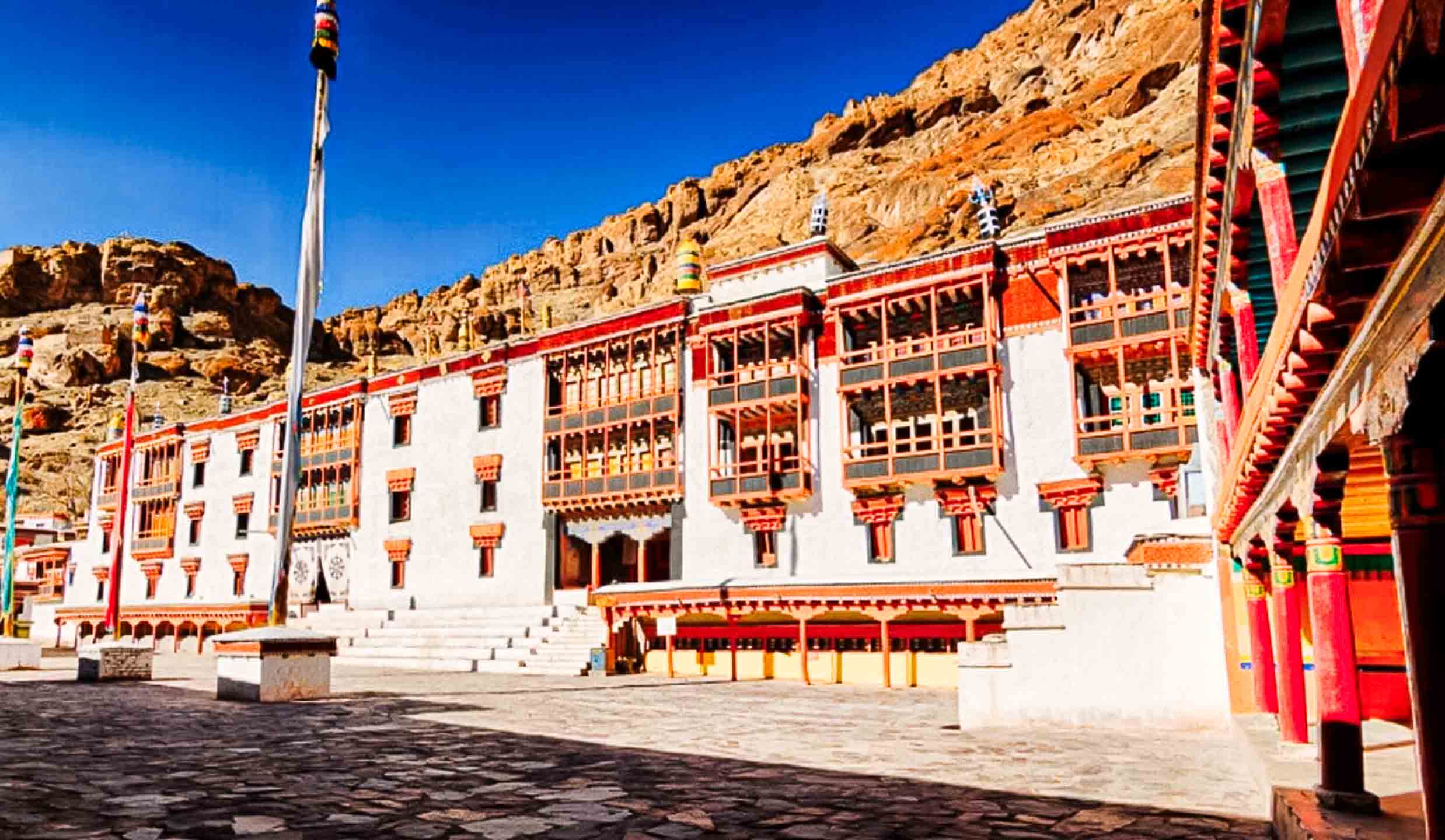
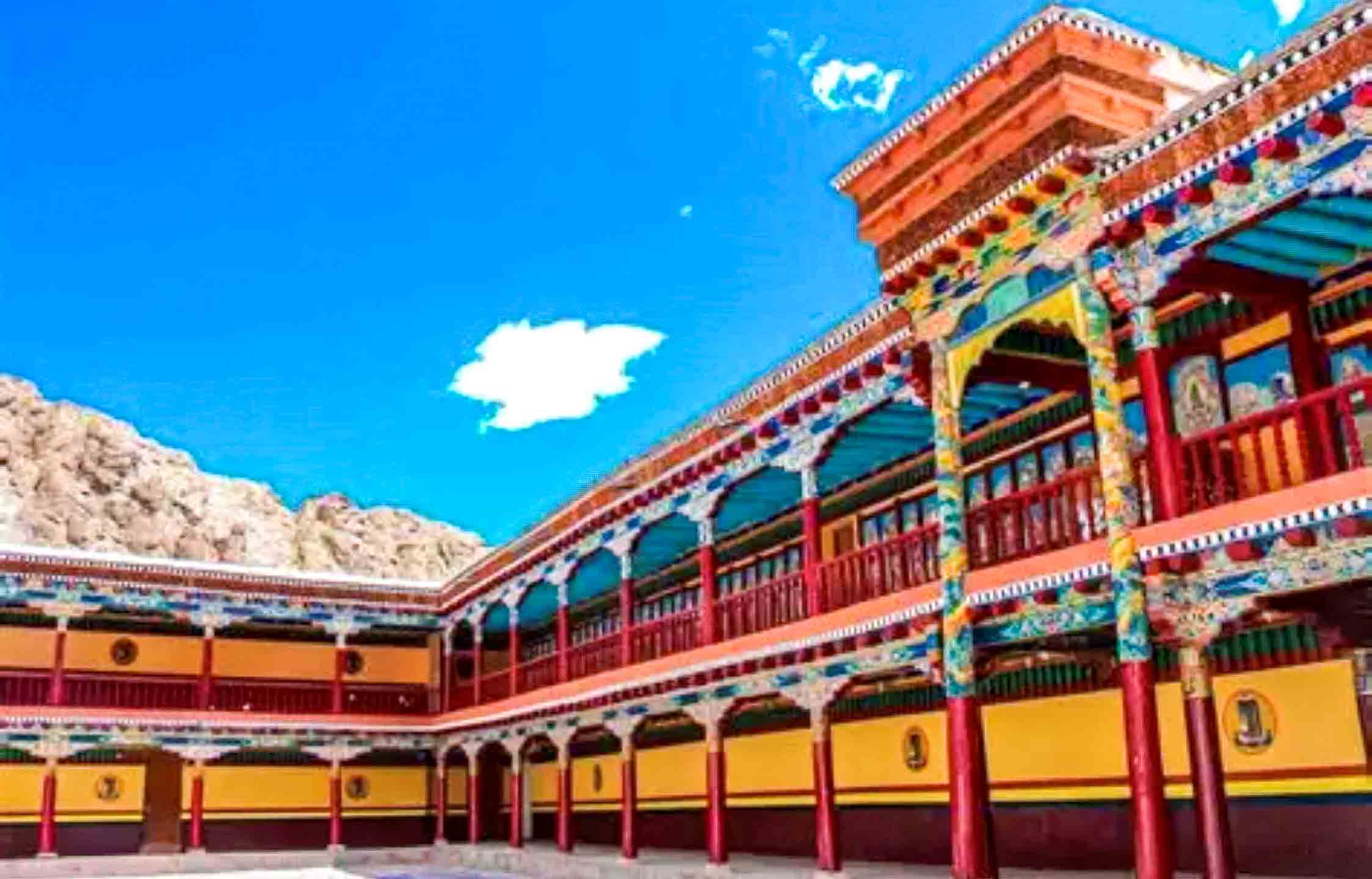
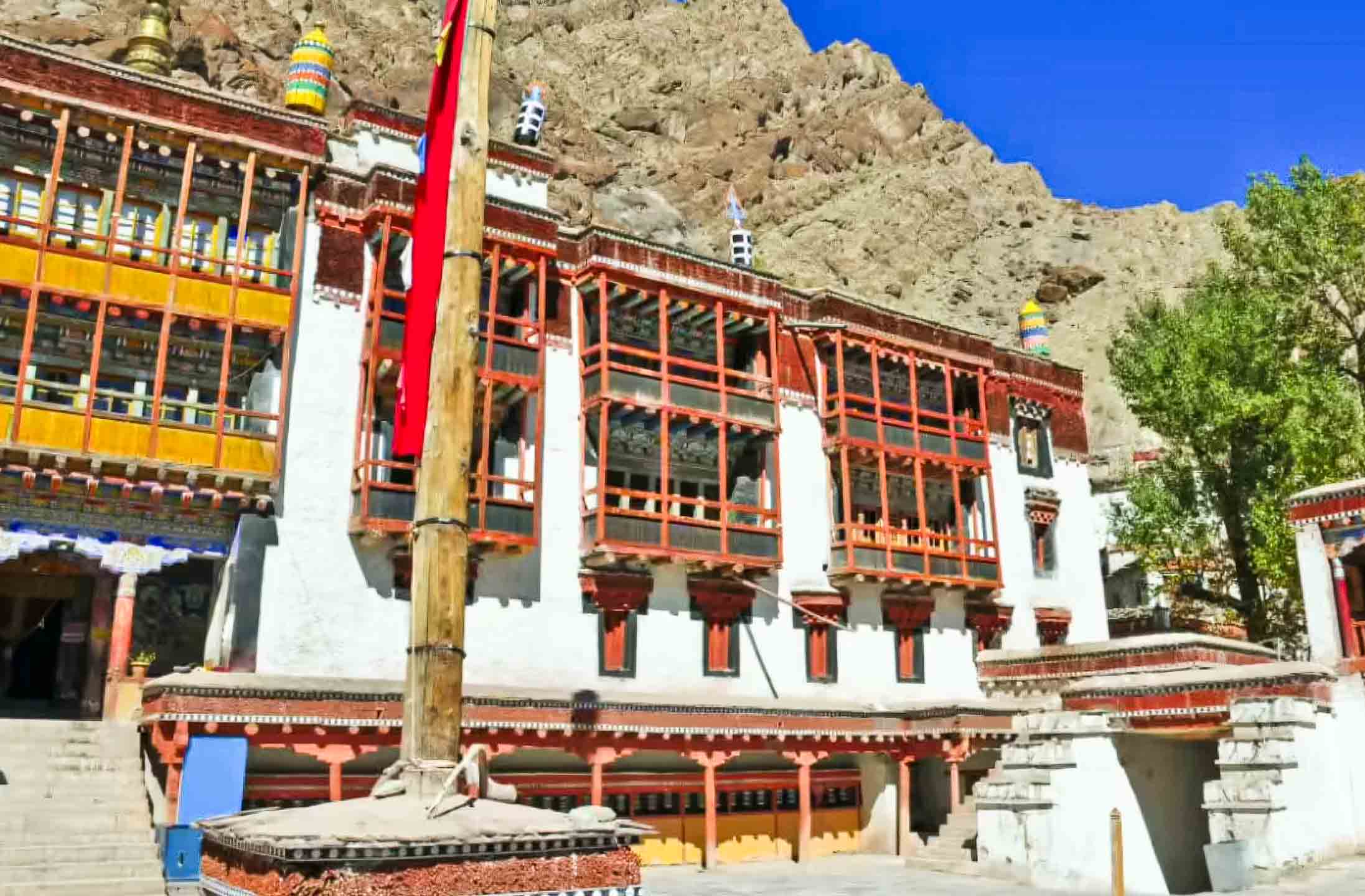
We walked through the main gate into a courtyard much bigger than we expected, big enough to hold the crowds that gather here every June for the Hemis Tsechu, when monks in silk robes and painted masks perform the Cham dances that honour Guru Padmasambhava. Even without the festival, the courtyard had a certain drama to it: tall prayer poles, faded murals along the gallery walls, and doorways leading off in every direction to halls we hadn’t explored yet.
Inside, the assembly halls stay dim and cool. Rows of lamps light up the gold leaf on the statues and thangkas along the walls. People often call Hemis the richest monastery in Ladakh, and its museum makes that clear — a quiet room of glass cabinets holding old manuscripts, ceremonial masks, ritual weapons, and thangkas so old their colours have faded to ochre and rust. One thangka of Guru Padmasambhava is so large that monks unfurl it only once every twelve years, during the festival. Seeing it folded away behind glass, we tried to picture how it must look on the day it finally opens.
But what stayed with us most wasn’t the scale, it was the quiet corners. A monk swept the courtyard. Another sat alone in an unlit side chapel, reciting texts. Sunlight fell in a single shaft through a high window. For a monastery known for wealth and spectacle, Hemis felt surprisingly unhurried in these in-between hours, just a working monastic community going through an ordinary afternoon.