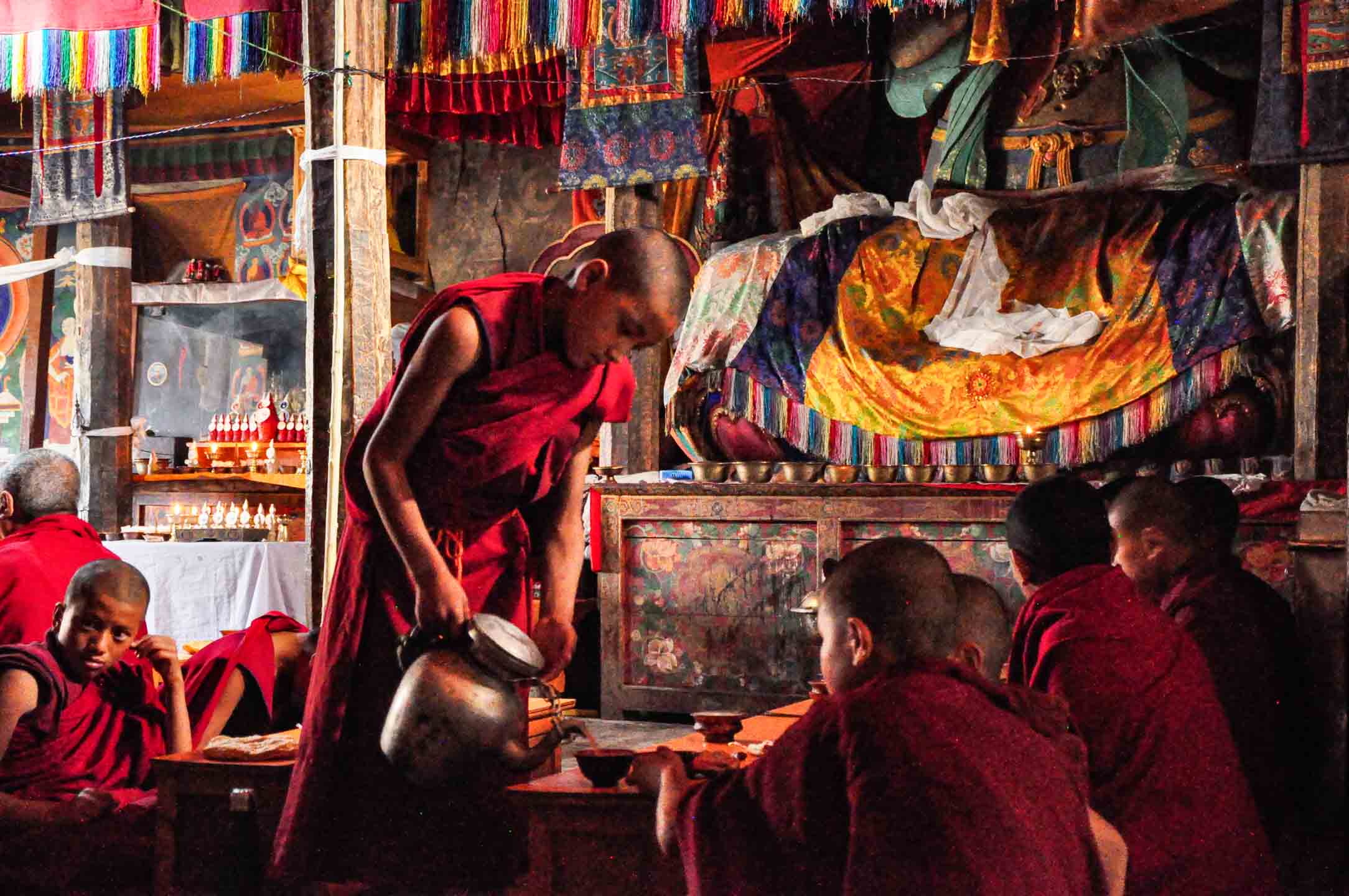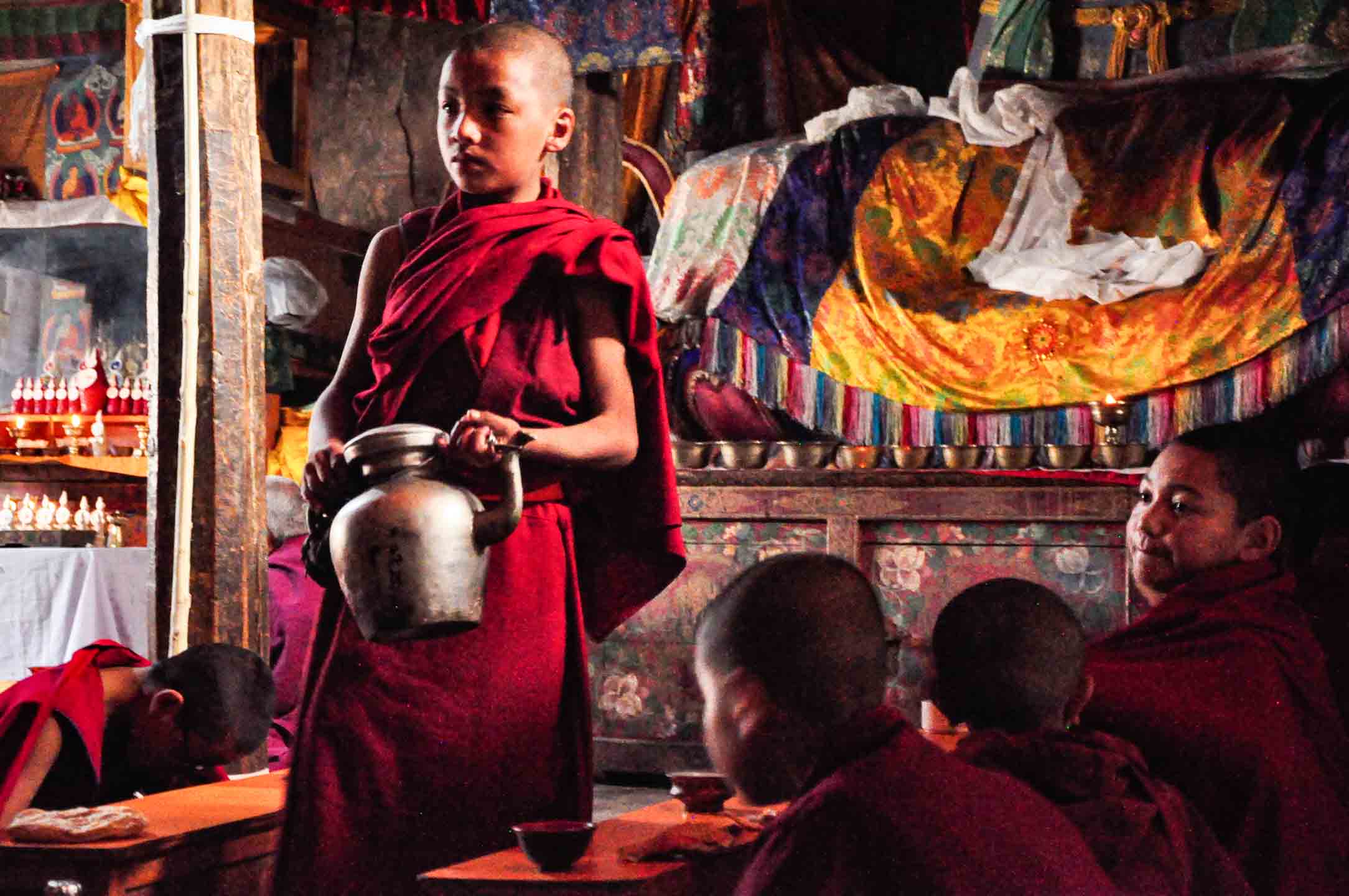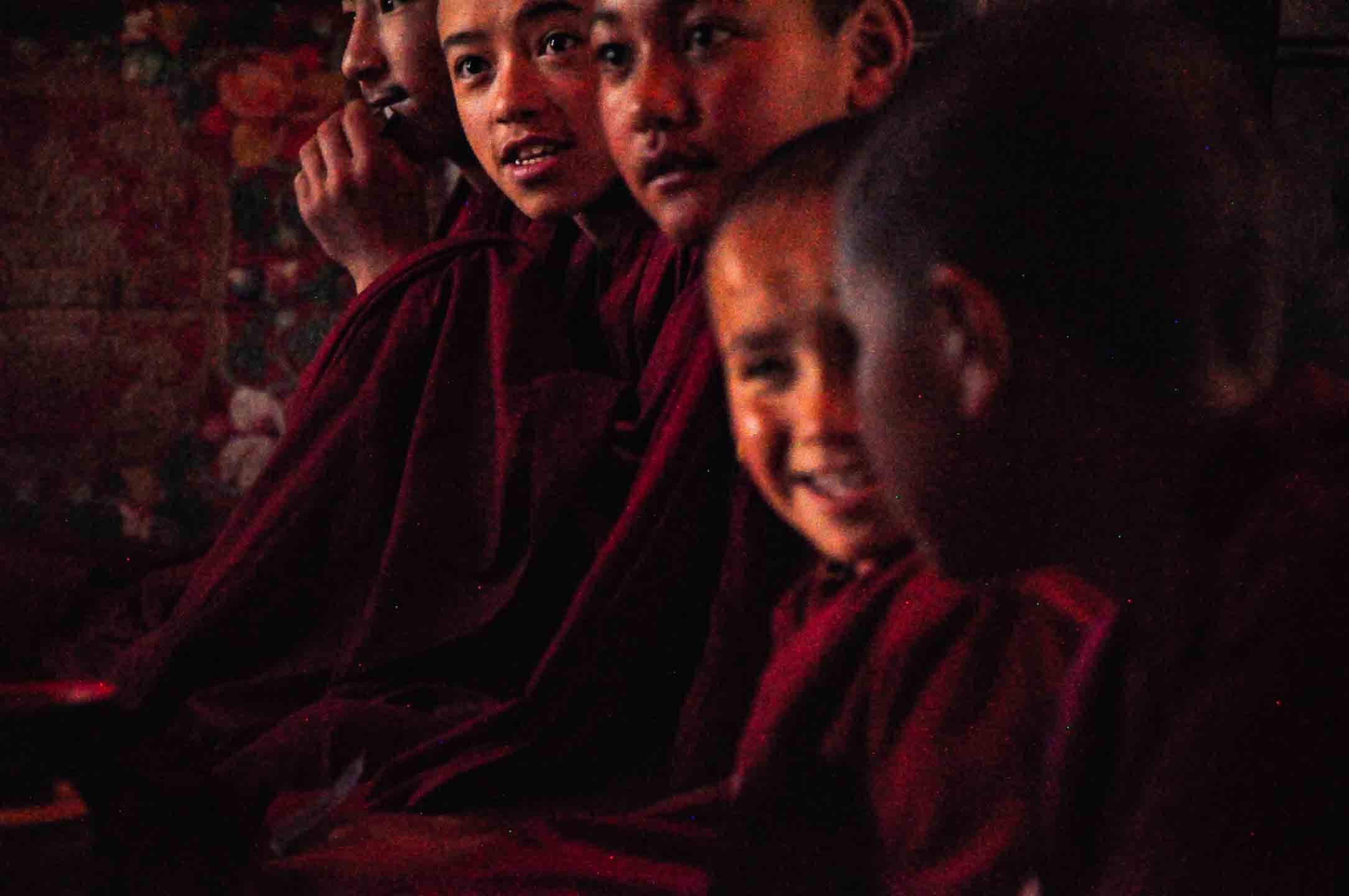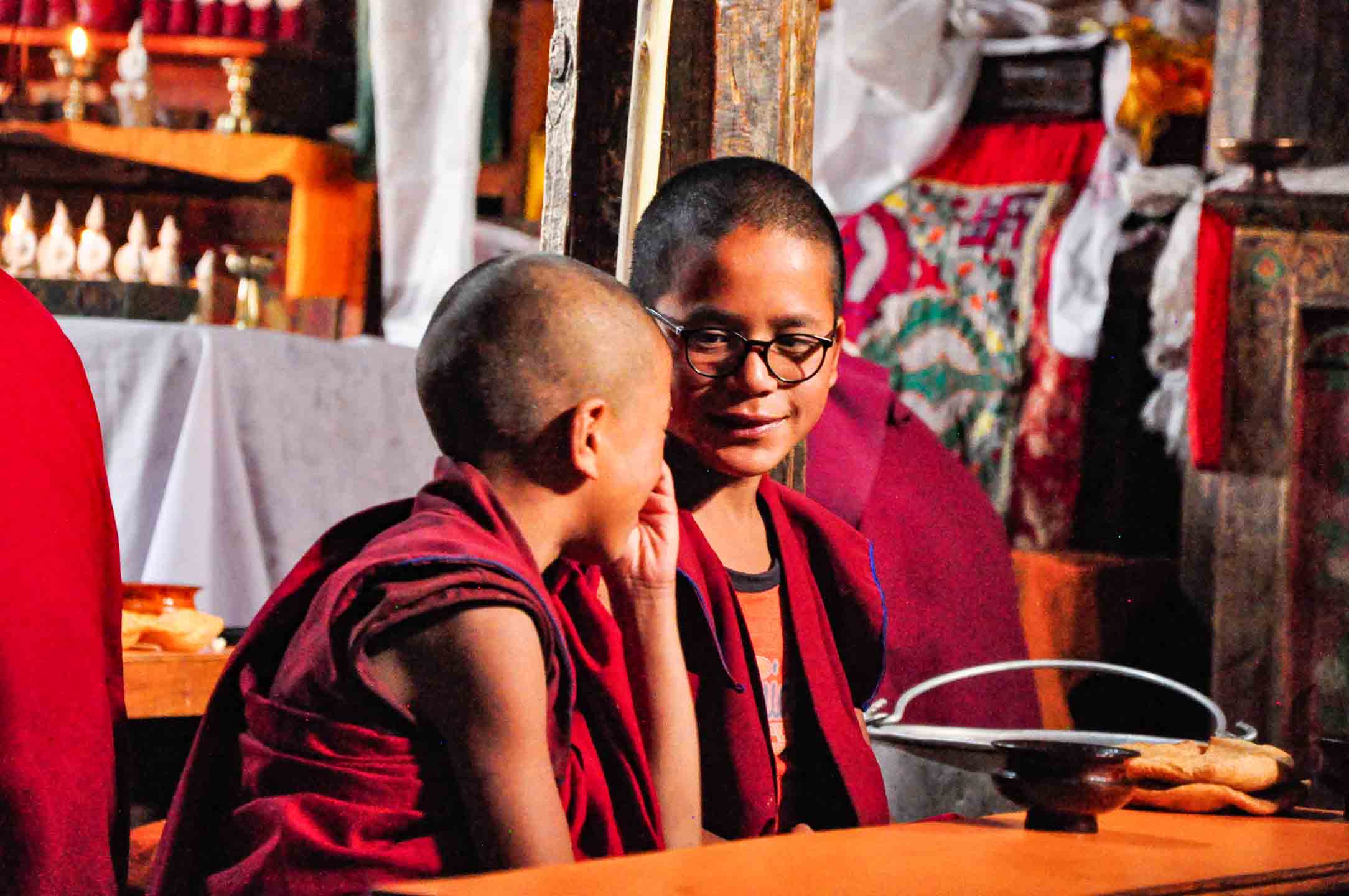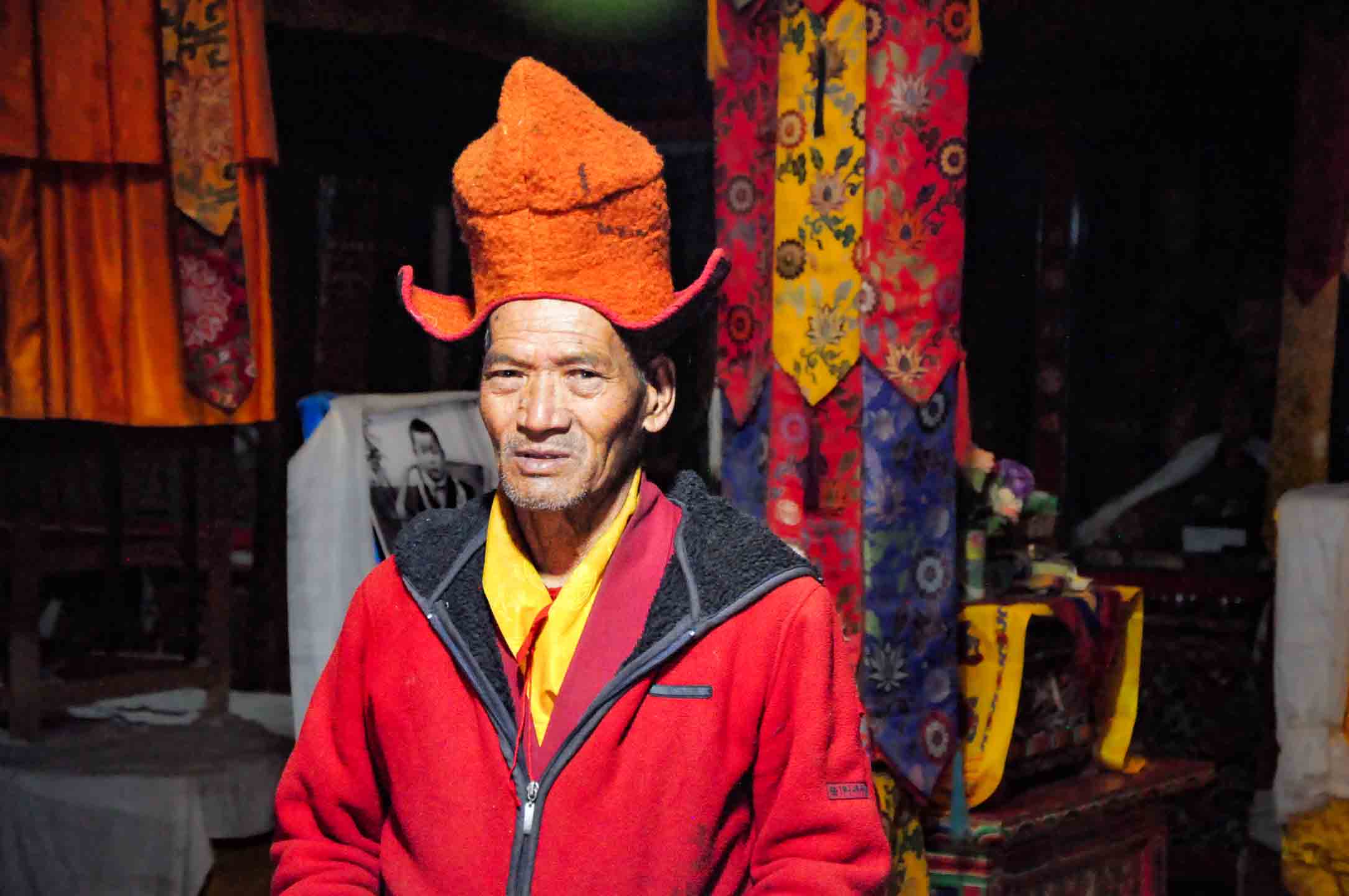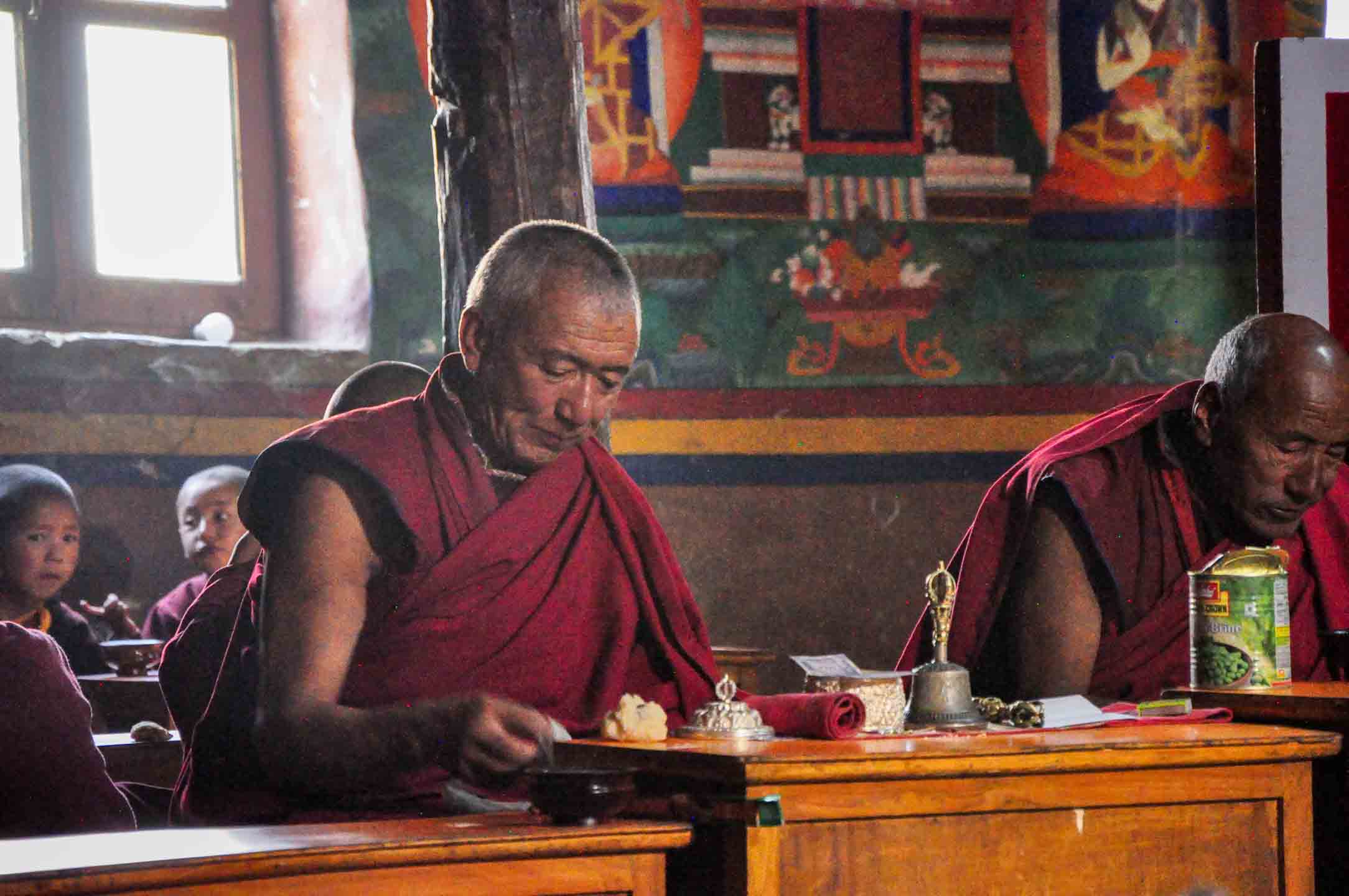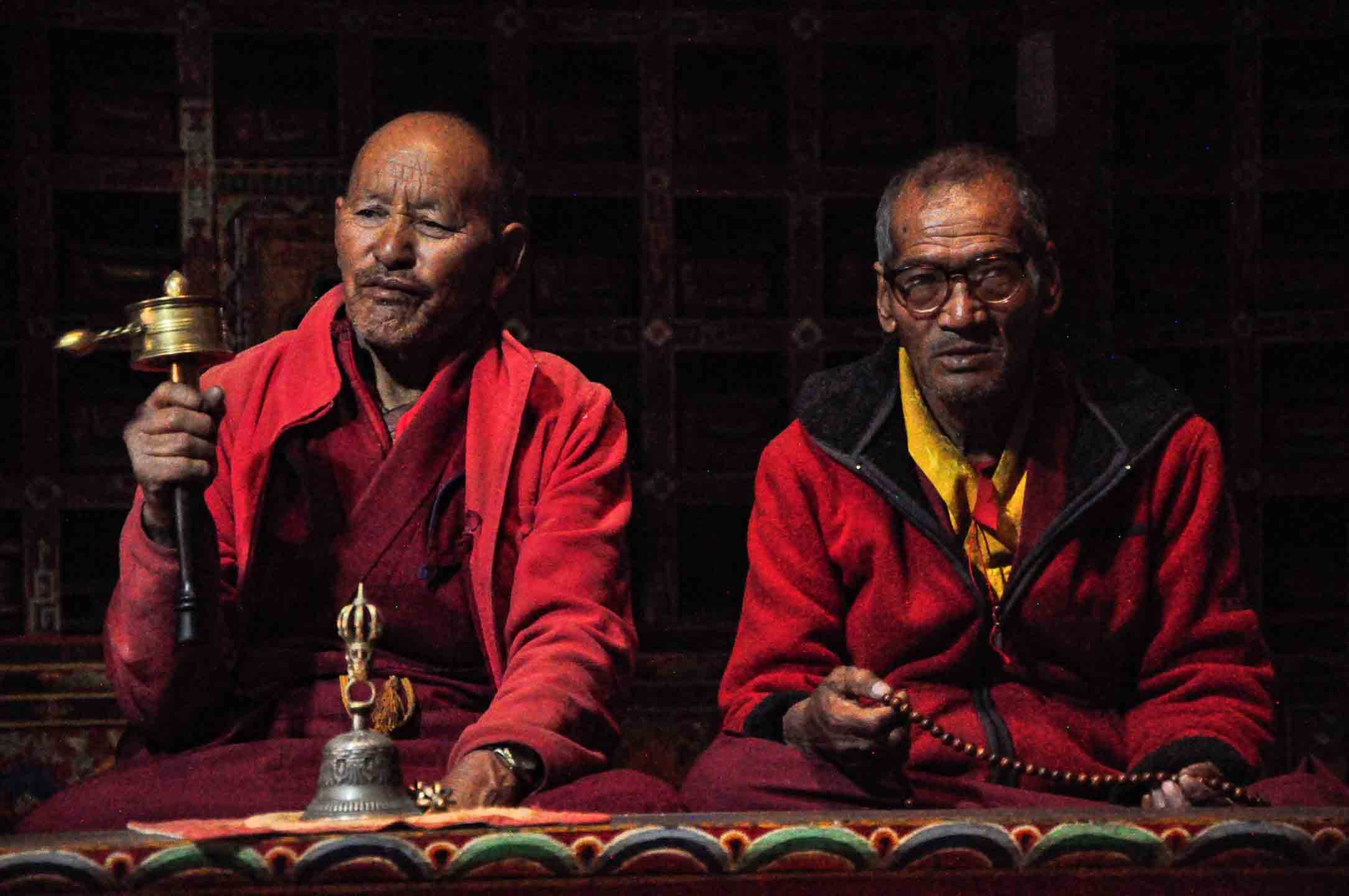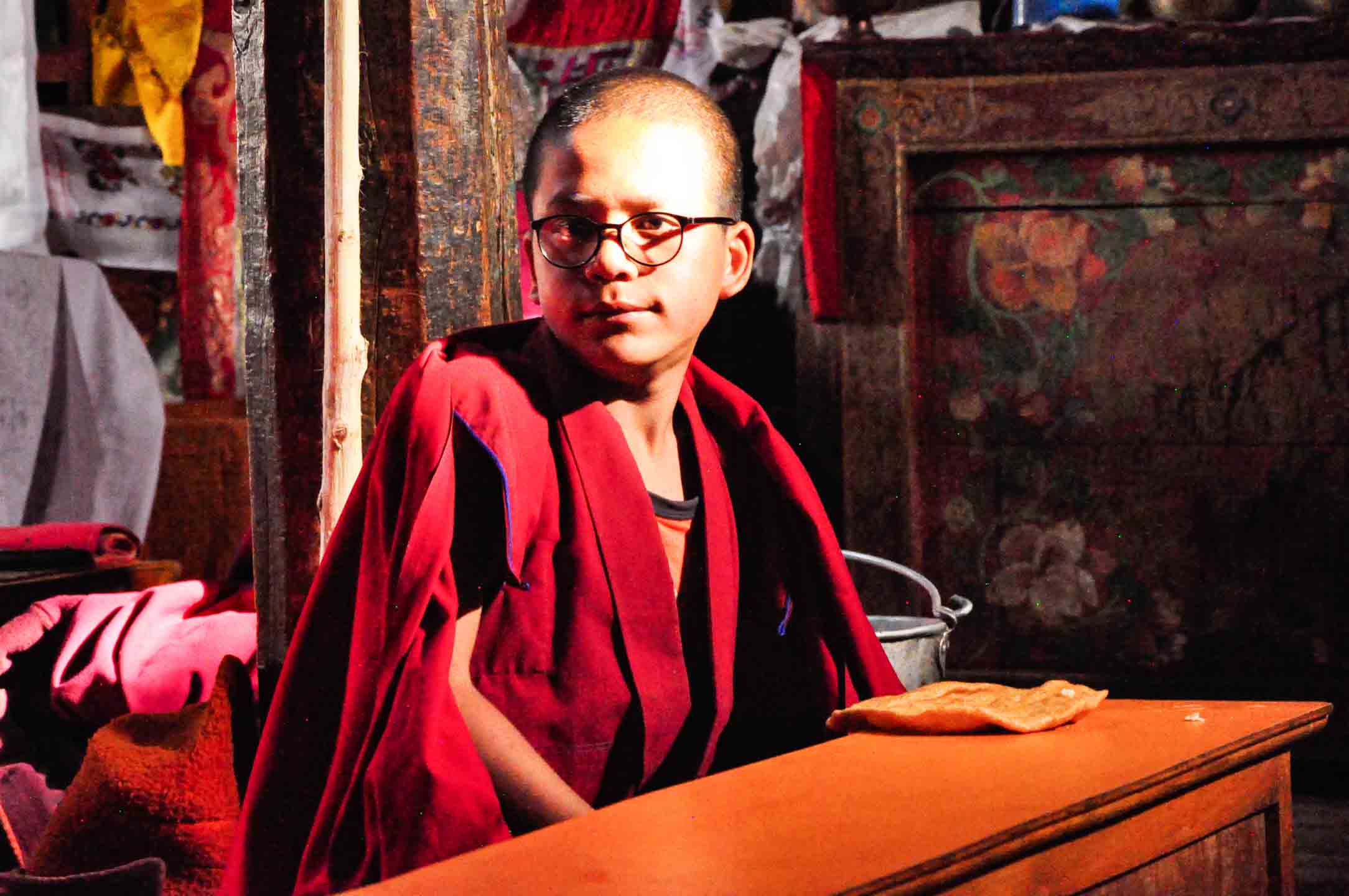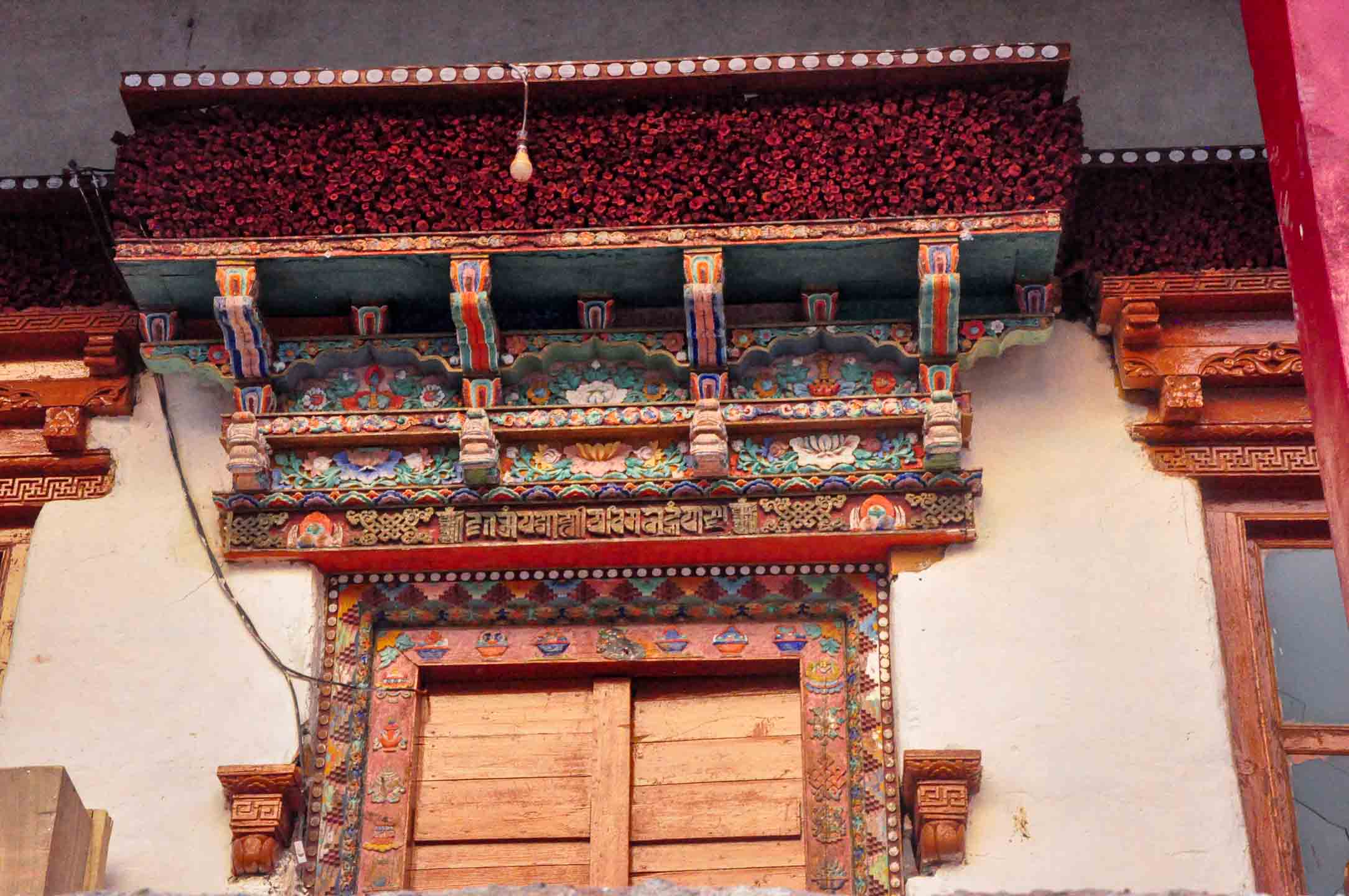
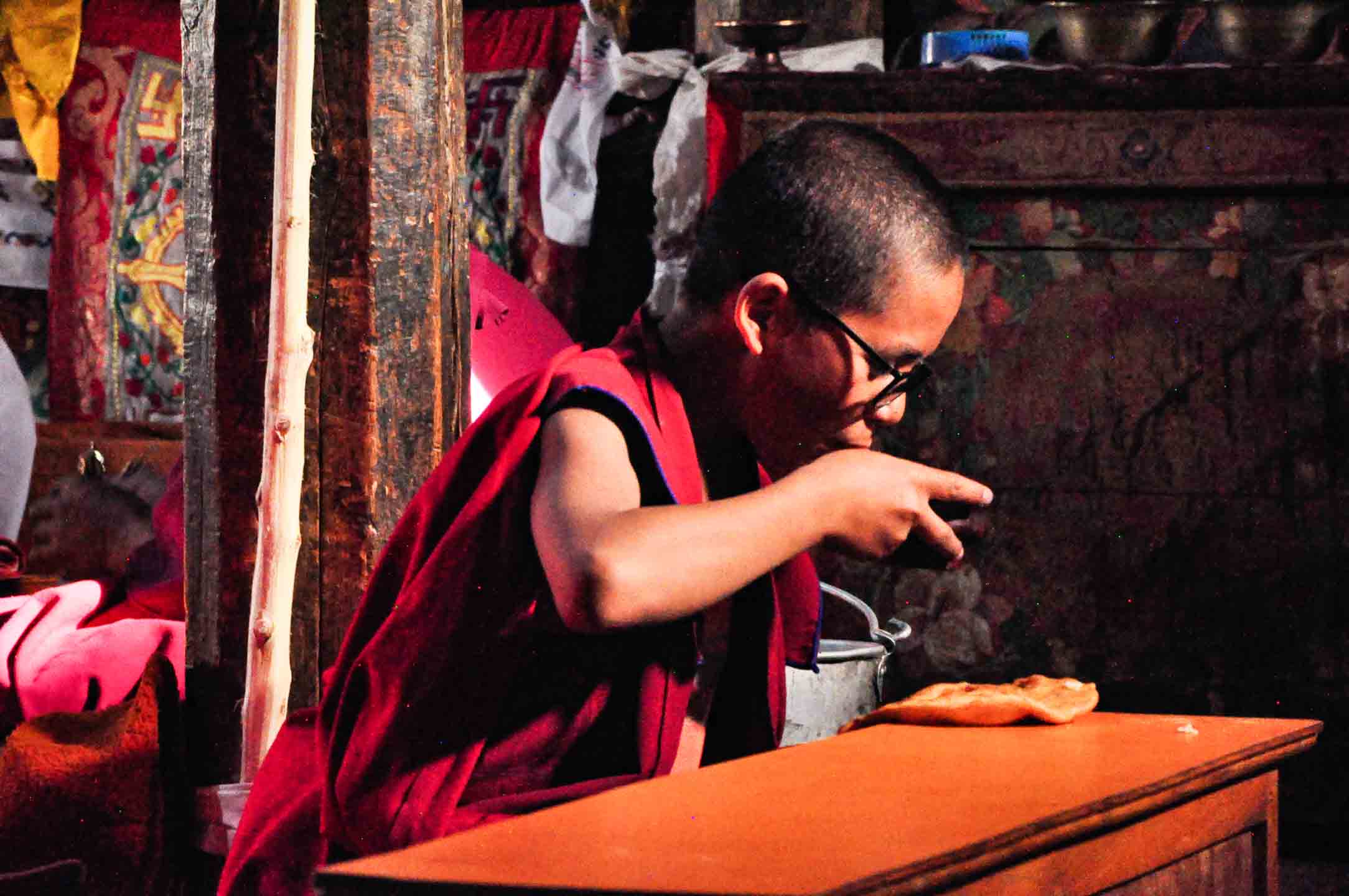
Our first major stop was Karsha Monastery, the largest and most important monastery in Zanskar. Long before we reached it, the white buildings could be seen cascading down a hillside above the valley, creating one of the most striking views in the region.
Belonging to the Gelug school of Tibetan Buddhism, Karsha traces its origins to the 11th century, although many of its present-day structures were expanded over subsequent centuries. The monastery has long served as the spiritual centre of Zanskar, housing hundreds of monks who continue centuries-old traditions of Buddhist learning, meditation, and ritual.
As we climbed towards the monastery, colourful prayer flags fluttered in the mountain breeze while rows of whitewashed buildings gradually came into view. Inside, assembly halls were filled with ancient murals, beautifully painted thangkas, intricate statues of the Buddha, and shelves lined with sacred Buddhist scriptures. Every room reflected the artistic traditions that have flourished in the Himalayas for centuries. Green fields spread across the valley floor while rugged brown mountains rose dramatically beyond them, creating one of the most beautiful contrasts we experienced during our journey.
Karsha is also famous for the annual Gustor Festival, when masked cham dances are performed to symbolise the victory of wisdom over ignorance. Although we did not visit during the festival, it was easy to imagine the monastery courtyard filled with monks, villagers, and visitors gathered to witness one of Zanskar’s most important religious celebrations.