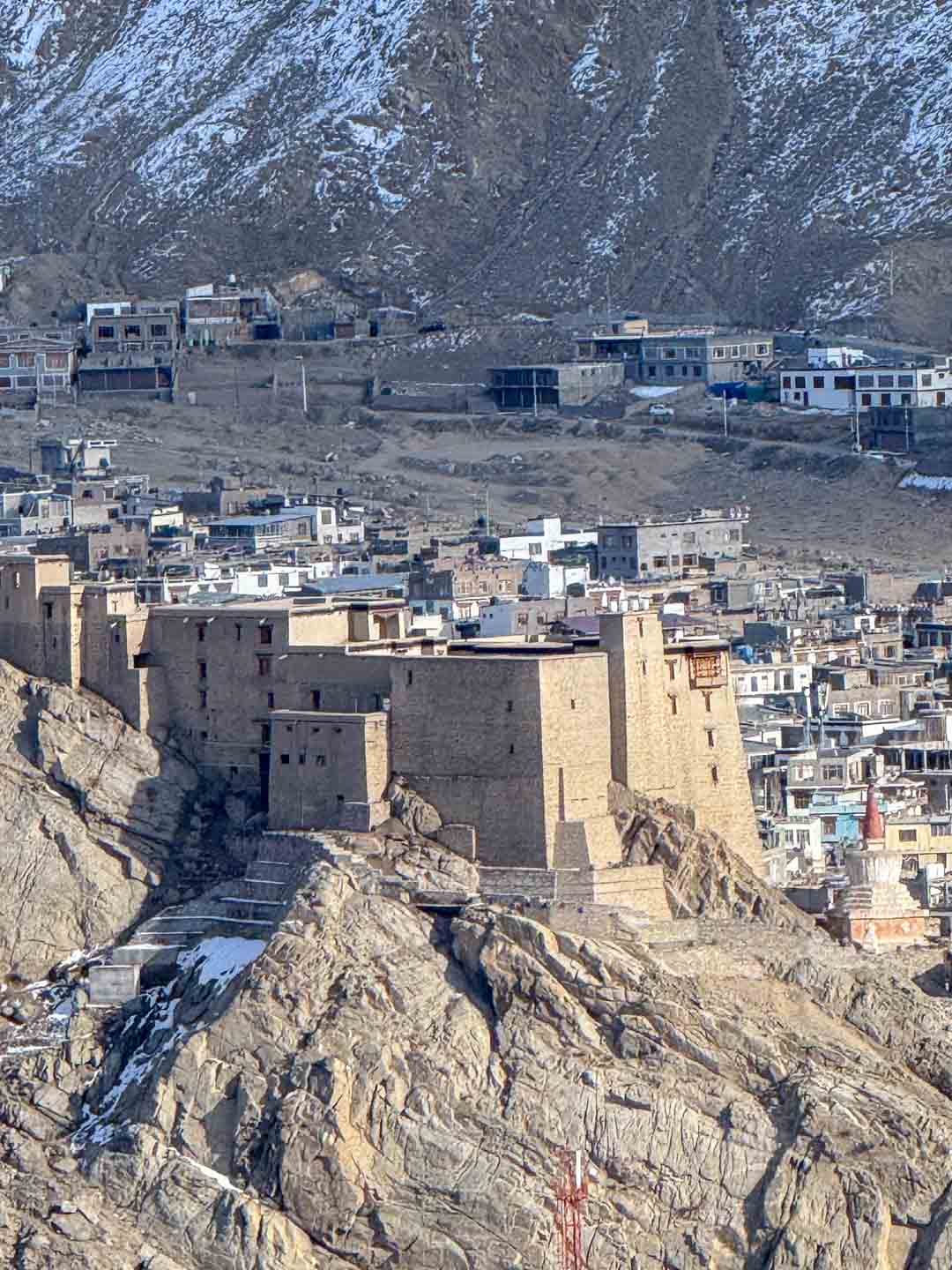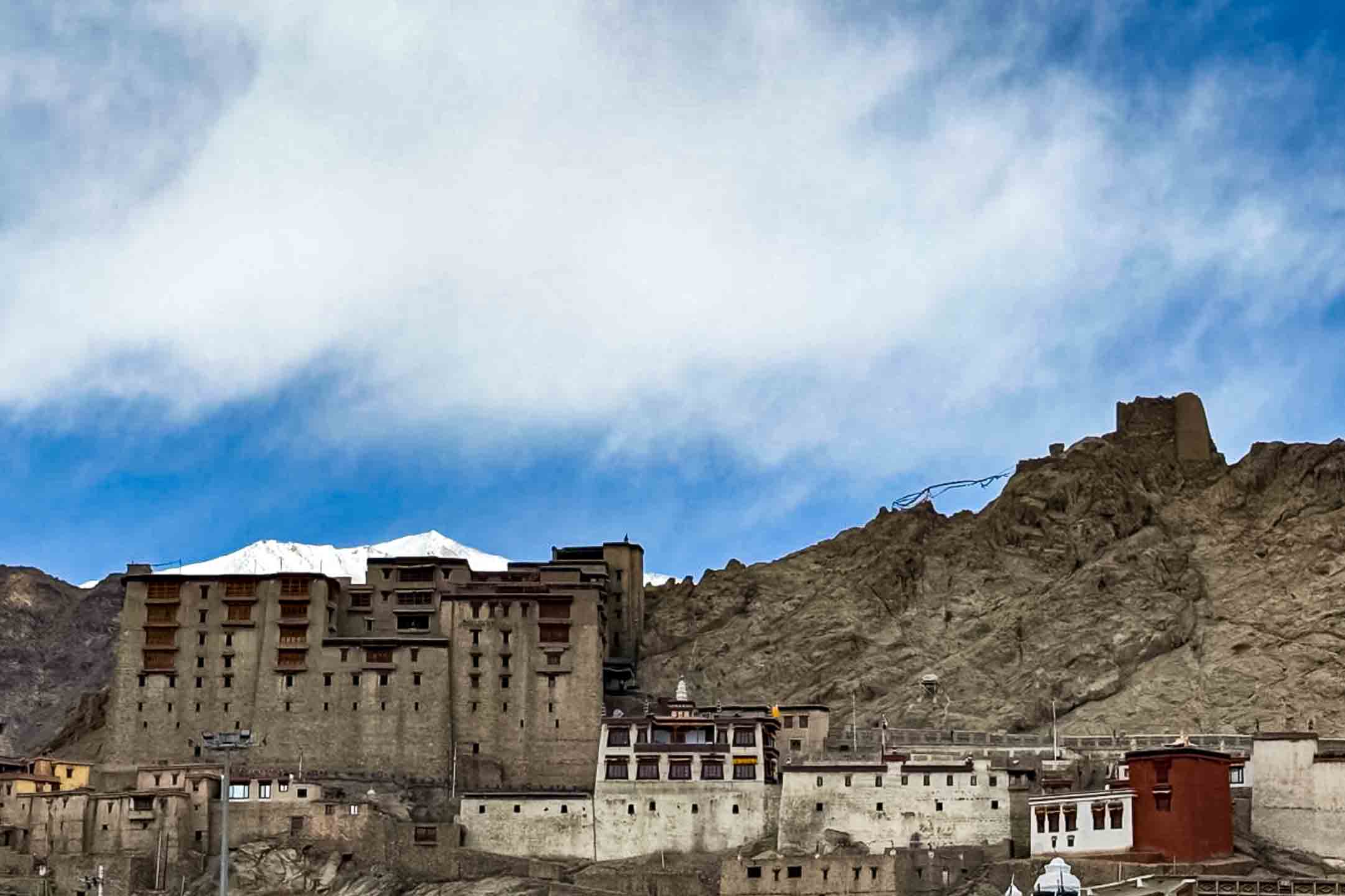
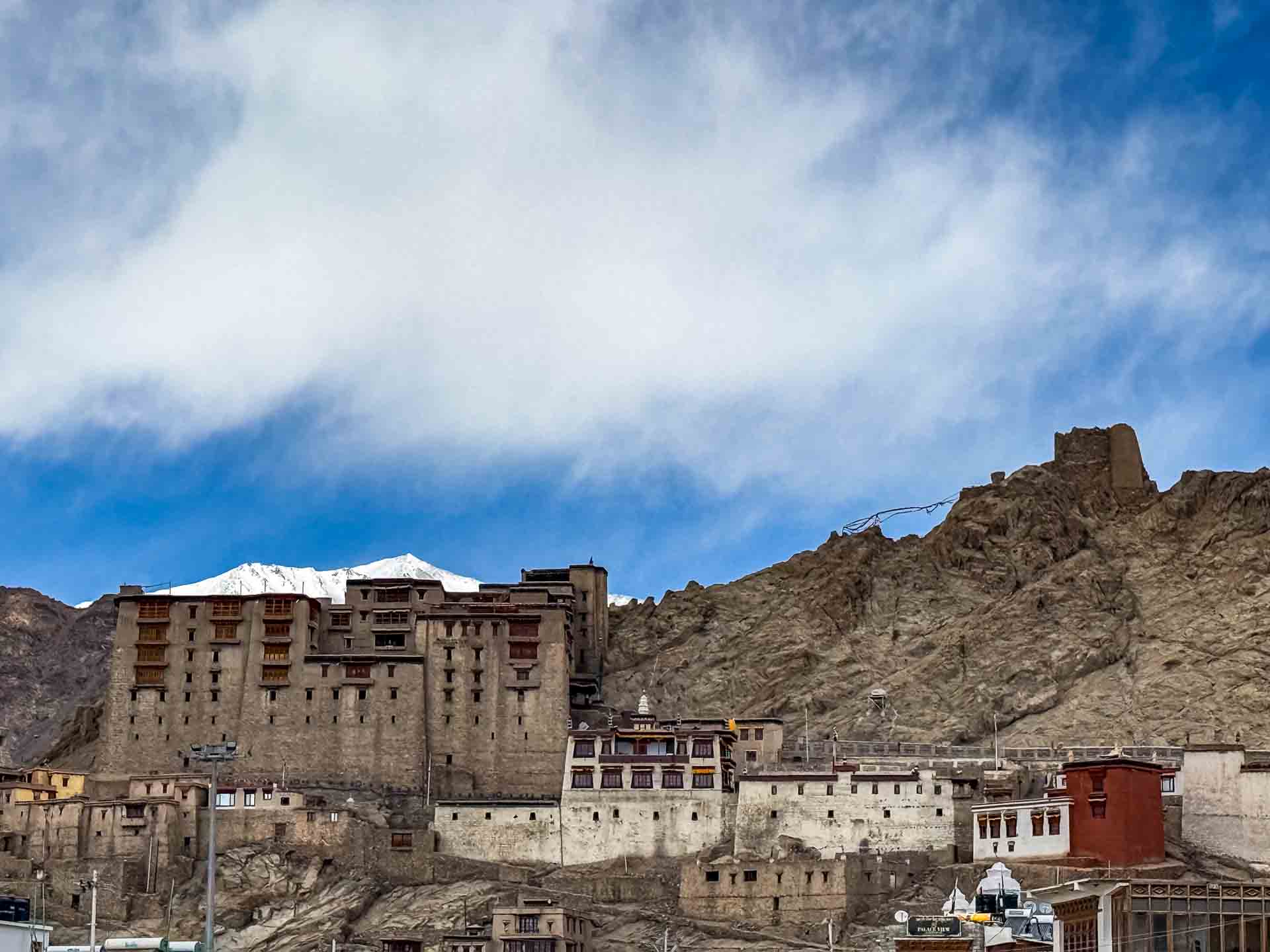
Rising above the old town, Leh Palace remains one of the city’s most recognisable landmarks. Even from a distance, its imposing nine-storeyed structure dominates the hillside, overlooking the maze of narrow lanes below.
Built around 1600 CE by King Sengge Namgyal, the palace served as the royal residence of the Namgyal dynasty until the mid-19th century. Its design bears a striking resemblance to the Potala Palace in Lhasa, reflecting the strong cultural and religious ties between Ladakh and Tibet. Constructed primarily from stone, timber, mud, and sun-dried bricks, the palace was designed to withstand the harsh Himalayan climate.
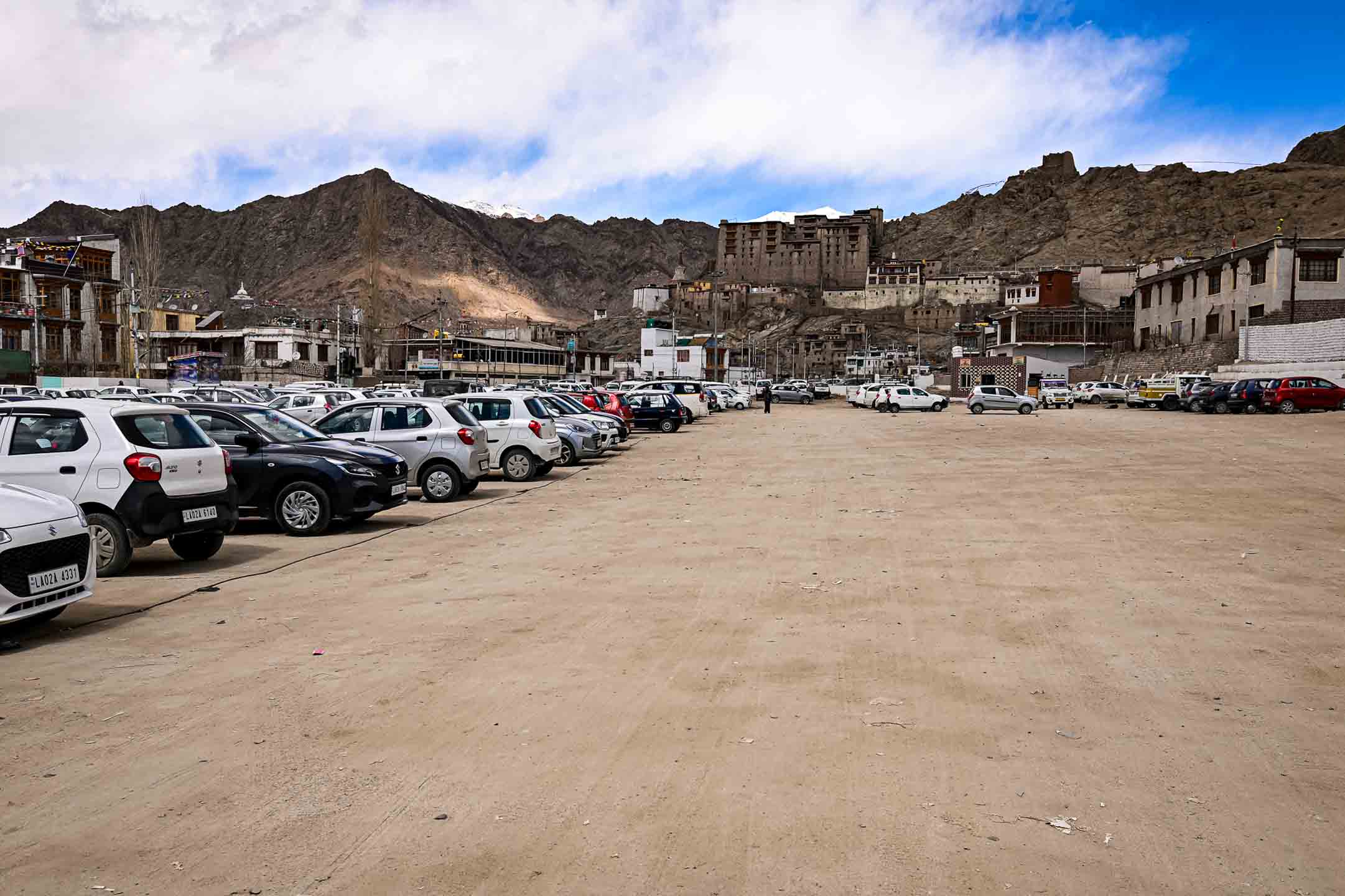
Although we did not explore the interiors, the palace is impressive enough from the outside. The weathered walls, rows of small wooden windows, and commanding position on the hill convey the grandeur it once possessed. Standing below the palace also offers one of the finest panoramic views of Leh, where whitewashed houses, poplar-lined streets, monasteries, and distant mountain ranges spread across the valley.
The palace no longer functions as a royal residence, but it remains one of Ladakh’s most significant historical monuments, symbolising the power and prosperity of the Namgyal rulers.