Around 45 kilometres east of Kargil lies the historic village of Mulbek, home to one of Ladakh’s oldest and most remarkable Buddhist heritage sites. Nestled along the ancient Srinagar–Leh trade route, Mulbek has served as an important stop for traders, pilgrims, and monks travelling between Kashmir, Ladakh, and Central Asia for centuries. Its strategic location made it a significant centre for the spread of Buddhism into western Ladakh, and today it remains one of the region’s most fascinating archaeological and religious sites.
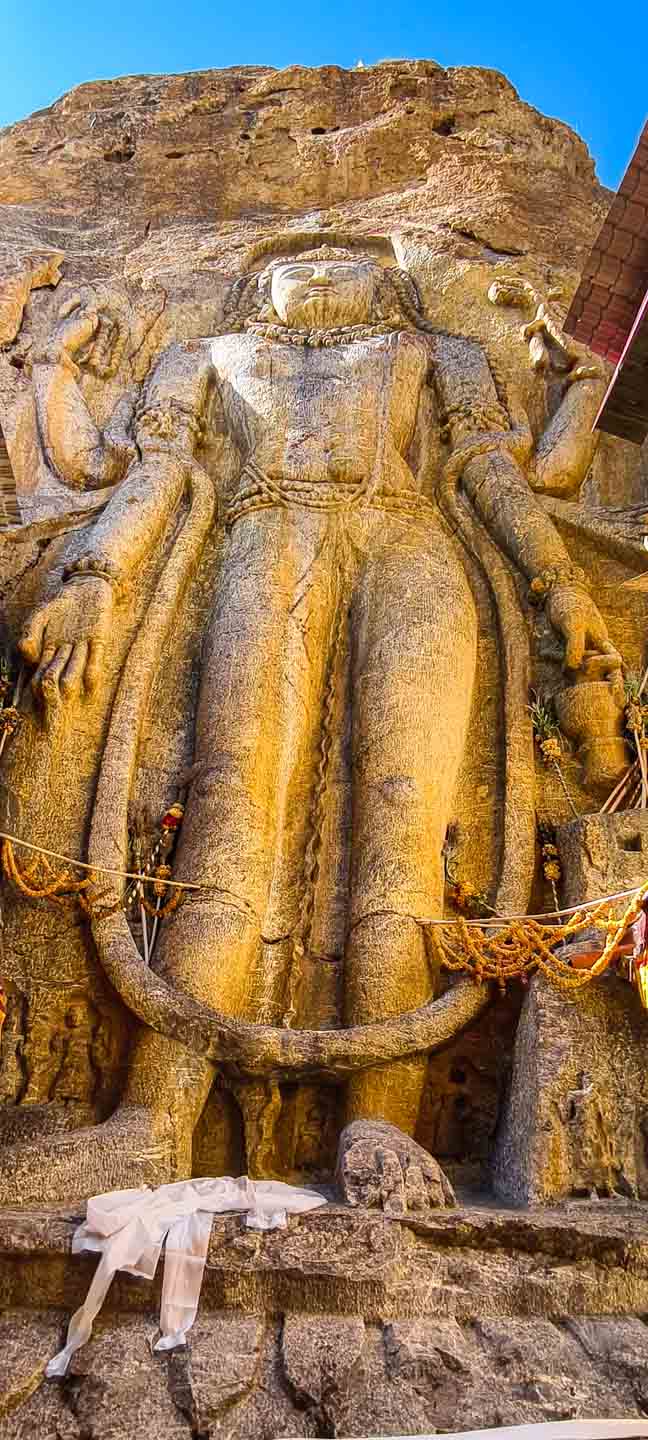
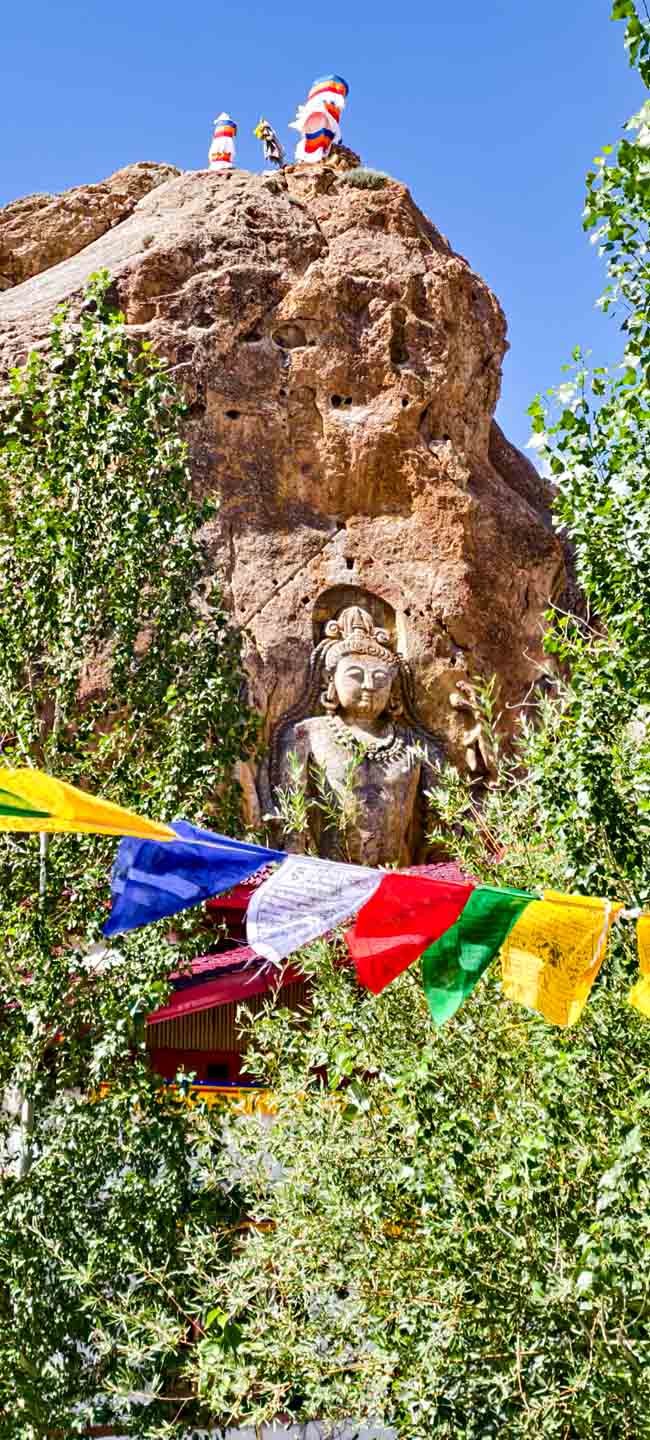
The village is best known for its magnificent nine-metre-high rock-carved statue of Maitreya Buddha, the Future Buddha, which is believed to date back to the 7th or 8th century. Carved directly into a vertical rock face beside the ancient trade route, the sculpture predates many of Ladakh’s monasteries and is among the earliest surviving Buddhist monuments in the region. Local tradition attributes the carving to the great translator Rinchen Zangpo, who played a key role in reviving Buddhism across the western Himalayas during the 10th and 11th centuries. However, historians generally believe that the statue was created even earlier, during a period when Kashmir exerted considerable cultural and artistic influence over Ladakh.
The Maitreya sculpture is particularly significant because it reflects a blend of artistic traditions rarely seen elsewhere in Ladakh. Its elegant facial features, elaborate jewellery, flowing robes, and intricate carvings display a strong Kashmiri style, while certain iconographic elements also reveal influences from Gandhara and early Tibetan Buddhist art. These stylistic features provide valuable evidence of the cultural exchanges that flourished
along the Silk Route, where artists, monks, and merchants carried ideas and artistic techniques across the Himalayas.
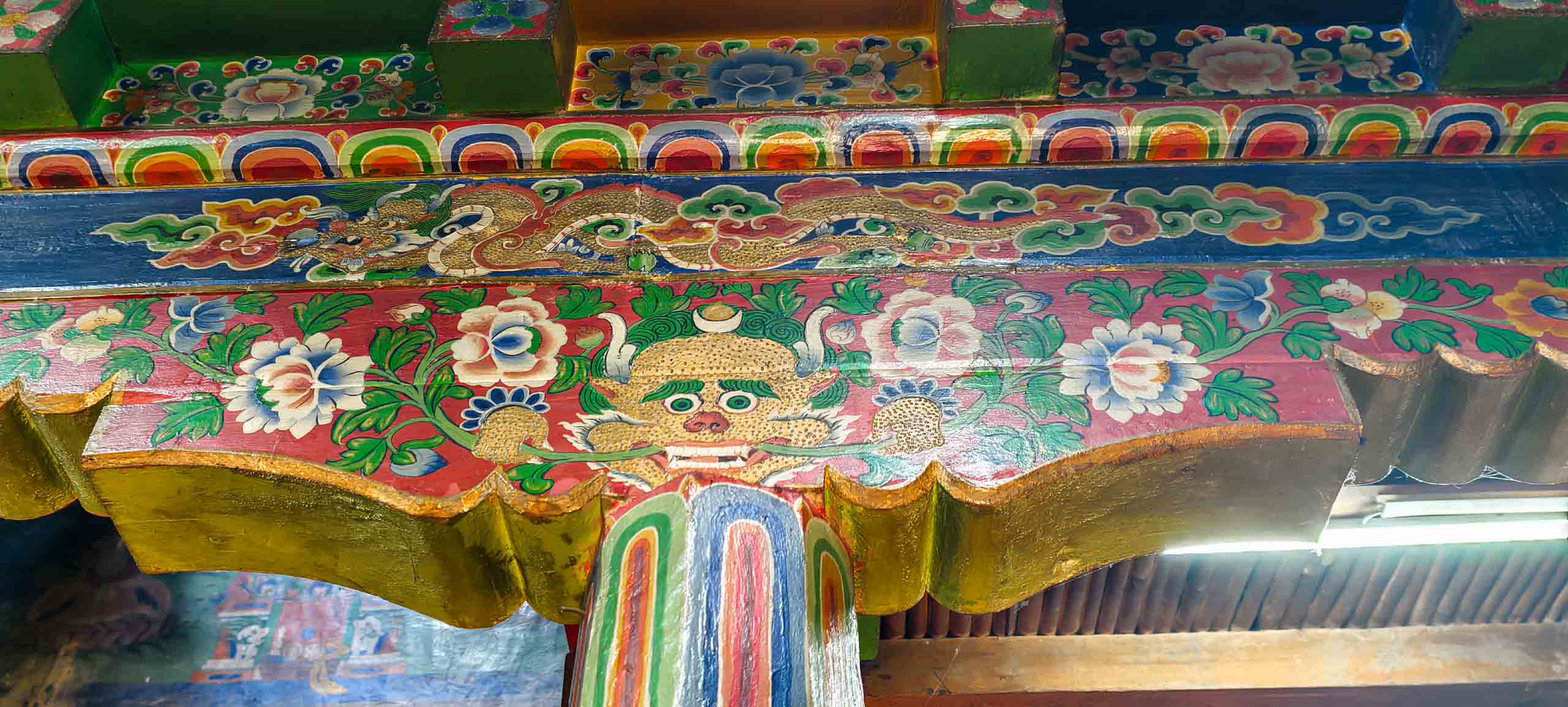
Adjacent to the statue stands Mulbek Monastery, which today belongs to the Drukpa Kagyu school of Tibetan Buddhism. The present monastery developed over several centuries and continues to function as an active place of worship and learning. Its prayer halls house beautifully preserved murals depicting Buddhist deities, protective guardians, and scenes from the life of the Buddha. Visitors can also find ancient manuscripts, prayer wheels, statues, and traditional thangka paintings that reflect Ladakh’s rich artistic heritage.
Beyond its architectural and artistic value, Mulbek remains an important spiritual centre for the surrounding villages. Monks conduct daily prayers, religious teachings, and community ceremonies throughout the year, preserving traditions that have been passed down for generations. During local festivals, the monastery becomes a gathering place where residents celebrate their faith through prayers, rituals, and cultural performances.
Lamayuru offers far more than a scenic stop along the highway. It is a place where geology, history, spirituality, and everyday village life come together. From the surreal landscapes of Moonland and the thousand-year-old monastery to the peaceful rhythm of the village and the panoramic views from Namkila Pass, every part of the journey reveals a different side of Ladakh.
For people exploring western Ladakh, trip to, and beyond Lamayuru is a unique experience. In this region, centuries-old Buddhist traditions continue to flourish amid one of the Himalayas’ most extraordinary landscapes. With its ancient monastery, surreal Moonland terrain, and timeless mountain vistas, Lamayuru offers a journey into both the cultural and geological heritage of Ladakh.