The Pangong Sight
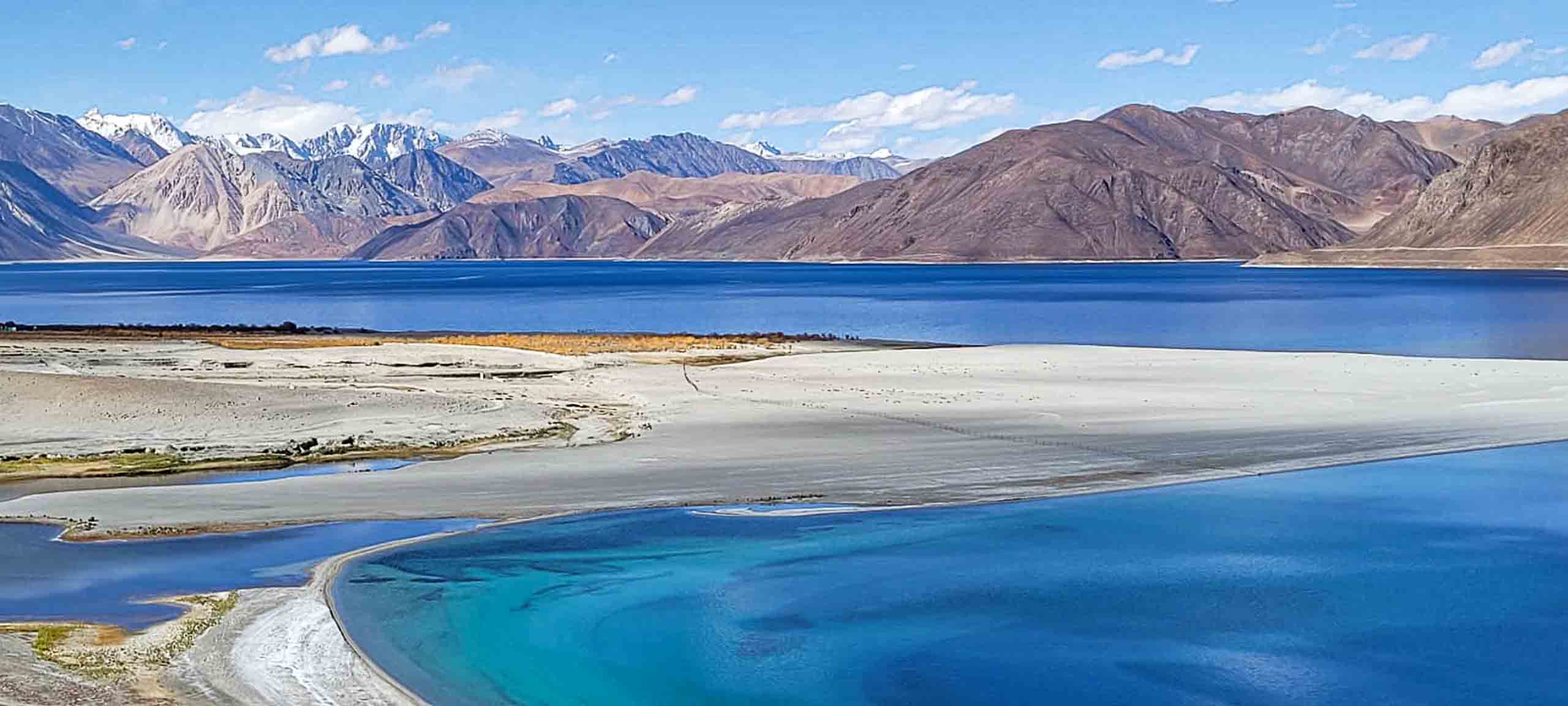
Beyond Wari La the landscape undergoes another dramatic transformation. The steep mountain roads gradually descend into wide, open valleys where vegetation becomes increasingly sparse and the horizon stretches farther than the eye can see. The rugged peaks give way to vast plains, and after hours of driving through the high-altitude wilderness of eastern Ladakh, the first glimpse of Pangong Lake appears like a mirage.
Situated at an altitude of approximately 4,225 metres above sea level, Pangong Lake is one of the highest saltwater lakes in the world. Stretching nearly 134 kilometres from India into Tibet, the lake occupies a unique position along the Himalayan frontier. Roughly one-third of the lake lies in India’s Union Territory of Ladakh, while the remaining two-thirds extend into the Tibet Autonomous Region of China.
Unlike most mountain lakes, Pangong has no outlet to the sea. It is an endorheic lake, meaning water flows into it but never flows out. Instead, the water gradually evaporates, leaving behind dissolved salts and minerals that give the lake its saline character. Although the lake freezes completely during the harsh winter months, even the thick layer of ice does not reduce its salt content. As a result, its water is unsuitable for drinking, irrigation, or supporting freshwater fish.
Scientists believe Pangong Lake was once part of a much larger water body that gradually separated into smaller lakes as geological changes reshaped the region over millions of years. Today, it remains one of Ladakh’s most remarkable natural features and an important subject of geological and environmental research. Despite its harsh environment, Pangong supports a surprisingly diverse ecosystem. While its saline waters cannot sustain fish, theyprovide ideal conditions for microscopic organisms and small crustaceans that form the foundation of the lake’s food chain.
During the brief Himalayan summer, the lake becomes an important breeding ground for several migratory bird species. Bar-headed geese, famous for flying over the Himalayas at extraordinary altitudes, nest along the lake’s quieter shores. Brahminy ducks, brown-headed gulls, and black-necked cranes can also be spotted in the surrounding wetlands during the breeding season. These birds travel thousands of kilometres each year to take advantage of the short but productive summer months.
The surrounding plains are equally important for wildlife. Herds of kiang, the Tibetan wild ass, often graze across the nearby grasslands, while Himalayan marmots emerge from their burrows during warmer months. The region is also home to pikas, woolly hares, and, in more remote areas, elusive predators such as the snow leopard and Tibetan wolf. Life here has adapted to survive freezing winters, intense solar radiation, and one of the most extreme climates on Earth.
The Lake That Changes Colour
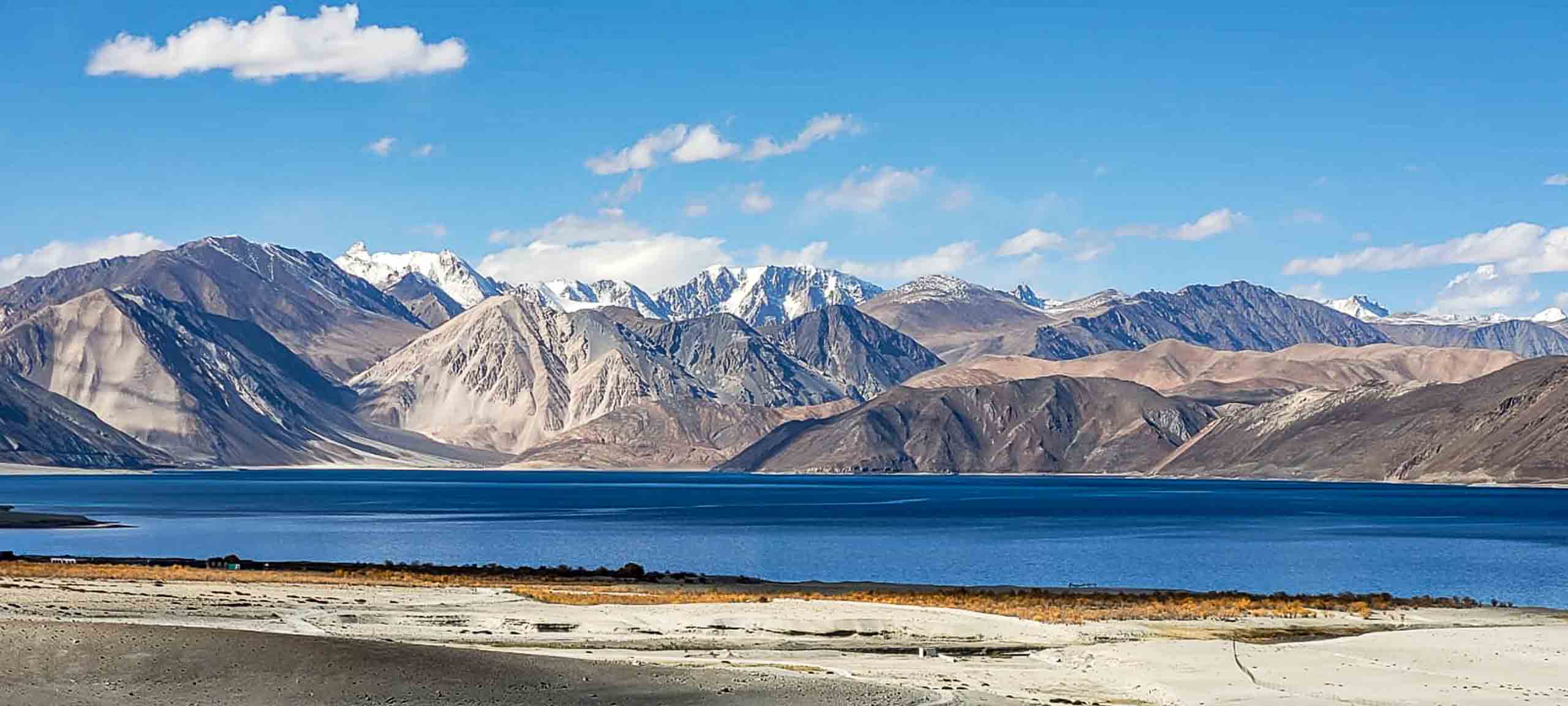
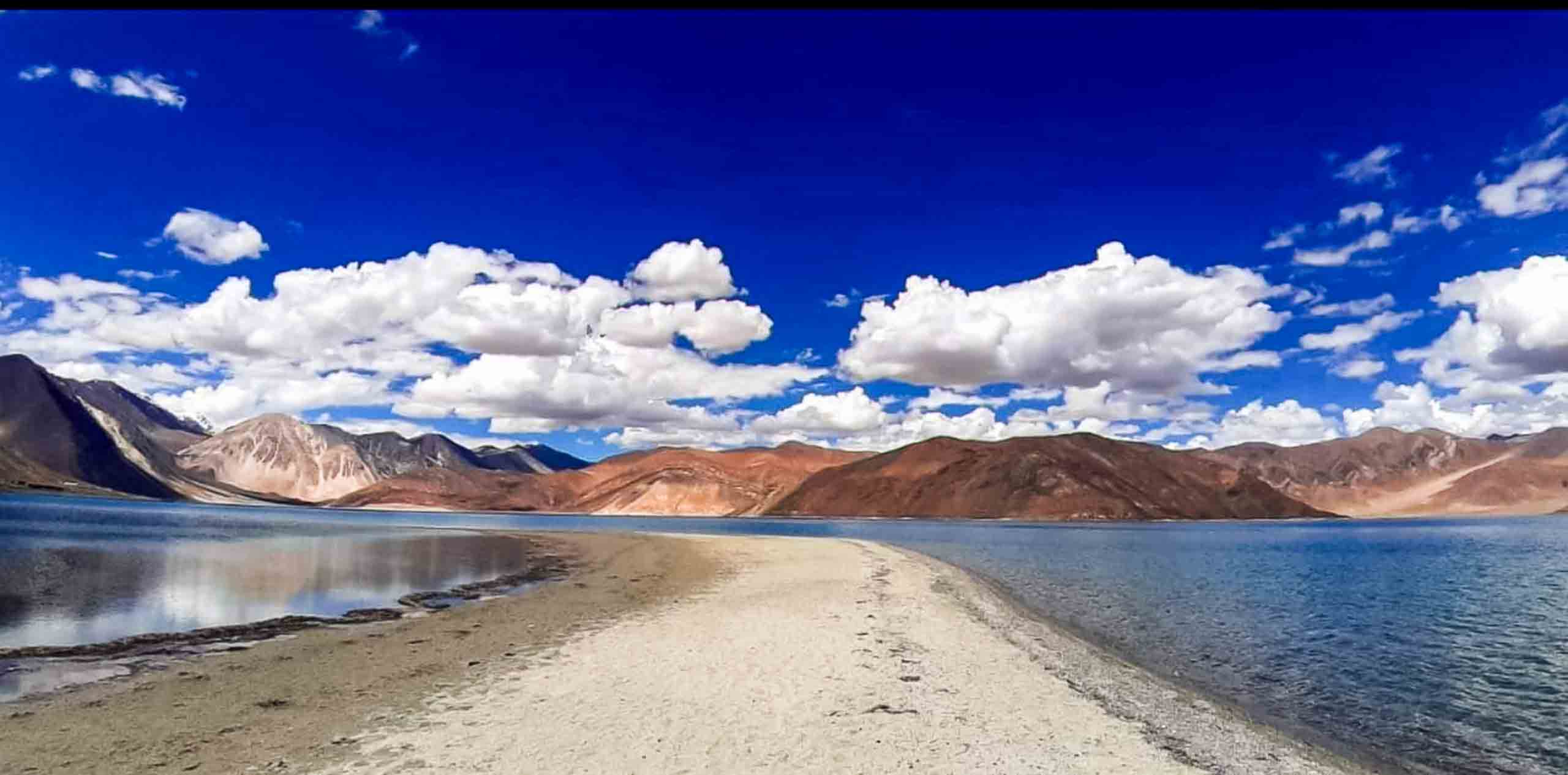
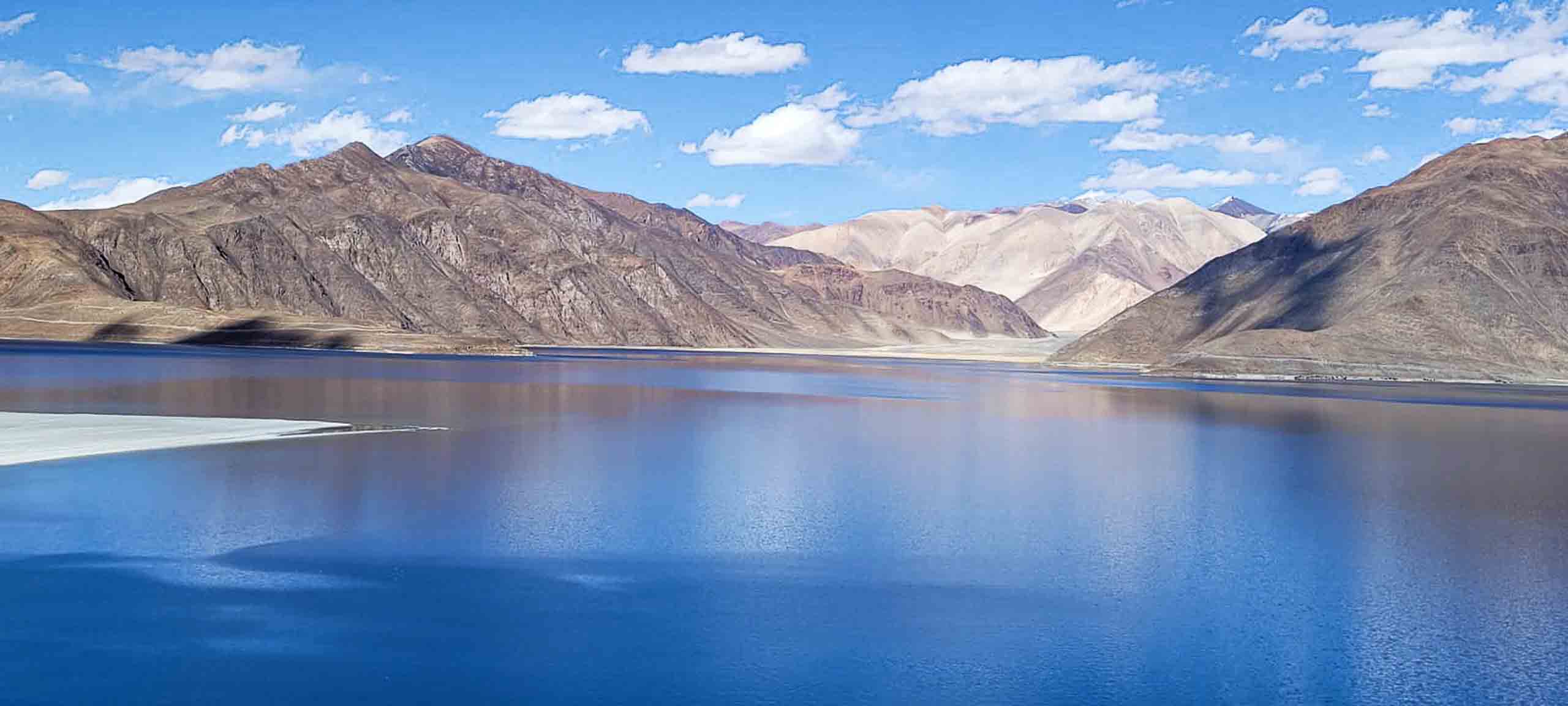
Pangong Lake is perhaps most famous for its extraordinary ability to change colour throughout the day. Few places in the world display such dramatic variations in water colour over the course of just a few hours. As the position of the sun changes, sunlight interacts differently with the lake’s depth, mineral content, and exceptionally clear water. The result is a constantly shifting palette of colours ranging from deep sapphire blue and brilliant turquoise to emerald green, steel grey, and even hints of violet during sunrise and sunset. Passing clouds, changing weatherconditions, and the angle from which the lake is viewed all contribute to these remarkable transformations.
This ever-changing appearance has made Pangong one of the most photographed destinations in Ladakh. Yet no photograph fully captures the experience of watching the colours evolve in real time, as the mountains, sky, and water continuously reflect one another.
When we finally reached Pangong Lake, its immense scale surpassed every expectation. The shimmering water stretched far beyond the horizon, merging almost seamlessly with the distant mountains. Standing on its rocky shoreline, we watched gentle waves roll across the lake, their colours shifting almost imperceptibly as sunlight filtered through passing clouds. Despite being one of Ladakh’s most popular tourist destinations, Pangong retains an overwhelming sense of tranquillity. The vastness of the landscape naturally quietens conversation, leaving only the sound of the wind sweeping across the valley and the rhythmic movement of the water. The absence of trees, towns, and urban noise makes visitors acutely aware of the immense openness surrounding them.
We spent time simply watching the changing colours, the reflections dancing across the surface, and the distant birds gliding silently above the water. It was one of those rare places where there seemed to be no urgency to move on.
Pangong and Tourism
Pangong Lake gained international recognition after appearing in several Indian films, particularly 3 Idiots, which introduced its breathtaking scenery to millions of viewers. Since then, it has become one of Ladakh’s most visited attractions. While tourism has brought new opportunities to local communities through campsites, homestays, and small businesses, it has also highlighted the need to protect this fragile ecosystem.Visitors are encouraged to minimise plastic waste, respect wildlife, remain on designated roads and trails, and avoid disturbing bird nesting areas. The high-altitude environment recovers slowly from human impact, making responsible tourism essential for preserving Pangong’s unique beauty.
More than just a scenic destination, Pangong Lake represents the extraordinary landscapes that define Ladakh. Its ever-changing colours, remarkable geology, thriving wildlife, and profound silence combine to create an experience that remains long after the journey ends. For many travellers, the first sight of Pangong is the moment when Ladakh truly reveals its most iconic face.