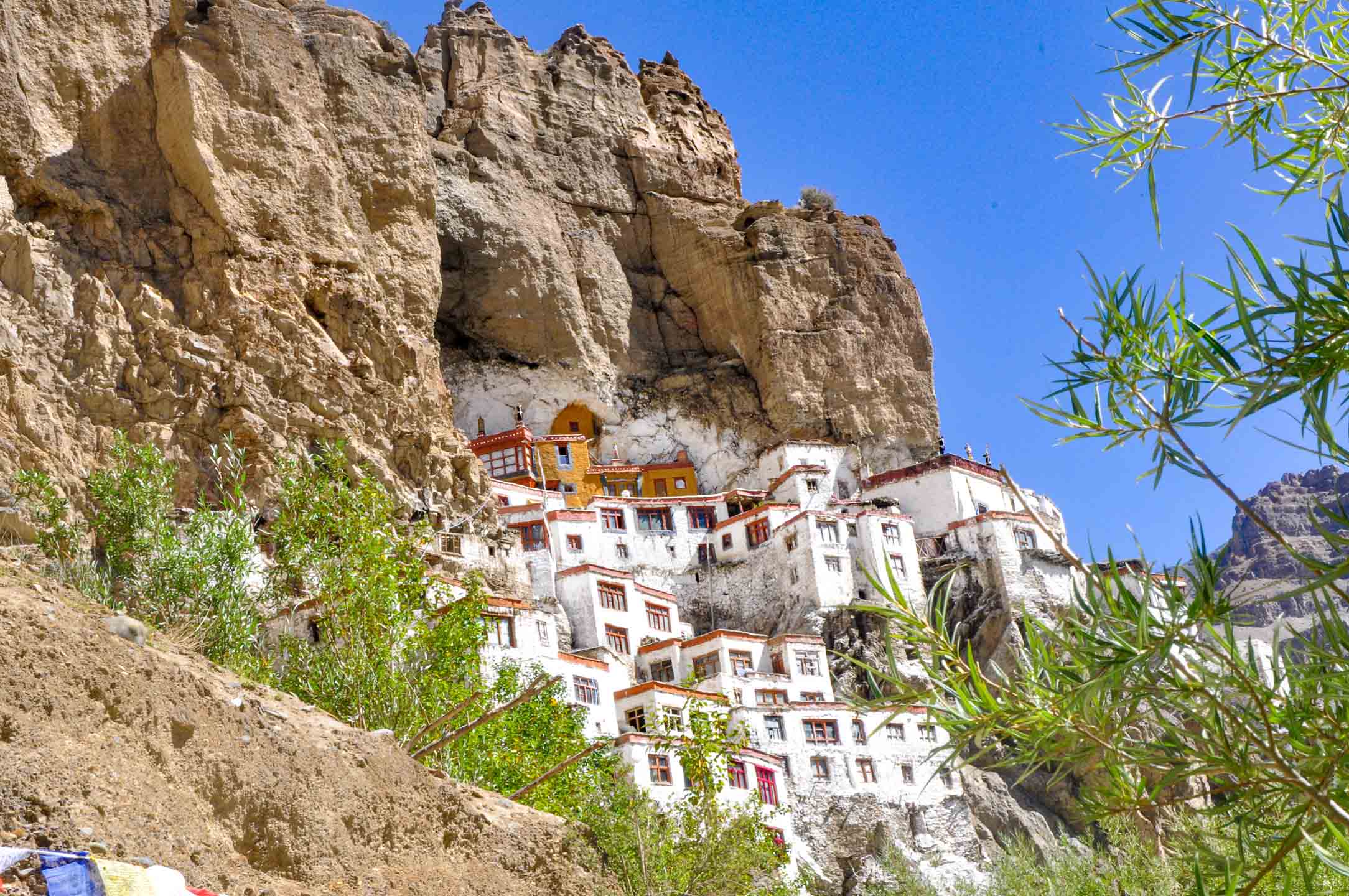
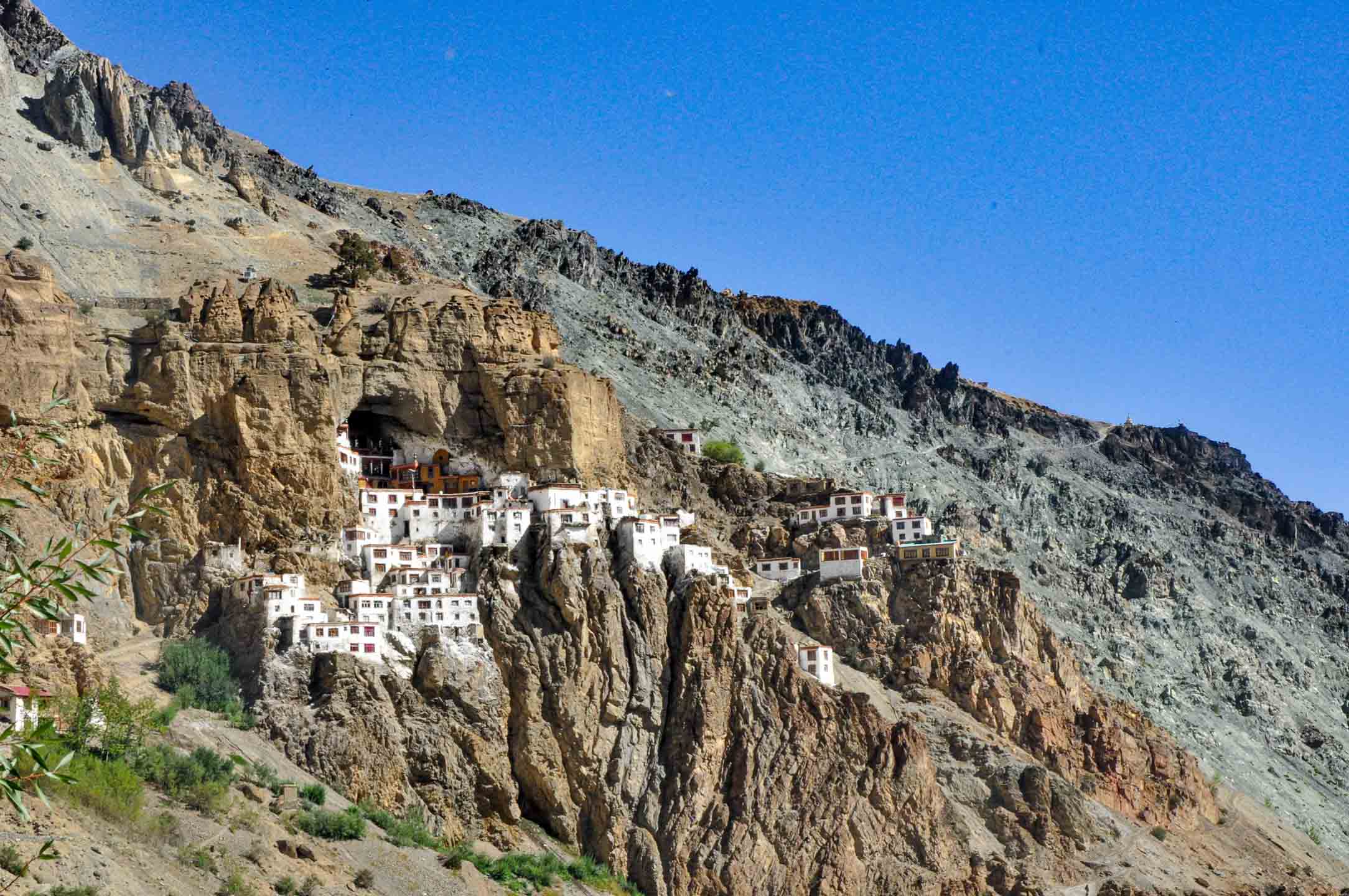
Few monasteries in the Himalayas leave such a lasting impression as Phugtal Monastery. Built around a vast natural cave high above the Tsarap River, the monastery appears almost impossible to construct, with its whitewashed buildings rising directly out of the cliff in a honeycomb-like formation.
Founded during the early 12th century by the renowned scholar Jangsem Sherap Zangpo, the monastery became an important centre of Buddhist learning and meditation. Long before the present buildings were constructed, the cave itself had been used by sages and monks seeking solitude for meditation, giving the site deep spiritual significance.
As we made the final climb towards the monastery, every turn revealed another breathtaking perspective. The closer we came, the more extraordinary the architecture appeared. Built into the natural contours of the cliff, the monastery seems less like a human construction and more like an extension of the mountain itself.
Inside, we explored prayer halls filled with centuries-old murals, statues of the Buddha, sacred manuscripts, and colourful thangkas preserved by generations of monks. The monastery continues to function as a living religious institution, housing young monks who study Buddhist philosophy alongside their daily spiritual practices.
One of the most remarkable features is the sacred spring that flows naturally from within the cave. Revered by devotees, the spring has supplied fresh water to the monastery for centuries and adds to the mystical atmosphere of the site.
Standing on the monastery terrace, we looked down upon the river winding through the narrow gorge below. The silence was broken only by the fluttering of prayer flags and the distant sound of chanting drifting from inside the monastery. It was one of those rare places where nature and spirituality seemed completely inseparable.