Stakna Monastery
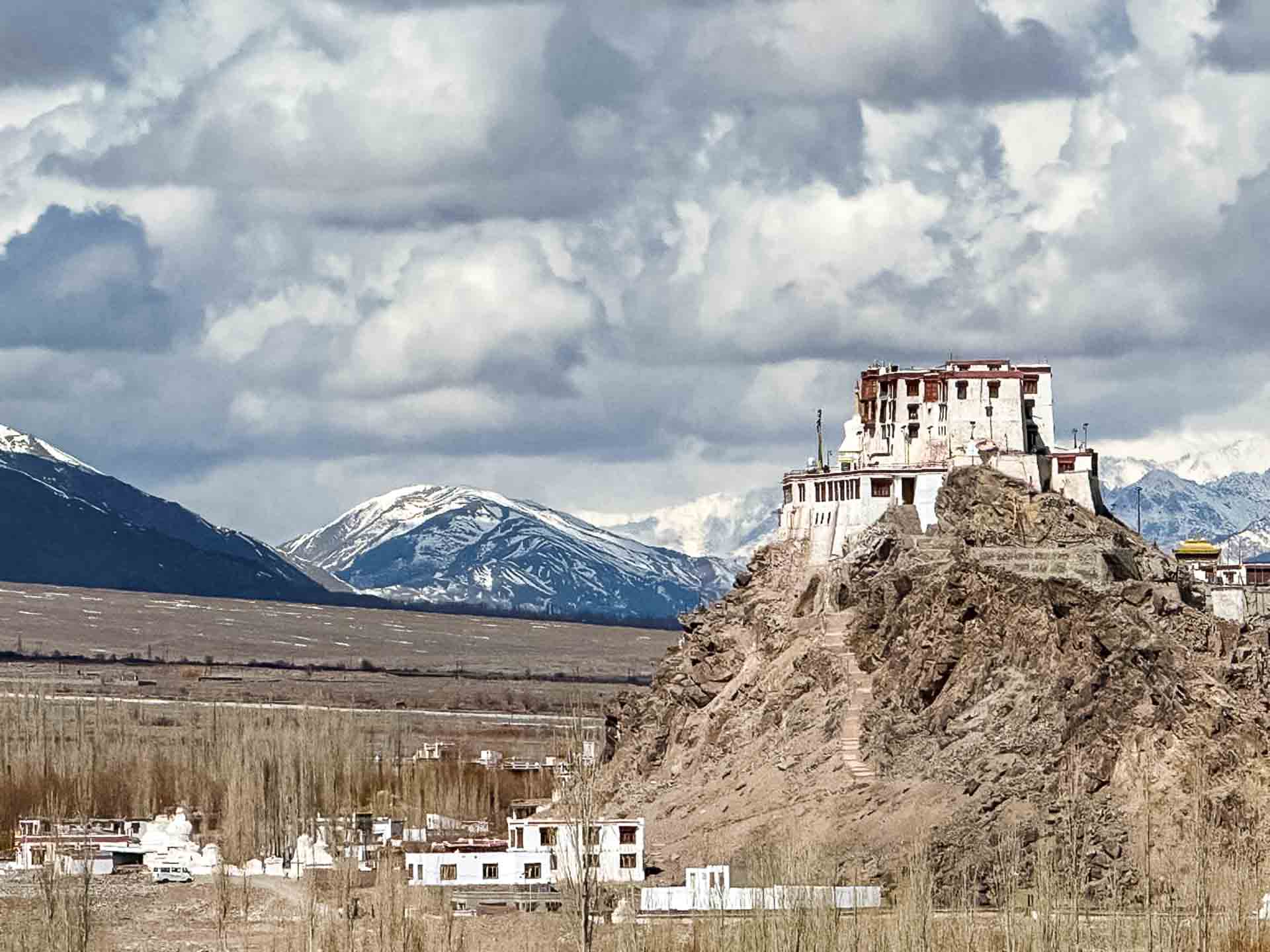
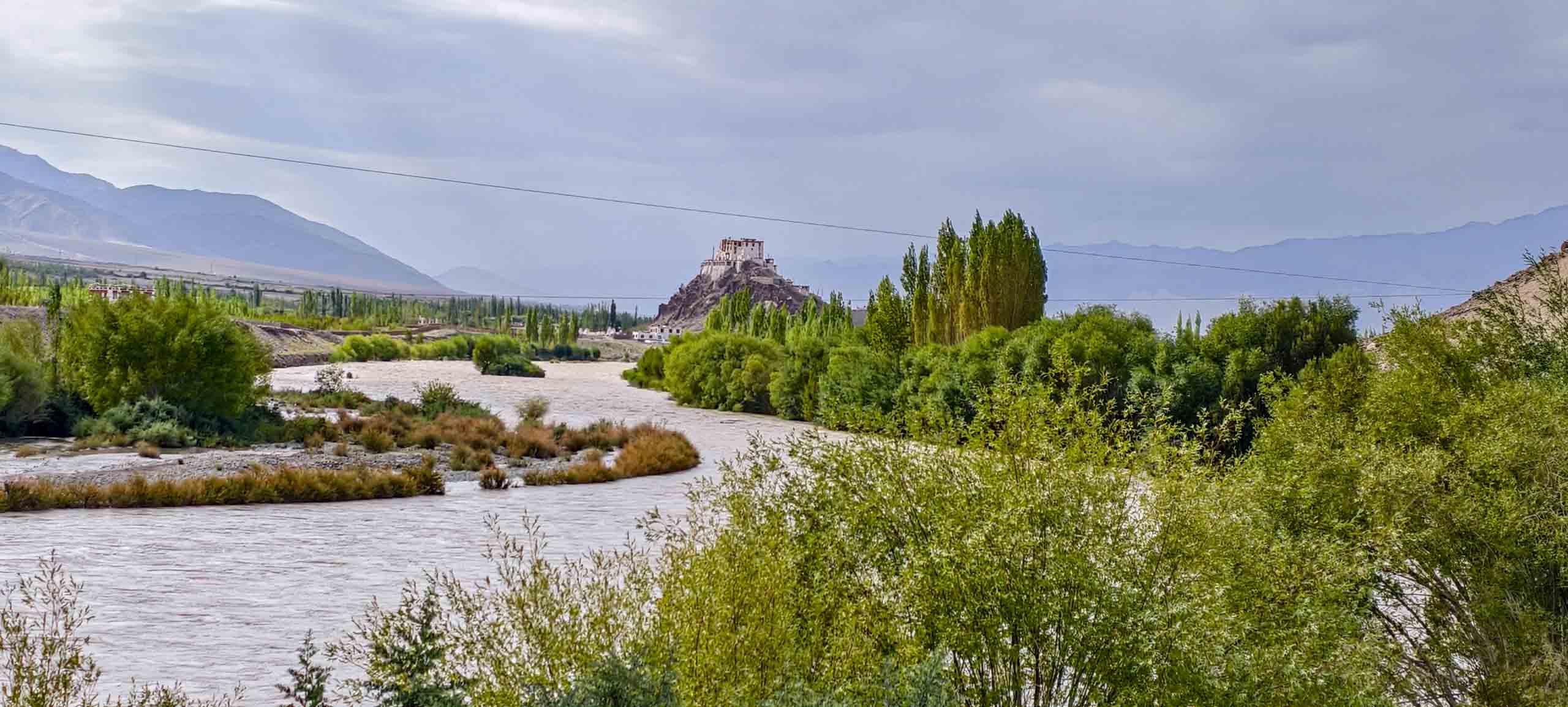
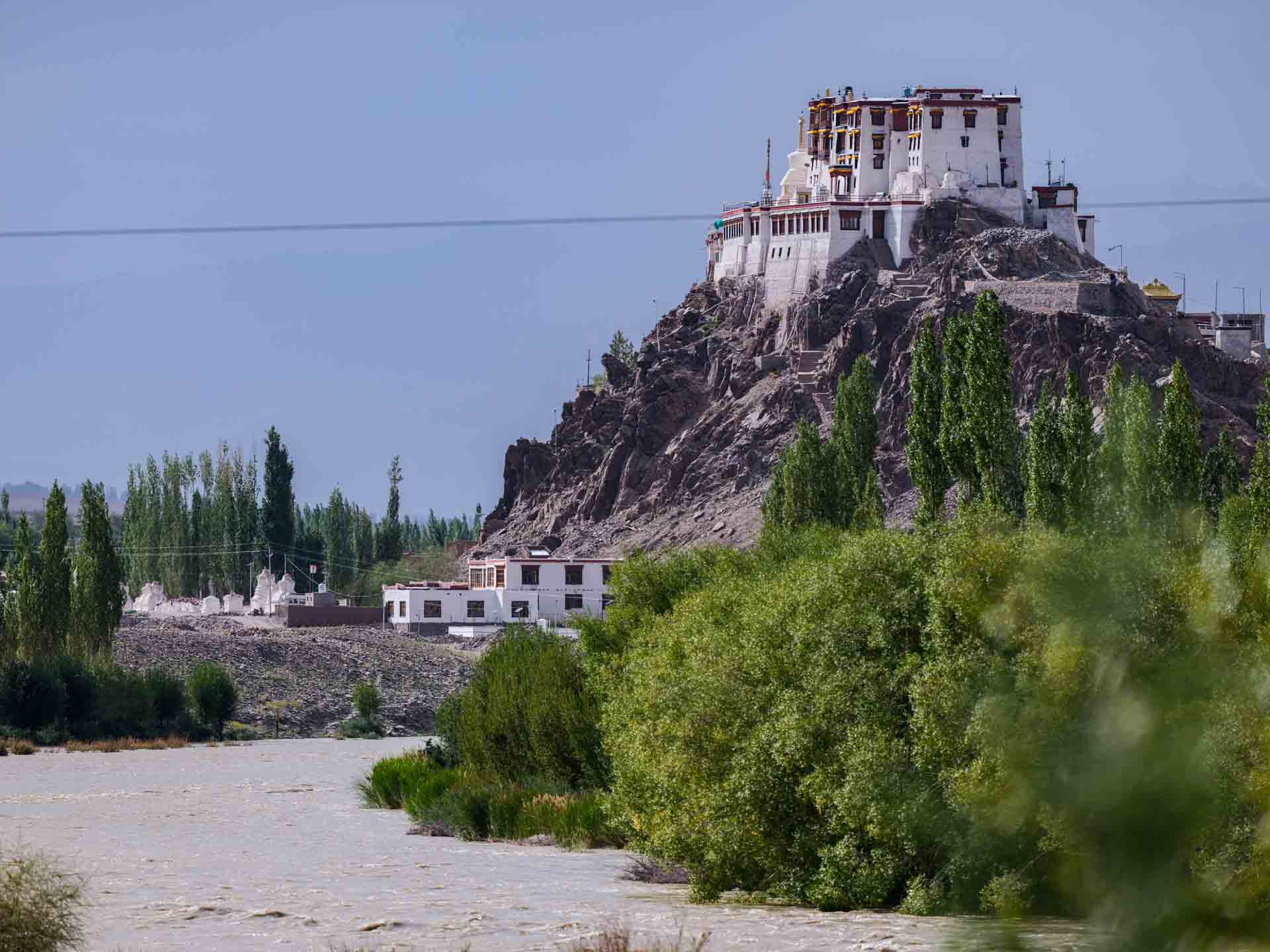
Continuing along the Indus, we reached Stakna Monastery, one of the most picturesque monasteries in Ladakh. Perched atop a steep hill overlooking the river, the monastery derives its name from the Tibetan words stag (tiger) and sna (nose), as the hill is believed to resemble the nose of a tiger. Rising dramatically above the surrounding fields, the white monastery seems to emerge naturally from the rocky hill on which it stands. Against the backdrop of the barren mountains and the green ribbon of the Indus Valley below, Stakna presents a striking contrast that immediately captures attention. Even from a distance, its commanding location reflects the centuries-old tradition of building monasteries on elevated ground, symbolising both spiritual aspiration and a close connection with the natural world.
Stakna Monastery was founded in 1580 by the renowned Bhutanese scholar and saint Chosje Jamyang Palkar, one of the foremost teachers of the Drukpa Kagyu lineage of Tibetan Buddhism. His arrival in Ladakh marked an important chapter in the spread of the Drukpa tradition, strengthening its influence across the region. The monastery soon developed into a respected centre for Buddhist philosophy, meditation, and monastic education, attracting monks and disciples from neighbouring villages. For centuries, it has remained an active institution where religious teachings continue to be preserved and passed down from one generation to the next.
The Drukpa Kagyu school, to which Stakna belongs, places great emphasis on meditation, compassion, and the direct transmission of Buddhist teachings from teacher to disciple. This tradition continues to shape the daily life of the monastery, where monks devote themselves to prayer, study, and community service. Despite the many political and social changes that Ladakh has witnessed over the centuries, Stakna has remained steadfast in preserving these ancient spiritual practices.The monastery welcomes travellers into peaceful prayer halls lined with ancient scriptures, intricately painted thangkas, gilded statues, ceremonial masks, and sacred relics that have been carefully preserved for generations. The walls are adorned with vibrant murals depicting Buddhist deities, protective guardians, and important episodes from the life of the Buddha, reflecting the remarkable artistic traditions that flourished under the patronage of Ladakh’s rulers.
One of the monastery’s most treasured possessions is a rich collection of Buddhist manuscripts and religious artefacts, many of which continue to be used during important ceremonies and festivals. These objects are not merely historical exhibits but remain an integral part of the monastery’s living traditions. Throughout the year, monks gather in the assembly hall to chant scriptures, perform rituals, and observe festivals that strengthen the monastery’s connection with the surrounding communities.
As we walked through the monastery, the quietness was striking. The soft glow of lamps illuminated the prayer halls, while the scent of incense lingered in the air. The rhythmic sound of monks reciting prayers echoed gently through the corridors, creating an atmosphere of calm that encouraged us to slow down and simply take in our surroundings. It was easy to understand why Stakna has long been regarded as a place of meditation and contemplation.
Climbing to the upper levels of the monastery rewarded us with one of the finest views of the Indus Valley. The river meandered through fertile fields lined with poplar and willow trees, while traditional Ladakhi villages appeared like small islands of green amid the rugged mountains. Snow-capped peaks rose in the distance, completing a landscape that was both dramatic and serene. combination of breathtaking scenery, rich history, and peaceful spiritual atmosphere offered a different perspective on Ladakh, one that reminded us that the region’s greatest treasures are often found in its quieter corners. Stakna is a living testament to Ladakh’s enduring Buddhist heritage and the timeless relationship between faith, nature, and community.