
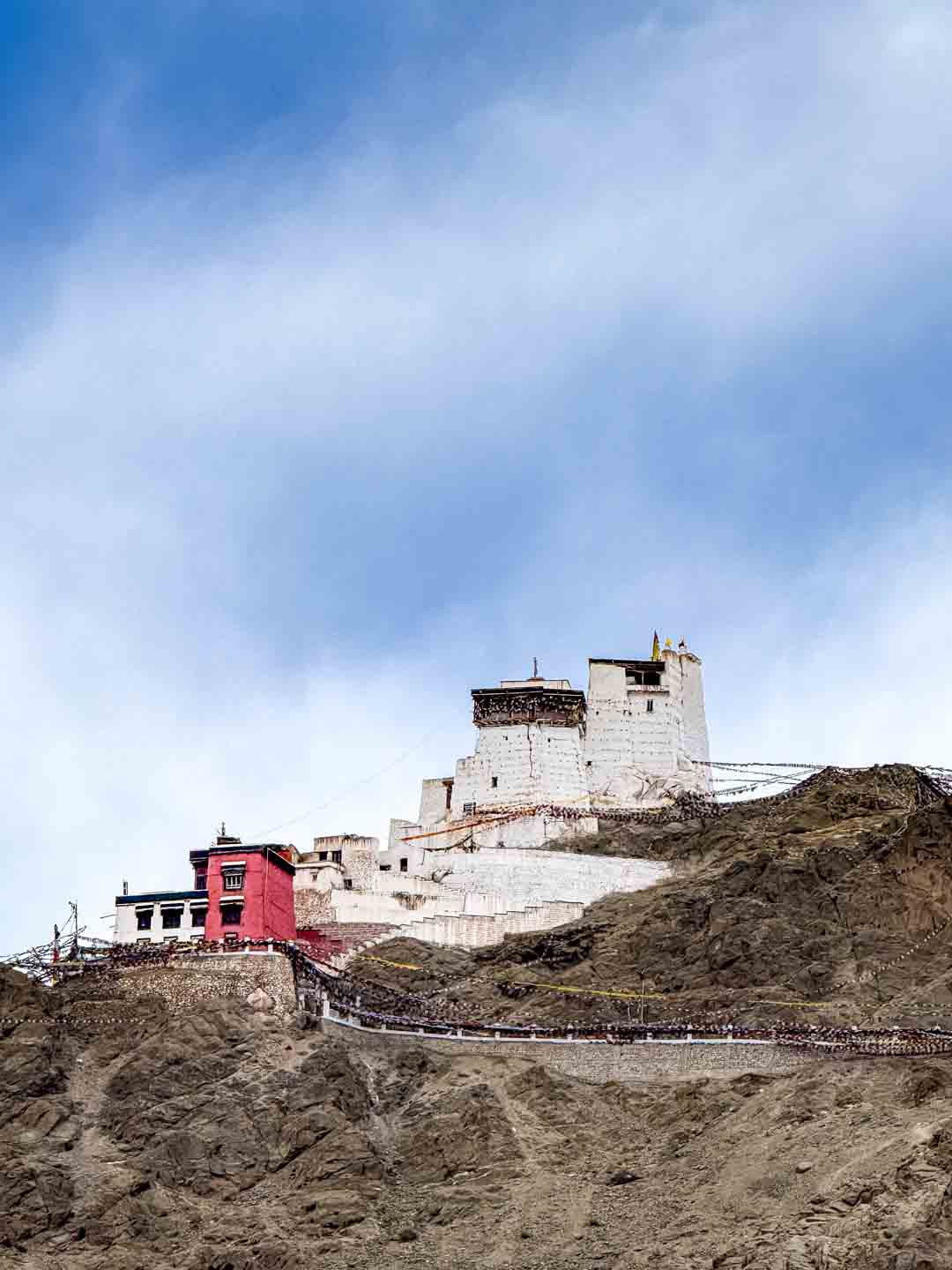
Across the Indus River from Leh lies the village of Stok, home to one of Ladakh’s most historically significant monasteries. Surrounded by fertile fields and backed by the rugged peaks of the Stok Range, the village has long been associated with the Namgyal dynasty, making it an important destination for anyone interested in Ladakh’s royal and spiritual heritage. Stok Monastery shares a close connection with the royal family, reflecting the close relationship between Buddhism and the Ladakhi monarchy.
Stok Monastery was established in the 14th century and belongs to the Gelug, or Yellow Hat, school of Tibetan Buddhism. Although it was an important religious institution from its earliest days, its prominence grew considerably after the Dogra invasion of Ladakh in 1834. When General Zorawar Singh annexed Ladakh to the Dogra Kingdom of Jammu, the Namgyal rulers were forced to leave Leh Palace and establish their new residence at nearby Stok Palace. From that point onward, Stok became the royal seat of the Namgyal dynasty, and the monastery developed an even stronger association with the royal household. It served not only as a centre of Buddhist learning but also as a place where the royal family sought spiritual guidance and participated in important religious ceremonies.
Over the centuries, Stok Monastery has played an important role in preserving Ladakh’s religious traditions. It remains an active centre of worship where monks continue to study Buddhist philosophy, perform daily rituals, and pass on teachings that have been preserved for generations. The monastery’s peaceful surroundings and relatively smaller scale give it an atmosphere that feels both welcoming and deeply spiritual.Inside the monastery, visitors are greeted by richly decorated prayer halls adorned with colourful murals, ancient Buddhist manuscripts, gilded statues, ceremonial objects, and an impressive collection of finely painted thangkas.
Many of these artworks depict scenes from the life of the Buddha, Buddhist cosmology, and revered spiritual masters, reflecting the remarkable artistic traditions that flourished under royal patronage. The monastery also preserves sacred relics and religious artefacts that offer valuable insight into the cultural and spiritual life of Ladakh over several centuries. One of the monastery’s most treasured possessions is its collection of ancient scriptures and ritual objects that continue to be used during important religious ceremonies. These carefully preserved artefacts highlight the monastery’s role not merely as a historical monument but as a living institution where centuries-old traditions remain an integral part of everyday life.
Stok Monastery is also renowned for the annual Stok Guru Tsechu, one of Ladakh’s most vibrant religious festivals. Celebrated according to the Tibetan lunar calendar, the festival attracts monks, local villagers, and visitors from across the region. During the celebrations, monks perform sacred Cham dances, wearing elaborate silk robes and intricately crafted masks representing protective deities and guardian spirits. Accompanied by the rhythmic sounds of traditional drums, cymbals, and long horns, these ritual dances symbolise th triumph of wisdom over ignorance and the victory of good over evil. Beyond their visual splendour, the performances serve as important expressions of Buddhist philosophy and community faith.
Walking through its courtyards, we watched monks quietly going about their daily routines while colourful prayer flags fluttered gently in the mountain breeze. The calmness of the monastery invited us to slow down and simply absorb the surroundings.Stepping outside, we were rewarded with beautiful views of the Indus Valley. Green fields stretched across the village below, framed by the rugged mountains that have shaped life in this region for centuries. Looking towards the nearby Stok Palace, it became clear how closely the monastery and the royal residence have remained connected throughout Ladakh’s history. Together, they tell the story of a kingdom where political authority and spiritual guidance evolved side by side.
Stok offered a meaningful glimpse into the enduring relationship between the Namgyal dynasty, Tibetan Buddhism, and the communities that continue to preserve this remarkable heritage today.