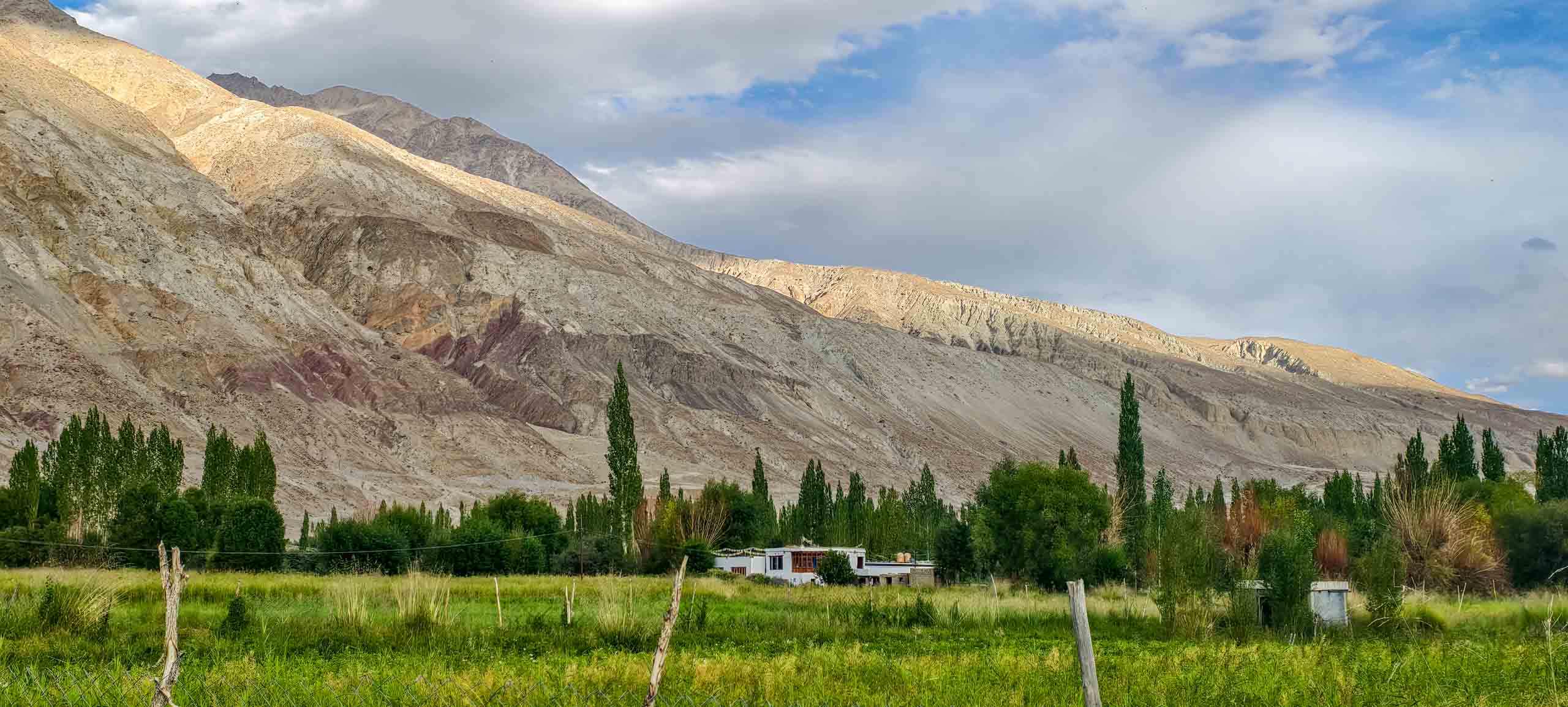
Sumur follows the rhythm of the seasons. During the short summer, families work in the fields from morning until evening, storing grain and drying apricots for the long winter ahead. Livestock such as yaks, dzos, sheep, and goats also play an important role in the local economy, providing milk, wool, and transport.
Unlike many tourist destinations in Ladakh, Sumur has retained much of its original character. There are no bustling marketplaces or large crowds; instead, visitors find quiet walking trails, welcoming homestays, and opportunities to experience Ladakhi hospitality firsthand. We left with an appreciation for the village’s slower pace of life.
Its peaceful surroundings, living traditions, and strong agricultural heritage make it one of the valley’s most rewarding places to explore at a leisurely pace.
The Sumur Sand Dunes
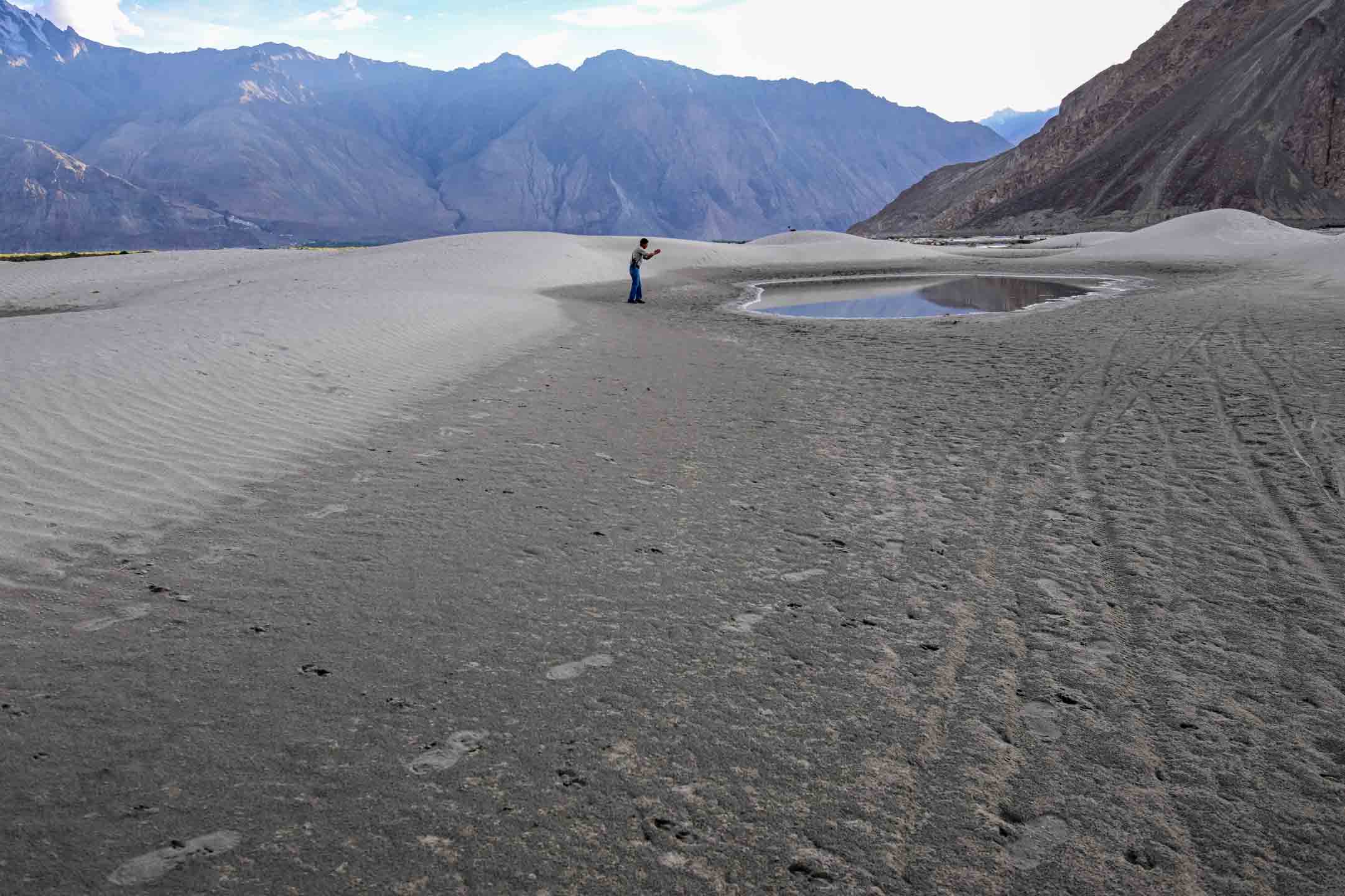
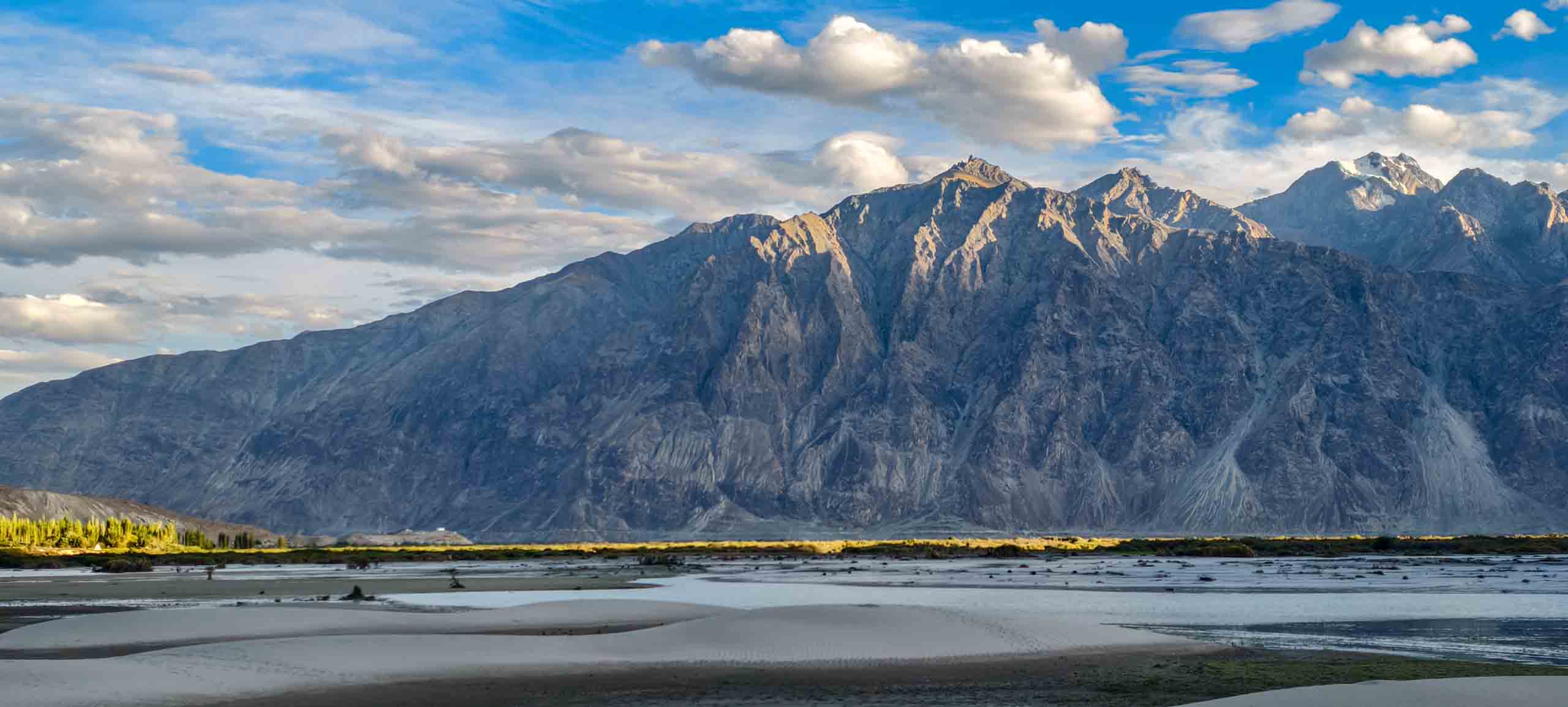
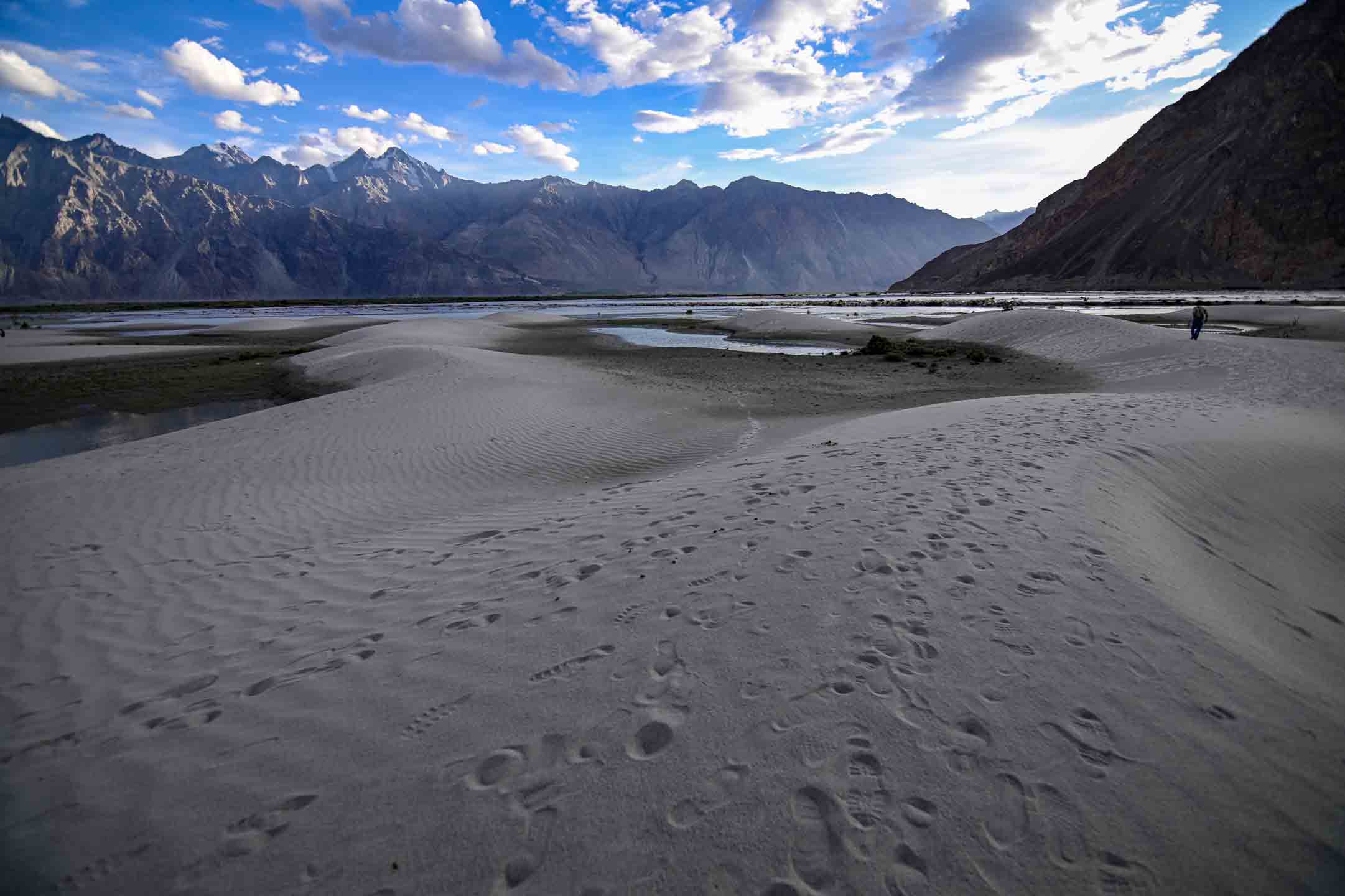
One of Nubra Valley’s most surprising landscapes lies near Sumur—its high-altitude sand dunes.
Formed over thousands of years by deposits left behind as ancient glaciers retreated and rivers shifted their courses, these dunes create an unusual contrast against the snow- covered mountains surrounding them.
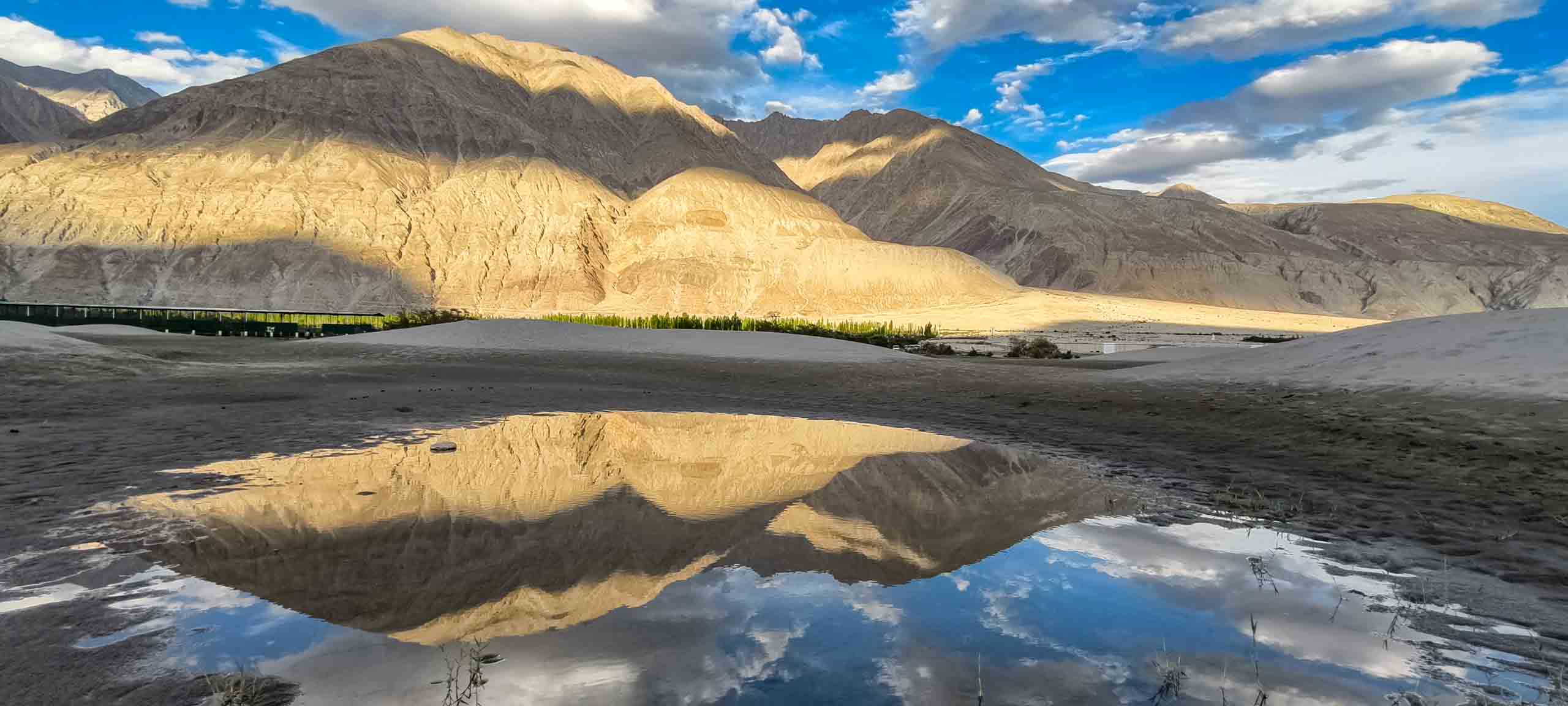
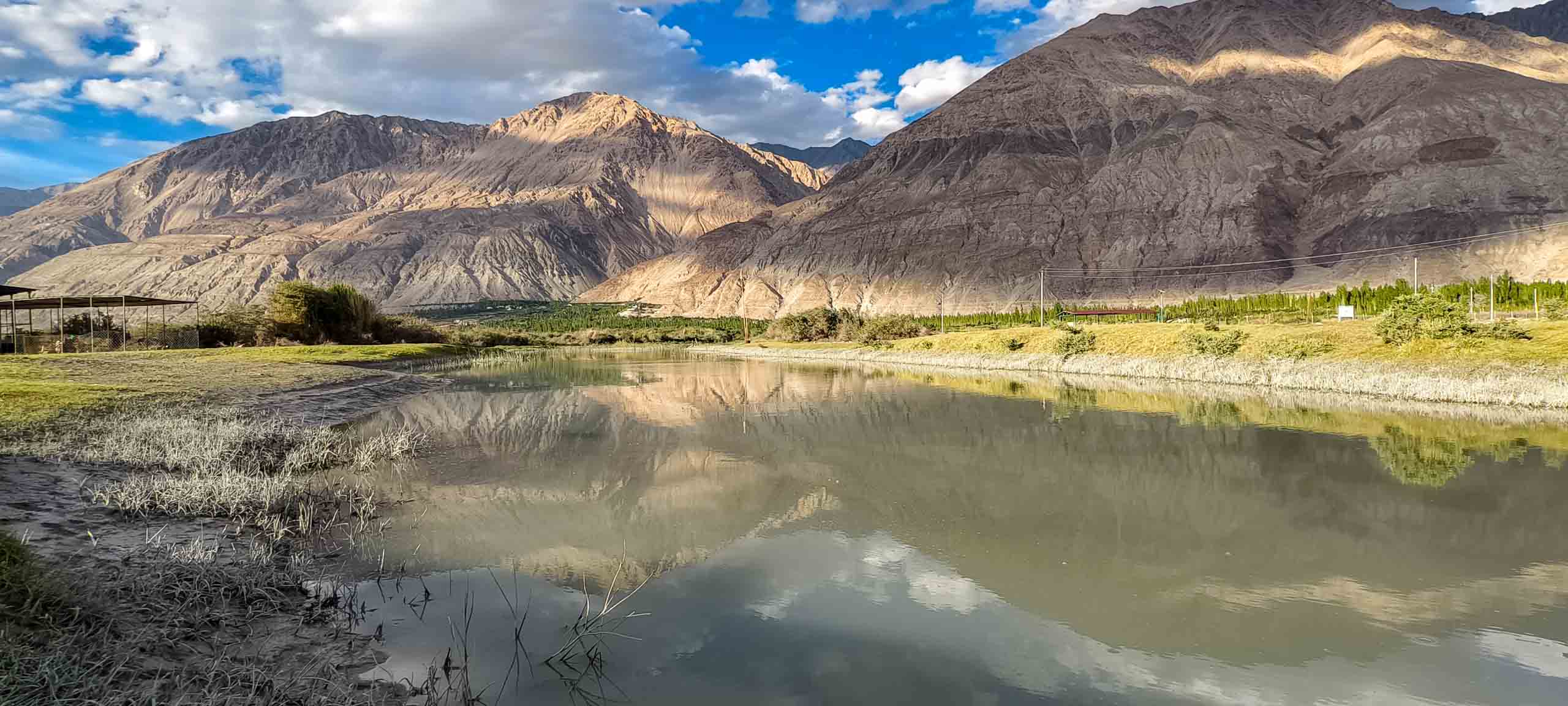
Although less famous than the dunes near Hunder, the Sumur dunes offer a quieter and more untouched experience. As we explored the area, the silence was striking, interrupted only by the occasional breeze sweeping across the sand. The soft dunes, scattered shrubs, and distant mountain ranges created a landscape that felt almost surreal.
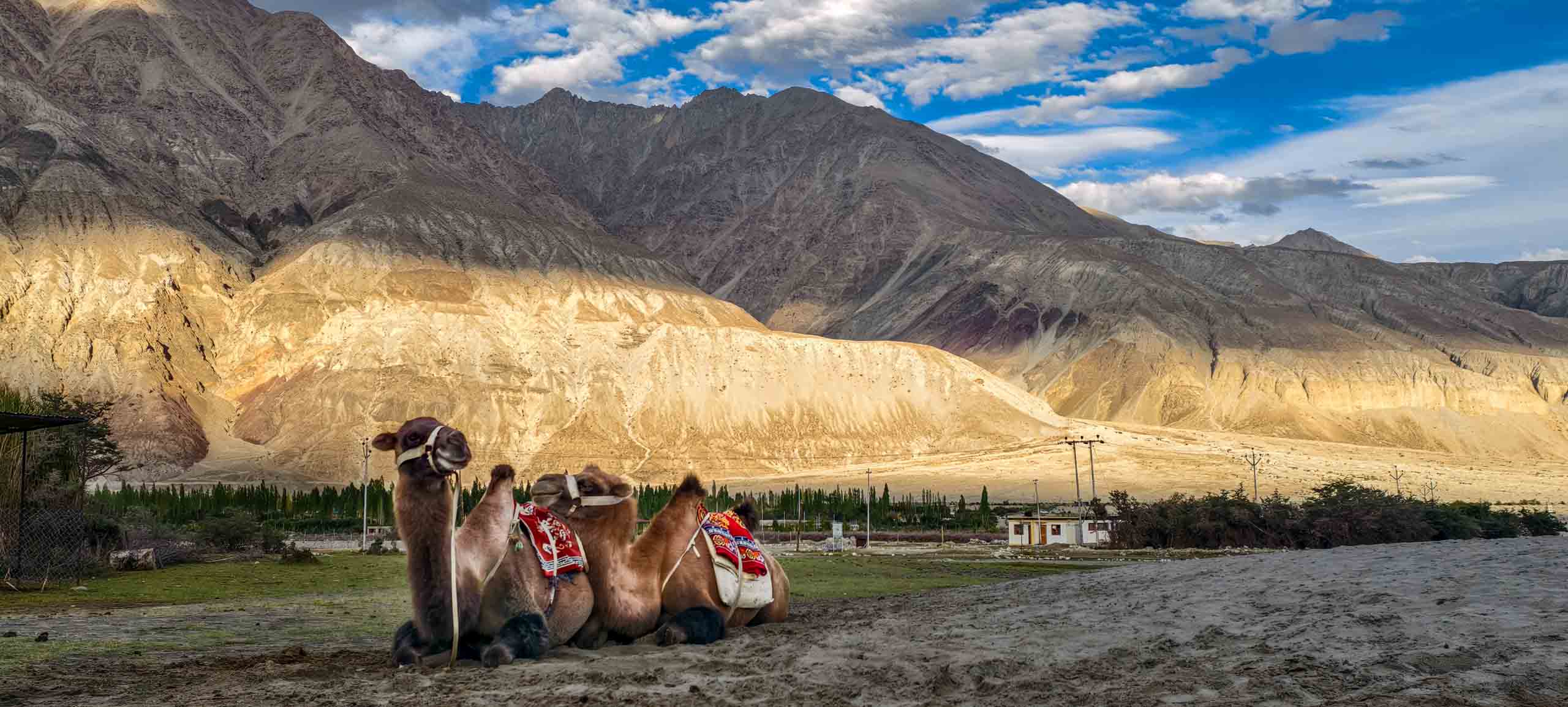
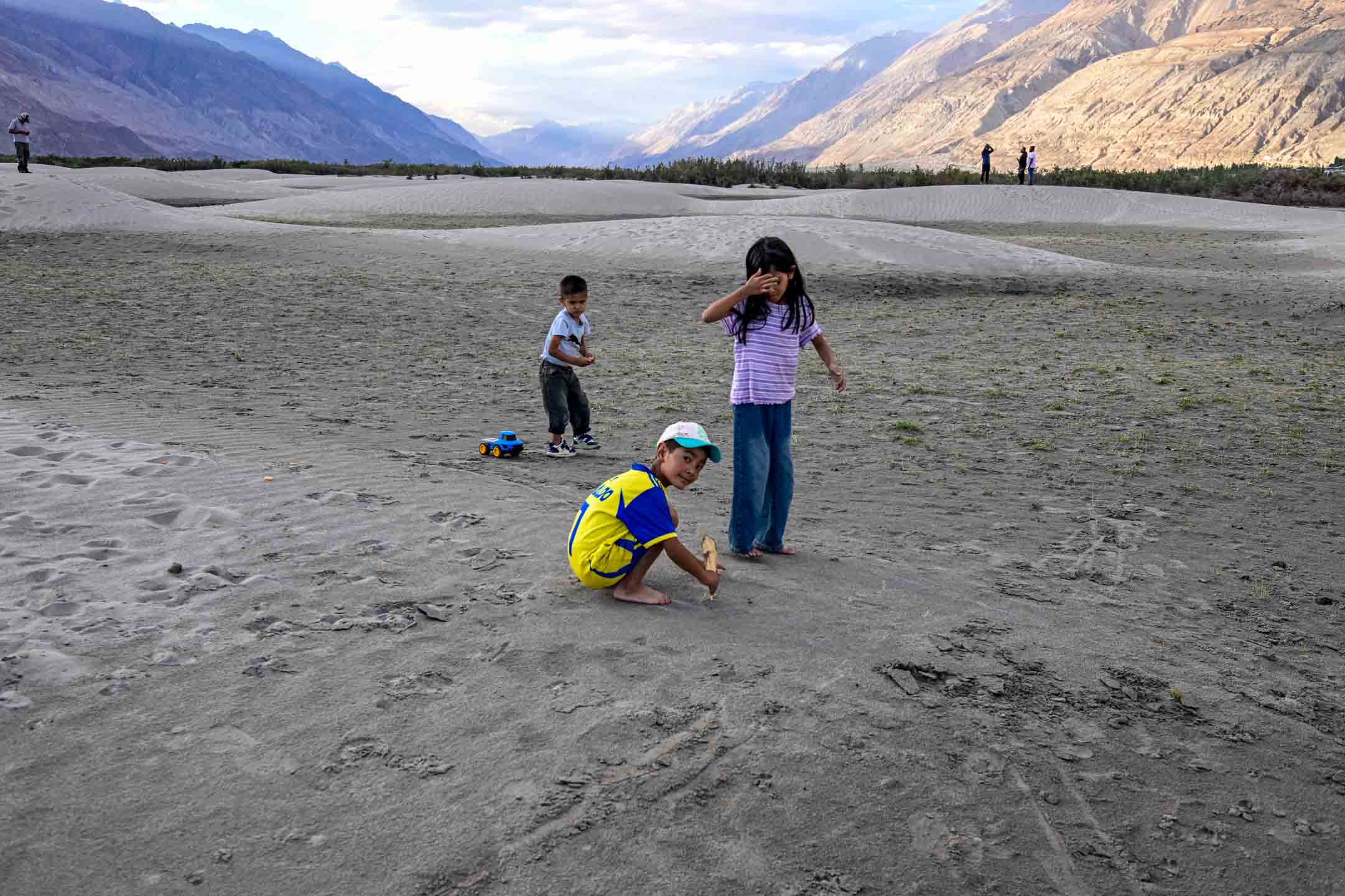
Here, we spotted a pair of double-humped Bactrian camels resting. Not far away, local children ran barefoot across the dunes, sliding down the sandy slopes and filling the quiet valley with laughter. Their carefree play brought a sense of life and warmth to the otherwise tranquil landscape.
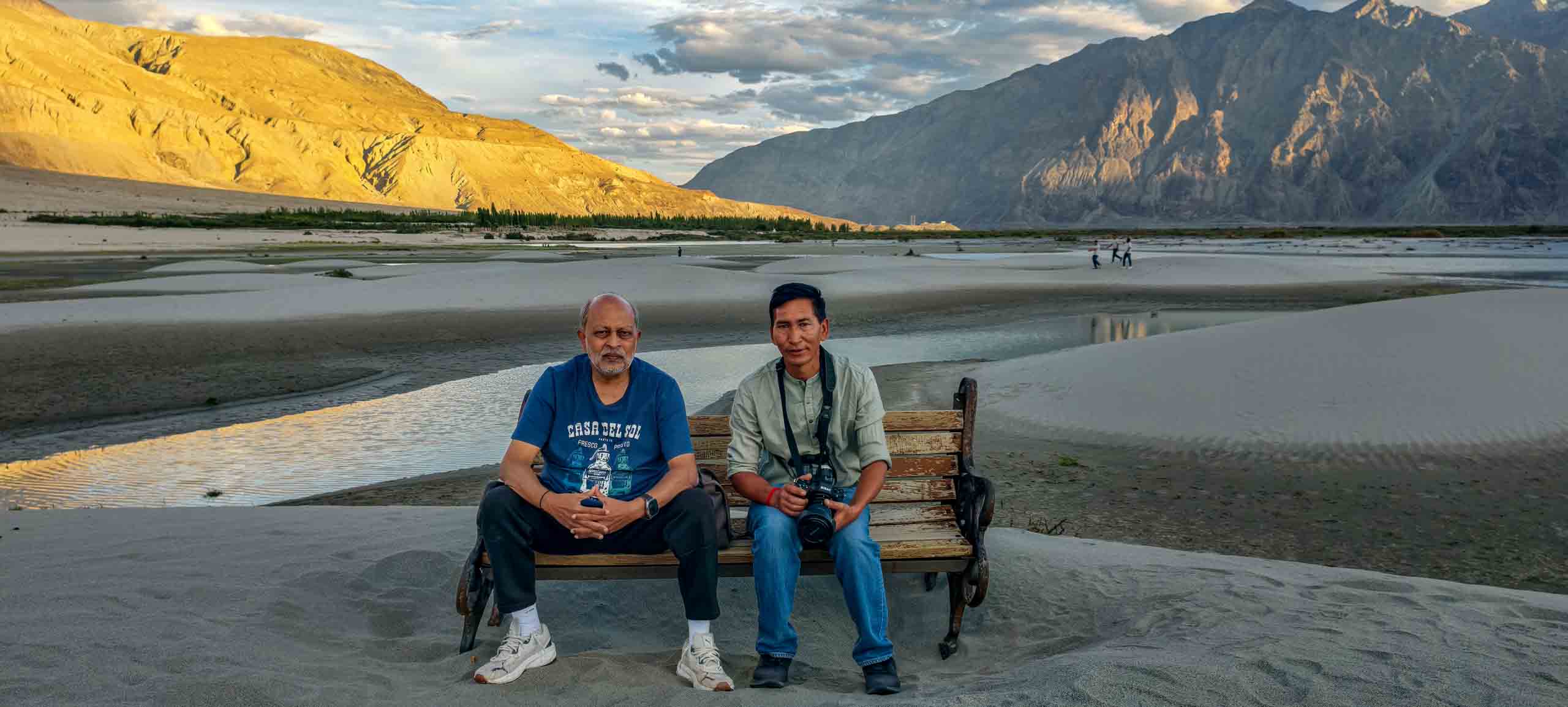
As the afternoon progressed, we watched the light transform the entire valley. The golden sand slowly shifted to shades of beige and silver, while the surrounding mountains changed from dusty brown to deep bronze and purple with the lowering sun.
Every passing cloud altered the colours once again, creating a landscape that seemed to reinvent itself every few minutes. It was one of those rare places where simply sitting still and watching the changing light became an experience in itself.
The dunes also support unique desert vegetation adapted to Ladakh’s cold climate, demonstrating how diverse the region’s ecosystems can be despite the harsh environment.
Their peaceful setting, combined with the ever-changing colours of the surrounding mountains, makes the Sumur dunes one of Nubra Valley’s most understated yet memorable landscapes.