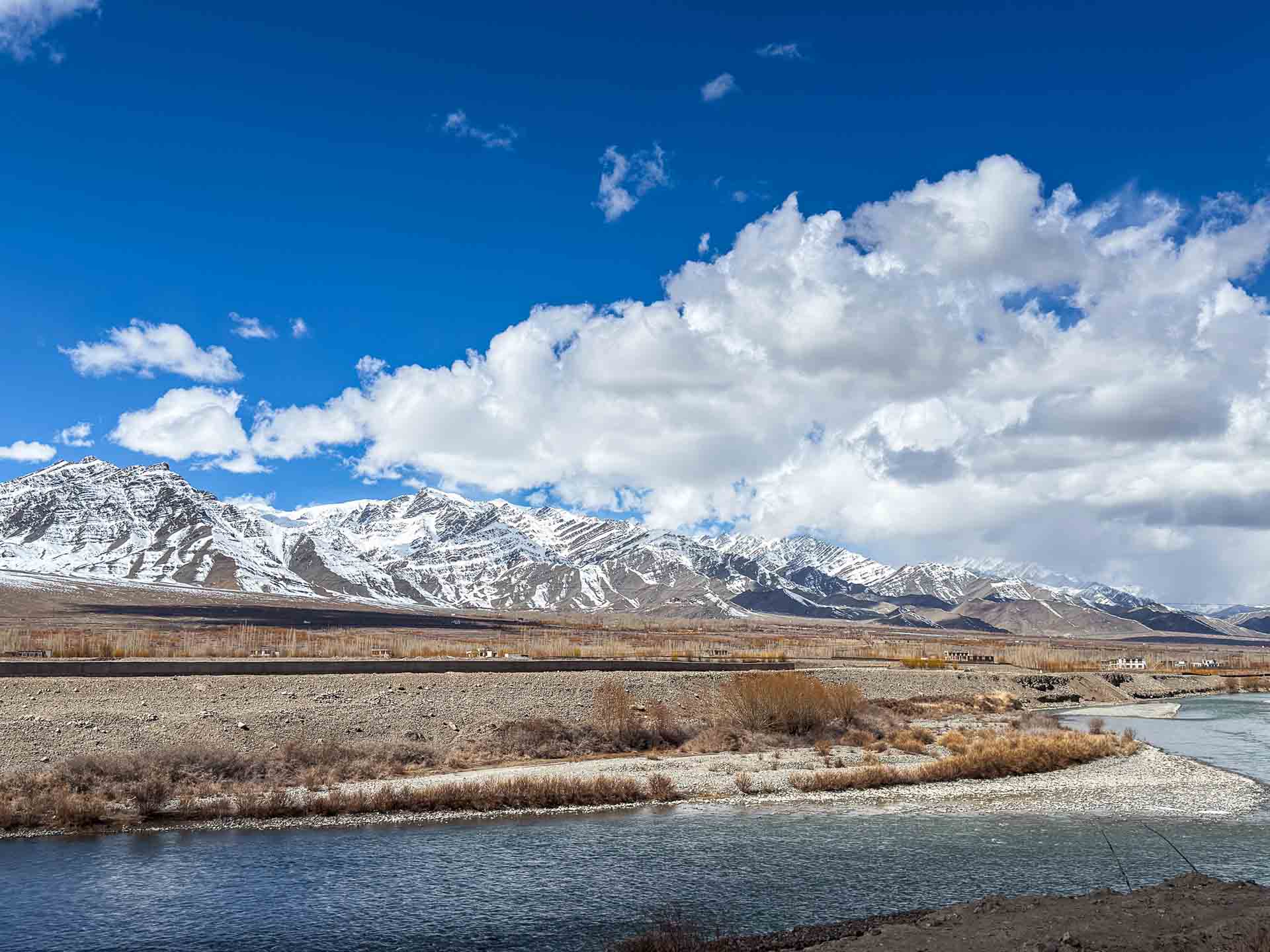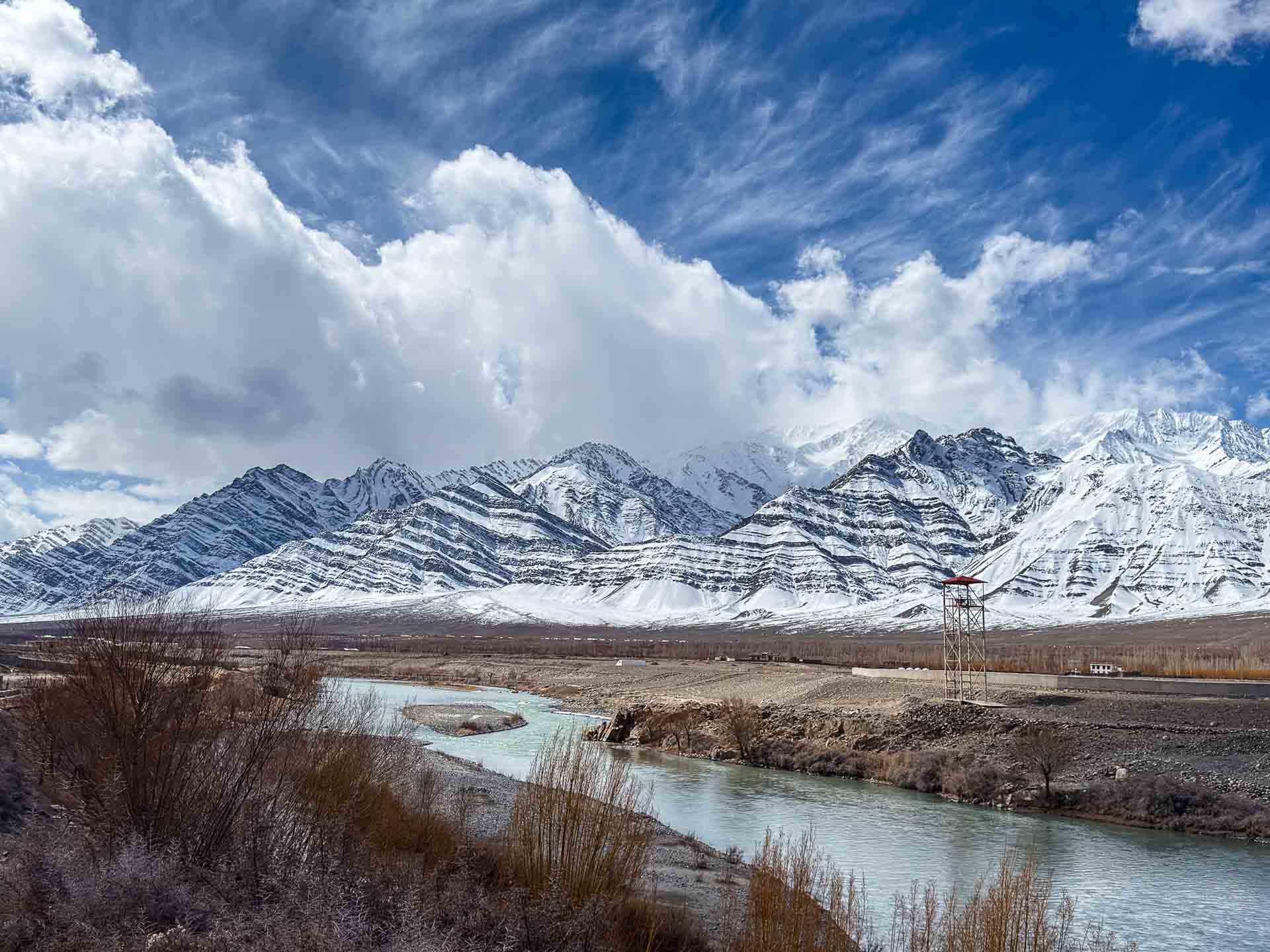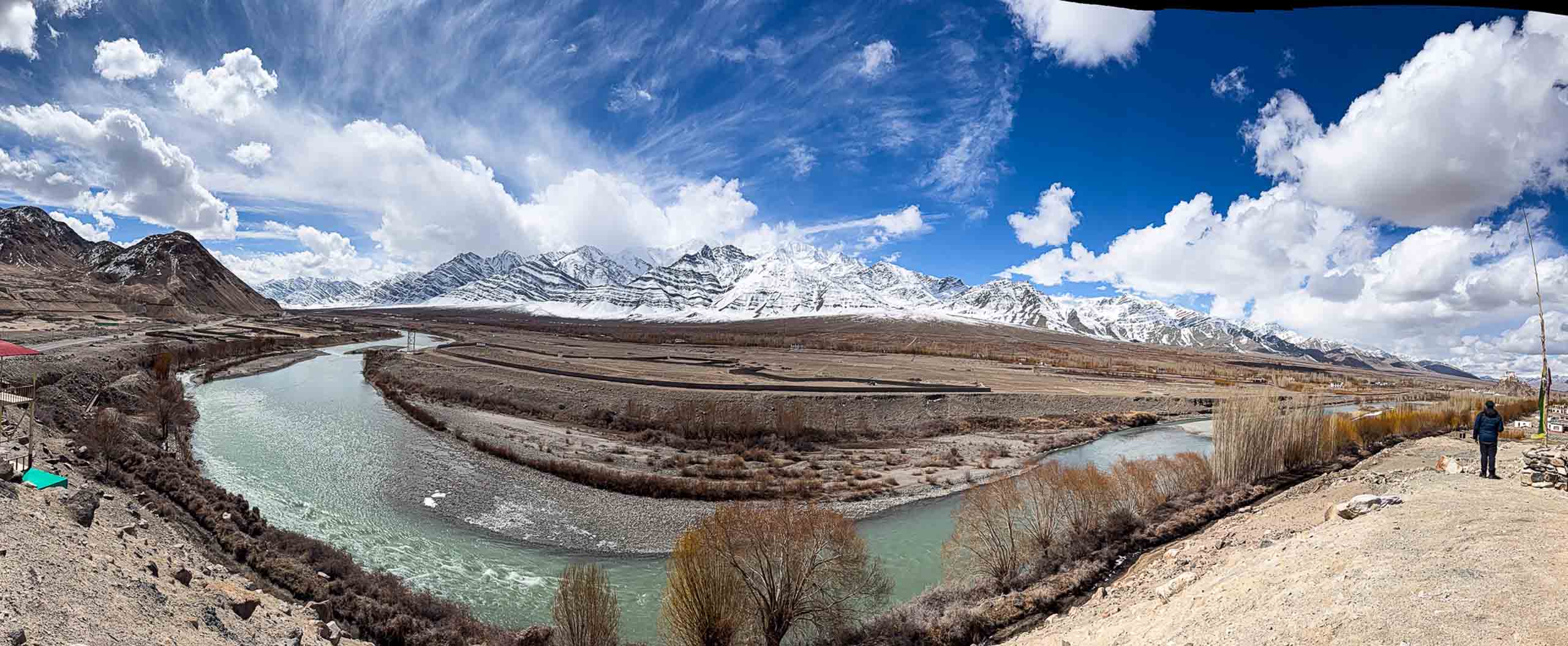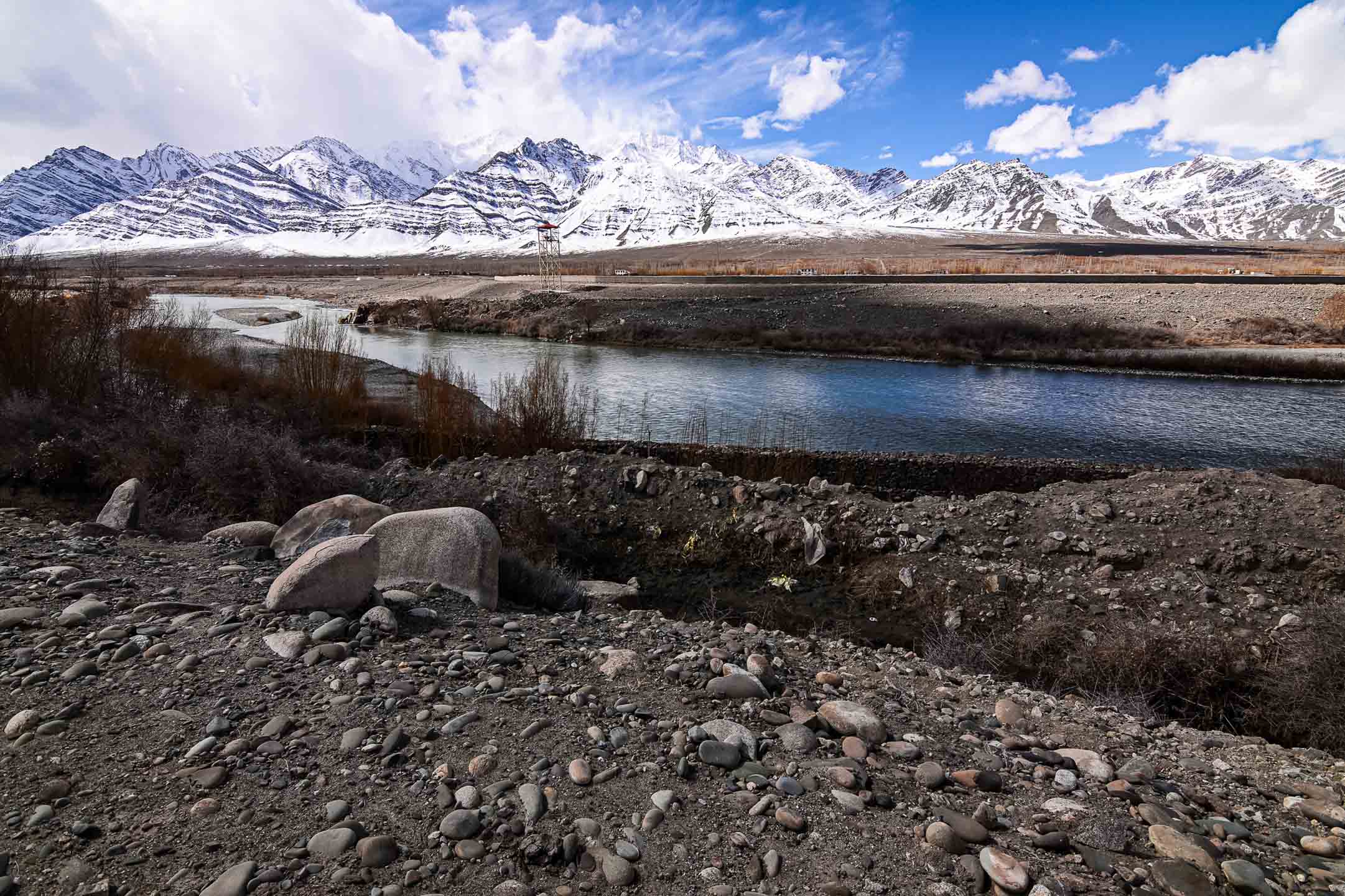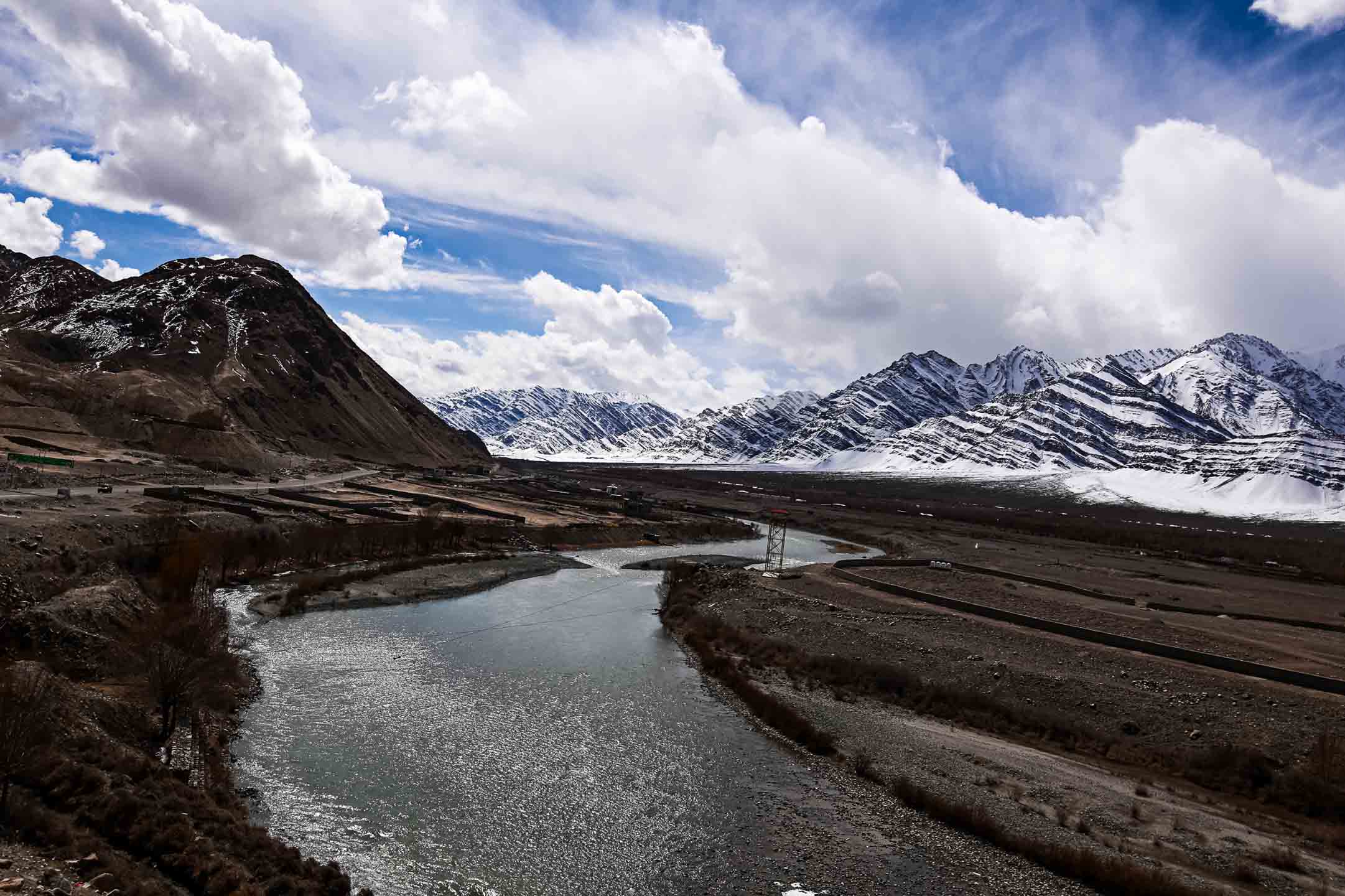
Flowing quietly along the southern edge of Leh, the Indus River is far more than a geographical landmark. One of Asia’s great rivers, it originates near Mount Kailash in Tibet before entering Ladakh and continuing west through Pakistan to the Arabian Sea.
The river has sustained settlements in Ladakh for centuries, providing water for agriculture in an otherwise arid landscape. Green patches of barley fields, willow groves, and poplar trees owe their existence to the irrigation channels fed by the Indus.
Historically, the river valley also supported trade routes that connected Leh with Tibet, Baltistan, Kashmir, and Central Asia. Caravans carrying pashmina wool, silk, tea, spices, precious stones, and salt often travelled alongside its banks.
Even today, the Indus remains central to Ladakh’s identity. Festivals, local traditions, and agricultural life continue to revolve around the river that has nurtured civilization here for generations.