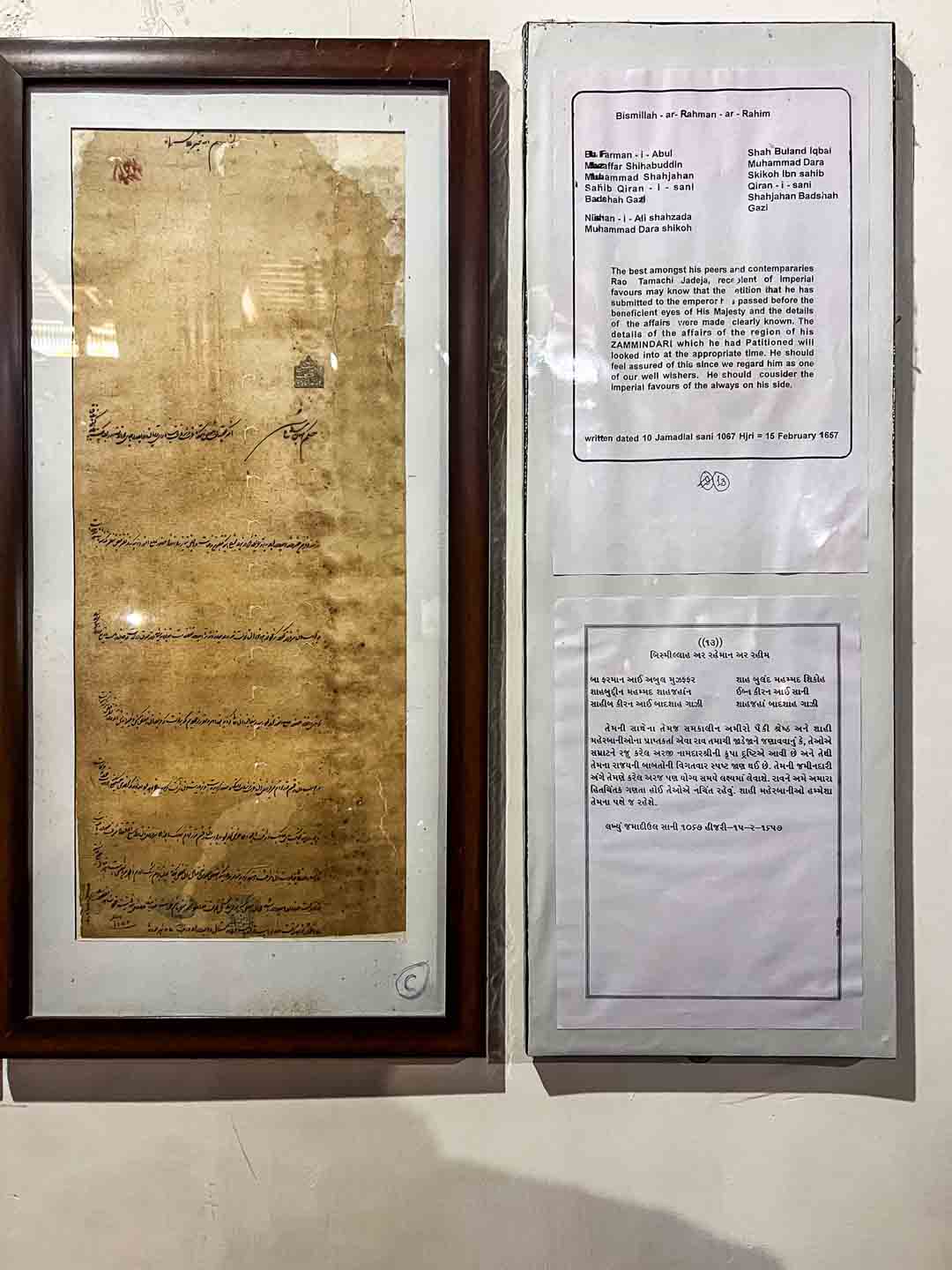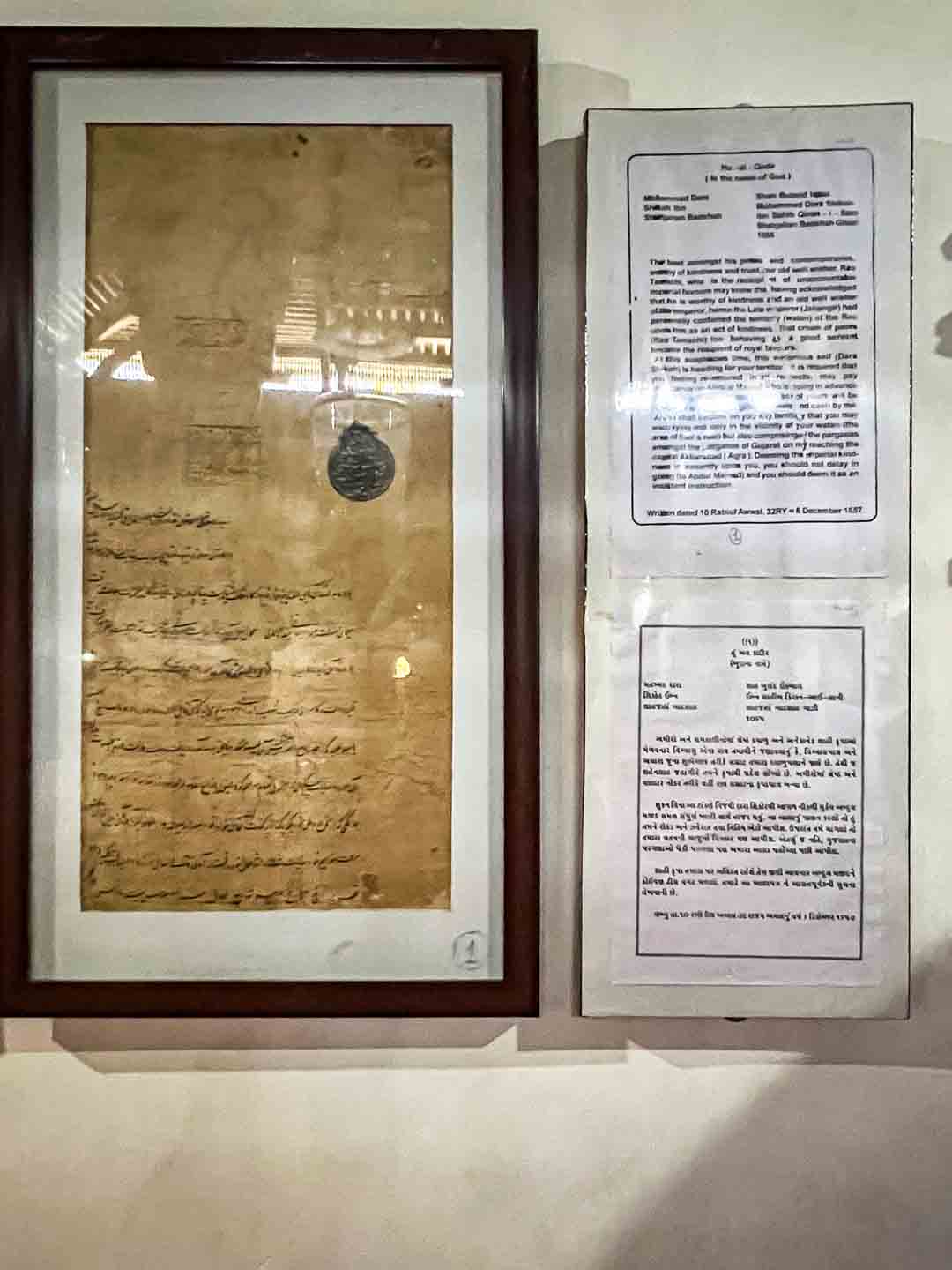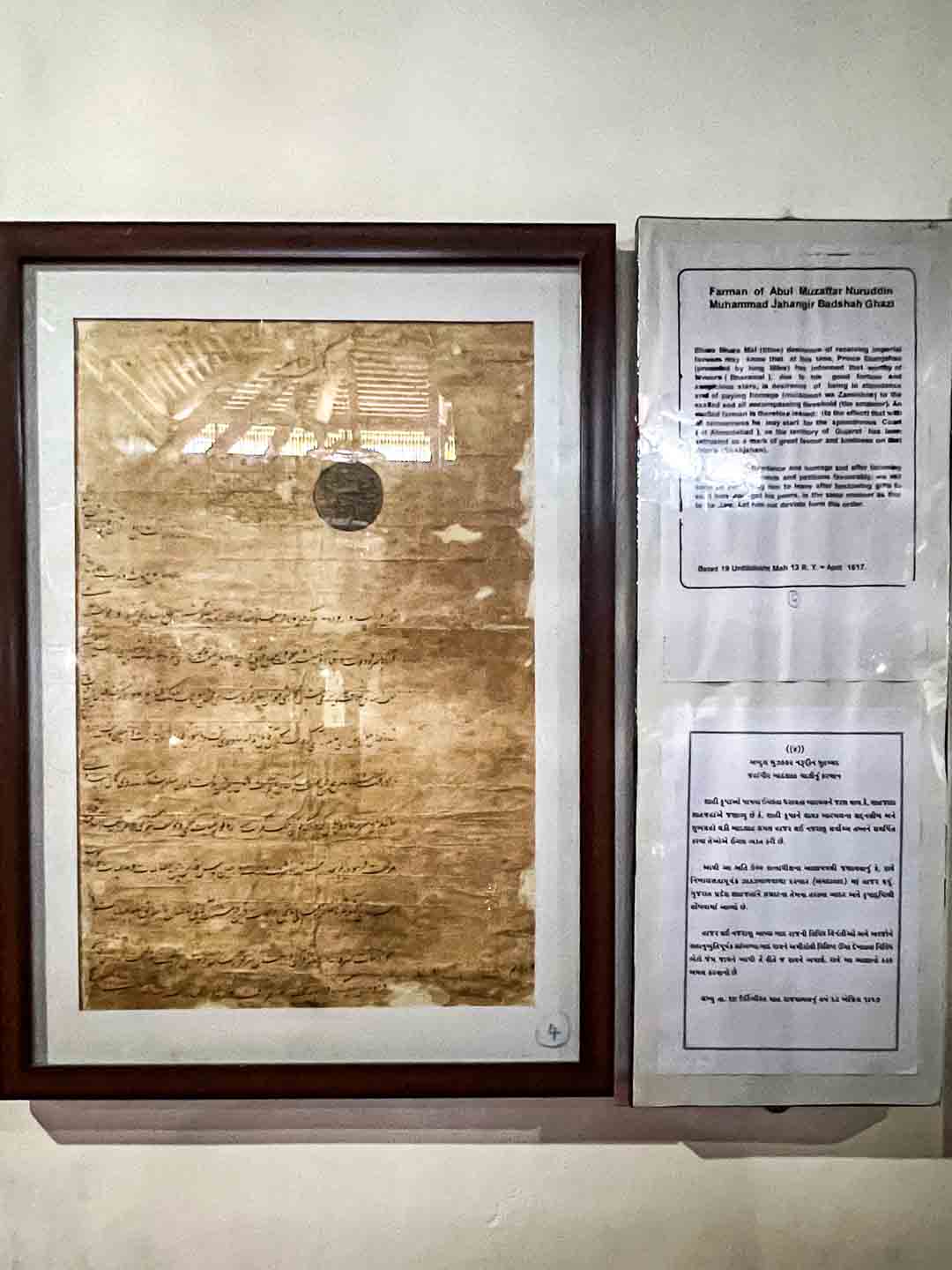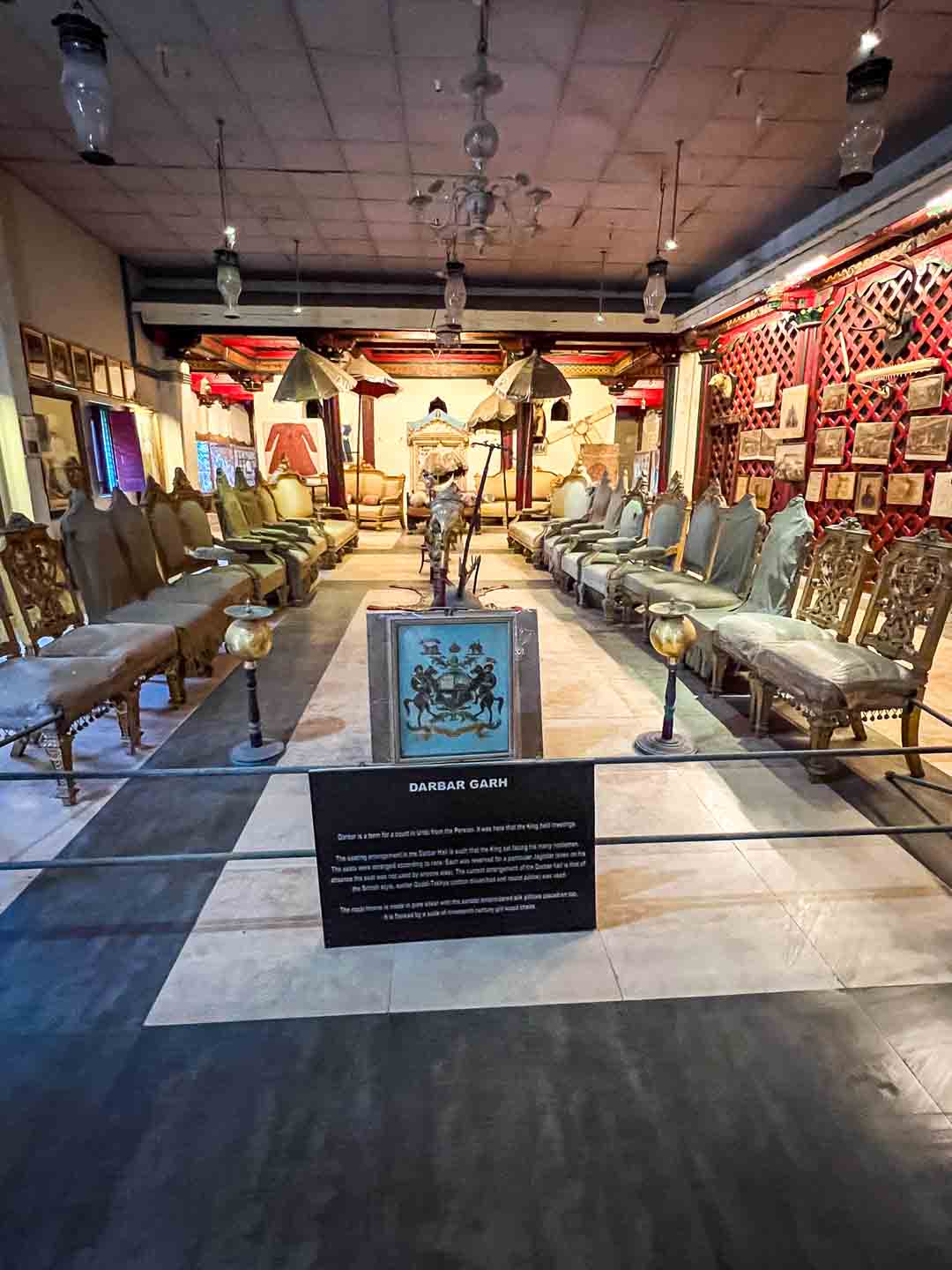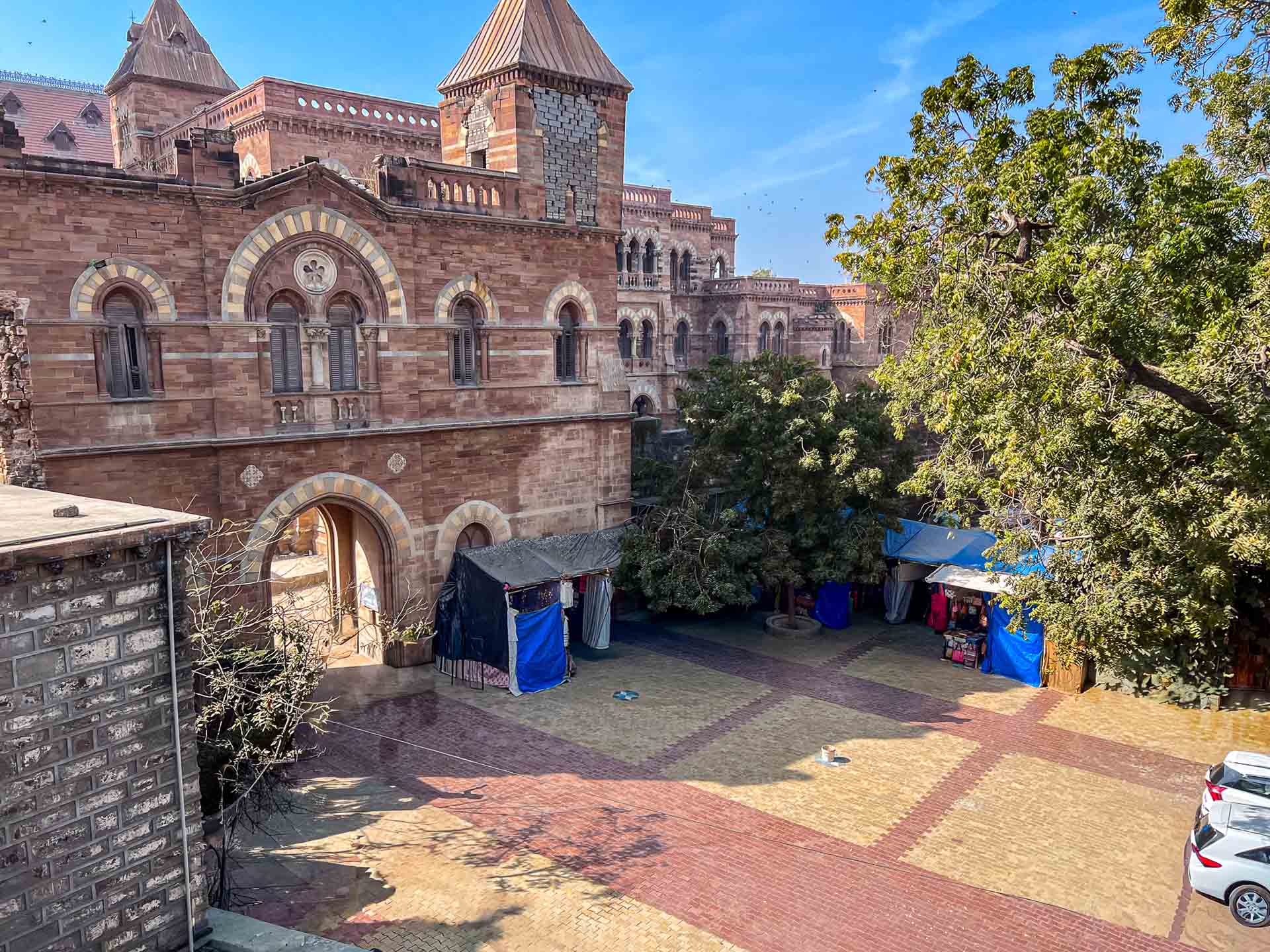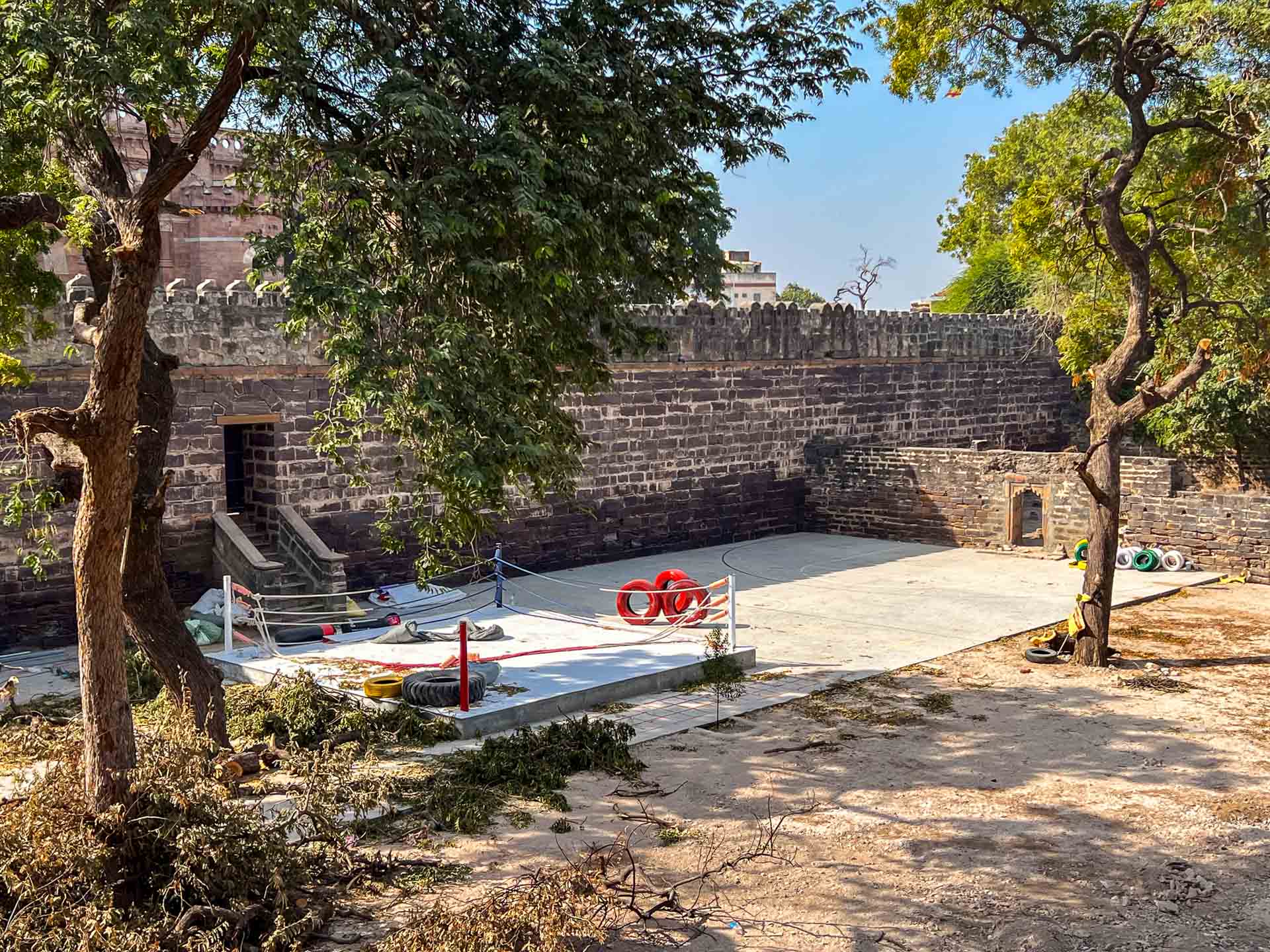
At the centre of historic Bhuj lies the former royal palace complex known as Darbargadh Bhuj. This walled palace compound served as the residence of the Jadeja rulers for centuries. Within the palace walls stand two of the most remarkable buildings in Bhuj: Aina Mahal and Prag Mahal.
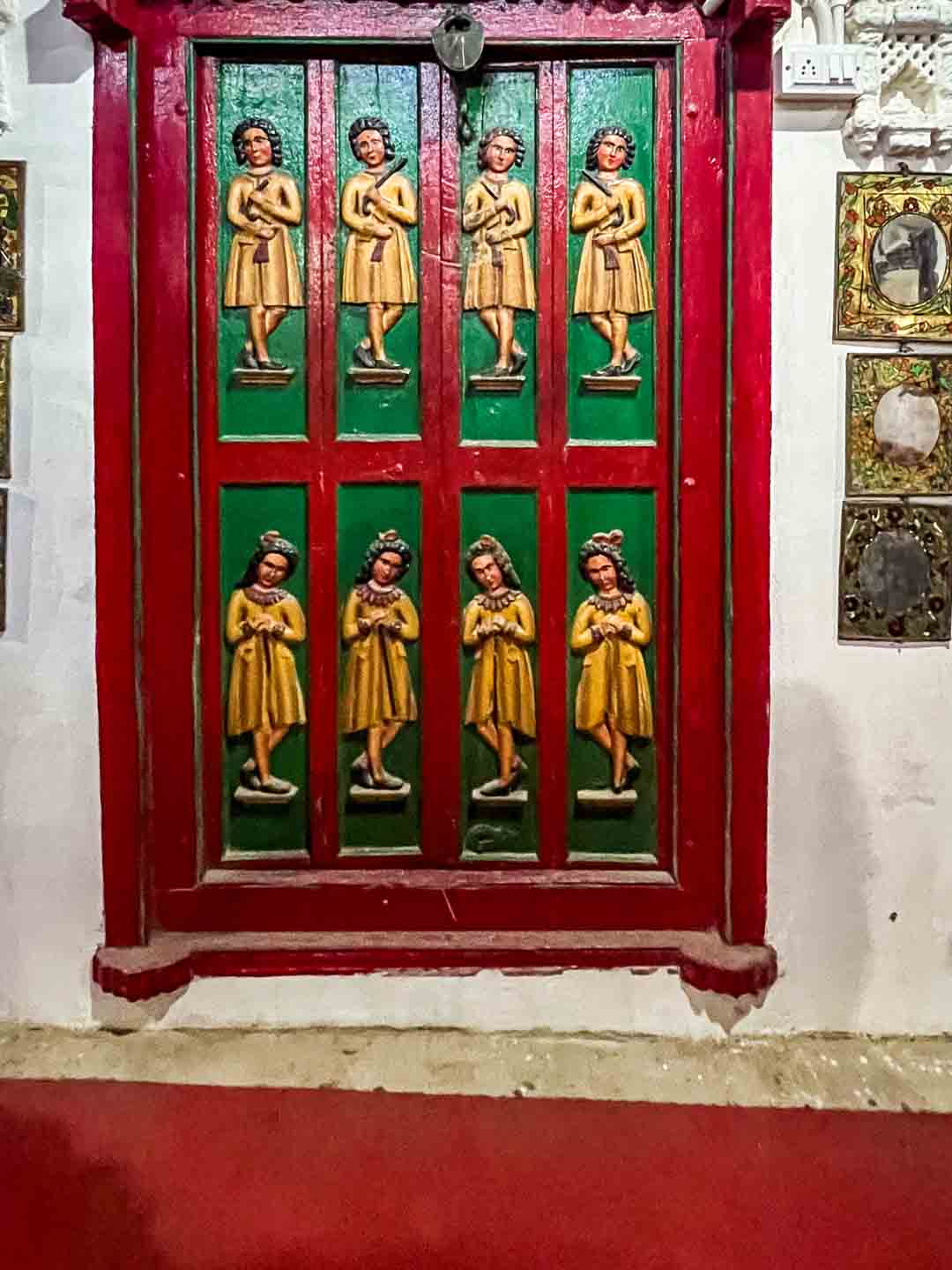
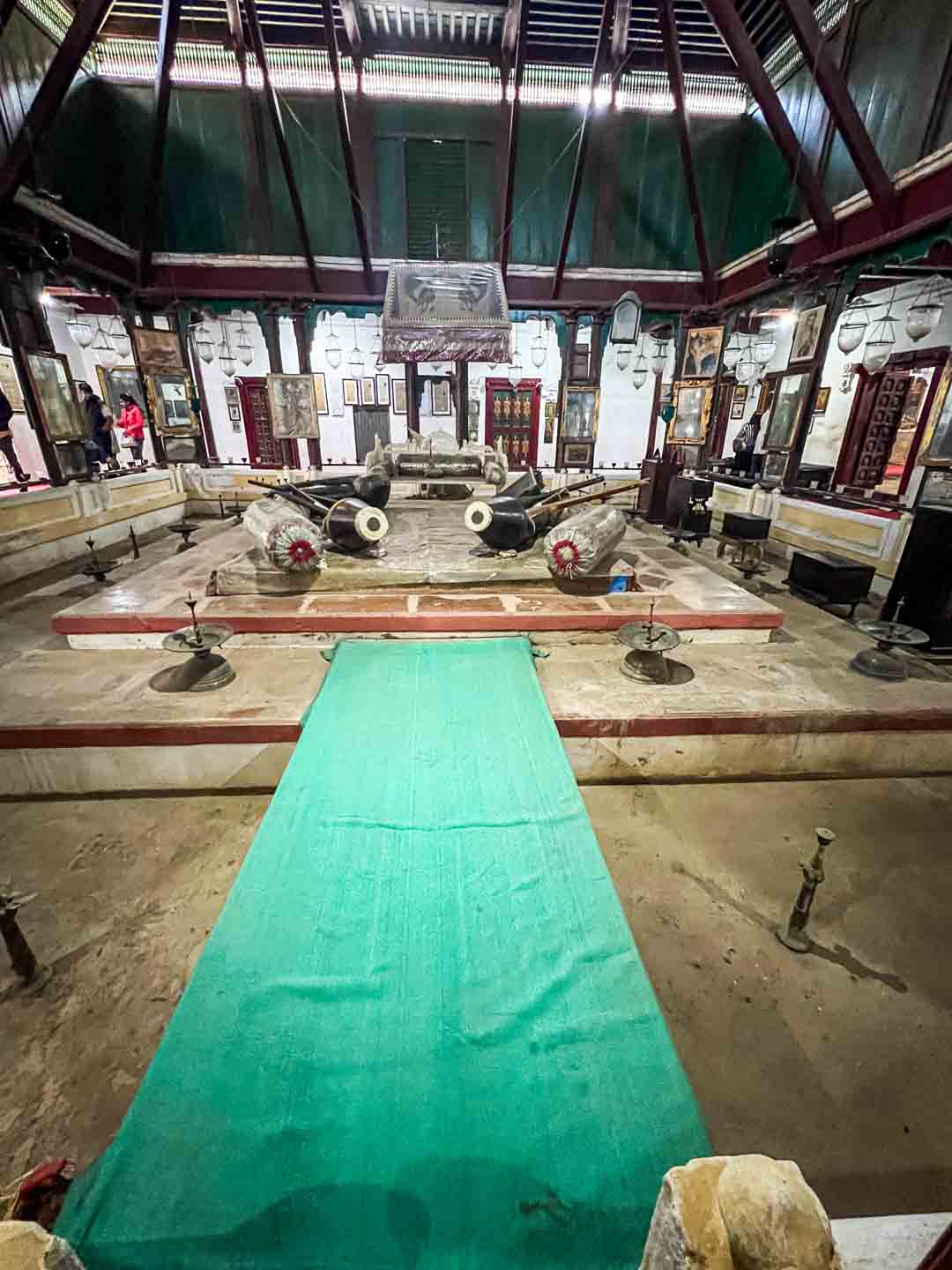
Built in the eighteenth century during the reign of Rao Lakhpatji, Aina Mahal — literally the “Palace of Mirrors” is famous for its richly decorated interiors. Mirrors, glass panels, chandeliers and intricate carvings create an elaborate visual environment reflecting both Indian craftsmanship and European influence.
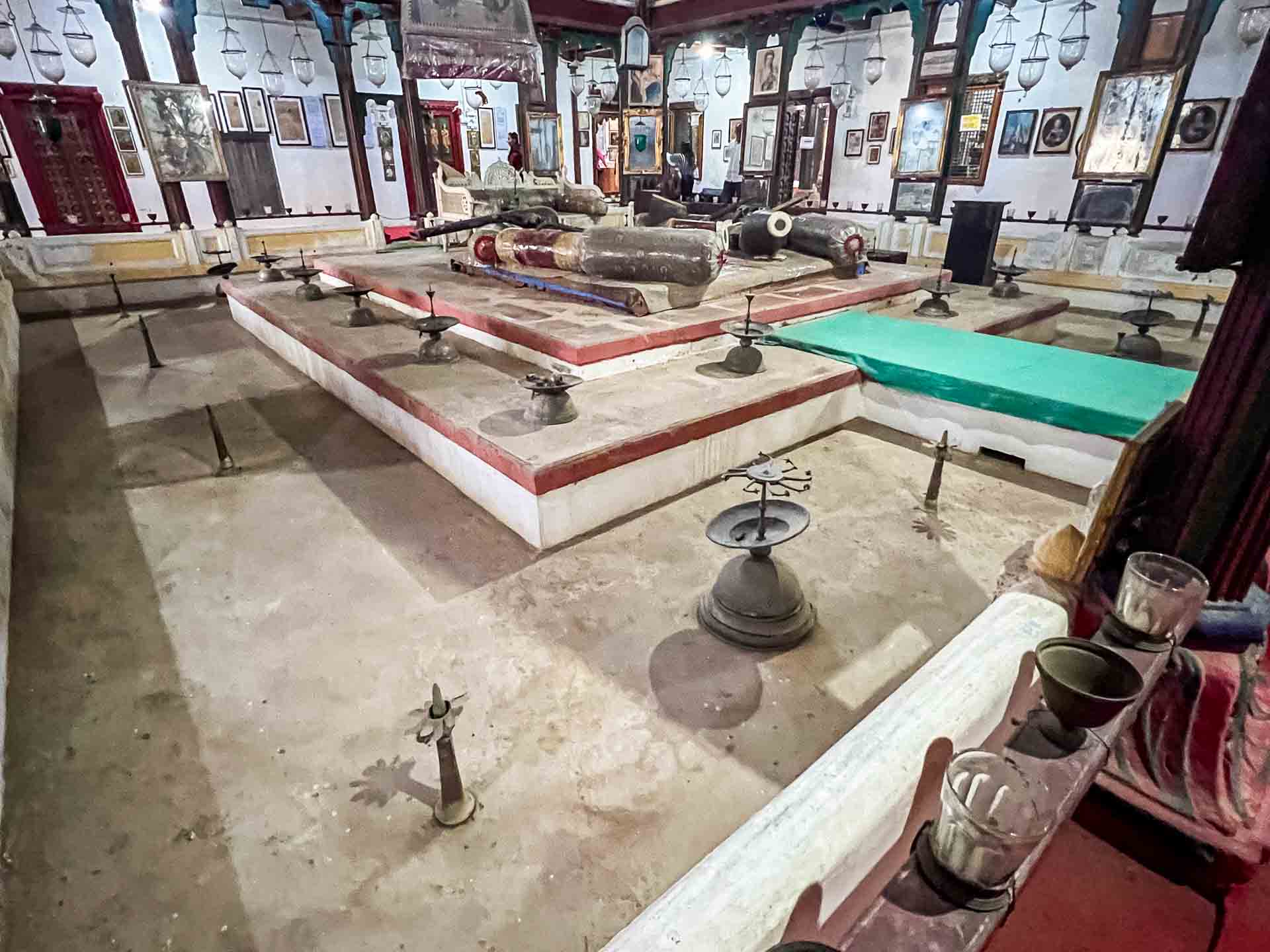
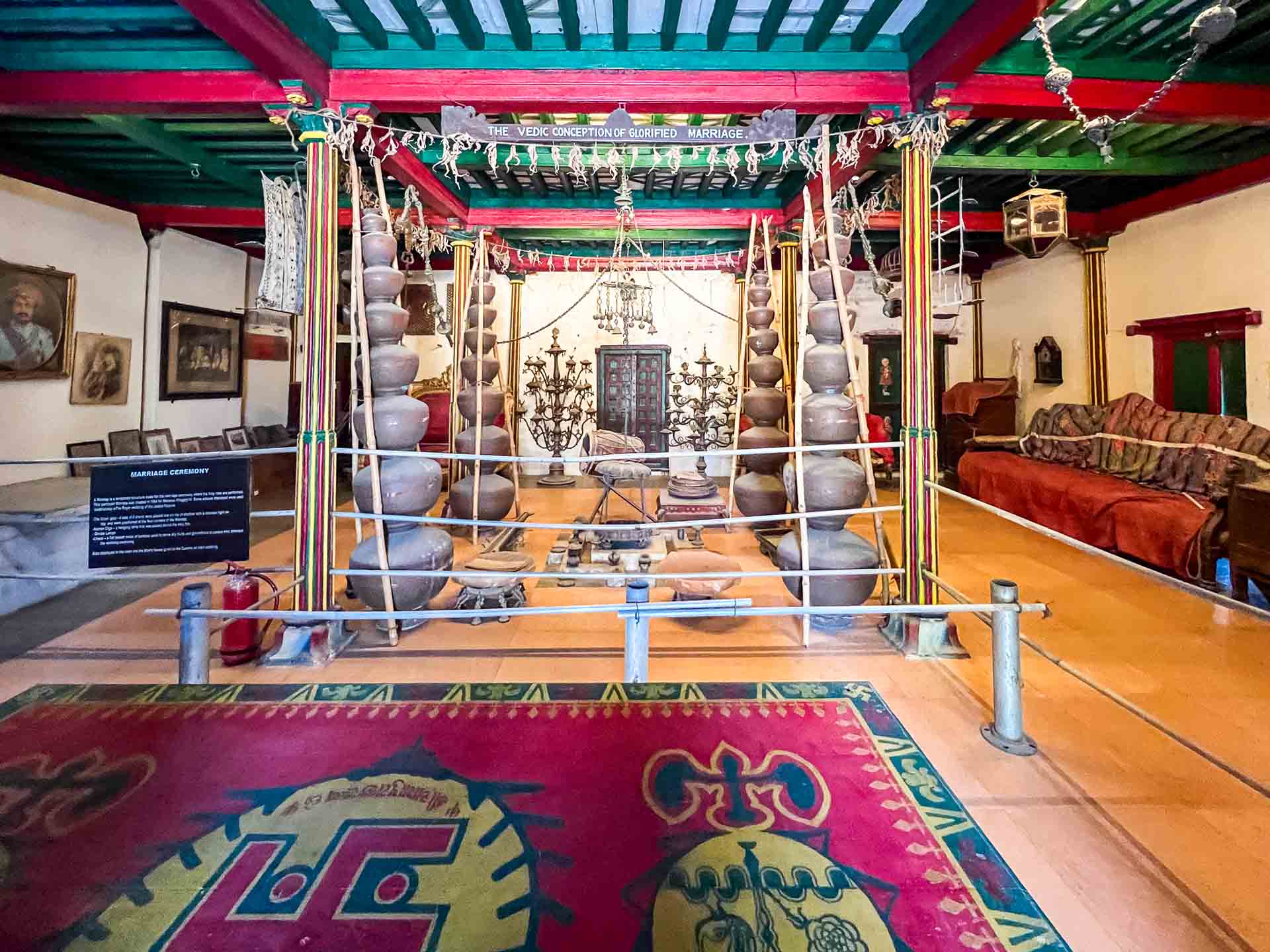
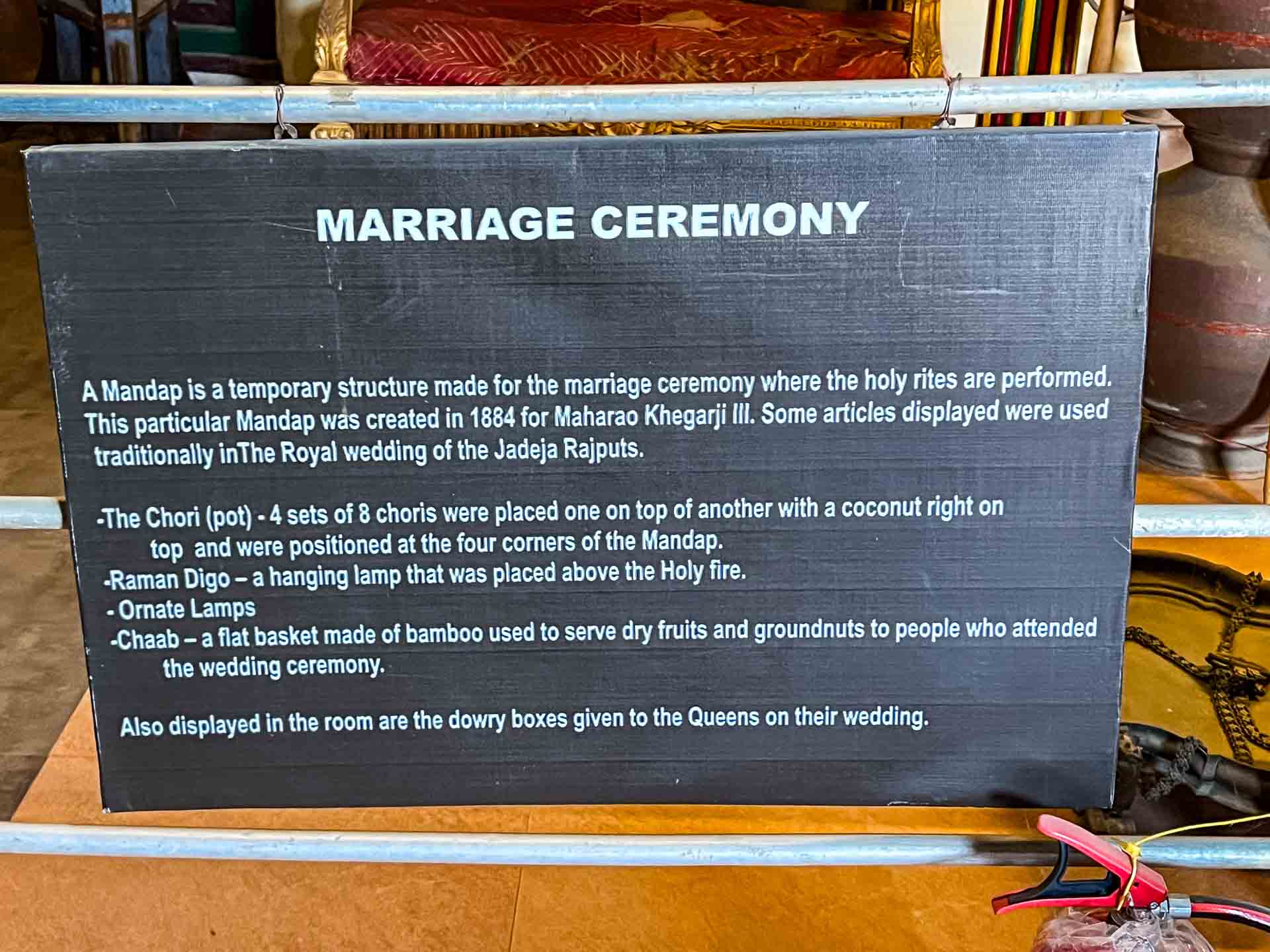
Today the palace functions as a museum displaying a remarkable collection of royal artefacts. One of the most fascinating exhibits recreates a royal marriage ceremony,
illustrating the elaborate traditions of princely weddings. Ceremonial garments, jewellery and decorative objects provide insight into the rituals and social customs of the Kutch court.
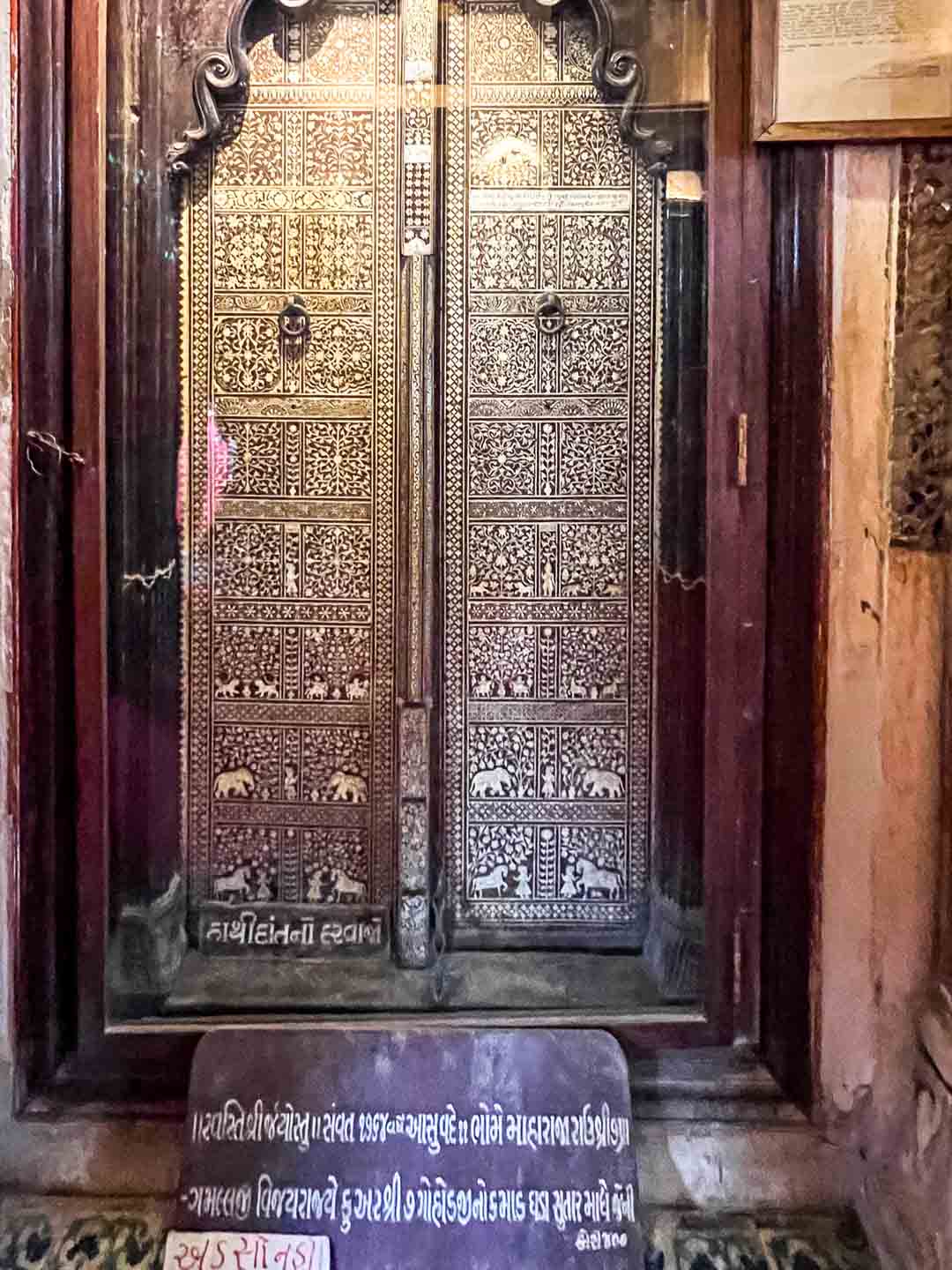
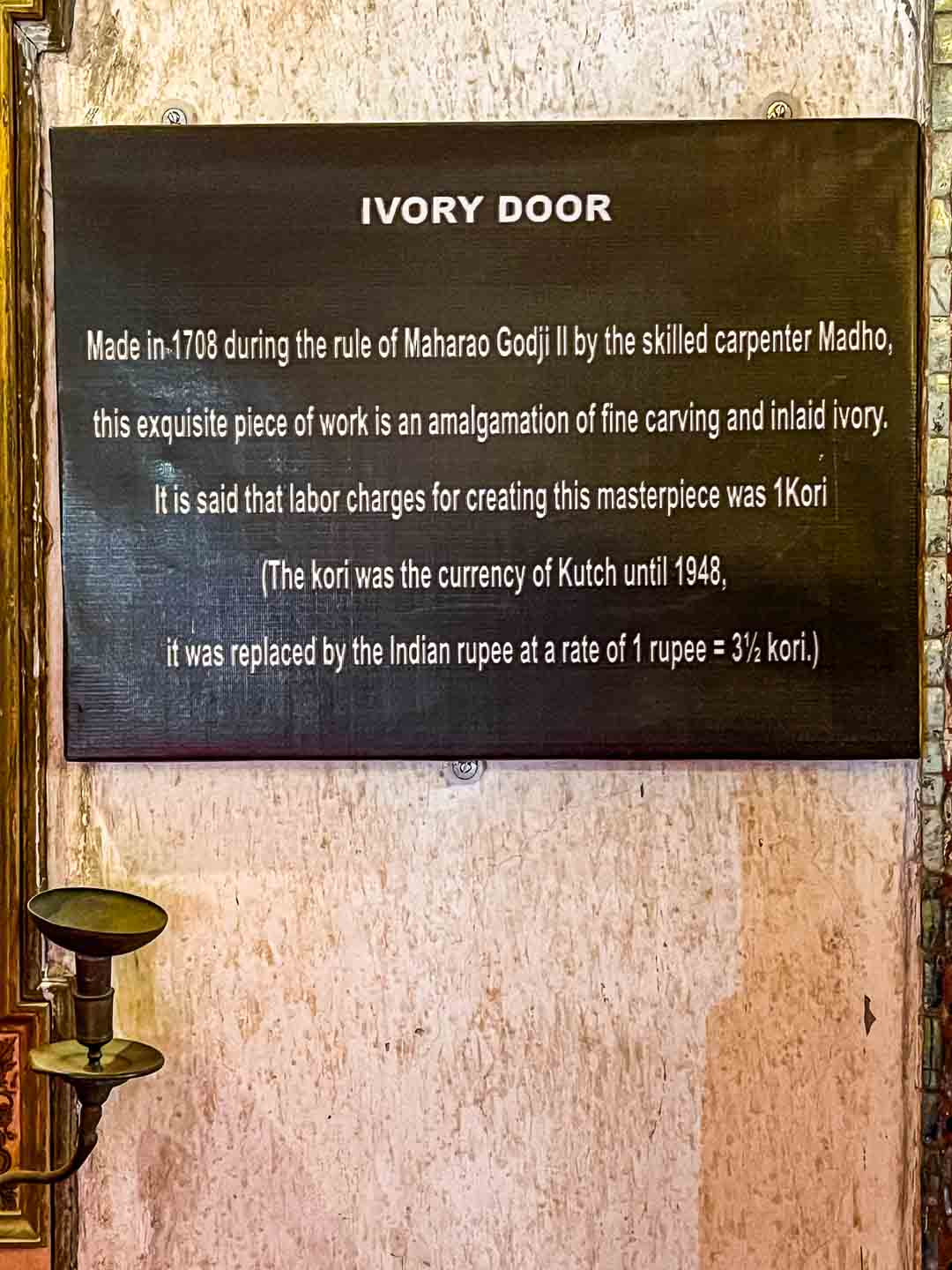
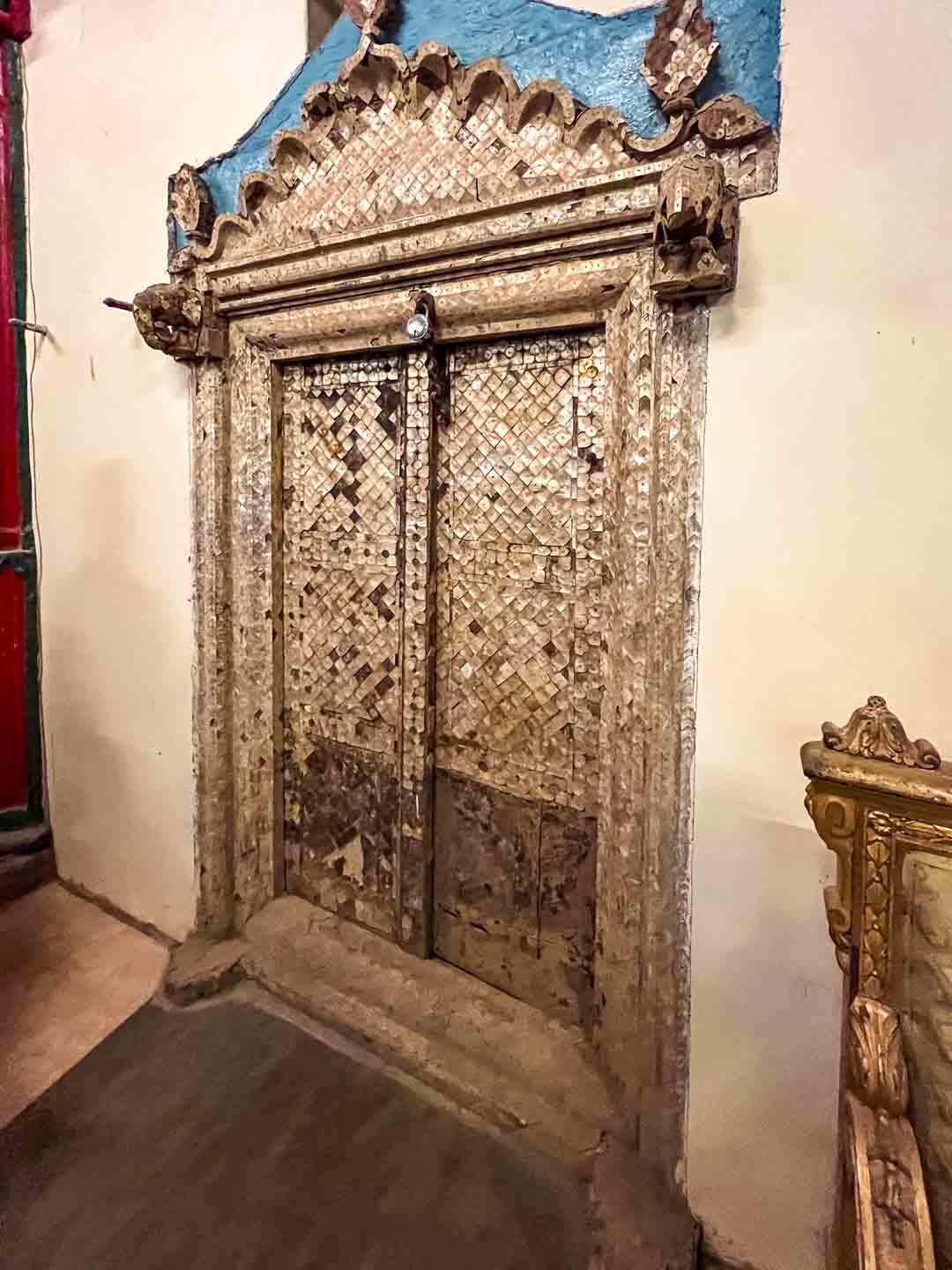
Another striking feature is the carved ivory door, a finely crafted entrance panel that once formed part of the royal residence. Its delicate carving demonstrates the exceptional skill of artisans who worked under the patronage of the Jadeja rulers.
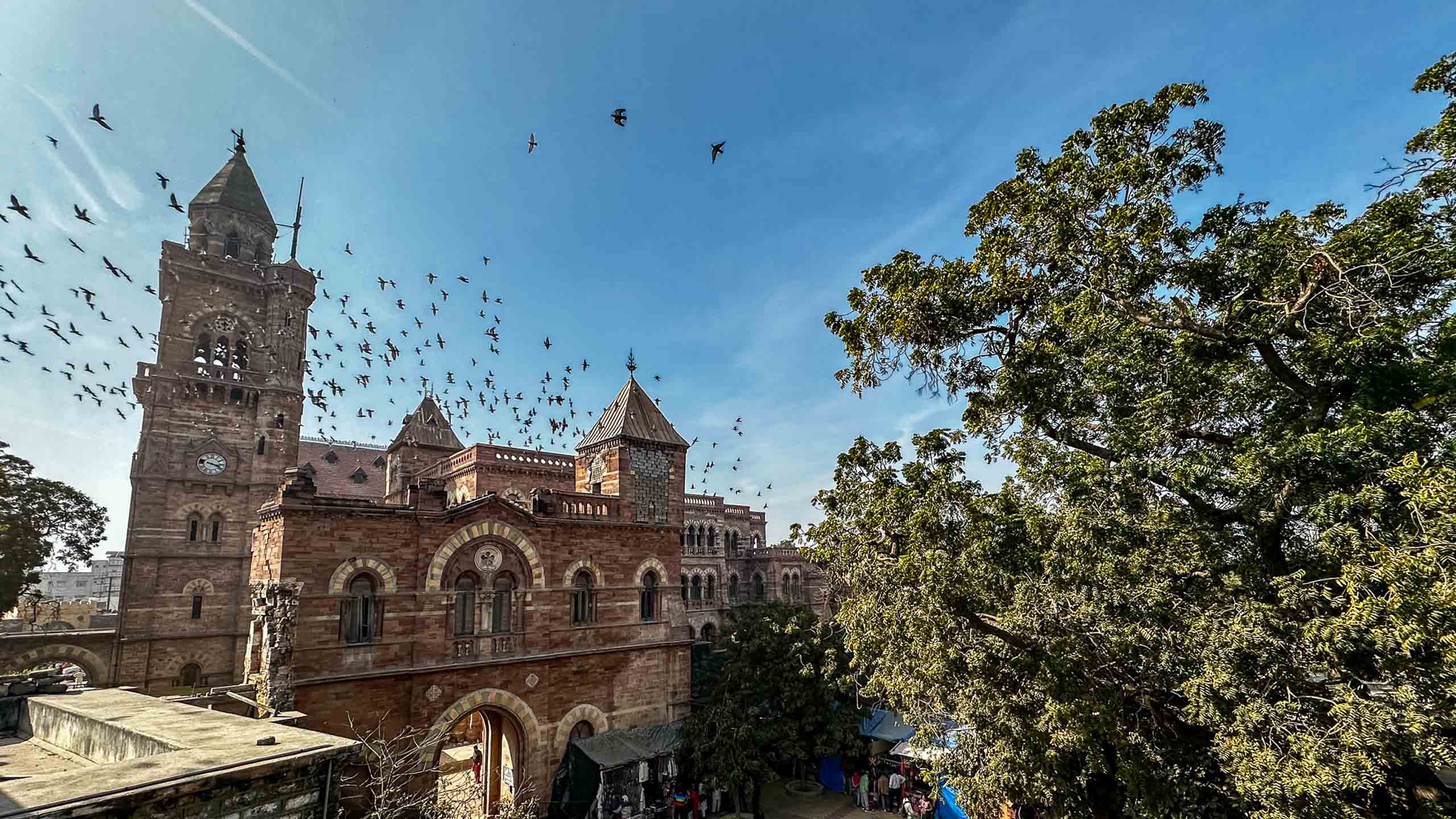
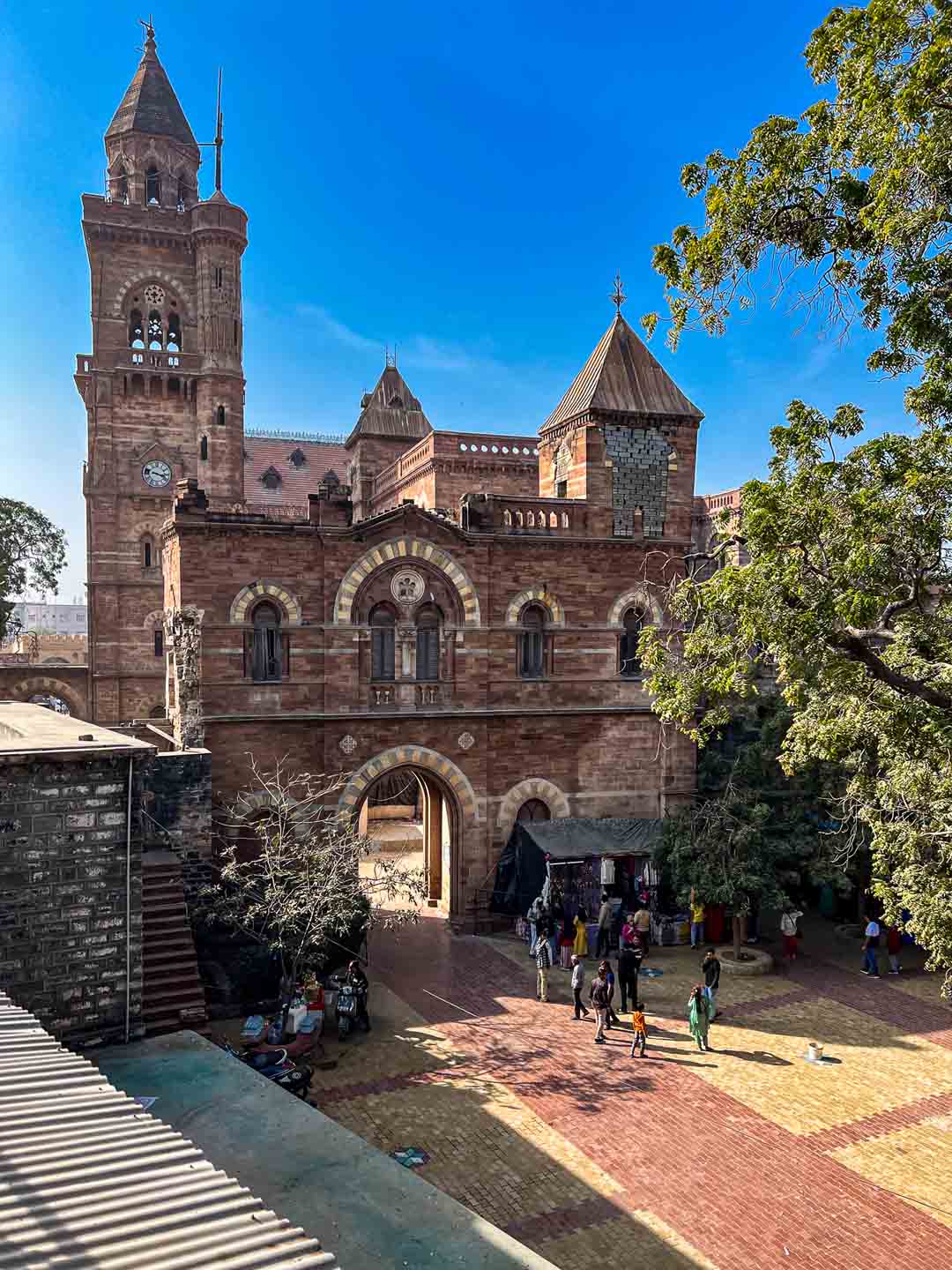
Adjacent to Aina Mahal stands the impressive Prag Mahal, constructed in the nineteenth century under Rao Pragmalji II. Designed in an Italian Gothic architectural style, the palace features tall windows, grand halls and an imposing clock tower. The structure reflects the influence of European architectural styles on Indian princely states during the colonial era.
Together these buildings within the Darbargadh complex illustrate the political power and cultural sophistication of the rulers of Kutch.