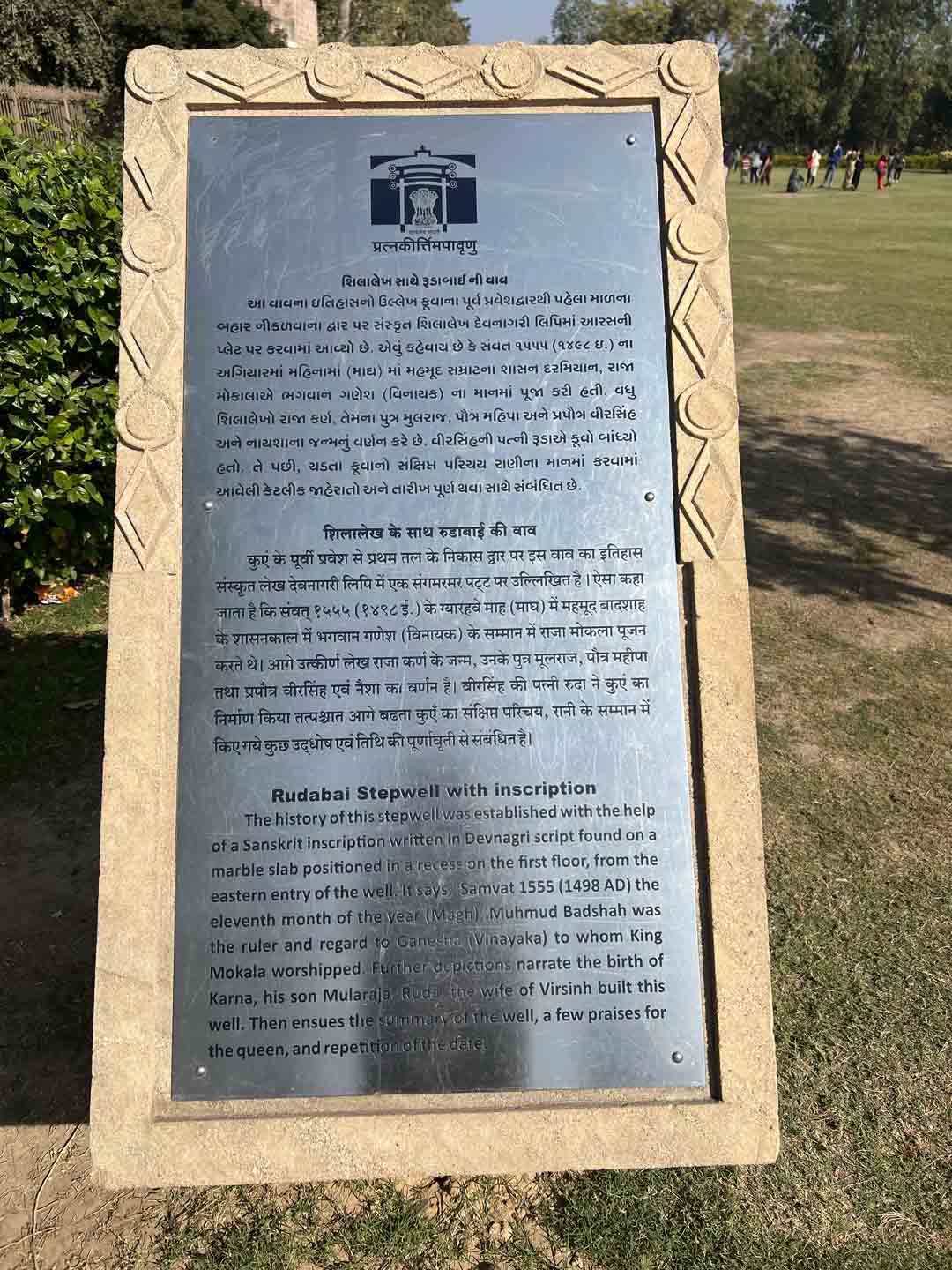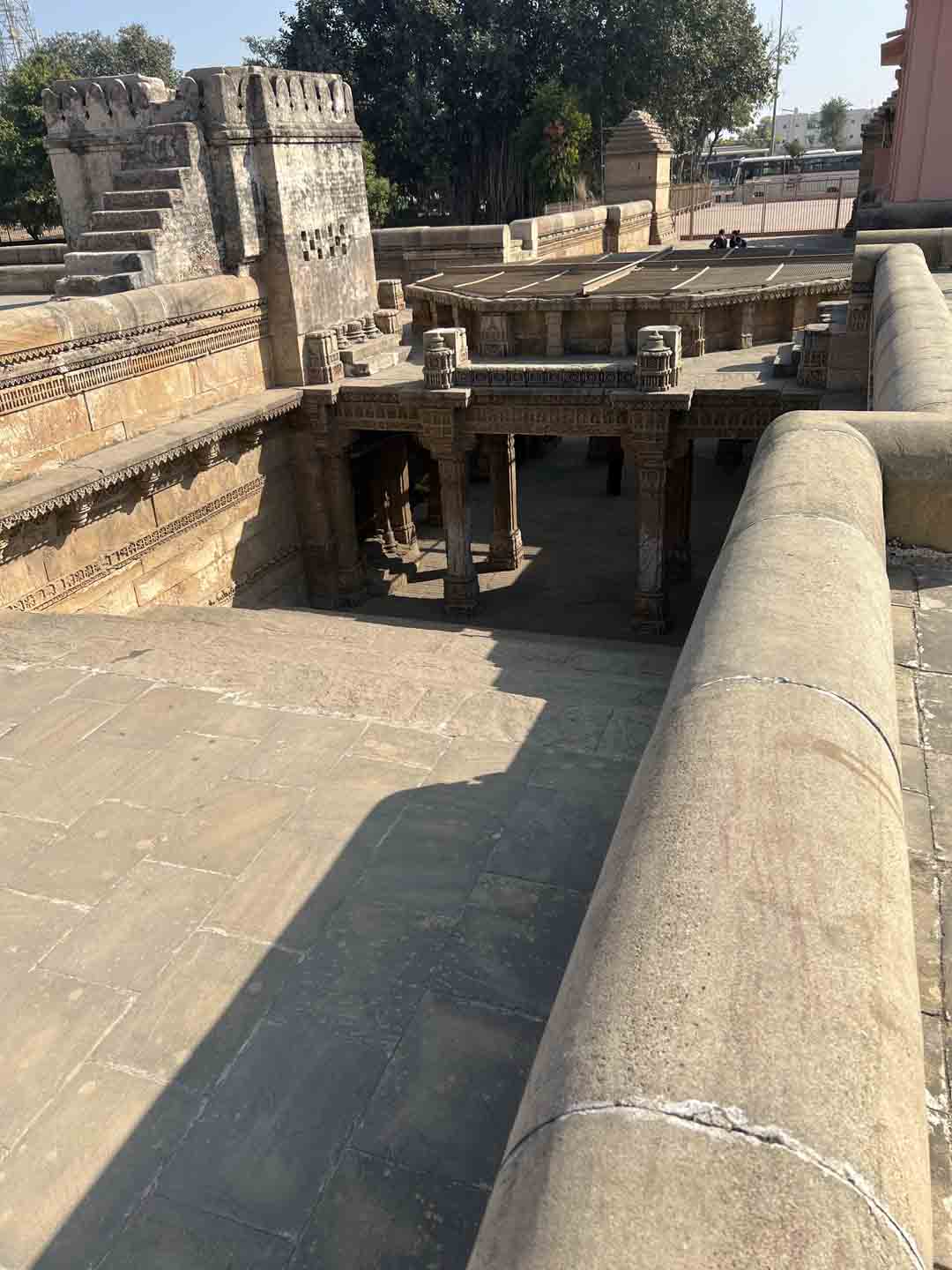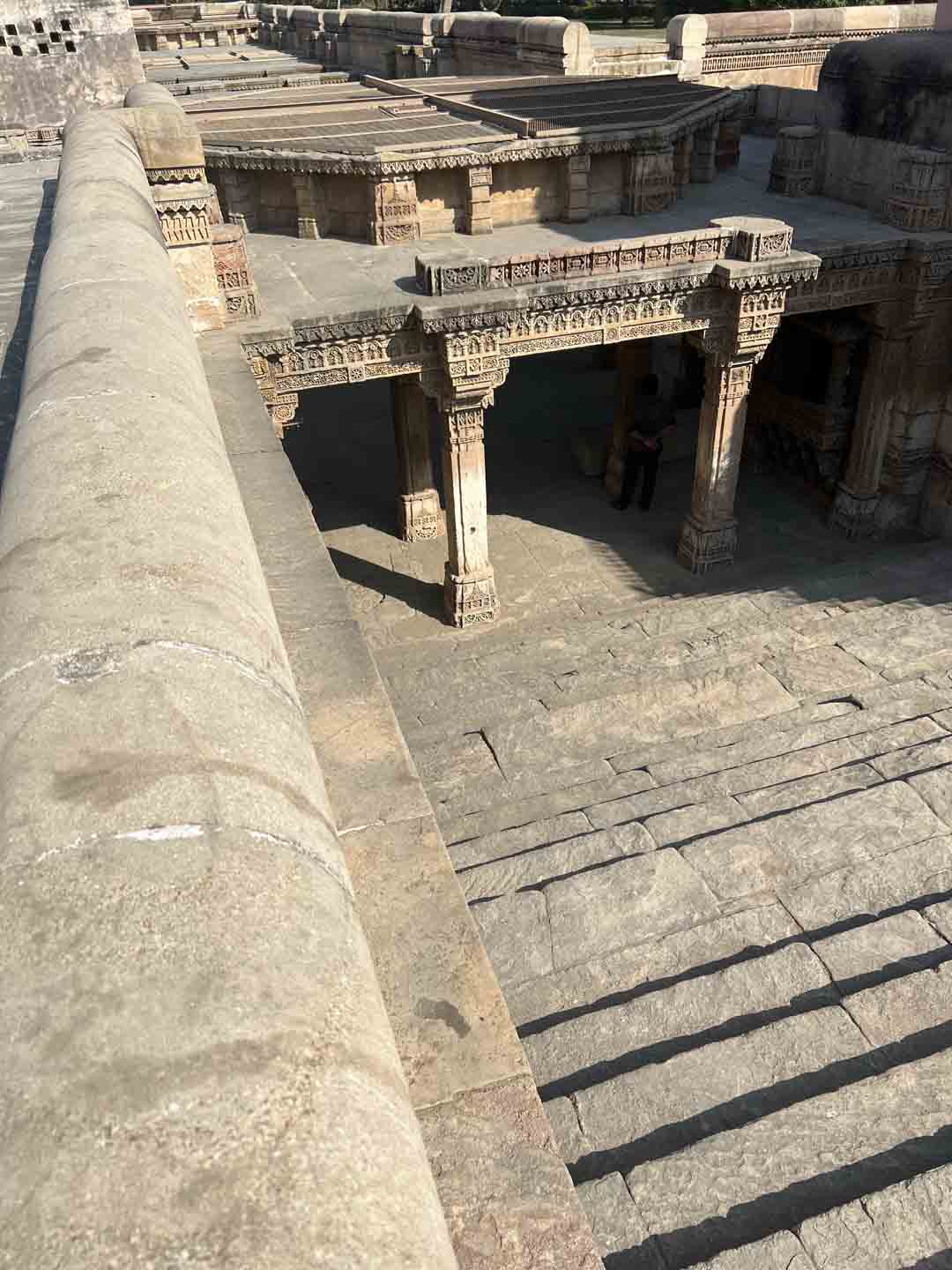
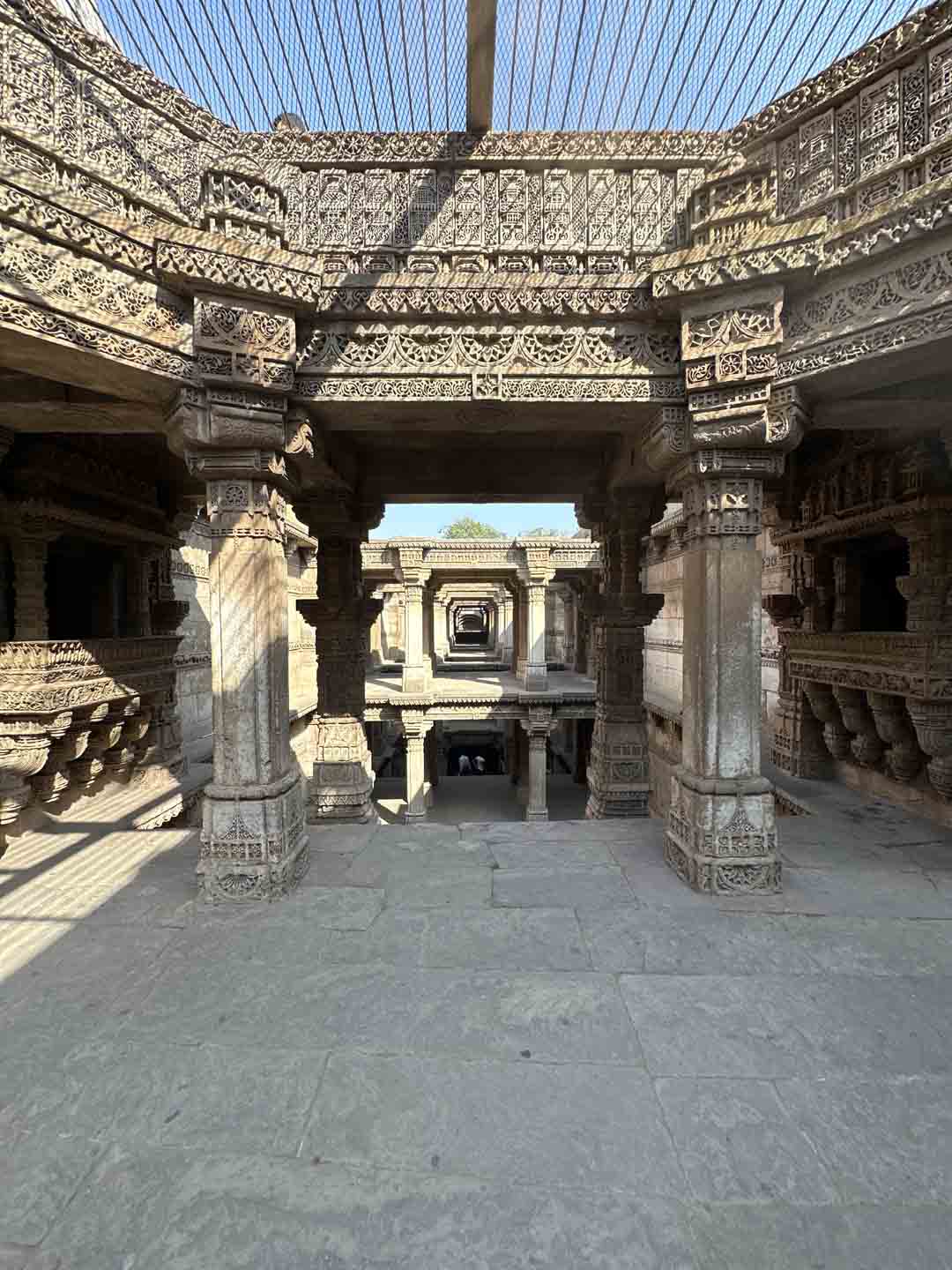
Within this sprawling modern landscape, a few historical buildings still remain as vestiges of an earlier era. The Rudabai Stepwell, which is frequently referred to as the Adalaj Stepwell. It has come to represent a deep expression of history, craftsmanship, and cultural symbolism. Constructed in 1499 by Queen Rudabai, step well is the fusion of Hindu and Islamic architecture which reflects the socio – political backdrop of that era.
The saga of Rudabai Stepwell is captivating as much as the architecture. According to popular belief, a local king Rana Veer Singh began the construction but it was not completed after his death. The regional conqueror Sultan Mahmud Begada agreed to finish building the stepwell in exchange for marrying Queen Rudabai. When the structure was complete, the queen is said to have ended her own life rather than submit. Whether cautionary tale or
historical fact, this account gives the building a measure of poignancy that elevates it from a space for use to one of memory and sacrifice.
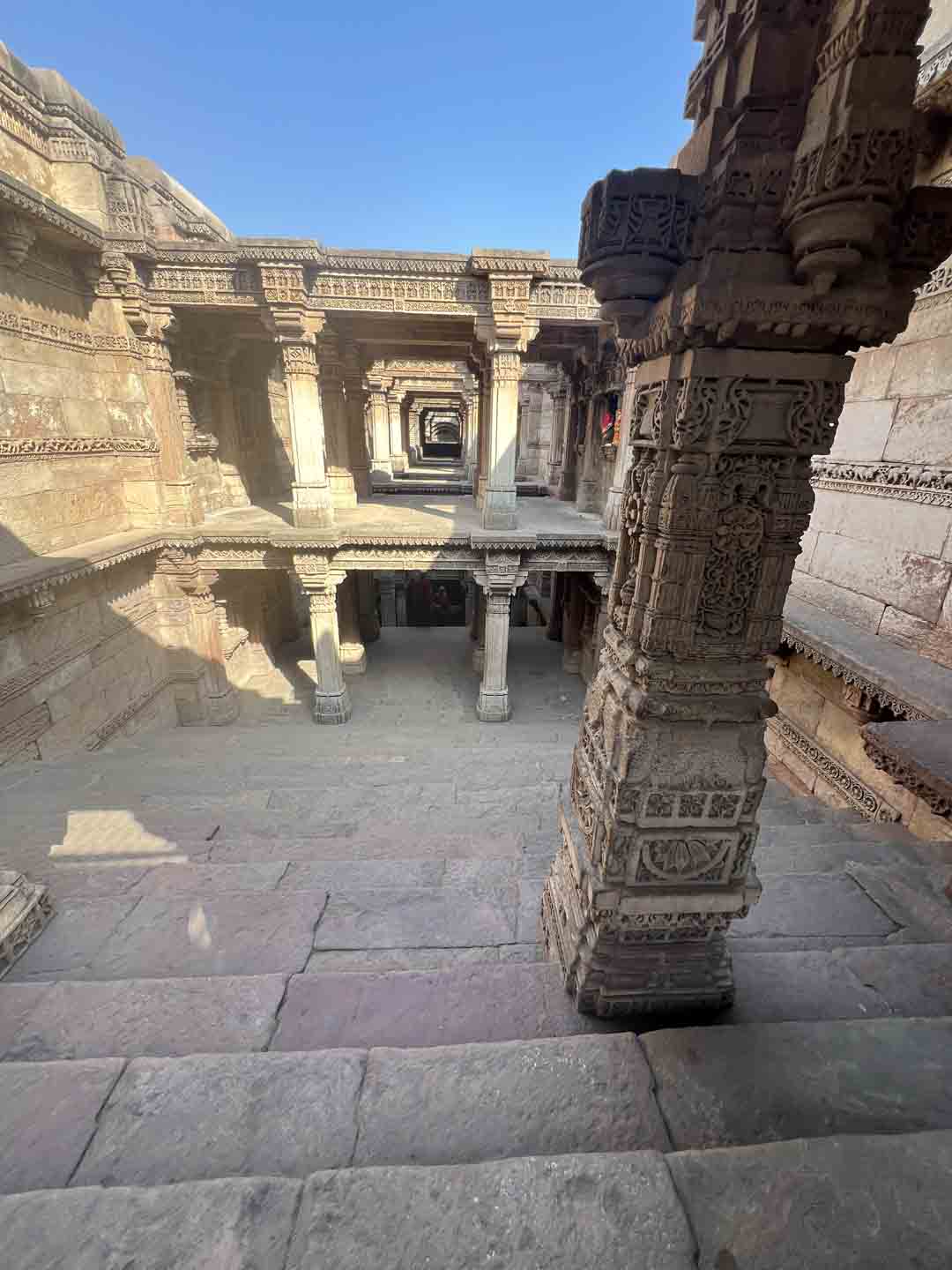
Architecturally, the stepwell is a marvel of symmetry and detail. Five levels below the earth, it is propped on intricately chiseled pillars and platforms that form a series of spaces, unfurling slowly through descent. Light and shadow are at the heart of the experience. Hole in the roof allows sunlight to filter through, and forms moving patterns on the surface of stone, giving the place a dynamic yet still life. The carvings themselves are exquisite, with images of flowers, birds and mythological figures rendered in detail and care.
What makes Rudabai Stepwell special is not only aesthetically, but also its practical and cultural importance. In an area where water has always been scarce, stepwells were critical as community spaces giving access to groundwater while also serving as places of gathering and refreshment. At these temperatures, the inside of the stepwell is still many degrees cooler than on the surface — thus providing a respite from the heat. Women would come here to collect water, tell stories, and perform rituals; the stepwell was an essential part of everyday life.
Within Gandhinagar, Rudabai Stepwell is a beautiful contrast. Visiting the stepwell makes you feel like you’ve entered a different rhythm, slower, more reflective and in touch with the elements.
Beyond the stepwell, there’s much more to Gandhinagar as a capital city. Key Places like Government buildings, schools and parks are evenly distributed. The only river in the city is Sabarmati which flows quietly on the edge of Gandhinagar adding to its natural look. Unlike the crushing pace of larger metros, Gandhinagar has a relaxed demeanour that allows for reflection and observation at leisure.
Gandhinagar’s food culture is not as famous as some other Gujaratis’ cities, but it is still deeply rooted in regional tradition. Meals tend to be simple but with abundant flavor, focusing on balance and freshness. From traditional thalis to street-side snacks, the culinary experience mirrors the wider ethos of the city; down-to-earth, consistent and filling.
With time, Gandhinagar has evolved and transformed into a modern city while cleverly adapting to new statuary developments yet being true to its roots. It has evolved into a hub for governance, education and increasingly technology, mirroring the broader trajectory of Gujarat’s development. And yet, for all these changes, the city has kept its core identity. It still feels orderly, green and relatively quiet — a place where the demands of modern city life feel somewhat mitigated.
Gandhinagar is a city of many contrasts. It is modern but historical, administrative but cultural. The presence of Rudabai Stepwell in its orbit is a reminder that even the most modern landscapes are layers on top of stories from before. They weave together in a narrative that is both coherent and complex, one that speaks to the continuity of this place.