
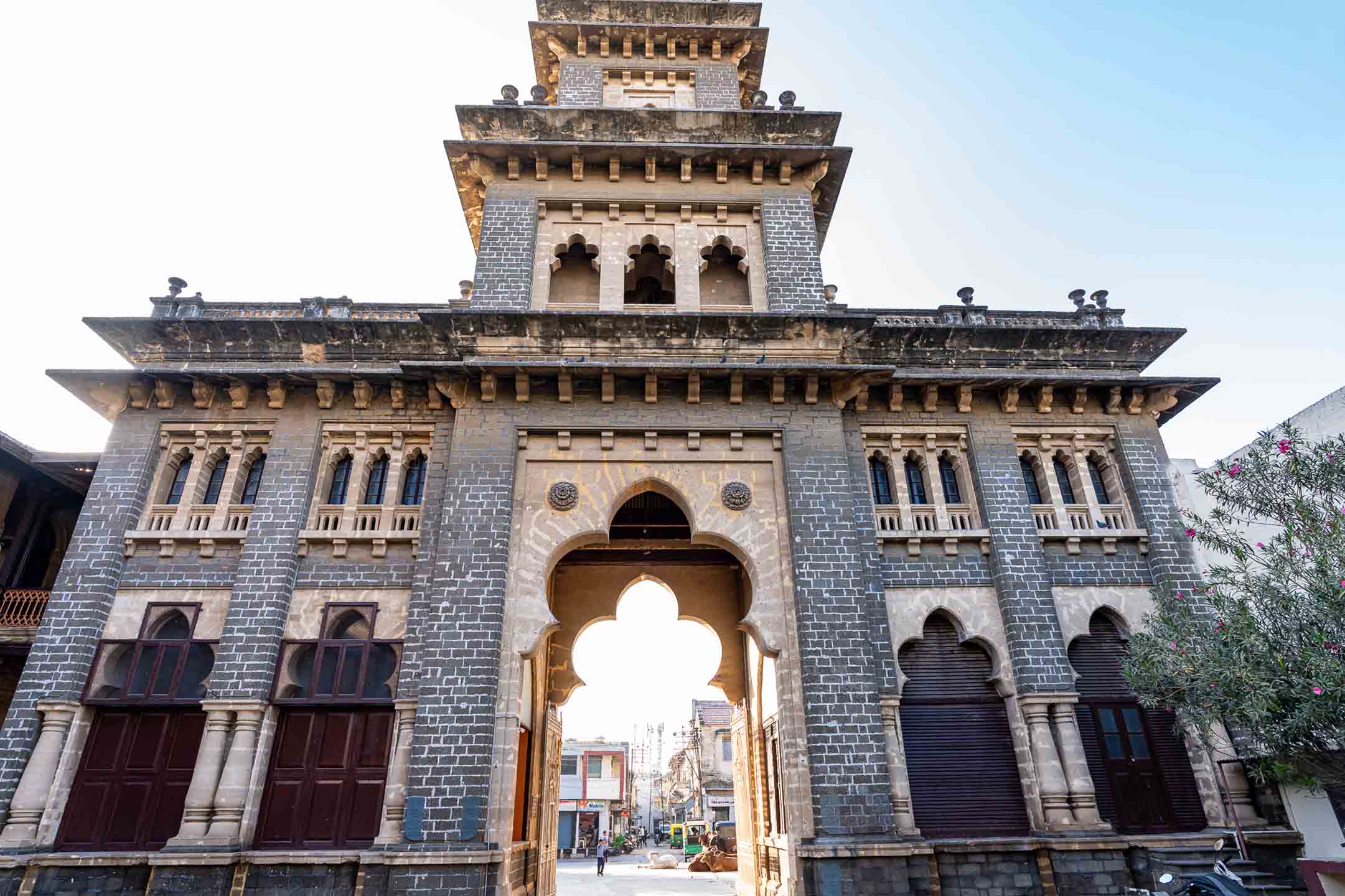
Set along the banks of the Gondali River in the Saurashtra region of Gujarat, Gondal presents itself with a measured and composed character that feels both deliberate and inherited. Unlike cities that assert their importance through scale or spectacle, Gondal reveals itself gradually—through its streets, its institutions, and its palaces that continue to shape the town’s identity.
As a former princely state governed by a progressive line of rulers, Gondal carries a legacy that extends beyond architecture into administration and reform.
History
Jadeja Dynasty
The history of Gondal is closely tied to the Jadeja Rajput dynasty, which established its rule here in the 17th century. Over time, Gondal evolved into one of the more forward-thinking princely states in the Kathiawar region. Its rulers invested not only in cultural and architectural patronage but also in modern governance. Systems of education, sanitation, and infrastructure were introduced well ahead of many contemporaries. This balance between tradition and reform defined Gondal’s identity, giving it a character that feels both structured and deeply rooted.
Maharaja Bhagvatsinhji
Among its rulers, Maharaja Bhagvatsinhji stands out for his transformative influence on the town’s development. Trained in medicine in Edinburgh and exposed to global ideas, he approached governance with a practical, reform-oriented mindset. Under his leadership in the late 19th and early 20th centuries, Gondal saw the introduction of planned roads, organized sanitation systems, educational institutions, and civic infrastructure.
His policies reflected a clear intent to modernize without disrupting existing cultural frameworks. Even today, the town’s layout, cleanliness, and administrative efficiency echo his vision.
The Gondal Palace Complex
At the center of Gondal’s architectural landscape lies what is often collectively referred to as the Gondal Palace. This term, however, encompasses multiple structures within a larger royal precinct. These buildings do not stand in isolation; instead, they form a cohesive environment that reflects different phases of the town’s evolution.
Naulakha Palace
Naulakha Palace brings a complex, embellishment-rich chapter to the architectural story of Gondal. It is one of the oldest structures in the royal complex, probably predating many of the more modern additions like the iconic clock tower, and hinting at a different style sensibility.
The palace, built in 1748 as a part of Darbargardh fort complex, is characterized by its ornate stone carvings, projecting balconies, and richly decorated façades. Naulakha Palace puts ornamentation to good use; its walls come alive with arches, jharokhas and more, all chiseled to perfection.
This taste continues inside, with rooms full of textiles, silverware, cradles, and other items from daily courtly life. It now operates as an exhibition space, thus making the palace not merely a monument of architecture, but a divested holding of Gondal’s material and cultural heritage.
The Riverside Palace
In contrast, the Riverside Palace introduces a distinctly different spatial experience. Located along the Gondali River, it derives much of its character from its setting. Built in the early 20th century as a royal guest house, it incorporates stronger European architectural influences.
Colonnaded verandas, open lawns, and a more relaxed layout distinguish it from the Naulakha Palace. Large windows, extended verandas, and direct connections to gardens create a seamless flow between interior and exterior spaces. The proximity of the river lends a constant sense of movement and calm.
Within the palace, rooms reflect both administrative and domestic functions. Private chambers offer a more intimate setting, providing insight into the past. Preserved furniture, artifacts, and period details allow the palace to function not only as a structure but also as a record of lived history.
This beautiful staircase is where that famous staircase scene from the movie “Hum Dil De Chuke Sanam” was pictured.
Today, the palace functions as a heritage hotel, allowing visitors to experience this setting while preserving its architectural integrity.
Architecture
The broader Gondal Palace complex unifies these individual structures into a coherent whole. It does not rely on a single dominant building; instead, it derives strength from the
relationships between spaces. Courtyards connect different sections, pathways guide movement, and architectural elements maintain a consistent visual language.
Local materials are combined with external influences, resulting in an architectural approach that remains rooted while accommodating change.
What distinguishes Gondal’s palaces is not only their architectural quality but also the ideas they represent. They reflect a period when princely states actively negotiated their role in a changing world. Rulers balanced tradition with modernization, authority with responsibility.
These palaces functioned as administrative centers, residences, and spaces for cultural exchange—extending their role far beyond symbolic representation.
Heritage Hotels
Over time, the palaces of Gondal have adapted to changing needs. Structures that once served as royal residences and administrative centers now function as sites of preservation and hospitality.
The conversion of parts of the palace complex into heritage hotels reflects a careful and sensitive approach to adaptation. This transition allows the buildings to remain active while maintaining their historical authenticity.
Culture and Food
Beyond the palace complex, Gondal’s cultural fabric continues this sense of continuity. Markets, temples, and public spaces operate with a rhythm aligned with the town’s history. The influence of its rulers remains visible in Gondal’s organization, cleanliness, and civic structure. While the town has expanded over time, it has done so without disrupting its underlying order.
The food culture of Gondal reflects the broader culinary traditions of Gujarat, emphasizing balance and clarity of flavor. Meals rely on local ingredients and established practices, creating a sense of familiarity that aligns with the town’s character.
In Gondal, the shift from private to public feels seamless. The palaces continue to serve as places of residence, gathering, and experience to a broader audience. This continuity ensures that Gondal’s royal heritage remains visible and relevant rather than confined to history. Its appeal lies in its balance—in the alignment of history and modernity, in the relationship between architecture and function, and in the way its spaces encourage engagement without imposing it. Within its palaces, one encounters not only architectural form but also a reflection of a way of life—ordered, progressive, and anchored in continuity.