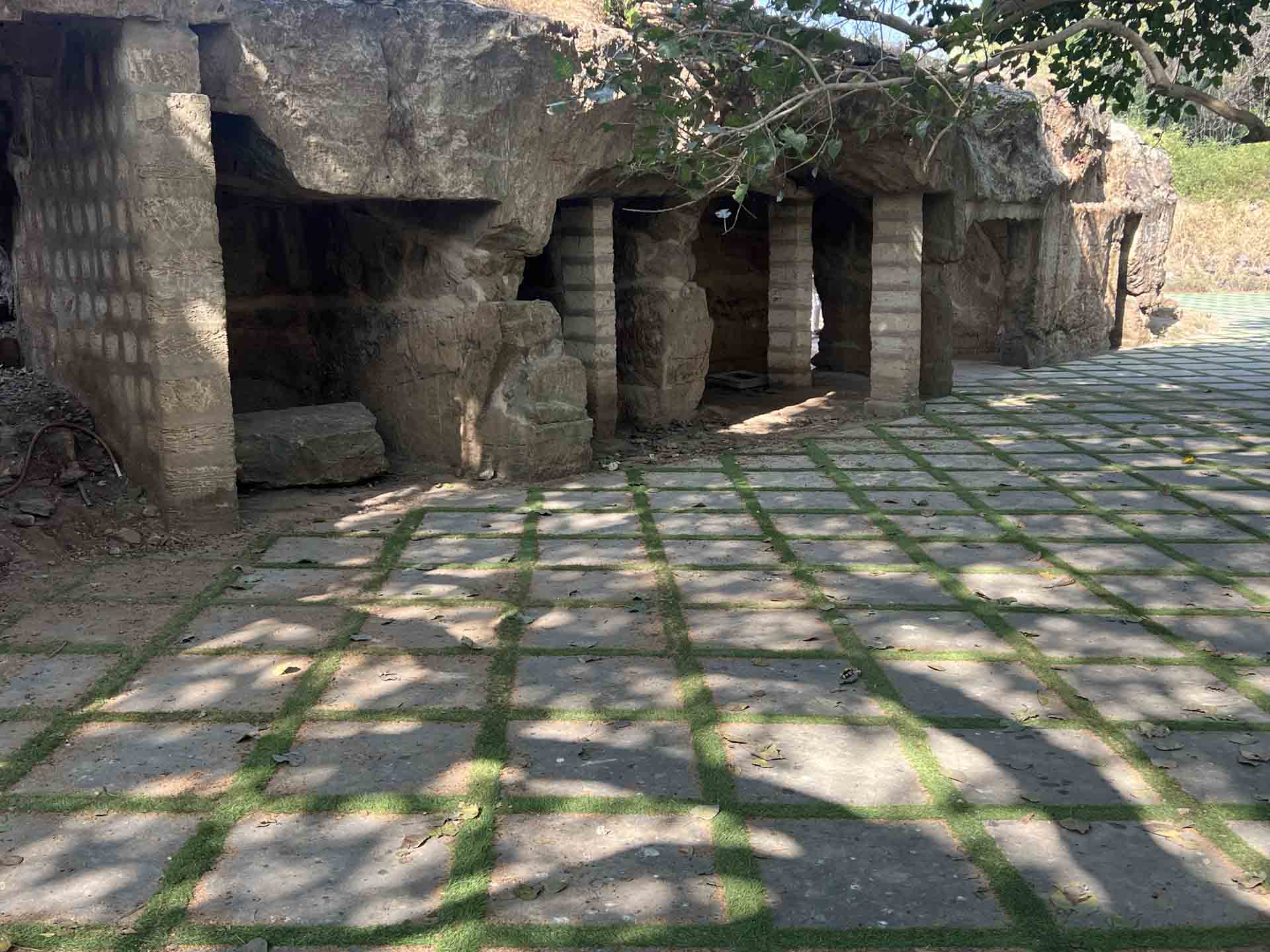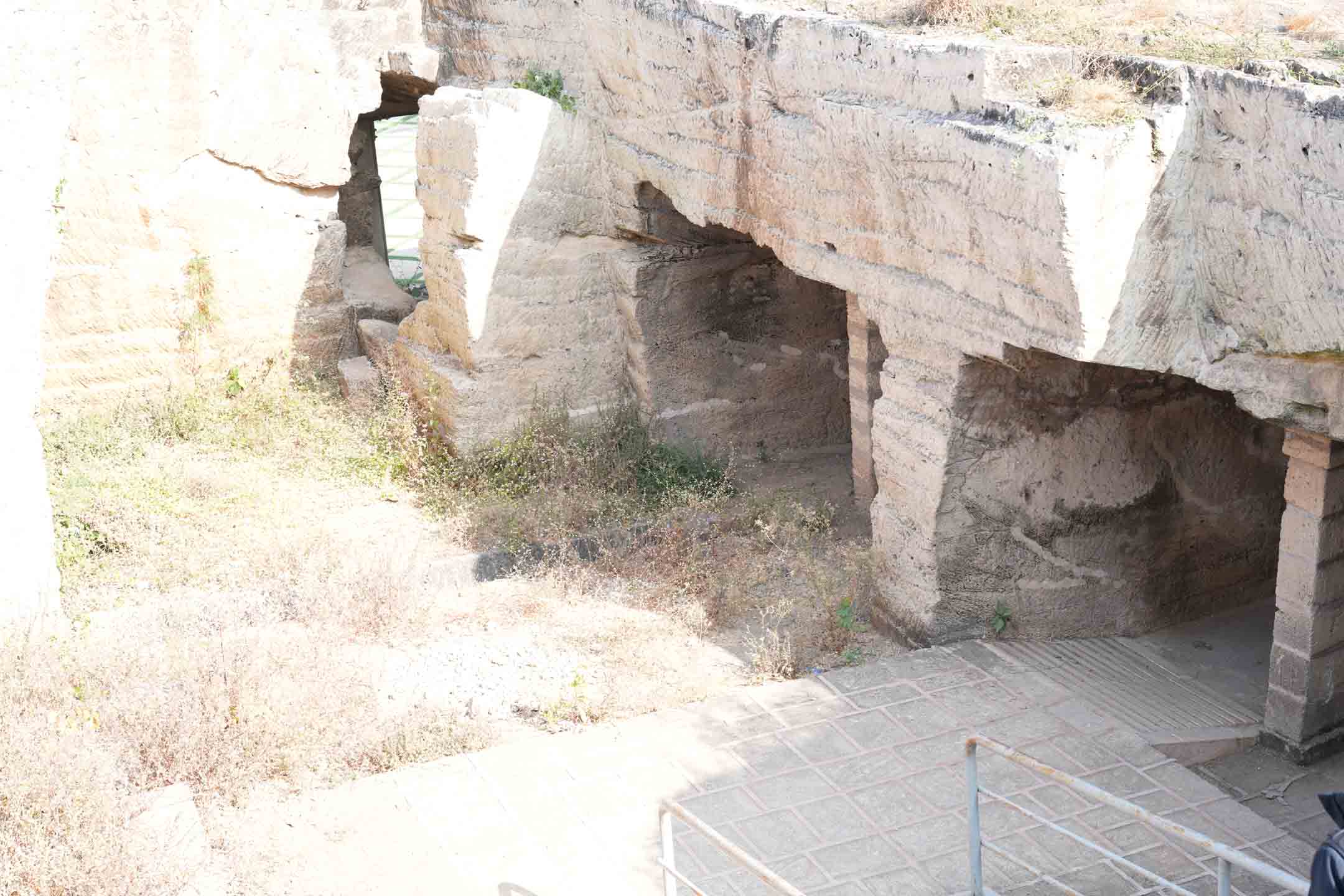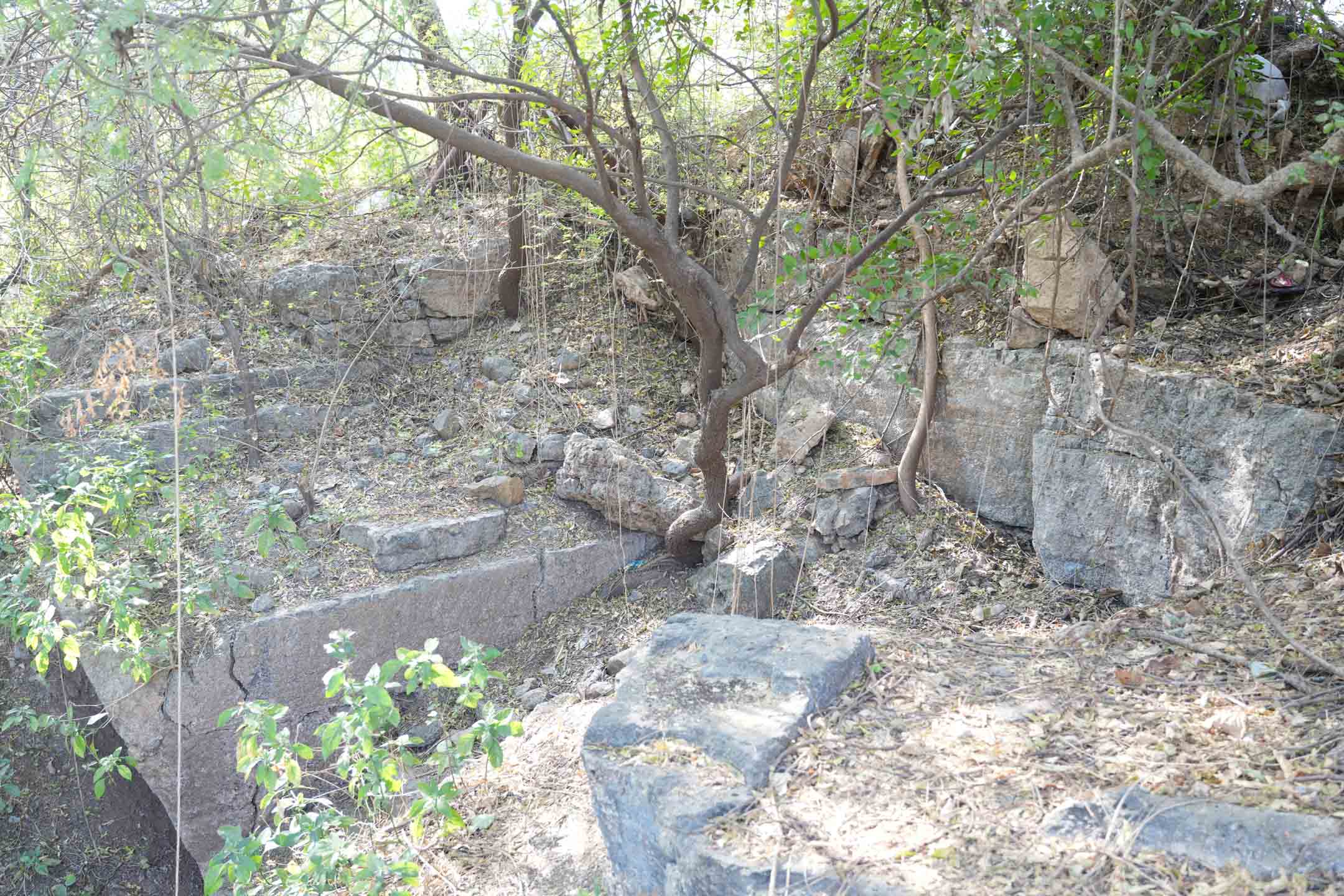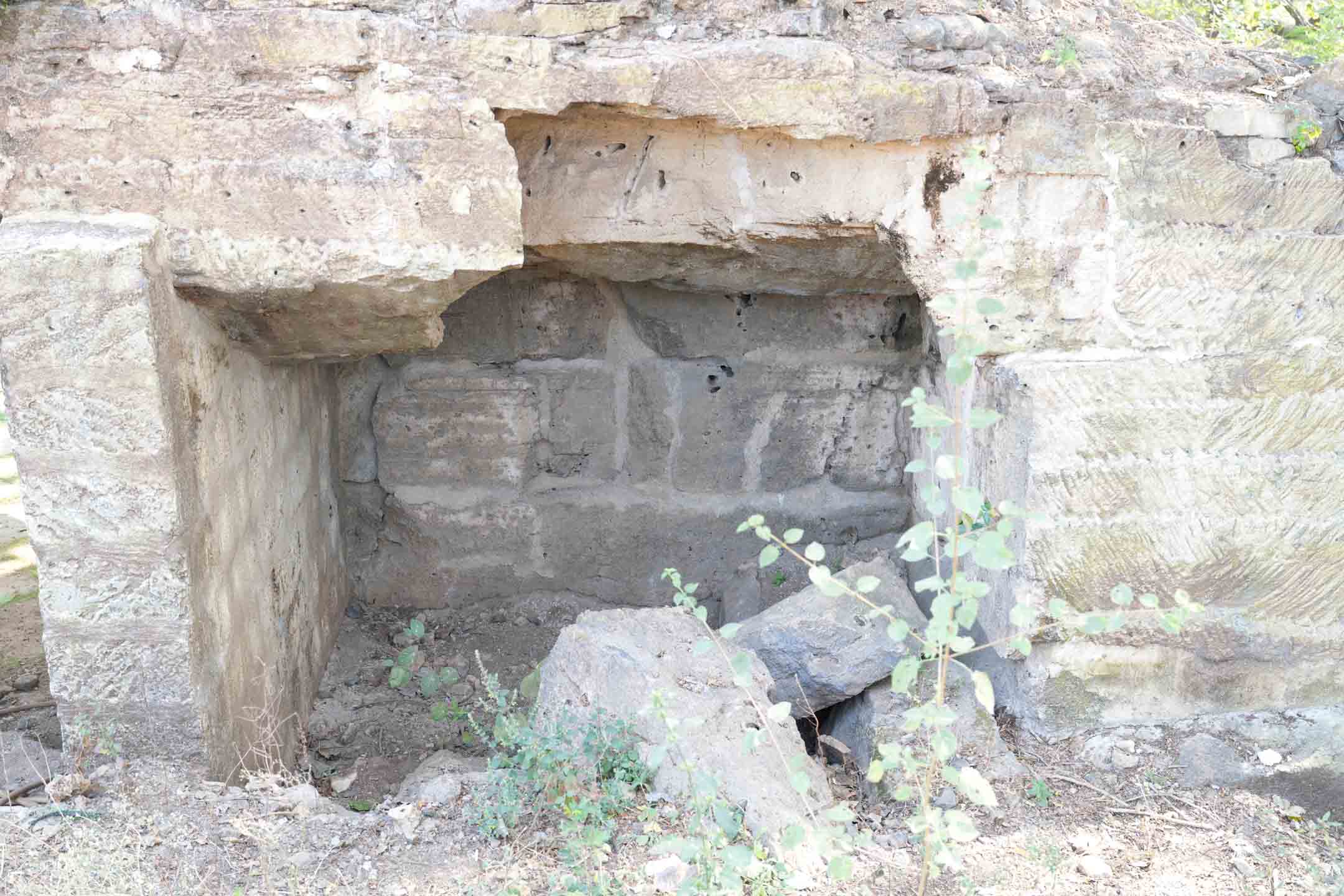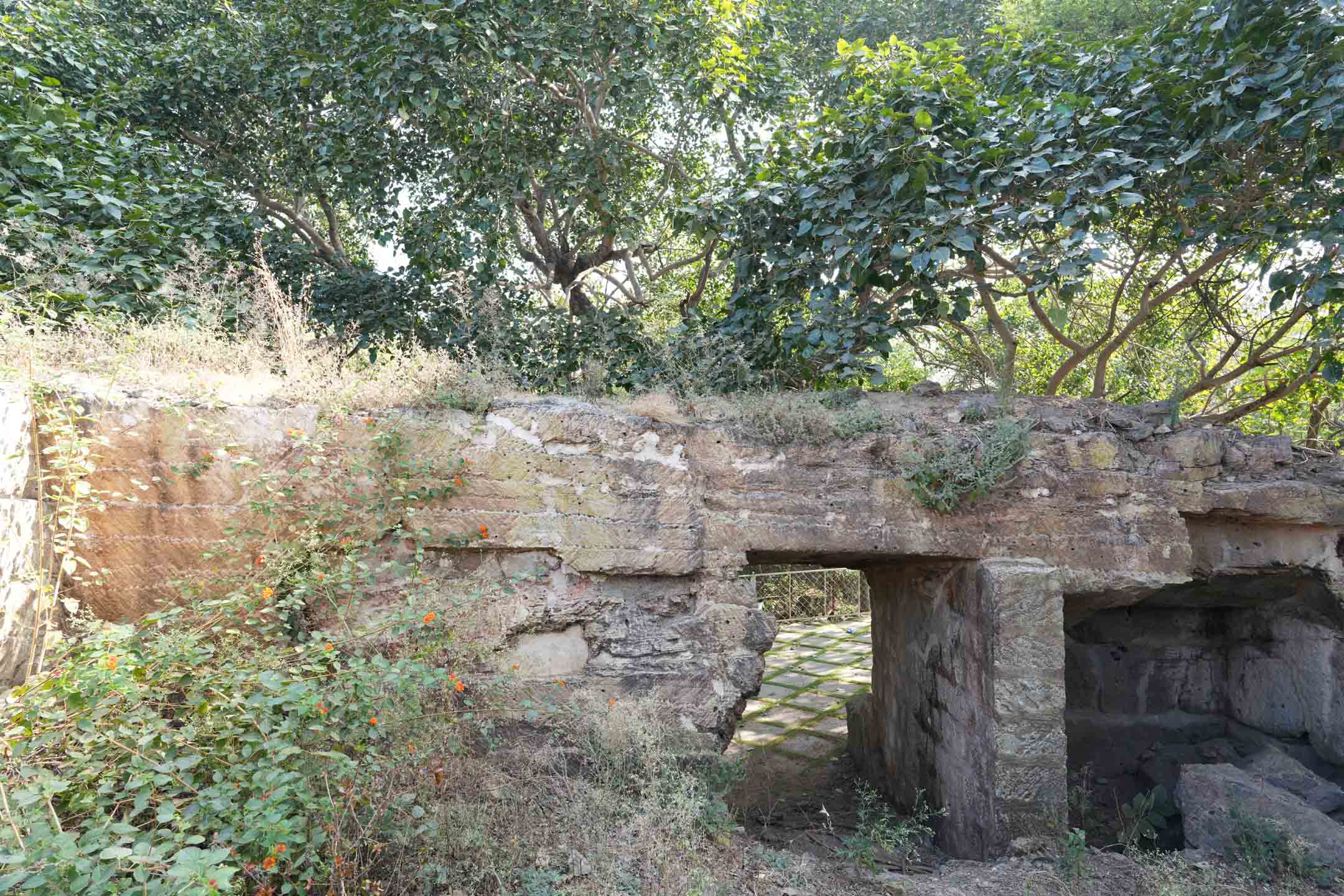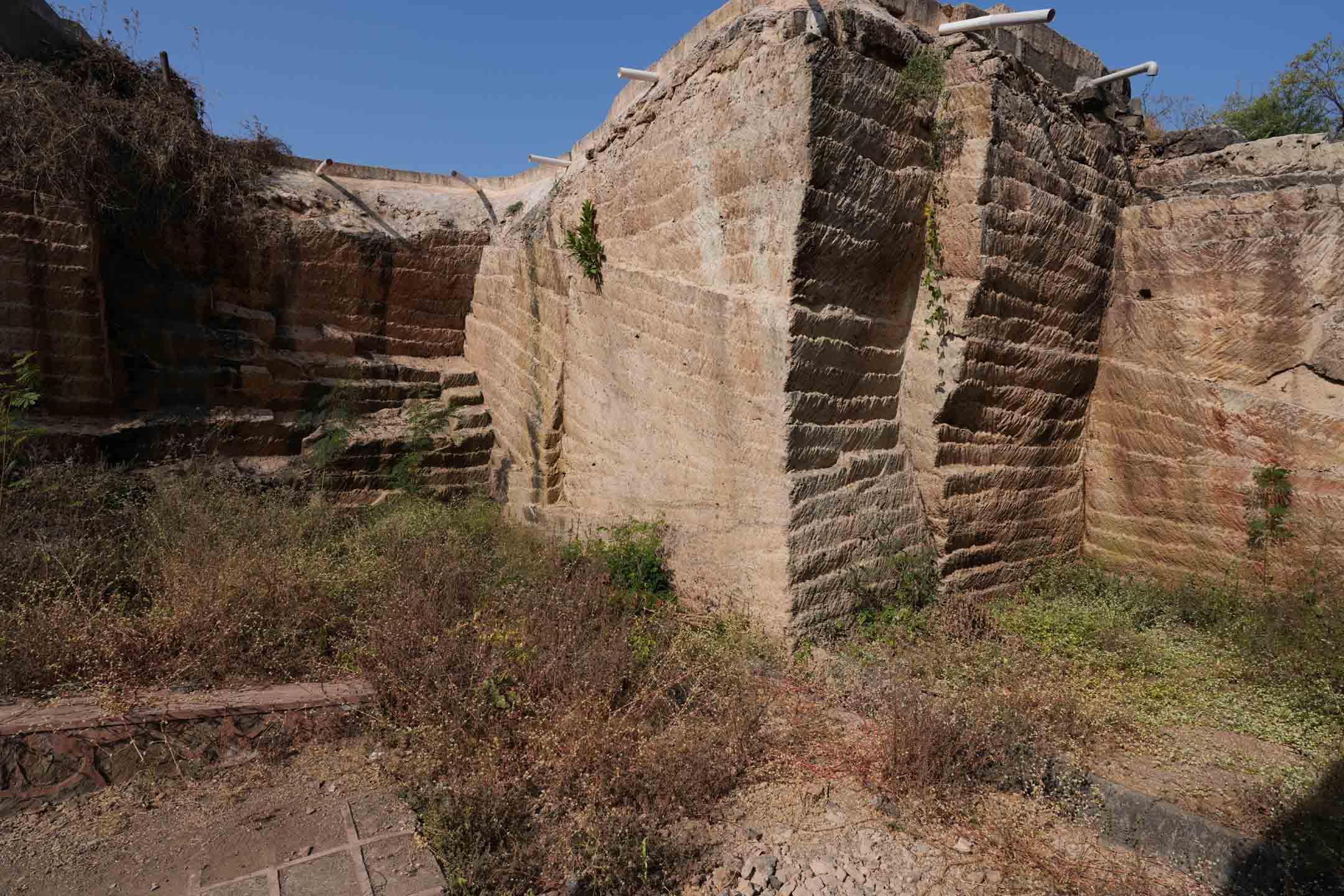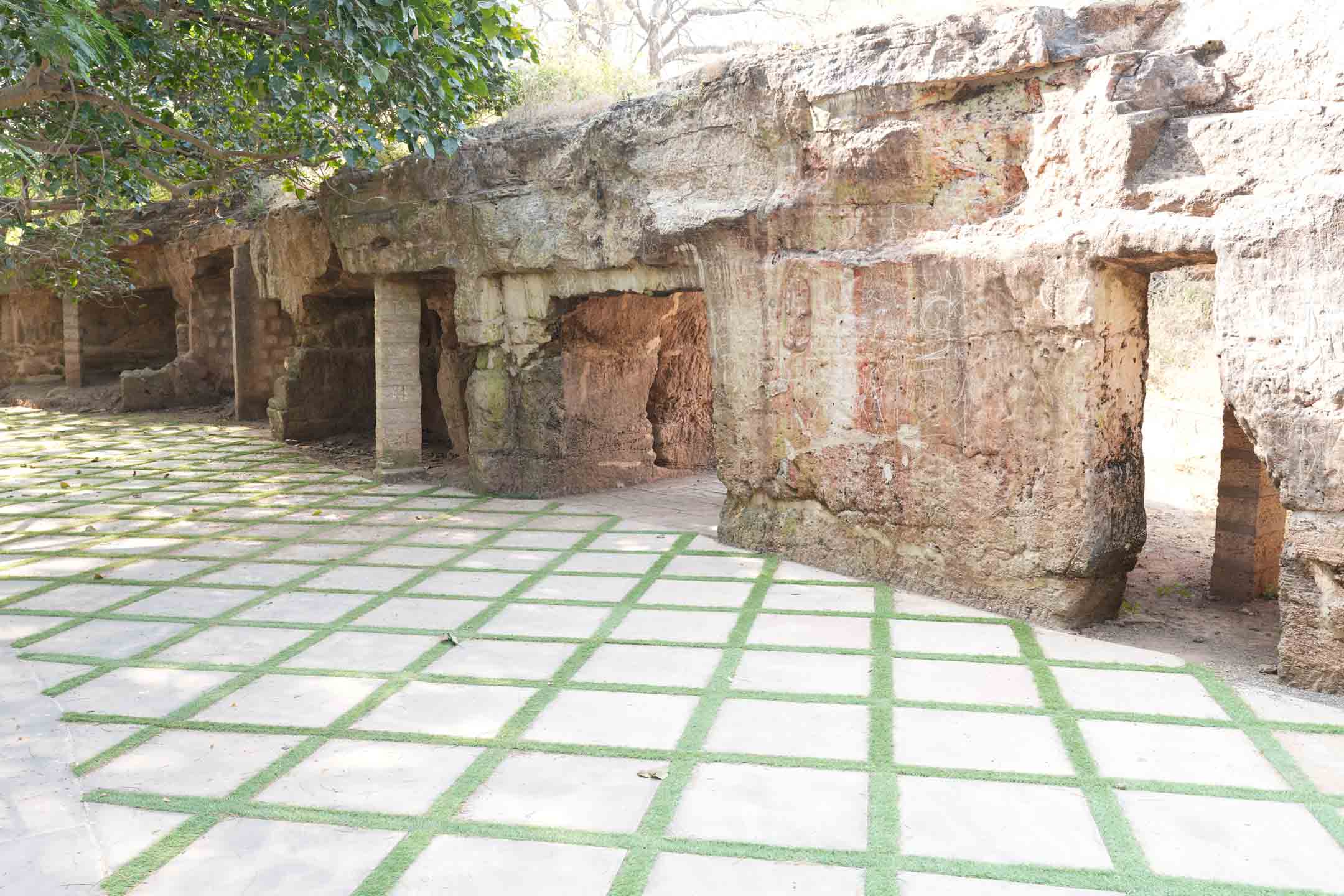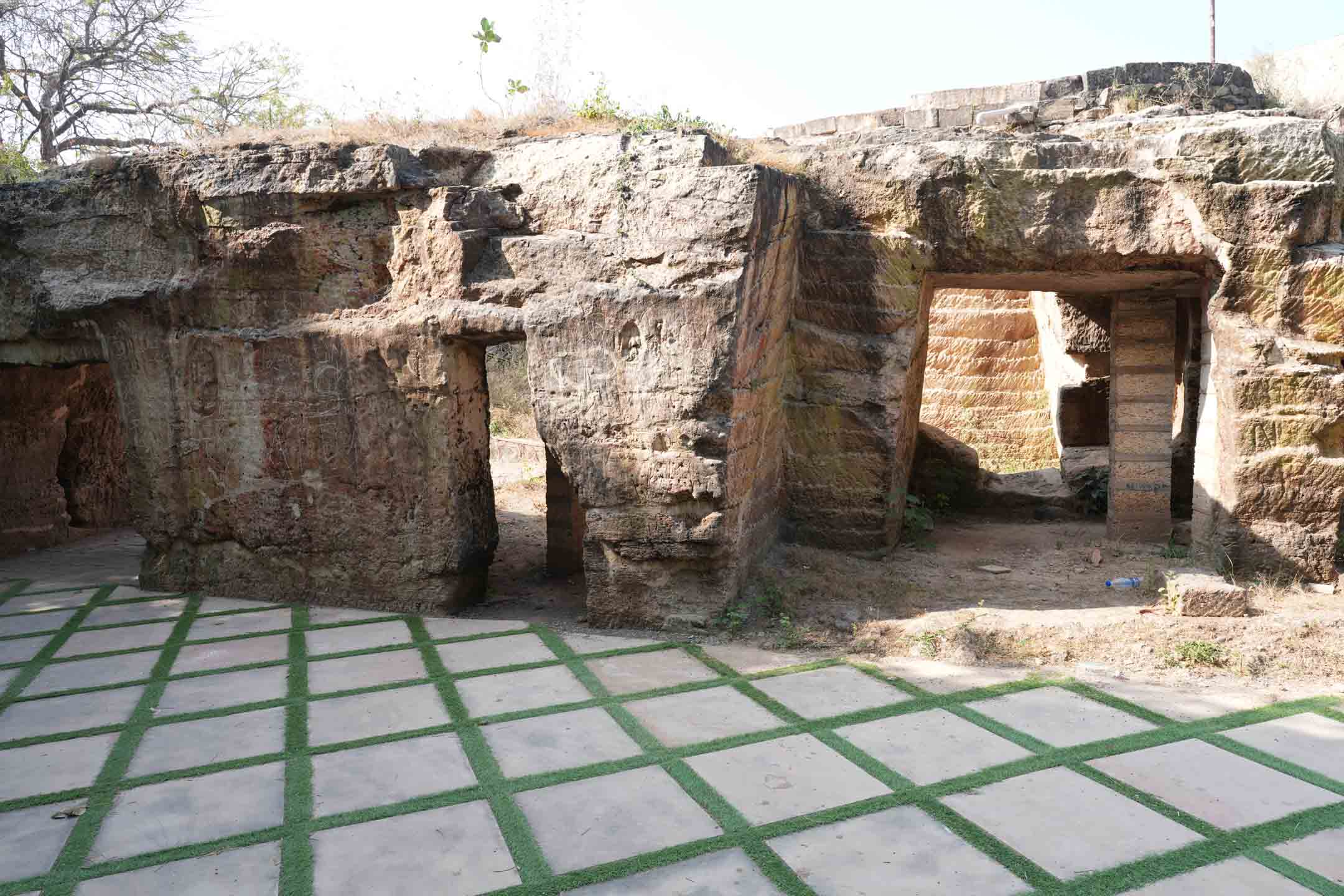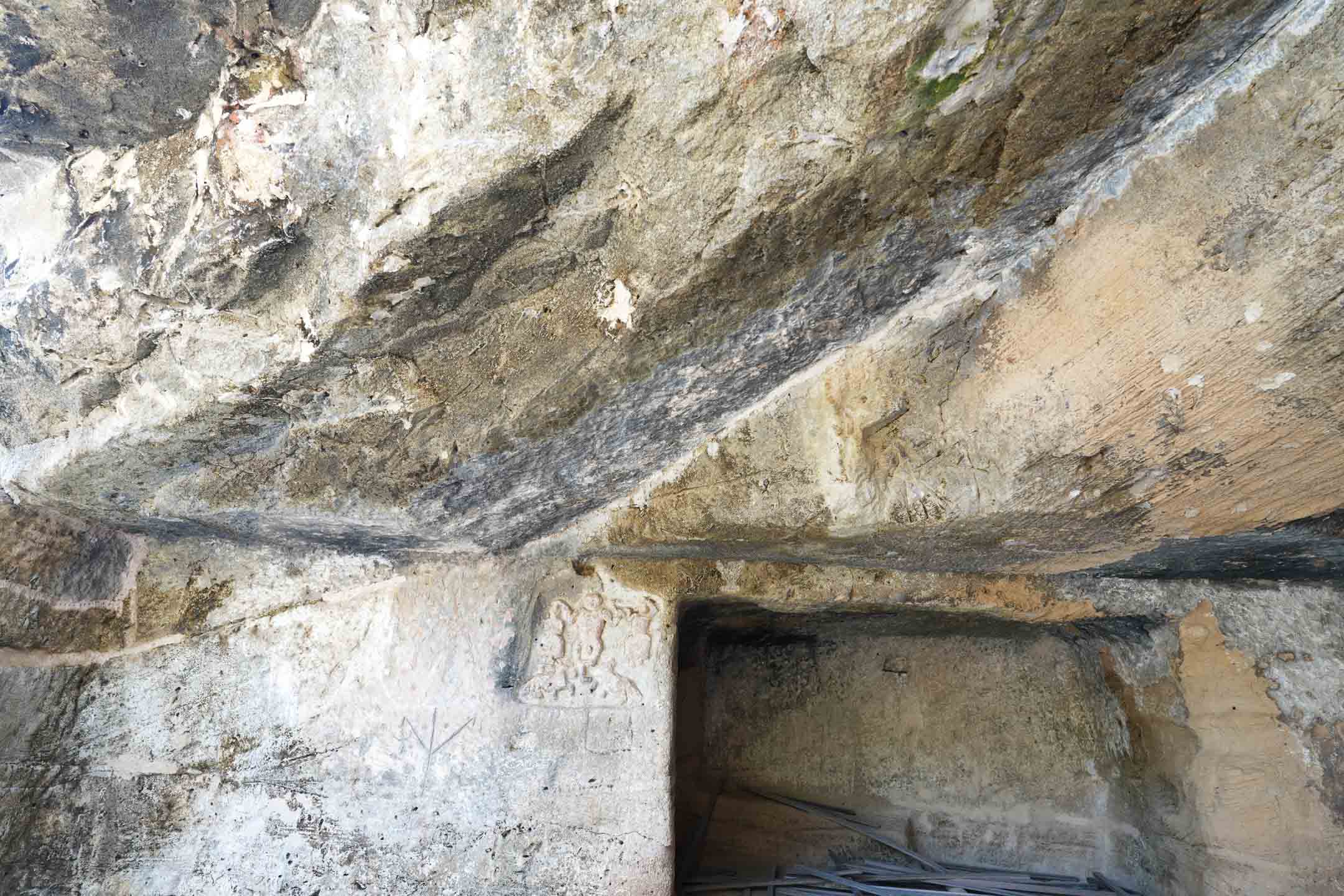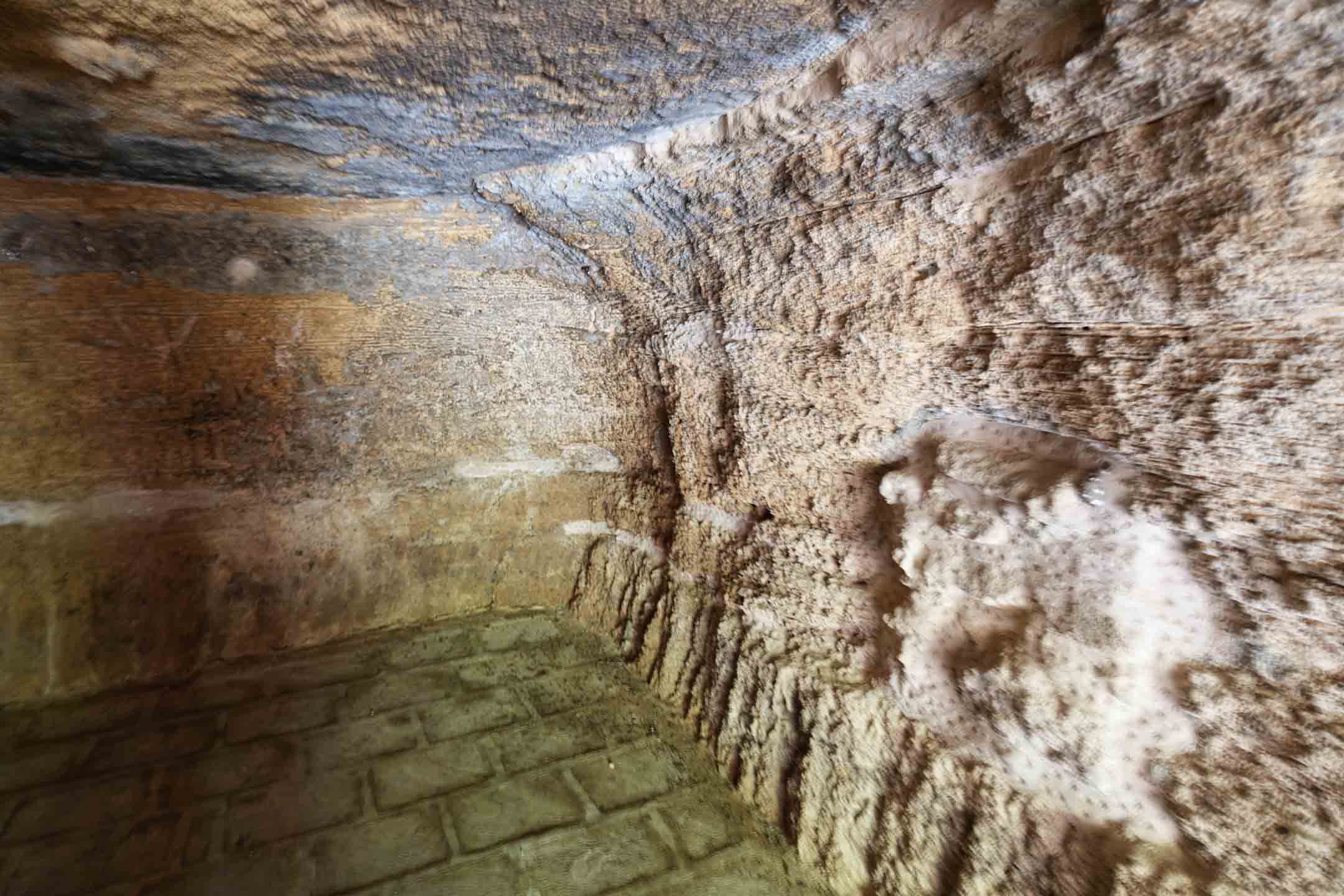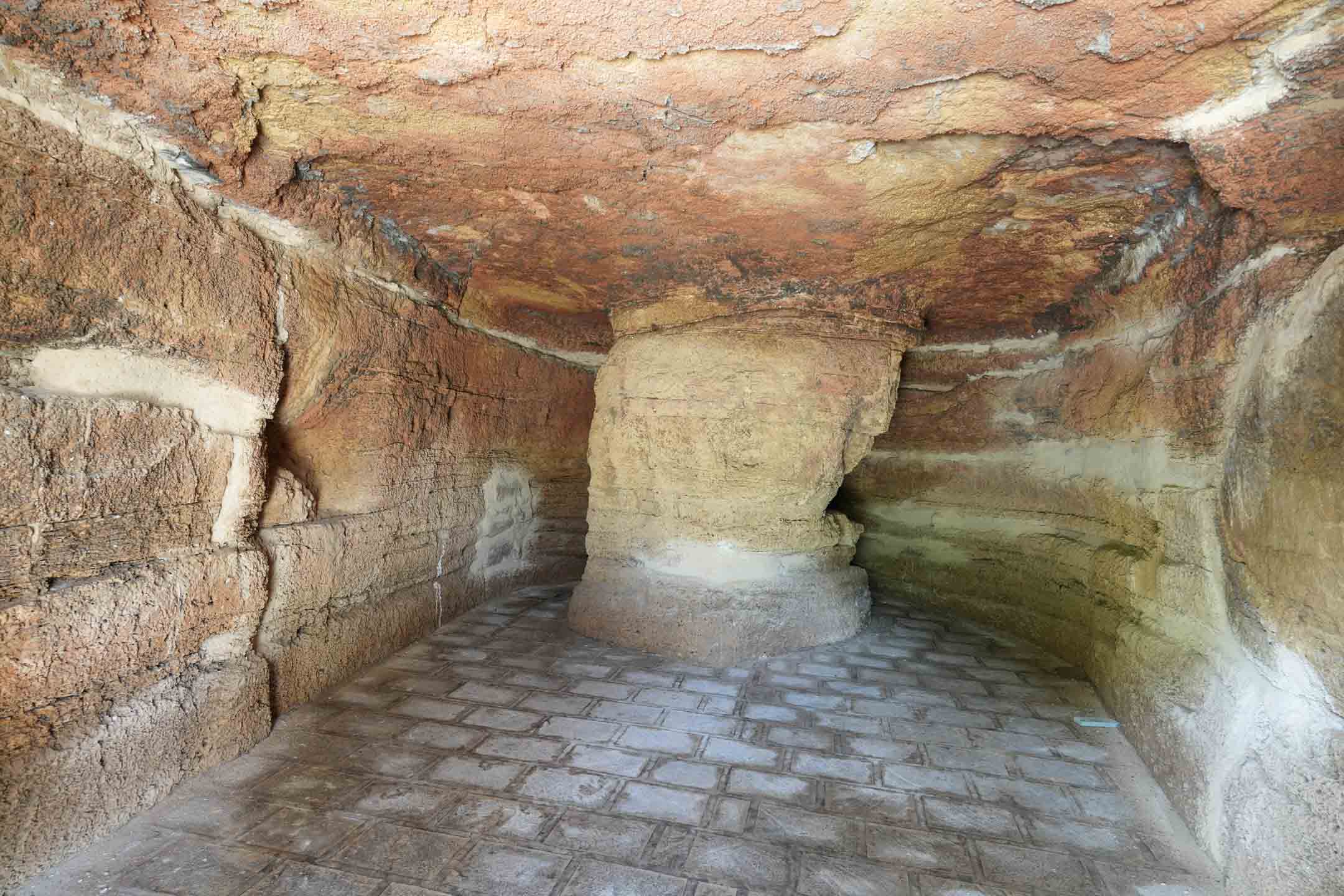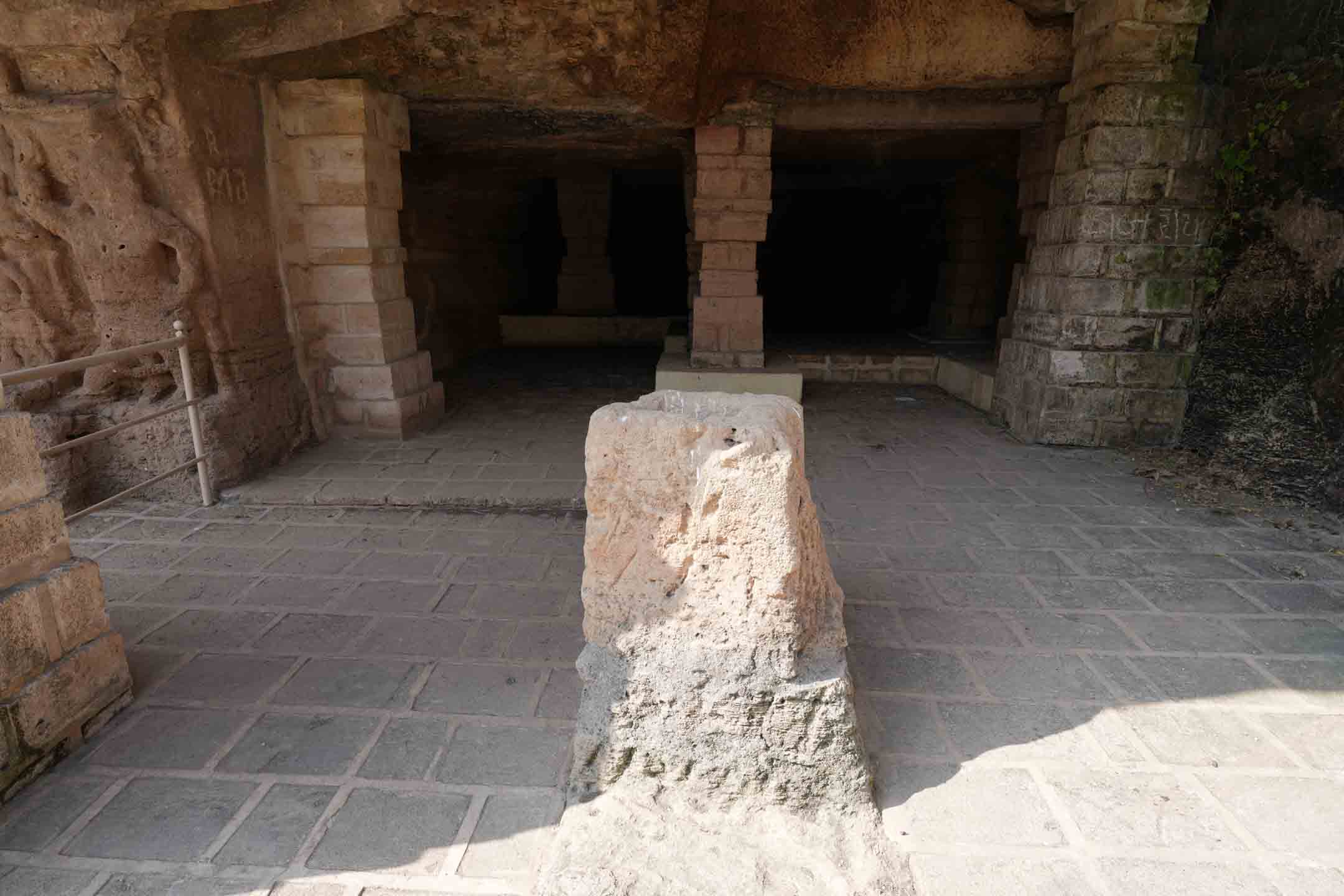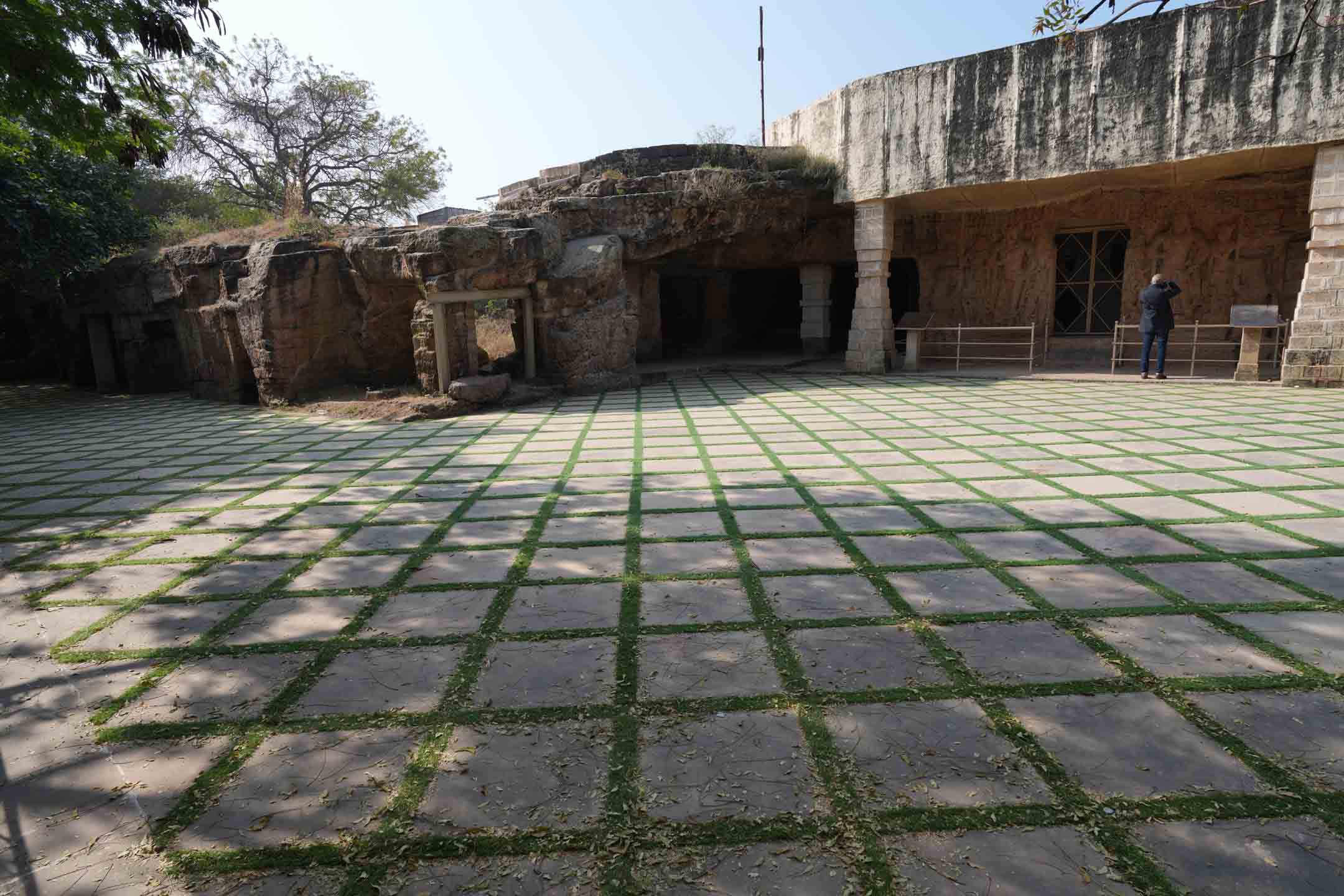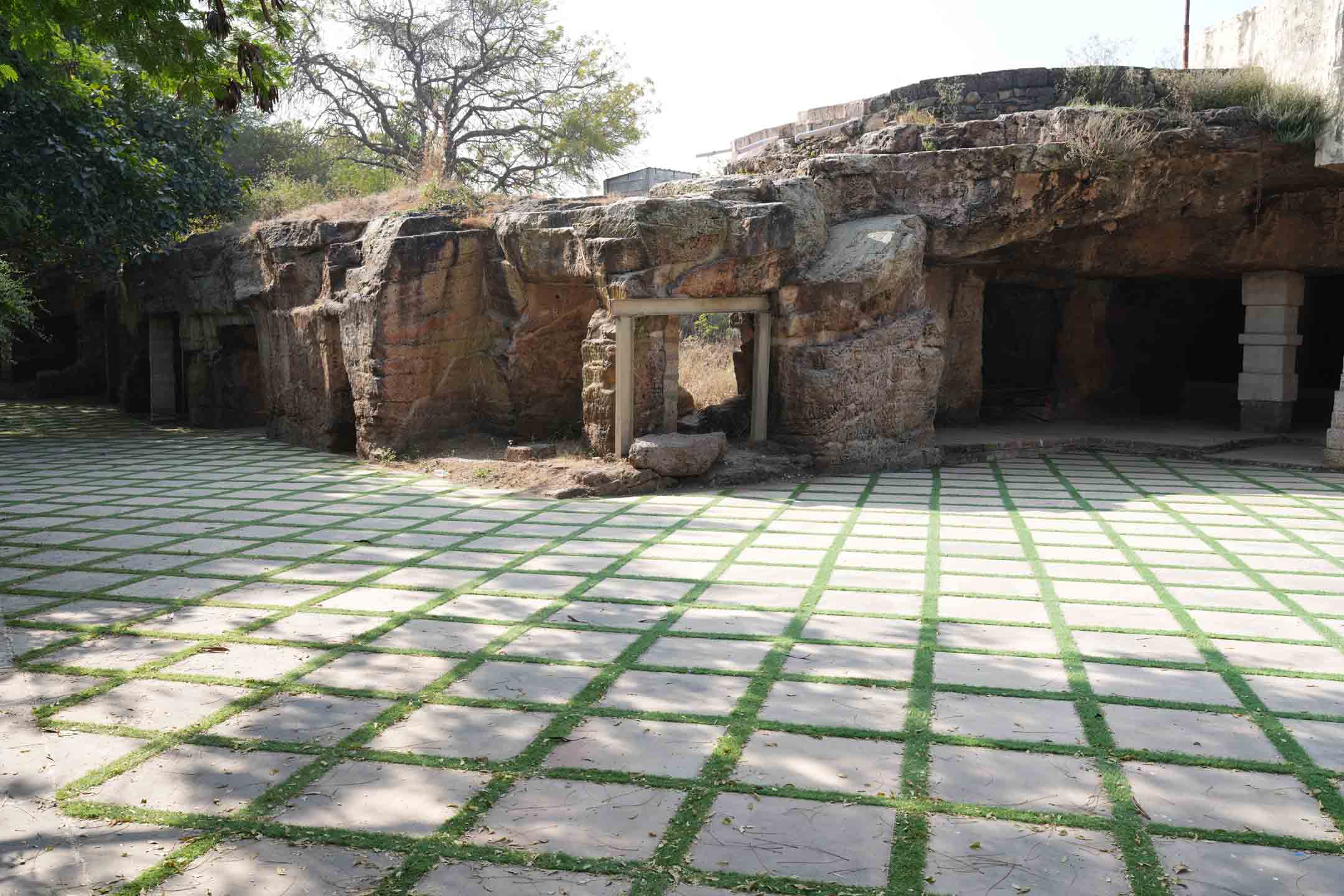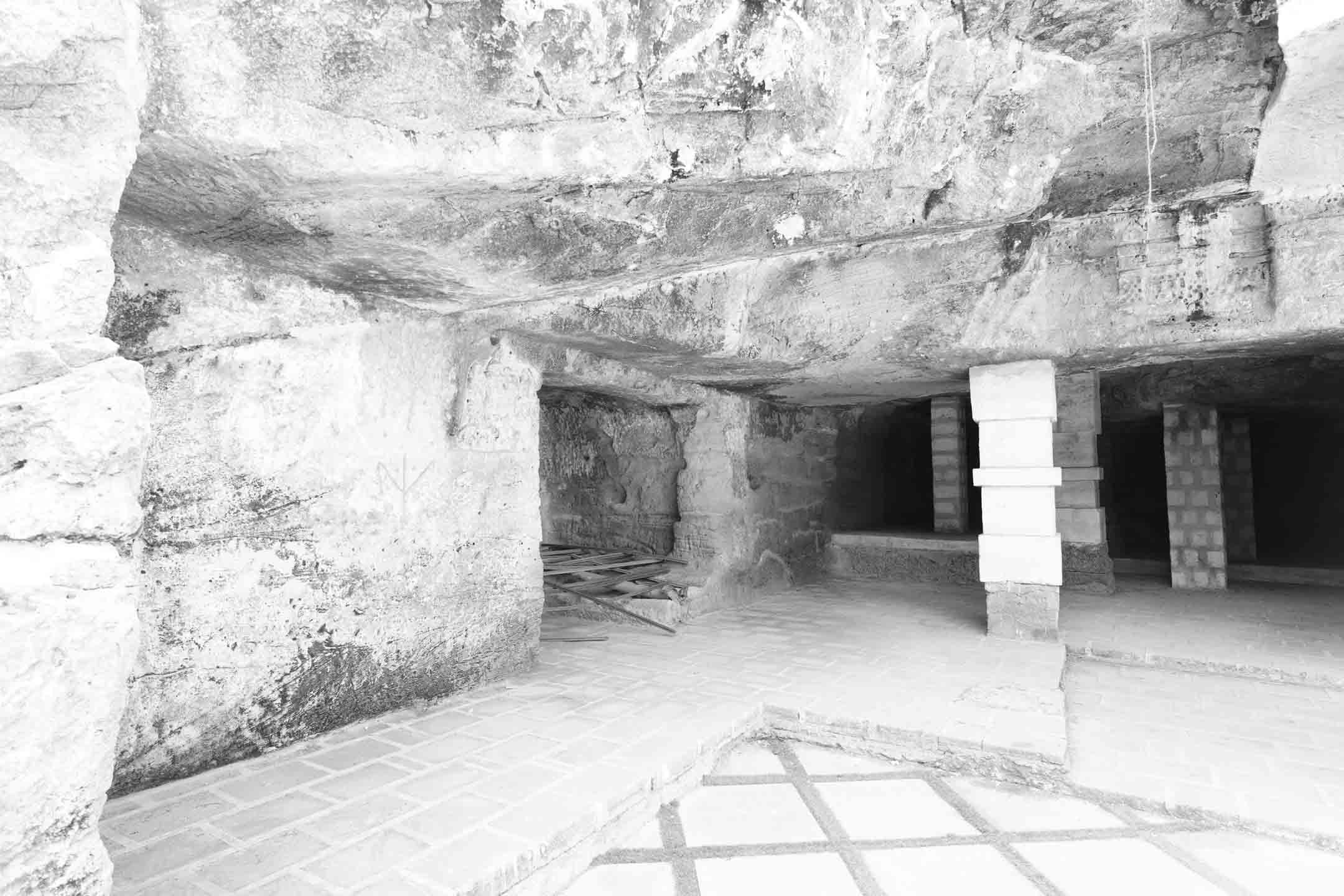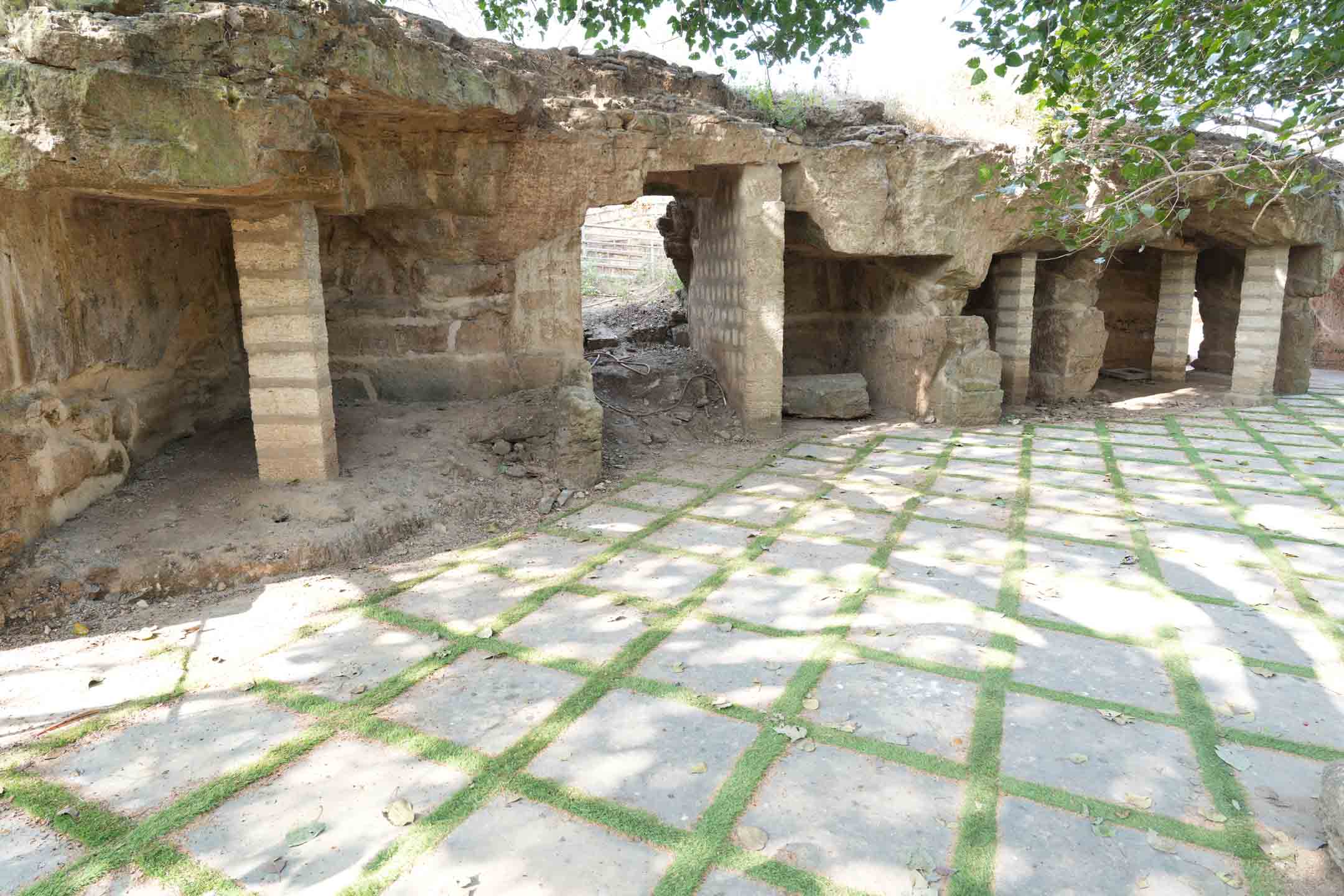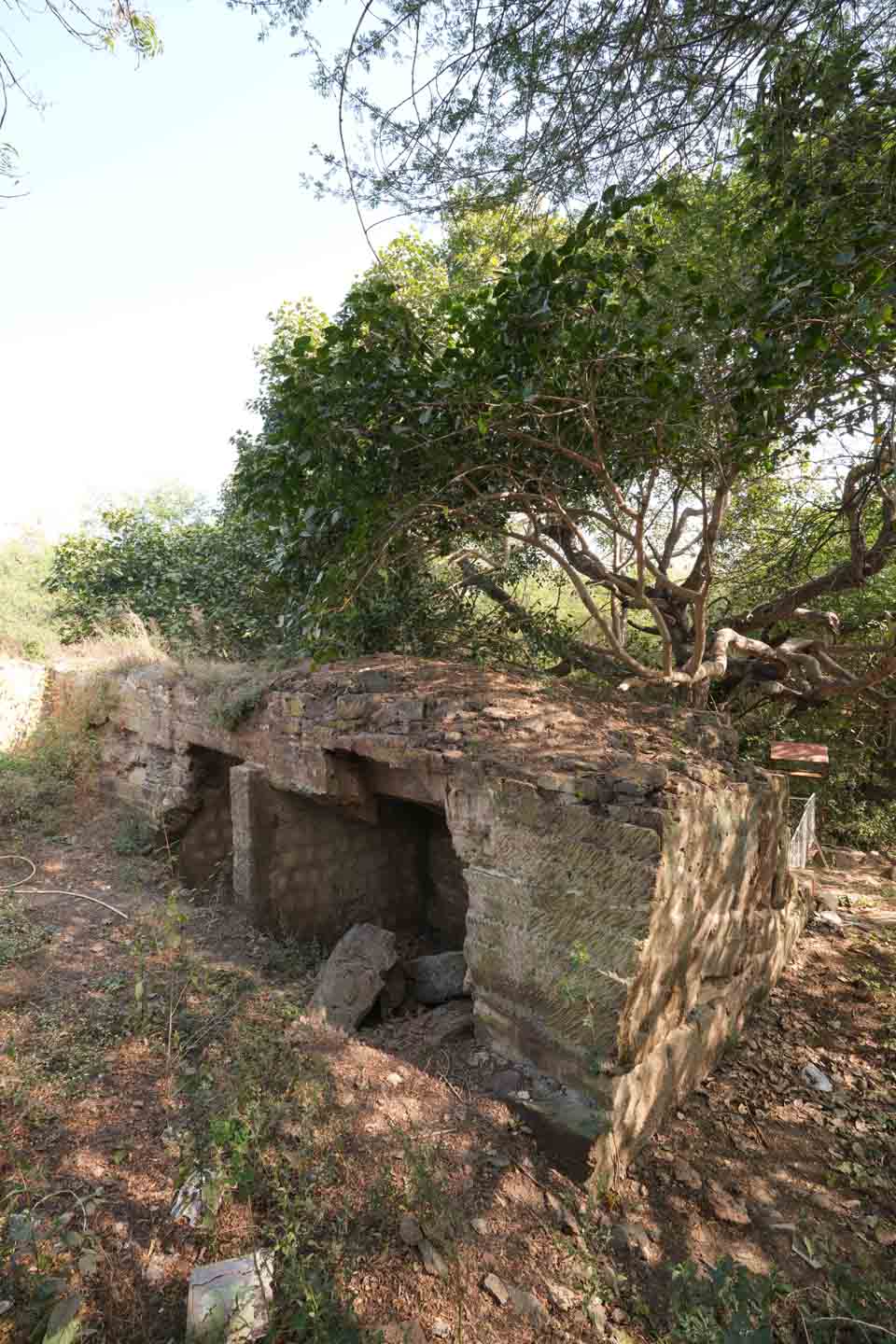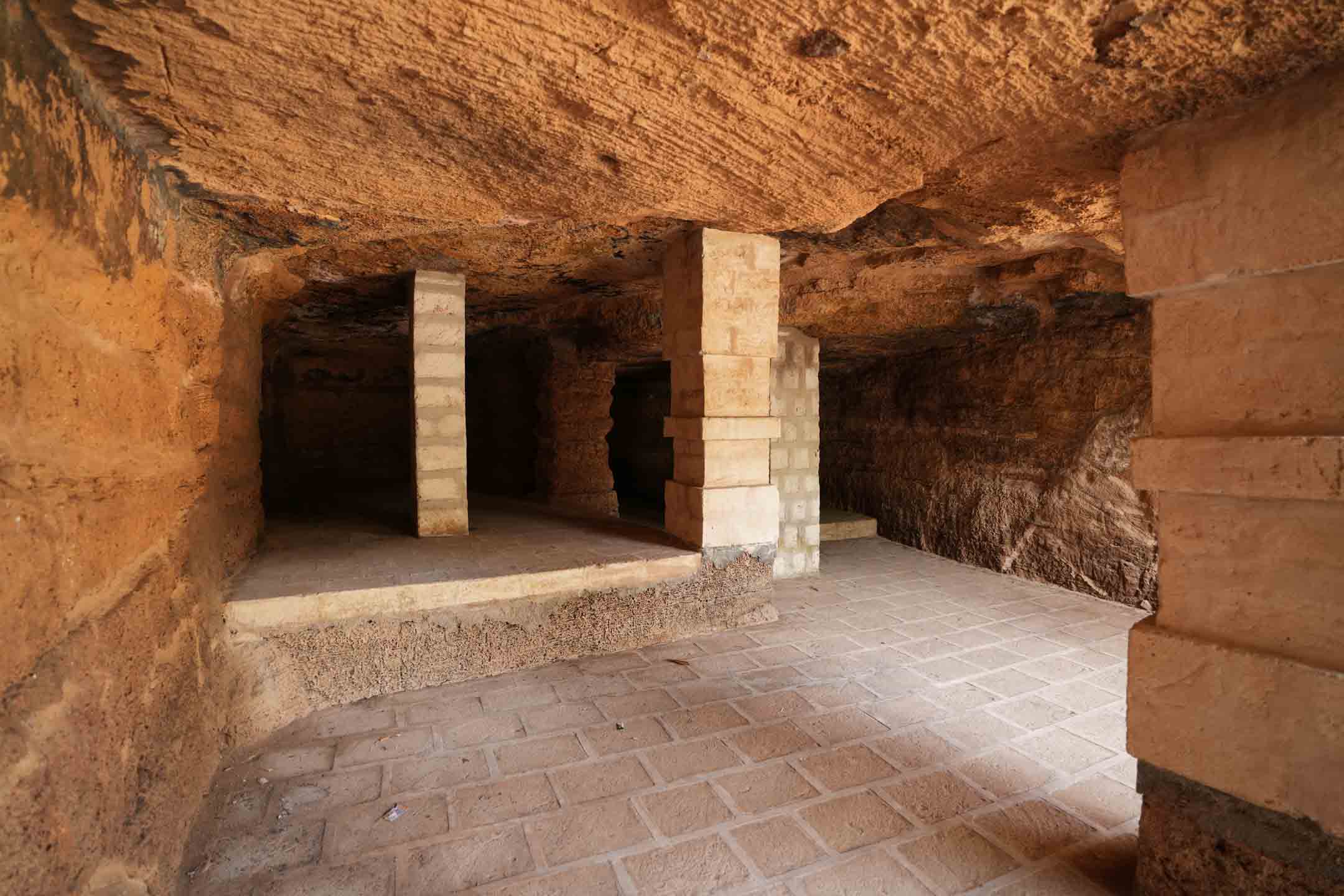
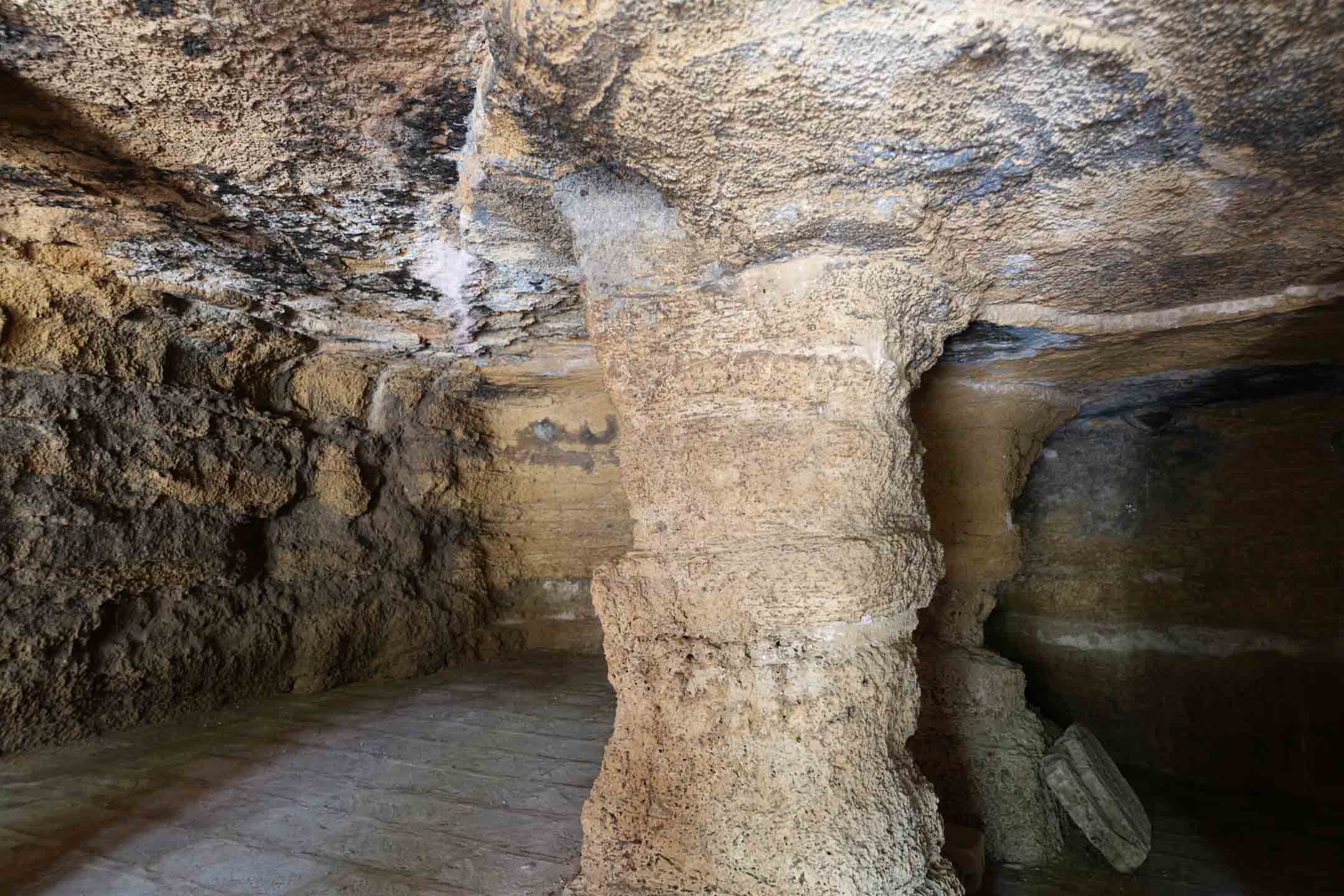
The Khambhalida Caves are an archaeologically significant site in Gujarat, located a short drive from the historic city of Rajkot. Dating to approximately the fourth or fifth century CE, these ancient rock-cut caves belong to the Buddhist tradition and reveal another fascinating layer of Saurashtra’s historical past. Nestled amid limestone hills and dry scrubland, the caves preserve traces of a period when Buddhism spread widely across western India through trade routes and cultural exchange. Today, the site is quiet and serene, standing in sharp contrast to the religious activity that once flourished here centuries ago.
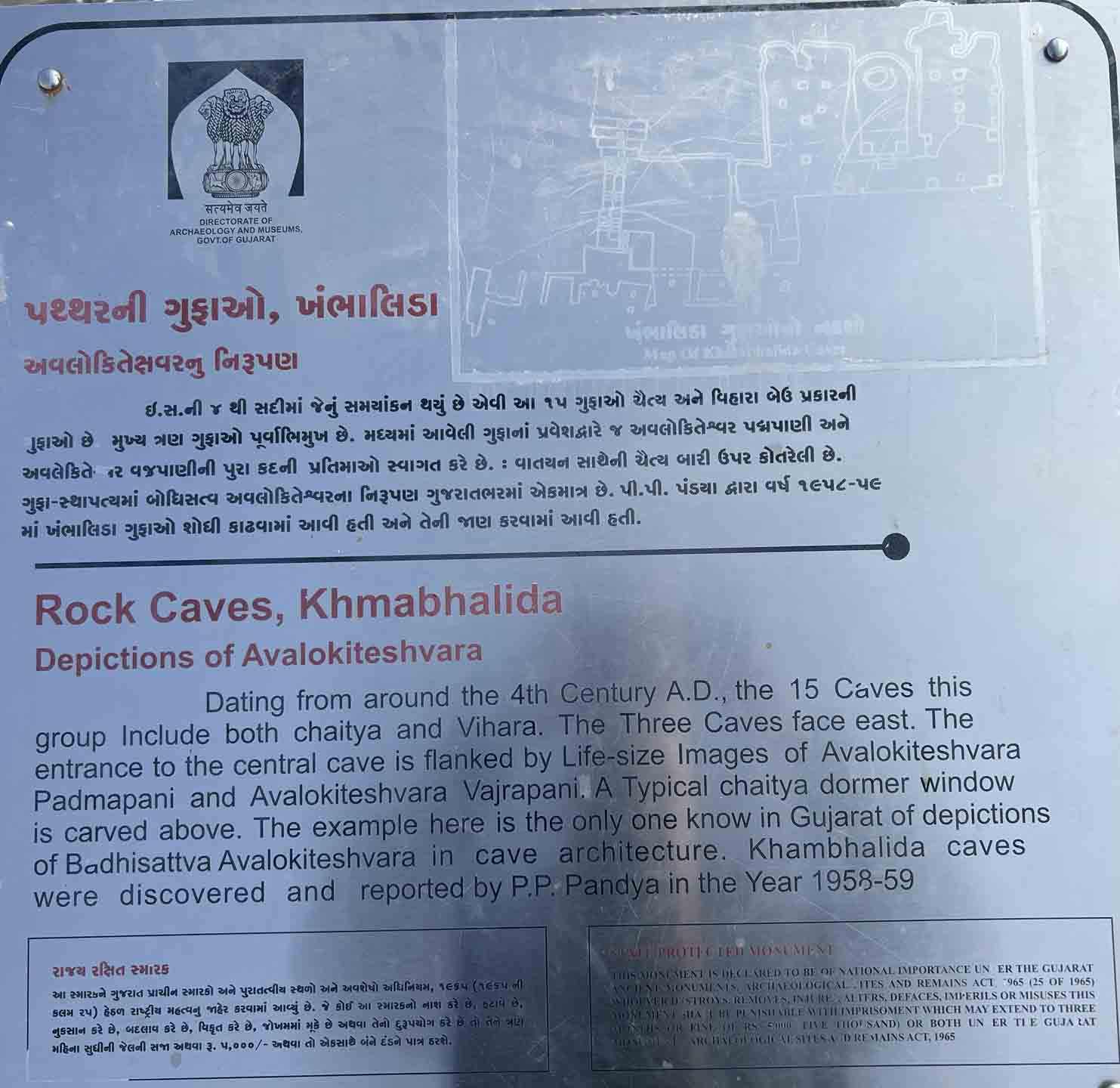
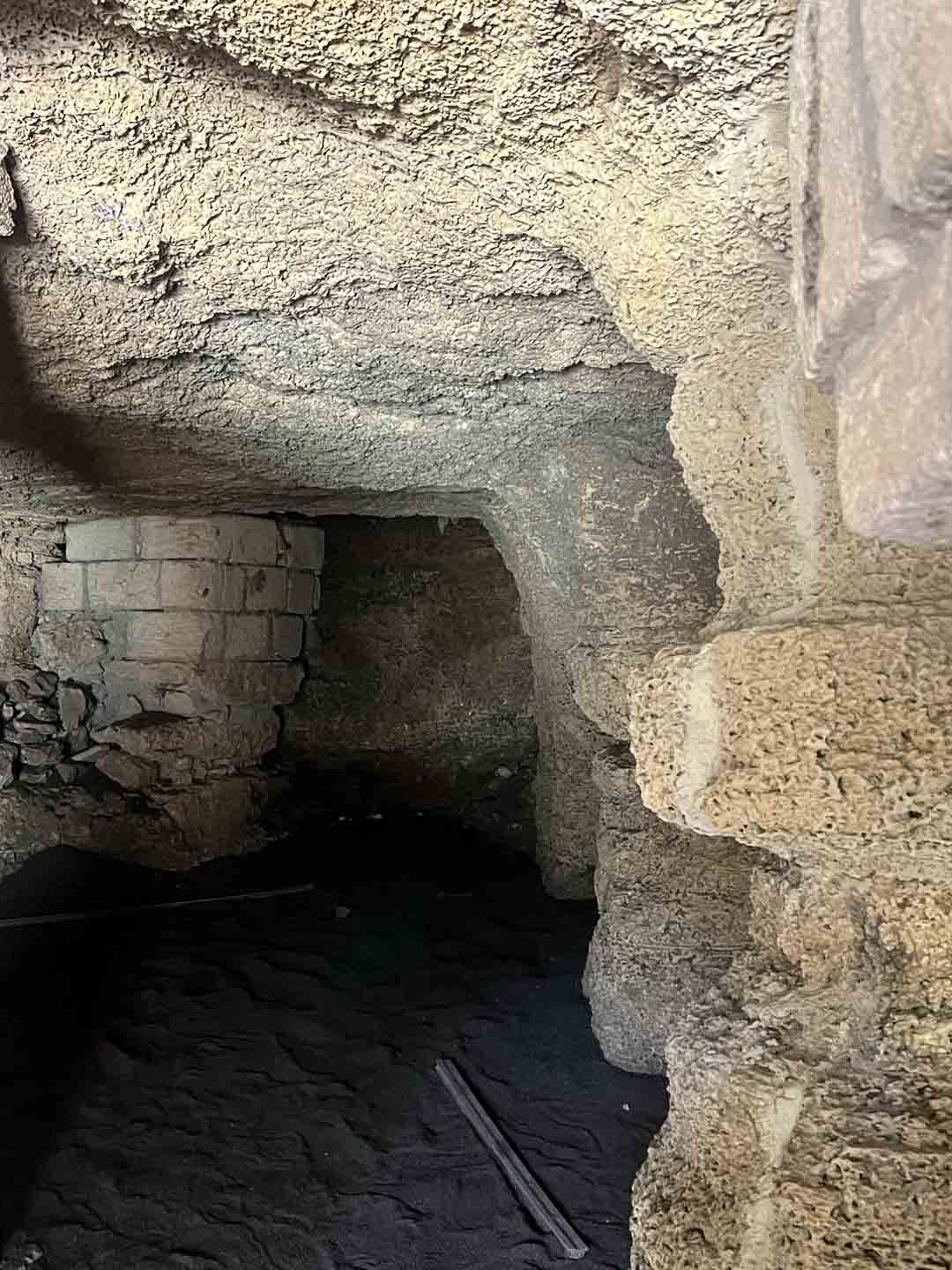
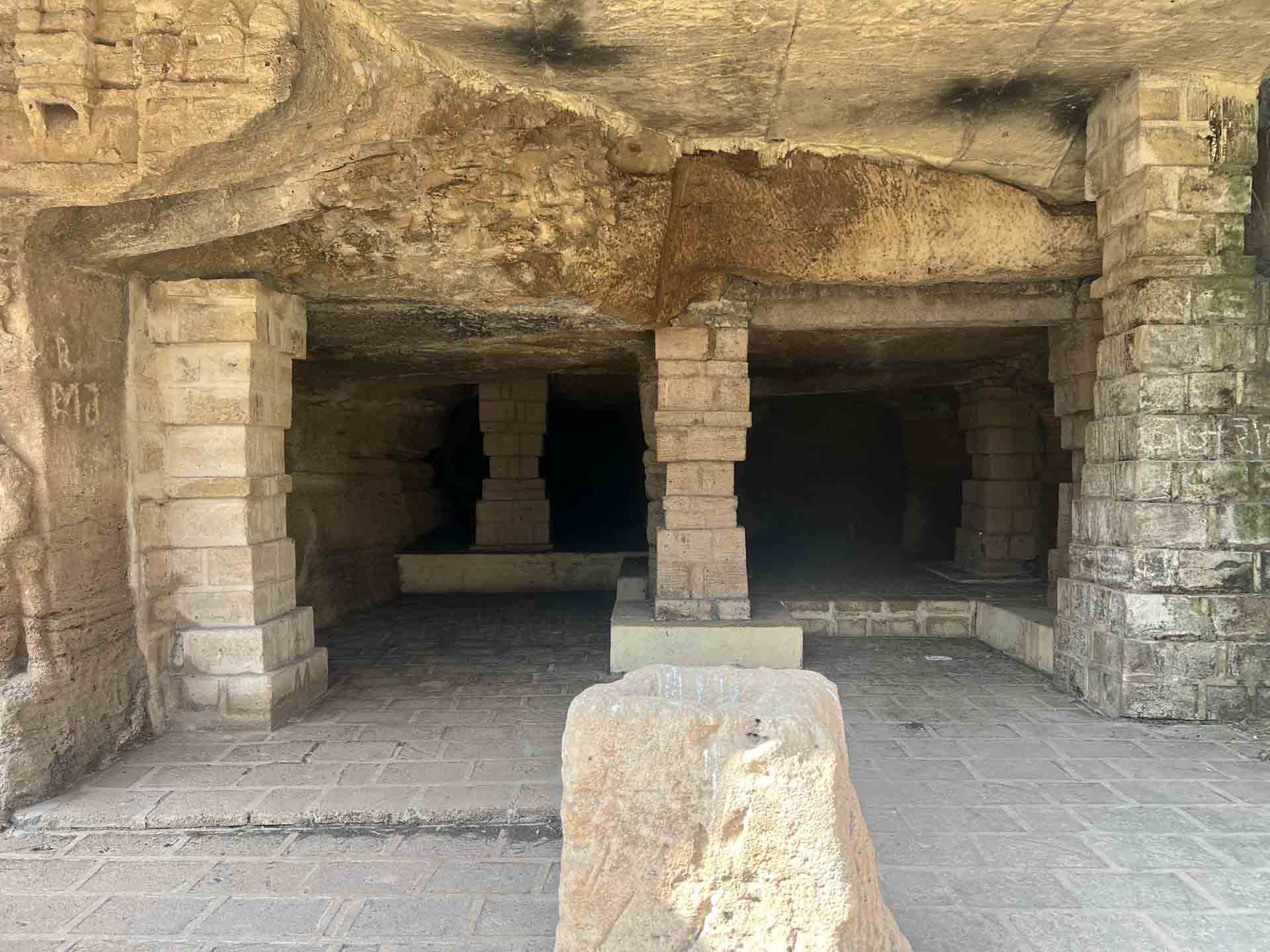
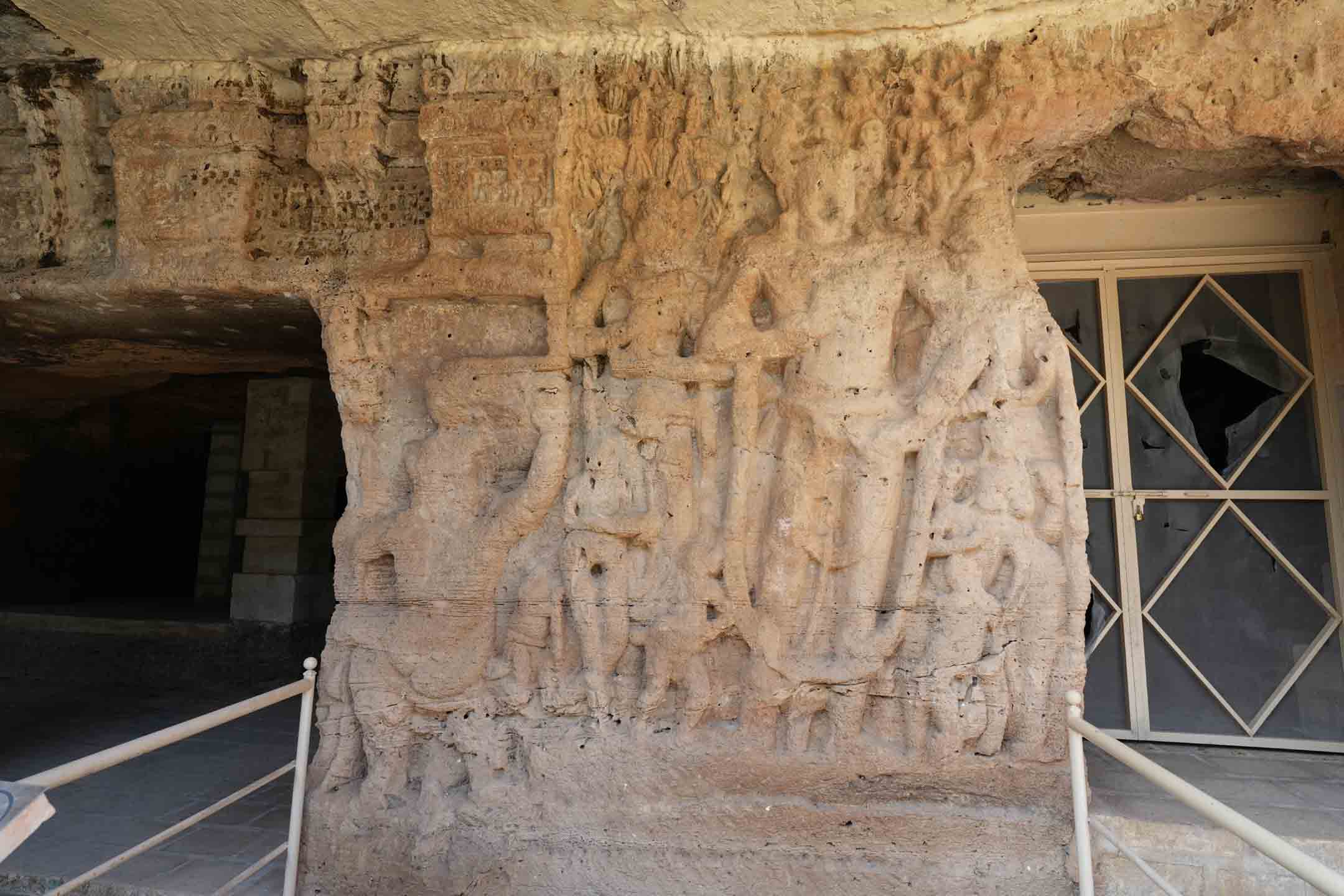
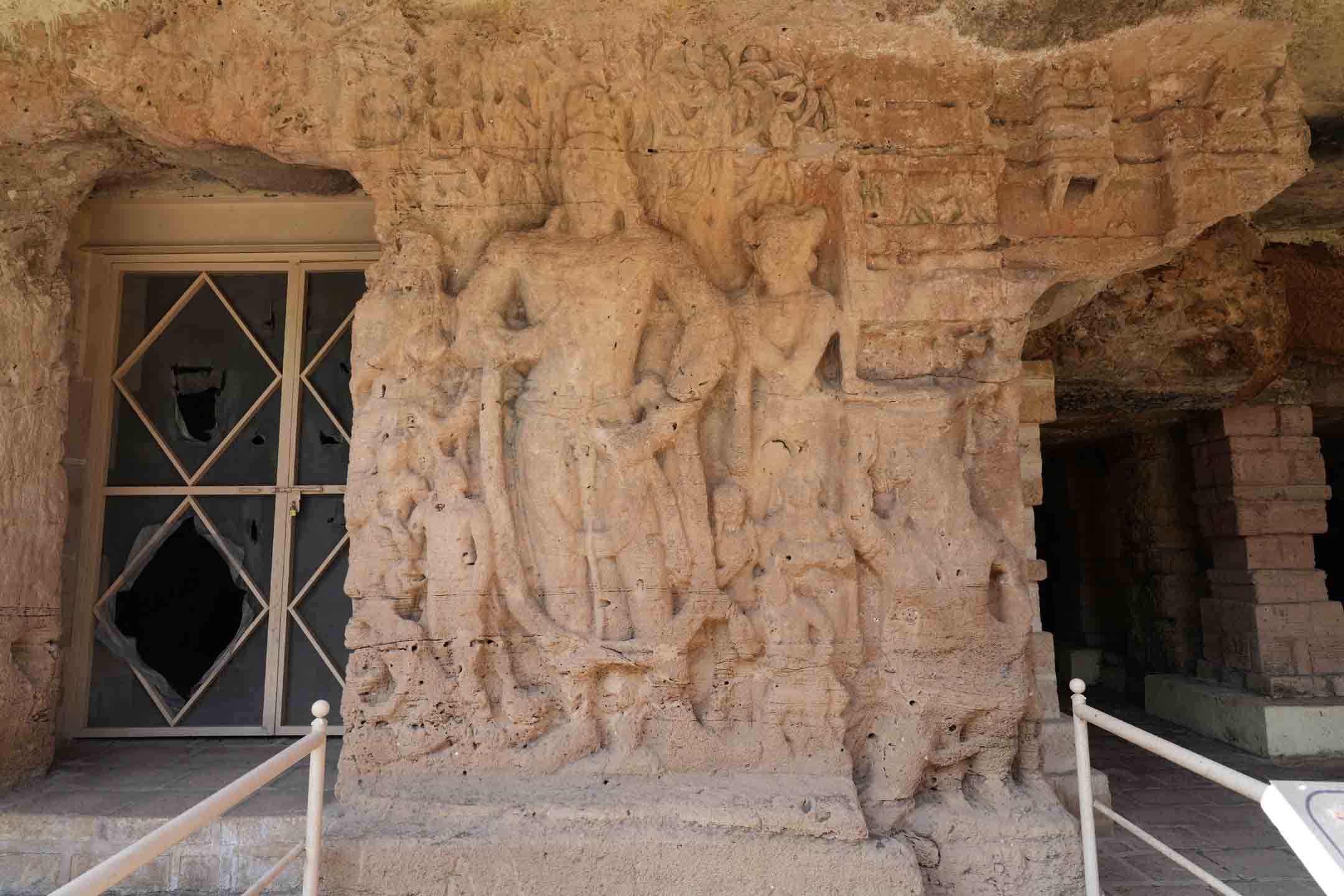
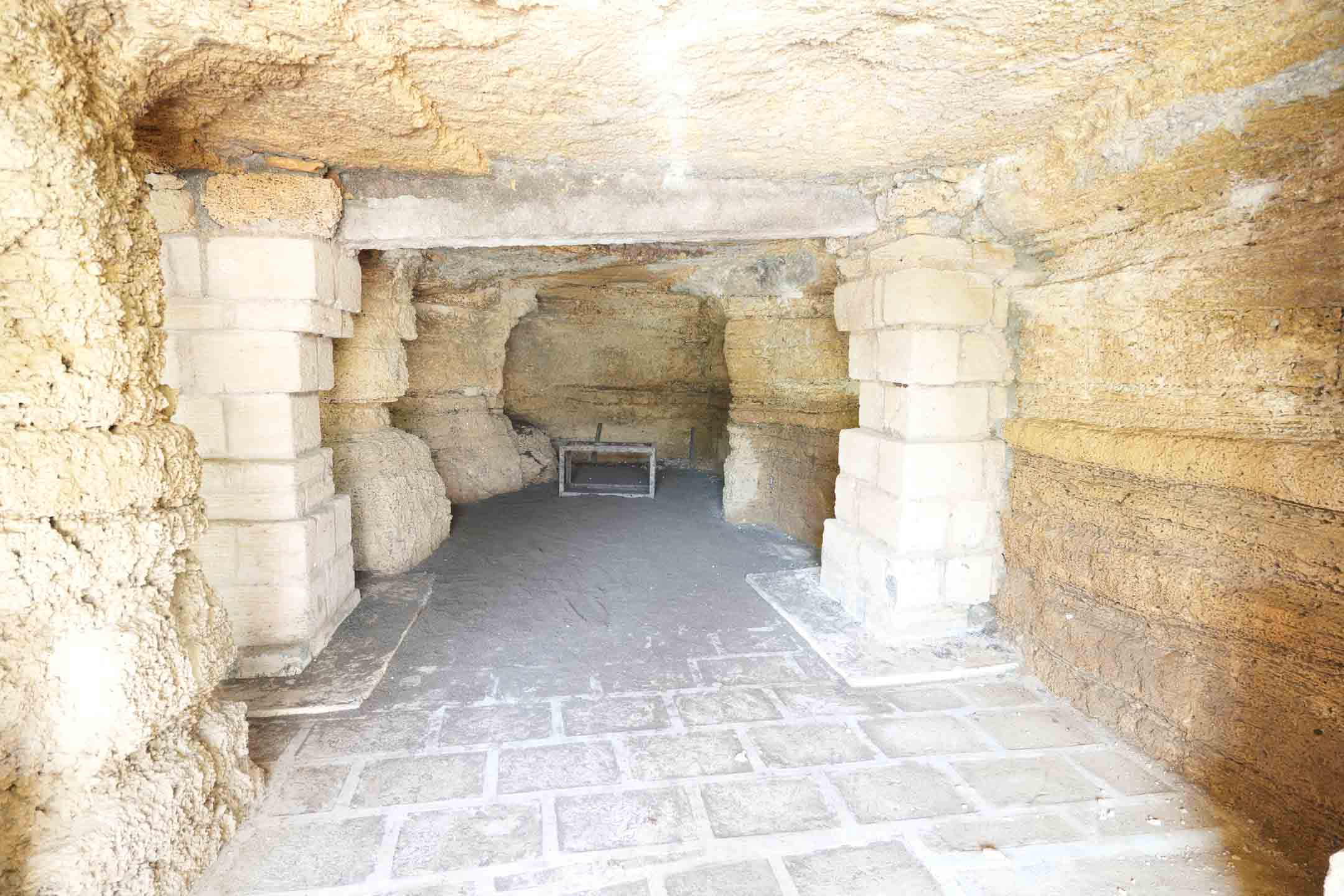
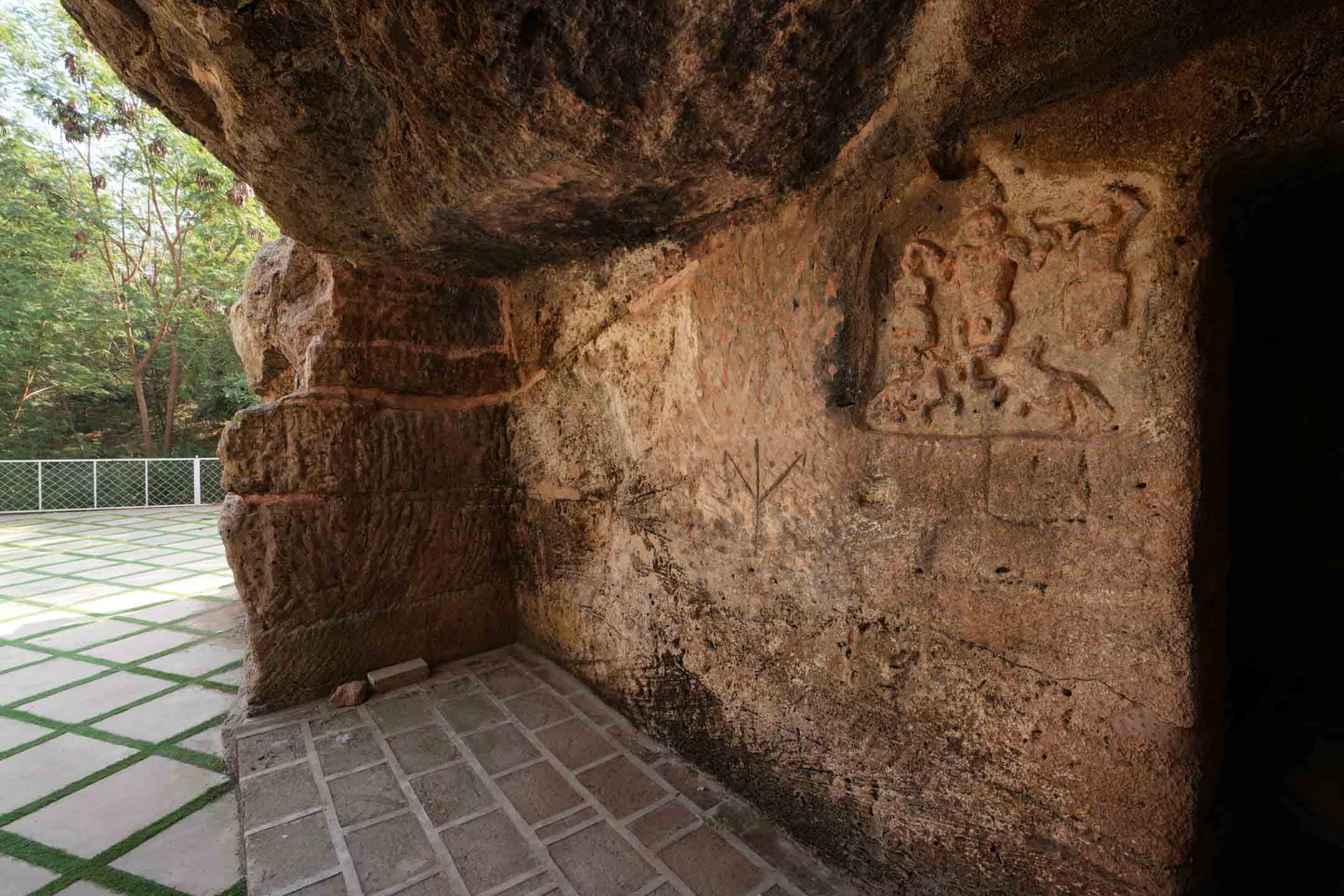
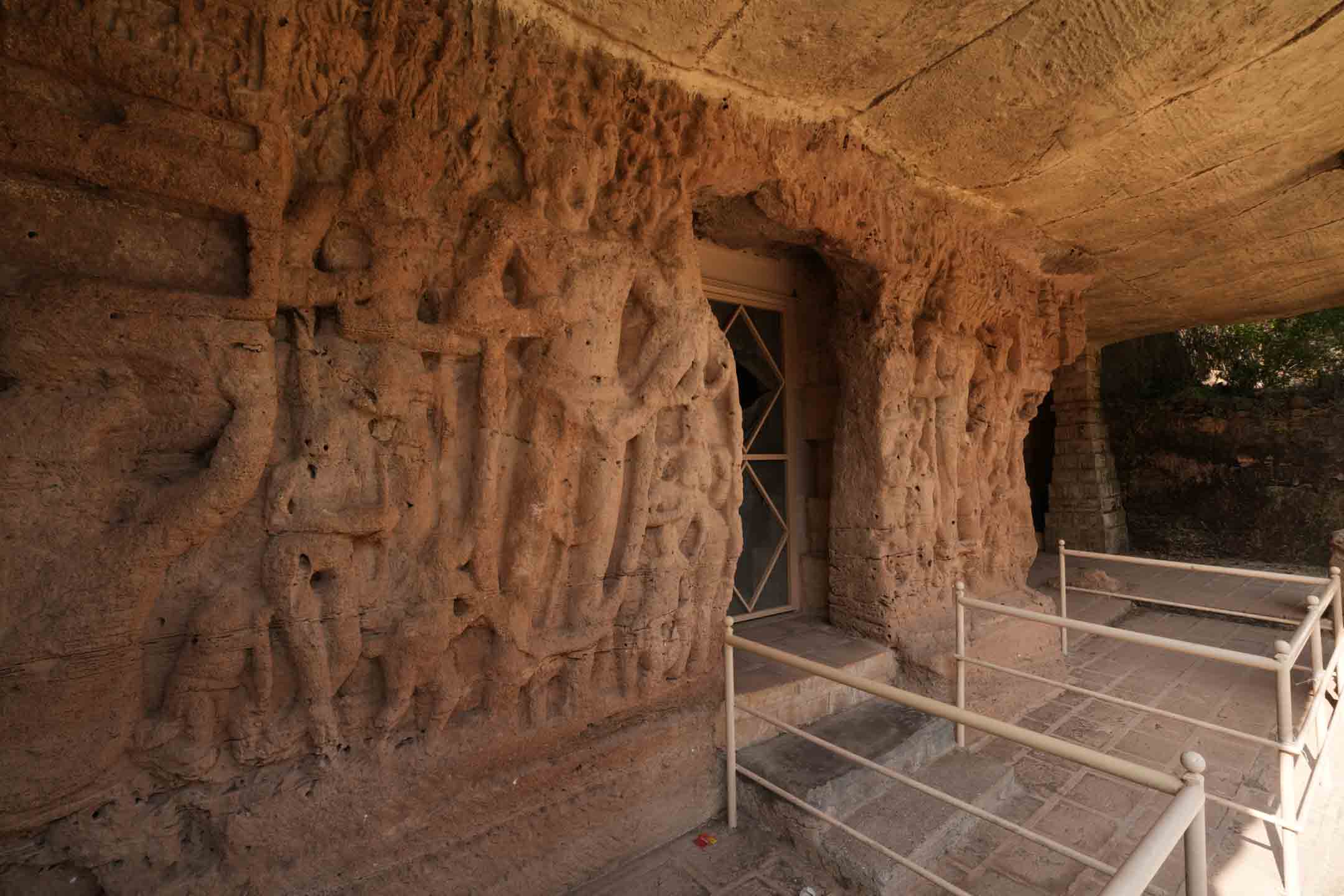
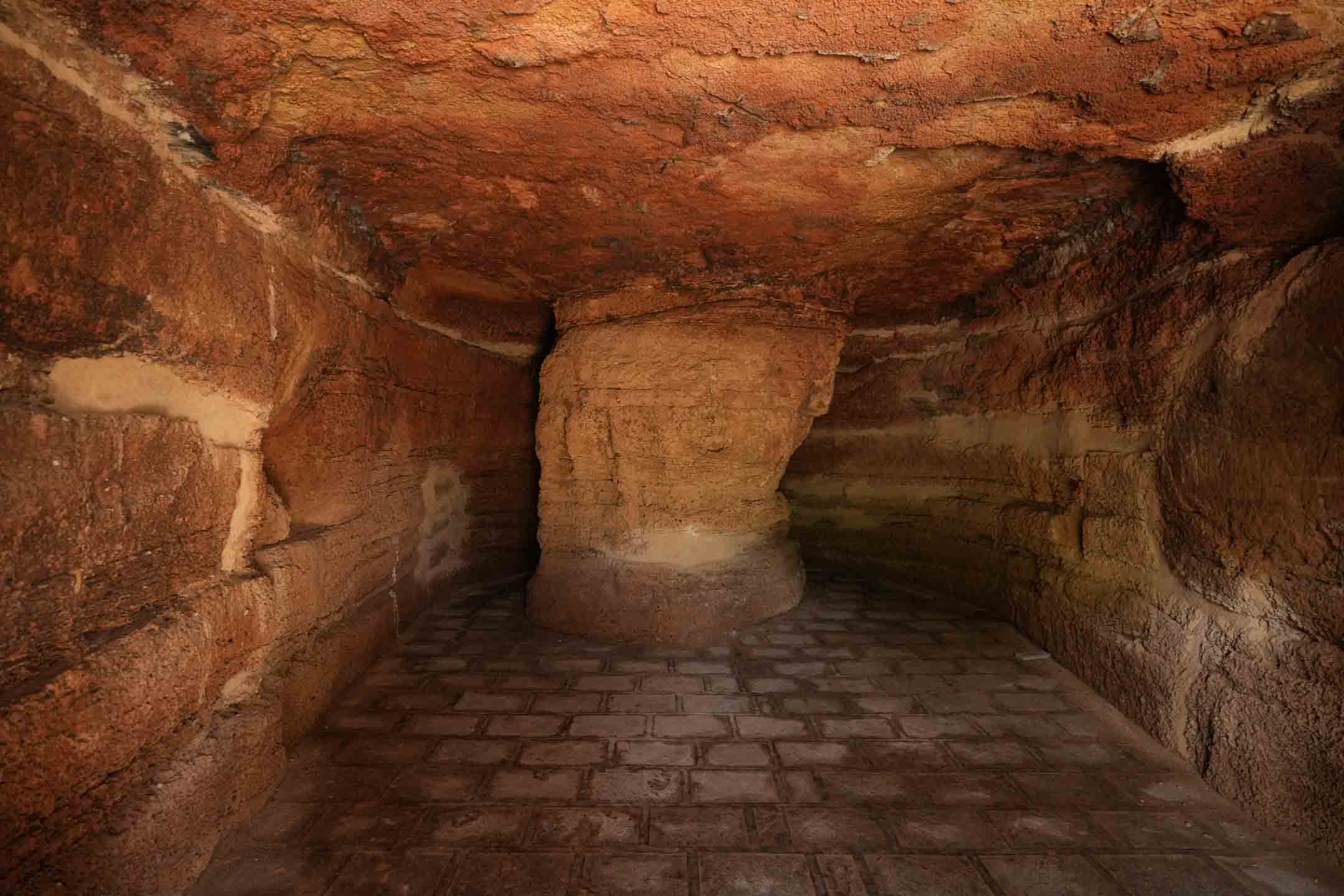
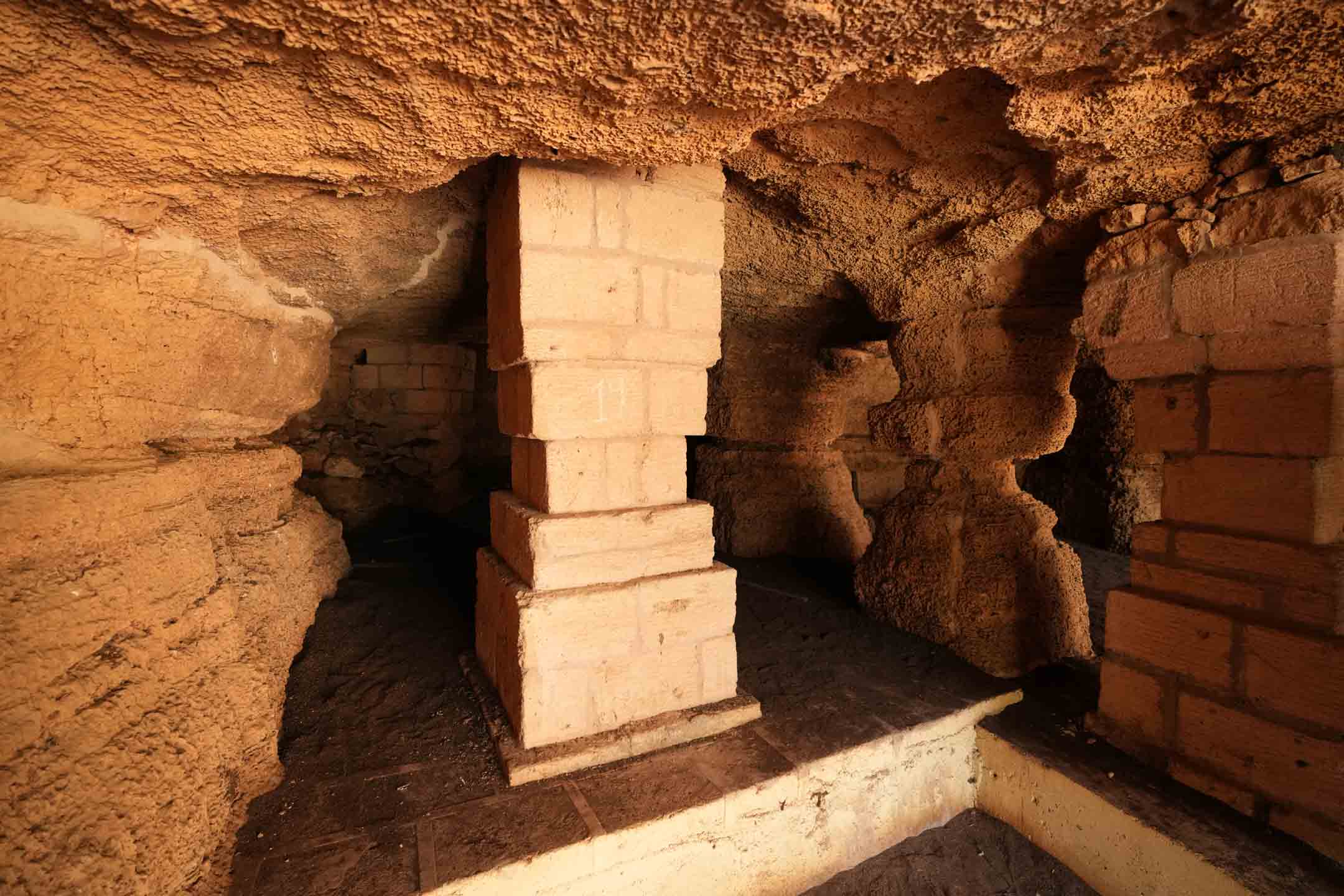
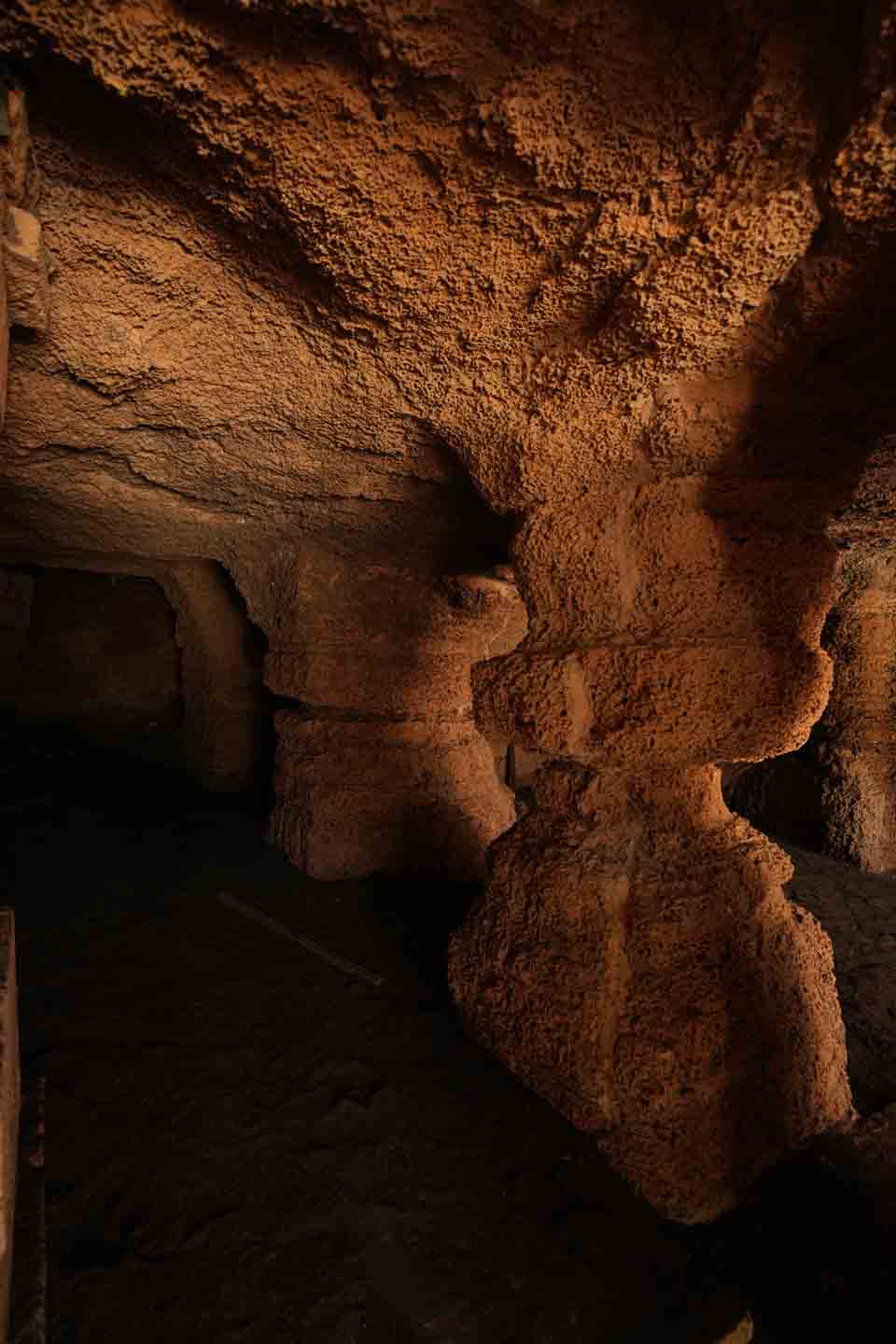
Carved directly into the limestone rock, the Khambhalida Caves contain monastic cells, prayer chambers, and sculptural panels associated with early Buddhist worship and monastic life. The most striking features are the large sculpted Bodhisattvas flanking the entrance to the chaitya hall. These figures display stylistic influences characteristic of late ancient Western Indian Buddhist art.
Their calm expressions, flowing drapery, and monumental presence create a dramatic contrast against the rugged landscape surrounding them. Though modest in scale compared
to some of India’s larger Buddhist cave complexes, the caves possess a remarkable sense of tranquility and historical depth.
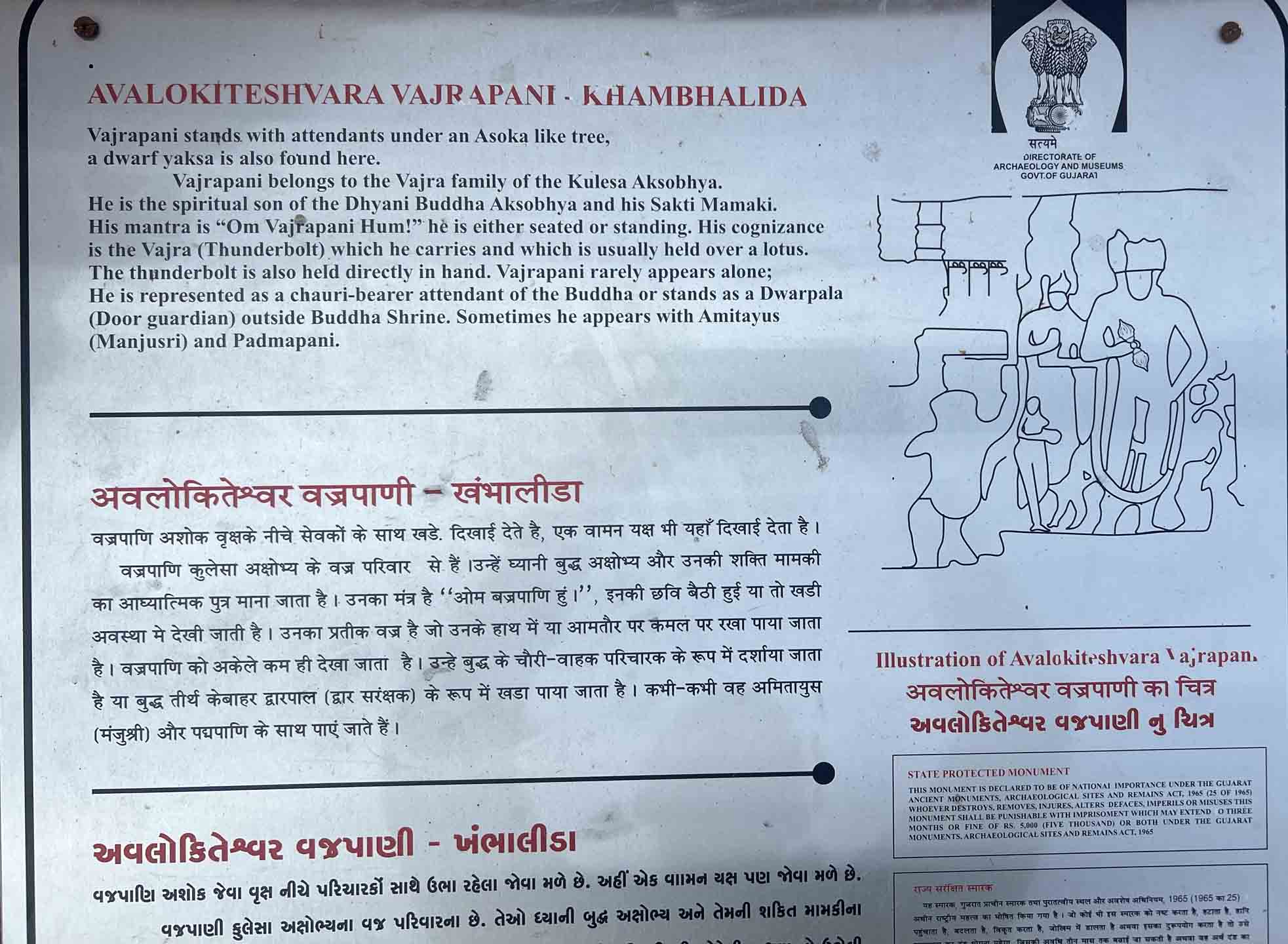
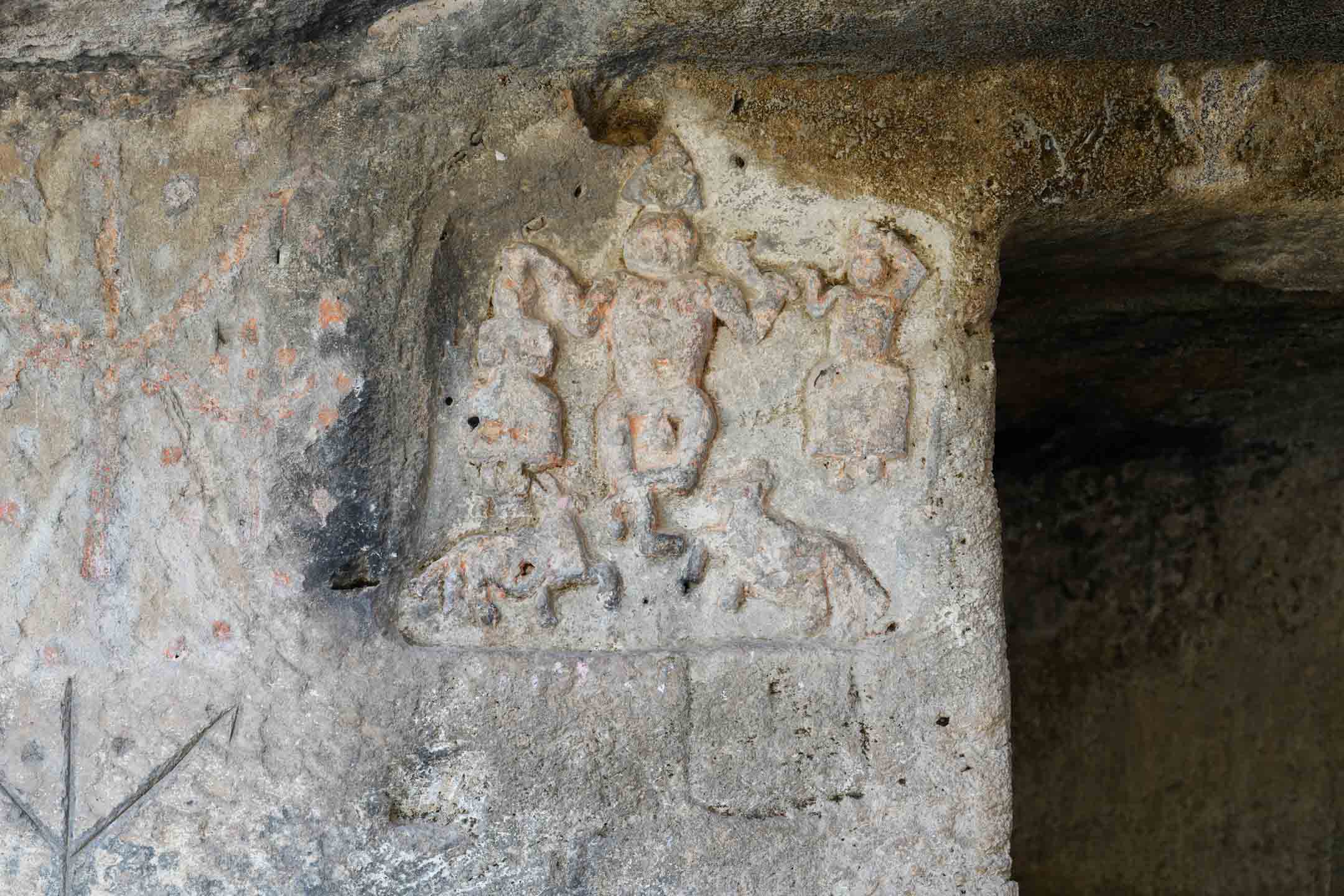
Khambhalida Caves One of the most wonderful thing to note in Khambhalida caves is the gargantuan sculptural depiction of Avalokiteshvara Padmapani, one of the greatest, both sought Bodhisattvas as per Mahayana Buddhism. The caves retain an extraordinary sculptural tradition which bears witness to the dissemination of Buddhist ideas and culture across western India in the fourth and fifth centuries CE. Padmapani is represented, according to the archaeological inscription on display at the site, standing below what looks like an Ashoka tree, being attended by attendants and having yaksha-apotheosis figures. The sculpture represents the Buddhist notion of compassion and spiritual protection, which is closely related to Avalokiteshvara in the Mahayana tradition.
The inscription also links the figure to Amitabha Buddha cosmology in Buddhism. Later Tibetan traditions mentioned in the site state that Avalokiteshvara was born from a light stream emerging from Amitabha whilst the latter was meditating. This image associating Avalokiteshvara with saviorhood — minding, and willing to end, the human condition —
allowed his transcendence. The chant “Om Mani Padme Hum” — presently one of the most-practiced Buddhist prayers throughout the Himalayan world — is linked to Avalokiteshvara practices and expresses the essence of spirituality imparted by the image at Khambhalida.
The dramatic surround of the Khambhalida caves and their well-worked sculptural program makes these caves all the more remarkable. Hewn out of limestone in the arid Saurashtra region, these caves show how Buddhist monastic culture thrived along the ancient trade routes that linked western India. This area would most probably have been passed through by merchants, monks, and travelers passing between ports and inland trade centers, facilitating the transmission of Buddhist religious and artistic traditions.
The Bodhisattva figures at Khambhalida have a quiet dignity typical of late ancient western Indian Buddhist sculpture. The drapery, posture (standing), and expression of calm in their faces indicate stylistic trends that tie the caves to broader artistic developments taking place throughout the subcontinent during the Gupta and post-Gupta periods.
Khambhalida represents a site of considerable artistic significance but much smaller in scope than other marvellous cave complexes such as Ajanta Caves (a world heritage site by UNESCO), largely due to the very few surviving examples of Buddhist cave sculpture from Gujarat.
Even today, the atmosphere around the caves is awash in solemn reflection. The wind hums quietly amongst the rocky hills, sparse vegetation holds to the arid soils, and a relative solitude keeps the site well-dressed for a former place of monastic rest. In contrast to heavily crowded heritage monuments, Khambhalida preserves its tranquillity, which lets one imagine the meditative world that existed here centuries ago.
It appears that way at first, but the caves suggest a much deeper history of Saurashtra than that of princely courts and mercantile cities. In fact long before the formation of modern Gujarat, this area fed into much larger networks of Buddhist thought and art that connected Western India to the larger cultural world of Ancient Asia, trade routes that brought goods to China from Egypt, and Galactic origins.
The Khambhalida Caves also serve as an important reminder of how Buddhism once spread across Gujarat’s urban centers and trade networks before gradually declining in the region.
Their survival preserves a valuable chapter in the layered cultural and religious history of Saurashtra. For travellers visiting from Rajkot, the caves offer not only an archaeological excursion but also a quiet encounter with a forgotten spiritual heritage that still lingers within the weathered stone walls and ancient sculptures of this remarkable site.