Somnath — A Sacred Jyotirlinga
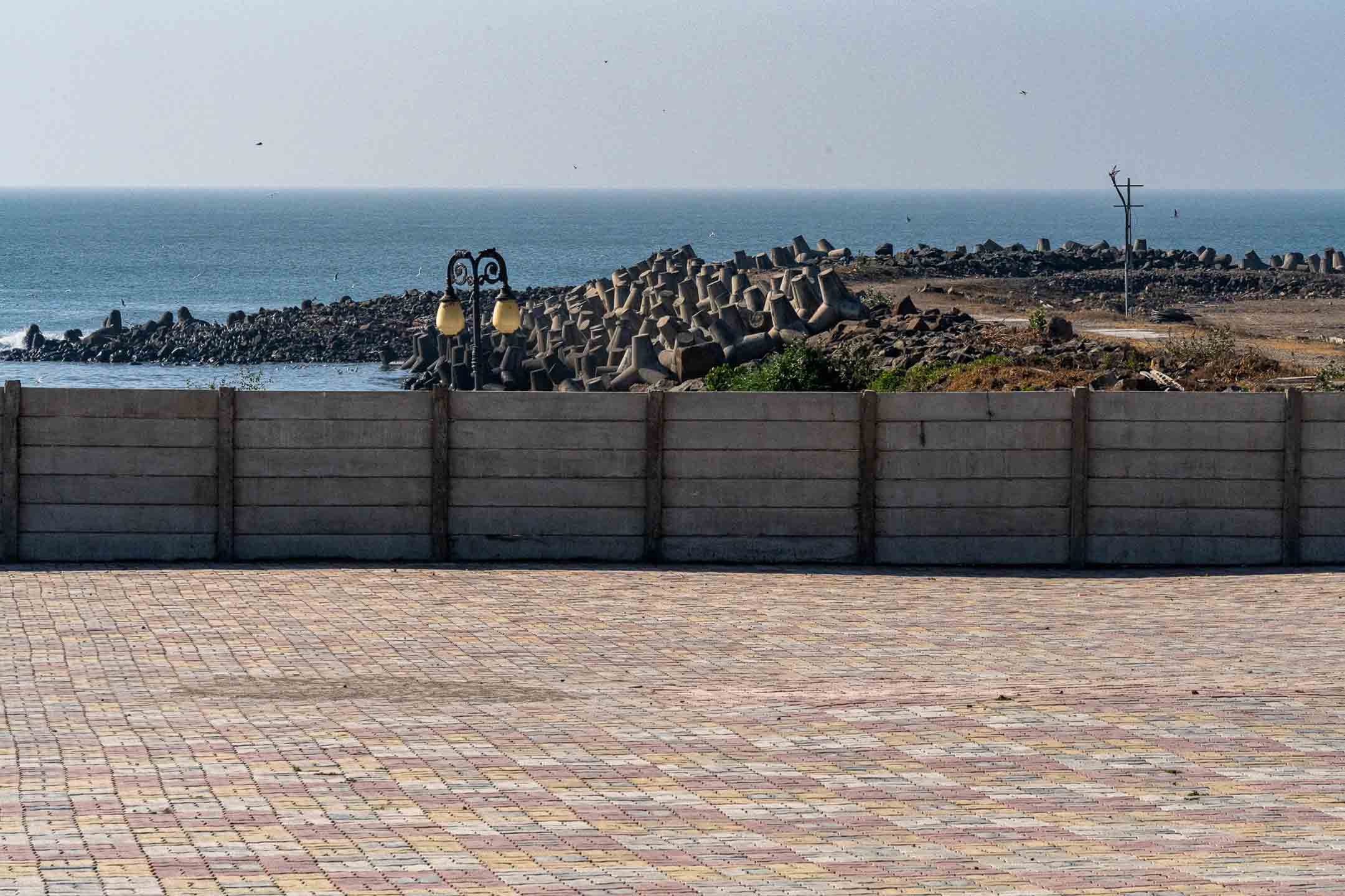
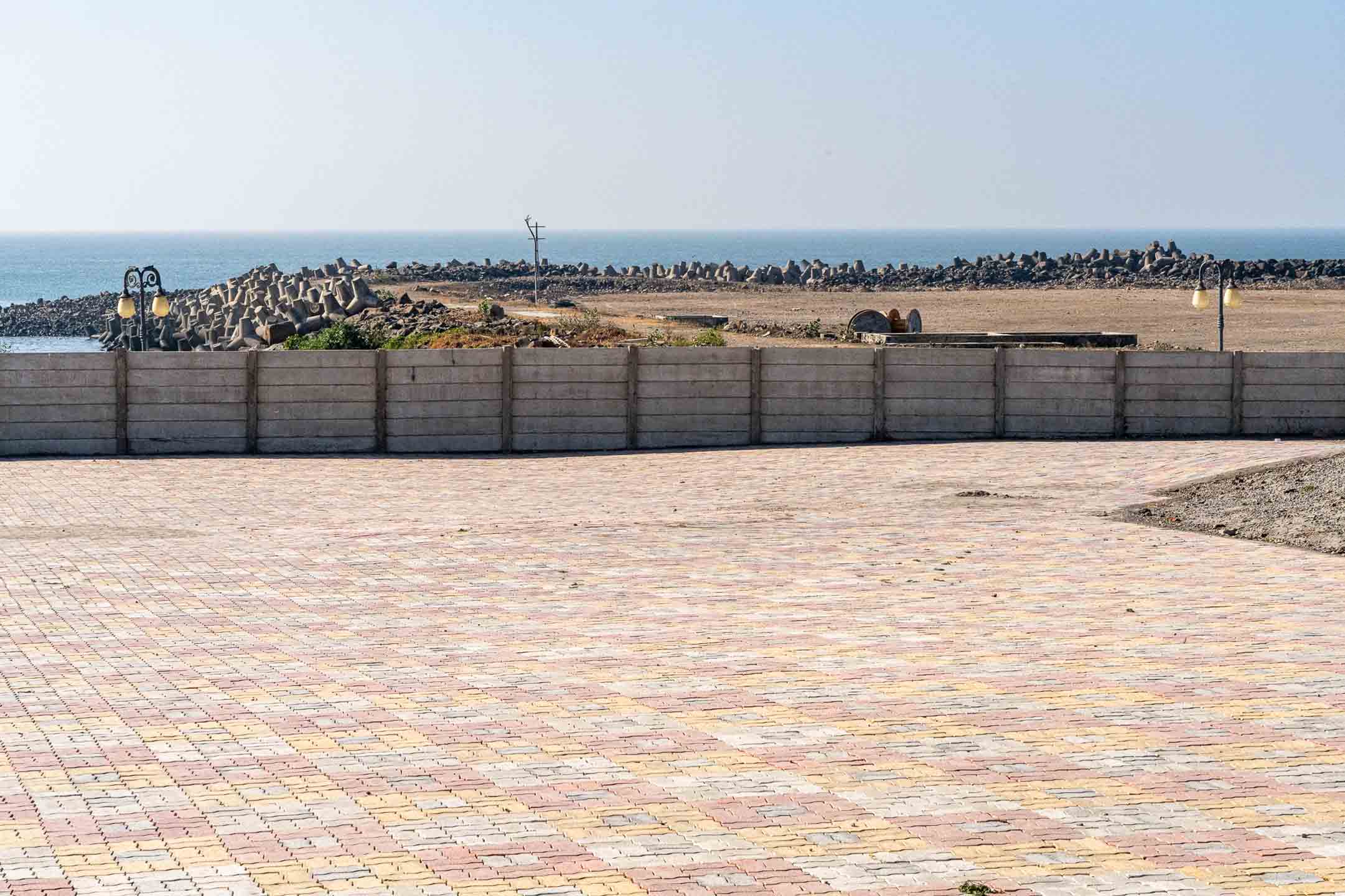
Somnath, the temple town on Gujarat’s western coast, overlooks the Arabian Sea stretching endlessly toward distant horizons. The convergence of history, faith, invasion, destruction, and renewal at this site has unfolded over more than a thousand years. Few monuments in India embody a story of resilience quite like the Somnath Temple, one of the twelve sacred Jyotirlingas dedicated to Lord Shiva and among the country’s most significant pilgrimage destinations.
Somnath occupies a remarkable geographical setting in the coastal town of Prabhas Patan, a few kilometers from Veraval. The temple stands beside the sea, facing an uninterrupted expanse of water. Within the temple complex is the Baan Stambh, a stone pillar bearing an inscription that states there is no landmass between this point and Antarctica along the same meridian. Whether viewed as a geographical observation or a symbolic statement, it reinforces the feeling of standing at the western edge of the Indian subcontinent.
Somnath also possesses a fascinating mythological heritage. According to Hindu tradition, Soma, the Moon God, was cursed by his father-in-law Daksha and lost his radiance. Seeking relief, Soma performed penance at this sacred site and worshipped Lord Shiva. Pleased by his devotion, Shiva freed him from the curse. In gratitude, Soma is believed to have established the first shrine here, giving rise to the name Somnath, meaning “Lord of the Moon.”
While mythology forms the spiritual foundation of Somnath, history provides an equally compelling narrative. References in ancient texts and travel accounts indicate that the temple was a renowned center of worship and prosperity for centuries. Supported by pilgrims, merchants, and royal patrons, it became one of the wealthiest religious institutions in western India.
The temple visible today is the result of one of independent India’s earliest cultural restoration efforts. Following independence, Sardar Vallabhbhai Patel visited the site and advocated for rebuilding the temple as a symbol of national and cultural renewal. Although Patel did not live to see its completion, his vision was carried forward by other leaders and administrators. The reconstruction was undertaken in the traditional Chalukyan style, and the present temple was consecrated in 1951.
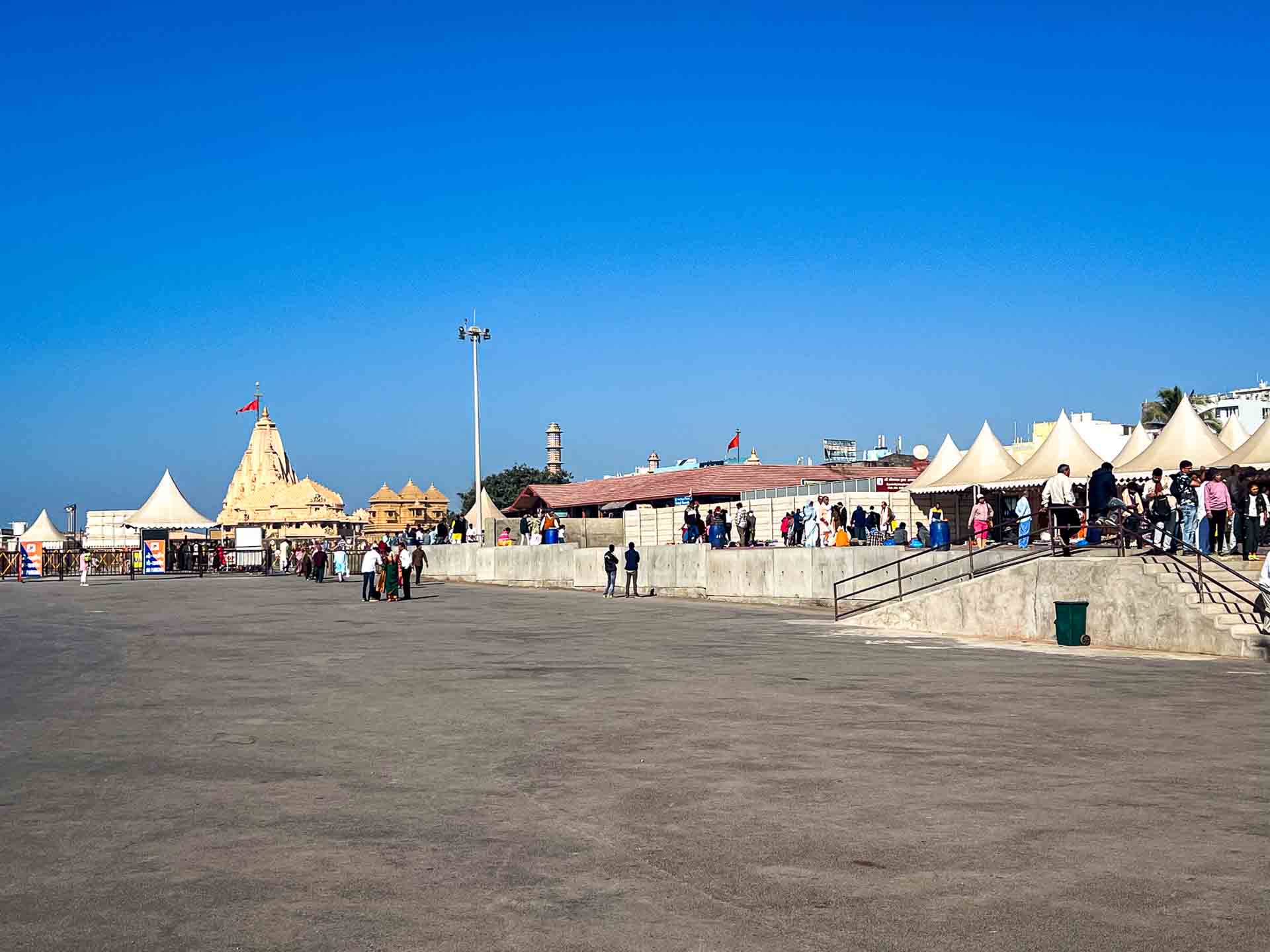
As visitors approach the temple, its dramatic location beside the sea immediately commands attention. Constructed from warm-hued sandstone, the structure rises gracefully against the coastal landscape. Its architecture follows the Kailash Mahameru Prasad style, characterized by intricate carvings, soaring shikharas, and harmonious proportions.
The temple’s main shikhara rises to approximately 155 feet and is crowned by a large kalash and a flag that is changed several times each day according to tradition. Every architectural detail reflects the craftsmanship associated with the great temple-building traditions of medieval western India.
At the heart of the temple lies the sacred Jyotirlinga. In contrast to the richly ornamented exterior, the sanctum is intentionally simple, directing attention toward the deity rather than architectural embellishment. Throughout the day, pilgrims gather to offer prayers, while the sound of temple bells and devotional chants creates an atmosphere of deep spirituality despite the constant flow of visitors.
One of the most memorable experiences at Somnath is standing along the seaward side of the temple. Waves crash against the rocky shoreline below while the temple rises above them, creating a striking meeting point of the natural and the sacred. At sunrise and sunset, changing light transforms the sandstone structure, lending it an almost timeless appearance.
The area surrounding the temple is home to several sites associated with both mythology and history. The Triveni Sangam marks the confluence of the Hiran, Kapila, and the mythical Saraswati rivers. Pilgrims visit the site to perform rituals and pay homage to their ancestors.
Nearby stands Bhalka Tirth, traditionally believed to be the place where Lord Krishna was accidentally struck by a hunter’s arrow before departing from the earthly world. The site forms an important part of the sacred landscape of Prabhas Patan and is closely connected with the final chapter of Krishna’s life as described in Hindu tradition.
The Somnath Museum, managed by the temple trust, offers valuable insight into the region’s history. Sculptural fragments, inscriptions, architectural remains, and archaeological artifacts help illustrate the many phases through which the temple and its surroundings have evolved.
What makes Somnath remarkable is not merely its religious significance or architectural beauty. Many temples possess those qualities. Somnath stands apart because it embodies continuity. Across centuries of upheaval, changing dynasties, and repeated destruction, the site remained a place of worship and devotion.
For travelers, historians, photographers, and pilgrims alike, Somnath offers more than a visit to an ancient temple. It offers a lesson in perseverance. The temple’s stones may have been rebuilt many times, but the faith they represent has endured.
At the edge of the Arabian Sea, where waves have struck the same shore for millennia, Somnath continues to stand as a symbol of resilience, renewal, and unwavering faith.