Bhutan

Bhutan: A Divine Himalayan Sanctuary
A Realm Between Earth and Sky
Nestled in the creases of the eastern Himalayas, betwixt the behemoths of India and China, it has kept its soul close to the chest for centuries—not simply through insularity, but with a mindset that prizes equilibrium over domination. It is a realm in which Gross National Happiness matters more than national productivity, where heritage is not preserved in of a museum, but instead practised every day, and where peaks grow not merely as stone formations, but as mountains of faith.
To visit Bhutan is to enter another dimension. The rhythm of living is unhurried, air scented with incense and pine, streets with monks and prayer flags threaded like poems blowing with the wind. Monasteries sit perched on cliffs, fortresses stand like ships of white and red above rivers, and valleys resonate with folklore as legitimate as the clouds drifting over snow peaks.
Bhutan is a place where myth and history walk side-by-side, where the sacred infuses the everyday, where resilience finds form as harmony.
Thimphu – The City of the Past and Present
Thimphu is in great part village rather than a metropolis; yet, it is where the contrasts of Bhutan converge. Instead of lights, traffic is directed by policemen in white gloves; monks walk alongside students holding smartphones; the weekend market sells sacred texts and sacks of chilies.
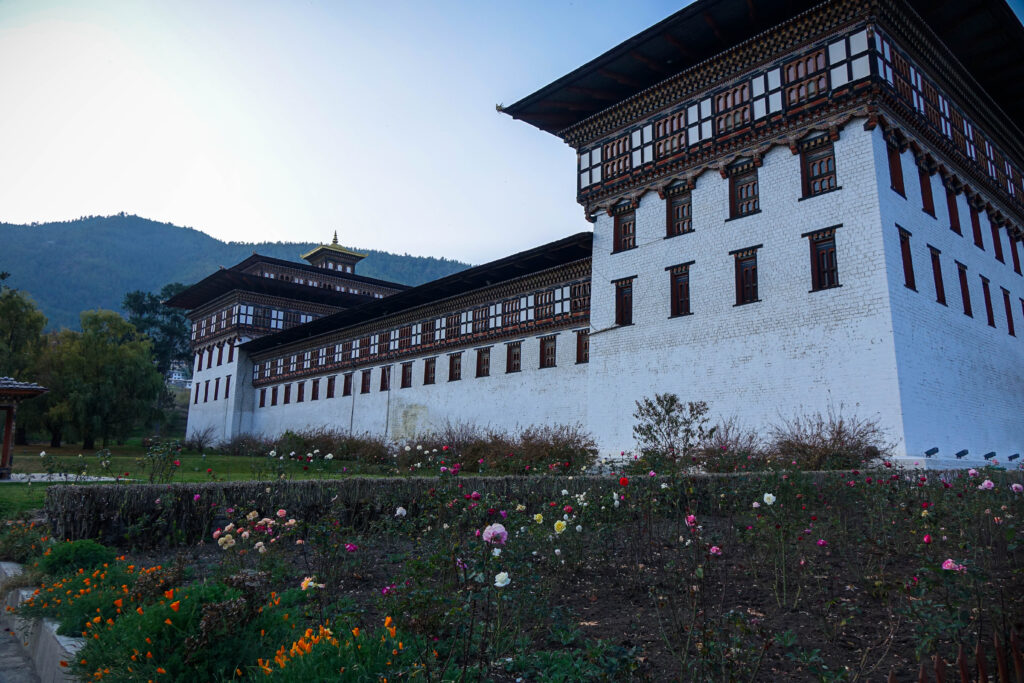
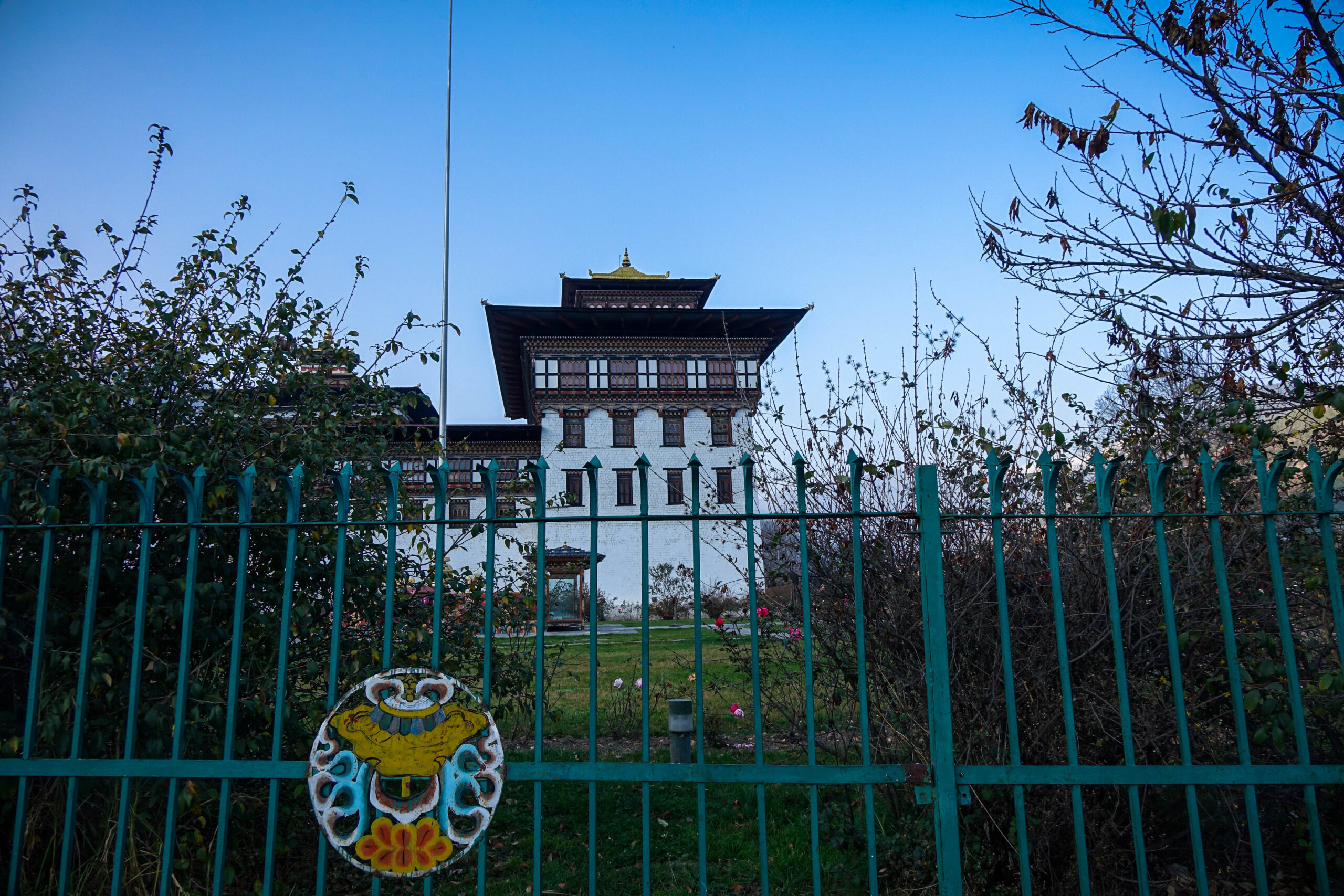
Its highlights include the majestic Tashichho Dzong, which houses the government and monastic body. At sunset, its white walls reflect the golden ray, which makes it shine in the mountains like an eternal eternal flame. Abuzz with worshippers going around the Memorial Chorten, built for the third king – circling, prayer beads in hand. The Buddha Dordenma is a gigantic golden statue that looks over the valley (and of course you) and on the inside it is lined with thousands of smaller Buddhas.
Thimphu balances its roots with some modernity, with neither pole dominating the other. You see the philosophy of moderation that defines Bhutan in its streets.
Tiger’s Nest – Paro Taktsang
Paro Taktsang, the so-called Tiger’s Nest Monastery, is one of the few places that grabs the imagination so utterly. Seemingly less made than summoned, perched impossibly on a sheer cliffside 3,000 feet up from the valley, as though the mountain itself gave permission for the manmade form to sprout from its rock rib cage.
According to legend, in the 8th century Guru Rinpoche also called Padmasambhava, the saint responsible for bringing Buddhism to Bhutan, flew here on the back of a tigress. He went into a cave and meditated for three years, three months, three weeks and three days, conquering the demons that haunted the valley. Some say, the tigress was his lover who turned into protective avatar. His cave still occupies a central position in the monastery; its air filled with the remnants of hundreds of years of chanting.
The pilgrimage to Taktsang is one in itself. It threads through blue pine and rhododendron forests scented with spirituality, where prayer wheels set spinning by rushing mountain streams sing mantras to the breeze. Horses are there for tired pilgrims but most prefer to walk for the distance is part of the devotion. A teahouse halfway down affords the first full vision of the monastery, suspended between earth and sky as if dreamt. Its golden roofs glimmer on the cliffs at sunset, and one almost senses the tigress still prowling in the shadows of the forest.
Within its chambers, murals of wrathful deities and serene Buddhas decorate the walls, and every corner is alive with the flicker of the lamps. To stand here is not to just witness architecture, but to feel caught between history and myth.
Punakha Dzong – The Palace of Perfect Bliss
Rub Paro Taktsang together and you have a dream scratched into stone; scrape Punakha Dzong corn in a sea of rivers. Constructed in 1637 at the confluence of the Pho Chhu (Father) and Mo Chhu (Mother) rivers, it towers above with whitewashed walls and golden spires, its quadrangles dappled by jacaranda, which flowers violets in spring. Even the name of the place itself —Pungthang Dewa Chenpoi Phodrang, the ‘Palace of Great Happiness’ embodies its spirit.
Once the site of the crowning of Bhutanese kings, the hall can still host royal weddings. It is home to the holy object of Rangjung Kharsapani, a naturally manifested statue of Avalokiteshvara, the bodhisattva of compassion. The site is said to have been chosen after Zhabdrung Ngawang Namgyal, dreamed of a great palace by the rivers. Upon the completion of the dzong, the spirit of the valley had blessed the dzong in the form of a white snake which slithered into its foundation.
The walk across the wooden cantilever bridge into the dzong brings you into another century. The chants of monks reverberate in courtyards, the maroon of their robes against the background of the white walls. None of this here is mere decoration — it tells the story of the life of the Buddha, the Wheel of Life and cosmic battles between deity and demon. In spring, when gushing rivers and fragrant trees lead the senses to the long-forgotten capital of Bhutan, Punakha Dzong rises before one not merely as a grey printed fortress but as a sea bubbled colour decked in devotion.
Trongsa Dzong – The Timeless Fortress of Ancestral Kings
As one drives eastwards the road spirals through winding mountains until it becomes visible, Trongsa Dzong perched on a ridge with breathtaking views above the Mangde Chhu river. That cascades down the hillside in white walls and courtyards like a waterfall, larger than any other dzong in Bhutan.
It is not just majestic but symbolic as well: Trongsa Bhutanese kings are by right first governors of Trongsa, making it a cradle of Bhutanese monarchy. Pervaded by Sinhalese control, an ancient city of Sri Jayawardenapura Kotte, once was of extreme strategic significance for commanding the east-west trade route.
According to legend the first temple here was built after a monk found a fire burning on the hillside without fuel. Treating it as a sign, he built a small shrine which became the large dzong. As in the political history of the day, so too the spiritual weight of the time — one need only walk its grand, sometimes labyrinthine corridors to feel it. Each year, its courtyards are filled with dancers in brocade wearing elaborate masks, twirling and stamping in time to a belief that the movement will sweep away evil and blessings in its wake during the annual tshechu festival.
Bumthang Valley – The Kingdom of Stories
Bumthang Valley: If Bumthang Valley is indeed the spiritual heart of Bhutan. Some of the kingdom’s oldest monasteries, all of which are steeped in myth, are nestled in rolling hills.
The Jambay Lhakhang, one of the 108 temples built overnight by Tibetan King Songtsen Gampo to hold a demoness in bondage, rests placid in rolling buckwheat fields. Villagers jump through flames by night during its fire festival in a ceremony that seems a little dangerous and a little sacred.
Inside Kurje Lhakhang is the stone where Guru Rinpoche meditated, leaving the imprint of his body. It bears his energy, they say — a sort of heartbeat that still flickers in the same stone that marks it.
At Tamshing Lhakhang, set up by the treasure-revealer Pema Lingpa, 16th-century murals and relics are intact. According to one legend, when Pema Lingpa jumped into a lake carrying a butter lamp, the lamp was still lit when he emerged, demonstrating his supernatural abilities. The villagers believe that lamp still guides the spiritual seekers of Bhutan.
Bumthang is mythical not just —it is pastoral. The aroma of apple orchards, meadows dotted with grazing yaks, and rivers snaking their way through swatches of fields. But under its tranquil, lies a valley that has defined Bhutan’s spiritual identity for centuries.
The Dochu La ( Dochu Pass, la means pass in Dzongkha) is a mountain pass in the snow covered Himalayas within Bhutan on the road from Thimphu to Punakha where 108 memorial chortens or stupas known as “Druk Wangyal Chortens” have been built by Ashi Dorji Wangmo Wangchuk, the eldest Queen Mother. Apart from the chortens there is a monastery called the Druk Wangyal Lhakhang (temple), built in honour of the fourth Druk Gyalpo (head of the state of Bhutan), Jigme Singye Wangchuck. The open grounds in its front yard is a venue for the annual Dochula Druk Wangyel Festival and the view of the Himalayan peaks is breathtaking.
The Testament of Bhutan
From the cliffside miracle of the Tiger’s Nest to the riverside majesty of Punakha, from the ancestral halls of Trongsa to the mythic valleys of Bumthang, Bhutan offers itself as body and spirit: a kingdom, and a prayer. In its chants, festivals, and landscapes, its stories are not locked in the past.
The cranes that swoop over monasteries, the butter lamp that burned beneath the sea, the tigress that bore a saint—these are not simply myth but reflections of a truth on which Bhutan rests: resilience in reciprocity. In sync with the earth, with the past, with the soul.
Walking in Bhutan is walking knowing that life does not have to be fast — or even rich — but balanced. Its monasteries do not dwarf the land—they emerge from it. But its people do not cling to happiness, they grow it. Its myths do not obscure, they reveal, reality.
Bhutan teaches humility. Along its valleys, one learns silence. Here, divinity is felt. It is right here, in the balancing of earth and sky.