Switzerland

Switzerland was a serene beauty, even lovelier than we had imagined. Every town, every lake, every peaceful train ride murmured stories; we listened with our hearts and admired them through our lenses. This was not a trip about rushing from one thing to another. It was about presence. We wandered, camera in hand and eyes wide open, letting the city, the view, or the silence guide us. What follows is a visual and emotional diary of the places that stayed with us. Whether you’re a traveler, a photographer, or a seeker of beauty, may these words and photographs help you see Switzerland not as a country—but as a subtle masterpiece. And yes—we vowed to return.
Zurich
Hotel: Park Hyatt Zurich
Zurich composed a quiet, sophisticated melody. At the Park Hyatt Zurich, where design was serenity and light was abundant, we found our rhythm in the city’s dual nature—historic and modern.
Grossmünster, its twin towers rising like solemn prayers over the Limmat, marked the cradle of the Swiss Reformation under Huldrych Zwingli. Across the river, The Fraumünster church softened the skyline, its Chagall stained-glass windows pouring deep blues, reds, and greens like devotion distilled into light. Within, a faded fresco of the Holy Trinity still clings to an ancient wall, a whisper of medieval belief.
Beneath Zurich lie the Roman baths and tombstones of Turicum—the Roman predecessor to this Swiss city. Time breathes gently in shadowed corners and under glass walkways. The nearly forgotten dungeons of Zurich Castle still echo with the murmurs of heretics and revolutionaries. Above, on Lindenhof Hill, once a Roman customs post and later a Carolingian fortress, Zurich was born. Lucius Aelius Urbicus’s gravestone from 200AD, marking the first known use of the Roman name “Turicen”, for Zurich is preserved here.
We stepped into the elegant Zunfthaus zur Meisen, where porcelain gleamed and guild pride lingered in carved panels. A commemorative plaque dedicated to Winston S. Churchill, marking a significant moment in European history on September 19, 1946. The plaque specifically references Churchill’s famous “Europe Arise” speech, delivered at the University of Zurich in Switzerland. In this speech, Churchill advocated for a united Europe in the aftermath of World War Il, laying the groundwork for future European integration.
At the nearby Stork Hotel—dating back to the 14th century—travelers, thinkers, and artists have long found haven. Today, the city still brims with ideas, creativity, and defiance—nowhere more so than at Cabaret Voltaire, where the Dada movement thumbed its nose at the absurdities of war and reason.
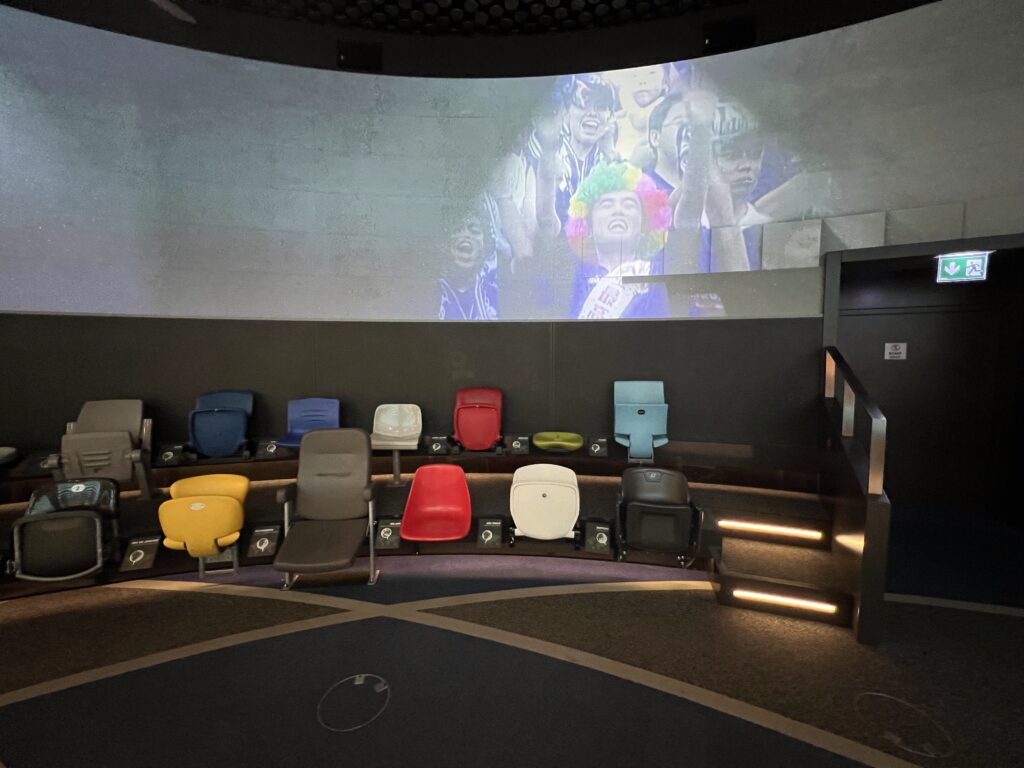
And then, scent took over. The Lindt House of Chocolate drew us in with warmth and sweetness, while the FIFA Museum reminded us that even play can carry elegance and dignity in Switzerland.
Lucerne
Hotel: Mandarin Oriental Palace Lucerne
At the Mandarin Oriental Palace, the lake didn’t just reflect beauty—it seemed to merge with the soul of the hotel. Mornings shimmered over still waters; evenings bathed in soft, golden skies.
The Kapellbrücke, built in 1333, arched across the Reuss River, its roof panels painted with tales of saints and civic pride. Though fire took much in 1993, the restored panels and charred originals together tell a story of resilience. Beside it, the octagonal Water Tower stood stoic—once a prison, treasury, and archive.
In a nearby cliff, the Lion Monument, carved in 1820, mourned the Swiss Guards slain during the French Revolution—a majestic beast dying in silent honor. We embarked on a guided Loop Tour, winding through hidden lanes, cheese cellars heavy with centuries, and chocolate ateliers that turned sugar into art. At the Zytrum, Lucerne’s cultural tower, tradition and innovation rose together. The Zytturm is a 13th-century tower in Zug, Switzerland, which houses an astronomical clock. The tower, which is
52 metres high, is located on Kolinplatz in the old town centre.
The astronomical clock on the eastern side of the tower was installed in 1574. Underneath the clockface, the calendar dial has four hands:
The arrow indicates the day of the week on the inner ring of the dial, on which the days of the week are represented by their Germanic deities and astrological signs, with Sunday at the top. The arrow in the photo points to enus/Friday.
The crescent moon indicates the lunar phase, pointing upwards at the new moon and downwards at the full moon. The moon hand in the photo indicates a waxing quarter moon, matching the globe above the clock.
The sun indicates the sign of the zodiac on the outer ring of the dial, starting with Capricorn at bottom (between 6 and 7 0’clock) for January. The sun hand in the photo points to Gemini/June.
The S hand indicates the leap year (Schaltjahr in German), completing a cycle every four years, pointing downwards at the start of a leap year. Above the clockface, a rotating gold and black globe indicates the phase of the moon.
Interlaken & Surroundings
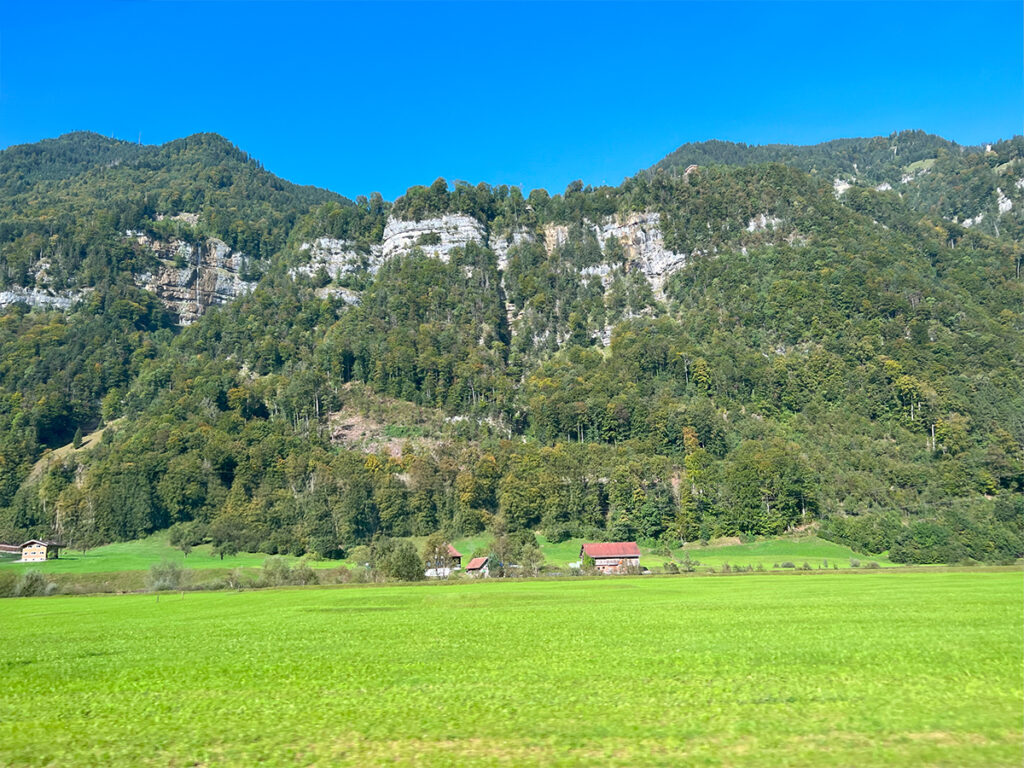
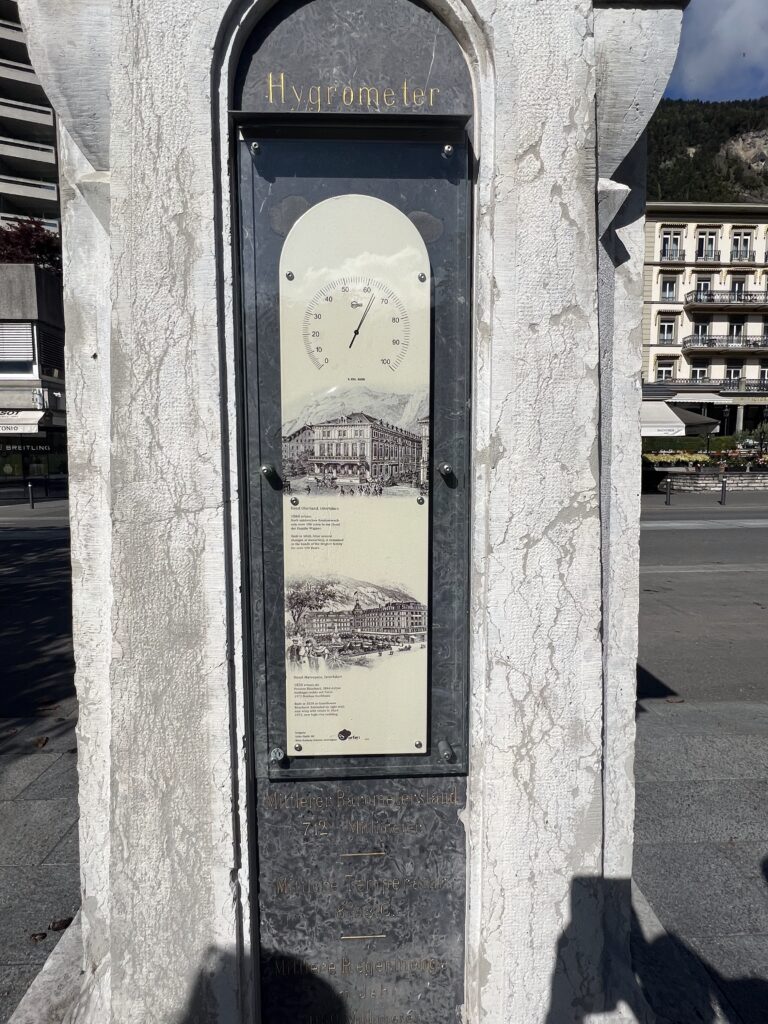
In Interlaken, we slowed. Between Lake Thun and Lake Brienz, under the shadow of the Jungfrau, peace blanketed the town. We passed through Lungern, still as glass, then Iseltwald and Lauterbrunnen, where Staubbachfall dropped from sky to valley like unraveling silver.
The Interlaken railway station wasn’t just transit—it was theater for Swiss Rail’s graceful choreography.
Glacier Express
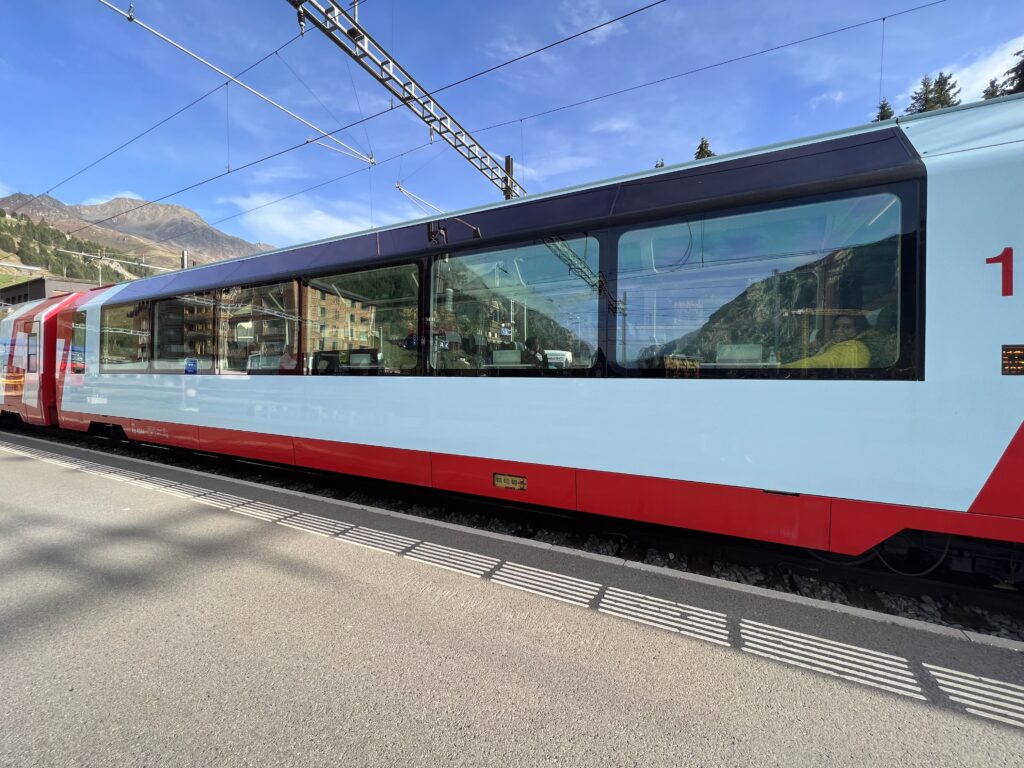
From Zermatt to St. Moritz, the Glacier Express stitched the Alps together. Over the Landwasser Viaduct, through the Albula Tunnel, and across the Oberalp Pass, the journey was not about speed—it was about stillness and awe. In Andermatt, we paused for a quick round of hot chocolate and sandwiches —a military village now reborn in boutique calm.
Engelberg
Hotel: Kempinski Palace Engelberg
Belle Époque grace welcomed us into pine-fringed serenity. Engelberg, the “Angel Mountain,” lived up to its name. The Benedictine monastery, founded in 1120, still hums with Gregorian chant. Its library holds ancient manuscripts and sacred songs.
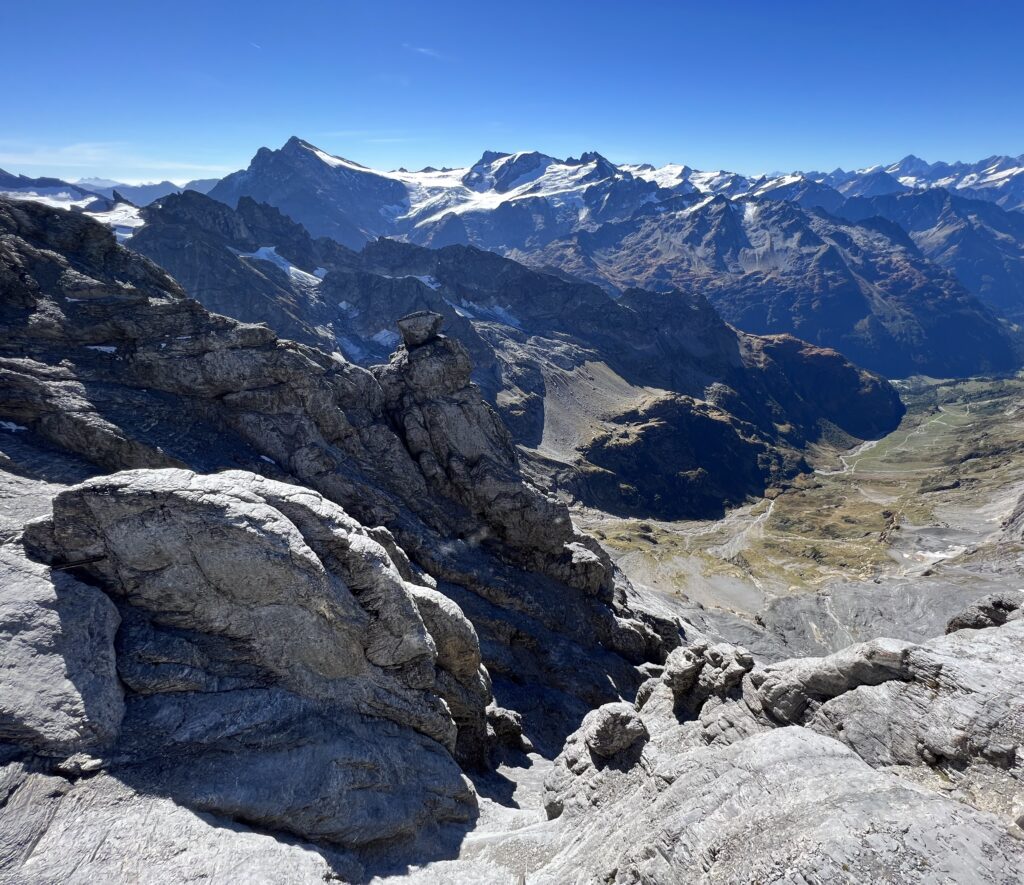
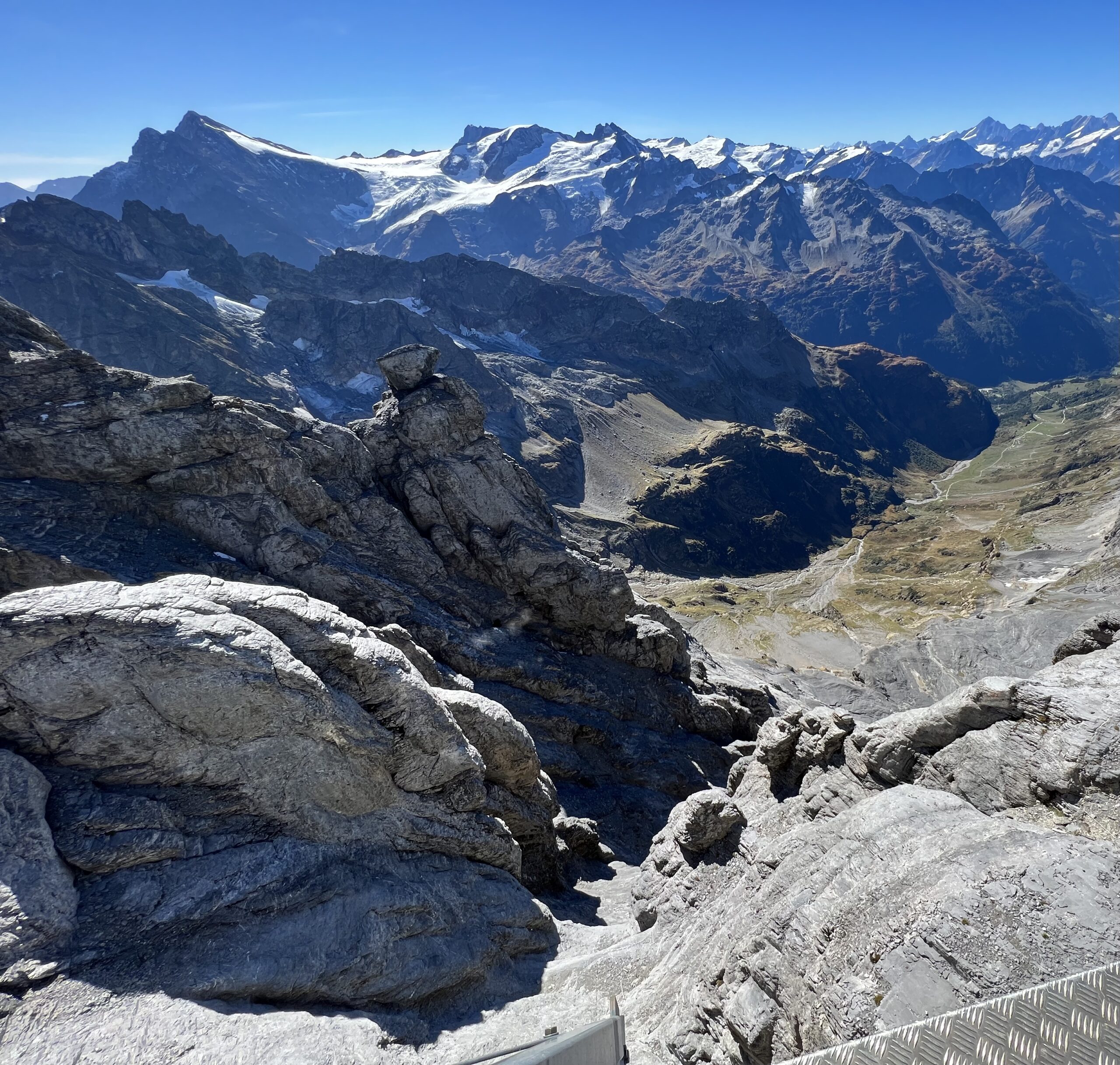
From devotion to daring, the Titlis Cliff Walk, Europe’s highest suspension bridge, spanned glaciers like a strand of silver. At 3,238 meters, Mount Titlis offered us a revolving panorama of silent majesty. Reverence and thrill intertwined. This was where scenes from Dilwale Dulhania Le Jayenge were filmed. At Engelberg Abbey, Latin chant mingled with the cold air—a sacred aria sung by the mountains.
Zermatt
Hotel: Grand Hotel Zermatterhof
Under the angled hymn of the Matterhorn, the Zermatterhof glowed with polished heritage. The mountain was not a peak—it was an icon.
The Gornergrat Railway lifted us to a world where summits pierced clouds like cathedral spires. Even Toblerone carries this mountain on its wrapper—a national flavor born of landscape and pride.
Montreux
Hotel: Fairmont Le Montreux Palace
Montreux curled along Lake Geneva like a stanza. Lavender skies. Still waters. Behind us, the Lavaux Vineyards, terraced by monks, climbed heavenward. Along the promenade stood Freddie Mercury, cast in bronze—arms wide, face lifted. Here, he lived. He created. For us, that statue was deeply personal—a symbol of artistry and bold grace.
At Château de Chillon, lake waters lapped ancient stone. Once a toll station, then a prison, it was part of the Via Francigena pilgrimage route. In its dungeons, François Bonivard’s chains still echo. Lord Byron carved his name here in 1816 after writing The Prisoner of Chillon. The arches breathed with the weight of layered histories—Savoy rule, feudal power, and the yearning for freedom.
Corsier-sur-Vevey
At Chaplin’s World, in the Manoir de Ban, we felt a quiet ache. Chaplin’s final home is now a museum of warmth, not grandeur. From The Kid to City Lights, his silent films spoke volumes. The recreated sets brought laughter into memory—the gear wheels of Modern Times, the dinner roll ballet—proof that gentleness could be radical.
Lausanne
Lake Geneva was magical. We were fortunate to get beautiful weather – with people swimming in the lake. The statue “VIERGE DU LAC OFFERTE A LA VILLE DE LAUSANNE PAR SOUSCRIPTION PUBLIQUE Vincenzo 8911. (This translates to “Virgin of the Lake offered to the City of Lausanne by public subscription Vincenzo 89.”) stands majestically on the banks.
The Lausanne Cathedral is a Gothic cathedral, considered one of the most important early Gothic structures in Switzerland. Its construction began in 1170 and it was consecrated in 1275. Perched on the heights of the city, it offers panoramic views of Lake Geneva and the surrounding Alps, making it a prominent feature of the city’s skyline. It has played a significant role in the city’s history, including its transformation into a Protestant church during the Reformation in 1536.
Chäteau d’Ouchy: Originally built as a medieval fortress in the 12th century, it served various purposes, including a fortified residence for bishops and later a property of Bernese bailiffs and the State of Vaud. In the late 19th century, it was radically transformed and rebuilt in the Neo- Gothic style by Jean-Jacques Mercier and converted into a luxury hotel. Today, it operates as a four-star hotel
We then drove to the wine country of Switzerland, the Lavaux region.
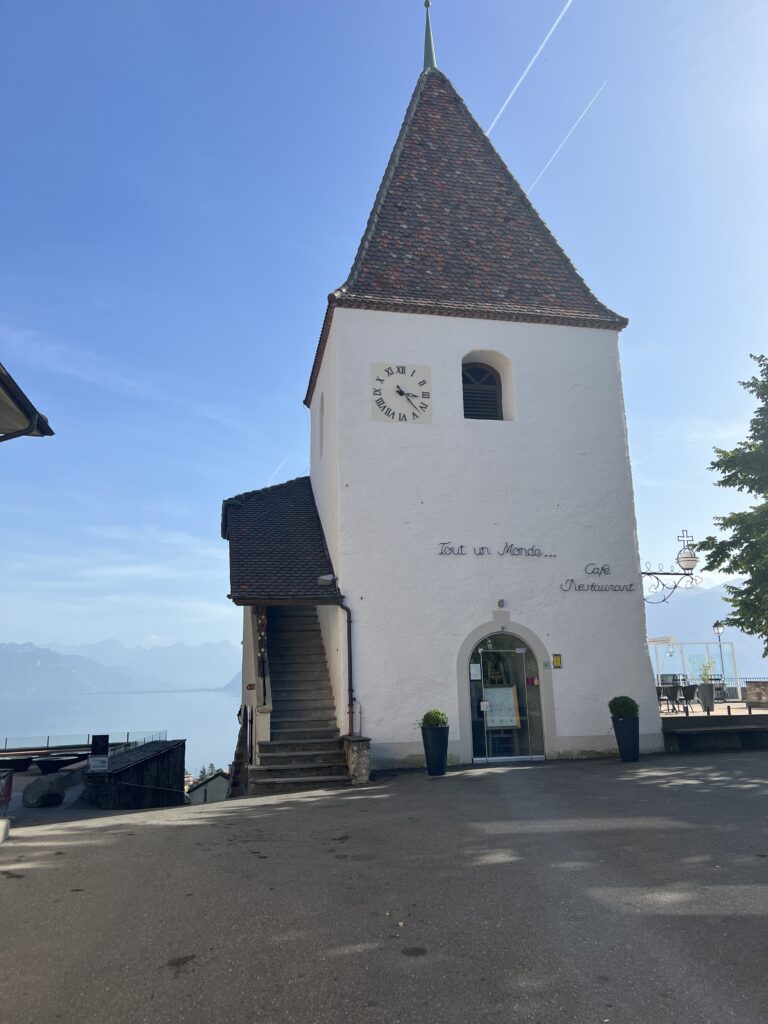
Our first stop was the “Tout un Monde a café and restaurant located in Grandvaux. A former 13th-century church, specifically the Saint-Nicolas tower, which also served as a school. it offered views overlooking Lake Geneva and the surrounding vineyards, which are a UNESCO World Heritage site.
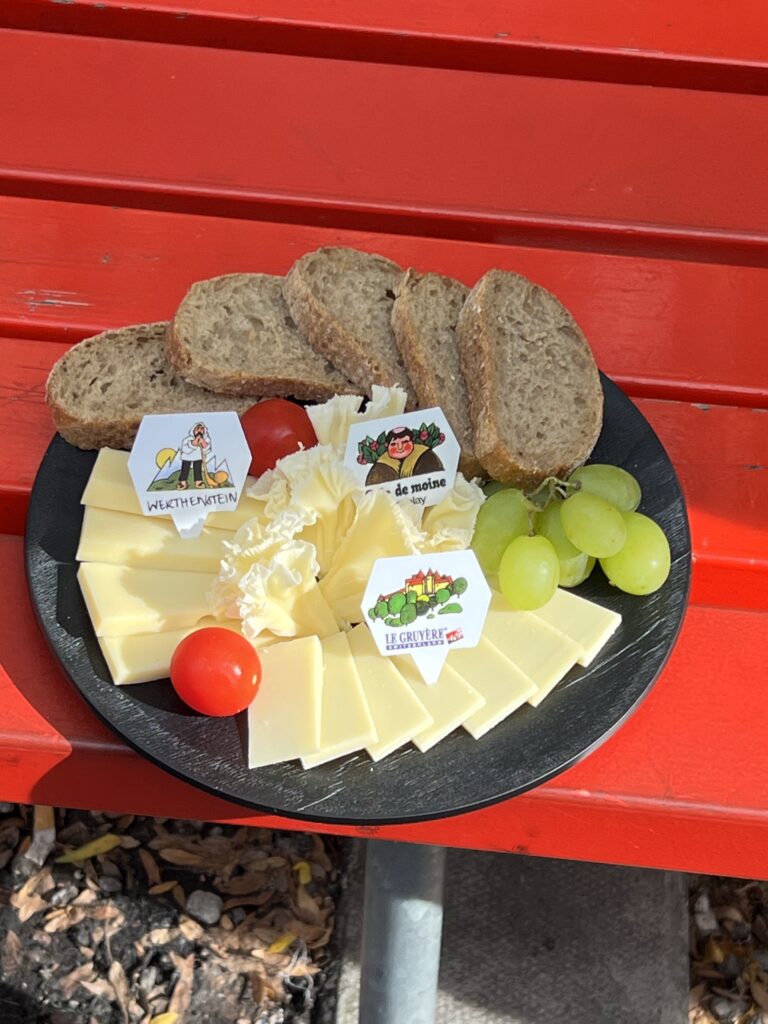
Epesses is a village in the heart of the Lavaux vineyard terraces in Lausanne It was a quaint place, the majority of the houses were those of wine-makers.After walking around the vineyards, we took a break at “Les 11 Terres”, a wine bar and shop IIt functions as a wine bar, vinothéque (wine shop), and a grocery store offering local Vaudois products. They offer a selection of wines from 11 local winemakers of Lavaux, alongside various local products like cheese, honey, jam, beers, and spirits.
Geneva
In Geneva, our journey began to fold inward. The city did not perform. It invited stillness. The Broken Chair monument near the UN was quiet defiance in red wood. We walked—through museums and cafés. It asked not to be seen but felt.
This journey through Switzerland was not about ticking boxes. It was about attention—to stained glass and falling water, to the hush inside a train, to chocolate melting slowly. Switzerland didn’t clamor to be loved. It waited in silence—and let us carry it home, piece by shimmering piece.