
Darjeeling: A Place the Sky Comes Down to Touch
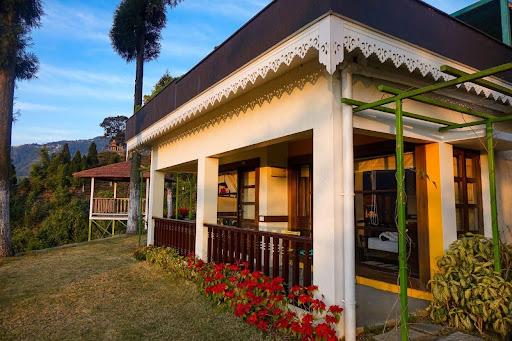
Hotel: Makaibari Tea Estate
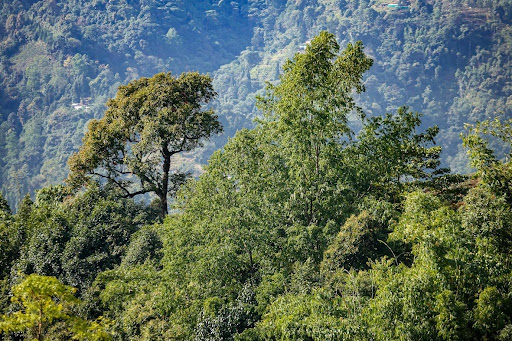
Darjeeling, where the sky bows low to meet the trees, where clouds walk on hillsides and tea leaves curve gently in prayer. There is no need for monuments here. The land itself is epiphany.
In Mirik, Sumendu Lake lay in silence. It did not glitter; it glowed. Mornings turned it to whispers. By dusk, it darkened to copper.
We walked slowly around its edge, not to complete it, but to become part of it. Pines rose like cathedral spires. Orange wildflowers swayed without asking. Boats moved like thoughts. Ducks disturbed the mirror with scribbles of joy.
Even the lake felt like it was waiting. For wind. For memory. For a pause.
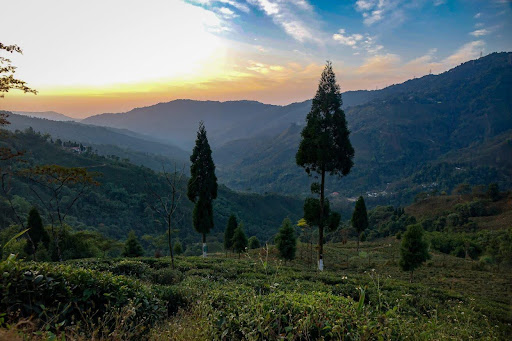
In Darjeeling, trees grew not for height but for grace. Cryptomeria and cypress rose like sentinels. The air smelt of wood and watchfulness.
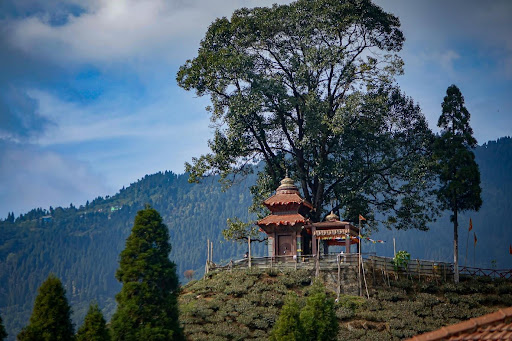
A small temple clung to the hill, its bell marking not the hour but the hush of the valley, as though even faith here had learned to whisper.
At Thurbo and Tingling, women moved through green rows of tea in movements that felt sacred. Baskets over shoulders, heads bowed to leaf and light, they plucked not just harvest but heritage.
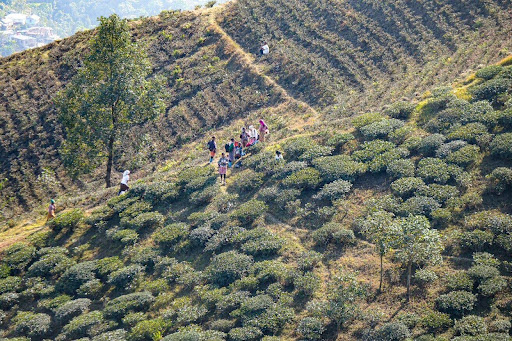
We watched from a curve. The earth swept to cloud. It wasn’t agriculture. It was choreography.
As evening settled, mist wrapped itself around the slopes. Lamps blinked on like hesitant stars. Silence deepened. A bell rang somewhere—not for time, but for silence.
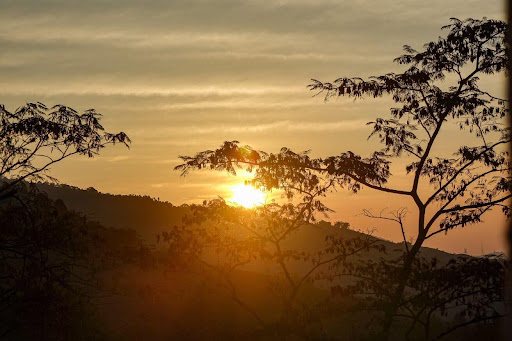
Darjeeling didn’t ask for attention. It offered its stillness.
We left with nothing in our hands. Only silence. And it stayed.