Ajmer: History, Faith, and Food
Ajmer is a city in the Indian state of Rajasthan and the administrative headquarters of Ajmer District. Unlike many cities in the state that function primarily as tourist destinations, Ajmer is a working religious center and an administrative city with a strong local character. Its identity has been shaped over centuries by shifting political control, Islamic scholarship, Rajput rule, and British-era governance, all coexisting with busy markets, street food vendors, archives, and transport hubs.
What sets Ajmer apart is continuity. Since the 12th century, the city has remained relevant as a center of faith, governance, and everyday commerce. Despite changes in rulers and populations, Ajmer has retained its role as a place where religious life and daily activity intersect without separation.
Origins and Early History
Ajmer was founded in the 7th century by Ajayaraja I, a ruler of the Chauhan (Chahamana) dynasty. The city was originally known as Ajayameru, a name linked to its location amid the Aravalli range, which provided natural protection. Due to its central position in Rajasthan, Ajmer quickly developed into a strategic military and political center.
Under the Chauhan rulers, Ajmer grew as a fortified city. During this period, its early urban structure took shape, including trade routes and water systems. Ajmer also began to attract scholars and pilgrims, adding religious importance to its political role.
In 1192–1193, following the defeat of Prithviraj Chauhan by Muhammad of Ghor, Ajmer came under Islamic rule. The city subsequently passed through the control of the Delhi Sultanate and later the Mughal Empire. These transitions brought lasting changes to Ajmer’s architecture, population, and cultural life.
The Dargah and Mughal Patronage
Ajmer’s long-term historical significance is closely tied to the Dargah of Khwaja Moinuddin Chishti, a 12th-century Sufi saint who settled in the city. His teachings emphasized humility, service, and spiritual equality, attracting followers across religious and social boundaries.
During the Mughal period, Ajmer became one of the most important pilgrimage centers in the empire. Mughal rulers, including Akbar, patronized the Dargah and contributed to the construction of mosques, courtyards, gateways, and charitable institutions. Ajmer’s religious role expanded alongside its administrative importance during this time.
In the mid-18th century, control of Ajmer shifted to the Marathas, marking another transition in governance before the arrival of British rule.
British Rule and Administrative Development
The British took control of Ajmer in the early 19th century and made it the capital of the Ajmer-Merwara province. This period introduced modern administrative systems, rail connectivity, roads, cantonment areas, and civic buildings.
Many British-era structures continue to function today, blending colonial planning with older Mughal and Sultanate-era spaces. After Indian independence in 1947, Ajmer was integrated into the state of Rajasthan in 1956.
Taragarh
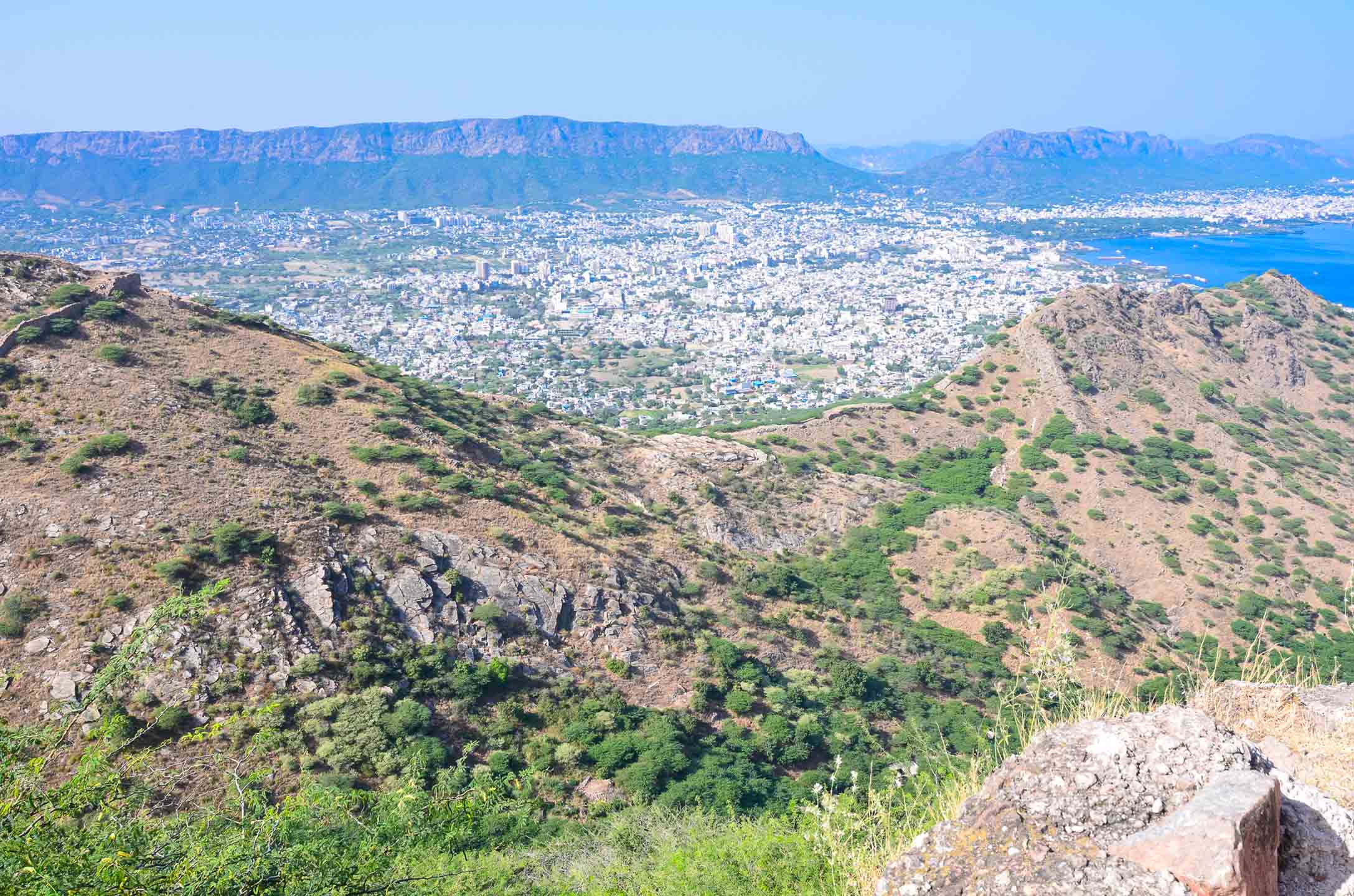
One of the oldest hill forts of India, Taragarh Fort is located atop a steep hill that overlooks Ajmer. The massive fort includes extensive defensive walls, reservoirs, tunnels, and lookout points that illustrate a well-developed knowledge of siege warfare. While Taragarh is now battle worn and partially dilapidated, the fort’s imposing silhouette, still echoes military wisdom and grandeur.
The Taragarh Fort was built high atop a 1,000 ft tall hill and once defended the routes carrying through to the Aravalli range with its gigantic walls, reservoirs, and watchtowers.
Akbar Fort
Akbar Fort — built in 1570, the mass and scale of this fort made sure that this is one building that secures Mughal superiority here in Rajputana. Red sandstone used for the thick walls, bastions and gates of the city all of which were used to portraying power and grandeur rather than beautifying.
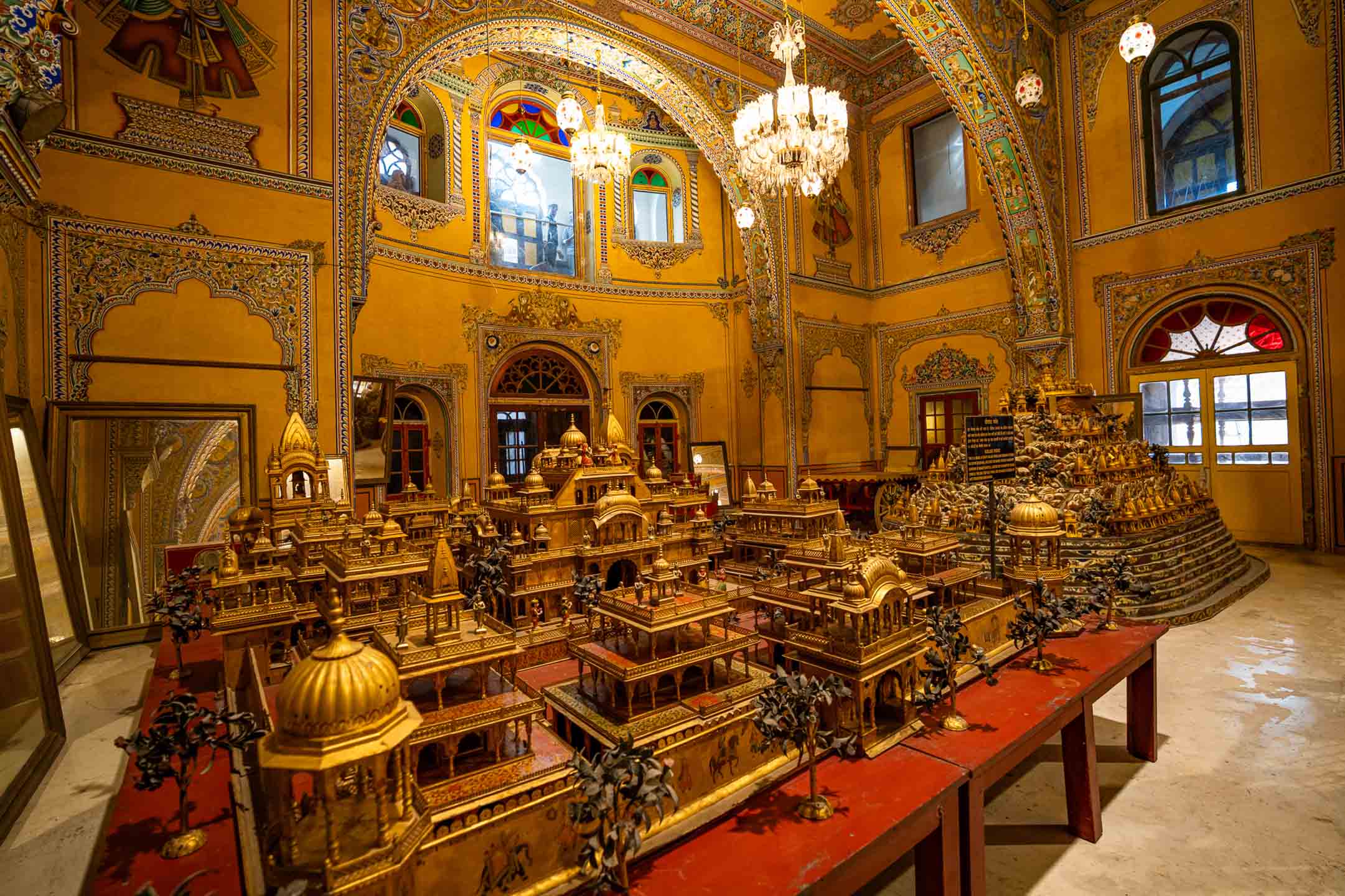
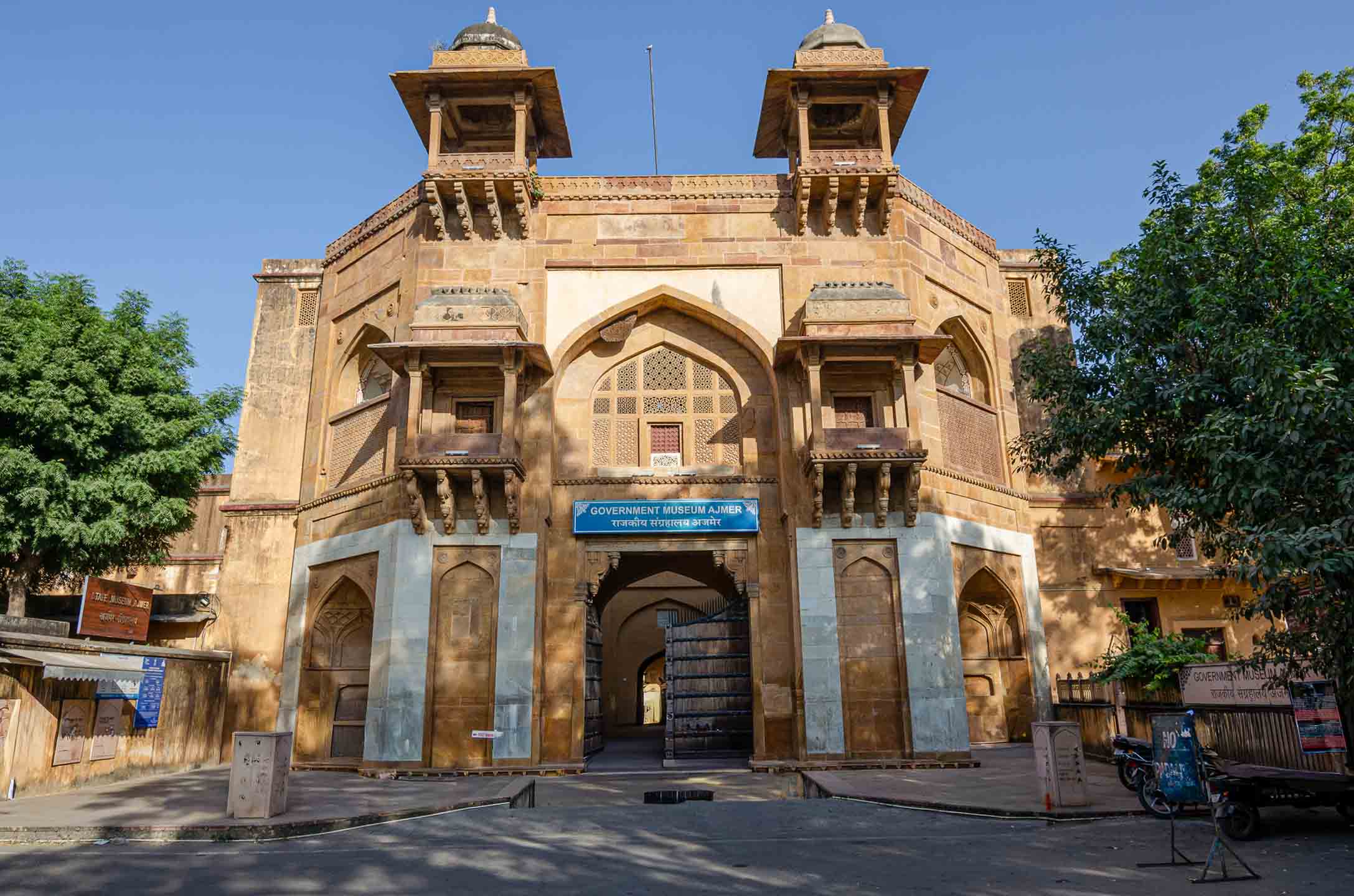
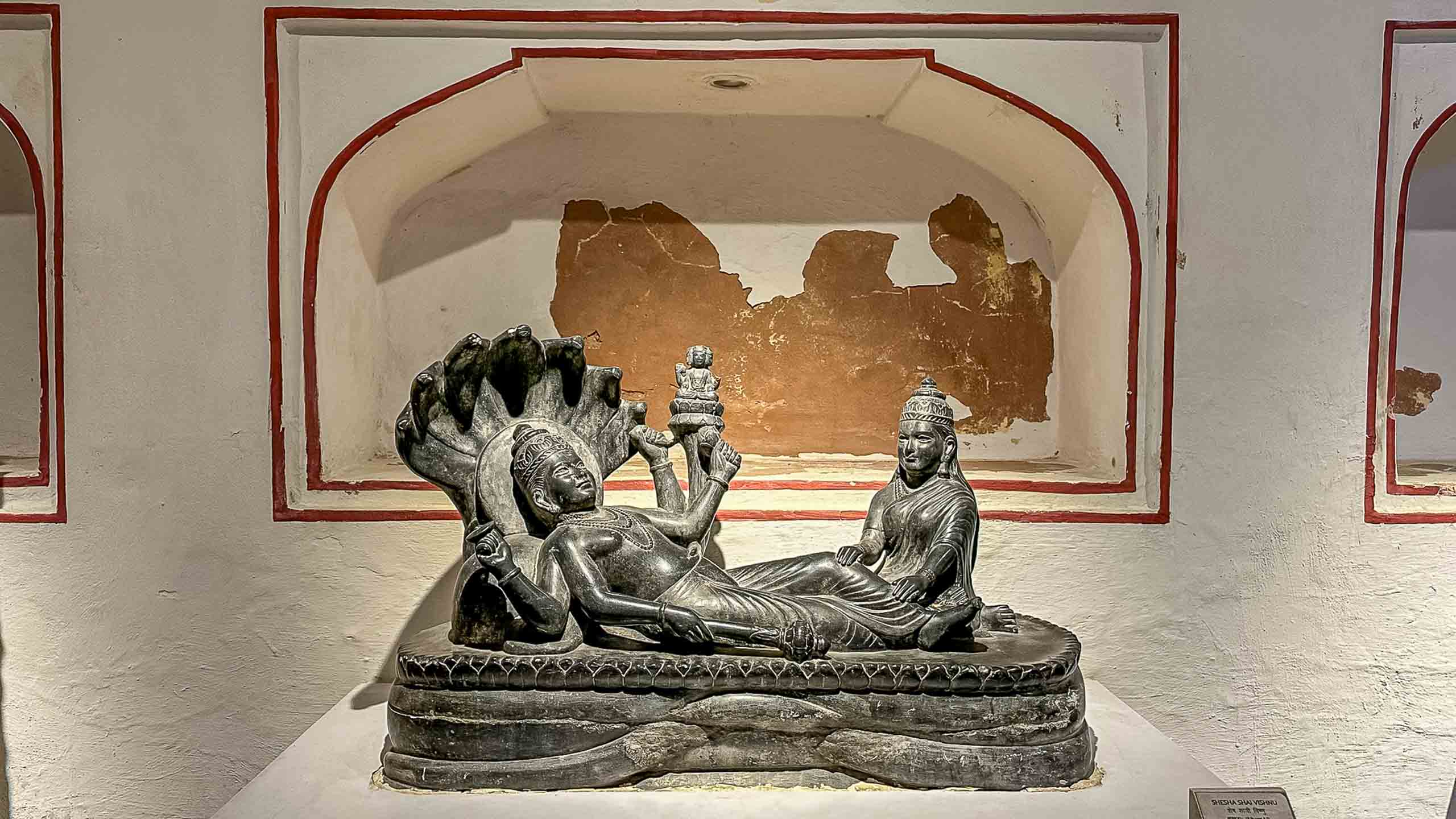
Built by the Mughal Emperor Akbar as a royal residence, the Akbar Fort evolved into a seat of administration, and a museum containing sculptures, inscriptions and artefacts that tell the political and cultural history of Ajmer. In the sound of inner city traditional havelis and mansions mirror life of nobles and traders with stone courtyards, painted wall and carved brackets. Together, the forts, shrines, palaces, and memorials of Ajmer tell a story of a place formed by devotion as much as diplomacy and defense. The fort, which came into British possession to later serve as an administrative centre, embodies a layered authority — imperial, colonial, and post-independence. The power of its architecture also comes through, even in this era.
At the foot of the fort sits the sacred Ajmer Sharif Dargah, the shrine of Khwaja Moinuddin Chishti, who has drawn pilgrims of all religions for centuries. The addition of massive gateways, marble courtyards, and mosques through the generous grants made by Mughal emperors such as Akbar and Shah Jahan, the dargah complex has become both a major religious focus and a monumental architectural complex.
Pratap Smarak
While Maharana Pratap played a pivotal role resisting Mughal expansion and Pratap Smarak was built in honour of him. The memorial, situated within a landscaped setting, commemorates sacrifice, perseverance, and independence expressed through both symbolic built form and inscription. Besides, in this larger history of Ajmer, it gives some counterbalance to imperial memory by anchoring Rajput identity.
Jain Temple, Ajmer
Ajmer’s Jain Temple offers a meditative foil to the warlike memorials of the city. This temple, chiseled into marble with exquisite embellishments, embodies symmetry, modesty, and contemplation among others. The quiet sanctity and regality of this temple is a reminder of both Ajmer’s pluralistic religious history and teachings and the multiplicity of faith traditions within a singular urban space.
The Working City
Today, Ajmer operates as a practical, utilitarian city. Narrow lanes are crowded with auto-rickshaws, handcarts, buses, and pedestrians. Local markets sell textiles, bangles, hardware, grains, and spices, catering primarily to residents rather than visitors.
Unlike curated heritage cities, Ajmer’s streets are shaped by daily needs. Shops are small, signage is functional, and commerce follows routine patterns. This gives the city a lived-in character rather than a performative one.
Gol Pyau
Gol Pyau is one of Ajmer’s most recognizable intersections. Historically, a pyau referred to a public water station, and Gol Pyau served as an important stopping point for travelers and pilgrims entering the city.
Today, Gol Pyau functions as a busy commercial and transit zone. It connects older neighborhoods with newer areas and remains a common reference point for directions, transport, and local commerce.
Street Food
Near Gol Pyau, Shankar Chaat is known for its kadhi kachori and other chaat items. It is a straightforward roadside establishment frequented largely by locals. Its popularity comes from consistency rather than novelty.
The appeal of places like Shankar Chaat lies in familiar flavors, practical portions, and quick service. Such stalls form the backbone of Ajmer’s everyday food culture.
Another well-known local stop is Krishna Lassi, recognized for its thick, sweet lassi. In Ajmer’s climate, dairy-based drinks serve as both refreshment and sustenance. Businesses like Krishna Lassi reflect how food culture adapts to weather, routine, and regional taste.
State Film Archives
Ajmer is home to the State Film Archives of Rajasthan, which preserves and documents film material related to Rajasthani and Indian cinema. The archive houses reels, posters, scripts, and records that might otherwise be lost.
While not a conventional tourist attraction, the archive adds an academic and cultural dimension to Ajmer. It links the city to modern creative history and research, expanding its identity beyond pilgrimage and administration.
Ajmer has served as an educational center for several decades. Schools such as Sachdeva Public School, Subodh Vidya Mandir, and various government institutions educate students from Ajmer and surrounding towns. This academic population shapes many of the city’s residential neighborhoods.
Camel sightings in and around Ajmer recall its historical role as a trading hub. For centuries, animal trade, seasonal migration, and regional markets connected Ajmer to Rajasthan’s wider economy, a connection that persists in modified form today.
Contemporary Ajmer exists at the intersection of faith, administration, and everyday trade. Its importance lies not in spectacle but in layered history, functional spaces, and sustained relevance. Ajmer remains a city where history is embedded in daily life, and where religious devotion exists alongside street food stalls, offices, archives, and transit routes.