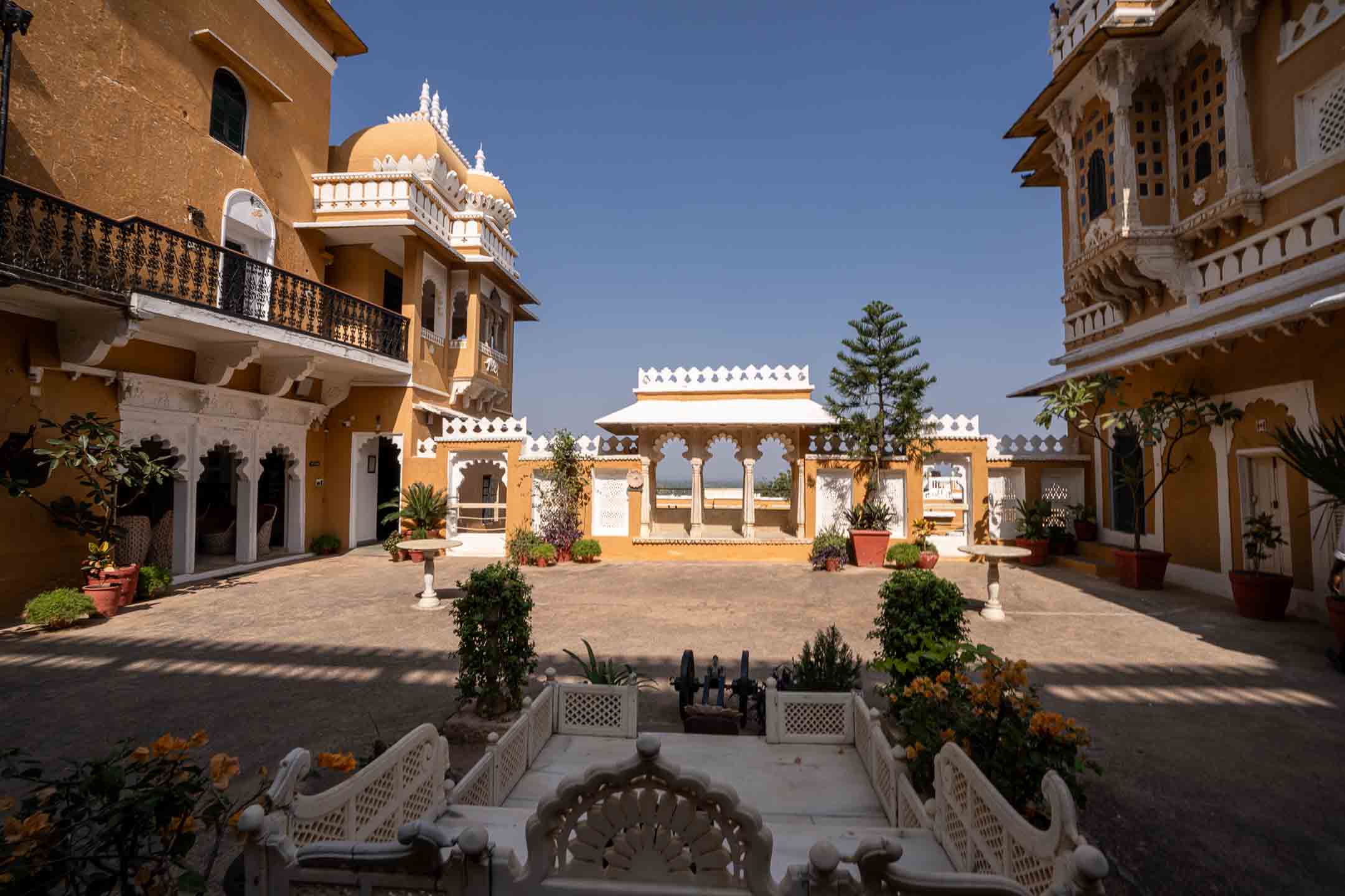
Deogarh Palace
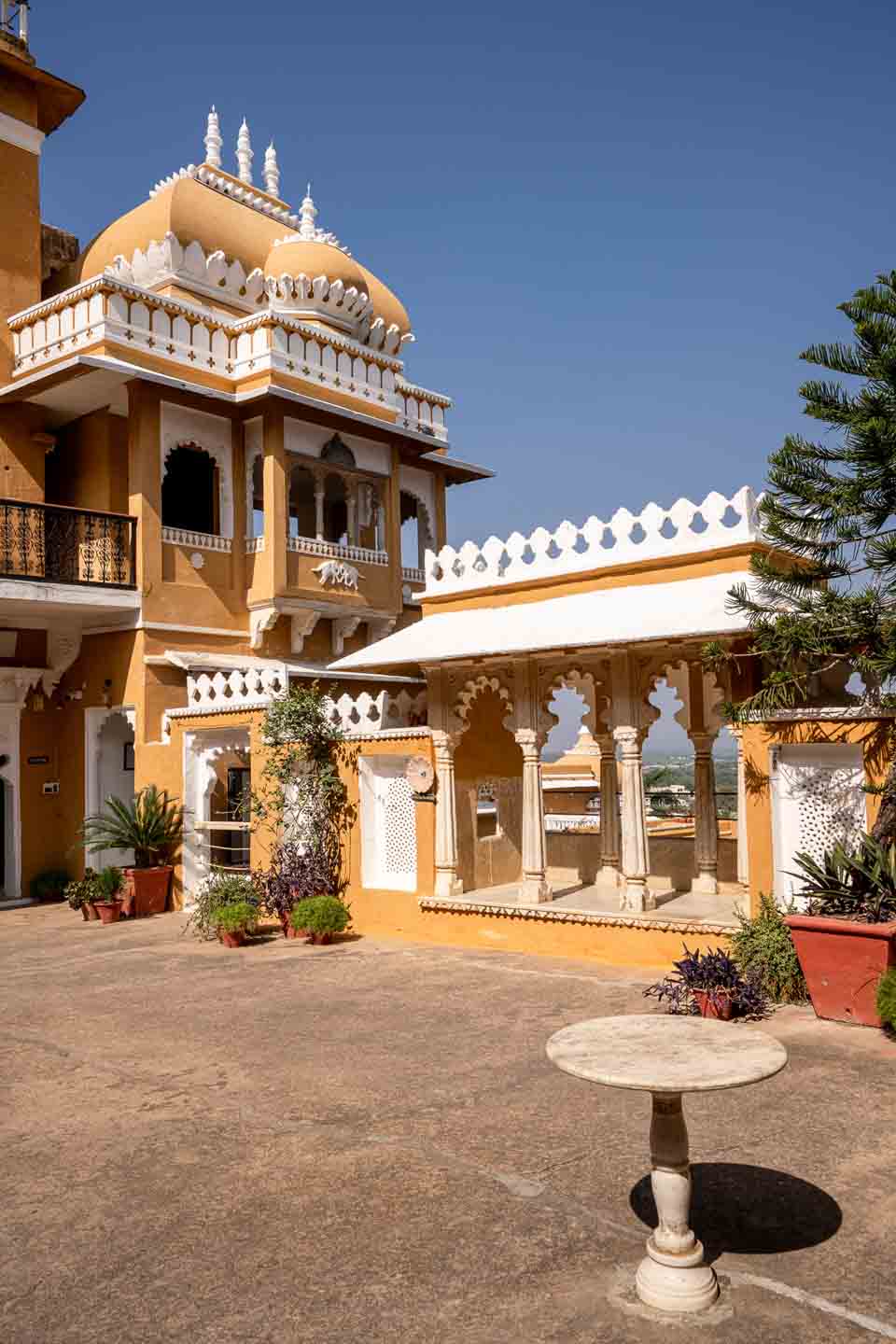
Deogarh Mahal is the beating heart of Deogarh’s historical identity. The palace is a symbol of the power and prestige of one of Mewar’s foremost noble households, built in the 17th century by Rawat Dwarka Dasji of the Chundawat clan. Chundawats were feudal lords under the Sisodia rulers of Mewar, and Deogarh was an erstwhile thikana in this political order. Its hilltop position commanded a functional mix of defense and overview of the surrounding area. The earth falls in muted browns and greys from its terraces, echoing the command and control that embodied Rajput rule.
The design of Deogarh Palace, however, is pragmatic and austere. Representing a culture of adaptation to climate change and a culture of security are the thick stone walls, the small entrances, the angular passages, and multiple courtyards. The Jharokhas and balconies break the facade to the inner and outer realms that assert the separation between the administration of the public and the private realm of the sovereign. While many have gone for grand and unmatched riches, the main palace at Deogarh exudes functional grace.
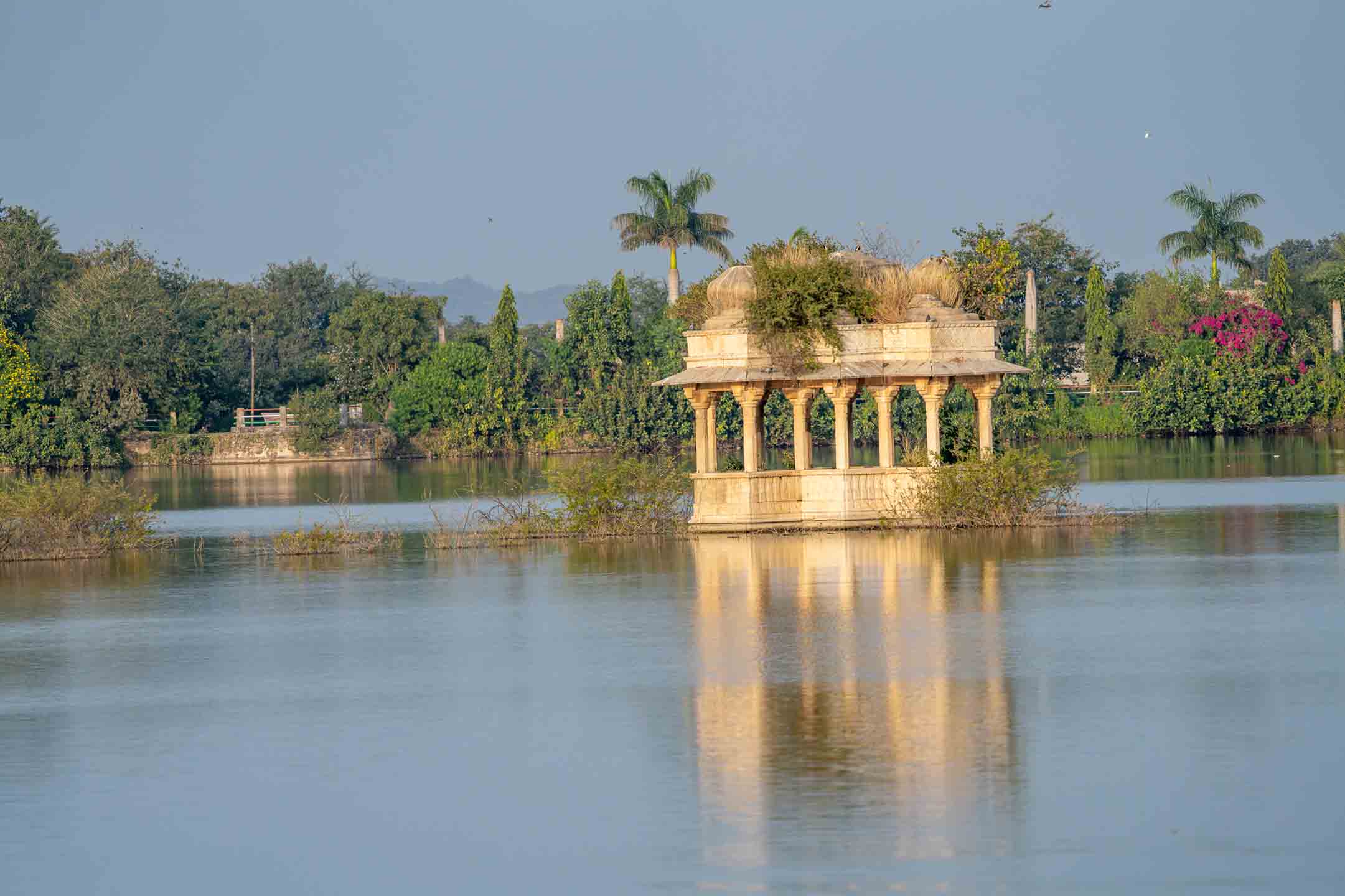
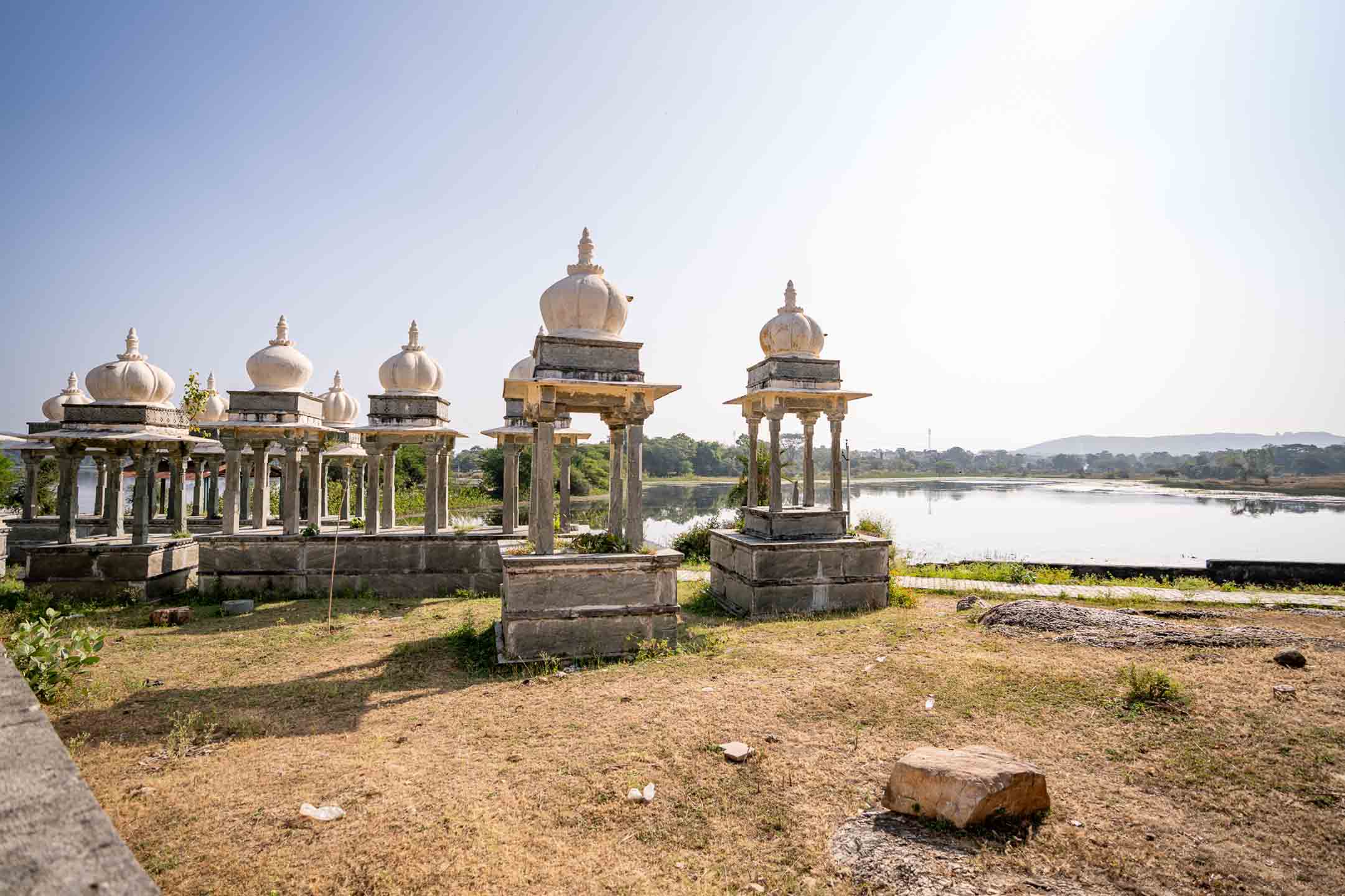
Outside the palace complex, the landscape of Deogarh is studded with mausoleums and cenotaphs, most of which are in the vicinity of water bodies or standing within them. These are memorials dedicated to the members of the ruling clan and nobility from the period, representing the tradition of the Rajput of establishing architectural tribute to their lineages. The mausoleums are simple and dignified structures usually in the form of domed chhatris supported by pillared verandas. Placed adjacent to water provides a visual and symbolic element of reflection. In this regard, the calm surfaces of the ponds and tanks reflect the stone domes, embodying themes of memory, continuity, and transience.