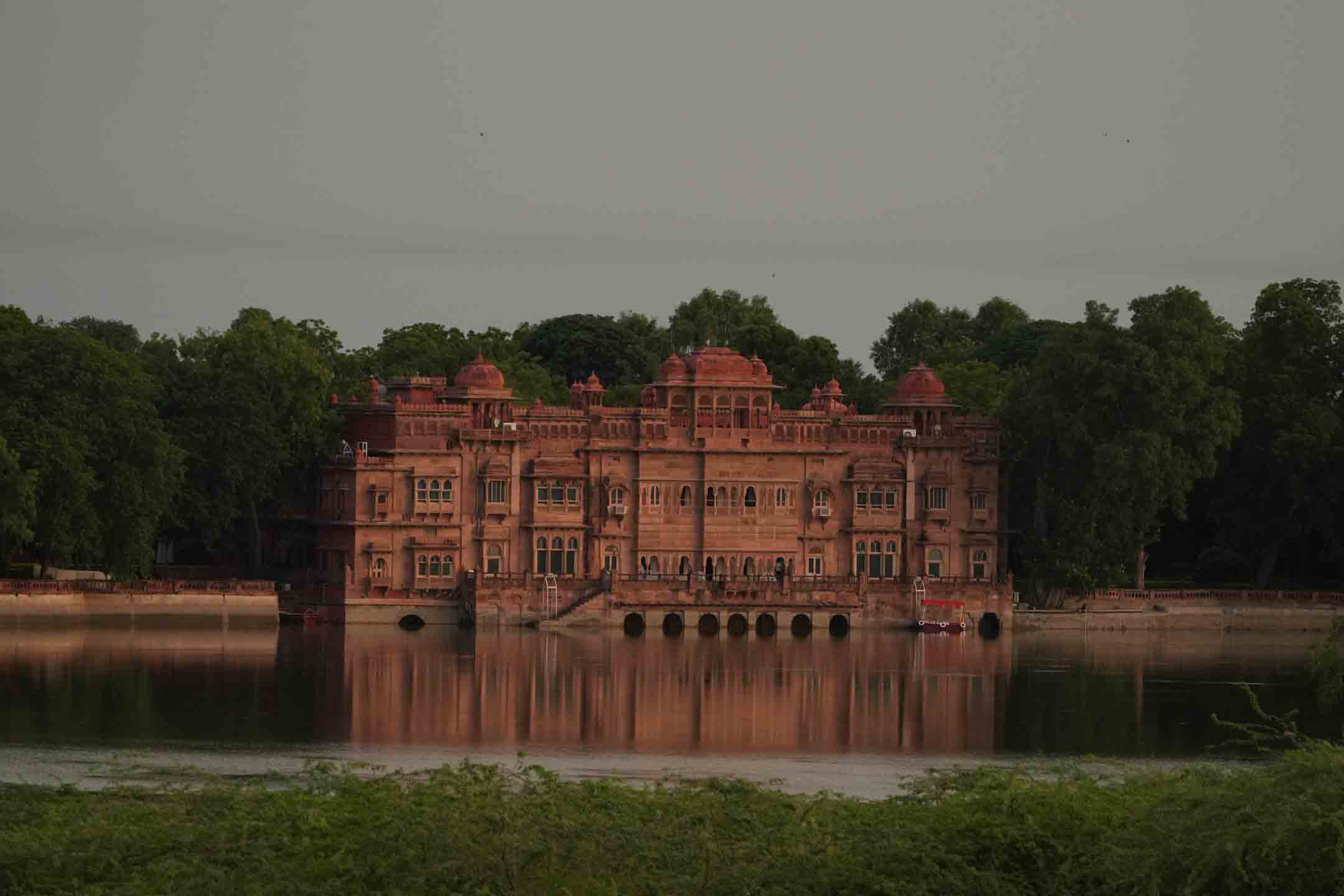
Gajner Palace — A Retreat of Quiet Grandeur
Located on the outskirts of the Thar Desert, some 30 kilometers from Bikaner, Gajner Palace is an oasis of peace and tranquillity away from city noise and congestion. Gajner was never meant to be a seat of power or defence, unlike the vast forts and palaces that occupy so much of Rajasthan’s architectural narrative. Instead, it was intended as a retreat, an intimate getaway where royalty could escape the demands of court and indulge in leisure, contemplation and nature.
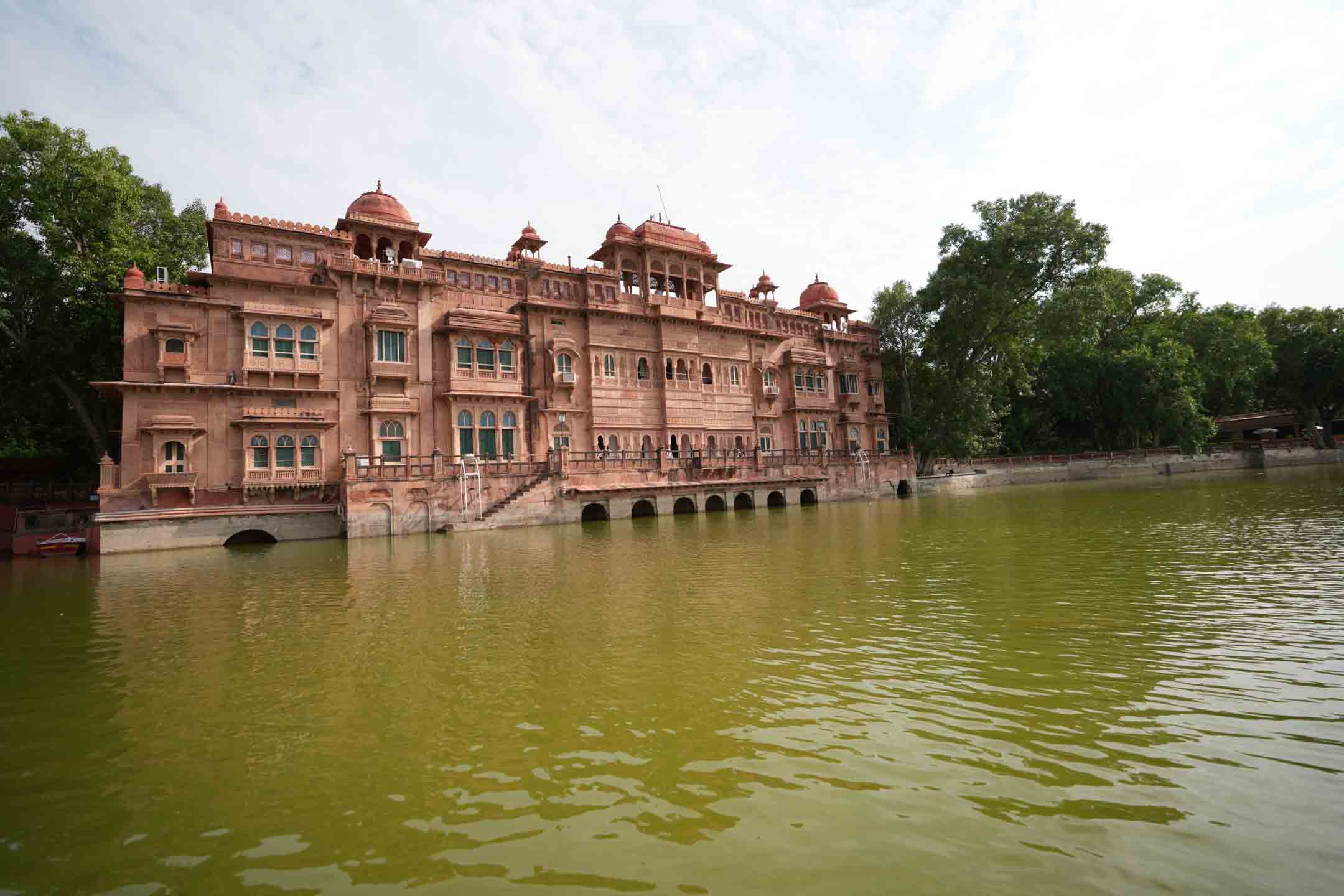
The origins of Gajner Palace reveal its fundamentally personal character. When Maharaja Gaj Singh of Bikaner married a queen from Jaisalmer, she longed for the familiar landscape and atmosphere of her homeland. In response, the Maharaja initiated a project to recreate elements of that environment. What began as an effort to cultivate a garden on barren land gradually evolved into a far more ambitious transformation. The construction of the artificial lake, Gaj Sagar, altered the terrain significantly, introducing water into an otherwise arid setting. This intervention allowed vegetation to thrive and created a micro-ecosystem that made habitation both possible and pleasant.
Over time, the site expanded in stages. Builders added gardens, pavilions, and residential structures, shaping the palace complex into what we see today. This gradual development defined its personality. Gajner never projected intimidation or authority; instead, it reflected
comfort, familiarity, and a deliberate sense of belonging. Every addition responded to lived needs rather than symbolic power.
During the late 19th and early 20th centuries, Maharaja Ganga Singh elevated Gajner Palace into a prominent royal retreat. He positioned it as an exclusive hunting lodge and invited British dignitaries, viceroys, and aristocrats to visit. The surrounding forests became designated hunting grounds, and the court organized elaborate expeditions that combined sport with diplomacy. These gatherings allowed rulers to build relationships outside formal political settings.
Gajner played a subtle but significant role in shaping alliances. The palace hosted guests from across the British Empire, and its setting encouraged informal interactions that often proved more effective than structured negotiations. Advisors and administrators carefully managed these visits, ensuring that every detail—from hospitality to presentation reflected refinement and control. Although the culture of hunting no longer defines the palace, this legacy of structured hospitality continues to influence its identity.
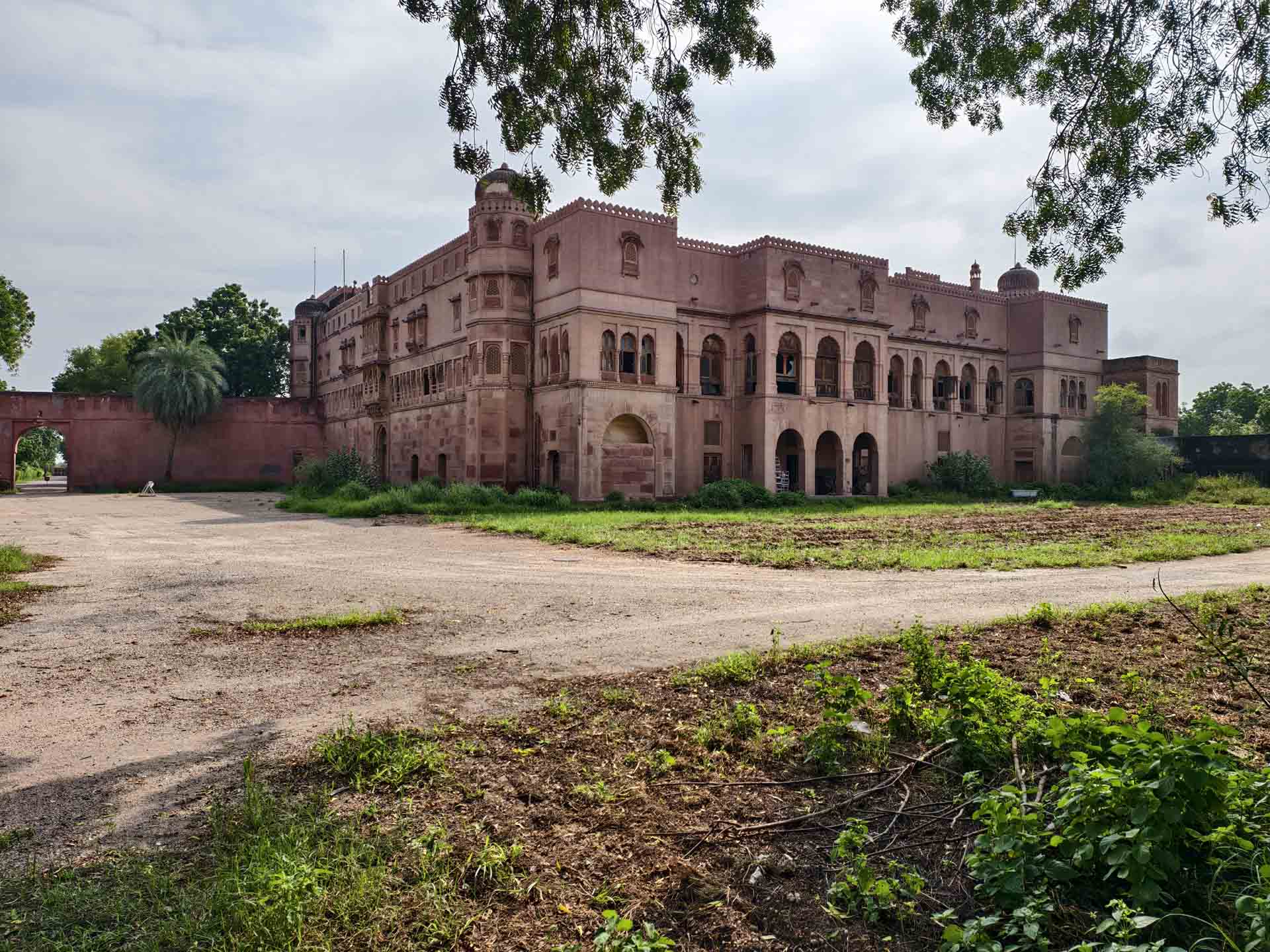
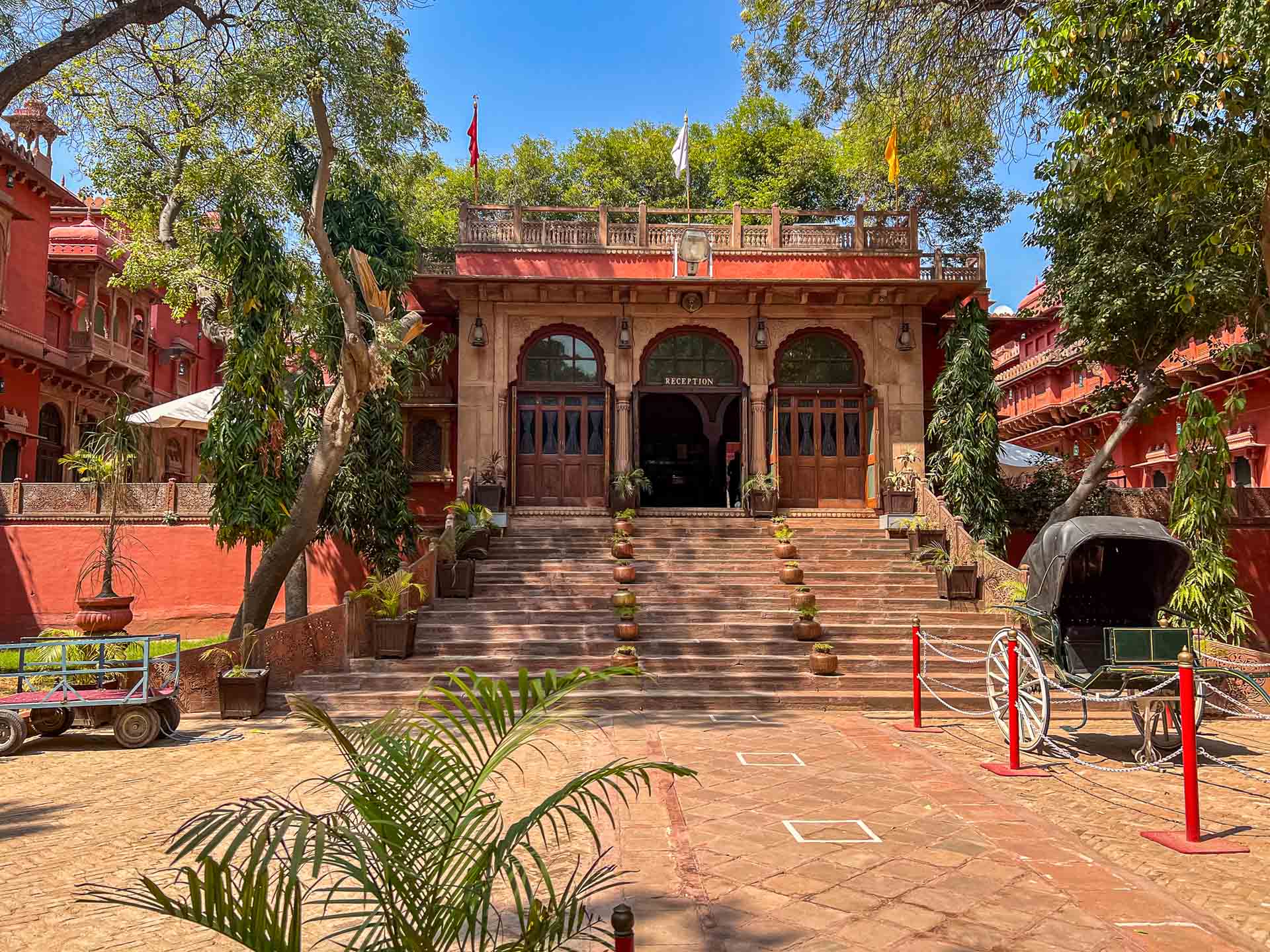
Architecturally, Gajner Palace presents a synthesis of Rajput design and Indo-Saracenic influences. Local artisans worked with red sandstone, giving the structure a warm tonal quality that shifts with the movement of light throughout the day. The facade incorporates intricately carved jharokhas that project outward, offering both shade and vantage points. Chhatris rise above the roofline, introducing rhythm and vertical variation to the skyline.
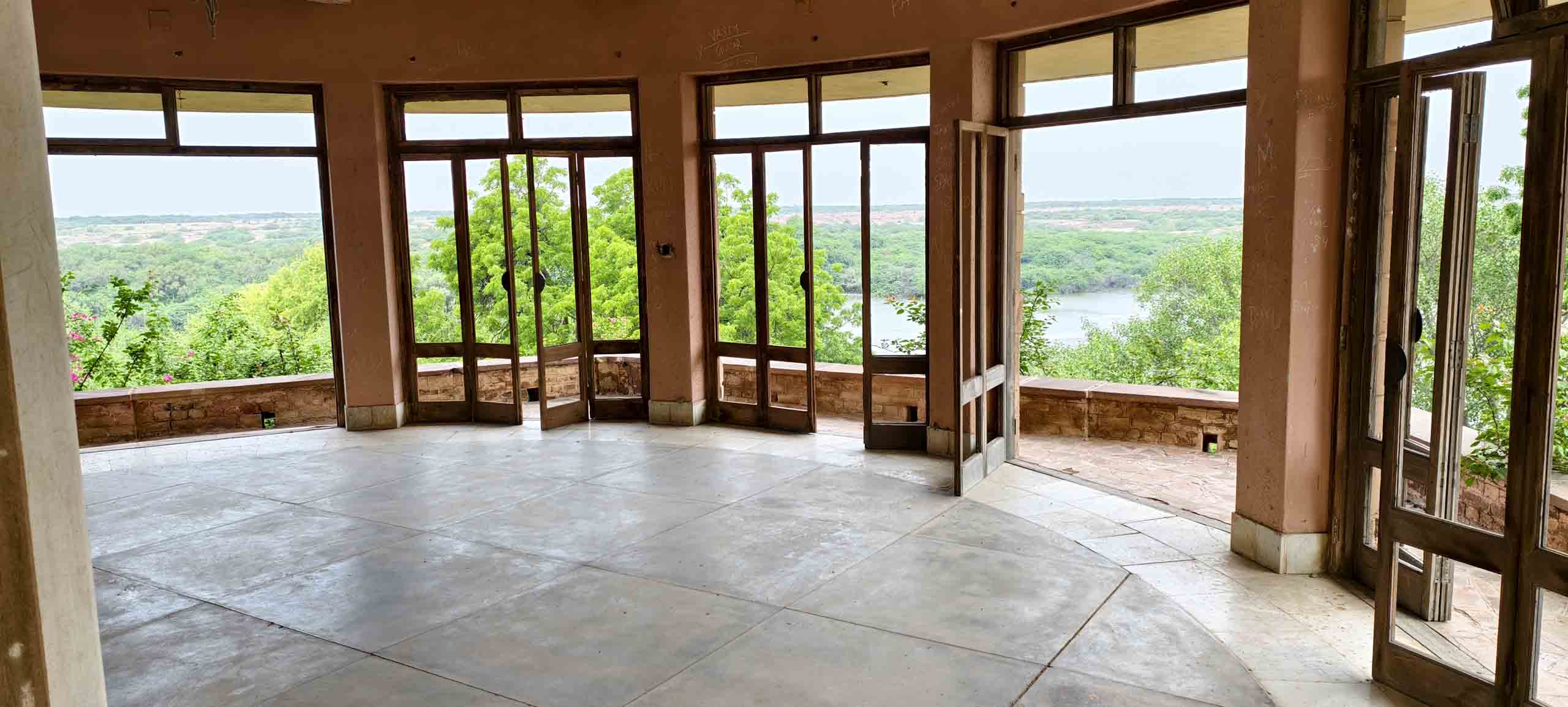
The builders used jaalis to filter light and regulate temperature. These perforated stone screens allow air to circulate while diffusing sunlight, creating interiors that remain functional in extreme climatic conditions. The palace design does not treat architecture as purely aesthetic; it actively responds to the desert environment. Courtyards and open corridors facilitate airflow, enabling passive cooling and maintaining comfort without mechanical intervention.
The structural layout reflects careful planning. Sections such as Dungar Niwas, Gulab Niwas, Champa Niwas, and Mandir Chowk form interconnected yet distinct zones within the complex. Corridors and courtyards link these areas, creating continuity while preserving individual identities. This arrangement allows movement without monotony; each space introduces variation in scale, light, and purpose.
Mandir Chowk functions as the central point of the palace. A temple anchors this courtyard, and large banyan trees surround it, creating a shaded and contained environment. The Banyan Tree Walk stands out as one of the most grounded experiences within the complex. The trees extend their roots and branches across the space, forming natural pathways. Walking through this area draws attention to the passage of time. The environment does not overwhelm; instead, it encourages awareness of continuity and change.
Ultimately, Gajner Palace operates through balance. The desert, the lake, and the built environment exist in relation to one another. None dominates completely. This equilibrium shapes the experience of the place. It does not rely on spectacle or scale. Instead, it maintains a steady presence that allows time, space, and structure to interact without excess.
Gajner Palace leaves a lasting impression not through grandeur alone, but through its consistency of character. It demonstrates how architecture, landscape, and history can coexist without excess or interruption. The palace does not attempt to dramatize its past; it carries it forward in a way that feels intact and unforced. As one moves across courtyards, along the lake, and beneath the banyan canopy—the experience remains measured and continuous. There is no urgency here, no need for spectacle. Instead, Gajner sustains a quiet equilibrium, where each element holds its place and contributes to the whole. In doing so, it becomes a place where time stands till and the experience lingers well beyond departure.