Jodhpur — The Fortress of Marwar
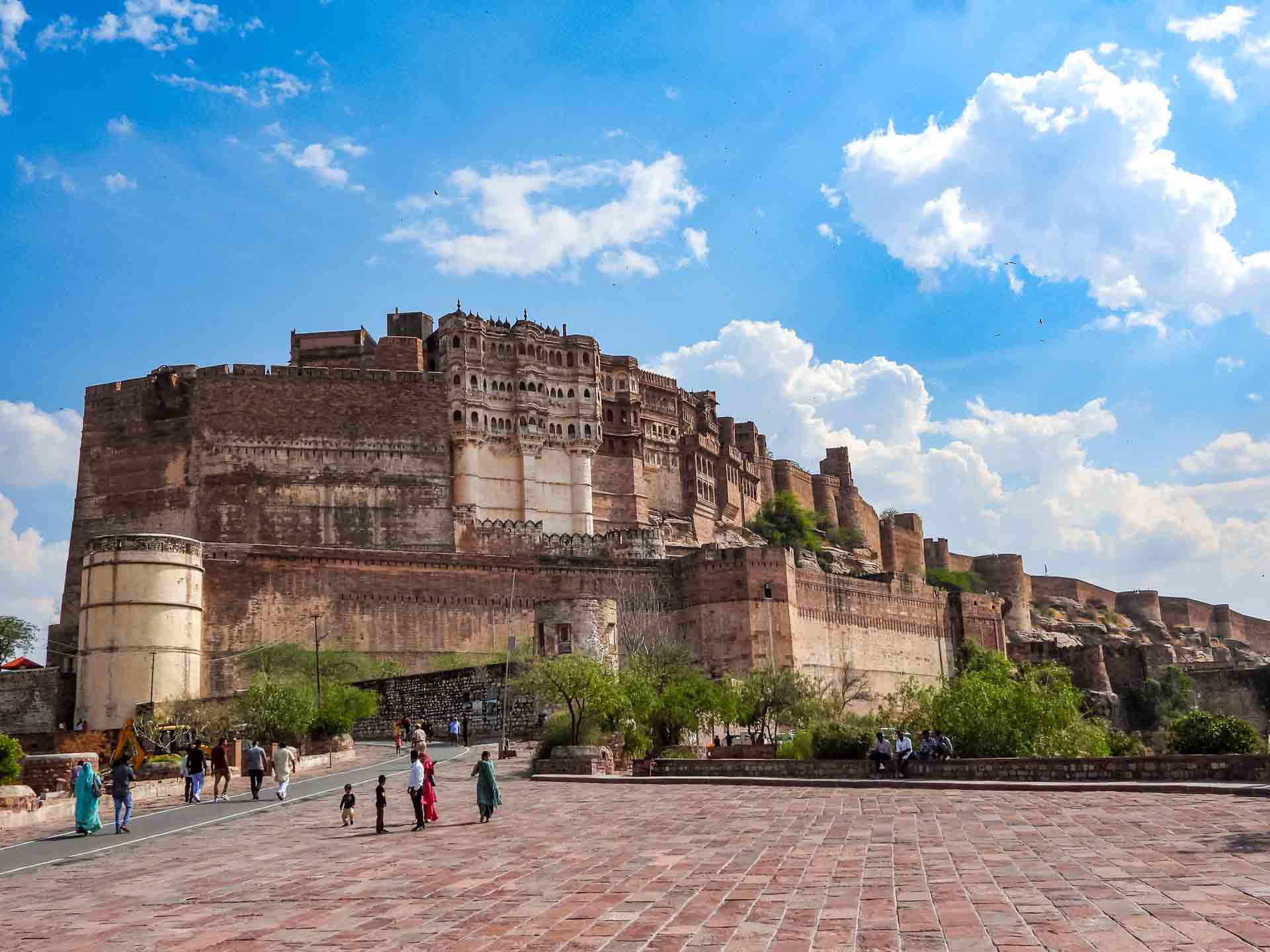
Jodhpur, a city of sandstone architecture shaped by trade routes, warfare, and centuries of Rajput rule, lies in western Rajasthan where the land gradually gives way to the Thar Desert. Founded in 1459 by Rao Jodha, the Rathore ruler who shifted his capital from Mandore to the more defensible rocky hill of Bhakurcheeria, the city emerged not merely as a settlement but as a fortified capital of Marwar. It was on this hill that the massive Mehrangarh Fort was built, a fortification that continues to dominate the skyline centuries later.
The history of Jodhpur cannot be separated from the Rathores, who gave its identity to the region of Marwar. Strategically positioned on historic trade routes connecting Delhi with Gujarat and Central Asia, the city became an important commercial center for opium, silk, copper, sandalwood, and spices. Traders, warriors, artisans, and traveling communities passed through its gates, leaving behind architectural influences and a mercantile culture that still survives in the old quarters of the city. While many historic cities lost much of their original character to rapid urban expansion, Jodhpur continues to retain strong traces of its medieval past. Its streets still reflect centuries of commercial and cultural history.
Living Architecture
The old city unfolds beneath the shadow of Mehrangarh Fort through a network of winding lanes and tightly packed streets. Houses spill into narrow alleyways where shadows gather beneath projecting balconies and latticed windows.
The architecture is dense and highly detailed, filled with carved facades, jharokhas, stone screens, and decorated balconies designed both for ornamentation and protection from the desert heat.
Many of the old merchant houses, though worn by time, continue to stand defiantly. Several of these structures have been repurposed into dormitories, guesthouses, textile shops, cafes, and small hotels. Cracked walls, weathered timber beams, and faded shutters reveal their age, yet their adaptation into modern spaces has not erased their old-world character.
The streets themselves reveal how buildings in Jodhpur have constantly evolved over generations. Tangled electric wires and fading signboards now frame houses that once belonged to wealthy merchants and aristocratic families. Tea stalls, backpacker hostels, and shops occupy interiors that still retain traces of another century.
Sardar Market
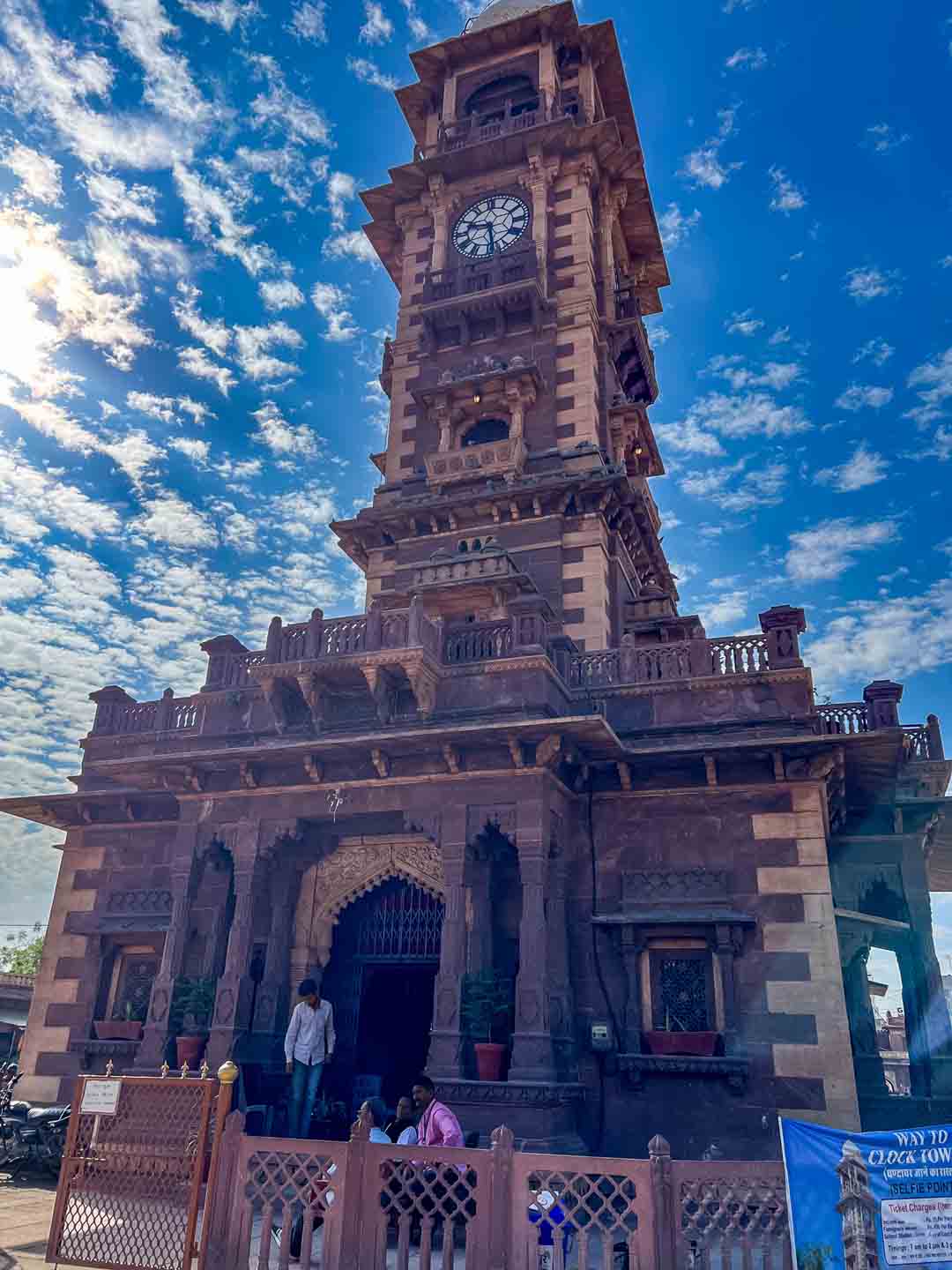
At the center of the old city stands the bustling Sardar Market, built around the iconic Ghanta Ghar (Clock Tower), commissioned by Maharaja Sardar Singh in the late nineteenth century. The market remains one of the busiest commercial spaces in Jodhpur.
Vegetable vendors shout across spice sellers while rickshaws force themselves through impossibly narrow spaces. Beneath worn awnings, textile merchants display embroidered fabrics and brass utensils that catch the afternoon light. Above this constant movement rises the clock tower, which continues to function as a landmark and meeting point within the old city.
From the market streets, Mehrangarh Fort appears almost unreal. Its enormous stone walls rise sharply from the cliffs behind the city, towering above the rooftops. Visible from much of the old city, the fort remains the defining feature of Jodhpur’s skyline.
Havelis and Merchant Houses
Near these crowded streets stand old havelis that preserve traces of aristocratic refinement. Pal Haveli, with its carved facades and old courtyards, offers insight into how Rajput noble residences have been adapted into heritage hospitality spaces.
These buildings also demonstrate how domestic architecture in Jodhpur balanced grandeur with practicality. Inward-facing courtyards, layered balconies, and stone lattice screens were designed to protect residents from heat while maintaining privacy within crowded urban neighborhoods.
Food and Culture
Food in Jodhpur reflects the harsh climate and rich culinary traditions of the region. One of the city’s best-known food destinations is the famous Mishrilal Hotel, known for its makhaniya lassi and traditional sweets.
Among its most memorable offerings are hot mawa kachoris served with thick rabri in earthenware bowls.
Rich in condensed milk, cardamom, sugar, and ghee, these sweets reflect the strong flavors and heavy textures common in desert cuisine.
Outside, street carts continue their own culinary traditions. Vendors sell stacks of rusks, trays of fried snacks, namkeen mixtures, and sugar-coated sweets. Tea boils constantly in blackened metal kettles that have been in use for years.
The smell of frying batter, spices, and clarified butter drifts through the streets from morning until late at night.
Bazaars
The commercial lanes of Jodhpur are lined with carpet stores filled with woven textiles in deep reds and indigos, sweet shops displaying silver-coated confections, and merchants selling brassware, antiques, and handicrafts.
Unlike markets designed purely for tourism, the bazaars of Jodhpur remain active working spaces where local trade continues alongside tourism.
Rohet House
Away from the crowded old city, time moves more slowly at Rohet House.
The property offers shaded courtyards, preserved interiors, and long unhurried meals that encourage a quieter pace.
The food reflects traditional Marwari cuisine — rich curries, lentils prepared with generous amounts of ghee, millet breads, and carefully spiced vegetables served as part of elaborate Rajasthani thalis.
Palaces, Ramparts and Royal Architecture
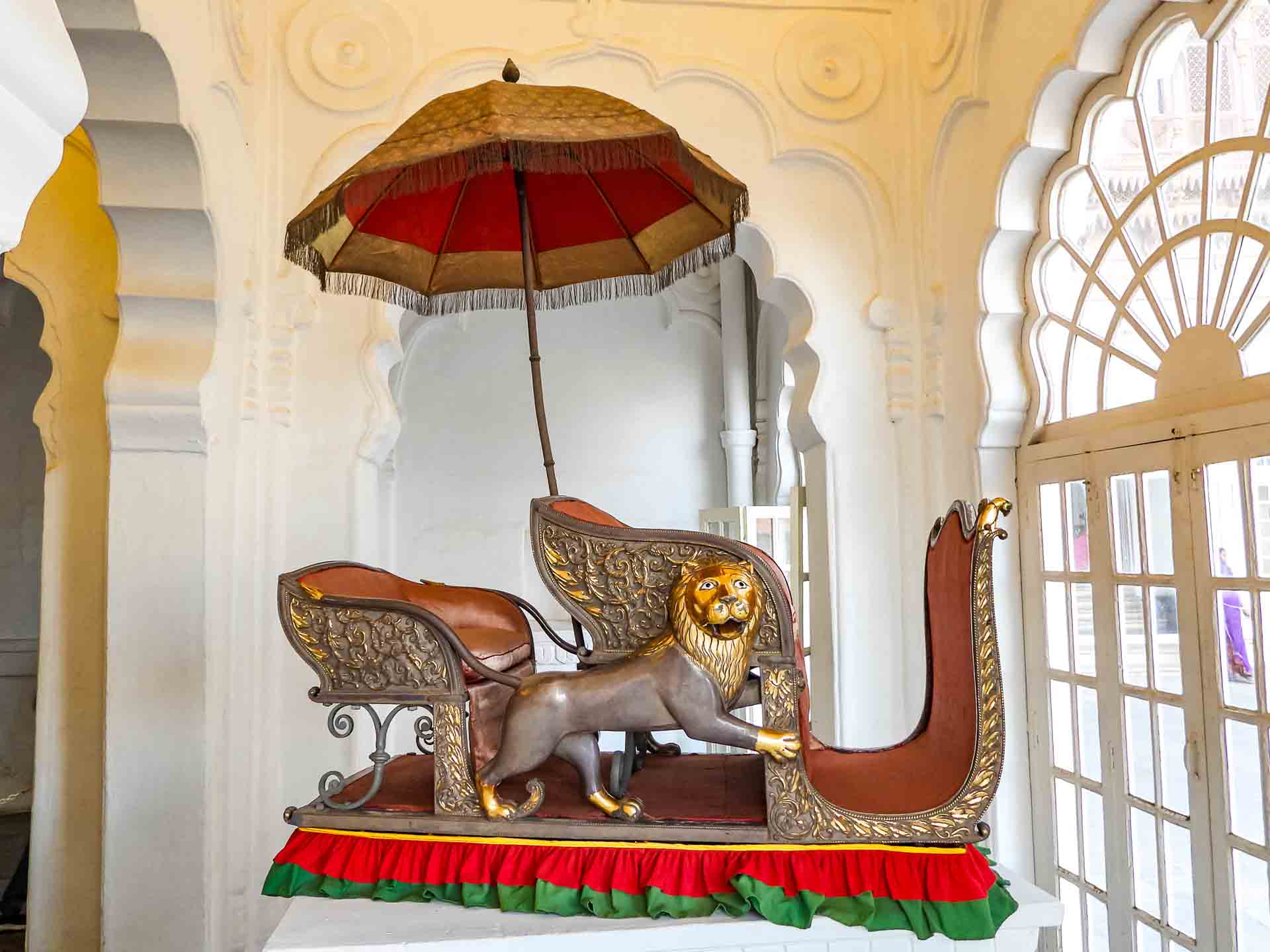
Inside the fort complex, the harsh military exterior gives way to highly refined palace interiors.
Courtyards open into richly decorated spaces filled with carved sandstone screens, painted ceilings, and ornamental details. This contrast between defensive architecture and elaborate interiors is characteristic of Rajput palace design.
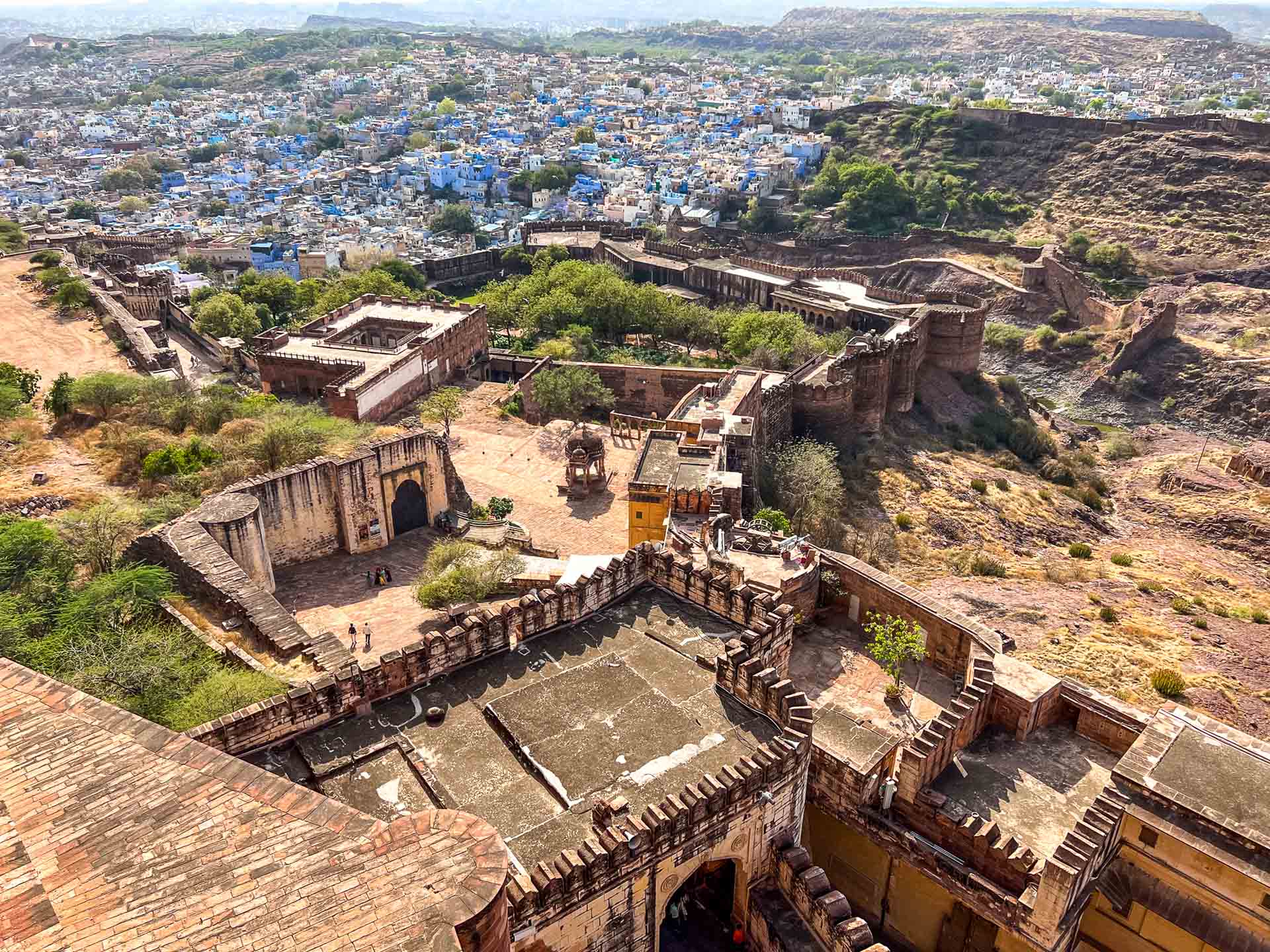
Cannons still stand along the ramparts overlooking the blue city below. From the fort walls, one can see the vast spread of blue houses across Jodhpur along with landmarks such as Umaid Bhawan Palace and the marble cenotaph of Jaswant Thada in the distance.
The fort’s darbar halls once served as spaces where rulers conducted state affairs surrounded by displays of royal authority and wealth.
Carved pillars, colored glass, gilded surfaces, and elaborate ceilings transformed these halls into ceremonial political spaces.