Bikaner: The Desert Jewel
Bikaner is tucked in the northwest of Rajasthan; it is not just what you might call a visually stunning experience. Instead, its experience is created over time—by people, trade networks, belief systems, and architectural forms that are gradually tailored to fit the inhospitable desert climate.
The town, unlike its heavily touristed counterparts in Rajasthan, still feels lived in. History here is not theatrical: it spoke to us through daily life, temples, and neighborhoods that haven’t altered much in centuries.
History of Bikaner
It was founded in 1488 by Rao Bika Ji, a Rathore Rajput prince. Rao Bika selected the initial site for his fort and founded the city of Bikaner, which means the settlement of Bikaji, so called after its founder (Bikaji). He marched from Gwalior in 1465 and established his kingdom at Jangladesh, later called Bikaner. Despite the forbidding nature of the terrain, its position was strategically significant. Jangladesh was situated on the main camel caravan and footpaths linking Central Asia with Multan, Sindh, and finally Gujarat; it commanded a monopoly over trade in salt, wool, dry fruits, and spices; later also in opium.
Bika created the power base that would eventually become the state of Bikaner: he rebelled against his Rathor overlords in Jodhpur and formed his own army of Rajputs, capturing large territories in western Rajasthan. The settlement in the course of time established itself as a small desert capital. The city’s early expansion was more directly related to trade and passage through the desert, rather than masses of food.
Royal alliances and the expansion of the kingdom
Its rulers pursued a policy of concern for the longevity and efficiency of their rule, in contrast with most other Rajput states. Rather than prolonged defiance, Bikaner was involved in agreements and alliances with the Mughal Empire, especially during the reign of Akbar. The Bikaner princes helped in Mughal military campaigns and fought at various ranks, besides getting protection and wider trade contacts. These linkages served to augment the economic and political strength of the kingdom.
During this time, the mercantile community within Bikaner, particularly that of the Marwaris and Jains, prospered. They invested in trade, constructed havelis, endowed temples, and were important to the city’s development. Princely era during the then British Raj, Bikaner was under the suzerainty of the British crown. The Bikaner Camel Corps was made famous for its overseas services. It formally joined independent India in 1947.
Bhanwar Niwas: Royalty in the Present Day
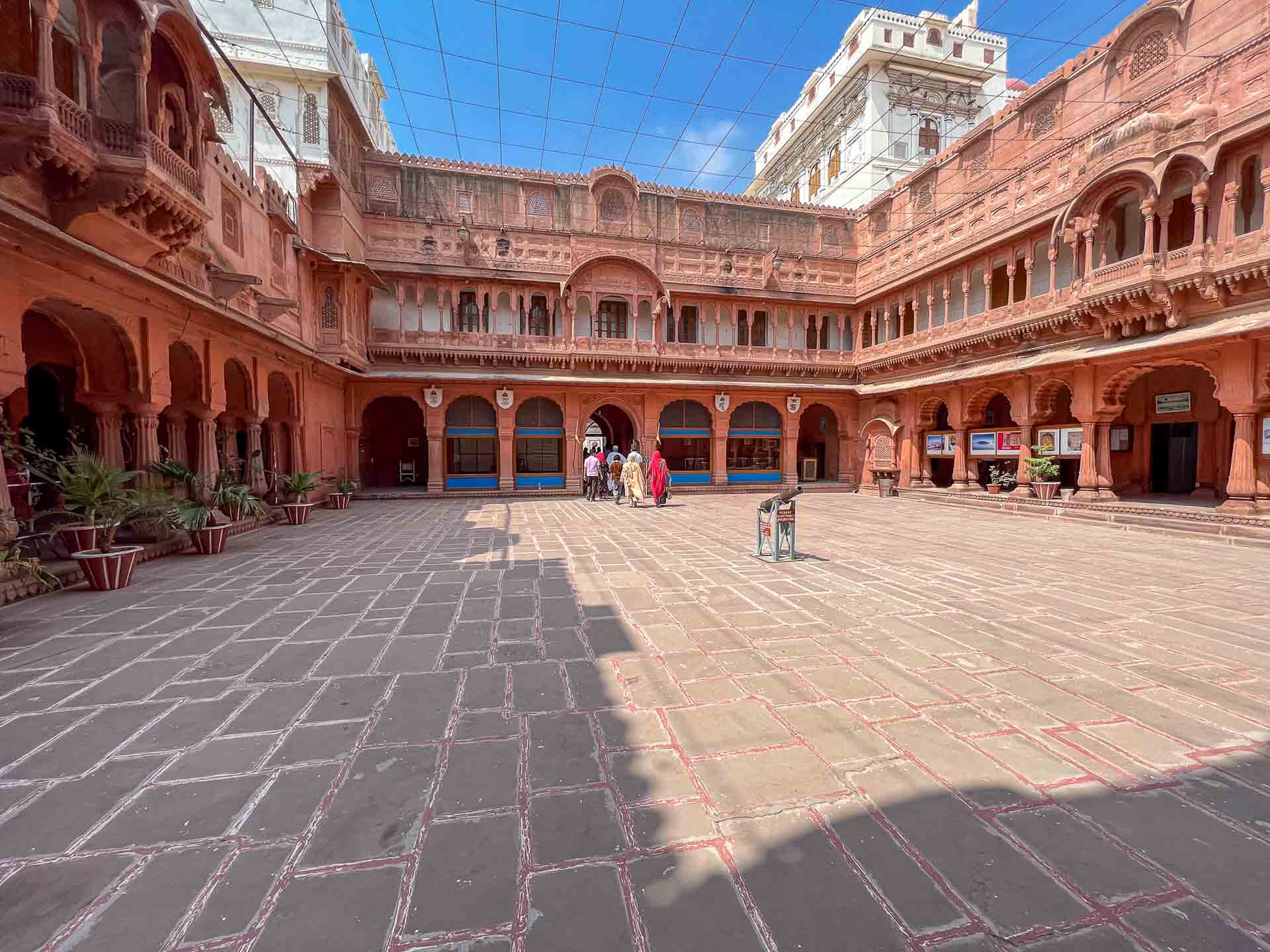
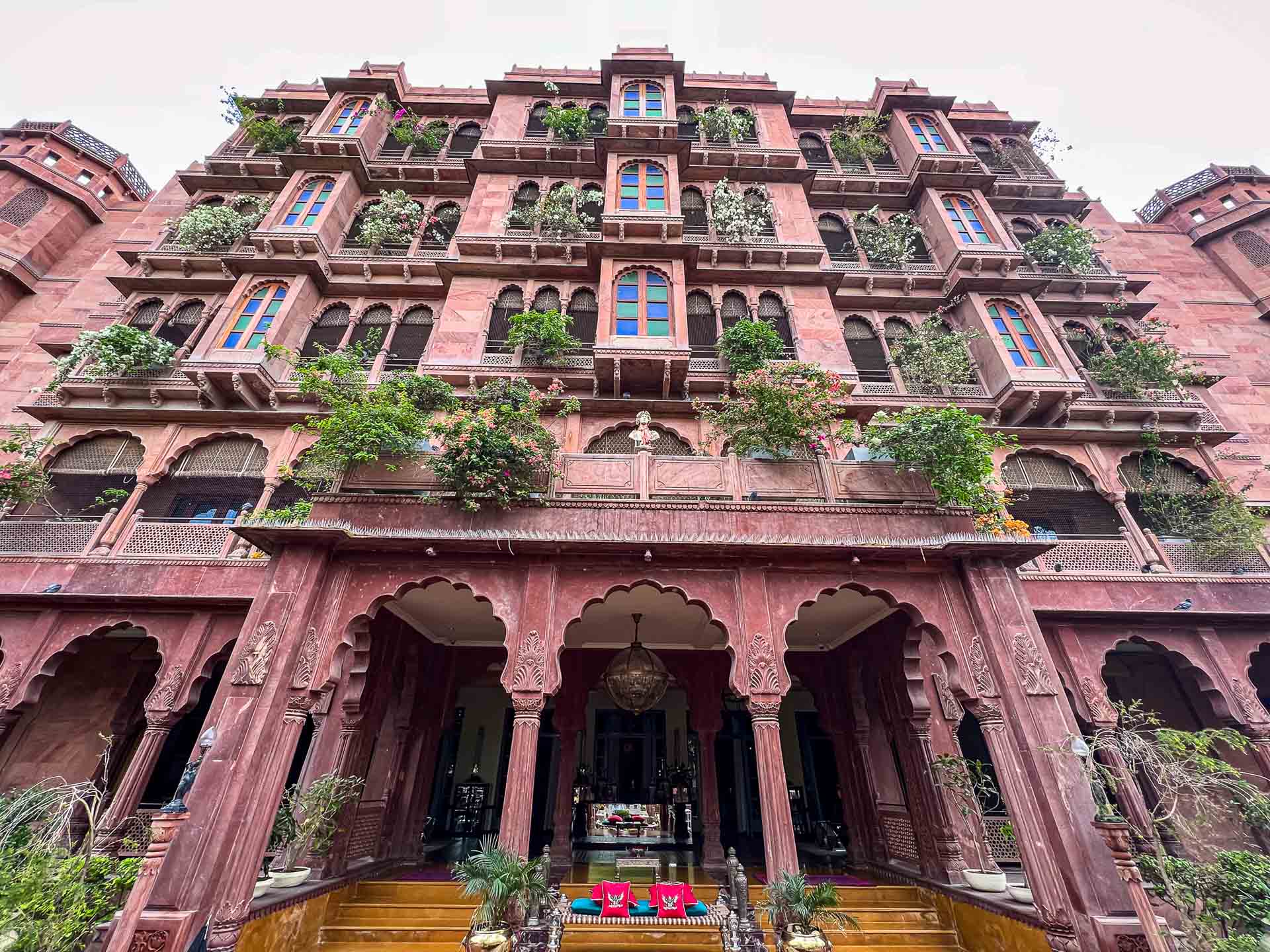
Bhanwar Niwas Palace is located within the Junagarh Fort, which was built in the early 20th century by Maharaja Ganga Singh. An educated and well-travelled man, Ganga Singh was a new kind of Indian ruler who had one foot in traditional styles of rule and the other in modern attitudes. The Bhanwar Niwas was a radical design for the time, showing that ceremonial residences were not as important.
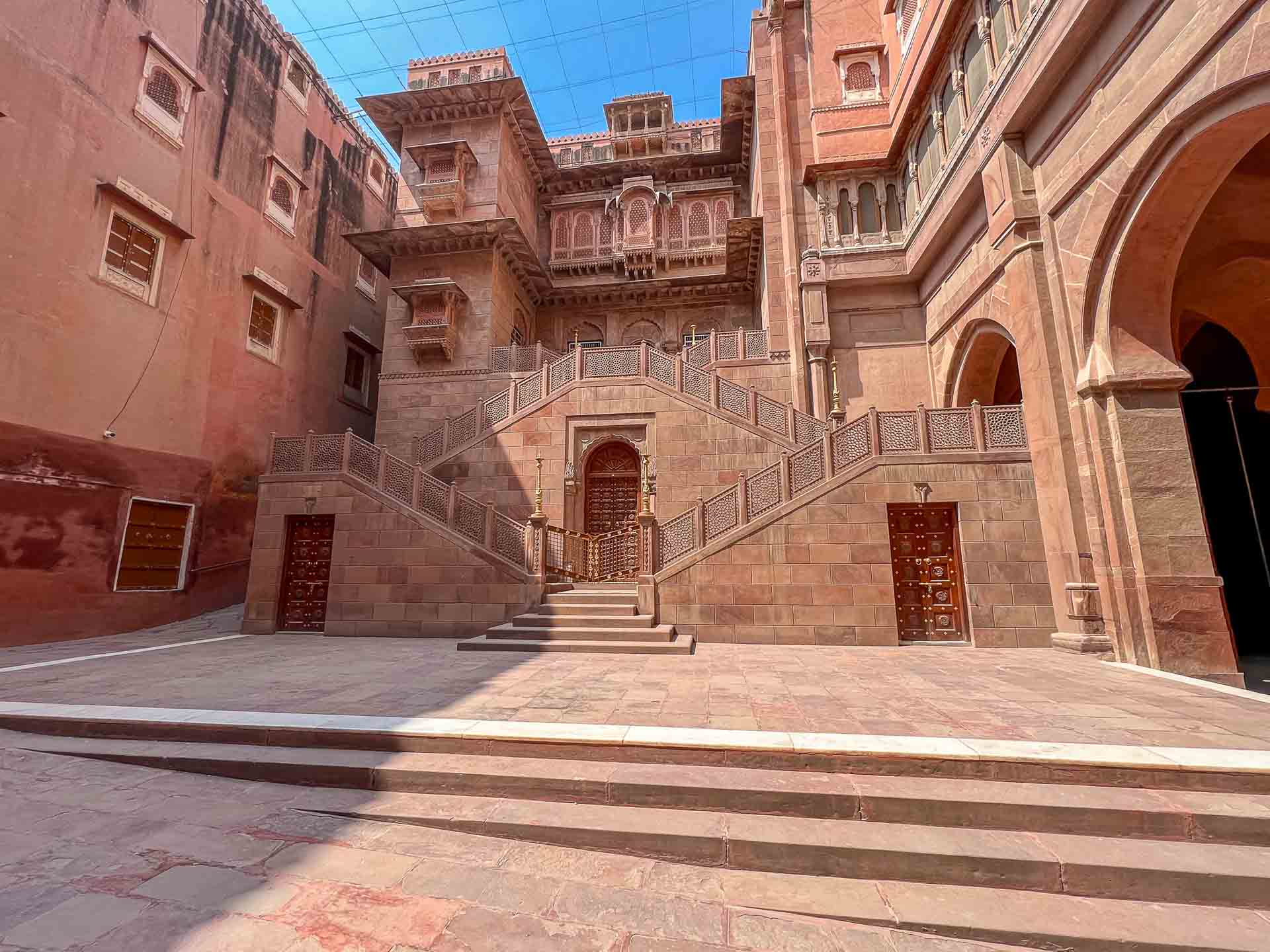
The palace, which is constructed with red sandstone, has Indo-Saracenic architecture and blends Rajput and Mughal architectural styles as well as society in the late 19th century. The red sandstone exterior works well with the original building structures of the fort, but inside, there are marble floors, mirror work, gold-leaf frescos, and hand-painted panels.
Bhanwar Niwas is a step away from the medieval character of desert Fort Living which provides an experience in itself. Today, the palace has been converted into a heritage hotel to give an insight into Bikaner’s royal family on the domestic front, and not just as rulers.
Rampuria Havelies
If Junagarh represents its royal past, Rampuria Havelis stand for the merchant history of Bikaner. These havelis were built by one of the wealthiest trader families, the Rampurias, in all the lanes of the fort area known as Johari Bazaar. The Rampurias were one of the richest trader communities in the area, involved in the trade of opium, cotton, spices, and textiles.
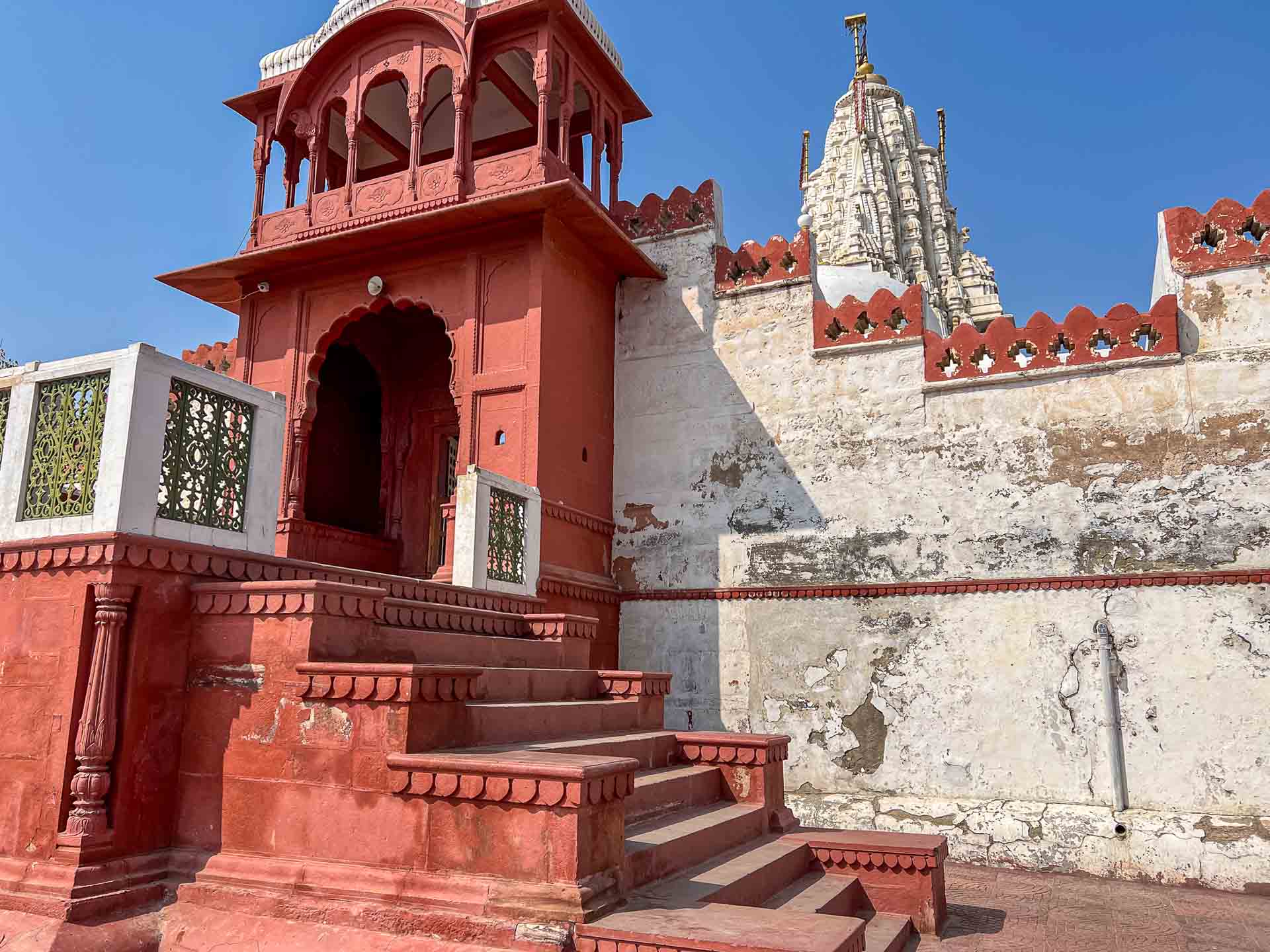
Built with Dulmera red sandstone, these havelis are adorned with ornate stone carvings, elaborate jharokhas, and intricately latticed windows. These architectural components served an aesthetic as well functional purpose, and were created to control airflow and offer privacy during high temperatures. The havelis served as homes, commercial offices, and warehouses, and were used for inviting the guests. They are a testimony to the self-assuredness and longevity of merchant riches in Bikaner’s townscape. Many are still privately owned, but even viewed from the outside, they provide an extraordinary overview of how trade made the city.
Usta Art Studio
One of our most personal cultural experiences in Bikaner was our visit to the Usta Art Studio. Hidden away from more touristy attractions in the city, the studio opened up our eyes to the Usta family tradition — a unique art form involving gilded miniatures called Usta kala. Every stroke, every motif, deliberate and influenced by Persian and Mughal traditions observed over centuries.
The thing that struck us the most was the quiet pride in the knack itself being preserved and passed on through generations. Visiting this place helped us to take a break from our own lives and allowed us to immerse ourselves in the creative beat of the city.
The Desert
The Thar Desert is more than just Bikaner’s backdrop; it’s the driving force behind its culture. The architecture features thick walls, courtyards looking inward, and few openings to the outside in order to control temperature. Generations after establishing water-saving practices, the cities were built close to keep the shade near.
Unlike other parts of Rajasthan, in Bikaner, hospitality began as an expediency rather than a cultural phenomenon. In the desert, a culture of community and resilience was always valued.